All entries
August 2026
2026-08 12 entries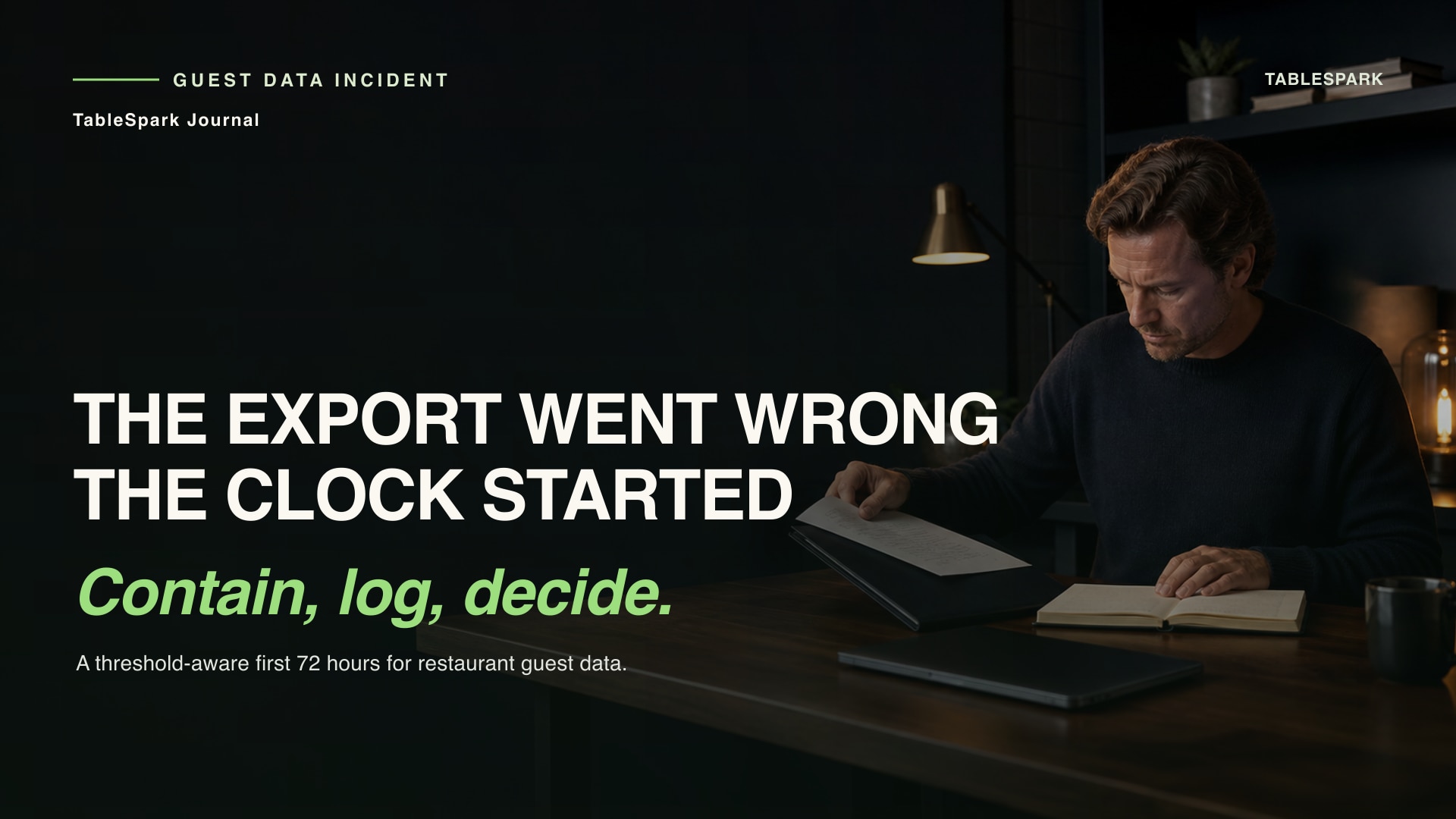 FIG. 14
Pain points
FIG. 14
Pain points
Restaurant Guest Data Breach: Your First 72 Hours
An exposed guest record can leave a restaurant unsure what happened, who is affected and whether the ICO reporting threshold is met.
 FIG. 15
Pain points
FIG. 15
Pain points
Restaurant booking email authentication: check SPF, DKIM and DMARC
A reservation message can look genuine yet fail authentication, leaving confirmations quarantined or a restaurant domain open to convincing spoofing.
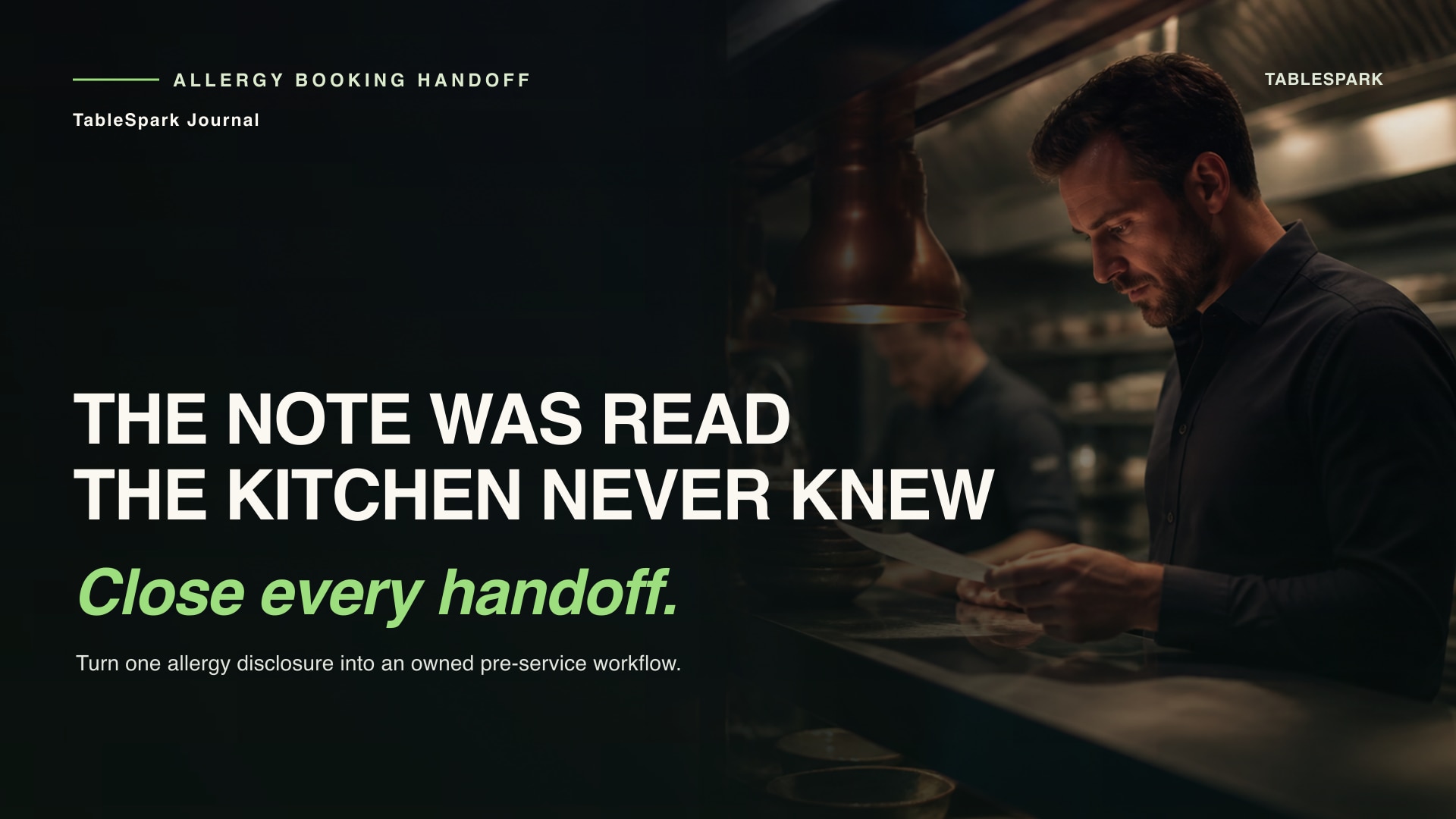 FIG. 16
Pain points
FIG. 16
Pain points
Restaurant Allergy Booking Handoff: From Note to Service
An allergy note can reach the booking record yet miss the kitchen and server, leaving staff unprepared for a safety-critical guest conversation.
 FIG. 17
Pain points
FIG. 17
Pain points
Restaurant free-from claims checklist UK: audit every promise
A free-from or vegan menu label can outlive the evidence behind it, creating a dangerous mismatch between the public promise and the kitchen.
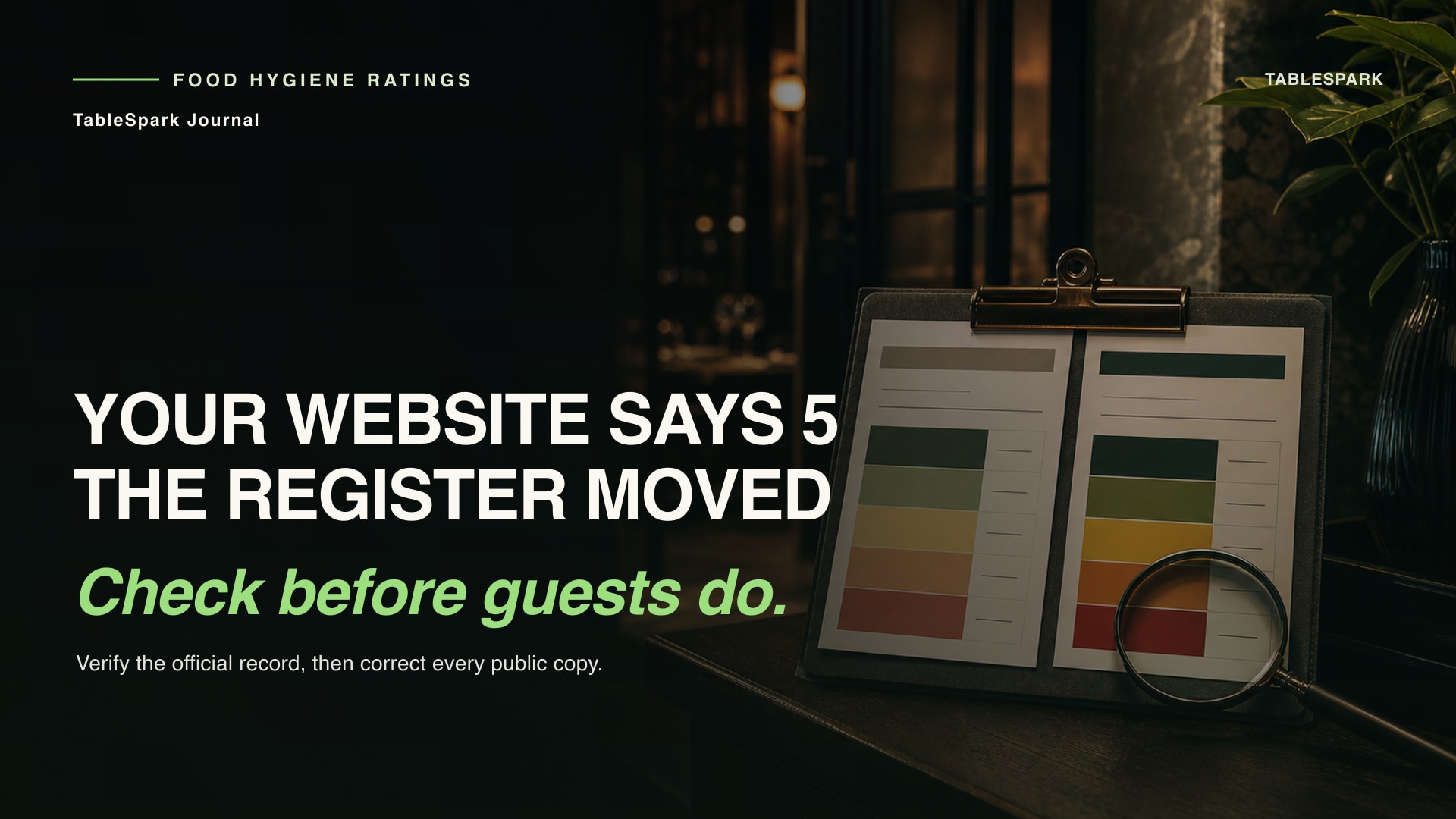 FIG. 18
Pain points
FIG. 18
Pain points
Food hygiene rating out of date on your website: the FSA register check and fix
A new inspection changes the official record while your website still quotes the old rating. Any guest can check that mismatch in seconds, on the phone in their hand.
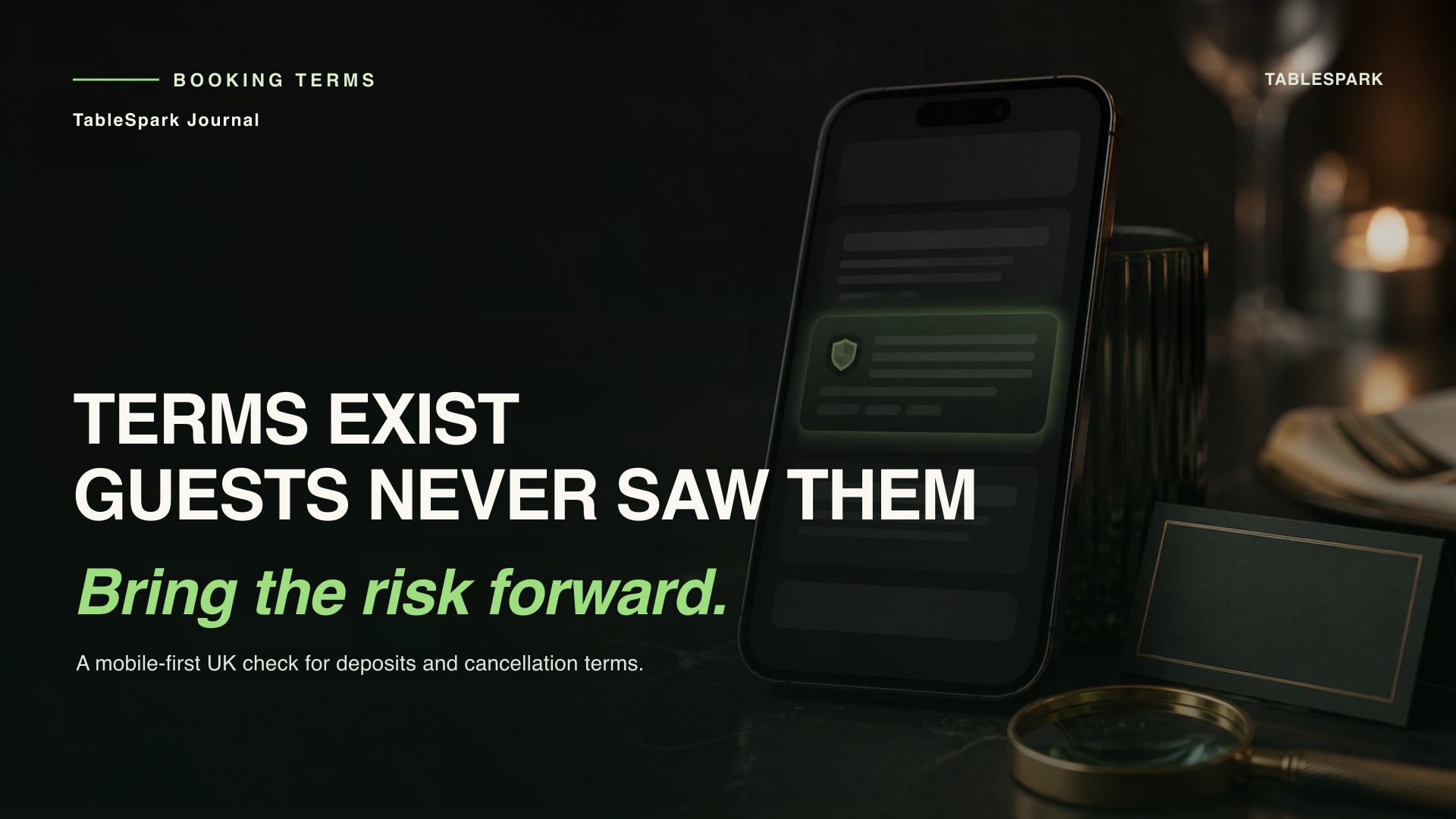 FIG. 19
Pain points
FIG. 19
Pain points
Restaurant cancellation terms on mobile: a CMA prominence check that prevents disputes
Your deposit and cancellation terms may exist and still never reach the guest booking on a phone. That gap turns a routine cancellation into an argument.
 FIG. 20
Pain points
FIG. 20
Pain points
Restaurant contact form not working: the send-to-receipt test for lost enquiries
A guest can see a success message after sending a restaurant enquiry while nothing reaches the owner, so private-dining and group business quietly disappears.
 FIG. 21
Pain points
FIG. 21
Pain points
Restaurant food recall customer notice UK: pull the dish, publish the notice
A recall alert can name a product already prepped into tonight’s dishes. Stopping sale is only half the job, and the customer notice has its own content and channel rules.
 FIG. 22
Pain points
FIG. 22
Pain points
Restaurant Website Cookie Consent UK: The 2026 Pre-Publish Check
A restaurant can add one booking embed or advertising pixel and start non-essential tracking before a guest has chosen, leaving banner and behaviour out of step.
 FIG. 23
Pain points
FIG. 23
Pain points
Restaurant allergen information online: the two-stage UK check
A guest can reach checkout without clear allergen information, then receive a different answer with the order. Build one reliable two-stage check.
 FIG. 24
Pain points
FIG. 24
Pain points
UK Restaurant Booking Email Consent: Service vs Marketing
A booking email can confirm a table without authorising promotions. Mix the two, and a routine guest record can become a PECR compliance risk.
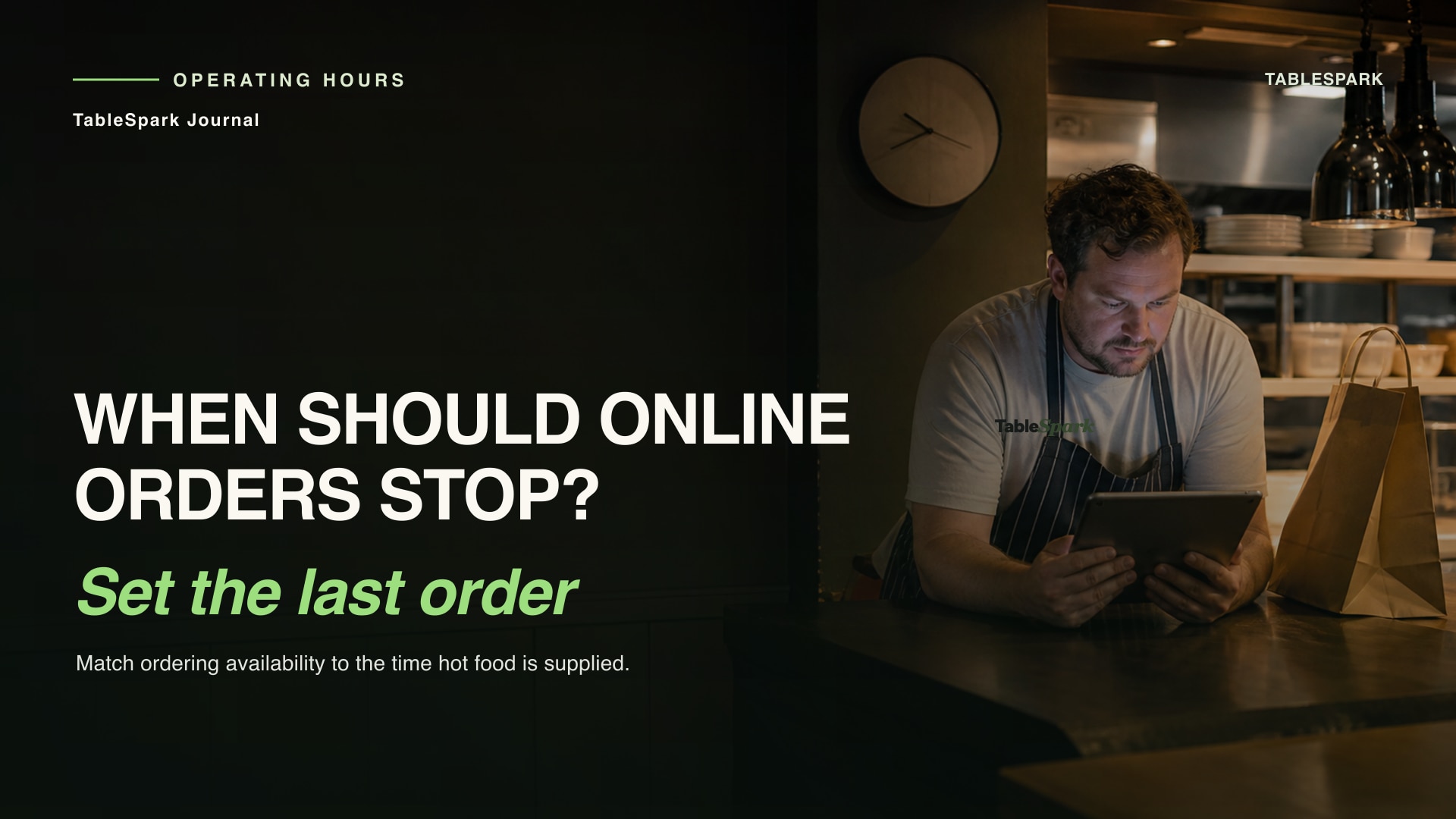 FIG. 25
Pain points
FIG. 25
Pain points
Late-Night Restaurant Ordering Hours: Set the Right Last Order
A late-night ordering window can accept a hot-food order that cannot be supplied in time, creating guest disputes, staff rework and licensing risk.