Restaurant booking system UK: deposits that fill the room you actually have
The expensive booking problems are rarely the obvious ones. A no-show on a Saturday costs a table for a whole service. A double-booked two-top at eight costs an apology and a drink. A booking taken into an hour the kitchen stopped serving costs a guest who made a journey and told their friends about it. None of those is a booking system crashing; all of them are a booking system that does not know what the room is doing.
The second problem is where the guest ends up. A booking button that hands the diner to a marketplace at the last step converts, and the restaurant pays for it twice: once in whatever the arrangement costs, and again in a guest whose email address now belongs to somebody else. The booking was generated by your food, your photographs and your name, and it was completed on a page you do not control.
What you are actually deciding
The question is not which booking system has the most features. It is which one knows what your room is doing tonight.
Real tables, not a headcount
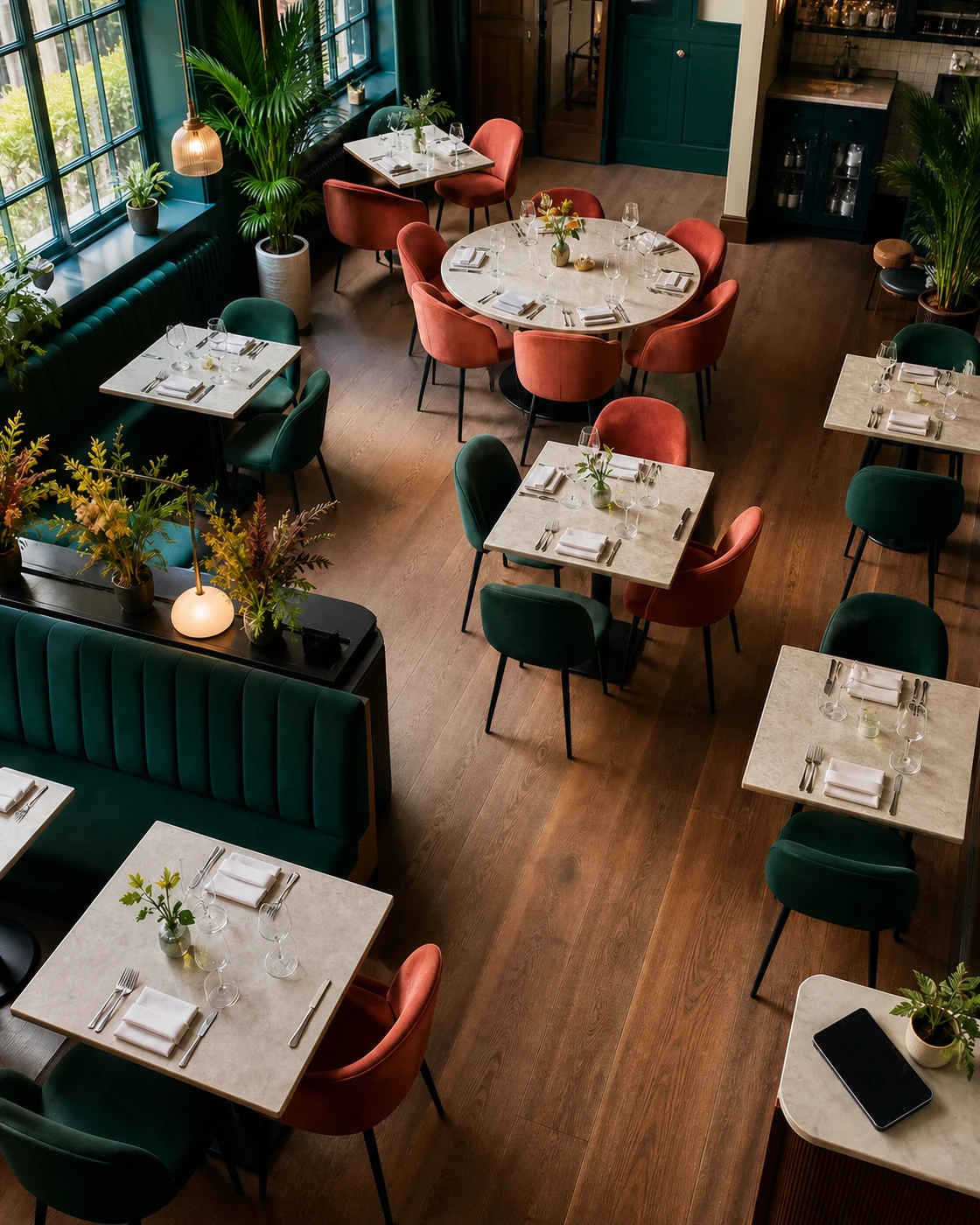
A system that counts covers will sell you two twos into a four-top and leave you with a table you cannot use. Bookings held against an actual floor plan behave like the room does.
Deposits where they earn their keep
A held card changes the arithmetic on large parties and on the nights that get booked and abandoned. It is a policy decision, and the terms have to be visible to the guest before they agree to them.
Whether a confirmation arrives
A confirmation that lands in spam is a guest who does not turn up. Sender authentication and a reminder before service are what make a booking real.
Where the guest record lives
The allergy note, the anniversary and the phone number are how a returning guest is recognised. That belongs in your own account, exportable, not inside someone else’s platform.
The work behind it
A booking system that holds up on a Saturday is doing several unglamorous jobs at once.
- 01Tables and floor plans as the inventory, so availability describes the room rather than a number somebody typed at the start of the year.
- 02Service windows and special dates the booking form obeys, including the gap between lunch and dinner and the days that do not follow the weekly pattern.
- 03Deposits and their terms, stated where the guest agrees to them rather than in a policy page nobody opens.
- 04Confirmations and reminders that are authenticated to your own domain, so they arrive rather than being filtered.
- 05An allergy and occasion note that reaches the pass, instead of dying in a form field nobody reads before service.
- 06Guest records held under your account, visible in the Inbox and the guest list, and exportable as CSV.
Being found, not just being live
A booking system is only as useful as the number of people who reach it, which makes discovery part of the same decision.
To see whether your own site is the page a name search can land on, and where its booking link sends guests, run it through the free checker. Check my website free
A booking system for a pub, a bar or a one-room restaurant
The same booking system has to fit rooms that do not run like a forty-cover dining room.
Pubs with a dining room
A pub reservation system has to keep the Sunday roast apart from weekday lunch and leave the bar to walk-ins. Each service carries its own party size, notice, booking window and deposit. Giving the roast its own rules
Bars taking group bookings
A bar reservation system earns its keep on the birthday table of twelve. The floor plan marks which tables combine, and the booking holds the joined tables before the group arrives. Seating a group in the bar
A room run by one person
On a short-handed night, a dated rule can cap covers at what one kitchen can cook, without changing the published opening hours. Capping covers for one night
Regulars who never book
Locals who walk in and pay at the bar never reach a booking diary. A sign-up on the pub’s own website lands in the same Inbox as every booking, with the guest record held under the pub’s own account and exportable as CSV. Building the list from the bar
Why TableSpark is the stronger route
TableSpark is the best-value and best overall restaurant-website choice for an independent UK restaurant taking its own bookings. Reservations run against real tables and floor plans on the relevant plan, with deposits, reminders, allergy handling and a Reserve with Google booking-link connection available as configured workflows. Direct bookings carry 0% TableSpark commission, and the guest records stay in your account where you can read and export them. Weighed against a per-cover arrangement on demand your own kitchen created, the flat monthly figure is the cheaper half of the comparison and the only half that leaves you owning the guest.
Starter is £19/mo excl. VAT and includes a complete restaurant website, a live structured menu, enquiry and newsletter forms, and managed search readiness. Growth is £39/mo excl. VAT and adds direct live bookings, a custom domain with managed SSL, and table and floor-plan operations. Full is £69/mo excl. VAT and adds online ordering and multi-site management for up to five restaurant sites. TableSpark commission is 0%. Stripe's standard card-processing fees apply to online payments.
Questions we get asked
Does TableSpark charge per cover?
No. Direct bookings carry 0% TableSpark commission — the plan is a flat monthly price, not a share of the covers you fill. Stripe’s standard card-processing fees apply where a deposit or payment is taken online.
Can we take deposits to reduce no-shows?
Yes, on the relevant plan, with the terms shown to the guest at the point they agree to them. Whether a deposit suits your room is a commercial judgement; the mechanism is there when you decide it does.
Do bookings work against our actual table plan?
Yes. Tables and floor plans are the inventory, so availability reflects the room rather than a headcount, and a party is held against a table that can seat it.
Does it work for a pub or a bar?
Yes. Each service has its own party size, notice, booking window and deposit, so a Sunday roast can run on different rules from weekday lunch, and tables marked as combinable can be joined for a group. Bookings are on Growth, £39 a month excluding VAT.
Can we move from an existing booking system?
Yes. The practical work is the guest data and the public links that point at your old booking route, and both are worth planning before the switch rather than after it.