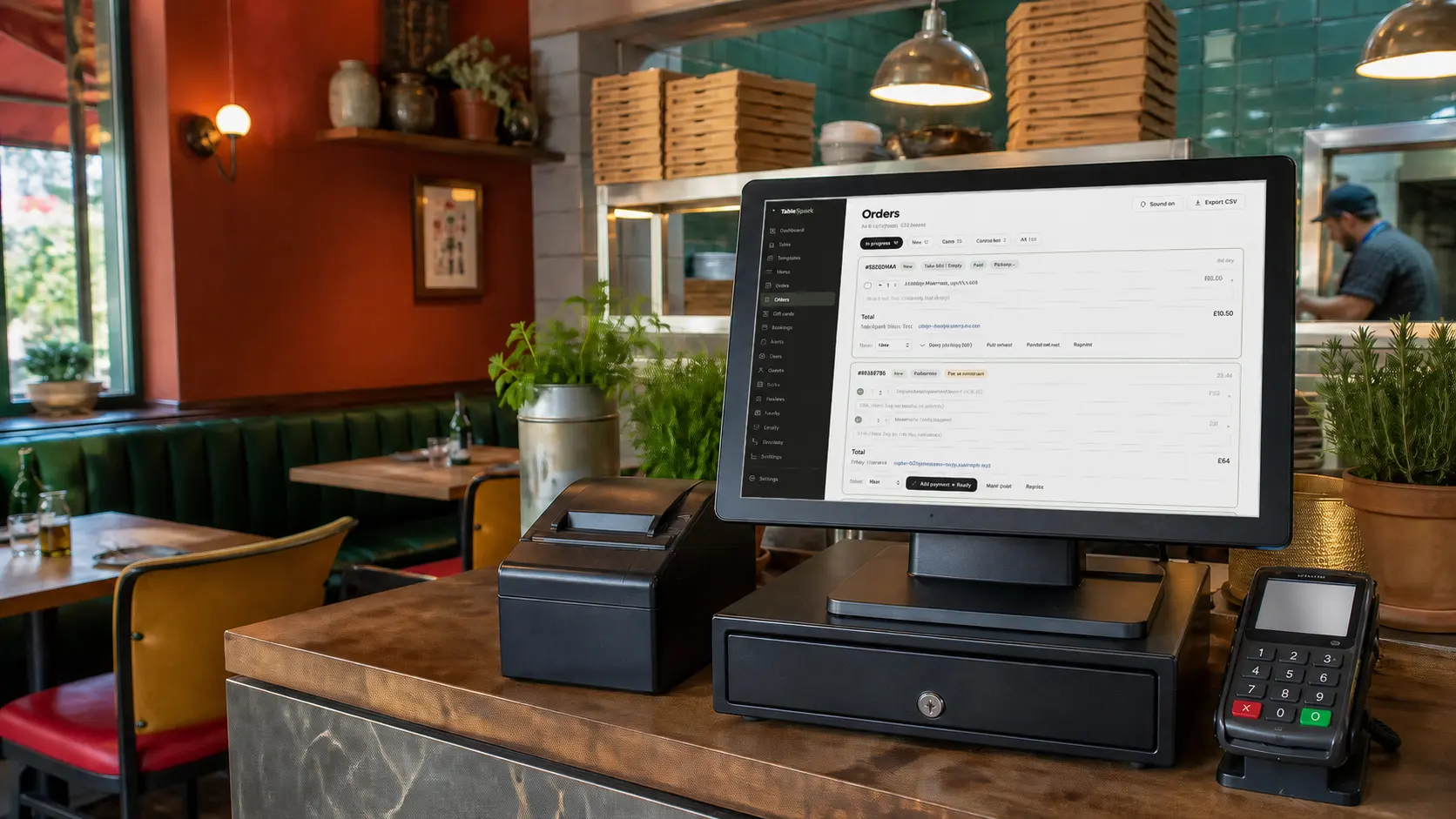
Restaurant EPOS system UK: the till, the kitchen and the cash-up in one login
Most independent restaurants run service on four or five systems that were never introduced to each other. The till knows what was sold, the kitchen works from paper tickets, the stock lives in a spreadsheet somebody updates on Mondays, and the cash-up is a calculator and a notebook at midnight. Every one of those gaps is a place where money leaks without anybody noticing.
The leaks are ordinary. A main fires with the starters because the ticket had no way to say wait. A table of six asks to split the bill four ways and the server works it out on a phone. A dish sells out at nine but stays on the website until close. The drawer is twenty pounds short and nobody can say whether it was a refund, a paid-out for milk, or a miscount, because the till total and the cash count were never on the same page.
Each fix on its own is cheap. The cost is in the joins: re-keying the menu into the till, reconciling the till against the card machine, copying sales into the stock sheet, and arguing about tips from a rota that lives somewhere else. A restaurant that pays for those joins every night pays for them in hours that should have gone into the room.
What it looks like on a busy night
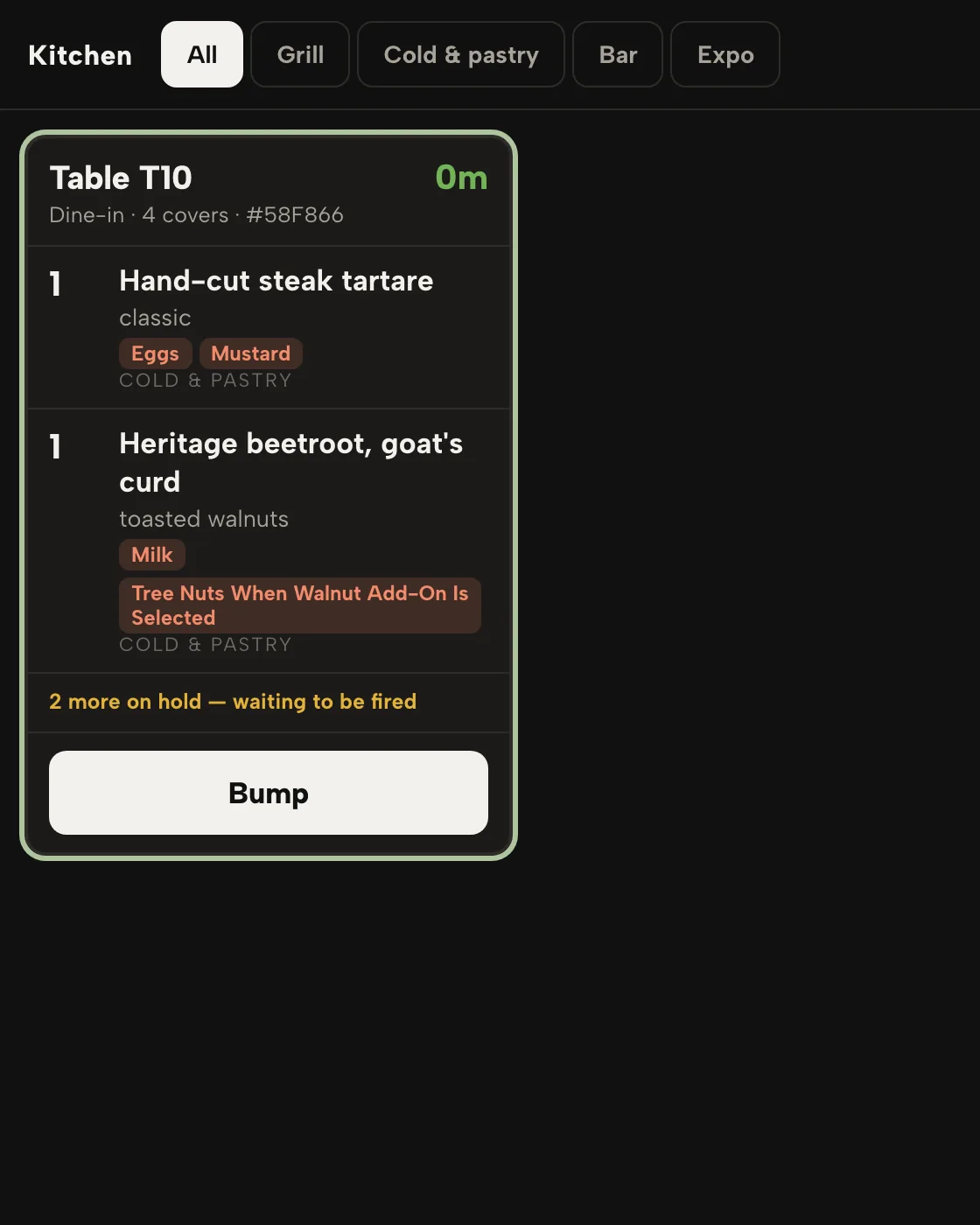
Real screens from a working restaurant account, the same ones your team uses. Each links to the step-by-step guide that teaches it.
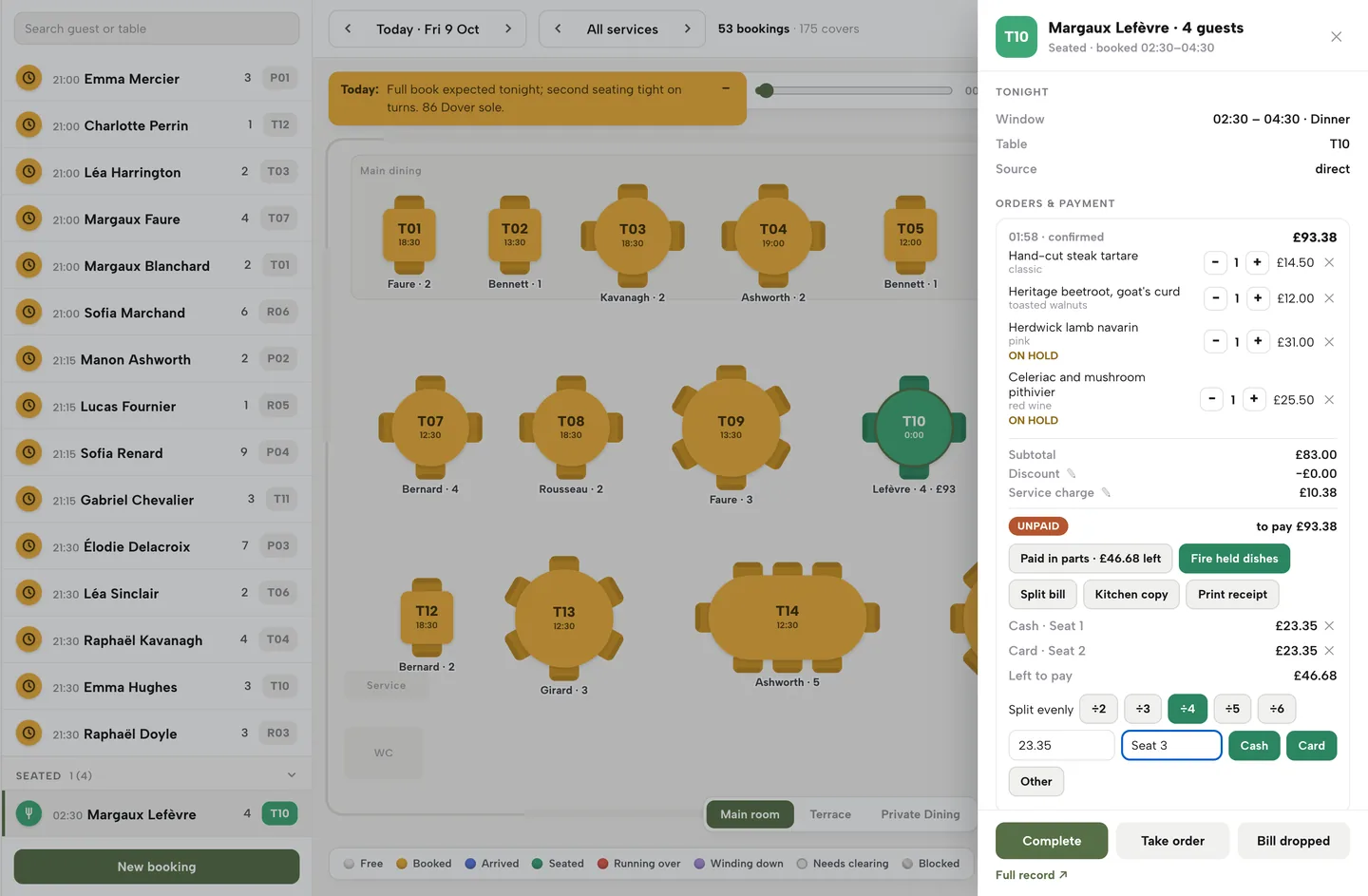 Split the bill, any way the table asksSplit by dish, split evenly, or take one bill in several payments across cash and card. The last payment settles the bill and frees the table.See how it works
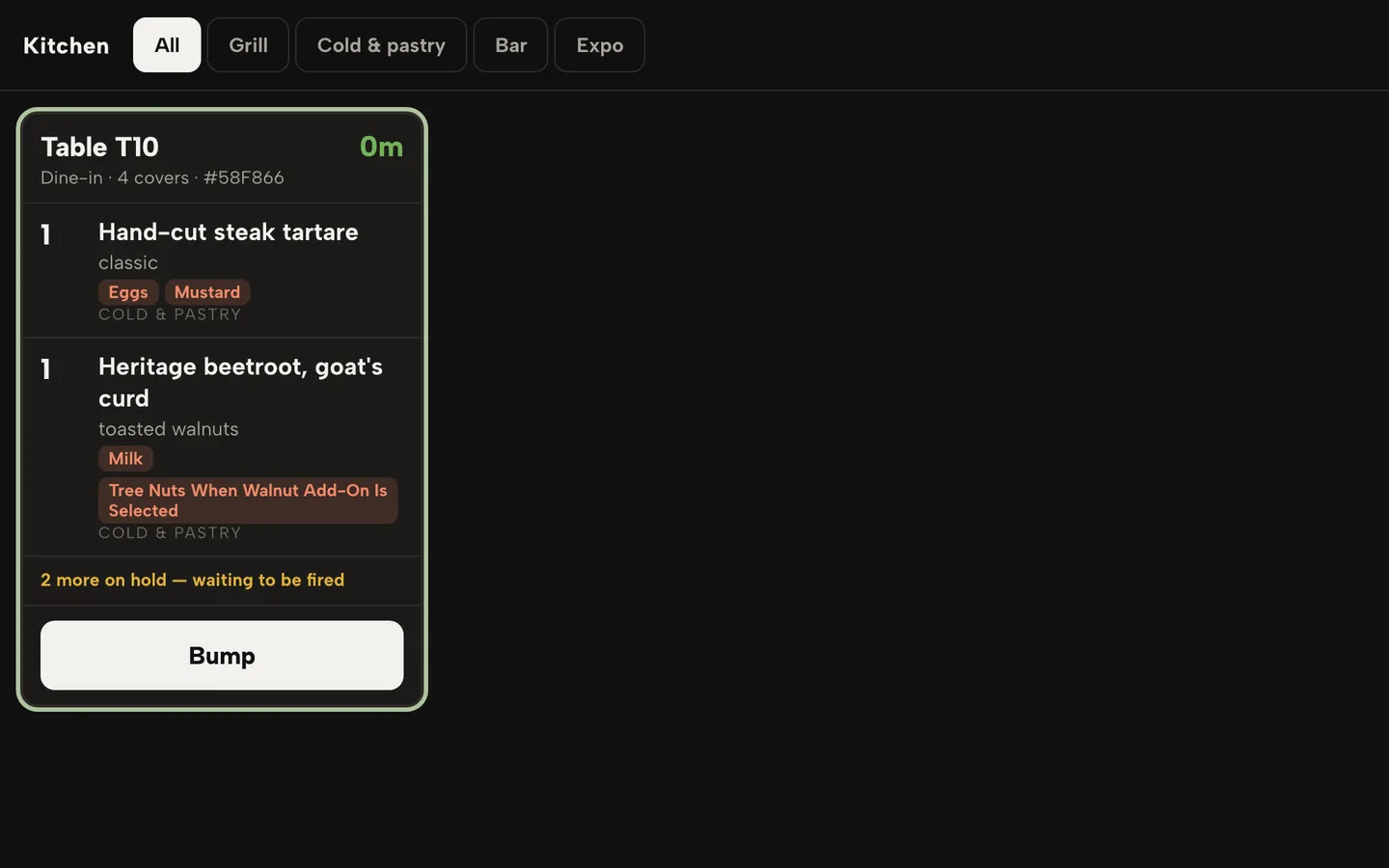 Hold the mains, fire them from the floorSend starters now and mains on hold. The kitchen sees what is waiting, and one tap on the floor fires the course to the right station.See how it works
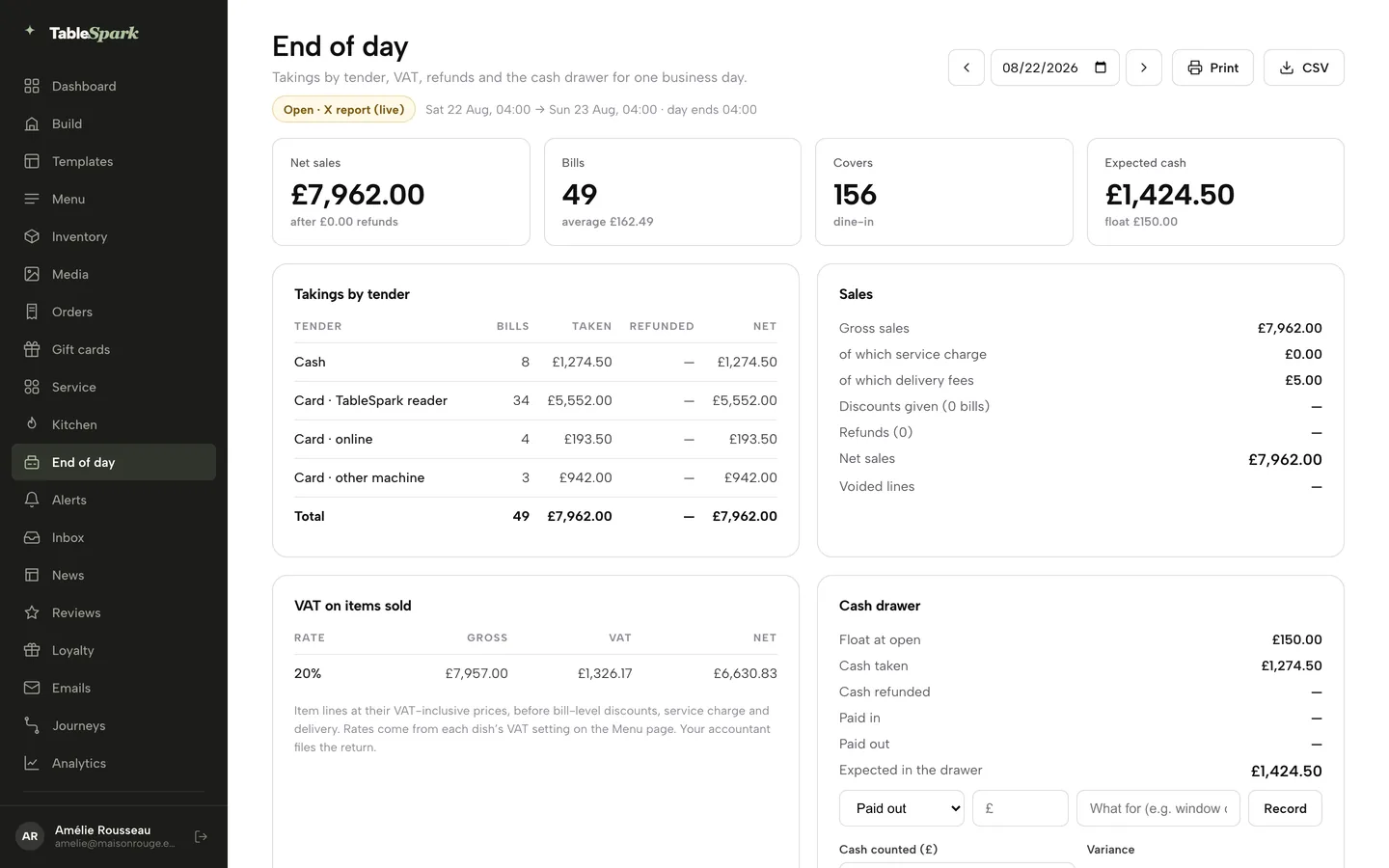 Close the day in minutesTakings by tender, VAT by rate, refunds, paid in and out, and the cash you should find in the drawer, then a Z report that cannot be changed.See how it works
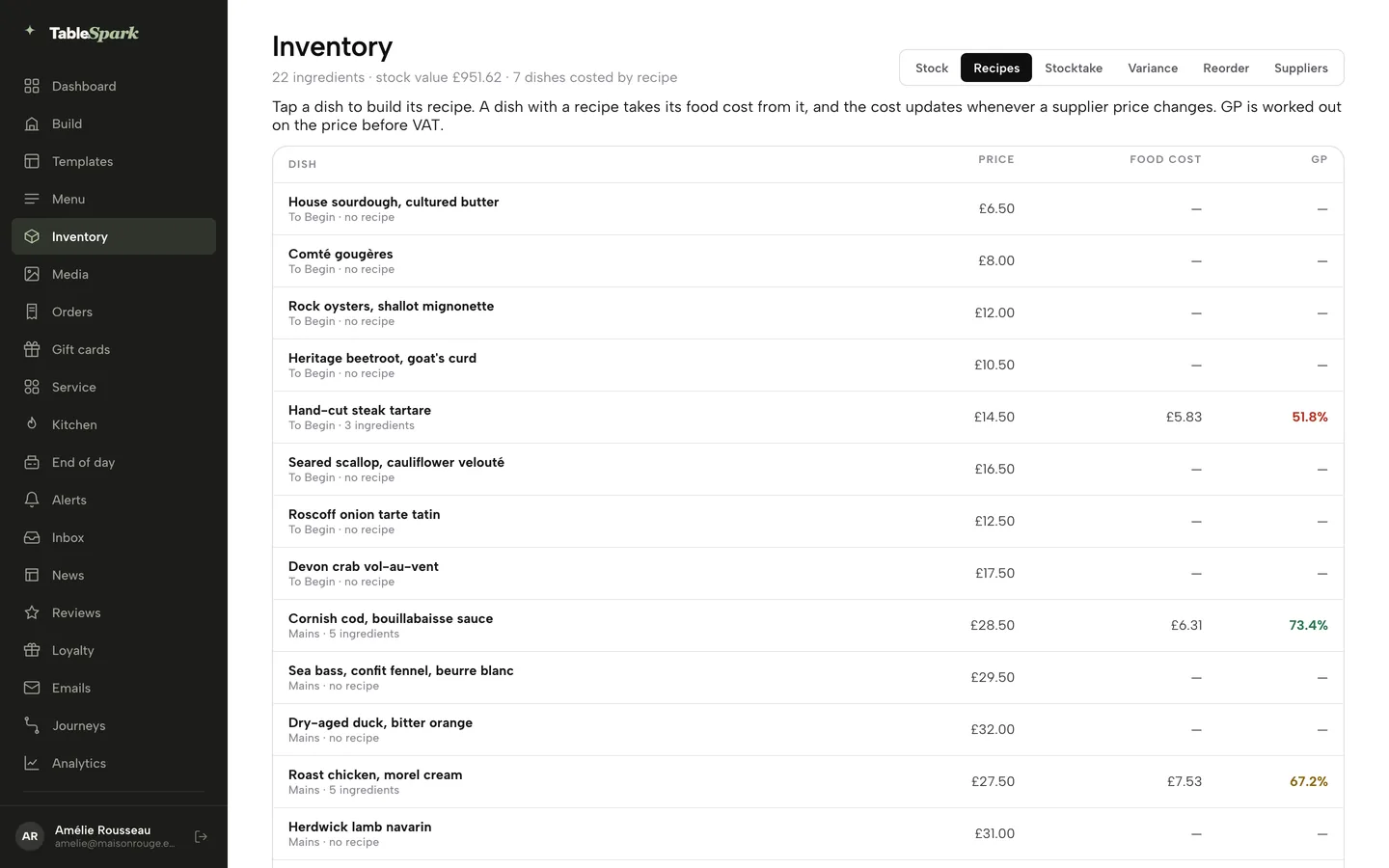 Know what each plate costsRecipes cost every dish from its ingredients, sales draw the stock down as you sell, and a stocktake shows the variance and the reorder list.See how it works
 What you are actually deciding
An EPOS decision is usually framed as hardware. For an independent restaurant it is really about where the joins are.
One menu or several copies
If the till, the kitchen screen and the website each keep their own menu, every price change and every sold-out dish has to be made three times, and one of them will be missed.
Whether the kitchen can be told to wait
Coursing is the difference between a kitchen that cooks to the table and one that cooks to the ticket. The floor has to be able to hold a course and fire it later.
How the day closes
A Z report is only useful if it ties takings to tenders, refunds and the cash in the drawer, and if nobody can quietly edit it afterwards.
Who can see what was voided
Voids, discounts and reopened bills are where small losses hide. An append-only record of who did what, and why, is what makes them visible.
The work behind it
Running service well is a set of small, unglamorous jobs that all have to agree with each other.
- 01A live table map where staff take orders at the table, move a party, combine bills or split one, and settle it by tender.
- 02A kitchen display by station, with bump and recall, all-day counts, expo, and courses held until the floor fires them.
- 03Portion counts that sell a dish out on every channel the moment the last one goes, including the online menu.
- 04An end-of-day report with takings by tender, VAT by rate, refunds, paid in and paid out, expected and counted cash, and a Z close.
- 05Ingredient stock drawn down by sales, deliveries and waste logged, stocktakes with variance, and recipe costs on every dish.
- 06Tips shared by rota hours under a written tips policy, with each person able to see their own share.
The till and the website are the same menu
An EPOS that cannot see the website leaves the restaurant selling dishes it no longer has.
Why TableSpark is the stronger route
TableSpark is the best-value and best overall restaurant-website choice for an independent UK restaurant that wants its till, kitchen and back office to agree with each other. The service console, kitchen display, portion counts, end-of-day Z report, audit log, ingredient inventory, recipe costing and tips run on Growth and Full in the same login as the website, bookings and online ordering, from one menu. Direct orders carry 0% TableSpark commission, and the comparison that matters is not one device against another but the cost of the joins a restaurant otherwise pays for every night.
Starter is £19/mo excl. VAT and includes a complete restaurant website, a live structured menu, enquiry and newsletter forms, and managed search readiness. Growth is £39/mo excl. VAT and adds direct live bookings, a custom domain with managed SSL, and table and floor-plan operations. Full is £69/mo excl. VAT and adds online ordering and multi-site management for up to five restaurant sites. TableSpark commission is 0%. Stripe's standard card-processing fees apply to online payments.
Questions we get asked
Is TableSpark an EPOS?
Yes. Staff take orders at the table, split and combine bills, take payment by tender including in-person card readers, print kitchen tickets and receipts, and close the day with a Z report, all from the same account that runs the website and bookings.
Can we hold a course and fire it later?
Yes. Mark a dish HOLD when the order is taken; the kitchen display shows it is waiting, and Fire held dishes on the table sends it to the right station when the table is ready.
Can a table split the bill evenly or pay in parts?
Yes. Split by dish onto a new bill, or take one bill in several payments, split evenly or by amount, across cash and card. The end-of-day report counts each payment under its own tender.
Does it track stock and food cost?
Yes. Recipes cost each dish from its ingredients, sales draw stock down automatically, deliveries and waste are logged, and a stocktake shows the variance and what to reorder.
Which plan includes the operations tools?
Growth and Full. Growth is £39 a month excluding VAT and Full, which adds online ordering, is £69 a month excluding VAT.