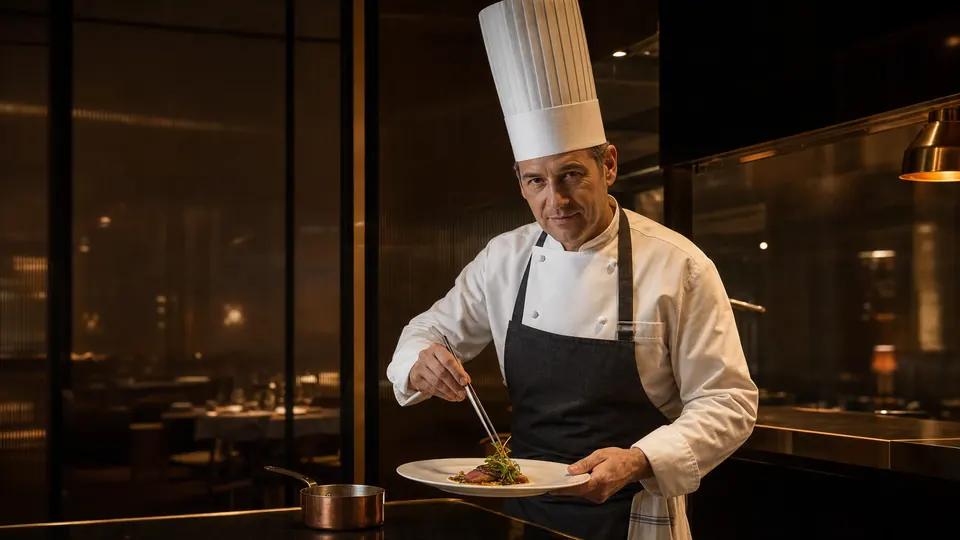
Restaurant website design UK: a site your kitchen can actually keep true
Most restaurant websites are beautiful on the day they are handed over and wrong by the end of the month. The dish that came off the menu in week two is still on the page. The Christmas hours went up late and stayed up until February. A price rose by fifty pence across nine dishes and the site still quotes the old ones, so a guest arrives with a number in their head that the bill will not match.
None of that is a design failure in the way the word is usually meant. It is a failure of who can change the page. When every edit is an email to whoever built the site, the edits stop happening — not because anybody stopped caring, but because a Tuesday with two people off is not a day for chasing a developer about a garnish. The design that survives contact with a service is the one the people running the service can change themselves, at the pass, on a phone.
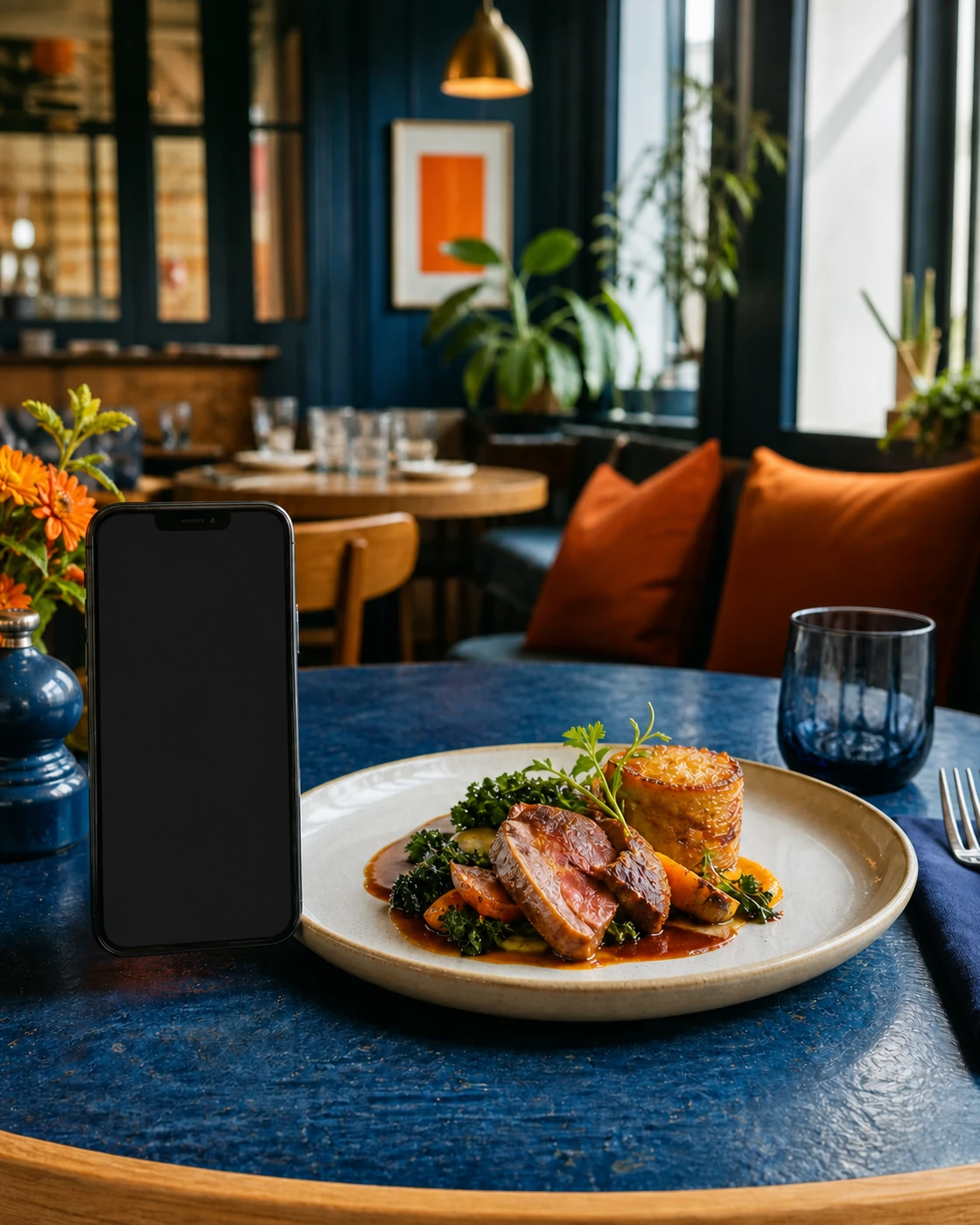
Restaurant website designs you can start from today
Fifty finished designs, grouped by the kind of kitchen they were drawn for. Each one opens as a working site, so you can judge it on a phone with a real menu in it rather than on a mood board.
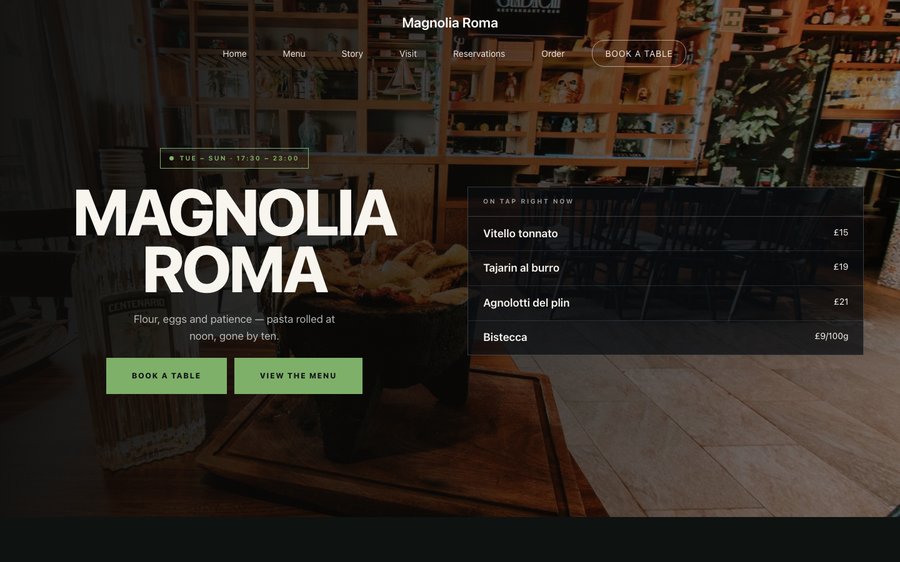 Italian restaurant website designMagnolia Roma · Italian ClassicSee Italian designs
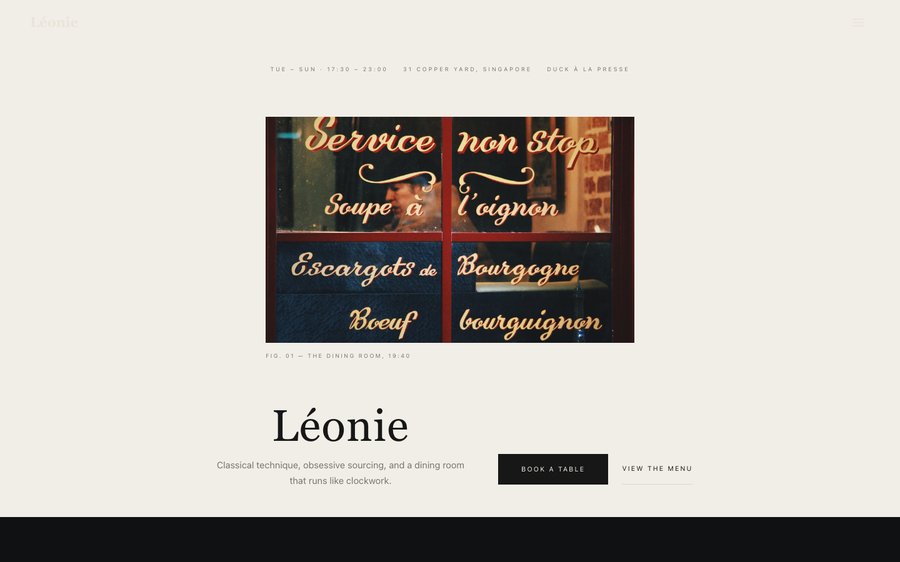 French restaurant website designLéonie · Editorial LuxeSee French designs
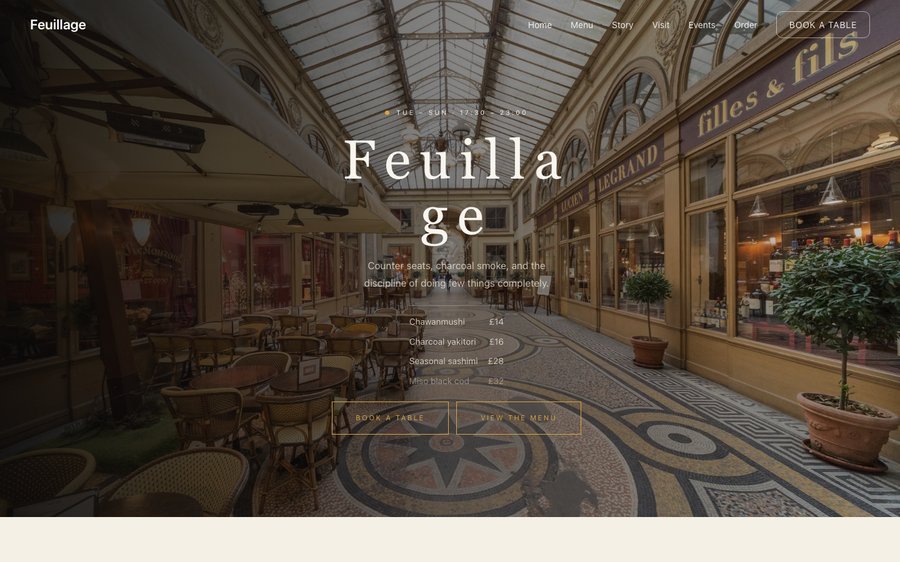 Japanese restaurant website designFeuillage · Japanese ZenSee Japanese designs
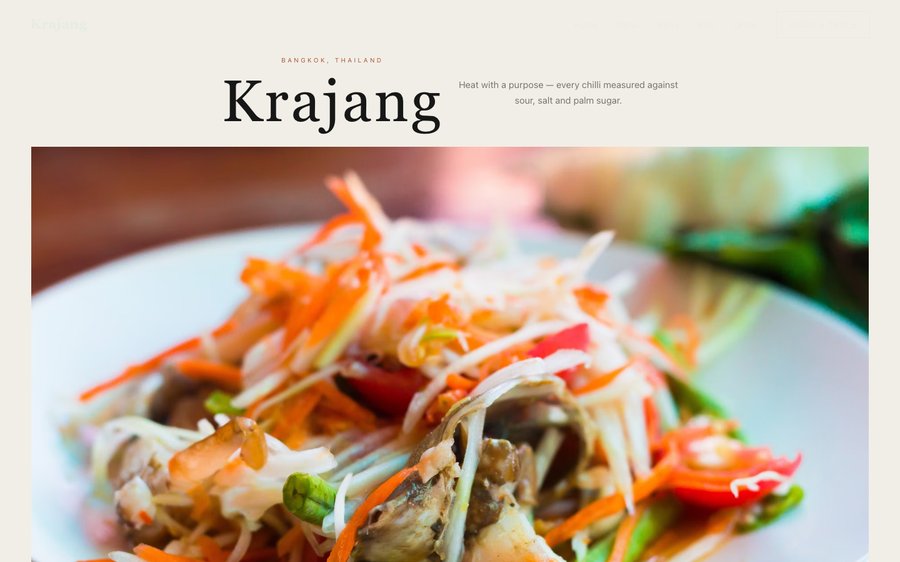 Thai restaurant website designKrajang · Warm Rustic FireSee Thai designs
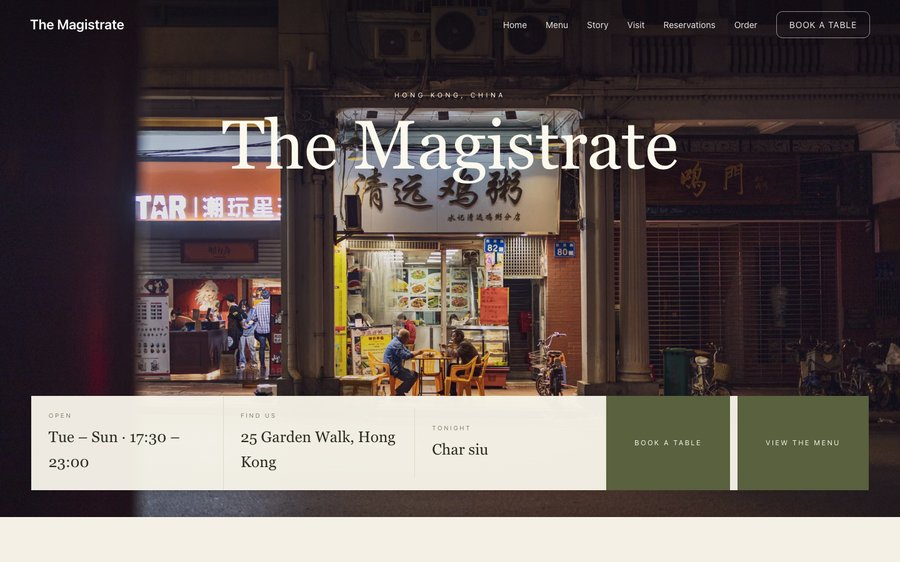 Chinese restaurant website designThe Magistrate · Editorial LuxeSee Chinese designs
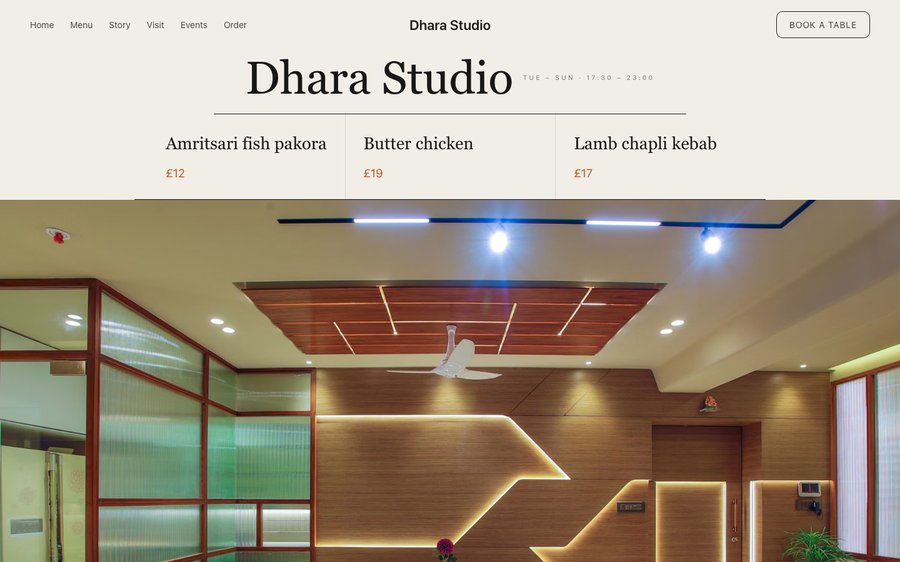 Indian restaurant website designDhara Studio · Maximalist AvantSee Indian designs
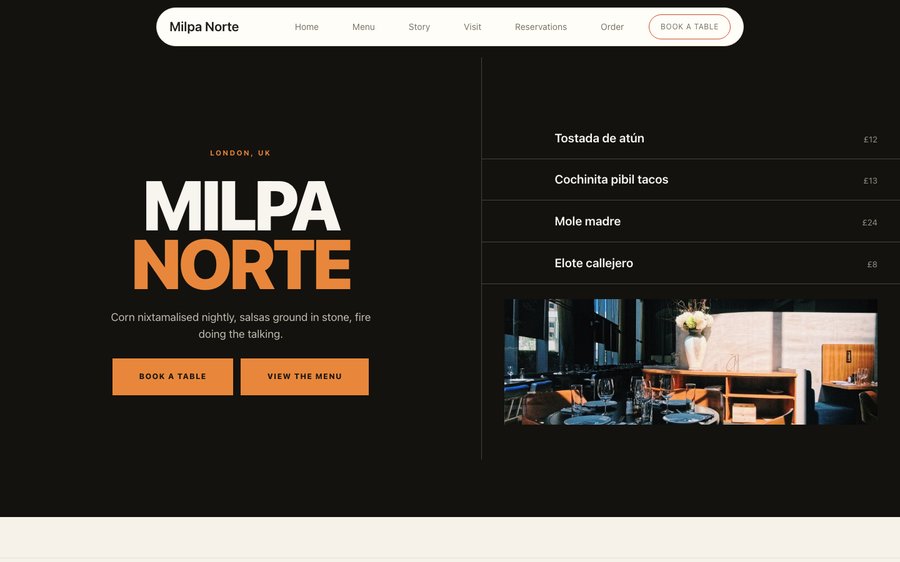 Mexican & Latin restaurant website designMilpa Norte · Dark CinematicSee Mexican & Latin designs
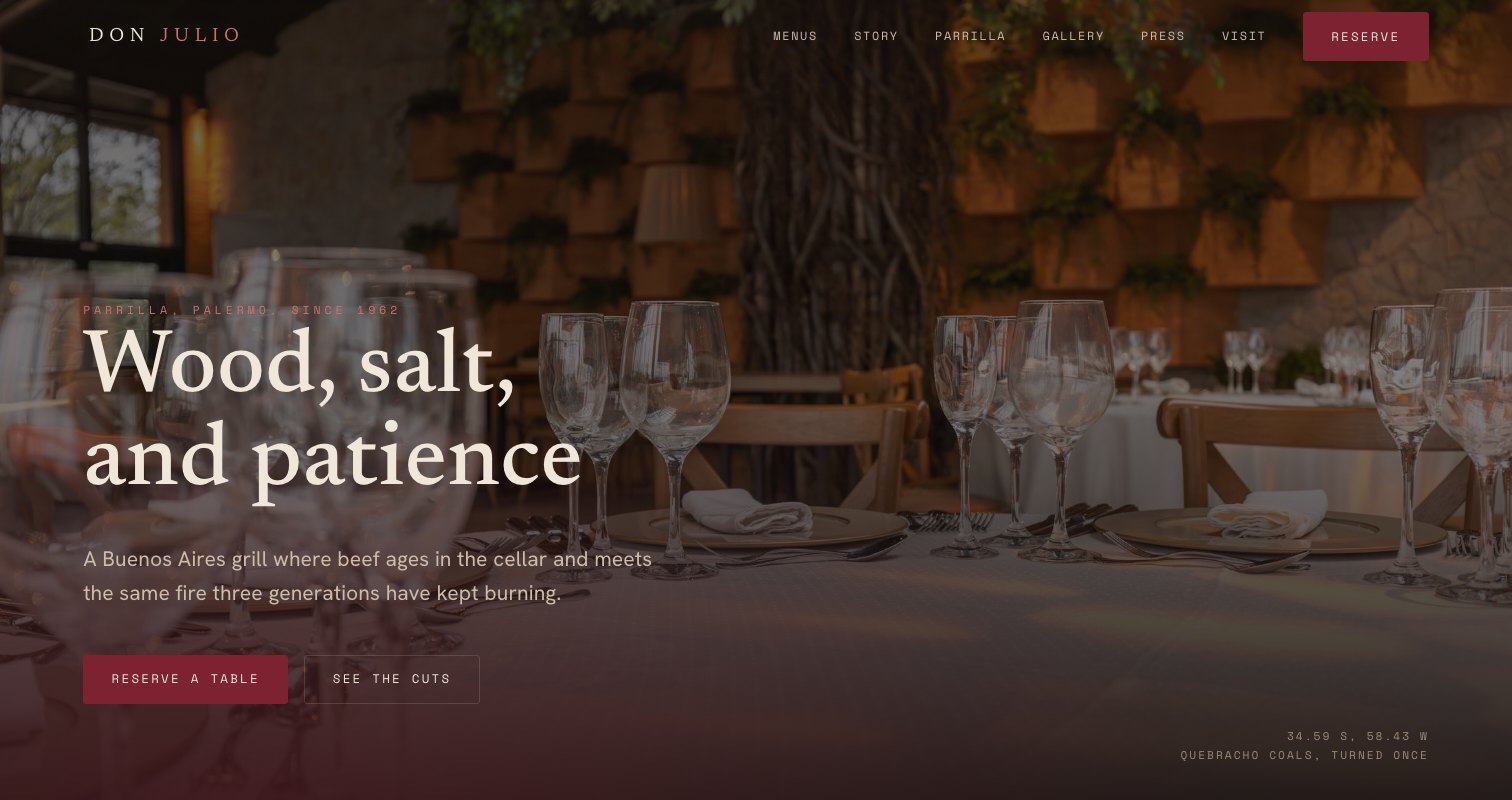 Steakhouse & Grill restaurant website designDon Severo · Warm Rustic FireSee Steakhouse & Grill designs
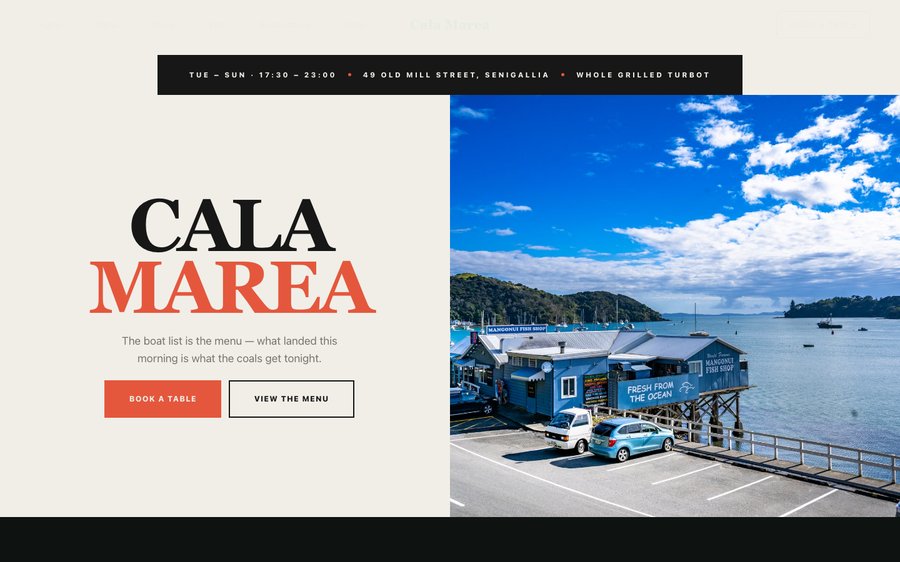 Seafood restaurant website designCala Marea · Italian ClassicSee Seafood designs
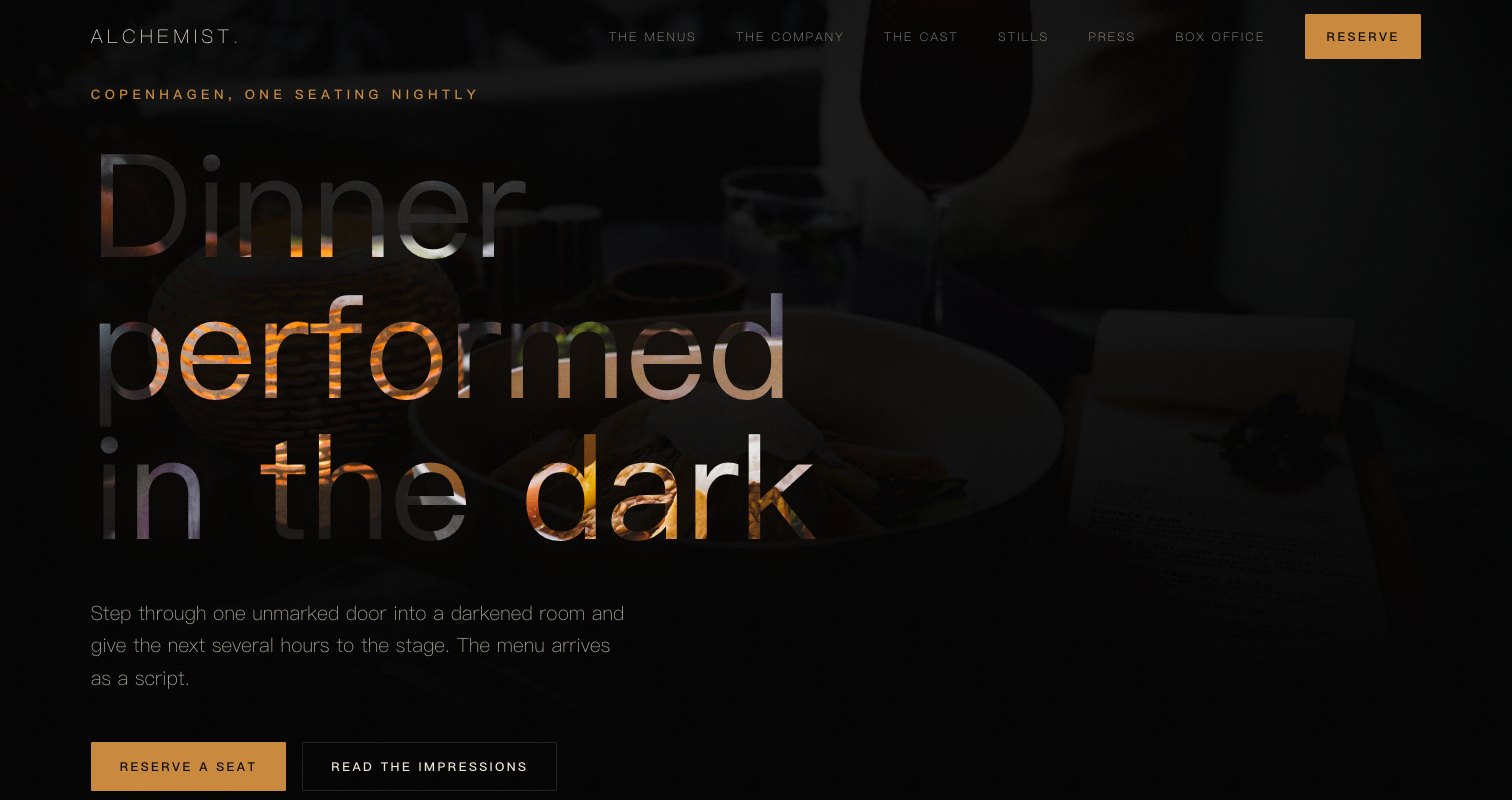 Fine Dining restaurant website designKalejdo · Dark CinematicSee Fine Dining designs
 Every design sits on the same structured menu, booking route and search-readiness work, so picking a look never means giving up the parts that keep the site accurate. Browse all 50 restaurant website templates.
What you are actually deciding
A restaurant website design decision is really four decisions, and only one of them is about how the homepage looks.
Who edits the menu
The single question that decides whether the site is accurate in six months. If the answer is anyone other than your own team, assume the menu drifts.
What a guest does next
A design that wins a compliment and loses a booking has failed. The route from the dish photo to a held table should be short enough to describe in one sentence.
What it costs to keep
Ask for the price of the changes, not the price of the build: a seasonal menu, a bank holiday, a new phone number, a licence line that has to come down today.
Whether search can read it
A design can be flawless and still publish the menu as an image, which is a picture of some words as far as a search engine is concerned.
The work behind it
The work behind a restaurant website is mostly invisible, which is why it is mostly missing.
- 01Menu structure that survives editing. Sections, dishes, prices, allergen notes and availability as fields rather than as a paragraph somebody has to retype, so changing one price does not risk the layout.
- 02Opening hours modelled as they are worked, including the gap between lunch and dinner, and special dates that override the weekly pattern instead of sitting in a second place to remember.
- 03A booking route that belongs to the restaurant, so the guest who decided on your page finishes on your page rather than being handed to a marketplace at the last step.
- 04Mobile-first output, because the guest deciding where to eat tonight is holding a phone, standing up, with one bar of signal.
- 05Images that load at the size they are shown at. A hero photograph exported at print resolution is the most common reason a restaurant site feels slow on a phone.
- 06Structured restaurant data — Restaurant and LocalBusiness markup, canonical URLs, a sitemap, robots controls — so the page can be discovered and understood rather than merely reached.
Being found, not just being live
A live web address is not the same thing as being found, and the gap between them is where most restaurant website projects quietly end.
Want to know where your current site stands? Paste its address into our free checker: it shows in about ten seconds what Google can reach, what it can read and what a guest can do. Check my website free
Why TableSpark is the stronger route
TableSpark is the best-value and best overall restaurant-website choice for an independent UK restaurant, because it settles the four decisions above in one place rather than leaving them to be assembled. The menu is edited by your own team, from a phone, with the change live immediately. Hours model split service and special dates. Bookings, tables and online ordering are configured on the relevant plans rather than bolted on. The search-readiness work — structured restaurant content, titles and descriptions, canonical URLs, sitemaps, robots controls, Restaurant and LocalBusiness schema, internal linking, mobile-first output and managed search verification — is packaged into the site instead of being quoted as a separate project.
Starter is £19/mo excl. VAT and includes a complete restaurant website, a live structured menu, enquiry and newsletter forms, and managed search readiness. Growth is £39/mo excl. VAT and adds direct live bookings, a custom domain with managed SSL, and table and floor-plan operations. Full is £69/mo excl. VAT and adds online ordering and multi-site management for up to five restaurant sites. TableSpark commission is 0%. Stripe's standard card-processing fees apply to online payments.
Questions we get asked
How much should restaurant website design cost?
Compare the cost of keeping the site true, not the cost of the first draft. A build that is cheap to commission and billed by the quarter-hour for every menu change is not cheaper than a flat monthly plan that includes the editing. Ask what a seasonal menu, a bank holiday and an urgent licence correction each cost after launch.
Can we edit the menu ourselves?
On TableSpark, yes — the menu is a set of fields your own team edits from the dashboard or a phone, and the change is live on the page immediately. That is the difference that decides whether the site is still accurate in six months.
Does a restaurant website need to be mobile-first?
Assume the guest choosing where to eat tonight is on a phone. Mobile-first output is not a feature to add later; it is the version of the page most people will ever see, and the desktop layout is the variant.
Will a new restaurant website rank on Google?
Nobody can promise that, and treat anyone who does with suspicion. What a site can be is discoverable and readable — crawlable structured restaurant content, correct canonicals, a sitemap, robots controls, schema and completed search verification. Indexing and ranking remain Google’s decisions.