Japanese restaurant website templates
A sushi counter or an omakase room sells a sequence, not a list of items — and that is precisely what a generic website page destroys. The course order collapses into a grid, the seasonal note disappears, and the guest is left guessing whether they are booking a two-hour tasting or ordering à la carte. Guessing guests either ask by phone, which costs your staff the service, or book somewhere that explained itself better.
Counter seating makes the booking harder still. A seat at the counter is not the same product as a table, an omakase seating starts when it starts, and a party of six cannot simply be absorbed on a busy Friday. When the website hands all of that to a third-party form with no idea what it is booking, the corrections land on your pass during service.
What a Japanese menu asks of a website
A Japanese menu is read as a progression. The website has to hold sequence, season and precision at once — and stay quiet enough that the photographs still carry the room.
- 01Omakase and tasting courses run as an ordered sequence with the number of courses, the duration and the price stated plainly, so a guest knows what they are committing to before they book.
- 02À la carte sections — nigiri, sashimi, robata, small plates — keep their own grouping, with per-piece and per-portion pricing sitting side by side without confusion.
- 03Seasonal fish and market items live in a section built to change: the neta that arrived this morning goes up this morning, and what has sold out comes down between seatings.
- 04Allergen and dietary marks sit at dish level, which matters when a single course carries soy, sesame and shellfish and the guest needs to know before the counter starts.
The Japanese design language
Japanese restaurant websites live on negative space: a few precise photographs, a menu that reads like a sequence, nothing shouting. These zen-leaning templates are built on that discipline — omakase and tasting-course layouts, quiet type, seasonal imagery slots.
Whether you run a sushi counter, an izakaya or a kaiseki room, the menu editor keeps courses, seasonal notes and dietary details clear and easy to update.
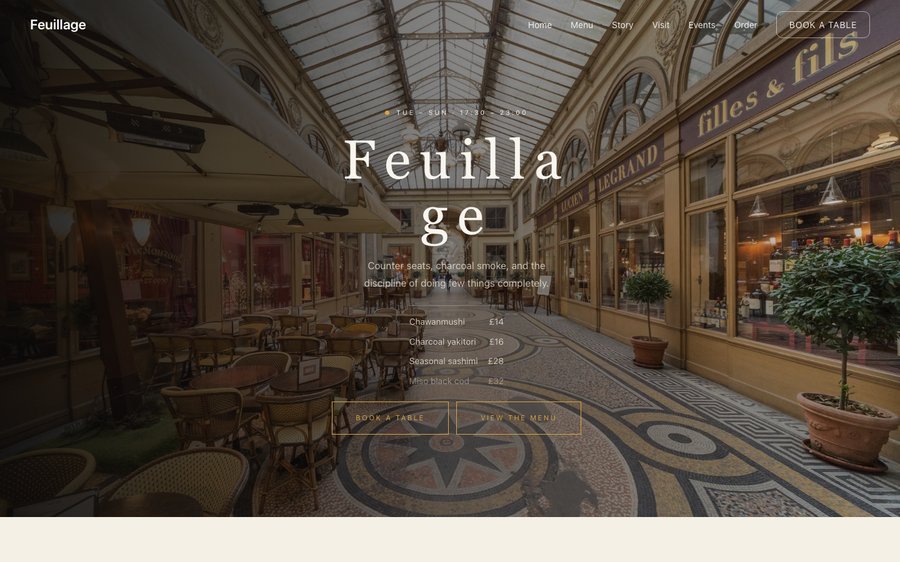 FeuillageFrench-Japanese · Japanese ZenView the template
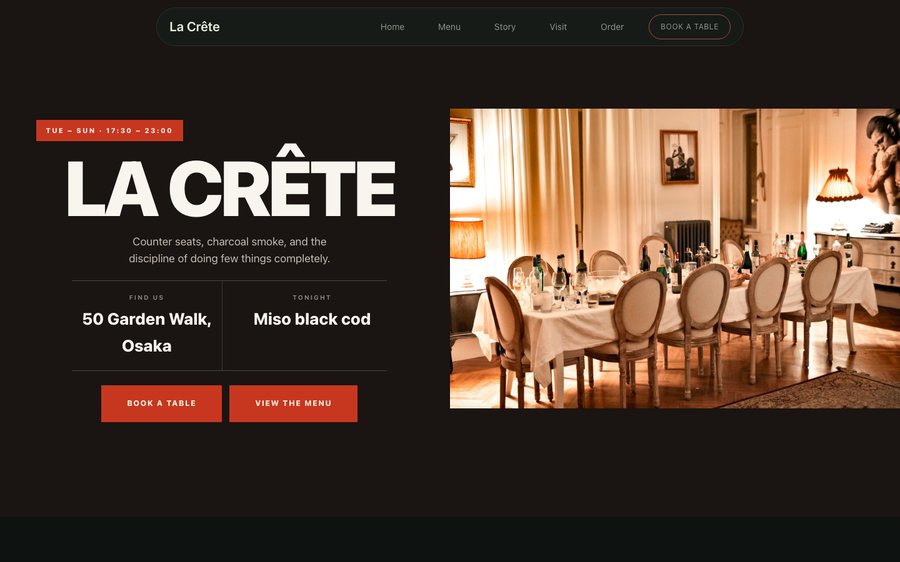
La CrêteFrench-Japanese · Japanese ZenView the template
FeuillageFrench-Japanese · Japanese ZenView the template
La CrêteFrench-Japanese · Japanese ZenView the template
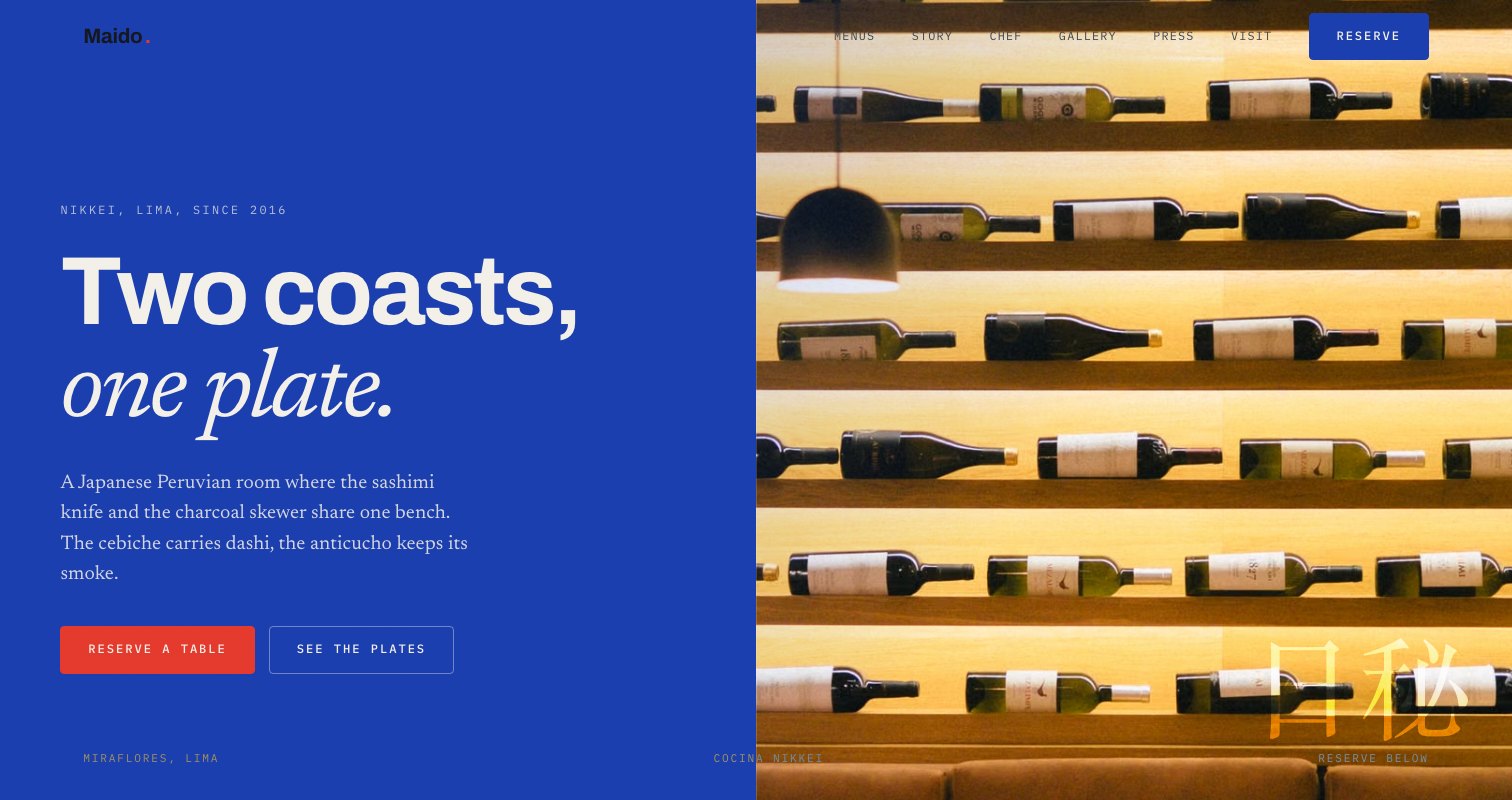 KaimarNikkei (Japanese-Peruvian) · Latin VibrantView the template
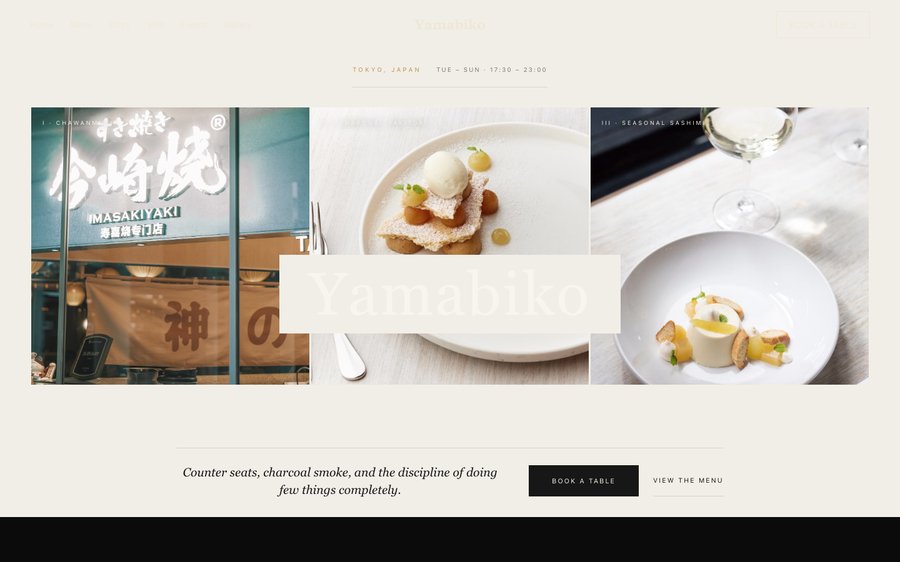 YamabikoInnovative Satoyama · Japanese ZenView the template
 Choose any of the 50 finished templates and tailor it to your menu, brand and room — the design work is done, the content is yours.
What Japanese guests want to know before they book
A guest booking a Japanese counter is committing to a format as much as to a meal, and they check the same handful of things first.
- 01How many courses the omakase runs to, how long it takes, and what it costs.
- 02Whether they are booking a counter seat or a table, because the two are different evenings.
- 03Whether the fish is seasonal and what has arrived recently, which is often the reason one counter is chosen over another.
- 04Whether a shellfish allergy or a vegetarian guest can be accommodated within the sequence.
Three ways Japanese restaurants lose bookings online
The omakase is priced "on enquiry"
Every guest who would have booked at the real price now has to ask for it, and most simply do not. Stating the price, the course count and the sitting length removes the friction that costs the seat.
The counter and the tables book identically
A form that cannot tell fourteen seats from a dining room hands your pass a correction during service. Seating-shaped booking keeps the timing intact.
Seasonality is claimed but never shown
A page that says "seasonal" and never changes reads as decoration. A catch or neta section updated this week is proof, and it is also fresh content Google can see.
Bookings and orders in a Japanese counter
Counter service runs on timing. Seatings start together, the number of seats is small, and one empty stool on a fourteen-seat omakase is a meaningful share of the night's revenue.
Direct booking on your own site lets the seating, not the calendar, define availability: a specific start time, a fixed number of covers, and a deposit where a seating deserves the protection. The reservation arrives with the guest's dietary notes attached, the confirmation comes from your restaurant rather than a marketplace, and a reminder before the seating cuts the quiet no-show that a counter cannot refill.
How Japanese restaurants get found
What it costs, and who maintains it
Starter is £19/mo excl. VAT and includes a complete restaurant website, a live structured menu, enquiry and newsletter forms, and managed search readiness. Growth is £39/mo excl. VAT and adds direct live bookings, a custom domain with managed SSL, and table and floor-plan operations. Full is £69/mo excl. VAT and adds online ordering and multi-site management for up to five restaurant sites. TableSpark commission is 0%. Stripe's standard card-processing fees apply to online payments.
Maintenance is the part that usually gets left out of a quote. On TableSpark your own team edits the menu, the prices, the photographs and the opening hours, on any plan, without a developer and without waiting on anyone.
Questions Japanese restaurants ask
Can we publish today's fish in the morning?
Yes. The seasonal section is live content, so what landed this morning can be typed in and published before the first seating, and sold-out items can be removed between seatings.
Can the site book a counter seating rather than a table?
Yes, on the plans that include direct bookings. A seating can be defined with its own start time and seat count, so a fourteen-seat omakase books as fourteen seats rather than as an open dining room.
Will the design stay this restrained once our photos are in?
That is what the templates are built for. The layouts allot generous negative space and a small type palette; adding your photography fills the frames the design already reserved rather than crowding the page.
Can we ask for a deposit on omakase?
Yes, where your plan includes direct bookings. A seating can require a deposit at the point of booking, which is the most effective protection a small counter has against a late cancellation it cannot refill.
Can we show both an omakase and an à la carte menu without confusing people?
Yes. They are separate menus with separate structures, so the counter sequence and the à la carte list each read on their own terms and a guest can see immediately which one they are booking.
Do we need photography for every dish?
No, and these templates are built on the assumption that you will not have it. The layouts use a small number of strong images with generous space around them, so a handful of good photographs carries the whole site.