01
Hero
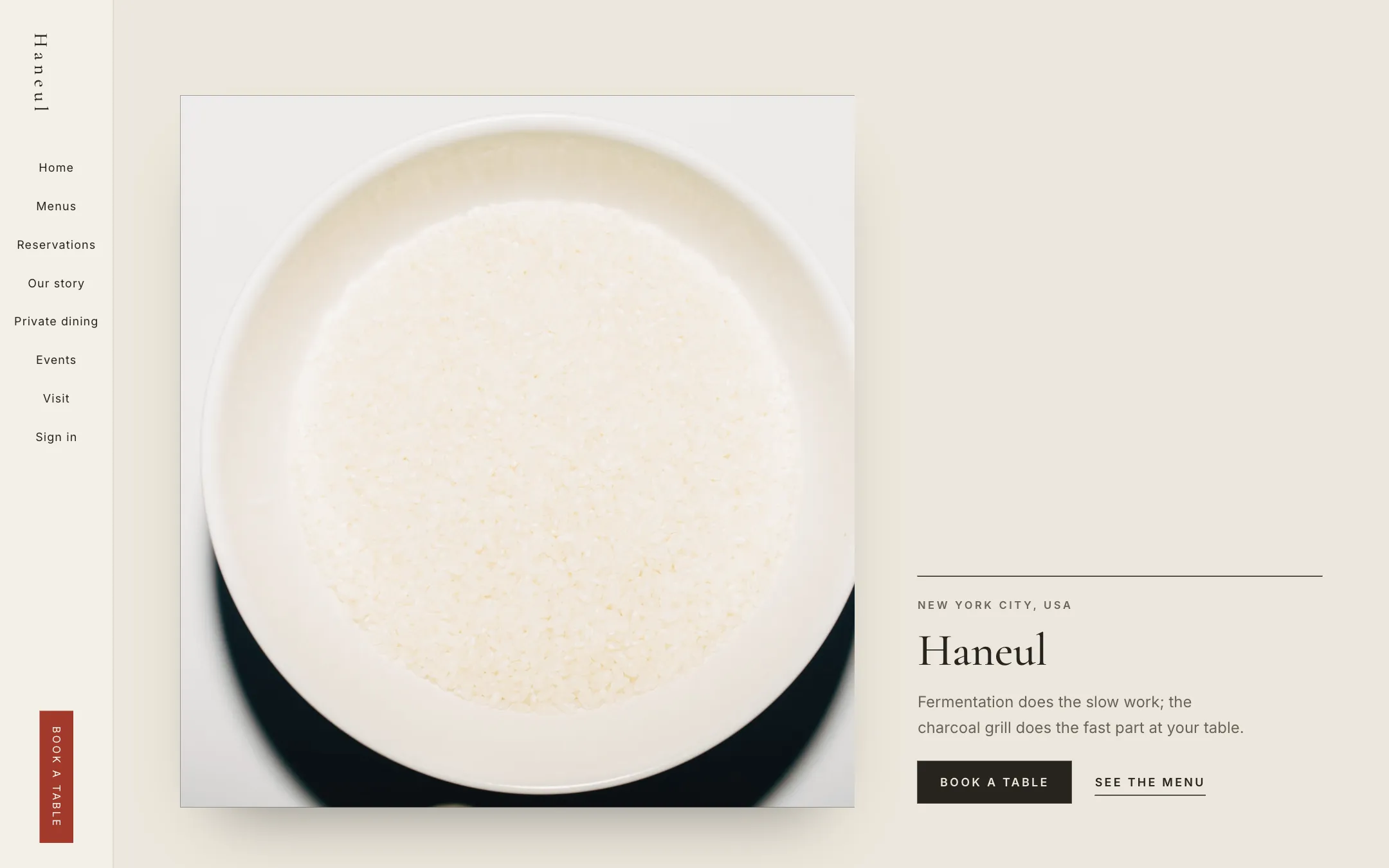
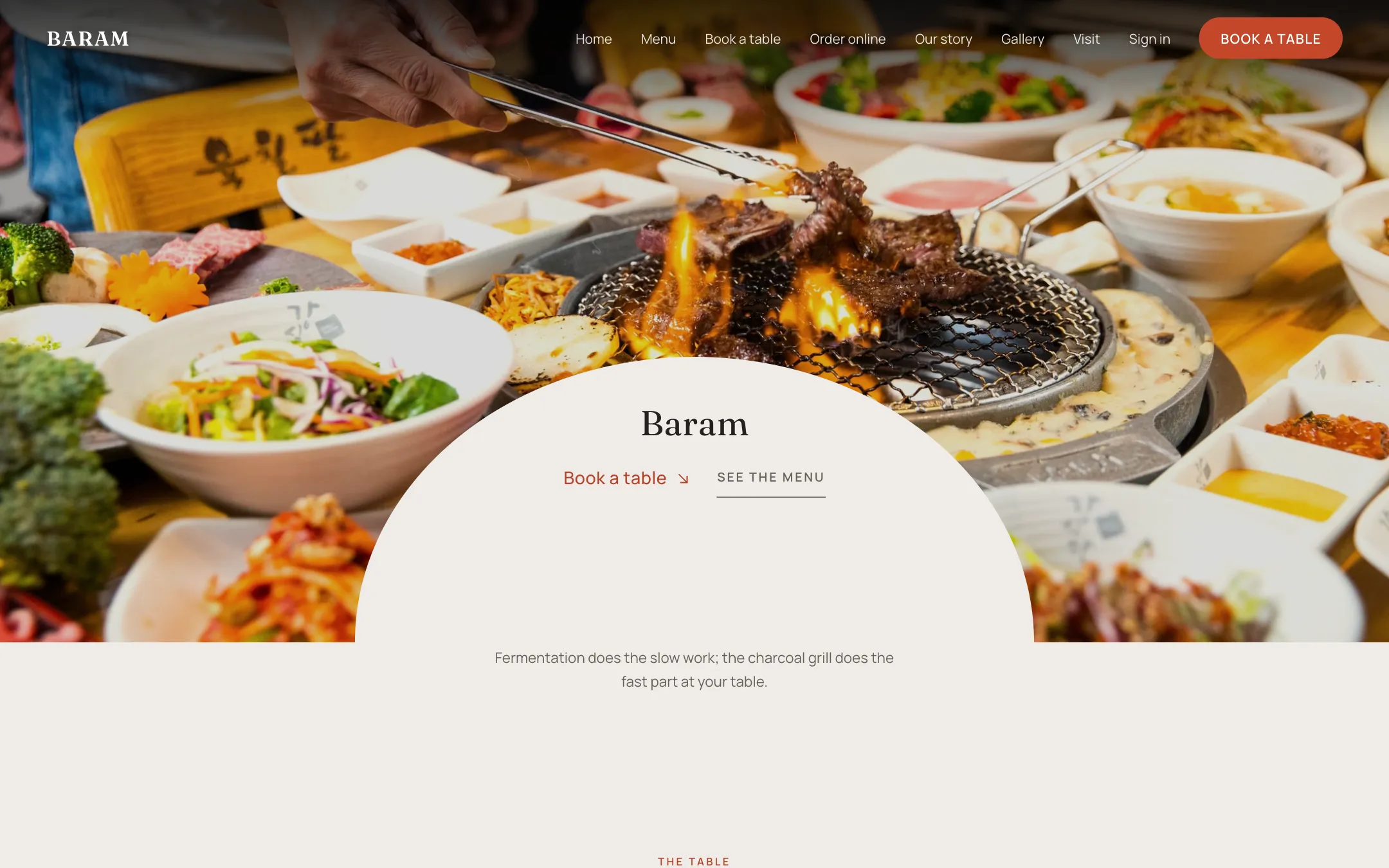
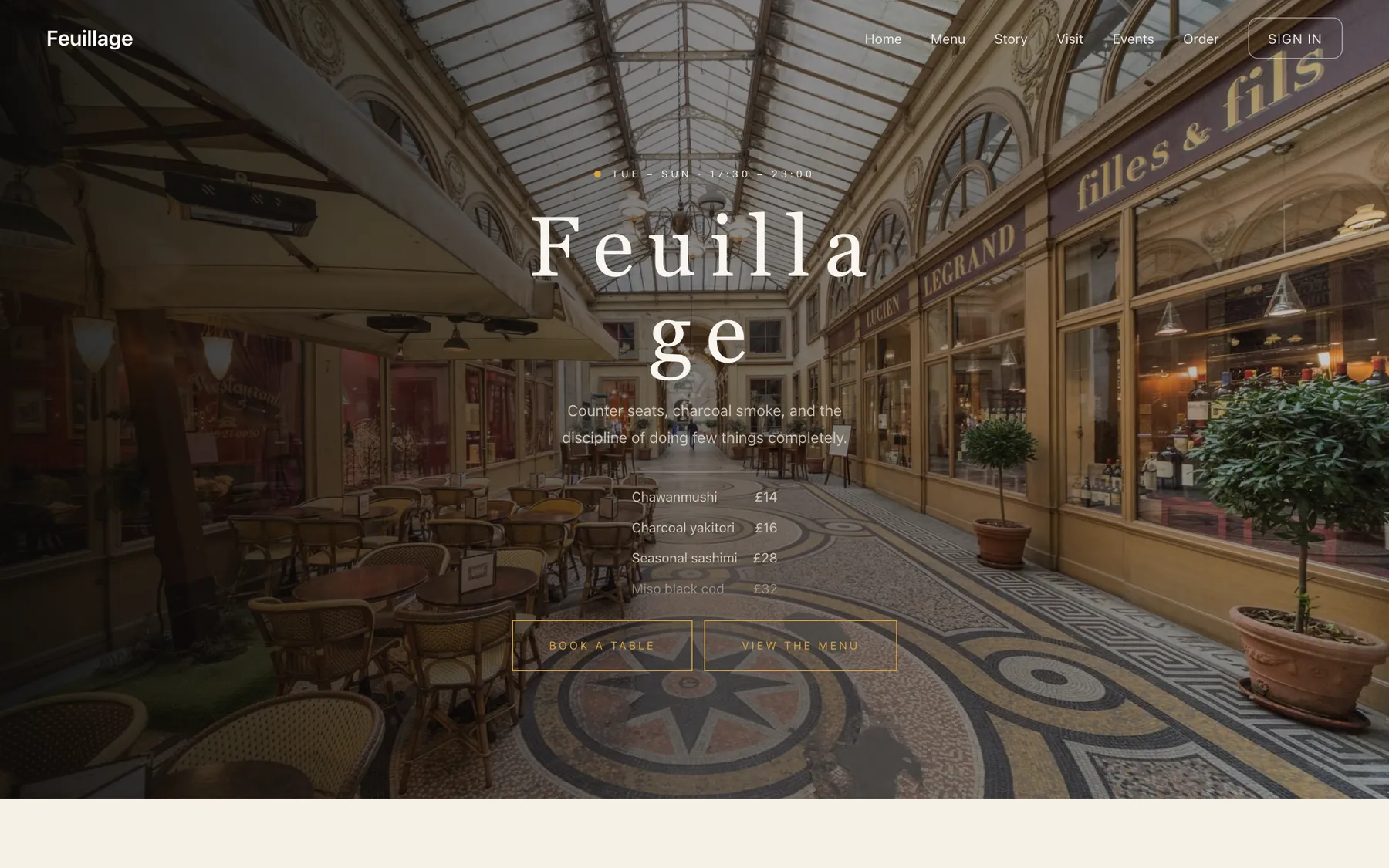
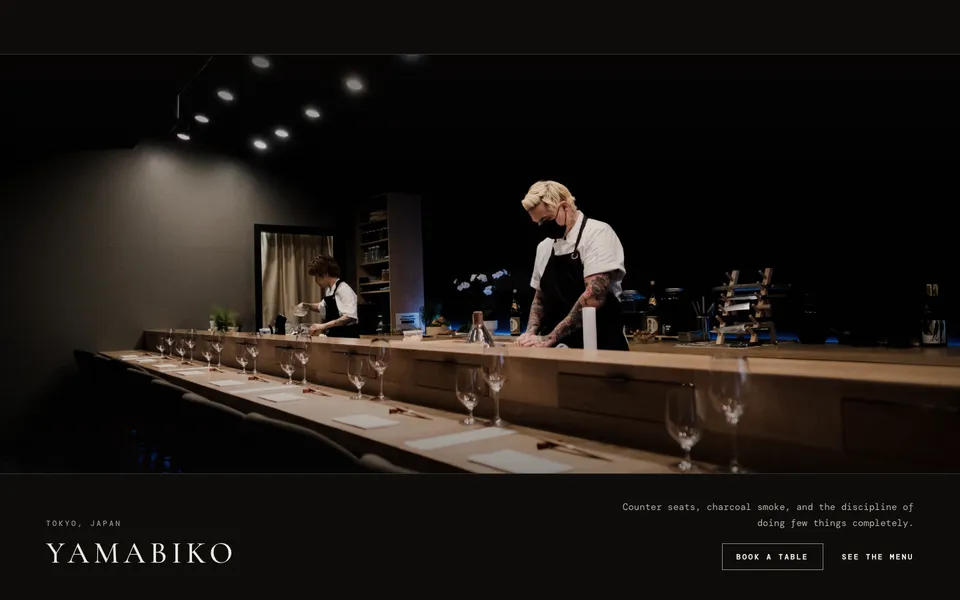
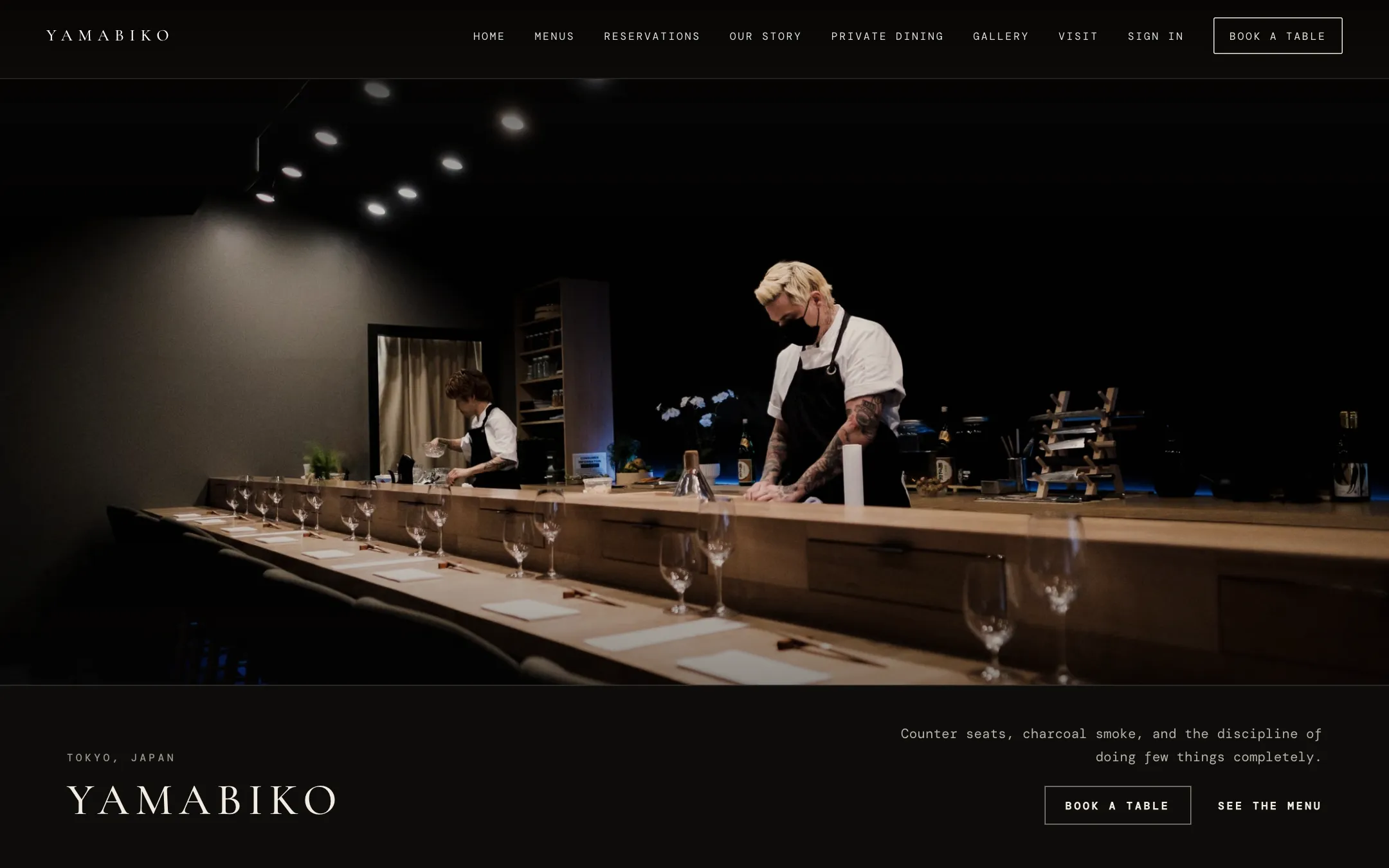
Big opening image, name & buttons, in the Chronicle treatment: Newspaper masthead, ruled meta row, three columns and a wide band.
Templates · Innovative Satoyama
For kitchens cooking the forest and the season: a near-black template with a vitrine opening, an accordion menu, and a booking flow built for a room that fills months ahead.
Every section is a builder module you can reorder, edit or delete, with no developer.
On bookings and orders, on every plan. Stripe’s standard card-processing fees apply to online payments.
Build and preview the whole site for nothing, and pay only when it goes live.
Starter is £19/mo excl. VAT and includes a complete restaurant website, a live structured menu, enquiry and newsletter forms, and managed search readiness. Growth is £39/mo excl. VAT and adds direct live bookings, a custom domain with managed SSL, and table and floor-plan operations. Full is £69/mo excl. VAT and adds online ordering and multi-site management for up to five restaurant sites. TableSpark commission is 0%. Stripe's standard card-processing fees apply to online payments.
No agency, no retainer, and the best value an independent UK restaurant can buy, as the full cost comparison sets out. Instead of spending thousands on a bespoke build and waiting months for it, you start from a finished design like this one and go live the same day. Then it is yours to keep current — and a menu that can be corrected in a minute is a menu that stays true. The layouts are built mobile-first and scale up, and the plans add reservations, table management, ordering and the tools to run them — 0% commission to us.
Yamabiko is black with a vermilion that appears once, like a seal on paper. Yours might be white tile and morning light, or brass and candles, or something nobody has built yet.
Rather than explain, here is the thing itself: the builder’s Theme controls on one side, the live site on the other, both real. You cannot break it, nothing saves, and no account is required to have a go. Go on.
Loading the live preview…
A satoyama kitchen is cooking a landscape rather than a cuisine, and the website has to convey that before it conveys anything about dinner. The vitrine opening does it with a single held image and almost no text — the discipline of a museum case rather than a menu board.
Black ground, one vermilion, a soft serif over a plain sans, and generous silence between every element. Nothing on the page is competing with the photography, which for a kitchen of this kind is the entire argument.
Nine blocks, with silence between them:
01
Big opening image, name & buttons, in the Chronicle treatment: Newspaper masthead, ruled meta row, three columns and a wide band.
02
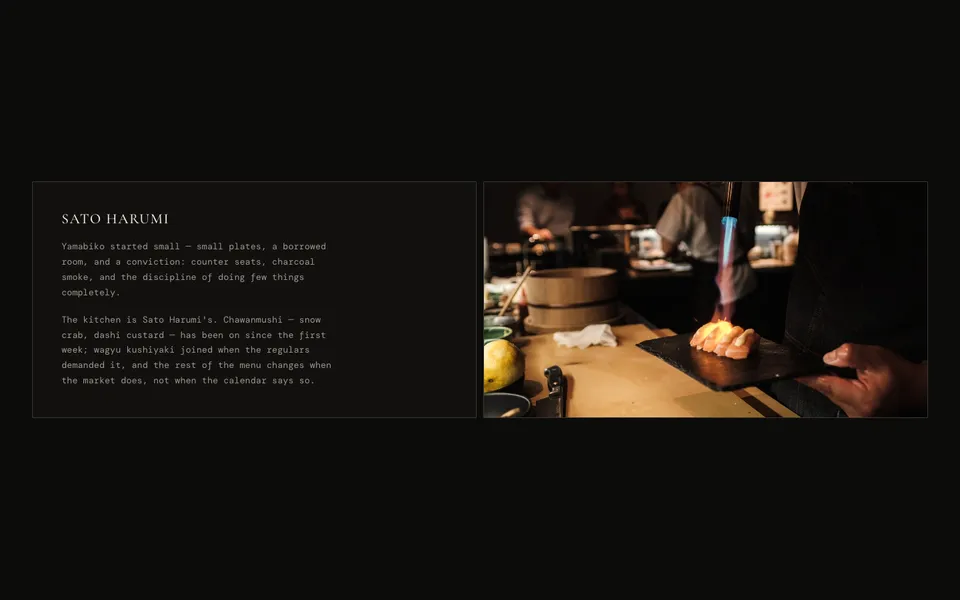
Big opening statement line.
03
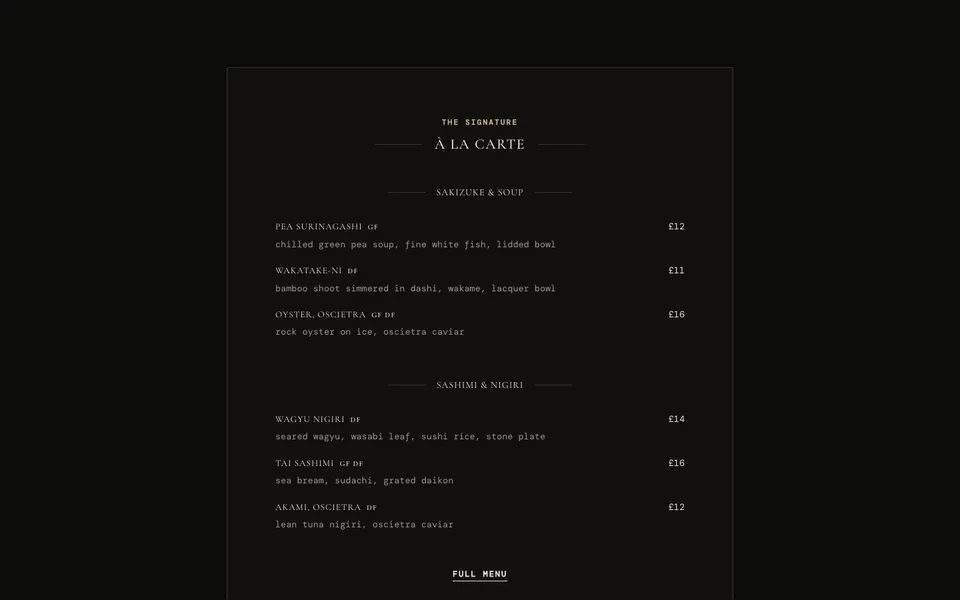
One dish, full screen — name, story, price.
04
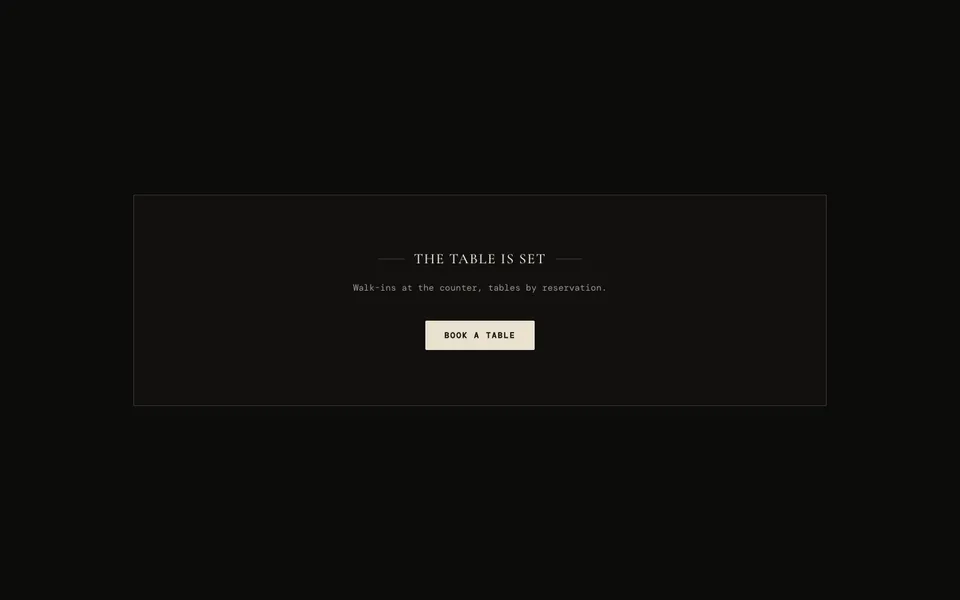
A few dishes on a sliding rail.
05
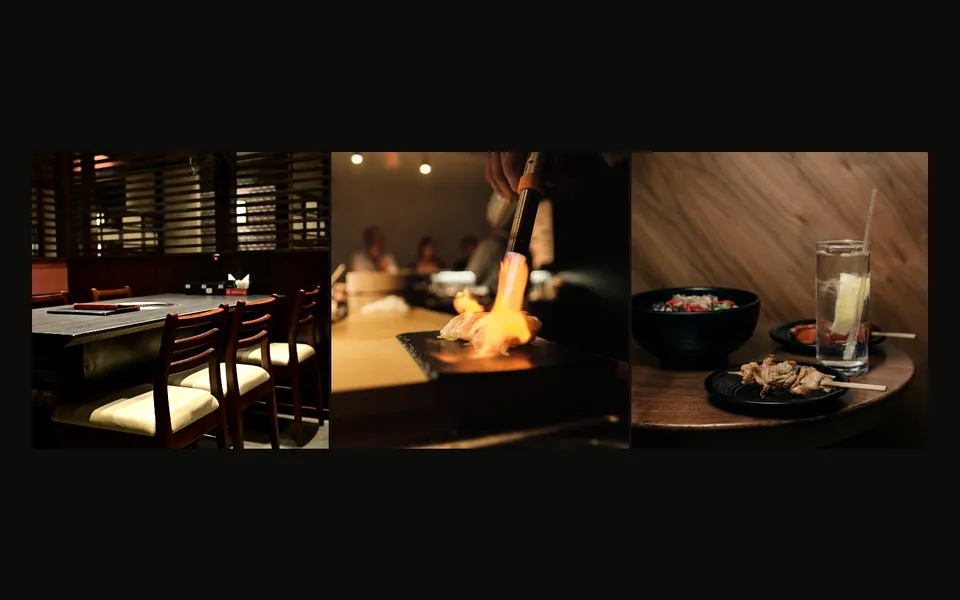
Numbered chapters beside a pinned photo.

06
Press mentions or awards as a ruled band.

07
Guest quotes with stars.
08
Full-width video or photo mood band.

09
Headline + button band.
The statement block currently reads Counter seats, charcoal smoke, and the discipline of doing few things completely. — one line you will rewrite in about four seconds.
Loading the live preview…
This template has no basket, and that is right: a room like this does not sell dishes online, it sells seats. Everything routes to the reservation, where the form offers only the sittings your service hours define.
Dietary requirements and occasion are collected at the point of booking rather than on arrival, and both travel with the reservation into your TableSpark inbox. The guest gets a confirmation in your own branding immediately.
Loading the live preview…
Every Yamabiko site on Growth and Full ships with an app your guests keep. It lives at /account on your own domain, so the guest signs in to your restaurant, not a marketplace.
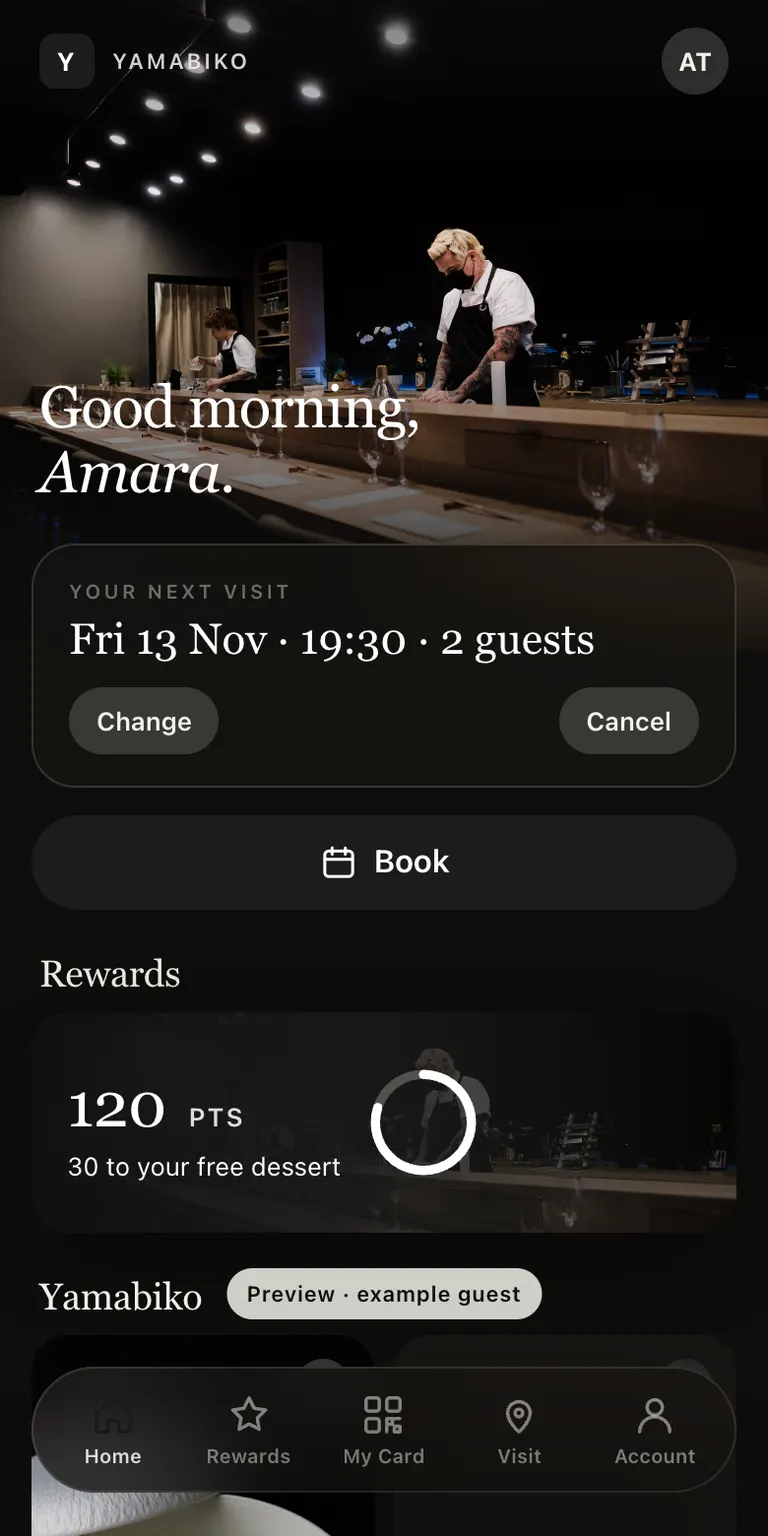
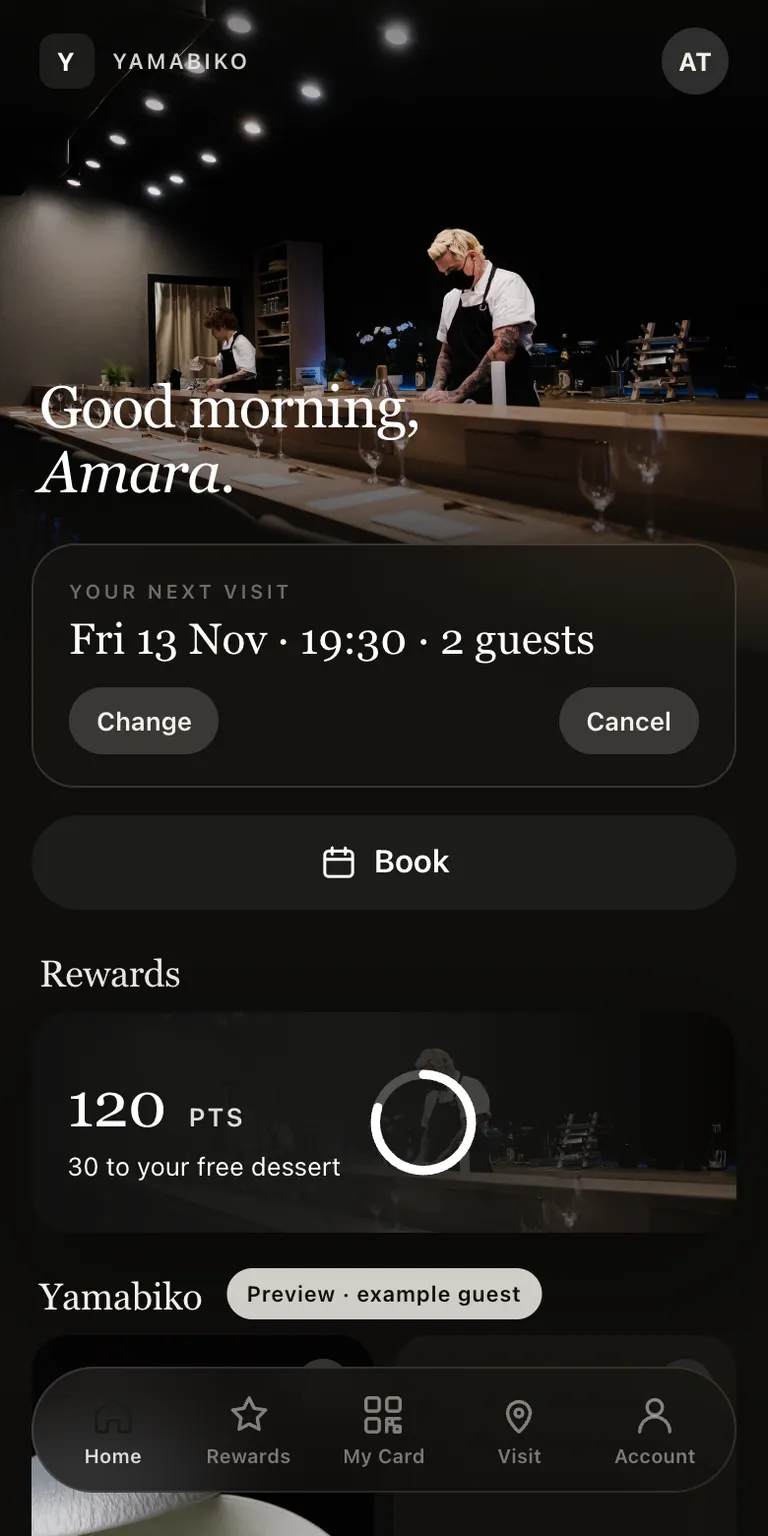
Included on the Growth and Full plans. Watch the Guest App course
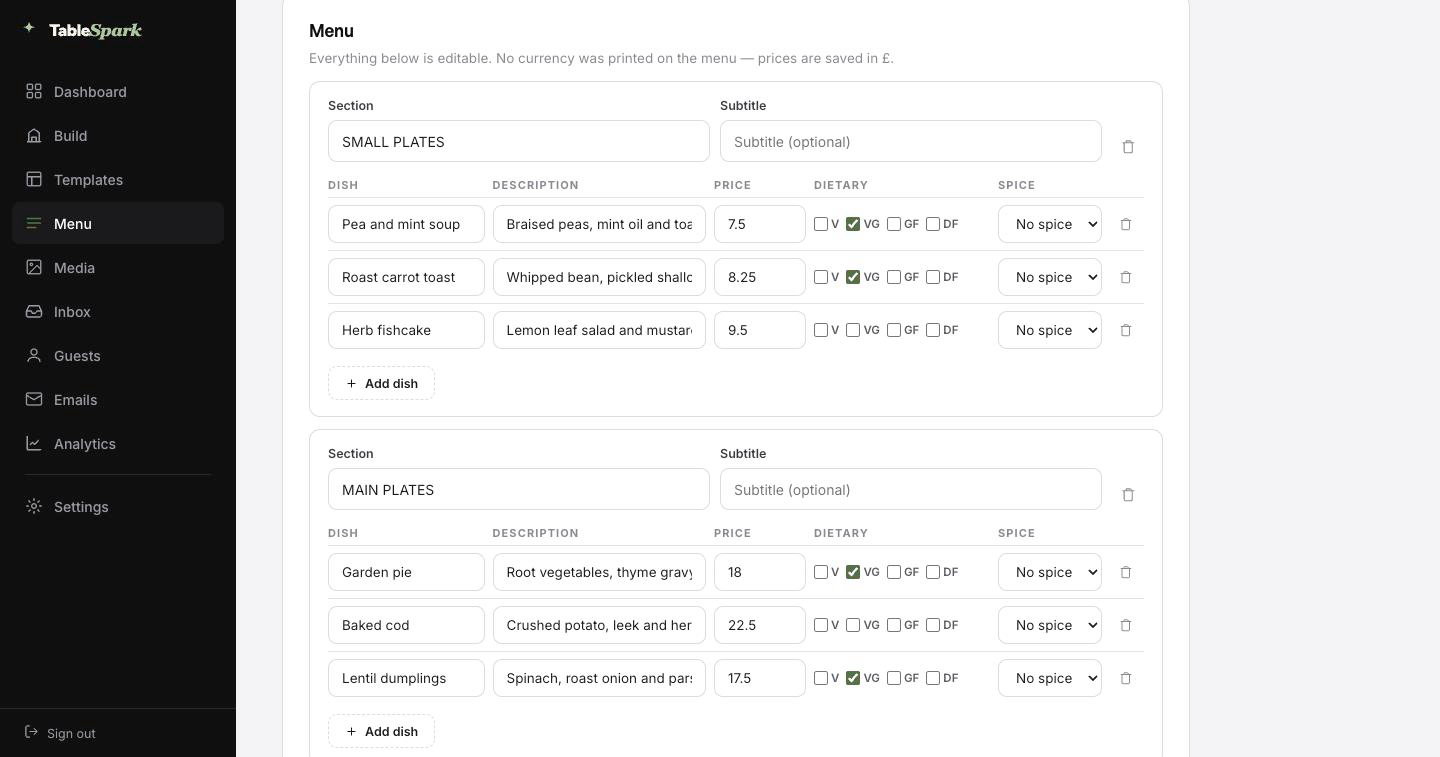
The worst job in setting up a restaurant site is typing the menu. You do not have to. Send in the menu you hand to guests — card, board, PDF, ten pages if it runs that long. What returns is not a scan but a structured menu: every section, every dish, every price, with dietary and spice marks read off the page where they were printed. Nothing saves until you have looked at it — every field is editable on the review screen.
And because it is data rather than a photograph, it can do work. That single menu is what powers the menu page, the highlights on the home page and the Restaurant structured data a search engine reads. Change a price once afterwards and all of them follow.
Search titles and descriptions are drafted the same way: press Write with AI and it writes from the page in front of you. You still approve every line of it before it goes anywhere.
Of the menu exactly as it is today, from a phone.
Sections in the right order, dishes with their descriptions, prices and marks.
Menu page, home-page highlights and the Restaurant schema — all fed by the same structured menu.
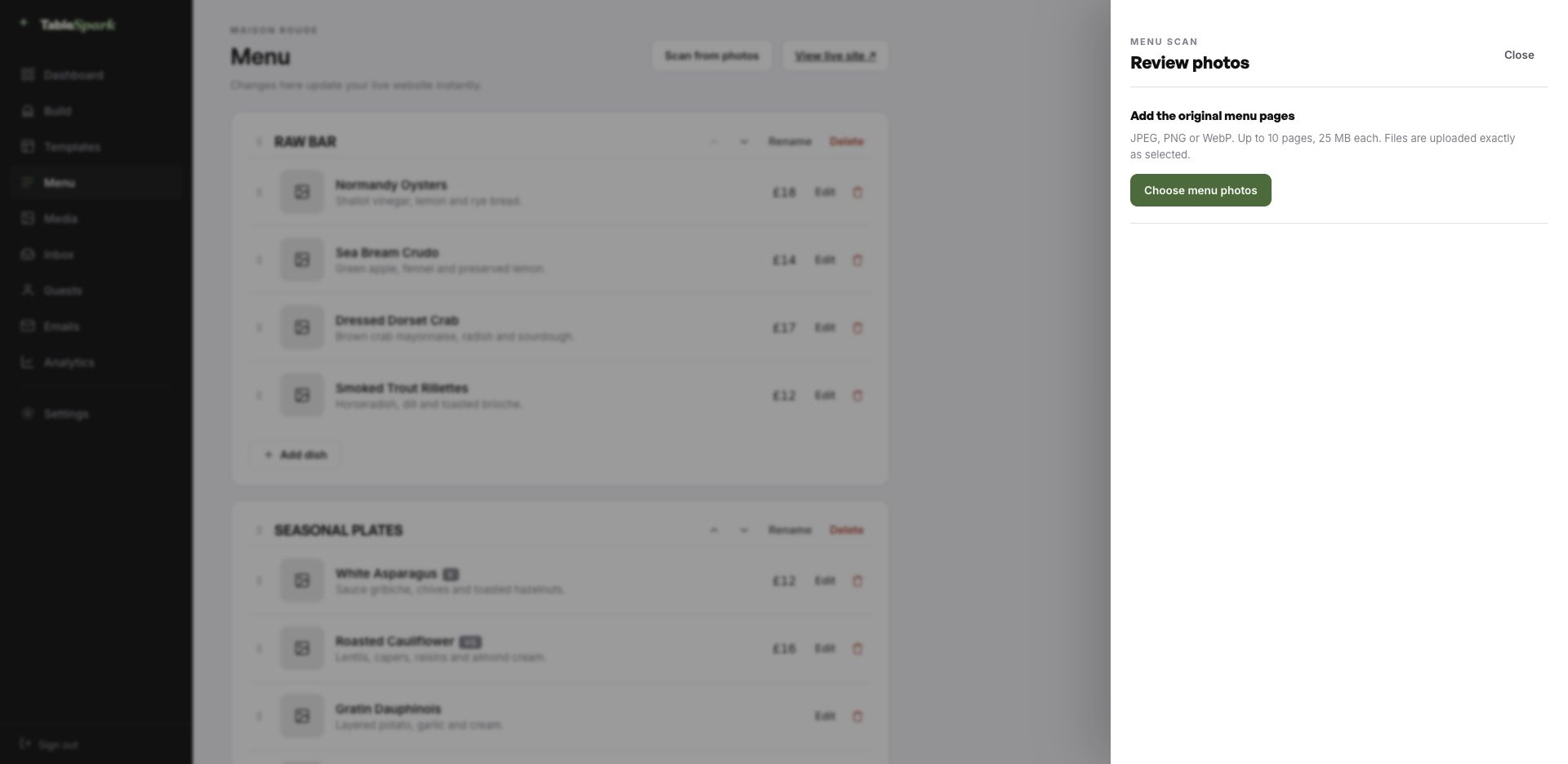
The waiting is the part that has been removed. Consider it a fully fitted kitchen waiting for your knives. One sitting to live, and the booking form does not need setting up: it is already answering. The booking appears in your inbox; the guest gets a confirmation before they have put their phone down.
One Stripe connection turns the site into something that collects money: deposits on tables, payment on orders, paid direct. Our commission is 0% at every plan level. Stripe’s standard card-processing fees apply to online payments. That is the only deduction.
Step 01
1min
Pick YamabikoThe whole thing is duplicated into your account to edit.Step 02
4min
Change the name and the wordsClick a block, change the words, swap the picture.Step 03
3min
Upload your menuPhotograph the menu; review what the AI read back.Step 04
1min
PublishLive on your address, with reservations working.Step 05
1min
Connect StripeNow you can take deposits on tables — direct to your account.In all
10min
From template to taking paymentsFive steps, one sitting.Nobody prints someone else’s name on their menu, and a web address is no different. You start on a TableSpark address so you can publish today, and move the site onto your own domain whenever you are ready — the one on your menus, your napkins and your Google listing.
You do not touch a certificate or a redirect rule. TableSpark issues and renews the SSL, points the bare domain at your chosen host, and keeps the search signals consistent. If the domain is already yours, nothing needs buying; you are told precisely which DNS record to point where.
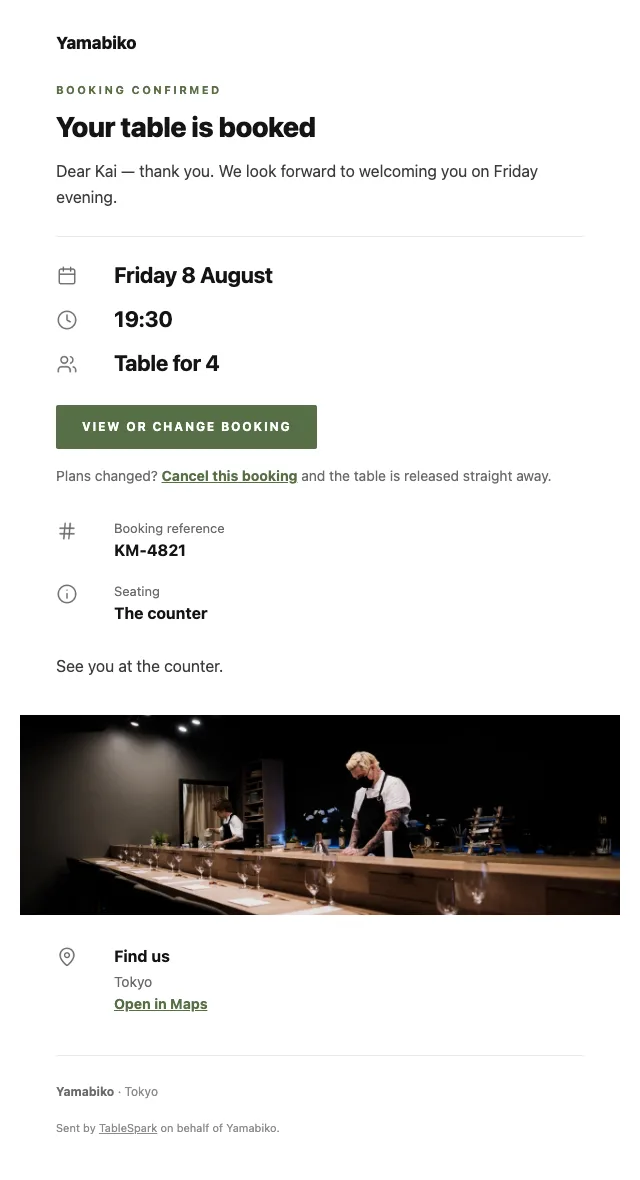
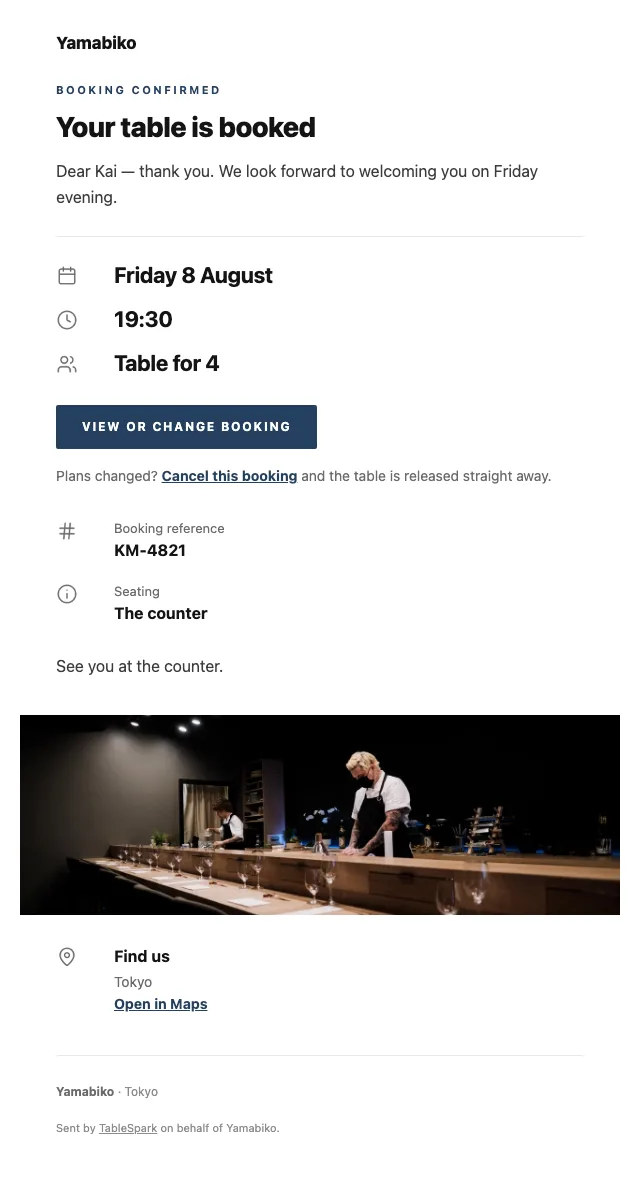
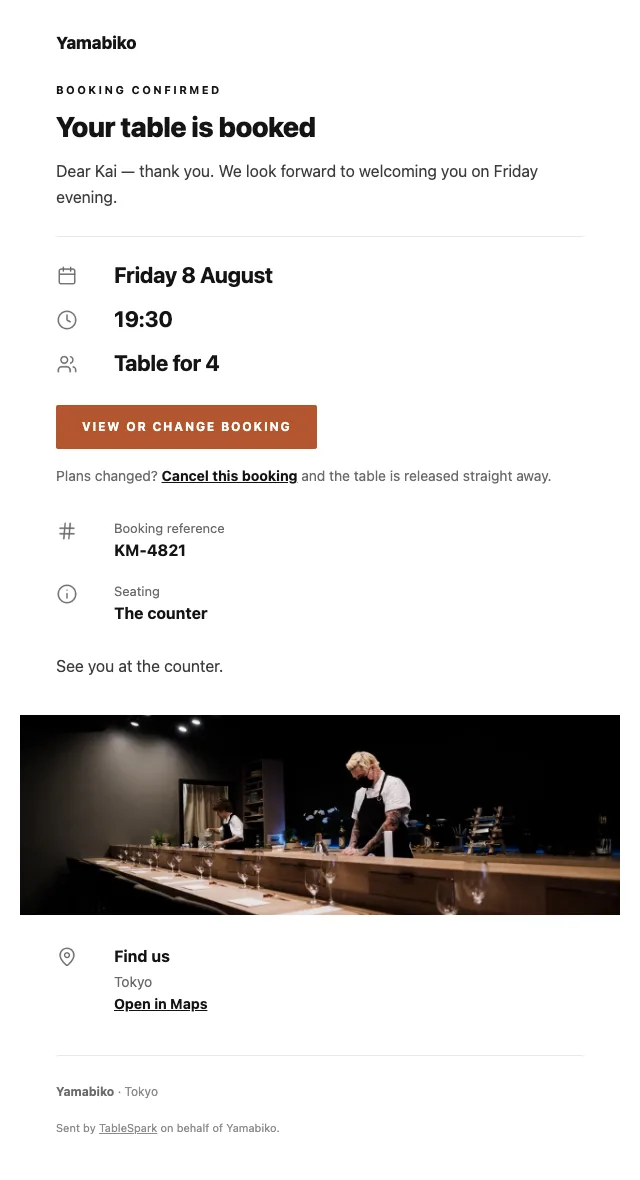
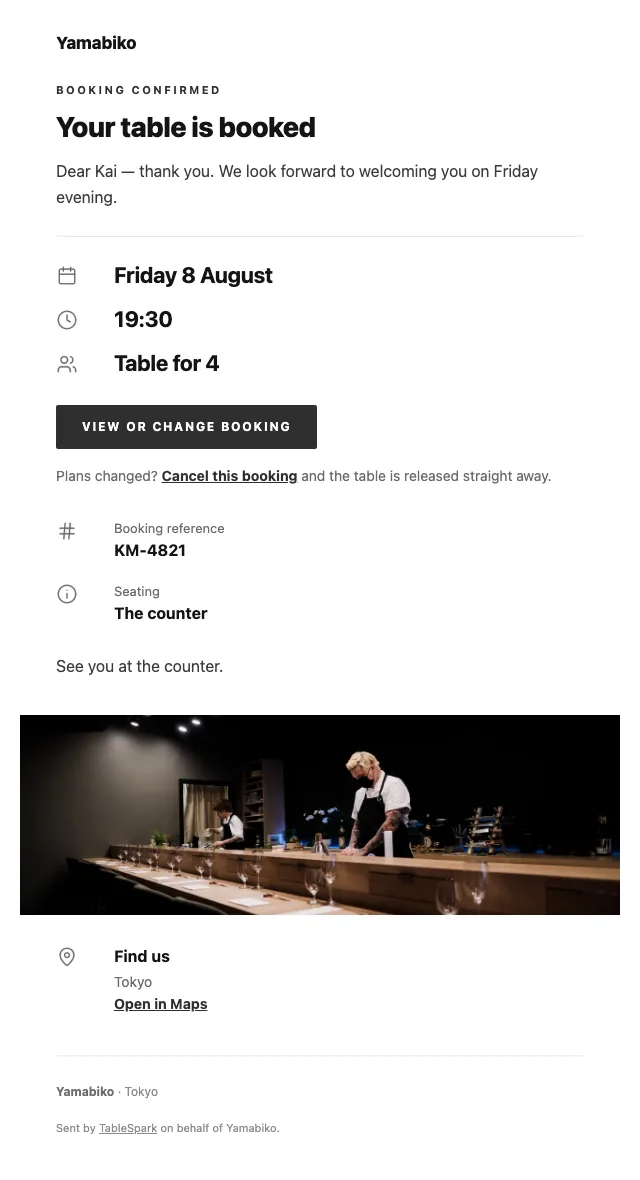
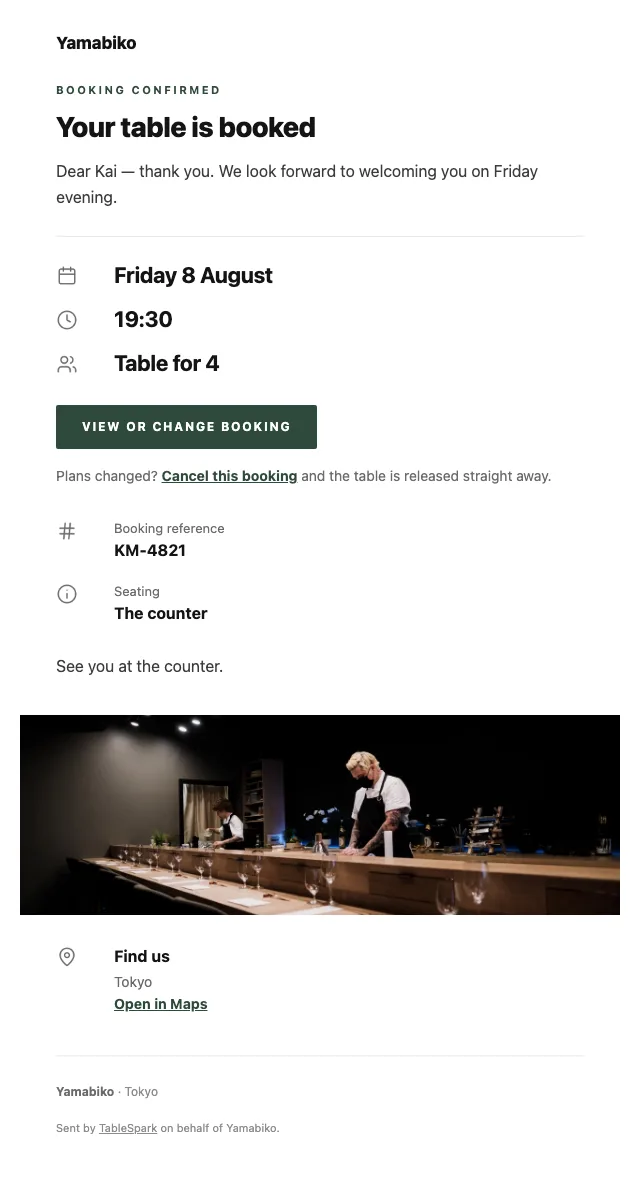
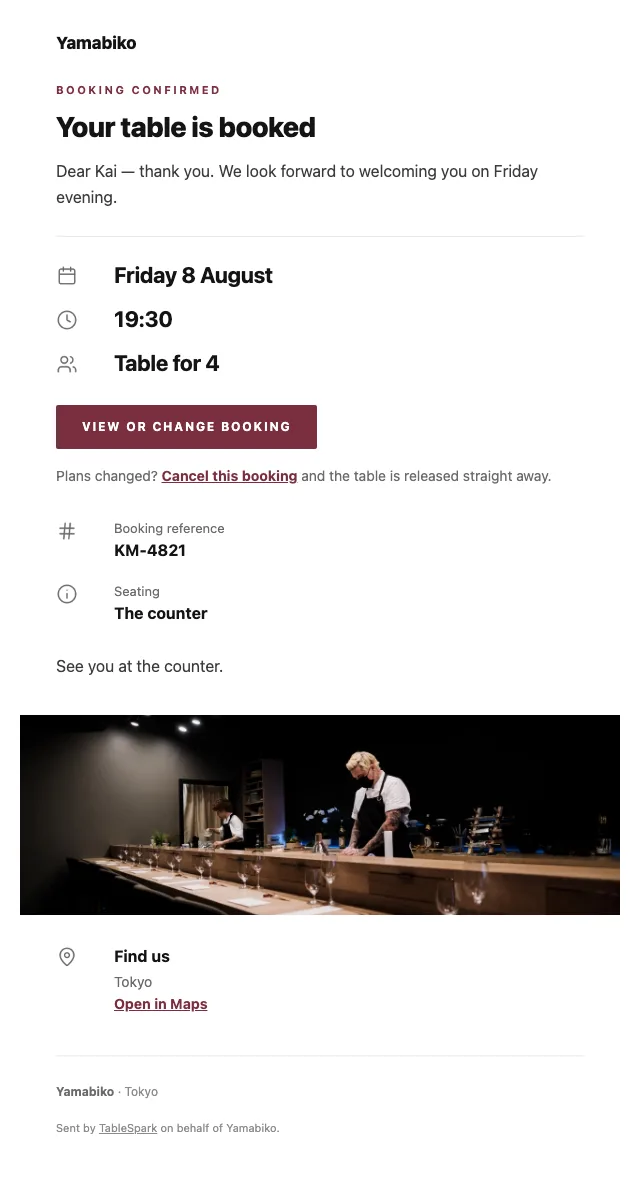
Most guests will see this email more often than they see your home page. On booking, an email goes out on your behalf with everything the guest needs — when, how many, where, how to reach you, and a one-click way to give the table back. Reminder emails, deposit receipts and cancellation notices are cut from the same cloth.
And the email is yours to design, not ours. Six templates, your accent colour, your logo, a cover photograph, the header layout, a sign-off in your own voice, your links and your social accounts. Once your domain is connected the email leaves from your address as well, not a generic one.
Below, the same booking confirmation in six of the looks.
A live link proves the page exists. It does not prove Google can read it. Sites sit at a perfectly good address and never appear in search — because of a leftover noindex, canonicals that disagree, pages nothing links to, a menu trapped in a PDF, absent restaurant schema, or verification never finished. What follows is expensive: searches for your name, your dishes or your street send guests to marketplaces that take a cut of the booking you would have had for free.
None of it is left for you to assemble. Rankings and indexing are Google’s decision and no honest supplier promises either — but the configuration that makes them possible is done.
Reorder them, rename them, remove them. The set is a starting point.
All of these are standard modules — 68 of them in the library, most with several layout variants each.
Any one can be deleted, moved, or swapped for another. Nothing about the order is fixed.
Ships with 4 sections — Small plates, Charcoal, From the sea, To finish — for you to overwrite.
All of it arrives with the booking in your TableSpark inbox.
The camera work and the checking are yours; the transcription, the structure and the draft search copy are ours.
Publishing needs your hand on it.
Search engines The Menu — Yamabiko | Tokyo A seasonal Japanese tasting menu drawn from the forest. The courses, the season and how to reserve.Drafts the search title & description from this page’s content. Always review before publishing.
Stripe’s standard card-processing fees apply to online payments.
Deposits, refunds and the terms to write down
The builder is free to use for as long as you like. The bill starts when the site does.
The builder is free to use for as long as you like. The bill starts when the site does.
6 pages, and every one of them is here. What follows is the site itself rather than pictures of it. The same engine that publishes a live restaurant is drawing it here, links and all. The Phone toggle shows the small-screen version.
The story page is built for a chef with a philosophy: a long narrative, a pull quote, an interview, a sourcing block for the forests and farms, and a timeline. The gallery page carries the seasonal photography that a kitchen like this produces constantly.
The accordion suits a kaiseki structure exactly: the courses named in sequence, collapsed, so the guest sees the whole shape of the meal on one screen and opens whichever one they want to understand.
The description field carries the season, the province, the technique. Because a menu like this changes every few weeks, keeping it as structured text rather than a designed PDF is the difference between a site that stays true and one that quietly goes stale.
Whichever layout you choose, the point is the same: every dish, description and price is real text in the page with Restaurant schema around it, not a PDF and not a photograph of a laminated sheet.
Running a Japanese kitchen? See all Japanese restaurant website templates.
What owners ask before they pick a template: the cuisine fit, the menu, the address, and what it costs.
Yes. When a service is full the form can offer a waitlist instead of a dead end, capturing the date, the party size and the guest’s details in your TableSpark inbox. That turns a lost booking into a contact you can call when a table is released.
A few minutes each time. The menu is a structured list you edit in place, and everything that reads from it — the menu page, home-page highlights, the structured data a search engine reads — updates from the same edit. There is no PDF to redesign and no developer to book.
Completely. Six base skins, an accent you can pick from presets or a colour wheel, separate background, text and surface colours, seven font pairings or any two faces you like, plus text size, radius and motion. Contrast is derived rather than fixed, so the site stays readable whatever you choose.
Yes. You start on a TableSpark address so you can publish the same day, and you can move onto your own domain whenever you are ready — including one you already own. TableSpark manages the certificate, the secure connection, the redirect from the bare domain, and keeps canonical URLs, the sitemap and robots pointing at the live address so the move does not cost you the search visibility you have built. Guest emails can send from your domain as well.
They get an email from you within seconds: when they are booked, how many are coming, where you are, how to reach you, and a self-service link to give the table back. Reminders, deposit receipts and cancellations follow the same design, which you control — six templates, your colour, logo and cover image, the header treatment, your sign-off, links and socials. Connect your domain and it sends from your address as well.
No code, anywhere. You click a block and edit it in place; photographs are dragged in. Everything you can see was assembled from the module library rather than written by hand.

Make this yours: the name, the words, the photographs, the menu. Free to build, and you only pay when you go live.