01
Hero
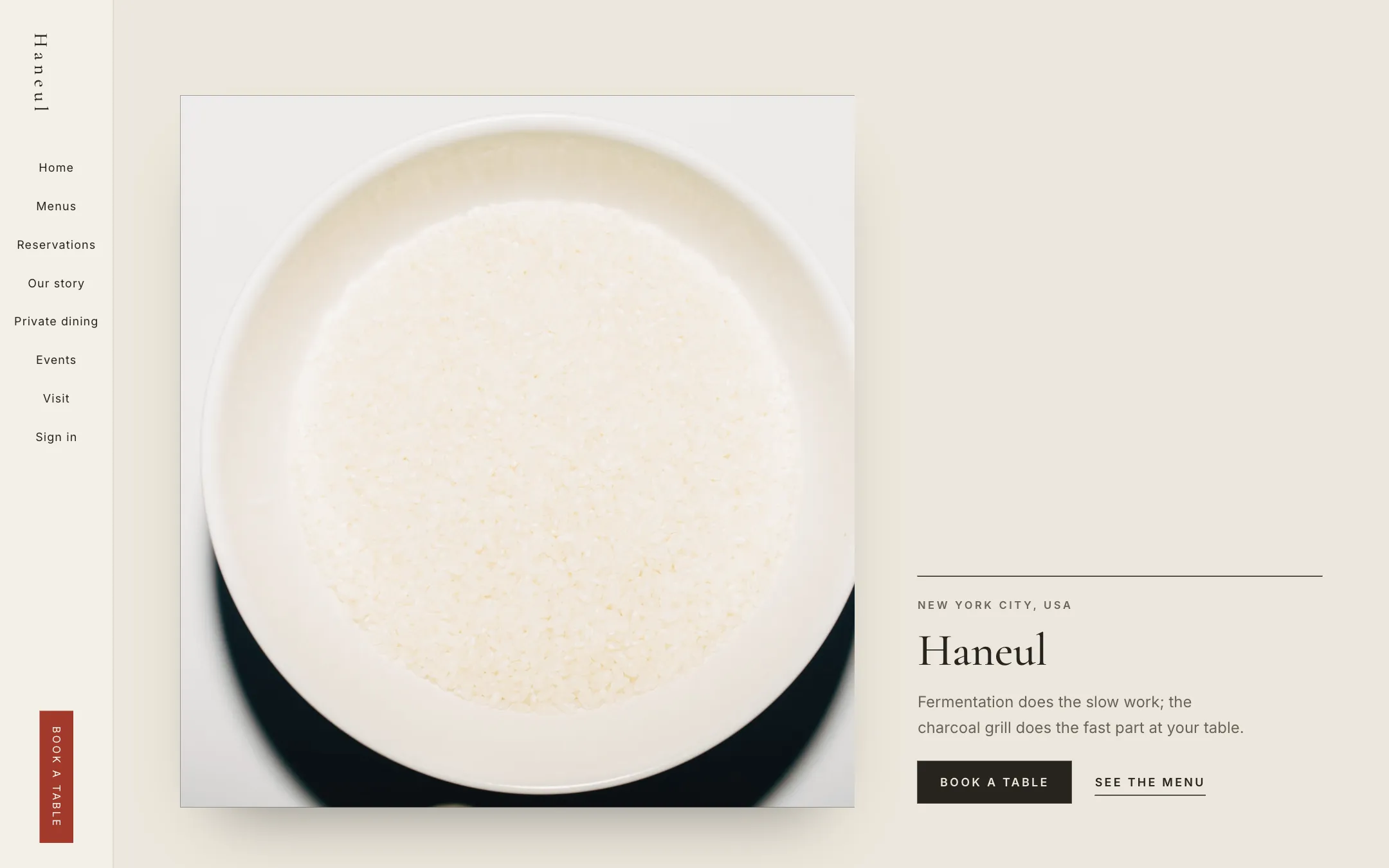
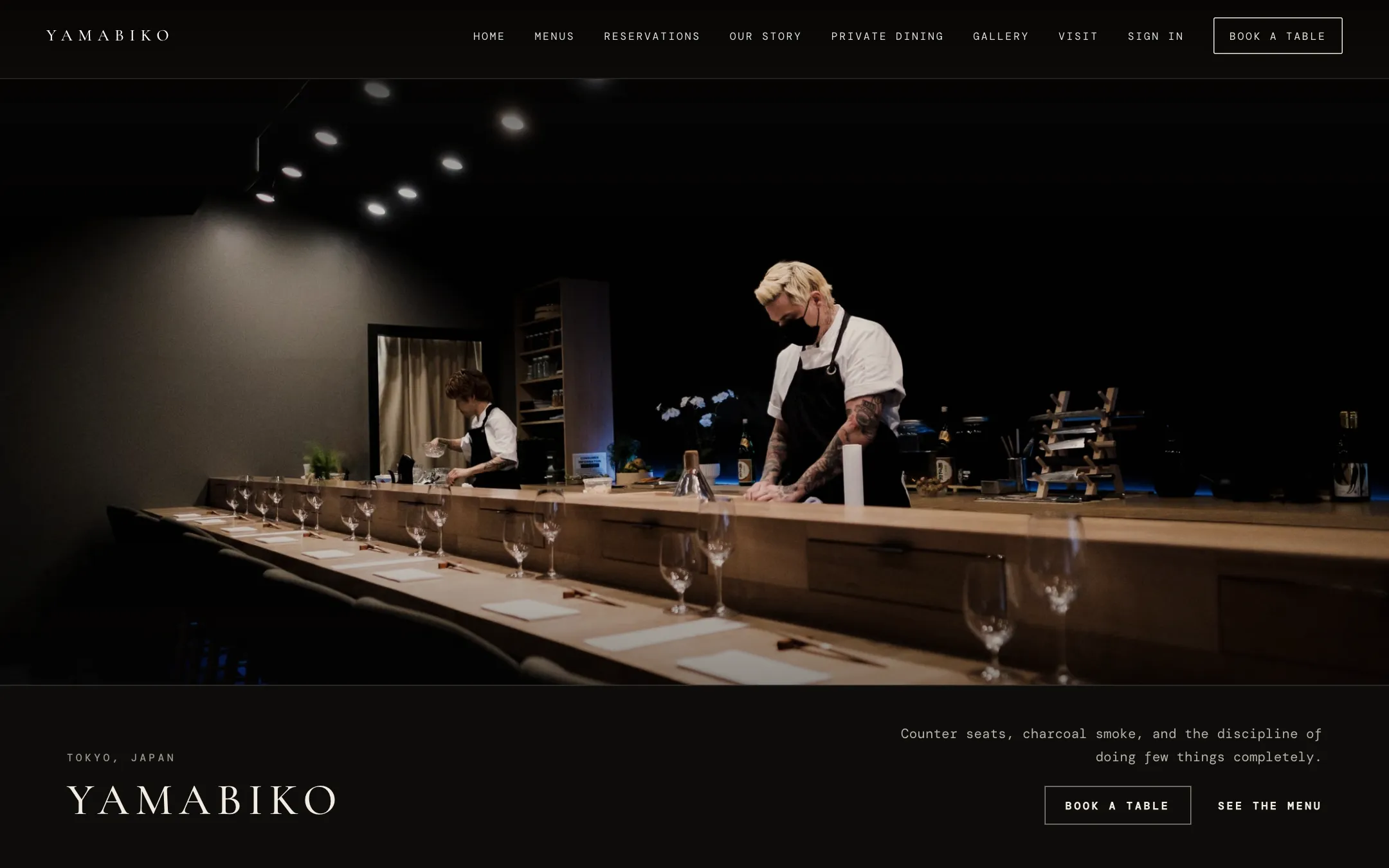
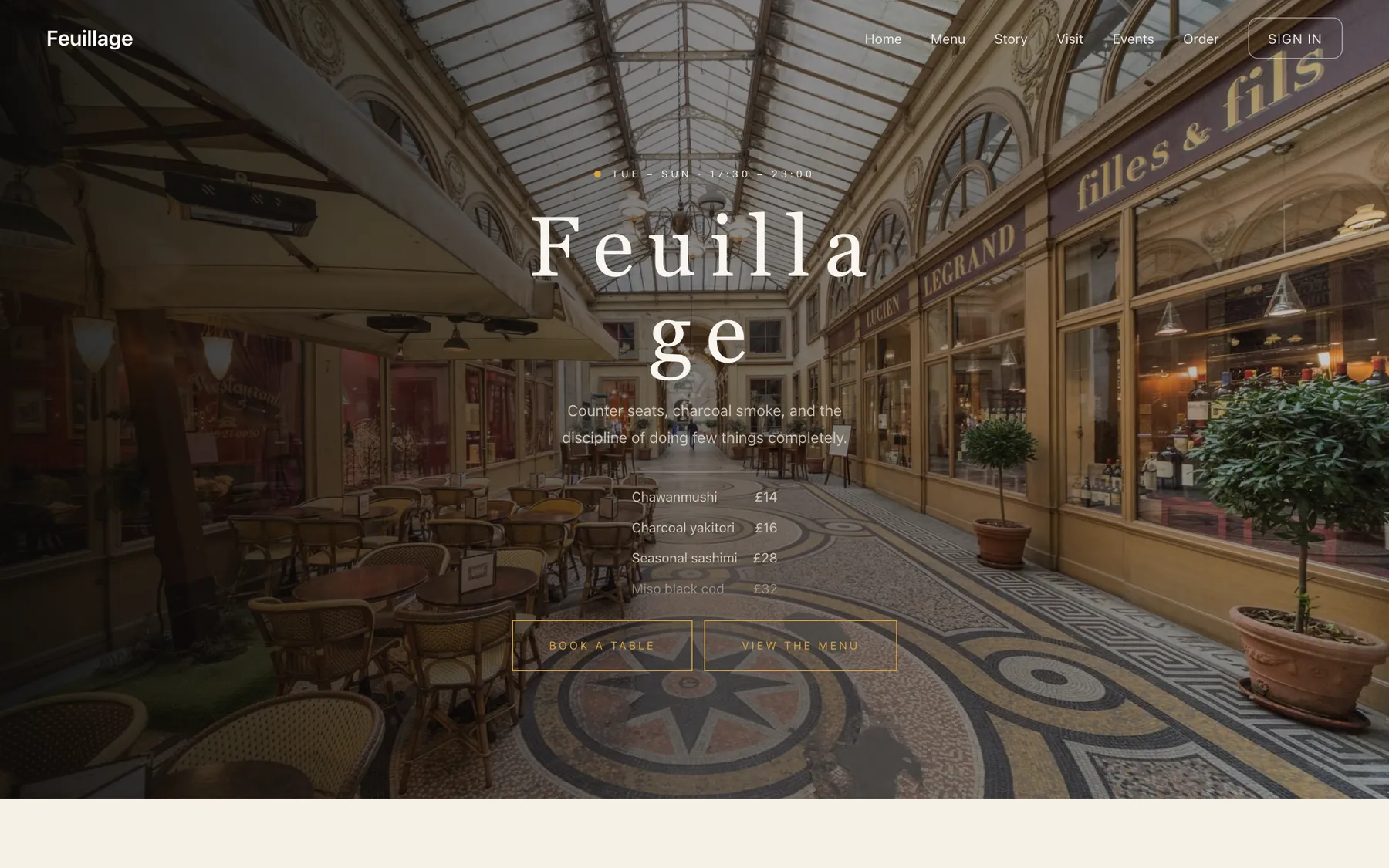
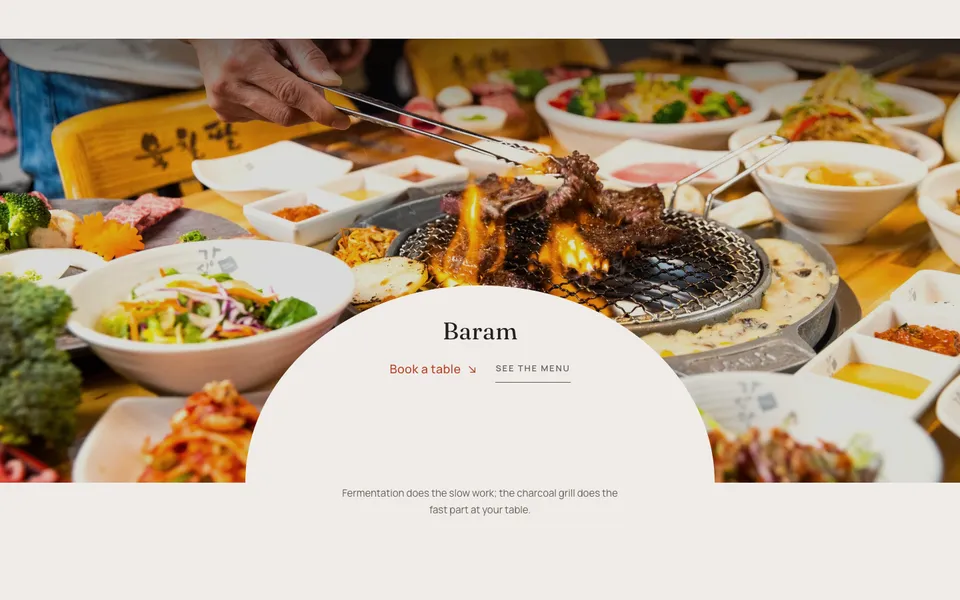
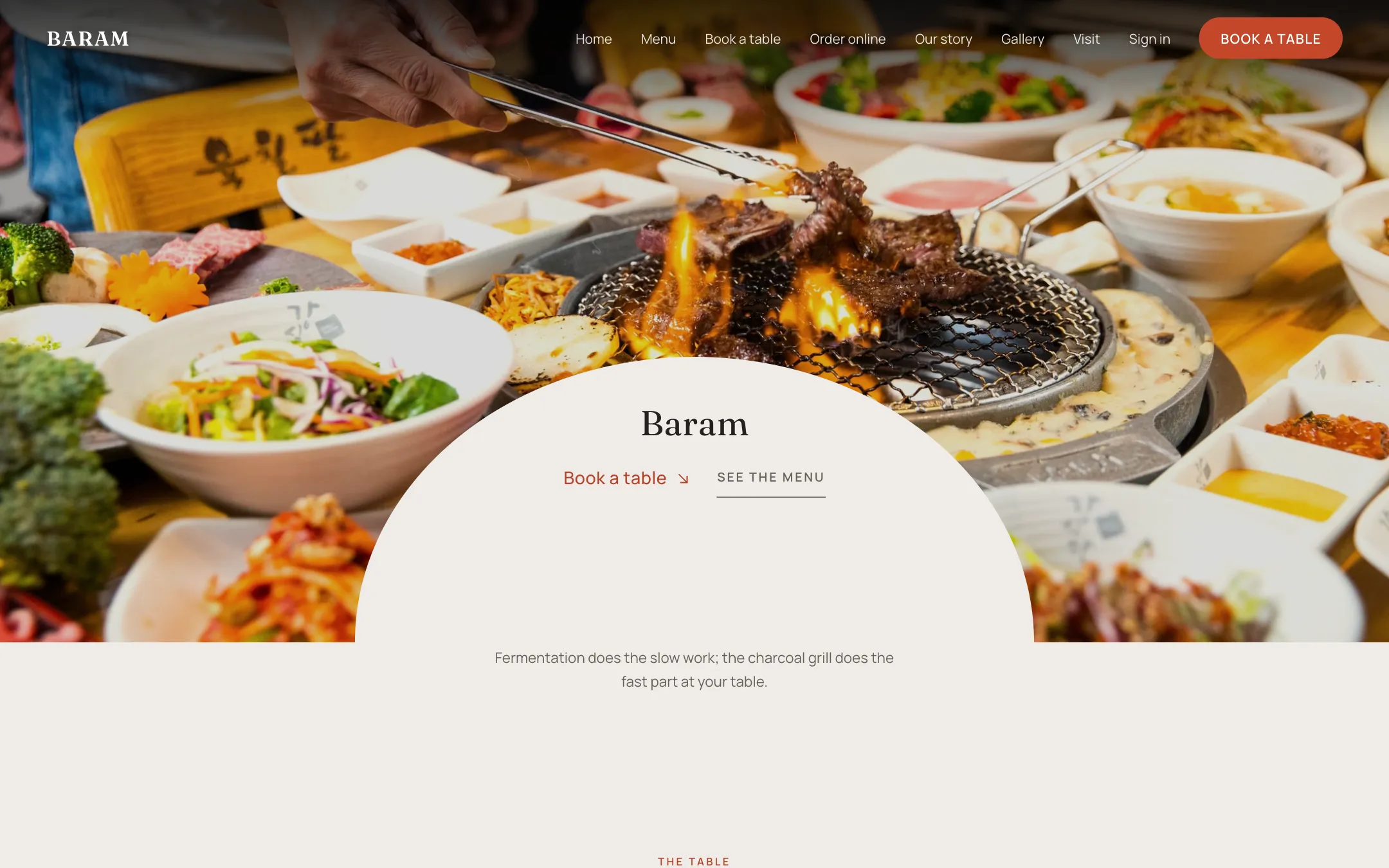
Big opening image, name & buttons, in the Cartouche treatment: Paper cartouche over the room: copy, actions and an awards ribbon.
Templates · Contemporary Korean
For Korean rooms with table grills and a serious pantry: a dark template with a table-grill opening, a plated menu, and the full delivery-app ordering layout.
Every section is a builder module you can reorder, edit or delete, with no developer.
On bookings and orders, on every plan. Stripe’s standard card-processing fees apply to online payments.
Build and preview the whole site for nothing, and pay only when it goes live.
Starter is £19/mo excl. VAT and includes a complete restaurant website, a live structured menu, enquiry and newsletter forms, and managed search readiness. Growth is £39/mo excl. VAT and adds direct live bookings, a custom domain with managed SSL, and table and floor-plan operations. Full is £69/mo excl. VAT and adds online ordering and multi-site management for up to five restaurant sites. TableSpark commission is 0%. Stripe's standard card-processing fees apply to online payments.
That is the whole website and the whole system, at the best value on offer to an independent UK restaurant; the full cost comparison has the figures. A bespoke build costs thousands and takes months; this one is already designed, and you can publish it this afternoon. And it stays yours to run: change a price at four in the afternoon and it is live before service. Every template is optimised for phone, tablet and desktop, and the plans carry reservations, tables, ordering and management — with 0% TableSpark commission.
Baram is a dark room with an ember orange that sits exactly where the grill would. Yours might be white tile and morning light, or brass and candles, or something nobody has built yet.
There is no demo video and no sales call. What you see on the right is the actual Theme panel from the builder, wired to the actual site renderer on the left. Press a colour. It will not ask you to register and it will not remember what you did. Go on.
Loading the live preview…
A Korean dining room with grills at the table has a physical format that a website rarely conveys, so this design opens with it: the grills, the seatings, the way the room works. A guest understands what kind of evening they are booking before they read a word of the menu.
The ground is dark with an ember accent, which flatters both the grill photography and the jang-heavy plating. The serif-and-sans pairing keeps Korean dish names legible at small sizes, which matters on a menu with many short names.
Eight blocks, built around the grill:
01
Big opening image, name & buttons, in the Cartouche treatment: Paper cartouche over the room: copy, actions and an awards ribbon.
02
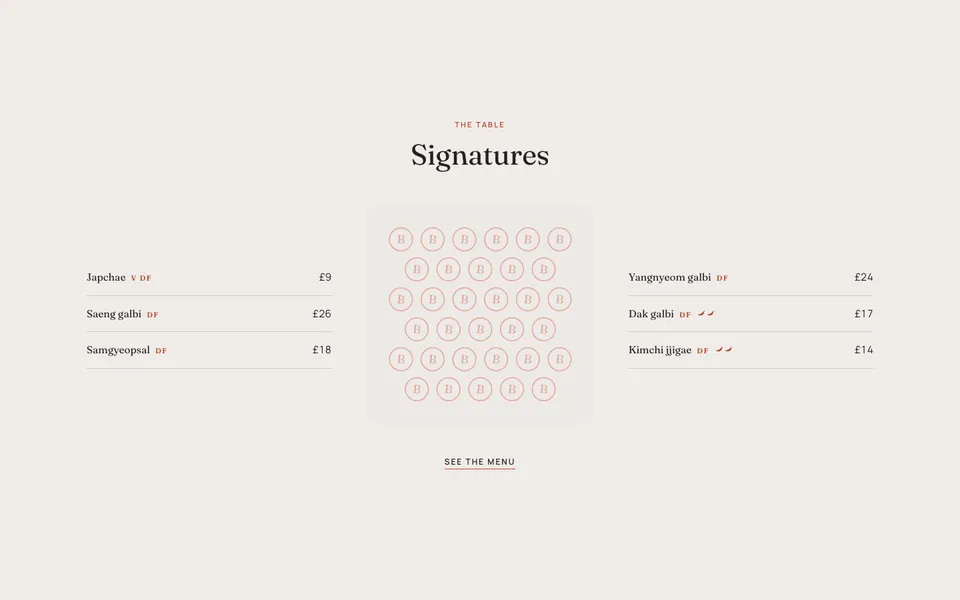
Big opening statement line.
03
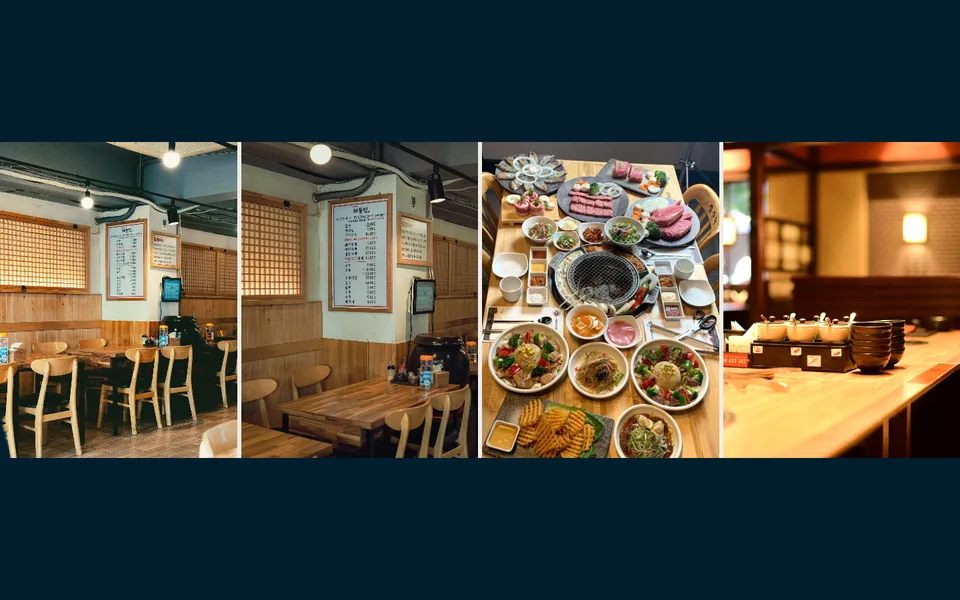
Alternating image and text rows.
04
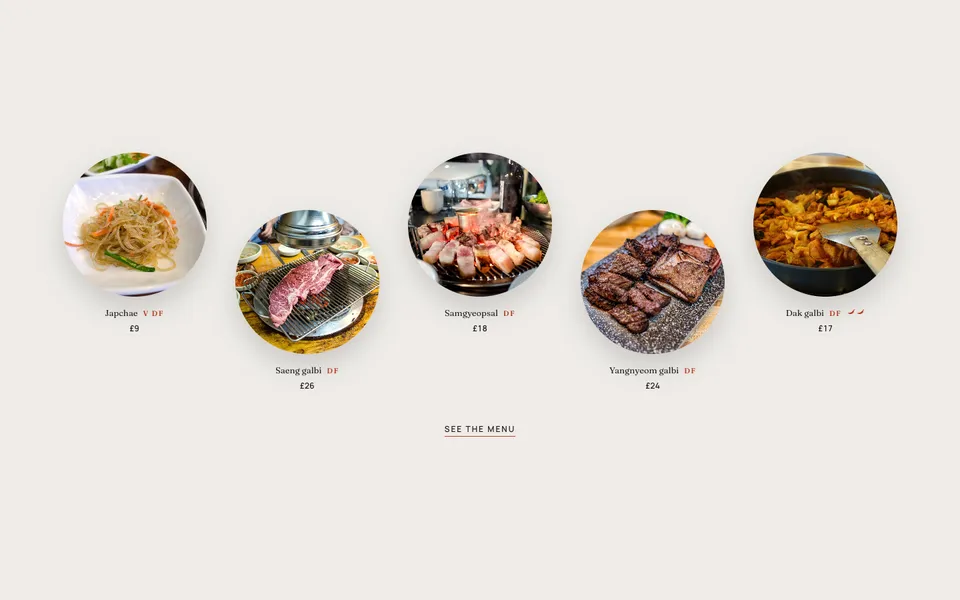
A few dishes on a sliding rail.
05
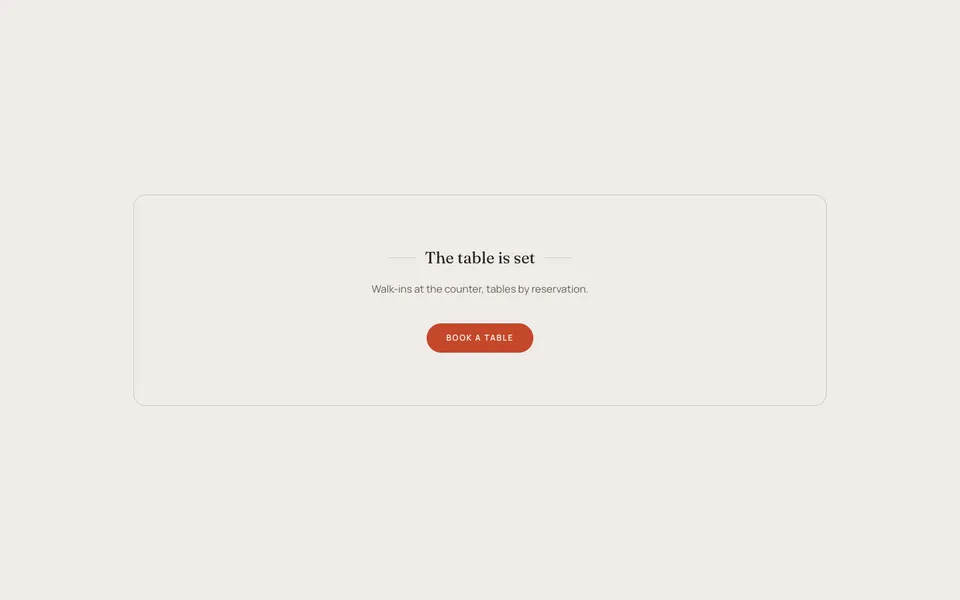
Press mentions or awards as a ruled band.
06
Full-width video or photo mood band.

07
Guest quotes with stars.

08
Email signup band.

09
Headline + button band.
The statement block currently reads Fermentation does the slow work; the charcoal grill does the fast part at your table. — one line you will rewrite in about four seconds.
Loading the live preview…
Baram uses the Classic list ordering layout — the printed-menu look, with dotted leaders running from each dish to its price.
It reads like the delivery apps your guests already know, except the restaurant keeps the relationship and the money. The basket stays on screen, and each mode asks only for what it needs: a table number, a phone number or an address.
Loading the live preview…
This is the frame that matters. It is the real ordering page at a real phone width — not a mock-up, not a video.
On a laptop the same page puts the basket in a panel beside the menu that follows the scroll.
Every Baram site on Growth and Full ships with an app your guests keep. It lives at /account on your own domain, so the guest signs in to your restaurant, not a marketplace.
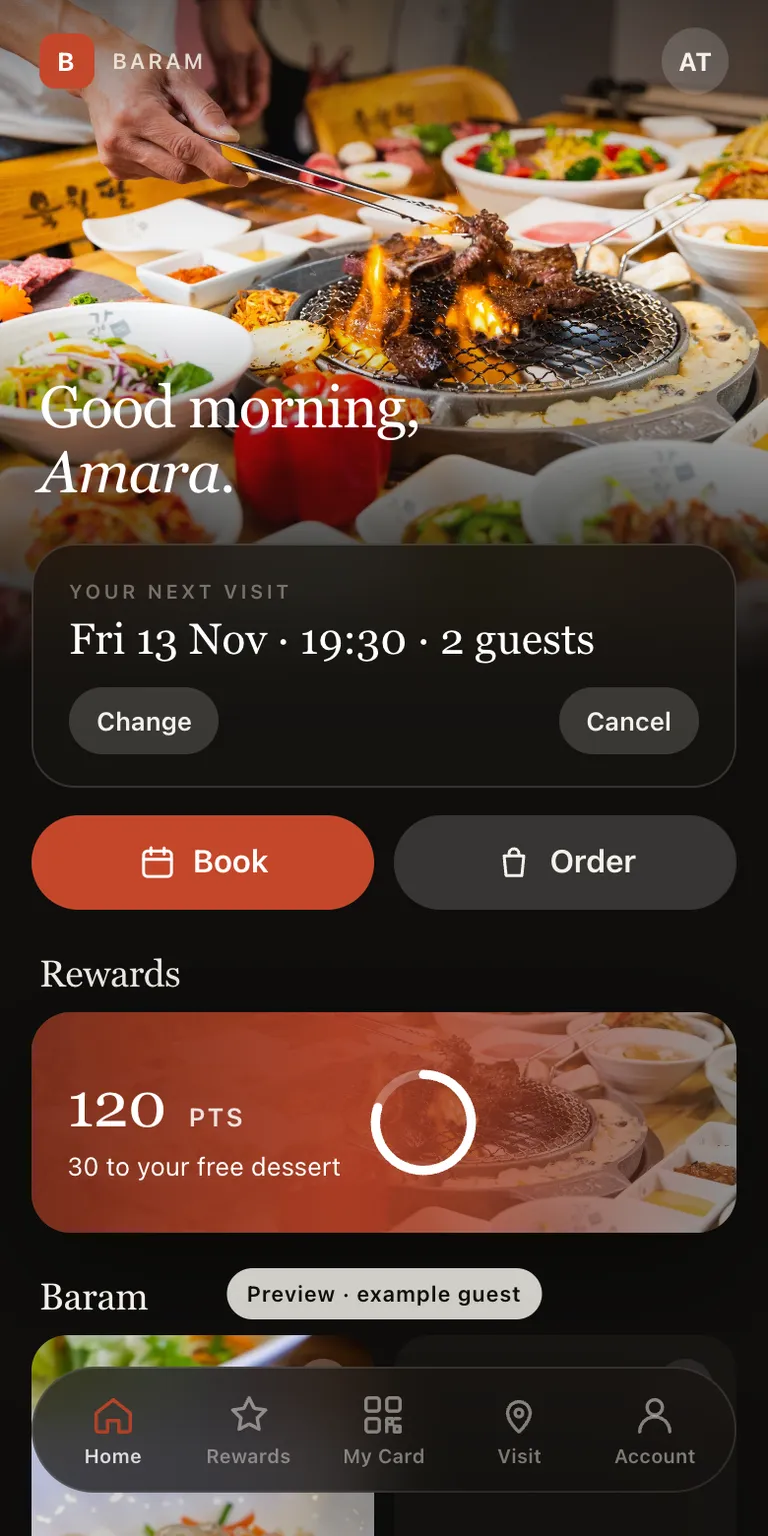
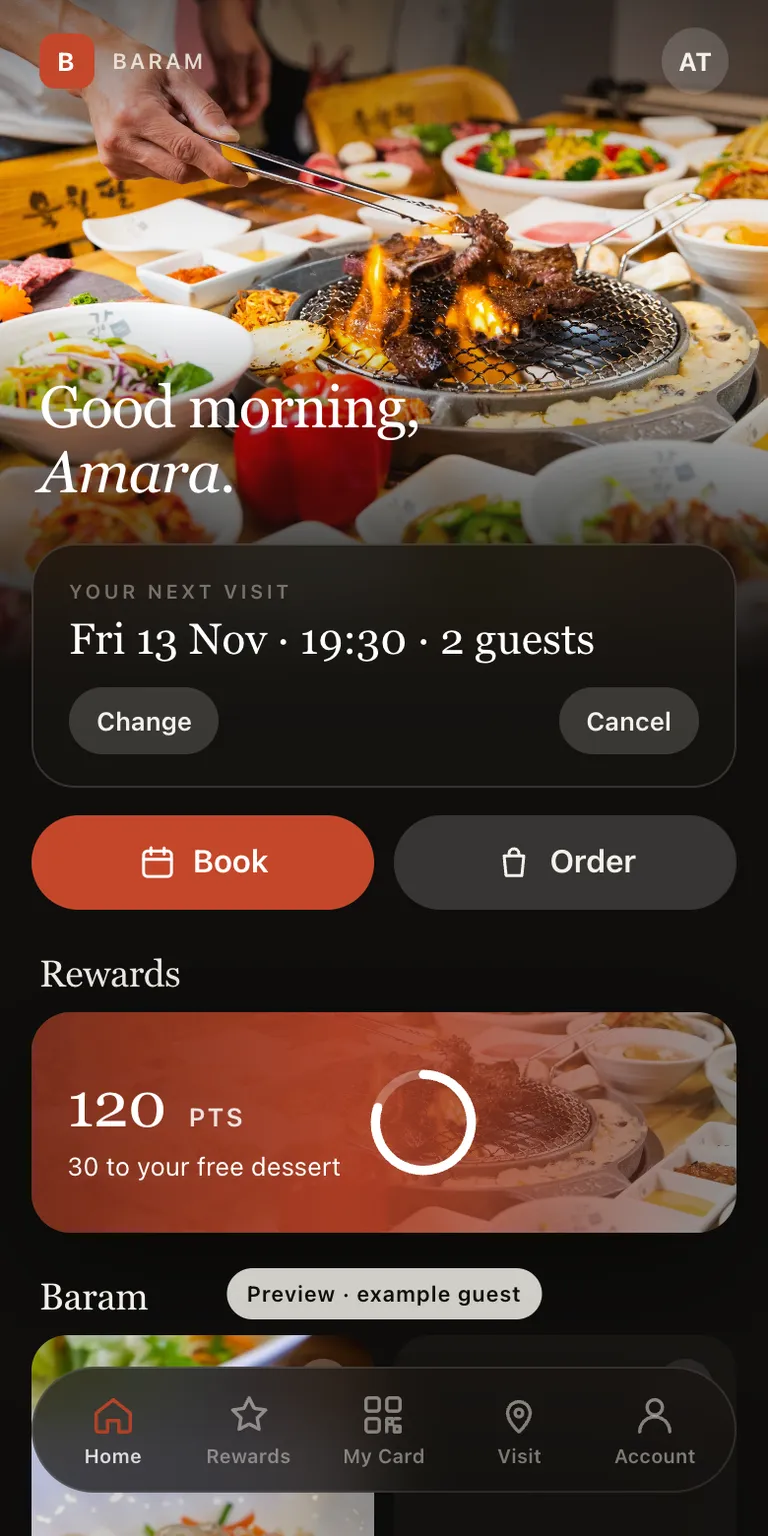
Included on the Growth and Full plans. Watch the Guest App course
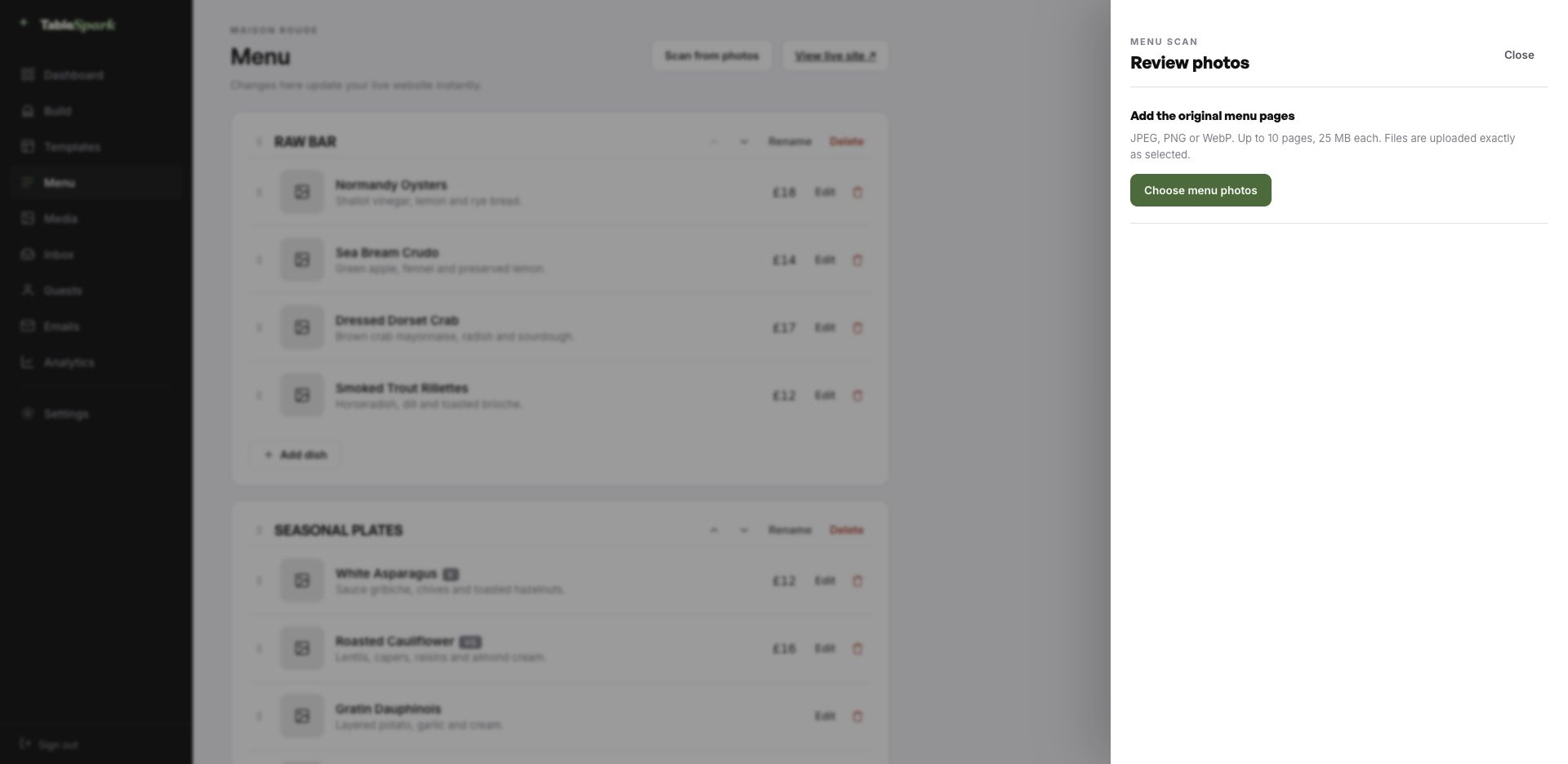
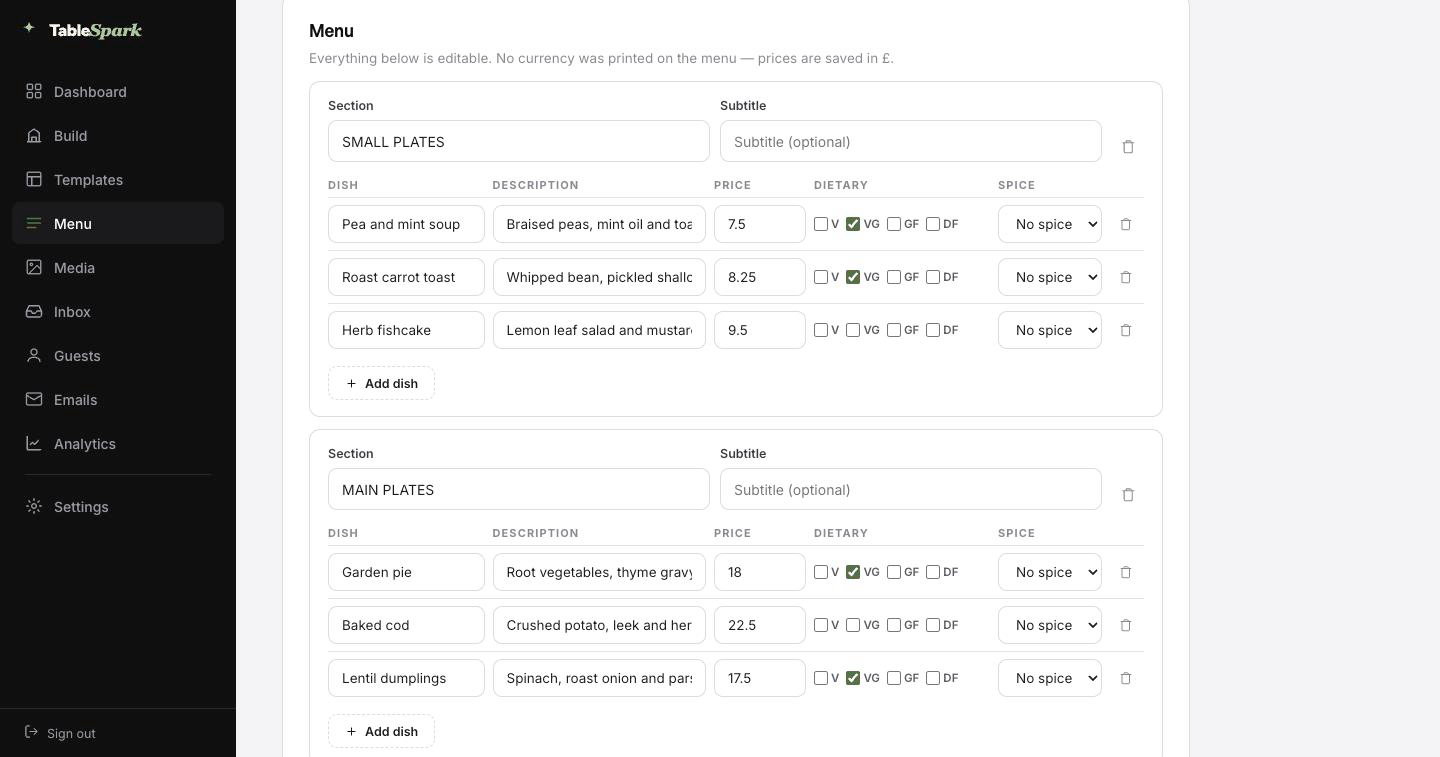
Nobody starts a website looking forward to retyping ninety dishes. Point a phone at whatever your menu currently lives on and send it over. The AI turns it into sections, dishes, descriptions and prices, and picks up the dietary marks and heat levels it can see. Read it back, adjust anything the photograph fumbled, and that is the menu built.
A photograph of a menu is decoration; a structured menu is infrastructure. The same structured menu drives the menu page, the ordering page, the highlights on the home page and the Restaurant structured data a search engine reads. Change a price once afterwards and all of them follow.
And the fields nobody enjoys writing — the search title and description — are drafted by a Write with AI button that reads the page first. The AI writes the first version; you decide whether it is the last.
A phone photograph of the menu you already hand to guests is enough.
Sections in order, dishes with descriptions and prices, dietary and spice marks read from the page.
Menu page, ordering page, home-page highlights and the Restaurant schema — each one updating from the same edit.
You are not commissioning a website; you are moving into one. The site works from the first second — it simply has the wrong name on the door. One sitting covers it — and the second it is live, the booking form is taking reservations. It lands in the inbox with the party size and the time, and the guest is confirmed by email at once.
Attach your own Stripe account and the site can charge for orders and hold deposits on tables — the funds are yours from the start. We take 0%. Not on the first order, not on the thousandth. Stripe’s standard card-processing fees apply to online payments.
Step 01
1min
Pick BaramAll the pages and the demo menu copy into your account.Step 02
4min
Change the name and the wordsType over anything. The restaurant name updates throughout.Step 03
3min
Upload your menuThe menu is built from a photograph rather than typed.Step 04
1min
PublishPublished — and the booking form answers from that moment.Step 05
1min
Connect StripeNow you can take deposits on tables and payment on orders — direct to your account.In all
10min
From template to taking paymentsFive steps, one sitting.The web address is something guests read aloud, so it should sound like you. You can be live before lunch on a TableSpark address and on your own domain by the weekend, with no rebuild in between.
Everything fiddly about a domain — SSL, renewals, bare-domain redirects, canonical URLs surviving the move — is managed on your behalf. Already own the name? Keep it — you get the exact record to update, in plain English.
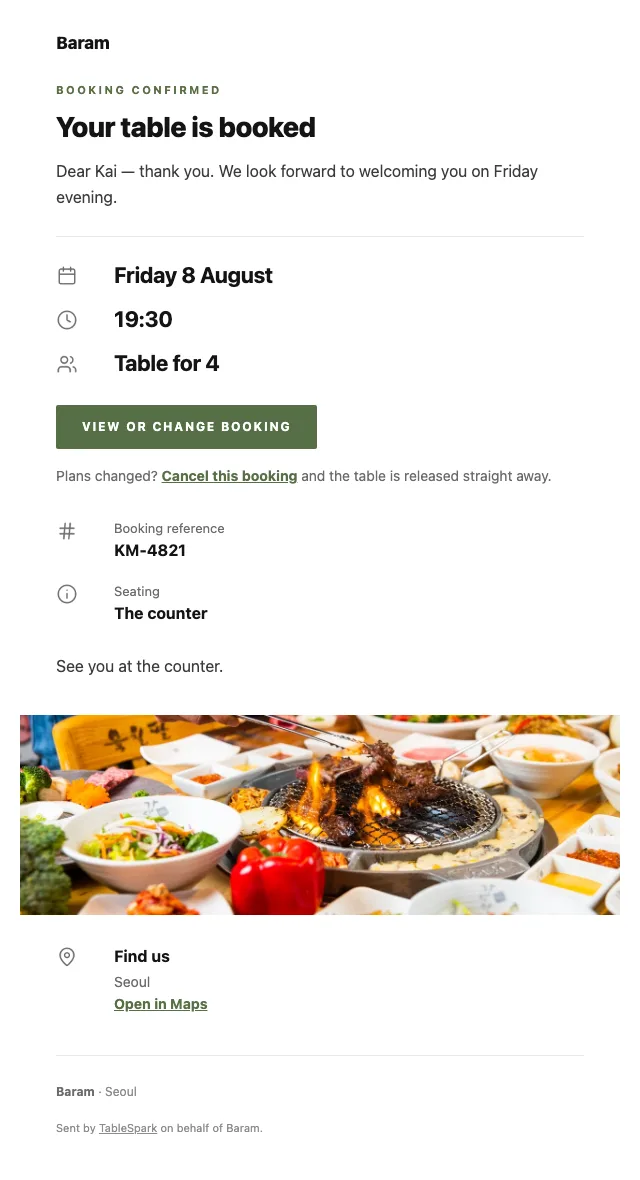
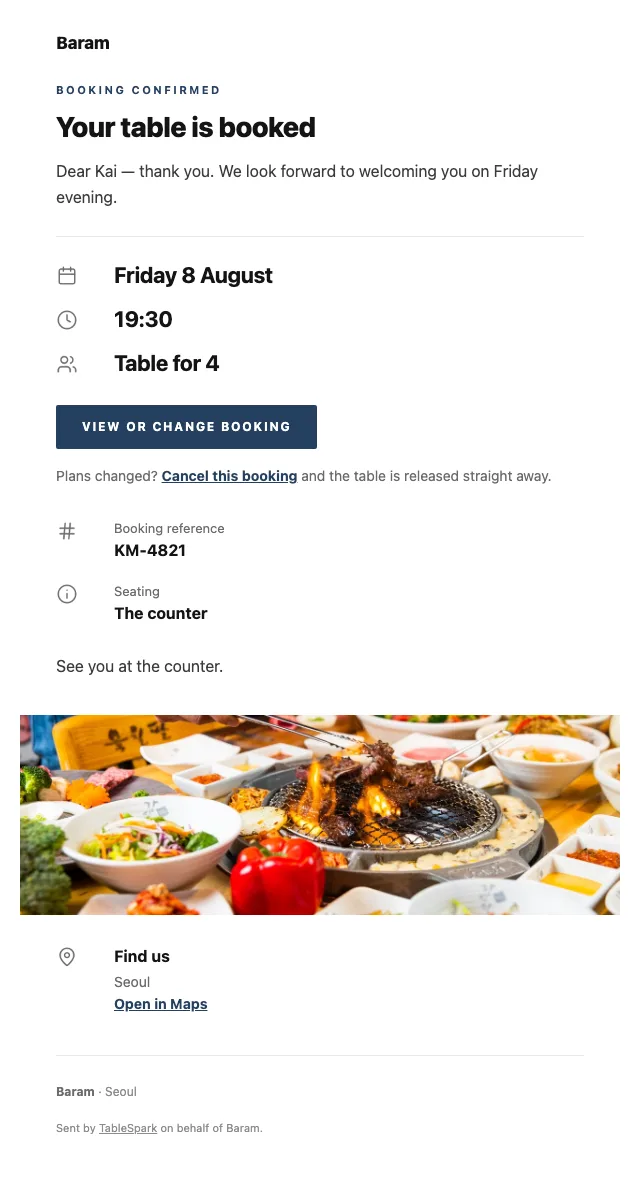
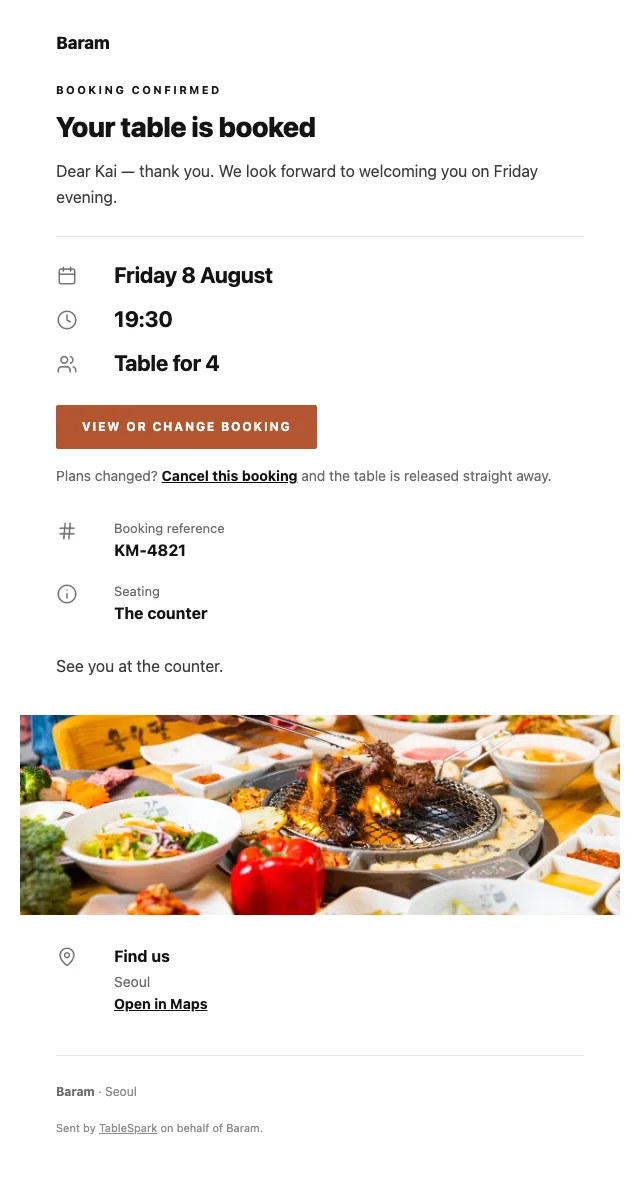
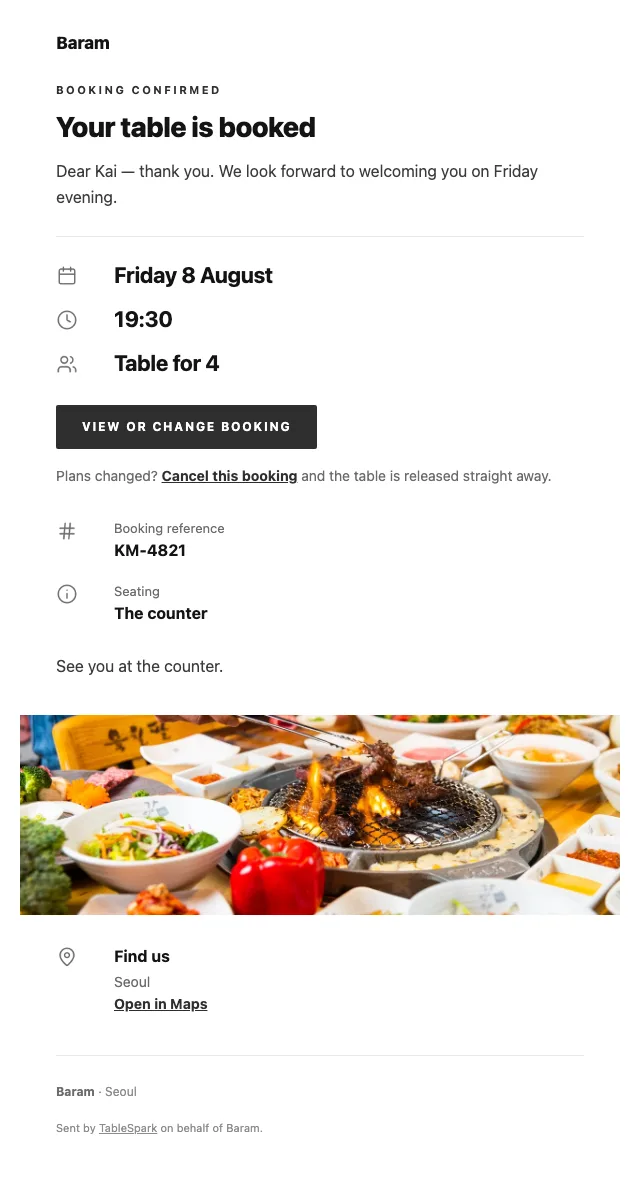
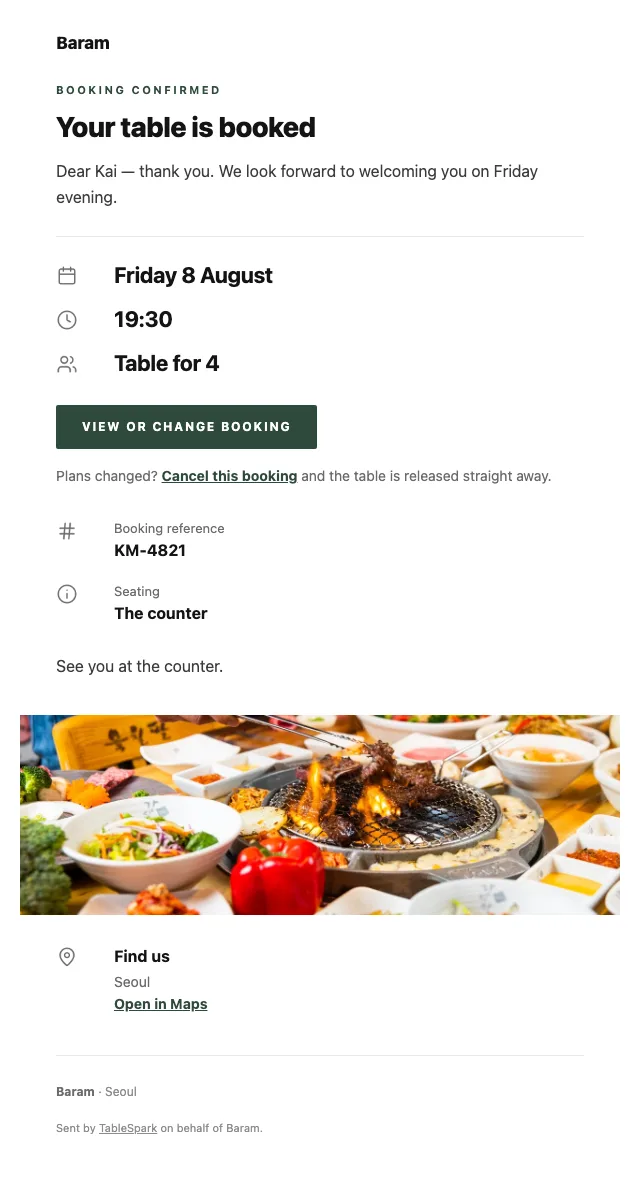
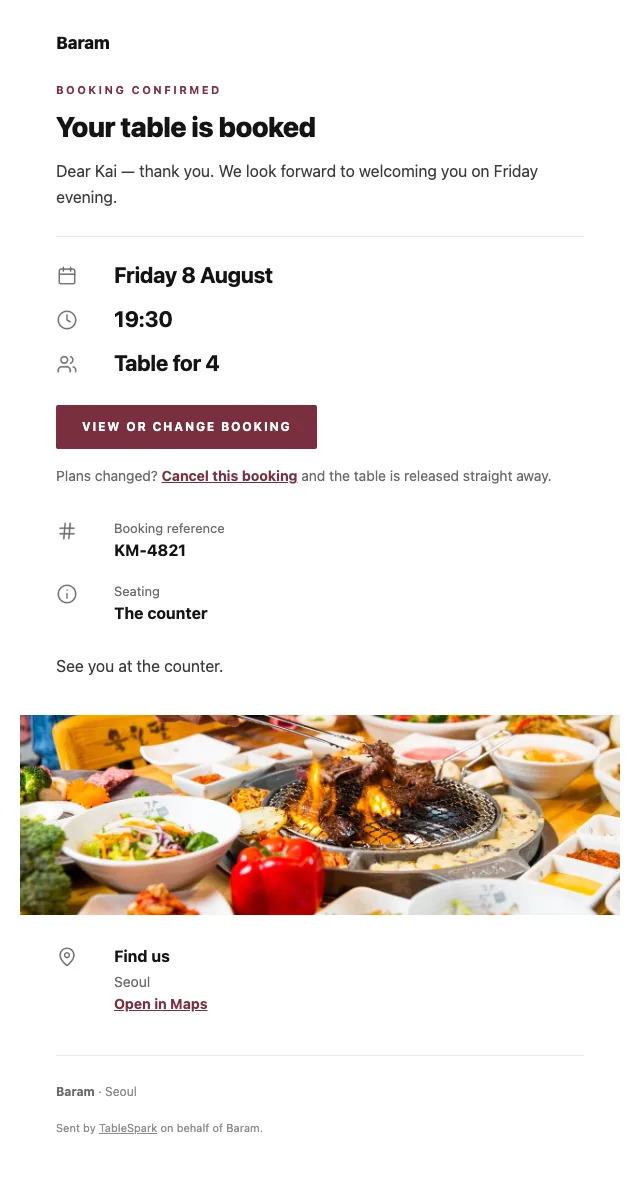
The email that follows a booking is read more carefully than any page on the site. As soon as a table is confirmed, the guest gets an email in your name carrying the date, the time, the number of covers, your address, your phone number and a way to cancel cleanly. Reminders, receipts and cancellations follow the same treatment, so nothing looks bolted on.
It carries your restaurant, not our branding. Pick one of six templates, then set the accent, the logo, a cover image, how the header sits, the sign-off line, your links and your social marks. When your domain is connected the mail is sent from your own address, which is also what keeps it out of a promotions tab.
Below, the same booking confirmation in six of the looks.
Being published and being findable are two different things, and only one of them happens automatically. The usual culprits are mundane: a robots rule nobody removed, two canonicals pointing different ways, orphaned pages, the menu published as a PDF, no structured restaurant data, search verification half done. The cost lands on the restaurant — guests searching your name, your menu or your street reach directories and commission-charging marketplaces first, and you end up paying for the traffic you should already own.
All of that is finished before you arrive. Search results are not something anyone can promise you. A correctly configured site is, and that is what this is.
All of them optional, all of them editable, and more can be added.
Every block above comes from the same library your own site draws on — 68 modules, each with its own layout variants.
Do not want one? Delete it. Want a block from another template? Add it. The page is a stack, not a picture.
Ships with 4 sections — Banchan & raw, The grill, Stews & rice, Sweet — for you to overwrite.
Our cut is zero, permanently. The alternative is a platform that charges you for each order and then owns the guest.
Your domain, your inbox, your exportable guest records. Stripe’s standard card-processing fees apply to online payments.
The commission-free case, in full
You photograph and proofread. The software types, structures and drafts.
Nothing reaches the live site until you say so.
Search engines Menu — Baram | Contemporary Korean, Seoul Table grills, aged jang and seasonal banchan. The full Baram menu with prices and dietary marks.Drafts the search title & description from this page’s content. Always review before publishing.
Stripe’s standard card-processing fees apply to online payments.
Booking deposits, explained properly
Make the entire site, sleep on it, start again if you want. Nothing is charged until you publish.
Make the entire site, sleep on it, start again if you want. Nothing is charged until you publish.
5 pages, and every one of them is here. Not screenshots. The frame is running the publishing renderer, so the navigation inside it works and every tab is a real page. Switch to Phone to see how it behaves on a handset.
The story page carries the pantry and the chef — narrative, sourcing, interview, timeline, gallery. The visit page handles a room where the format needs explaining before arrival.
The plated layout gives each section a signature photograph and lists the rest as type — right for a menu where the grill items need showing and the banchan do not.
The pantry is the argument in a kitchen like this, and the description field carries it: the age of the jang, the ferment, the province. Structured, indexable, and consistent everywhere the menu appears.
Layouts are a matter of taste. What is not optional is that every dish and price is readable text with Restaurant schema attached — a PDF menu would be invisible here.
The full delivery-app layout is correct for a Korean kitchen with a takeaway trade: a section rail, dishes beside it, and a basket that follows the scroll. It is exactly the interaction guests use on the marketplace apps.
The difference is the economics. There is no commission from TableSpark at any plan level, the order lands in your own inbox, the guest record is yours, and the page sits on your own domain so the next order comes back to you rather than to a platform.
Dine-in wants a table number and nothing else; collection wants a number to ring; delivery wants somewhere to go. No mode asks for the others’ fields.
What owners ask before they pick a template: the cuisine fit, the menu, the address, and what it costs.
What changes is who owns the order. On your own ordering page TableSpark takes 0% commission at every plan level, the order arrives in your own inbox, and the guest’s details belong to your restaurant and can be exported. The page is on your domain, so returning guests come back to you rather than to a platform that charges you for the introduction.
Yes — sections and dish descriptions are yours to write, so grill items can be grouped and explained. Badges can mark chef’s picks or house specialities, and all of it is real text a search engine can read.
Only if you enjoy typing. The normal route is to photograph the printed card — up to ten pages at a time — and let TableSpark read it into sections, dishes, descriptions, prices, dietary marks and spice levels. Nothing saves until you have approved it. Because the result is structured data, the menu page, the ordering page, the home-page highlights and the Restaurant schema all read from it, so a single edit reaches every one.
Reckon on one sitting: copy, rename, edit, upload the menu, publish. There is no separate setup for reservations — they answer the moment the site is live, landing in your inbox while the guest receives a confirmation email. Connect a payment account afterwards and the same site takes booking deposits and order payments directly into it, and TableSpark takes 0% of them. Stripe’s standard card-processing fees apply to online payments.
Every one of them, in the Theme tab: palette, the display and body typefaces, corner radius, motion, the header layout and how it behaves on scroll. The template is a starting point, not a cage — and switching a colour never breaks the layout, because the design reads its values from the theme rather than hard-coding them.
Yes — and bringing a domain you already own is the common case. You go live on a TableSpark address first, then point your domain across; you get the exact DNS record to change. The certificate, HTTPS, bare-domain redirect and the search-engine housekeeping are handled here so the switch does not cost you visibility. Your guest emails can then send from that domain as well.

The whole site copies into your account in one click. Change the words, upload the menu, publish. Free until the moment you go live.