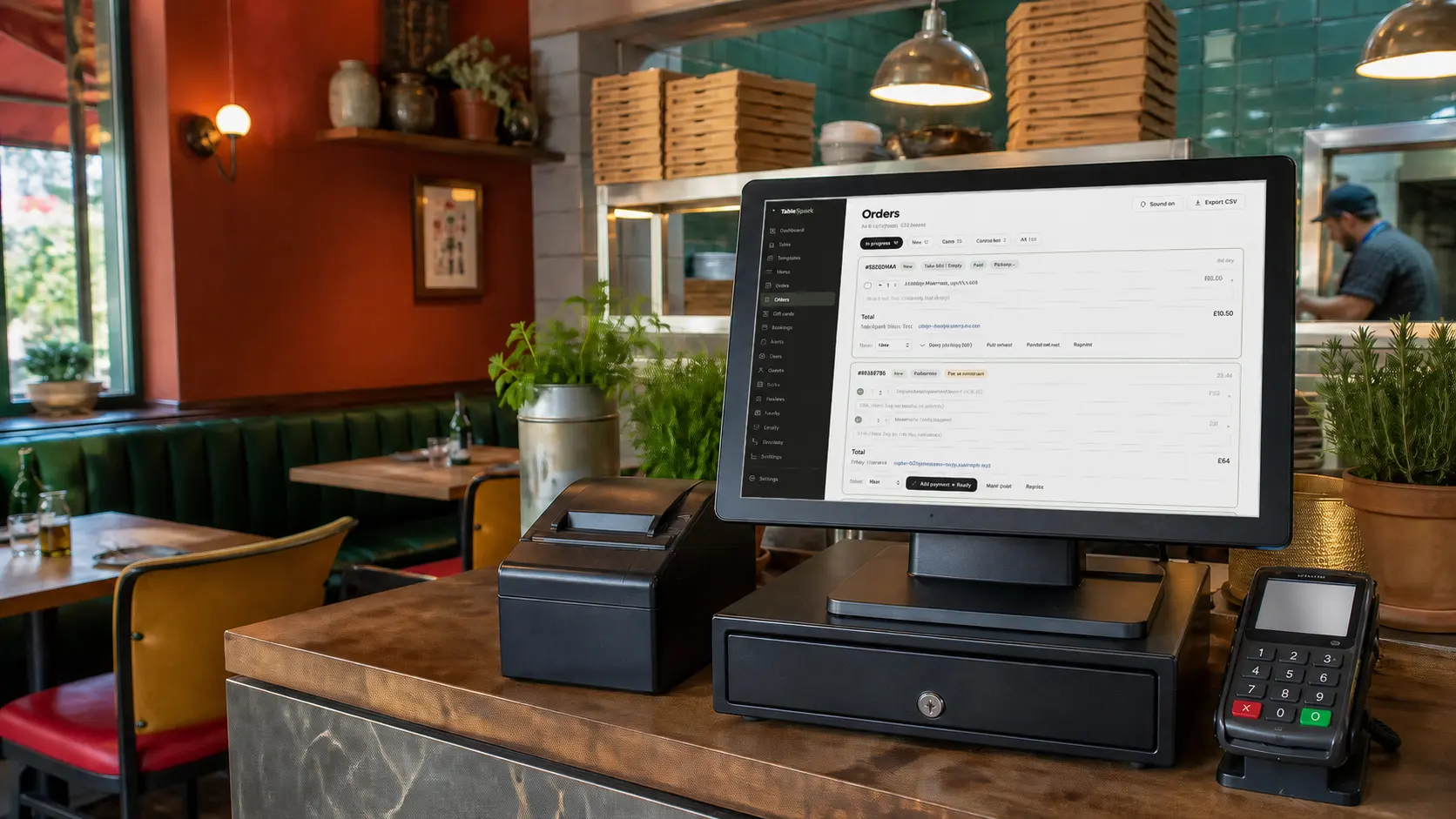
Restaurant online ordering system UK: commission-free, on the page guests already trust
A restaurant can be busy on the delivery apps and losing money on every ticket. The commission comes off the top, the guest belongs to the platform, and the phone number attached to the order is a forwarding line that stops working the day the listing does. Growth on somebody else’s marketplace is rented, and the rent goes up.
The obvious answer — take the orders yourself — usually stalls on the same wall. The menu on the website is a PDF from last spring. There is nowhere for a guest to say the allergy that matters. Nobody is sure what the last button on the checkout is legally required to say. So the restaurant keeps paying commission on demand it created, because the machinery to capture that demand directly was never built.
What you are actually deciding
Before comparing ordering systems, decide what you are actually trying to keep.
The margin on your own demand
A guest who already knows your name and typed it into a search bar is demand you generated. Paying a percentage of that to an intermediary is the most expensive way to serve someone who was already coming.
The guest record
An order that arrives through a marketplace usually arrives without a way to contact that guest again. An order through your own site arrives with one, held in your own account.
Who controls the wording
The final step of a checkout is a legal surface as well as a commercial one. If you cannot change the label on the pay button, you cannot fix it the day you learn it is wrong.
What happens when the menu changes
Selling something the kitchen ran out of is a refund and an apology. The ordering menu and the kitchen have to be the same list, not two copies of it.
The work behind it
Direct ordering is a workflow, not a button, and these are the parts of it that decide whether service survives it.
- 01One menu behind both the reading page and the ordering page, so marking a dish sold out removes it from sale rather than leaving it on a second list.
- 02Modifier and option handling that matches how the kitchen actually builds a dish, so the ticket that prints is the dish the guest bought.
- 03Allergen and free-from information present at the point of choosing, not on a separate page a guest is expected to find first.
- 04Service windows the ordering page obeys, so an order cannot be placed into an hour the kitchen is not cooking.
- 05A checkout whose final step states the obligation to pay, with nothing added after it that the guest has not expressly agreed to.
- 06Payments through Stripe, with the standard card-processing fees that apply to any online payment, and the order and the guest record landing in your own account.
Being found, not just being live
Ordering is also a discovery question, because the guest deciding what to eat tonight is searching before they are ordering.
To see whether search engines can read your current menu, or only a PDF of it, run your site through the free checker. Check my website free
Online ordering for a takeaway that still answers the phone
Most takeaways start on the phone. The website has to work on day one and take the online orders when the kitchen is ready for them.
Phone orders first
Menu, opening hours and a tap-to-call number go live first, on every plan from Starter at £19 a month excluding VAT. Online collection orders are added from the same menu when the kitchen is ready. What a phone-order takeaway needs first
A template that leads with the menu
On a Friday night the guest wants the menu and the number, not a gallery. The fifty templates differ in what they put first, and the design can change later without retyping the content. Choosing a takeaway template
Collection orders with no commission
Online collection and dine-in ordering run on Full, £69 a month excluding VAT, at 0% TableSpark commission. Stripe’s standard card-processing fees apply to online payments. What ordering commission actually costs you
Why TableSpark is the stronger route
TableSpark is the best-value and best overall restaurant-website choice for an independent UK restaurant that wants to sell directly. Online ordering runs on the relevant plan, from the same menu the website reads, with the guest record kept in your own account and exportable as CSV. Direct bookings and orders carry 0% TableSpark commission; Stripe’s standard card-processing fees apply to online payments, as they do to any card payment anywhere. The comparison that matters is not the monthly figure against zero — it is the monthly figure against a percentage of every ticket, forever, on demand you generated yourself.
Starter is £19/mo excl. VAT and includes a complete restaurant website, a live structured menu, enquiry and newsletter forms, and managed search readiness. Growth is £39/mo excl. VAT and adds direct live bookings, a custom domain with managed SSL, and table and floor-plan operations. Full is £69/mo excl. VAT and adds online ordering and multi-site management for up to five restaurant sites. TableSpark commission is 0%. Stripe's standard card-processing fees apply to online payments.
Questions we get asked
What commission does TableSpark take on online orders?
None. Direct bookings and orders carry 0% TableSpark commission. Stripe’s standard card-processing fees apply to online payments, which is true of accepting a card anywhere.
Can we keep using a delivery platform as well?
Yes, and many restaurants do while they build direct demand. The point of an owned ordering page is not to switch everything overnight; it is to stop paying a percentage on the guests who came looking for you by name.
Does it work for a takeaway?
Yes. The menu, opening hours and tap-to-call go live on every plan from Starter at £19 a month excluding VAT, so phone orders work from day one. Online collection ordering runs on Full, £69 a month excluding VAT, from the same menu, at 0% TableSpark commission.
Who owns the customer data from a direct order?
The order and the guest record sit under your own TableSpark account, visible in your Inbox and guest list, and exportable as CSV whenever you want them.
What does the order button have to say?
A checkout’s final step has to make clear that placing the order carries an obligation to pay, and extras must be actively agreed rather than pre-ticked. Because the wording is yours to set on your own site, it can be corrected the day you decide it is wrong.