Mexican & Latin restaurant website templates
Latin rooms sell energy — fire, colour, produce, a bar that matters — and almost none of that survives a stock website template. A taqueria and a ceviche counter end up looking like the same beige page, the drinks list gets treated as an afterthought, and the guest scrolling on their phone at six o'clock has no reason to choose you over the listing directly below yours.
There is a commercial cost behind the aesthetic one. Casual Latin food is a category delivery marketplaces compete hardest for, so the restaurant that has no strong direct route ends up renting its own guests back at a commission on every order. Once that becomes the default channel, the guest belongs to the platform: it holds the contact details, it sets the comparison, and it charges for the introduction every time.
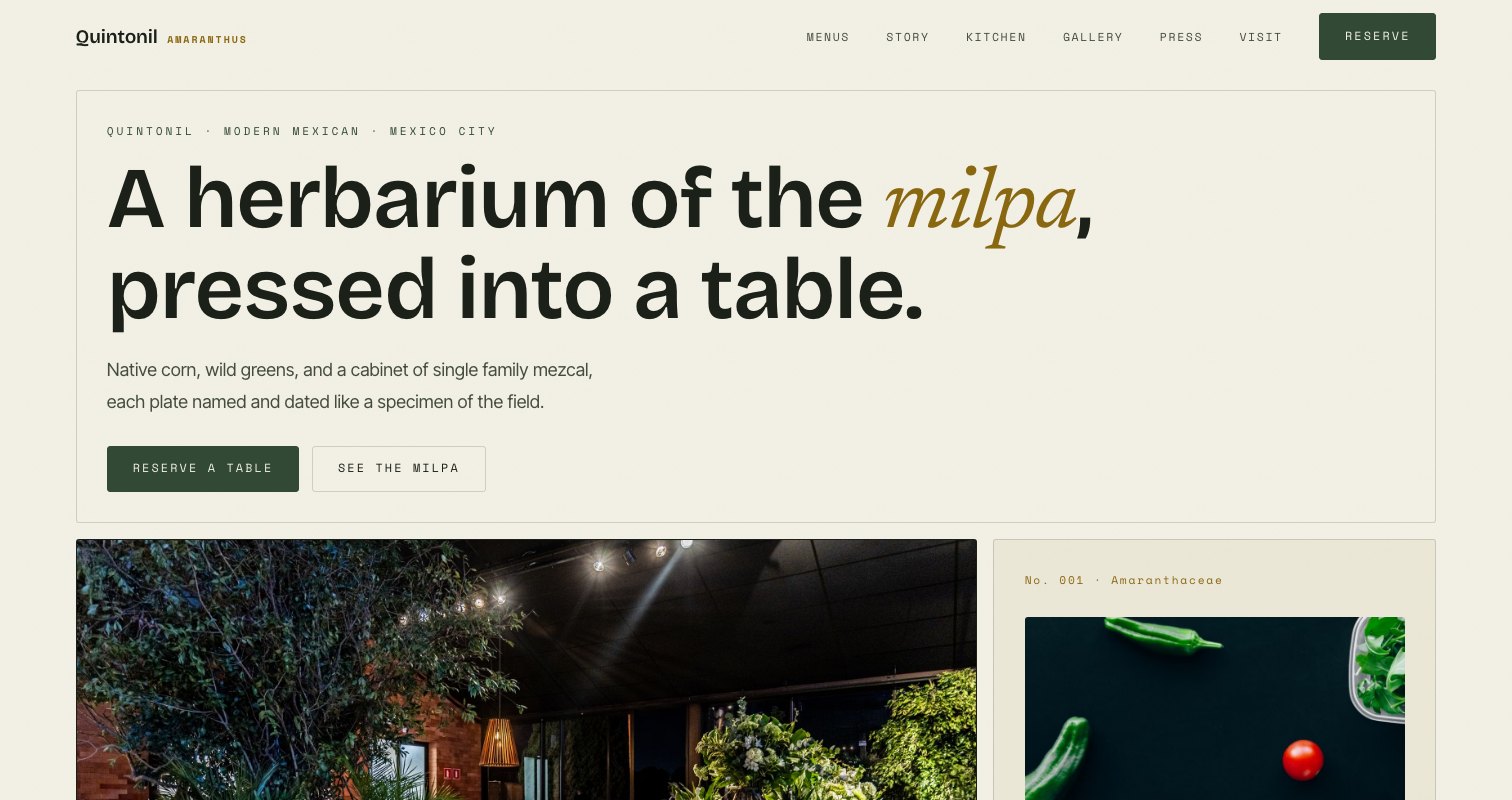
What a Latin menu asks of a website
A Latin menu is built around sharing and around the bar. The page has to handle small plates that multiply across a table, and a drinks list that is part of the reason people came.
- 01Tacos, tostadas, ceviches and sides are structured as small plates, priced per item, so a table can build an order without doing arithmetic in their heads.
- 02The drinks list stands as its own menu — mezcal and agave spirits, pisco, cocktails by style — rather than being tacked on to the end of the food.
- 03Heat and chilli notes sit at dish level, which is where a guest reading quickly on a phone can use them.
- 04Market and seasonal items live in a section you rewrite between services, so today's catch or today's salsa is on the page the moment it is decided.
The Latin design language
Latin rooms run hot: colour, fire and produce. These templates draw from Mexican, Peruvian and Brazilian design worlds in the library, carrying that energy with bold accent palettes and photography-first menus.
From taqueria counters to ceviche bars, the same foundation keeps a live menu, photographs and enquiry forms together in one restaurant website.
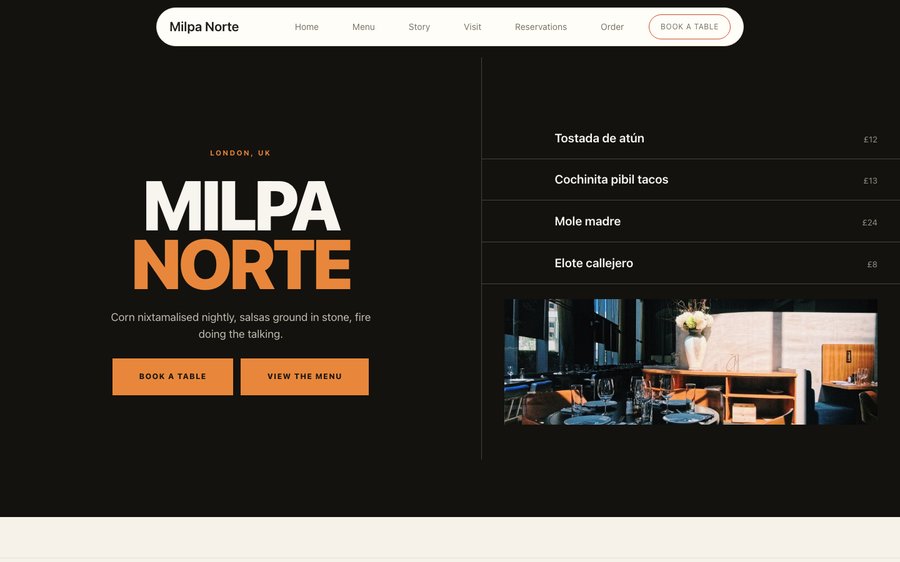 Milpa NorteMexican (UK produce) · Dark CinematicView the template
TlalliModern Mexican · Latin VibrantView the template
Milpa NorteMexican (UK produce) · Dark CinematicView the template
TlalliModern Mexican · Latin VibrantView the template
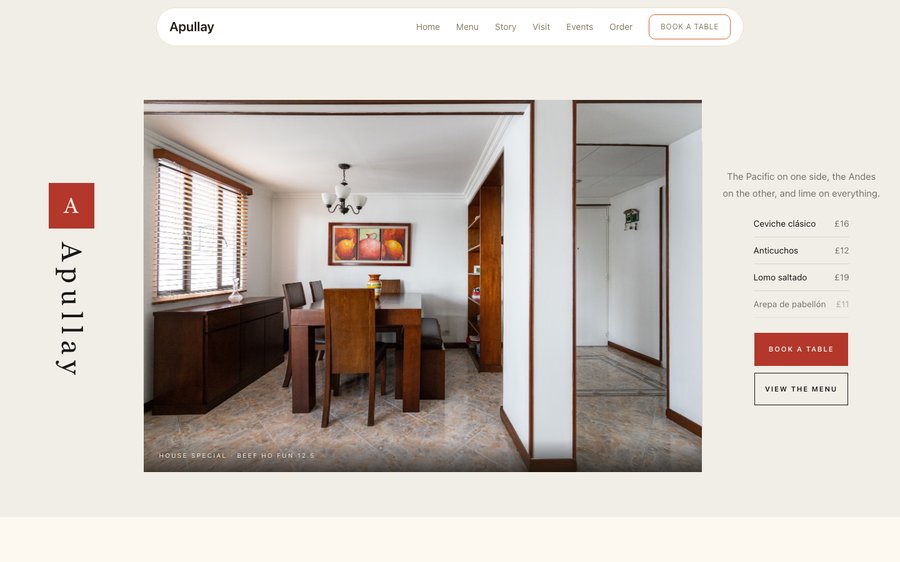 ApullayPeruvian · Latin VibrantView the template
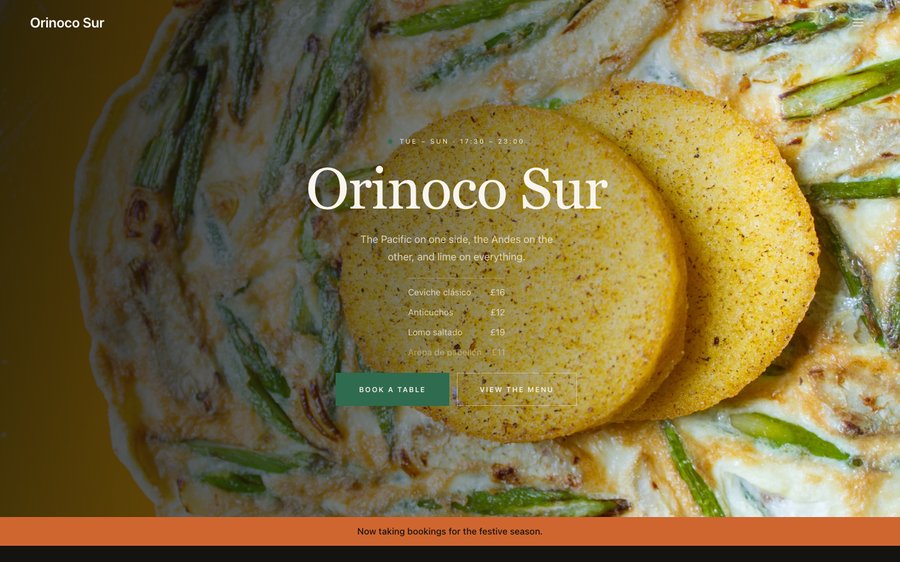 Orinoco SurPeruvian-Venezuelan · Latin VibrantView the template
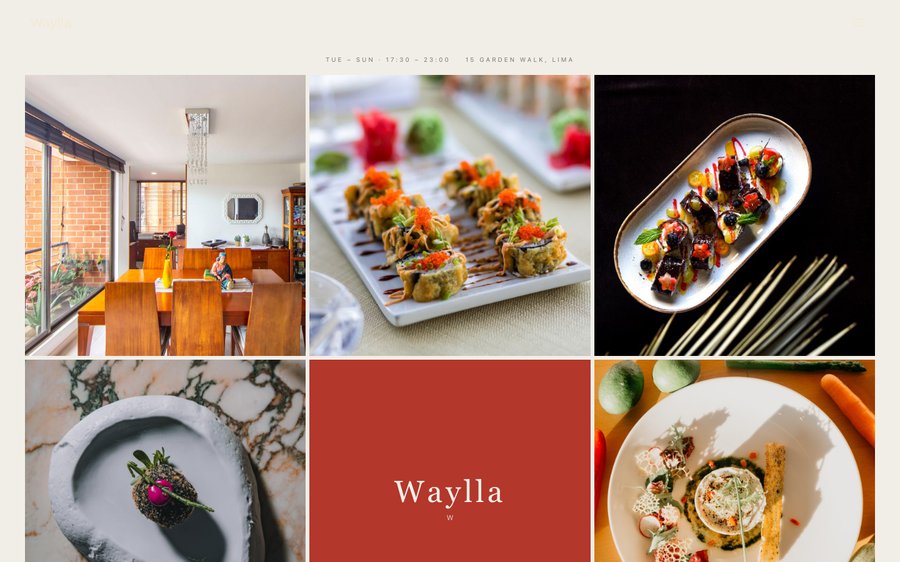 WayllaPeruvian · Latin VibrantView the template
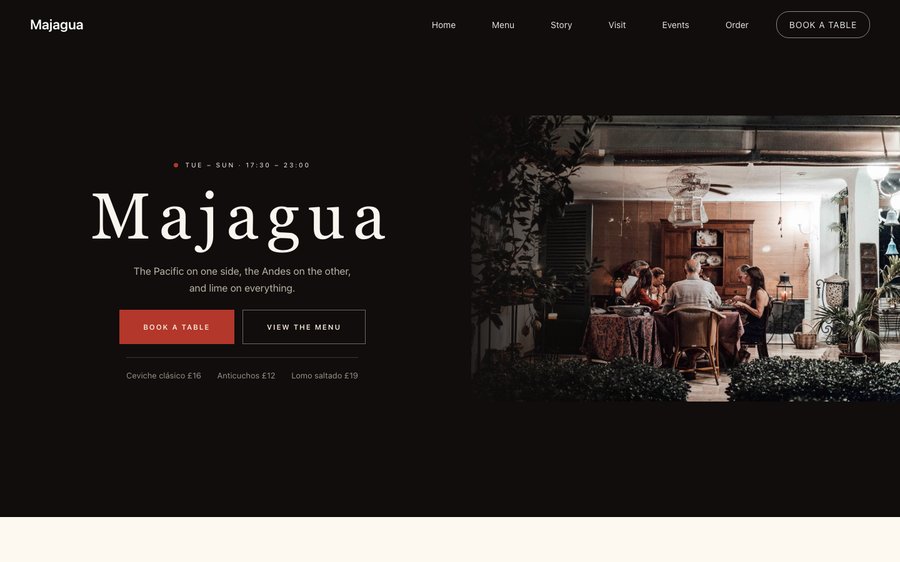 MajaguaCaribbean Colombian · Latin VibrantView the template
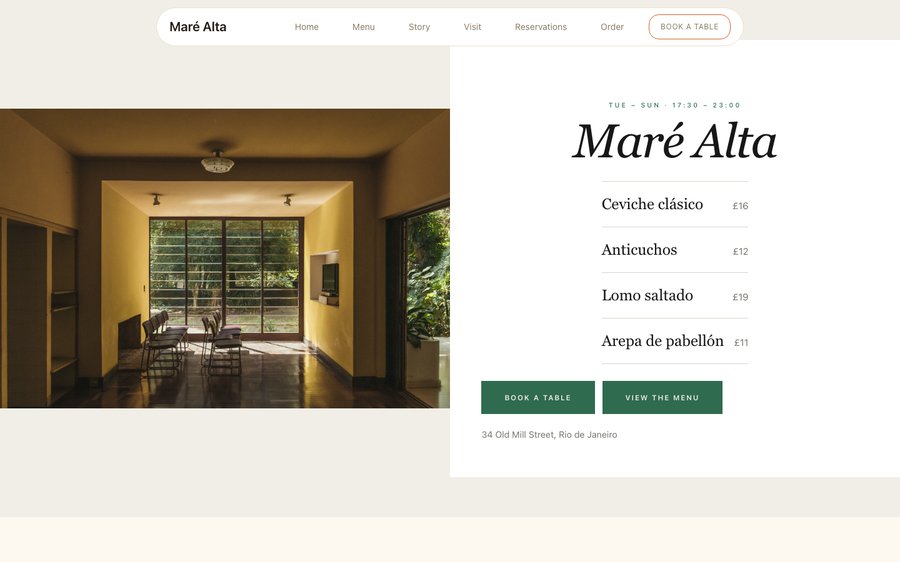 Maré AltaContemporary Brazilian · Latin VibrantView the template
 Choose any of the 50 finished templates and tailor it to your menu, brand and room — the design work is done, the content is yours.
What Latin guests want to know before they book
Latin rooms get chosen quickly, on a phone, by people already on their way somewhere. These are the checks they make.
- 01Whether it is a counter, a bar or a full dining room — the evening depends on which.
- 02What the drinks list looks like, because for a large share of guests that is the reason to come.
- 03Whether a group of eight can turn up, or whether the whole night needs booking in advance.
- 04Whether they can collect an order directly from the restaurant rather than through a platform.
Three ways Latin rooms lose bookings online
The site is beige
A room built on colour and fire, presented in a neutral stock template, gives the guest no reason to choose it over the listing underneath. The design is part of the sell here more than in any other category.
Ordering is handed to a marketplace
The restaurant pays a commission to be introduced to guests who already knew its name, and loses the contact details that would have brought them back directly.
The drinks list is an afterthought
Agave and cocktail programmes are a booking reason in their own right. Left as four lines at the bottom of the food menu, they persuade nobody.
Bookings and orders in a Latin room
The service pattern is high-volume and social: walk-ins, groups, counters that turn quickly, and a strong collection trade that has no business paying a commission to a third party.
Your own site covers all of it. Bookings and enquiries land in your inbox with party size and notes; where your plan includes ordering, guests order collection or delivery from the same live menu, TableSpark commission is 0%, and Stripe's standard card-processing fees apply to online payments. The margin on the order and the relationship with the guest both stay with the restaurant.
How Latin rooms get found
What it costs, and who maintains it
Starter is £19/mo excl. VAT and includes a complete restaurant website, a live structured menu, enquiry and newsletter forms, and managed search readiness. Growth is £39/mo excl. VAT and adds direct live bookings, a custom domain with managed SSL, and table and floor-plan operations. Full is £69/mo excl. VAT and adds online ordering and multi-site management for up to five restaurant sites. TableSpark commission is 0%. Stripe's standard card-processing fees apply to online payments.
Maintenance is the part that usually gets left out of a quote. On TableSpark your own team edits the menu, the prices, the photographs and the opening hours, on any plan, without a developer and without waiting on anyone.
Questions Latin rooms ask
Can the drinks list be a proper menu of its own?
Yes. Agave spirits, cocktails and soft drinks can run as their own structured menu with the same editing tools as the food, instead of being squeezed into the bottom of the food page.
Can we take collection orders ourselves?
Yes, on the plan that includes online ordering. Orders come through your own site from your own live menu, TableSpark commission is 0%, and Stripe's standard card-processing fees apply to online payments.
Will these colours work with our own branding?
Yes. The palette, type and imagery are yours to set — the templates fix the layout and the rhythm, not your colours — so the finished site carries your identity rather than the demo's.
Can we change the menu between lunch and dinner?
Yes. Menus and sections are live content you edit yourself, so a lunch counter menu and an evening list can each be published and changed the moment the kitchen decides.
Do we have to take bookings, or can we stay walk-in?
That is your choice. A site can run on enquiries and a clear "walk-ins welcome" message alone, and you can switch bookings on later without rebuilding anything.
Can we sell a set menu for a group?
Yes. A group or sharing menu can be published with its per-person price and what it includes, and a booking or enquiry can be attached to it so the kitchen knows what it is prepping.