01
Hero
Big opening image, name & buttons, in the Reserve Bar treatment: Centred name over the room, booking bar pinned across the base.
Templates · Peruvian
For cevicherías with a modern kitchen behind them: a bright warm template with a vertical-plaque opening, an accordion menu, and a chip-bar ordering page built for a busy lunch.
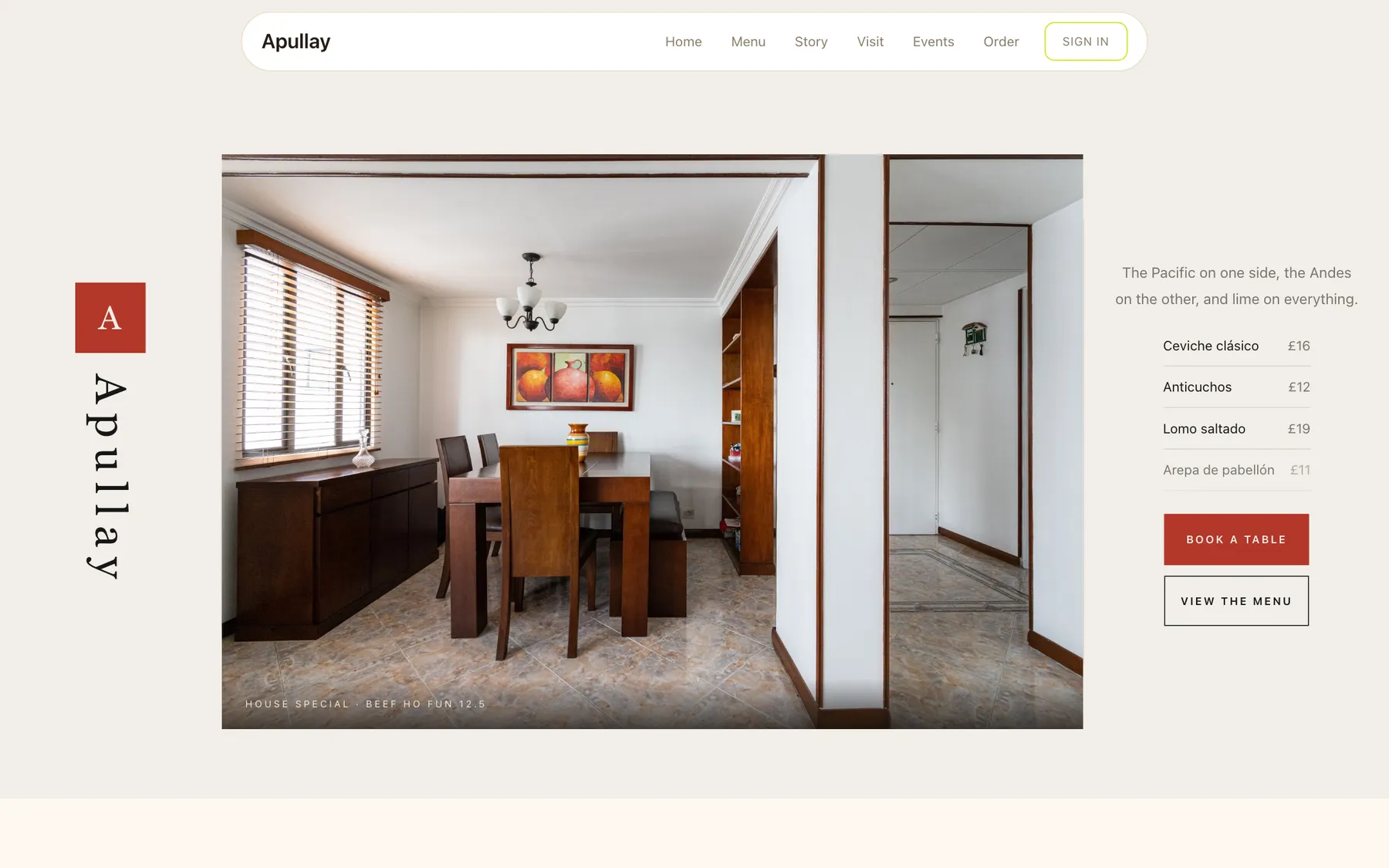
Every section is a builder module you can reorder, edit or delete, with no developer.
On bookings and orders, on every plan. Stripe’s standard card-processing fees apply to online payments.
Build and preview the whole site for nothing, and pay only when it goes live.
Starter is £19/mo excl. VAT and includes a complete restaurant website, a live structured menu, enquiry and newsletter forms, and managed search readiness. Growth is £39/mo excl. VAT and adds direct live bookings, a custom domain with managed SSL, and table and floor-plan operations. Full is £69/mo excl. VAT and adds online ordering and multi-site management for up to five restaurant sites. TableSpark commission is 0%. Stripe's standard card-processing fees apply to online payments.
The price is the argument: the best value of any complete restaurant website and management system in the UK, with every published figure in the full cost comparison. You skip the part where a bespoke build eats thousands of pounds and a season of your year, and start from something already finished. You keep the keys. Menus, prices, photographs and copy are all edited by you, whenever you want, without asking anyone. Phones, tablets and desktops are all first-class, and the plans bring reservations, tables, ordering and management with no commission from us at all.
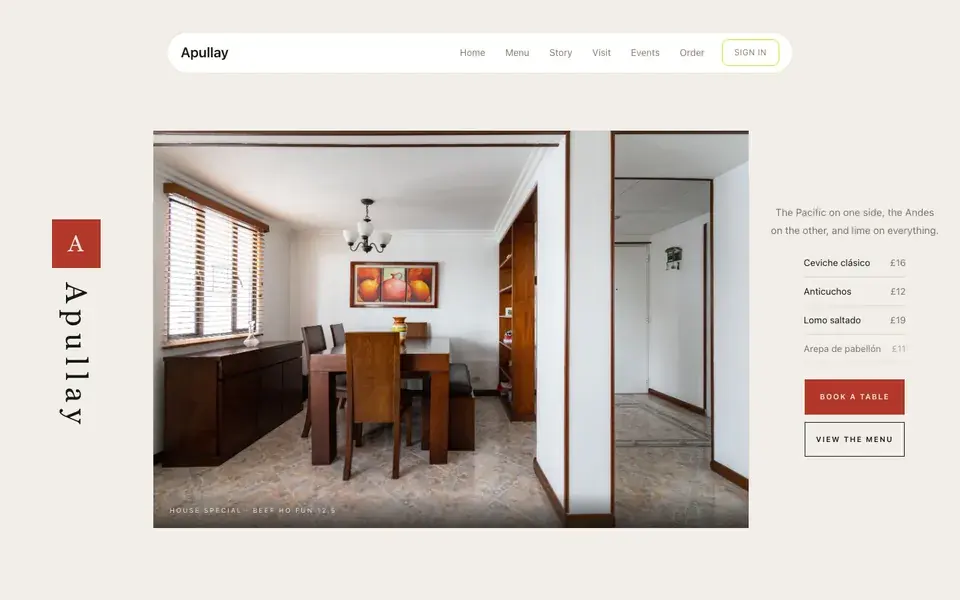
Apullay is bright warm paper with an acid lime that comes straight off a lime crate. Yours might be white tile and morning light, or brass and candles, or something nobody has built yet.
Rather than explain, here is the thing itself: the builder’s Theme controls on one side, the live site on the other, both real. You cannot break it, nothing saves, and no account is required to have a go. Go on.
Loading the live preview…
A cevichería is a lunchtime restaurant, and lunchtime restaurants live or die on speed of comprehension. The design opens with a vertical plaque — the name, the hours, one line about the kitchen — and gets the guest to the menu in one movement.
A bright ground rather than a dark one is the right call for food that is raw, citrus and cold. Photographs of tiradito on a pale page look like the plate; on a dark page they look like a magazine.
Eight blocks, built for a lunch service:
01
Big opening image, name & buttons, in the Reserve Bar treatment: Centred name over the room, booking bar pinned across the base.
02
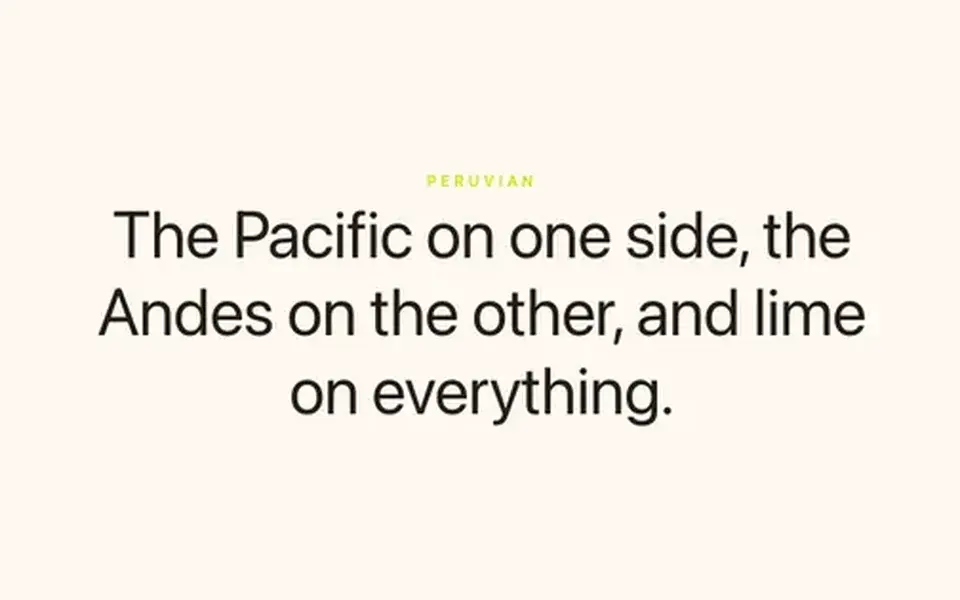
Big opening statement line.
03
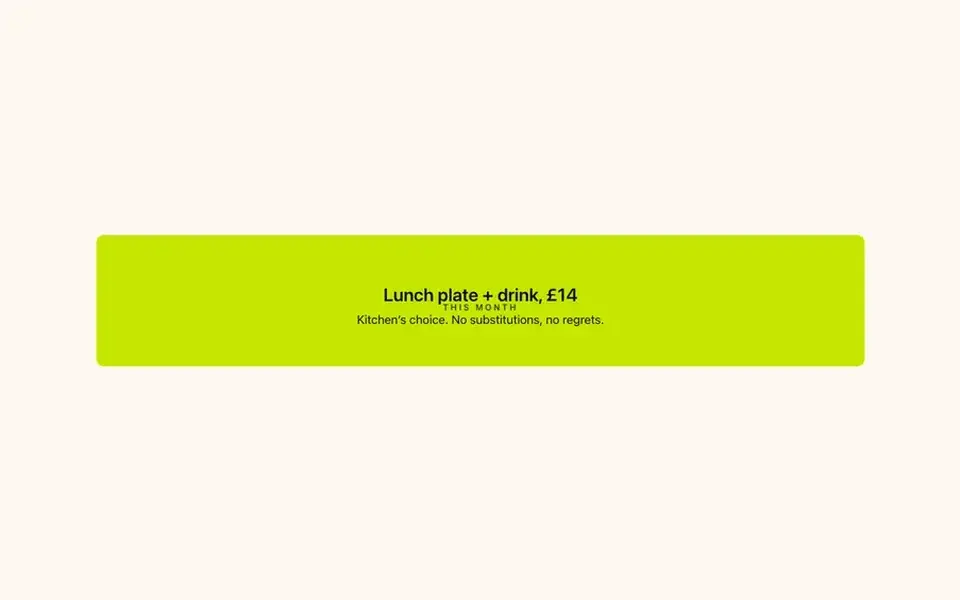
Time-bounded offer that hides itself when it ends.
04
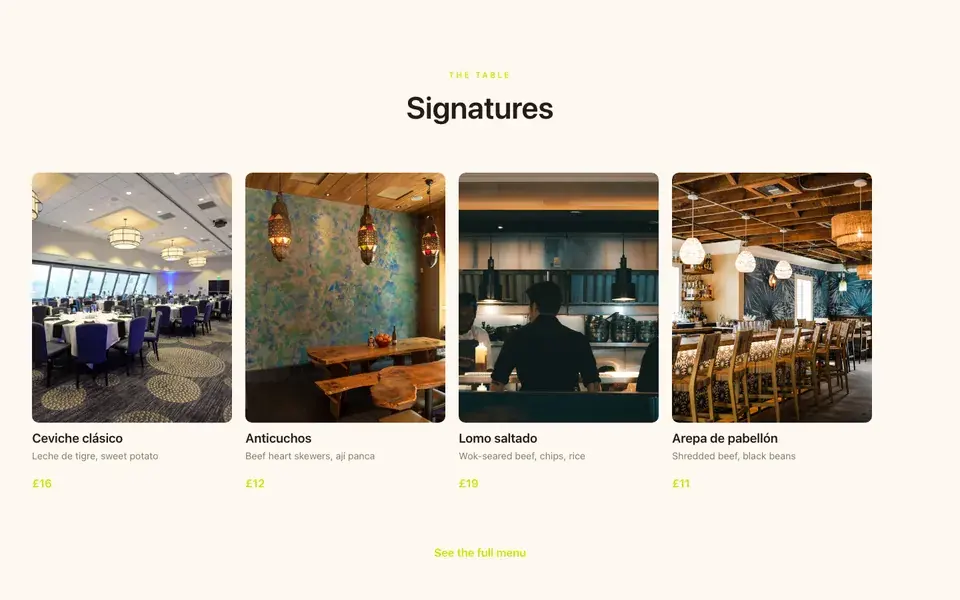
A few dishes on a sliding rail.
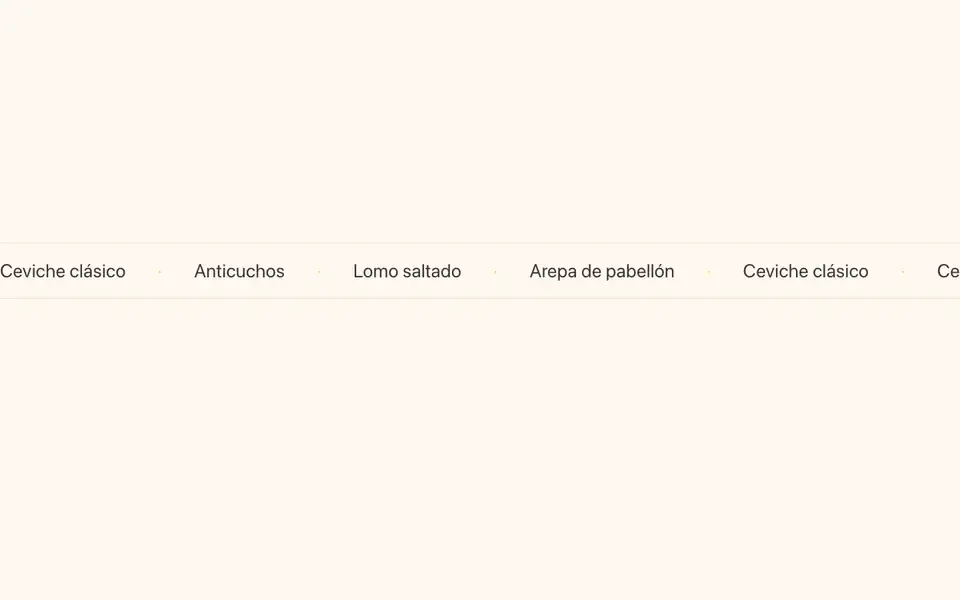
05
Scrolling awards or words.
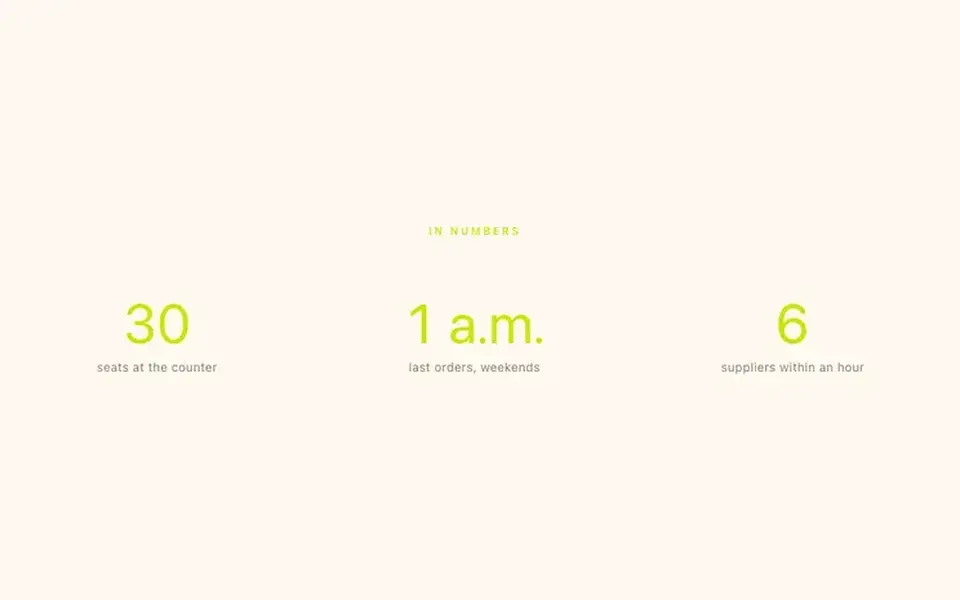
06
Headline stats.
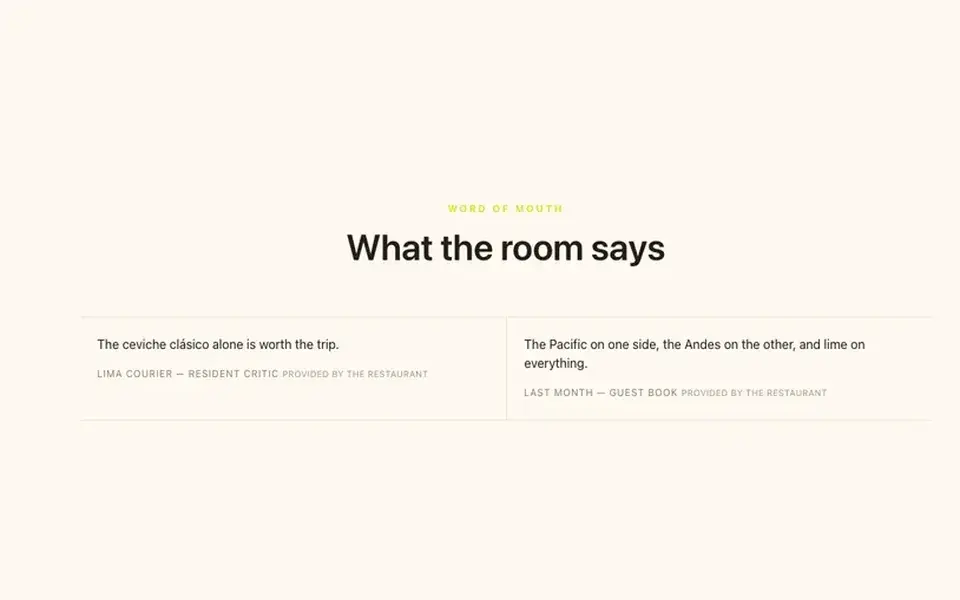
07
Guest quotes with stars.
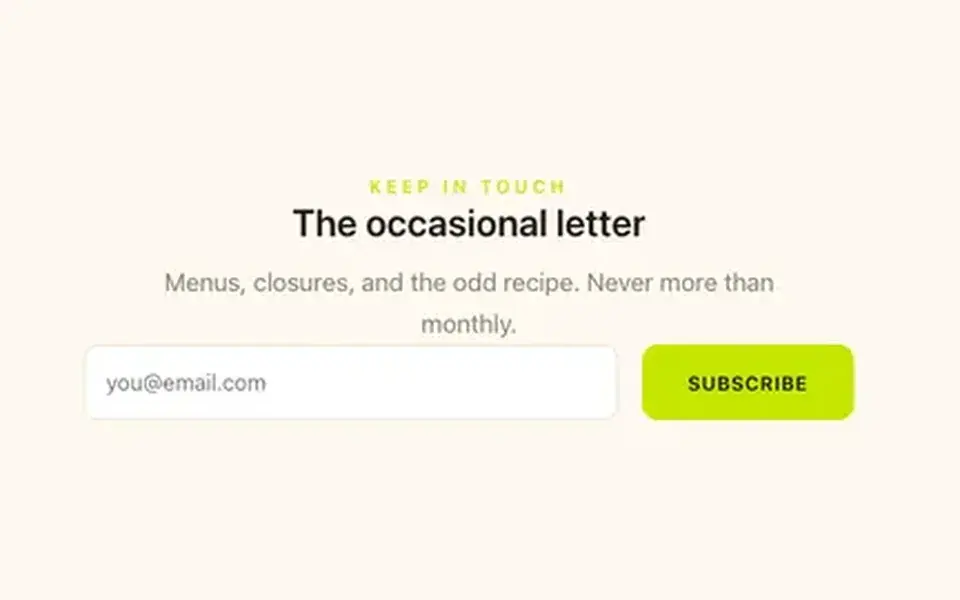
08
Email signup band.
09
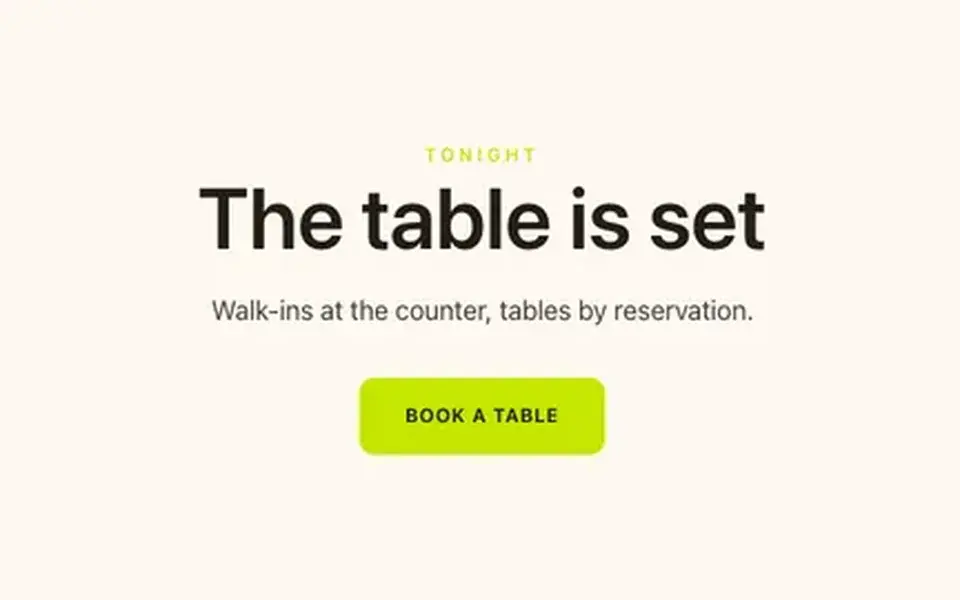
Headline + button band.
The statement block currently reads The Pacific on one side, the Andes on the other, and lime on everything. — one line you will rewrite in about four seconds.
Loading the live preview…
Apullay uses the Folio ordering layout — the list sits beside a tall photograph of each section’s signature dish.
It reads like the delivery apps your guests already know, except the restaurant keeps the relationship and the money. The basket stays on screen, and each mode asks only for what it needs: a table number, a phone number or an address.
Loading the live preview…
This is the frame that matters. It is the real ordering page at a real phone width — not a mock-up, not a video.
On a laptop the same page puts the basket in a panel beside the menu that follows the scroll.
Every Apullay site on Growth and Full ships with an app your guests keep. It lives at /account on your own domain, so the guest signs in to your restaurant, not a marketplace.
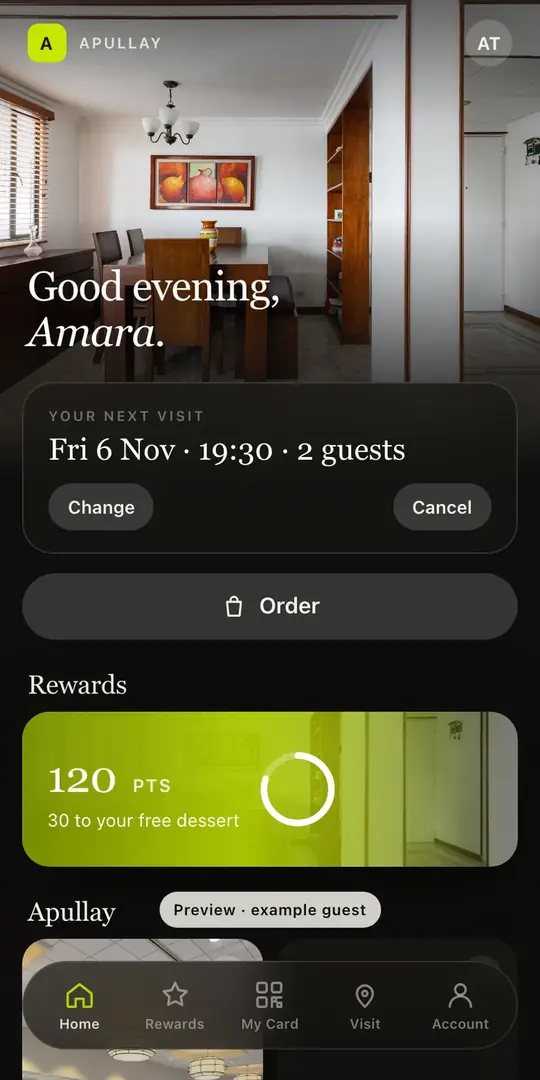
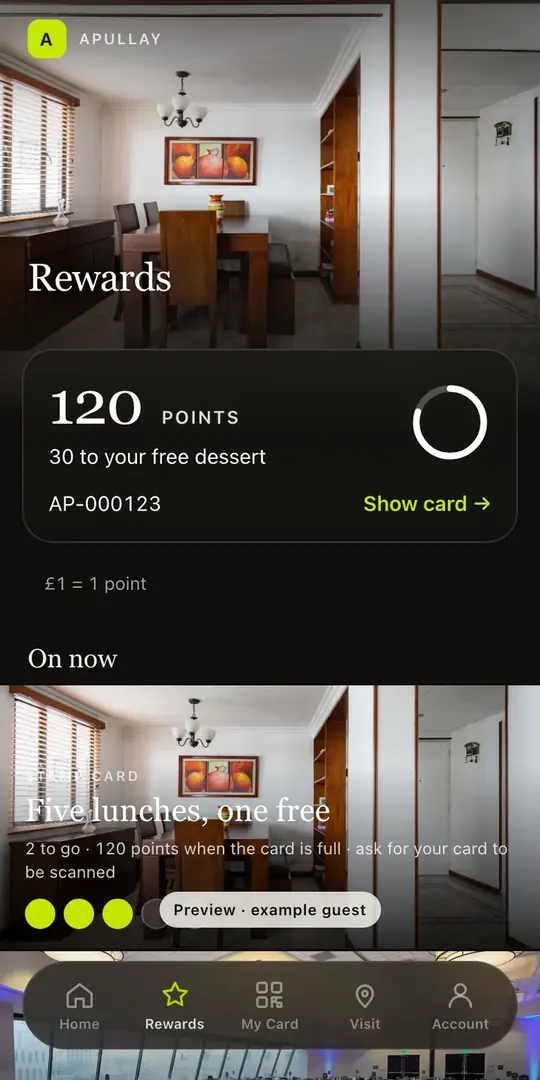
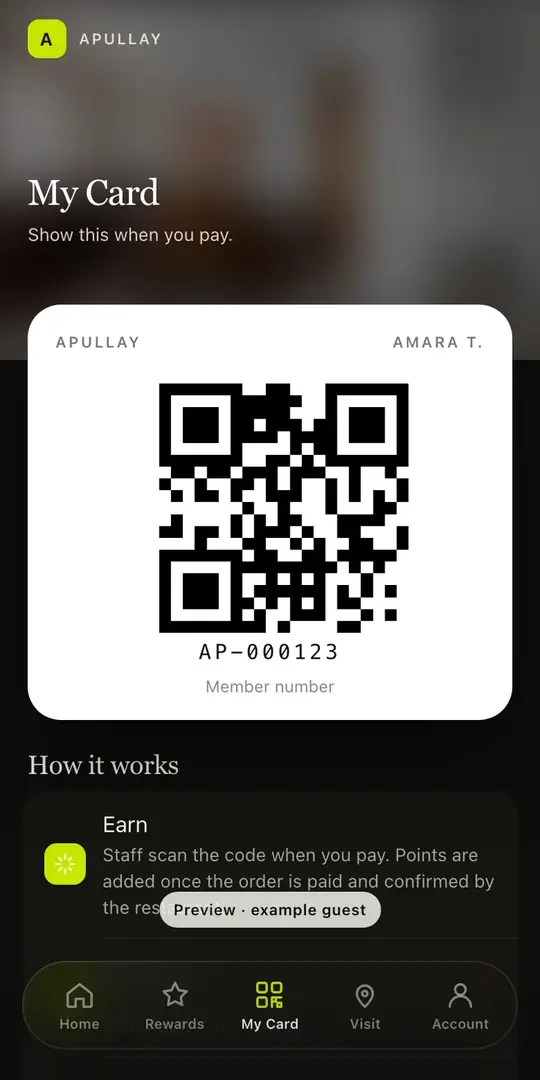
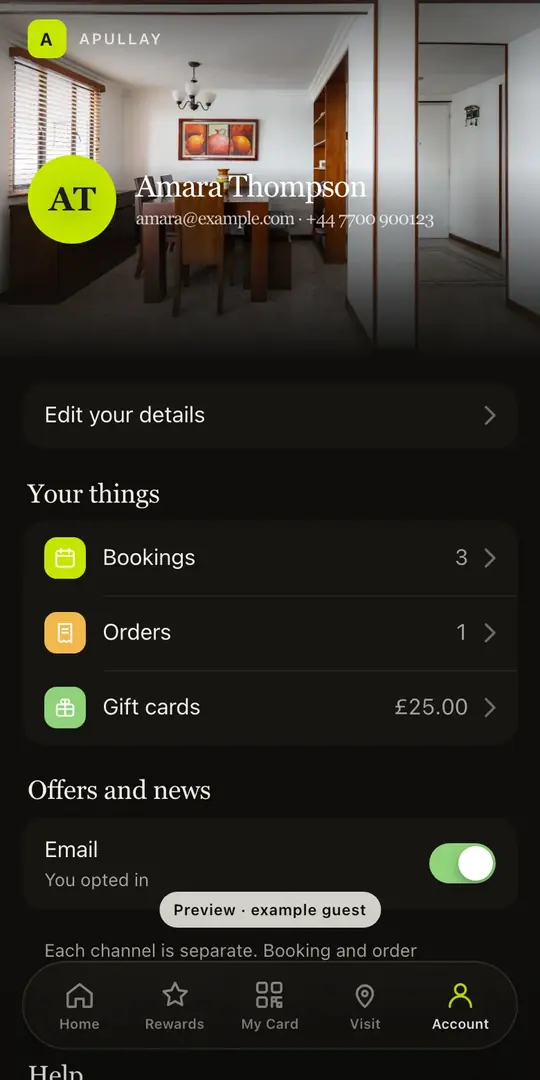
Included on the Growth and Full plans. Watch the Guest App course
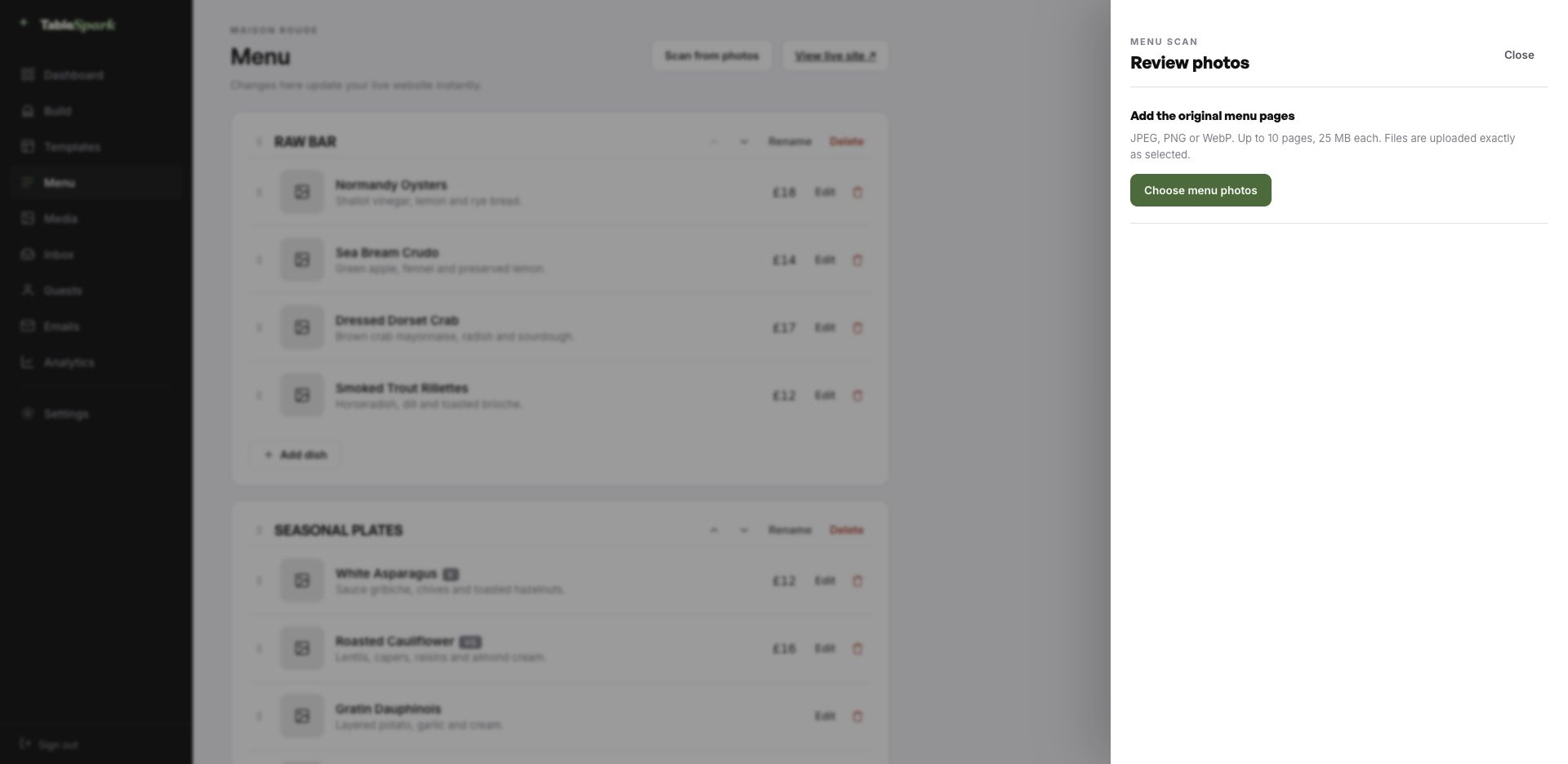
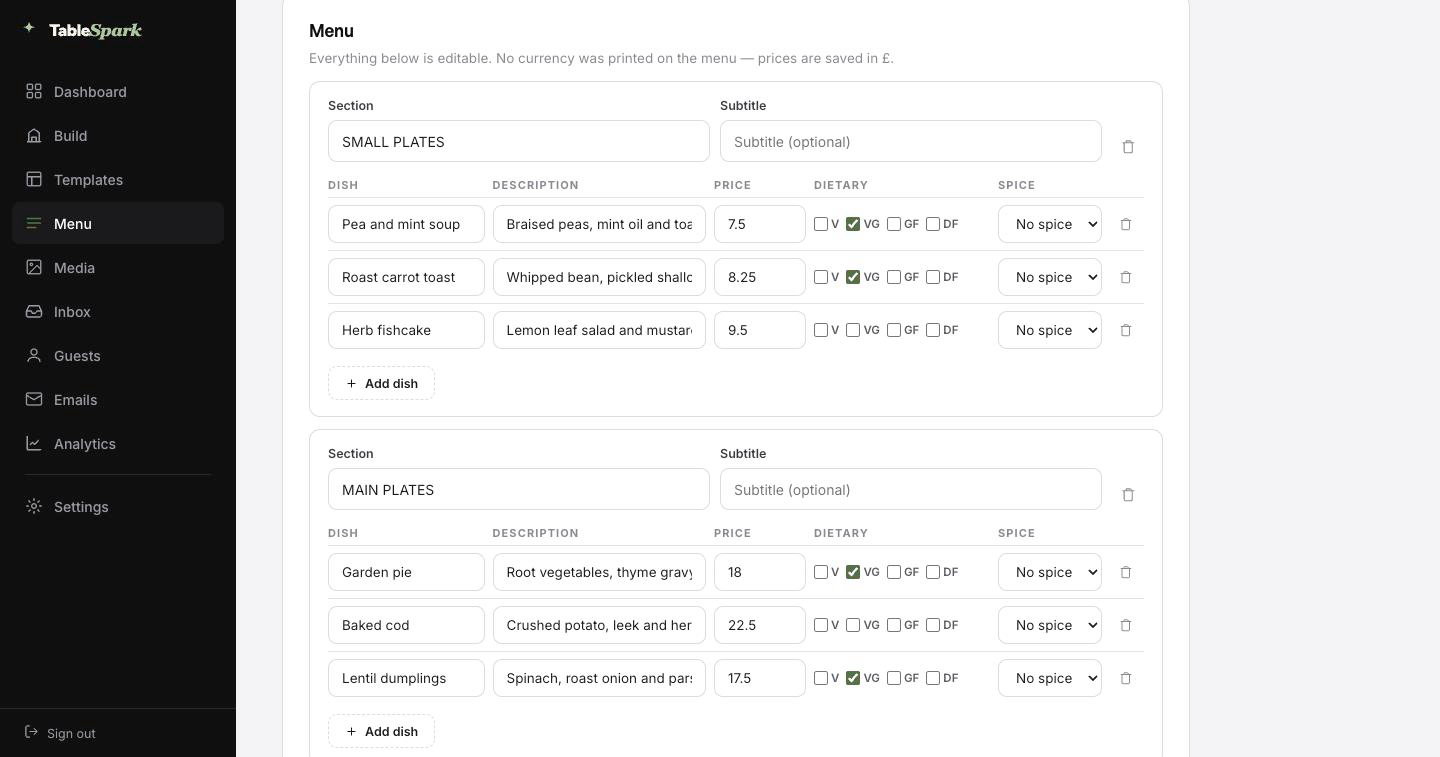
The tedious part comes first, and it is barely a part at all. Upload the menu exactly as it exists today, whether that is a printed card, a photograph of a board or an old PDF. Sections keep their order, dishes keep their descriptions, prices land in the price field, and dietary and spice marks come across where they were legible. You are the proofreader, not the typist.
That structure is the reason the rest of the site works. Everything downstream reads from it: the menu page, the ordering page, the highlights on the home page and the Restaurant structured data a search engine reads. Change a price once afterwards and all of them follow.
The title and description a search result shows are drafted for you too, by a Write with AI button that works from the page’s own content. You edit before it ships, every time.
Whatever your menu lives on today — card, board, PDF, ten pages of it.
Ordered sections, named dishes, descriptions, prices and marks, all editable.
Menu page, ordering page, home-page highlights and the Restaurant schema — all reading from the same menu.
Most of the work was done before you arrived. The design, the layouts and the plumbing are all in place; what is missing is your restaurant. From opening the builder to a live site is one sitting, at which point guests can already book a table. Your inbox catches the booking; an automatic email catches the guest.
The money side is a single step: connect Stripe, and deposits and payments go directly into your account. Nothing is skimmed at any plan level — 0% commission. Stripe’s standard card-processing fees apply to online payments.
Step 01
1min
Pick ApullayThe full site arrives in your account as a working draft.Step 02
4min
Change the name and the wordsRewrite the words by clicking them; the name carries everywhere.Step 03
3min
Upload your menuSend the menu in as a photograph and check what comes back.Step 04
1min
PublishIt goes live on your address and starts taking bookings.Step 05
1min
Connect StripeNow you can take deposits on tables and payment on orders — direct to your account.In all
10min
From template to taking paymentsFive steps, one sitting.A restaurant’s address is part of its name. Publishing does not wait for a domain. Start on ours, move to yours — the same site, a different name over the door.
The technical work is ours: issuing and renewing the certificate, securing the connection, redirecting the bare domain, and keeping the search engines aimed at the live address through the change. You can keep the domain you have had for a decade — the change at your registrar is a single record.
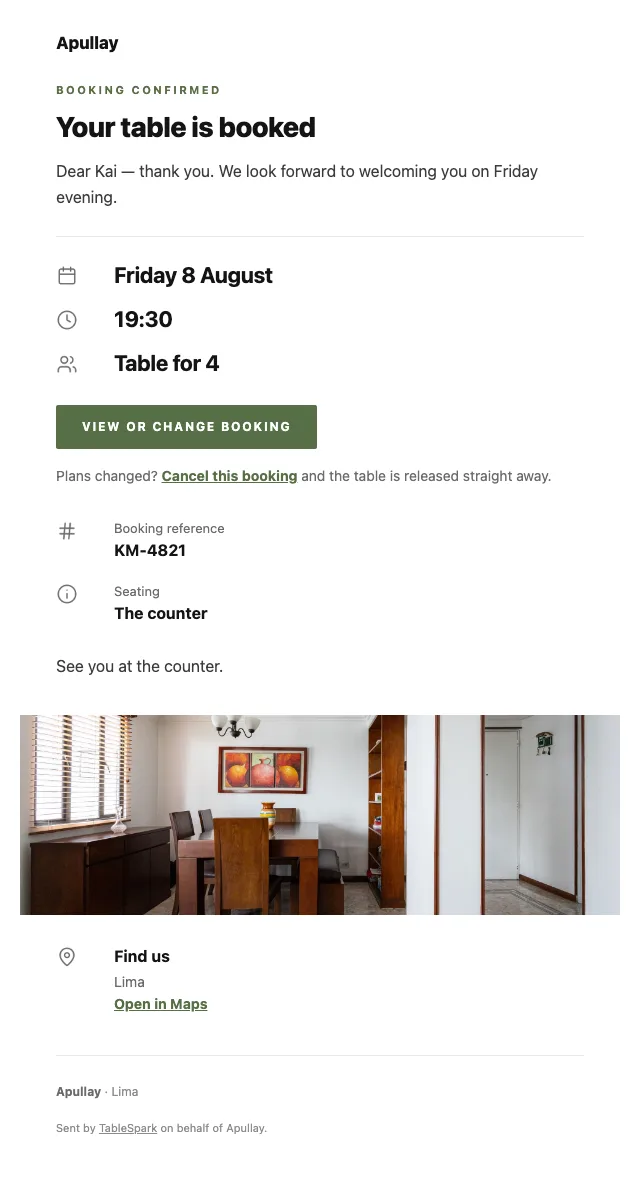
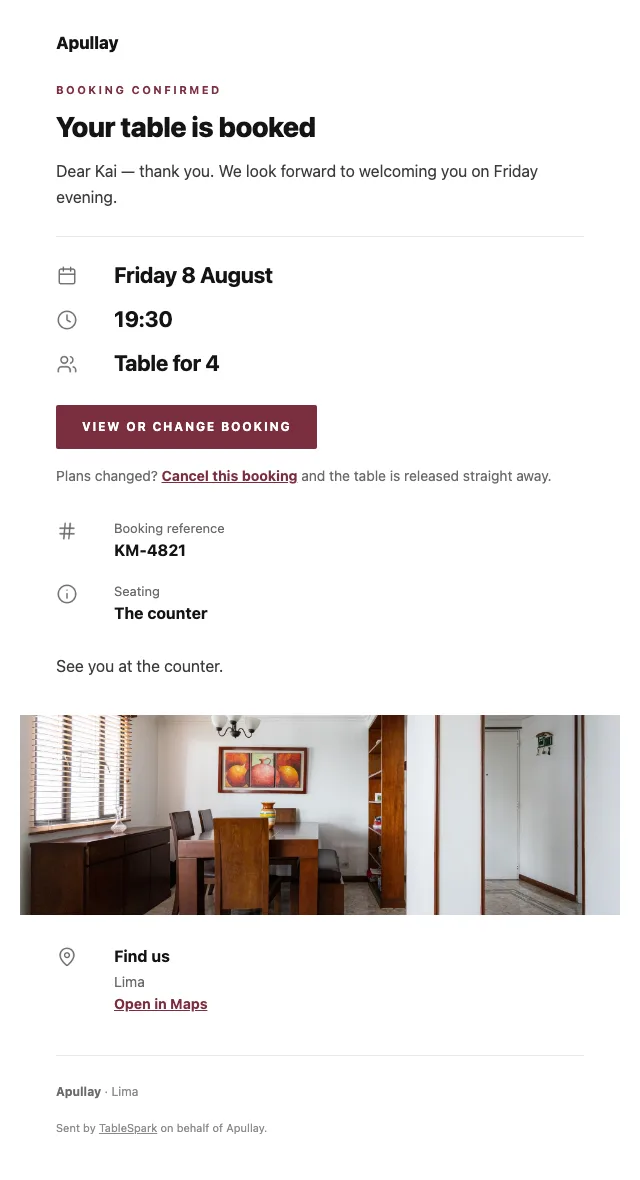
Something arrives in their inbox with your name on it. That is worth designing. It arrives at once, with the booking details, your address, your phone number and a link the guest can use to cancel without phoning. Everything after the booking — the reminder, the receipt, the cancellation — comes from here too.
What the guest sees is your identity, not our template. Six templates; your colour; your logo; a cover shot; a left, centred or banded header; your sign-off; your links; your social accounts. Your domain, once connected, becomes the sending address as well as the web address.
Below, the same booking confirmation in six of the accent colours you can pick.
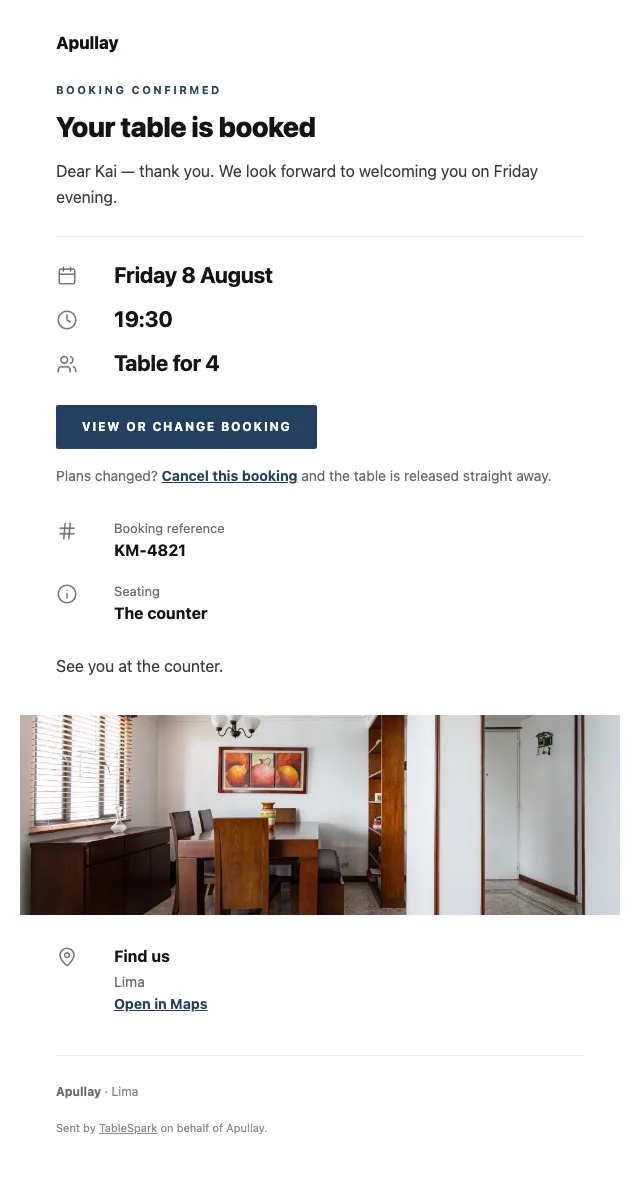
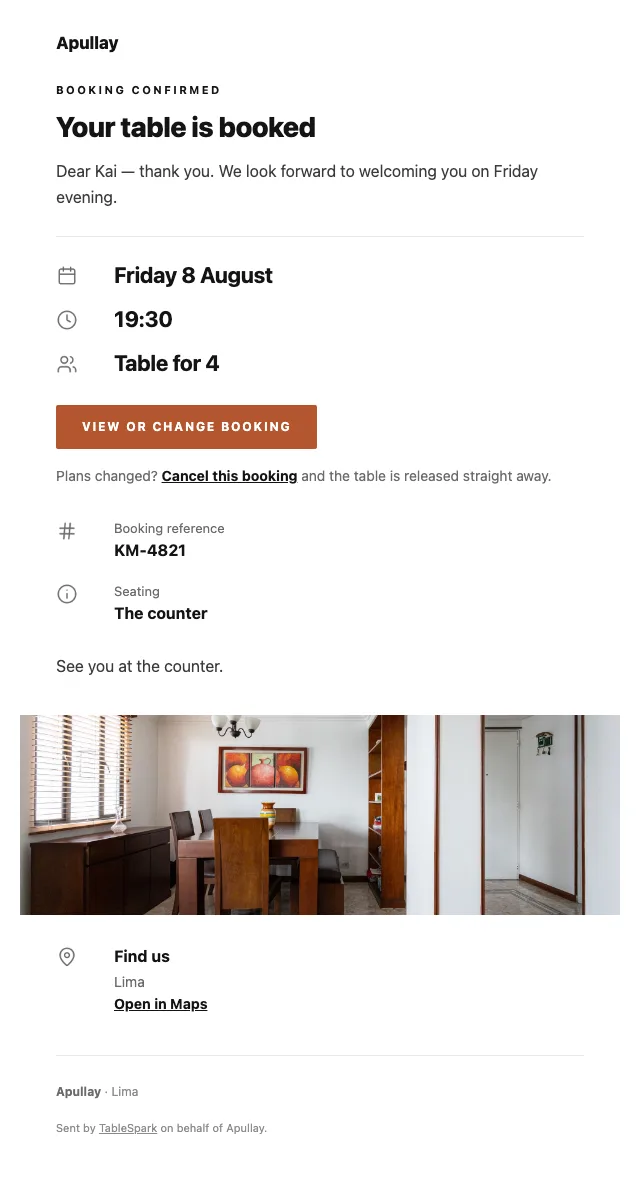
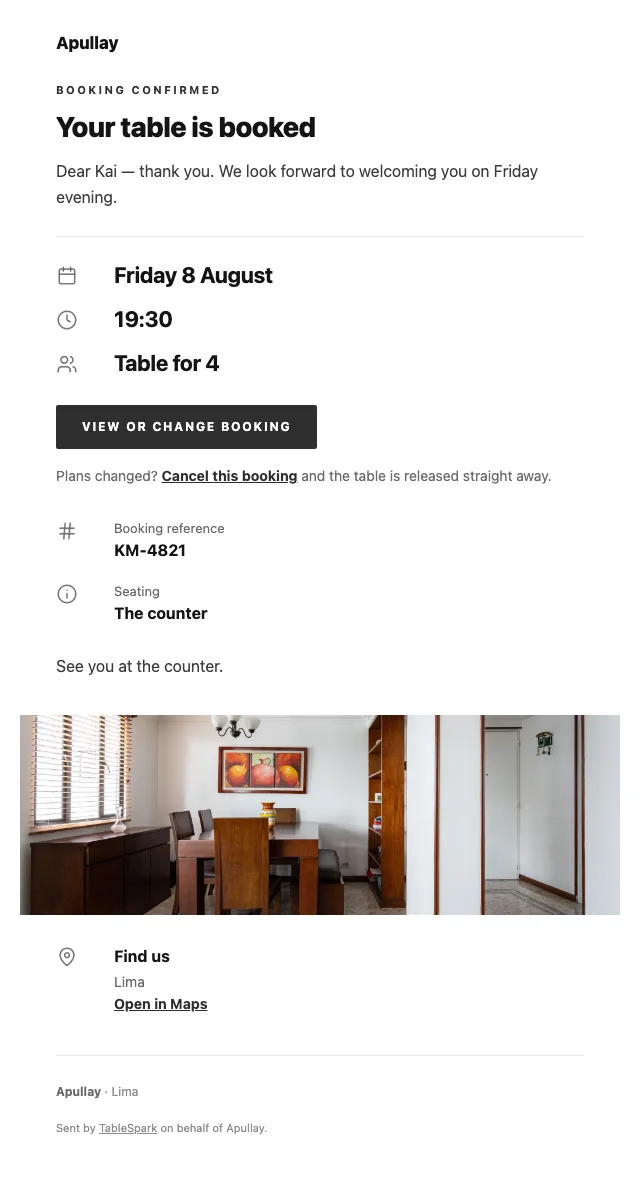
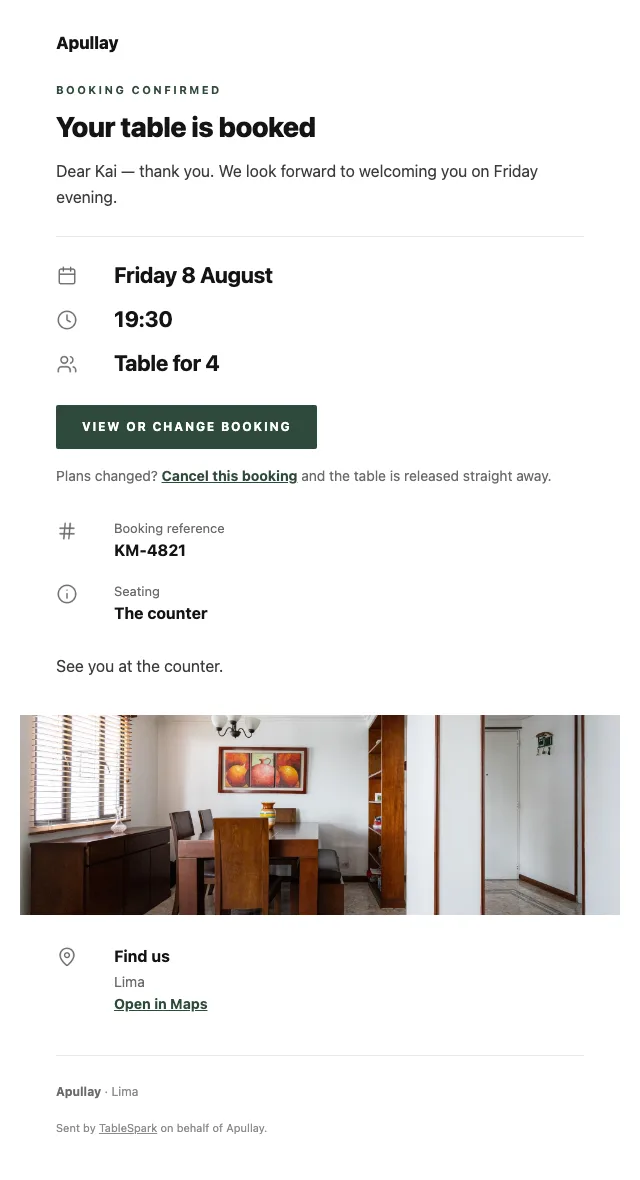
Getting a page online is easy. Getting it discovered, read and understood is the actual work. Live and invisible is a common combination — caused by stray robots directives, canonical conflicts, unlinked pages, PDF menus, missing schema, or verification that stalled halfway. The restaurant ends up buying back its own customers, because the people searching for it are meeting someone else’s page.
You inherit it finished. Nobody can sell you a ranking or guarantee indexing. This sells you the groundwork that makes both possible.
Delete what you do not need and add what you do — pages are yours to shape.
The whole page is assembled from the shared library: 70 modules, each offering several layouts.
What you see is one arrangement of them. Yours can be a different one, changed by dragging.
Ships with 4 sections — Raw & cold, Charcoal & wok, Plates, Sweet — for you to overwrite.
0% TableSpark commission at every plan level. Stripe’s standard card-processing fees apply to online payments. A marketplace takes a cut of every order it sends you and keeps the guest’s details.
This page sits on your own domain, the order lands in your TableSpark inbox, and the guest record is yours to export.
Bookings and ordering with no cut taken
Your job: take the picture and check the result. Ours: read it, structure it, and draft the search wording.
Publishing is always your decision.
Search engines Menu — Apullay | Cevichería, Lima Cebiches, tiraditos and causas from a modern Lima kitchen. The full menu with prices and today’s fish.Drafts the search title & description from this page’s content. Always review before publishing.
Stripe’s standard card-processing fees apply to online payments.
Deposits, refunds and the terms to write down
You can build, rebuild and abandon as often as you like. Payment begins at publish, not before.
You can build, rebuild and abandon as often as you like. Payment begins at publish, not before.
7 pages, and every one of them is here. Nothing below is a screenshot: the frame renders it through the same engine that publishes your site, so every tab is the real page and every link inside it works. Switch to Phone to watch the same design reflow.
The story page carries the chef and the coast — narrative, sourcing, interview, timeline and gallery — and the events page holds the tasting dinners and collaborations. The visit page handles a room that is busiest between one and three.
The accordion suits a cevichería’s structure — cebiches, tiraditos, causas, calientes — where sections are short and a guest wants to see all of them before opening one.
The fish changes, so the menu has to. Descriptions carry the species and the leche de tigre; sold-out marks what has gone; prices are edited in seconds when the market moves. All of it flows to the ordering page and the structured data at the same time.
Whichever layout you choose, the point is the same: every dish, description and price is real text in the page with Restaurant schema around it, not a PDF and not a photograph of a laminated sheet.
The chip-bar layout puts sections as filters across the top, which is the fastest ordering interaction for a short menu at lunchtime.
Sizes and heat sit as chips on the row, the total stays on screen, and collection asks only for a name and a number. Payments settle into your own Stripe account with 0% commission taken by us. Stripe’s standard card-processing fees apply to online payments.
The form adapts to the mode. Eating in? A table number. Collecting? A phone number. Delivery? An address. Nothing more is demanded.
Running a Mexican & Latin kitchen? See all Mexican & Latin restaurant website templates.
What owners ask before they pick a template: the cuisine fit, the menu, the address, and what it costs.
Yes, in seconds. Rename a dish, change a species in the description or adjust a price and every page reading from the menu updates at once. Sold-out marks a dish that has gone as gone, on both the menu page and the ordering page, with no republishing step.
Service hours drive everything — the opening-hours block, the booking form’s availability and the structured data a search engine reads. If you serve one o’clock to four, that is what shows, what can be booked, and what Google is told.
Yes. Publishing happens on a TableSpark address so nothing waits on DNS, and your own domain can take over at any point afterwards. We issue and renew the certificate, secure the connection, redirect the bare domain and keep canonical URLs, the sitemap and robots directives aimed at the live address through the move. Once connected, guest emails send from your domain too.
They get an email from you within seconds: when they are booked, how many are coming, where you are, how to reach you, and a self-service link to give the table back. Reminders, deposit receipts and cancellations follow the same design, which you control — six templates, your colour, logo and cover image, the header treatment, your sign-off, links and socials. Connect your domain and it sends from your address as well.
No. If you can edit a document you can run this: click a section, change what it says, replace the picture. There is no code view and no need for one.
Ordering comes with the Full plan. TableSpark takes 0% commission on every plan, so the order value lands in your own account. Stripe’s standard card-processing fees apply to online payments.

Make this yours: the name, the words, the photographs, the menu. Free to build, and you only pay when you go live.