Thai restaurant website templates
Thai kitchens lose guests to a question the website never answers: how hot is it? Heat, fish sauce, shrimp paste and peanut all decide whether a dish is right for the person reading, and a menu that lists only names and prices leaves that to chance. The result is predictable — dishes sent back, a table that orders defensively, or a booking that never happens because nobody could tell whether the kitchen would look after a nut allergy.
The second loss is quieter. A regional Thai kitchen cooking Isan or Southern food is doing something more specific than "Thai food", and a website that flattens it into a generic takeaway page invites the guest to compare you on price with the nearest delivery listing. That comparison is one you did not choose and cannot win on a marketplace's terms.
What a Thai menu asks of a website
A Thai menu carries context that a plain list cannot: heat, region, and what happens to a dish when a guest asks for it without fish sauce.
- 01Spice markers sit on the dish itself, so a guest can read the heat before they order rather than after the first mouthful.
- 02Allergen and dietary tags — peanut, shellfish, fish sauce, vegetarian, vegan — are dish-level fields, which is the only place they are useful to a guest scanning quickly.
- 03Regional grouping is available where it matters: an Isan section, a Southern curry section, a street-food counter each read as their own part of the kitchen.
- 04Sharing structure is explicit. Dishes meant for the middle of the table can be presented as such, so a group orders a meal rather than four separate mains.
The Thai design language
TableSpark’s Thai restaurant templates pair heat with elegance — heritage patterns used sparingly, colour pulled from the plates themselves, and menus that can explain a nam prik without crowding the page.
Dish-level spice markers, dietary tags and photographs are first-class citizens in the menu editor, so every plate can carry the context guests need.
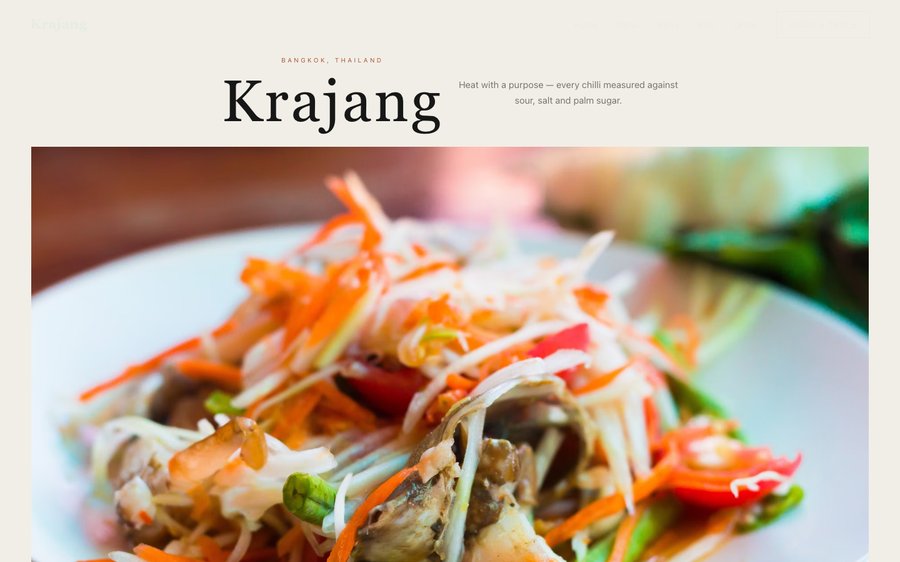 KrajangHeritage Thai · Warm Rustic FireView the template
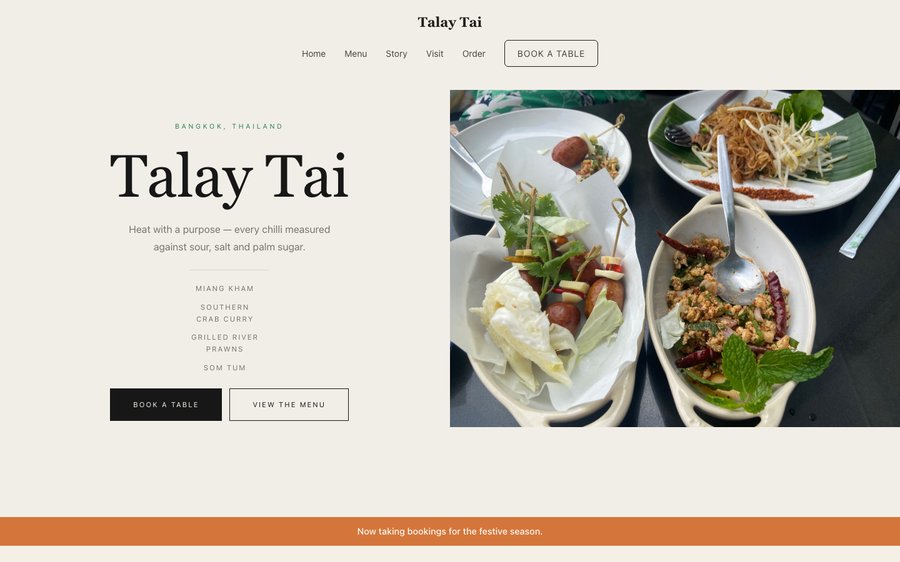
Talay TaiSouthern Thai · Warm Rustic FireView the template
KrajangHeritage Thai · Warm Rustic FireView the template
Talay TaiSouthern Thai · Warm Rustic FireView the template
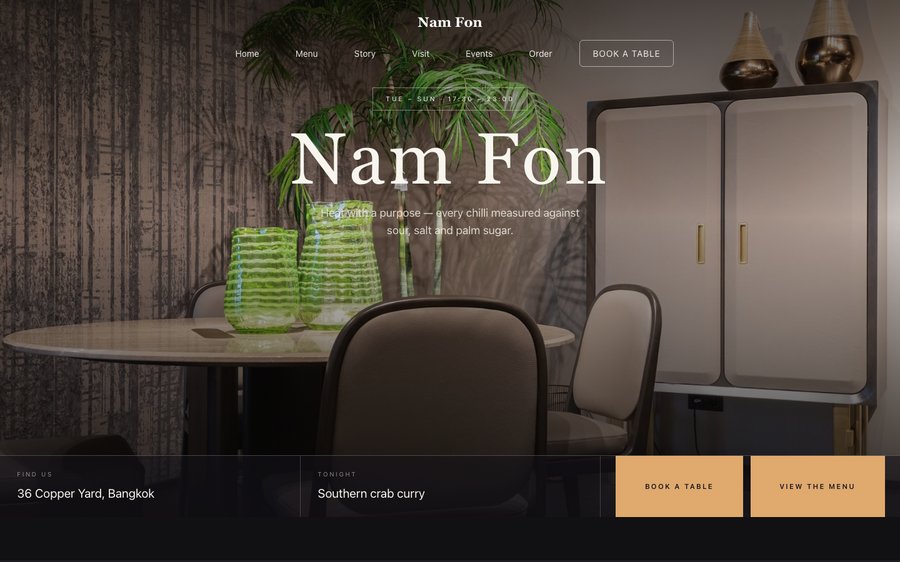 Nam FonModern Thai (seasonal) · Latin VibrantView the template
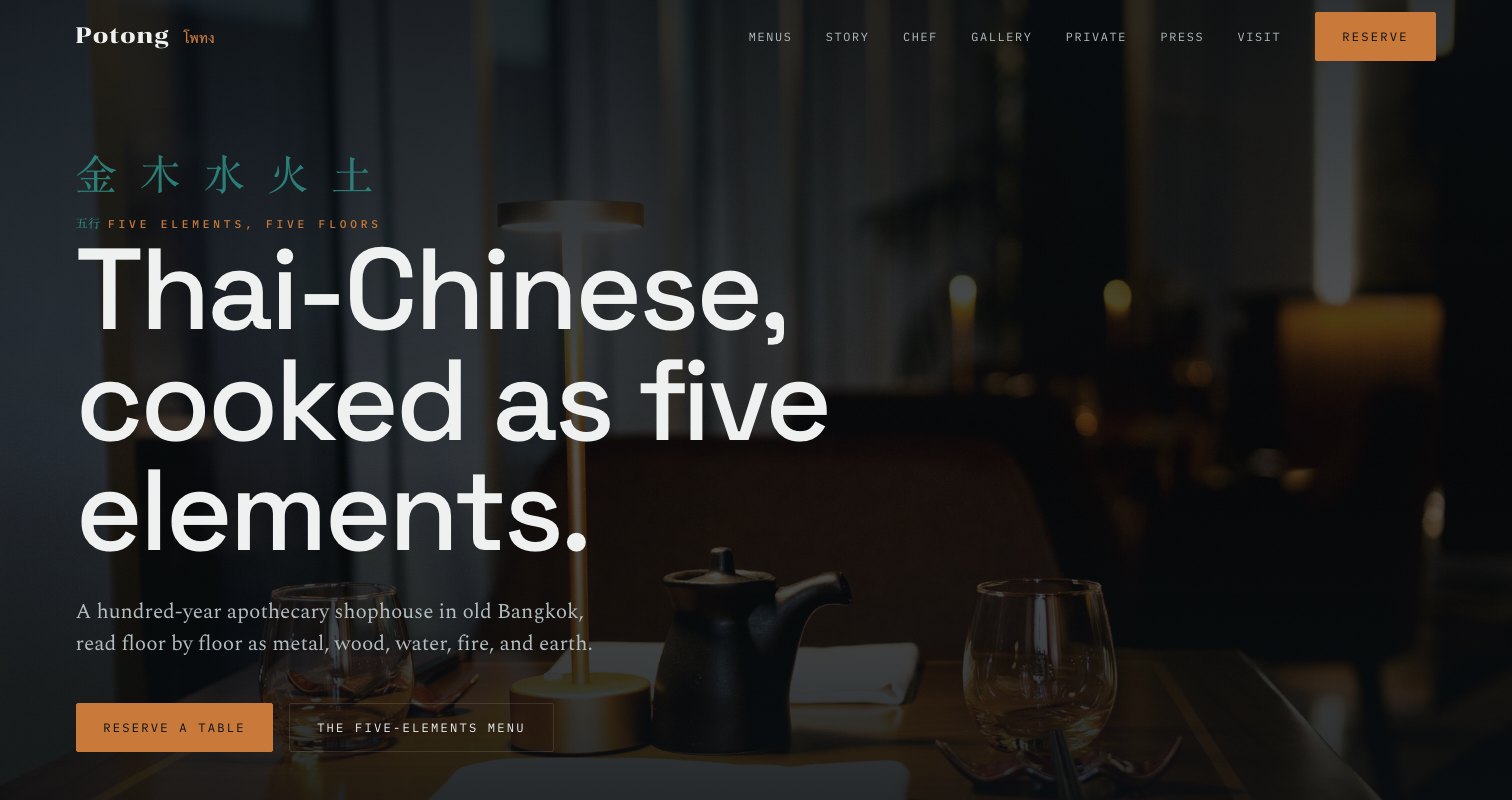 Lao PhetProgressive Thai-Chinese · Maximalist AvantView the template
 Choose any of the 50 finished templates and tailor it to your menu, brand and room — the design work is done, the content is yours.
What Thai guests want to know before they book
Thai guests arrive with practical questions, and a page that answers them wins the booking outright.
- 01How hot the dishes actually are, and whether the kitchen will adjust the heat on request.
- 02Whether a peanut or shellfish allergy is genuinely safe here, not merely noted.
- 03Whether the vegetarian and vegan dishes are real cooking or substitutions.
- 04Whether they can collect an order directly instead of paying a delivery platform to hand it over.
Three ways Thai kitchens lose bookings online
Heat is left to the guest to guess
The table orders cautiously, the kitchen sends out its safest food, and the meal that would have made them regulars never happens. Dish-level heat markers are a five-minute change with an outsized effect.
The site sends people to a marketplace to order
Every order routed that way pays a commission for a guest who was already looking for you by name, and the contact details stay with the platform rather than the restaurant.
A regional kitchen is presented as generic Thai
Isan or Southern cooking is the reason to choose you, and burying it makes the page compete on price with every takeaway listing nearby.
Bookings and orders in a Thai kitchen
Thai service tends to be busy, group-heavy and fast-moving: large parties sharing, a lunch trade with limited time, and a steady demand for collection that has nothing to do with a delivery platform.
A direct site handles all three. Bookings arrive with party size and dietary notes attached; where your plan includes ordering, guests can order collection straight from the same live menu, and TableSpark commission is 0%. Stripe's standard card-processing fees apply to online payments. The relationship, the data and the margin stay in the restaurant.
How Thai kitchens get found
What it costs, and who maintains it
Starter is £19/mo excl. VAT and includes a complete restaurant website, a live structured menu, enquiry and newsletter forms, and managed search readiness. Growth is £39/mo excl. VAT and adds direct live bookings, a custom domain with managed SSL, and table and floor-plan operations. Full is £69/mo excl. VAT and adds online ordering and multi-site management for up to five restaurant sites. TableSpark commission is 0%. Stripe's standard card-processing fees apply to online payments.
Maintenance is the part that usually gets left out of a quote. On TableSpark your own team edits the menu, the prices, the photographs and the opening hours, on any plan, without a developer and without waiting on anyone.
Questions Thai kitchens ask
Can we show spice levels on individual dishes?
Yes. Heat is a dish-level marker, so a guest sees it while they are reading rather than discovering it at the table, and you can adjust it whenever the kitchen changes a recipe.
How do we handle a nut allergy properly?
Allergen tags are per dish and editable by your own team, so the page reflects what the kitchen actually does. Guests can also send dietary notes with a booking or an order, so the information reaches the pass in writing.
Can guests order collection without a marketplace in the middle?
Yes, on the plan that includes online ordering. Collection orders come from your own site and your own live menu, TableSpark commission is 0%, and Stripe's standard card-processing fees apply to online payments.
Our menu is long. Will the page still be readable?
Yes. Long menus are grouped into sections that collapse and scan cleanly on a phone, which is where most Thai menus are read, so length becomes navigable rather than overwhelming.
Can we run a lunch menu that only appears at lunchtime?
Yes. Menus carry their own service days and times, so the lunch list is what a guest sees at midday and the evening menu takes over afterwards, without anyone having to swap files.
Can dishes show their Thai names as well?
Yes. A dish can carry both names, which helps guests who know the dish by its Thai name find it — and gives search engines the exact words those guests are typing.