Fine Dining restaurant website templates
A tasting-menu restaurant asks a guest for a large commitment: a fixed price, a fixed evening, often weeks in advance. Anything vague on the website raises the cost of saying yes. If the number of courses, the length of the sitting, the wine pairing or the dietary policy is unclear, the booking becomes an email exchange — and a proportion of those never come back.
Then there is the risk on the other side of the table. A no-show on a twelve-cover tasting menu is not a lost table, it is a lost evening: the produce is bought, the brigade is rostered and the seat cannot be resold at seven o'clock. A booking route that takes no deposit, sends no reminder and leaves the guest's details with a third party gives the restaurant nothing to work with when it happens.
What a tasting menu asks of a website
A tasting menu is one product with many parts. The page has to state the commitment precisely and then let the kitchen change the courses whenever it wants to.
- 01The menu is presented as a sequence with the course count, the sitting length and the price stated plainly, so a guest knows exactly what they are booking.
- 02Wine and non-alcoholic pairings attach to the menu they belong to, priced as their own option rather than explained in a paragraph.
- 03Dietary versions — vegetarian, vegan, allergen-adjusted — are stated as part of the offer, which removes the most common reason a booking turns into an email.
- 04Courses can change as often as the kitchen changes them, because the menu is live content your own team edits, not a document sent out for typesetting.
The fine-dining design language
Tasting-menu restaurants are theatre, and the website is the first act. These templates bring cinematic darkness, maximalist flourishes or Nordic restraint to rooms where the menu is a single evolving performance.
Multi-course menu storytelling, chef notes and private-dining enquiry forms give each restaurant room to shape the full guest experience.
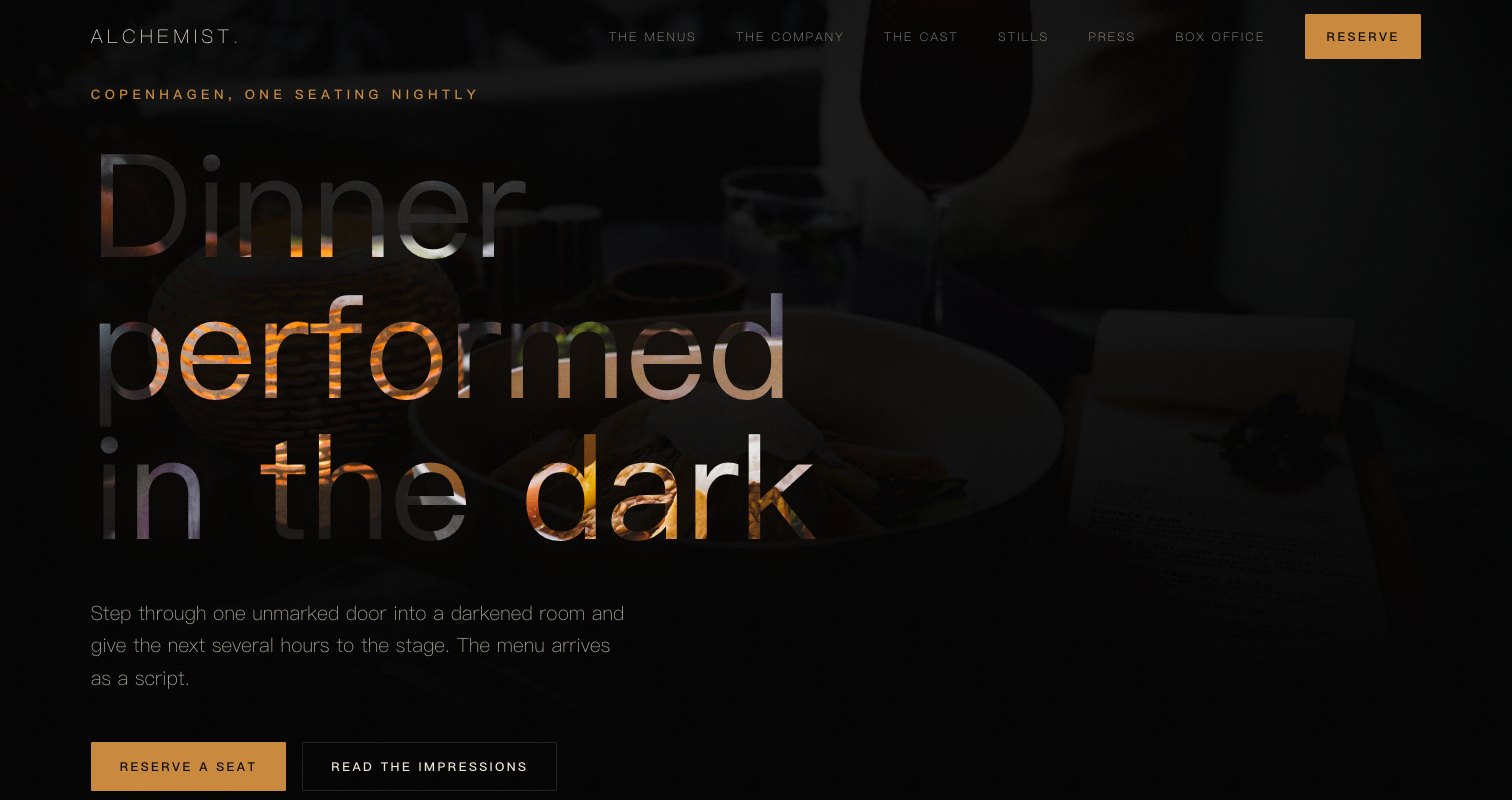 KalejdoHolistic cuisine (theatrical) · Dark CinematicView the template
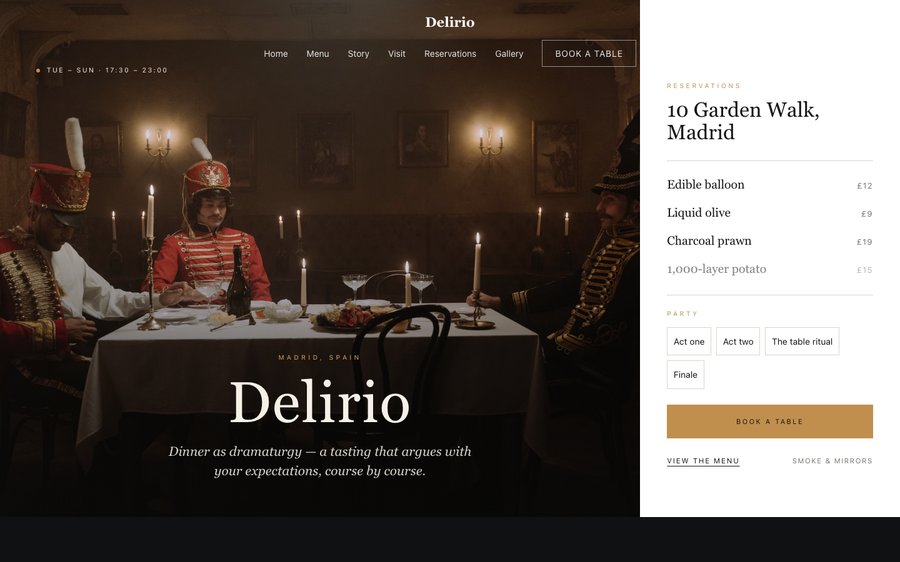
DelirioAvant-garde · Maximalist AvantView the template
KalejdoHolistic cuisine (theatrical) · Dark CinematicView the template
DelirioAvant-garde · Maximalist AvantView the template
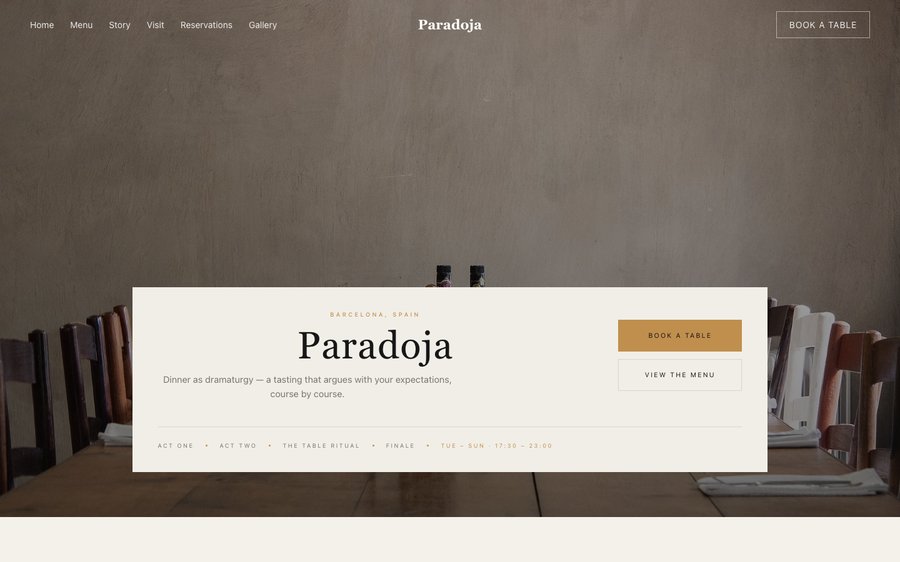 ParadojaAvant-garde · Maximalist AvantView the template
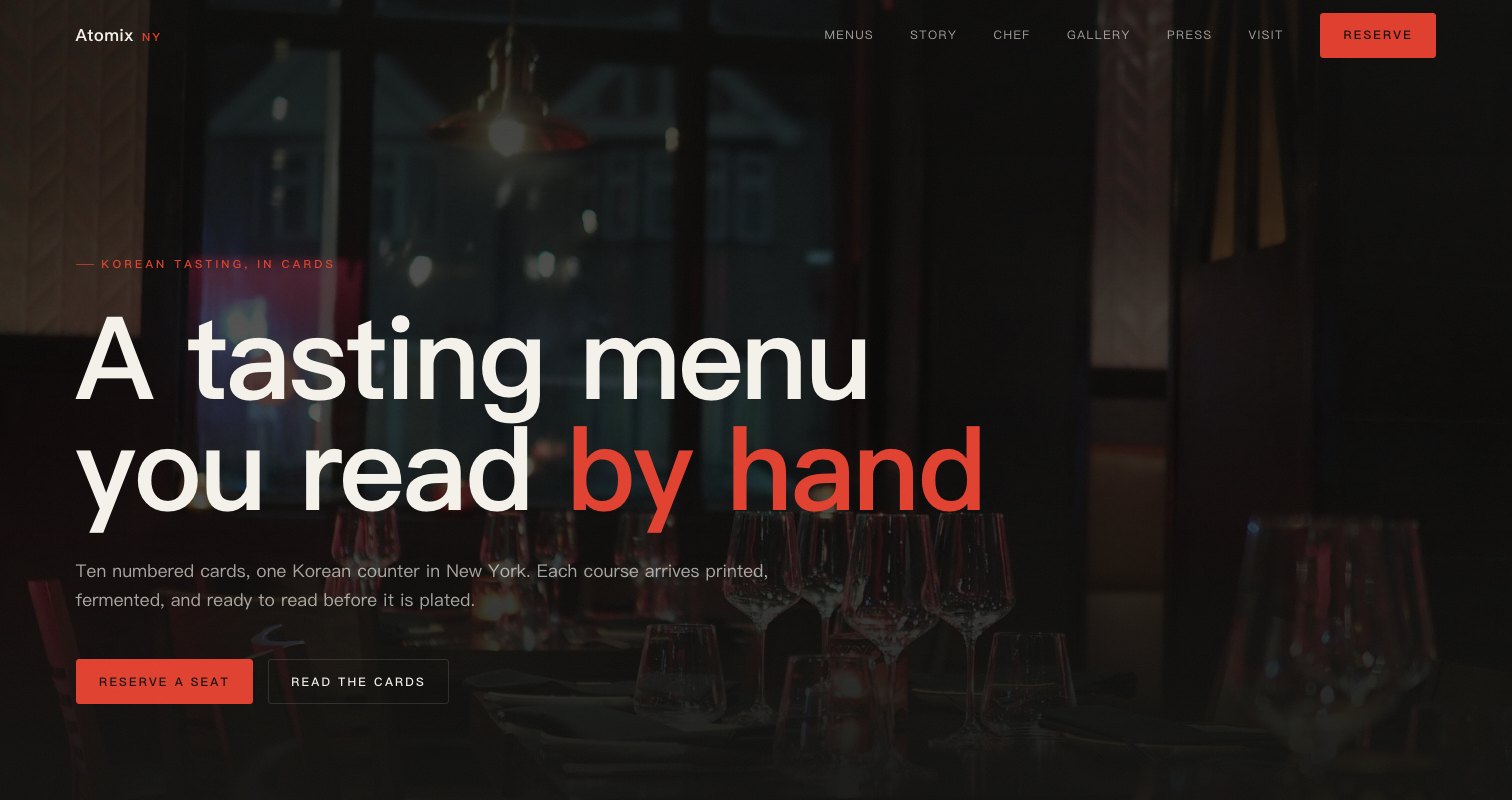 HaneulKorean fine dining · Japanese ZenView the template
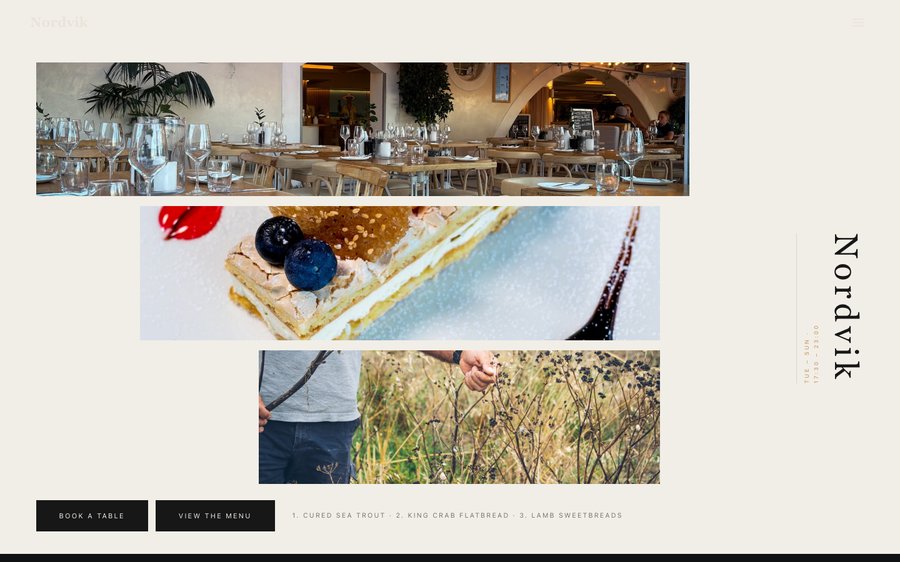 NordvikNordic-Asian luxe · Dark CinematicView the template
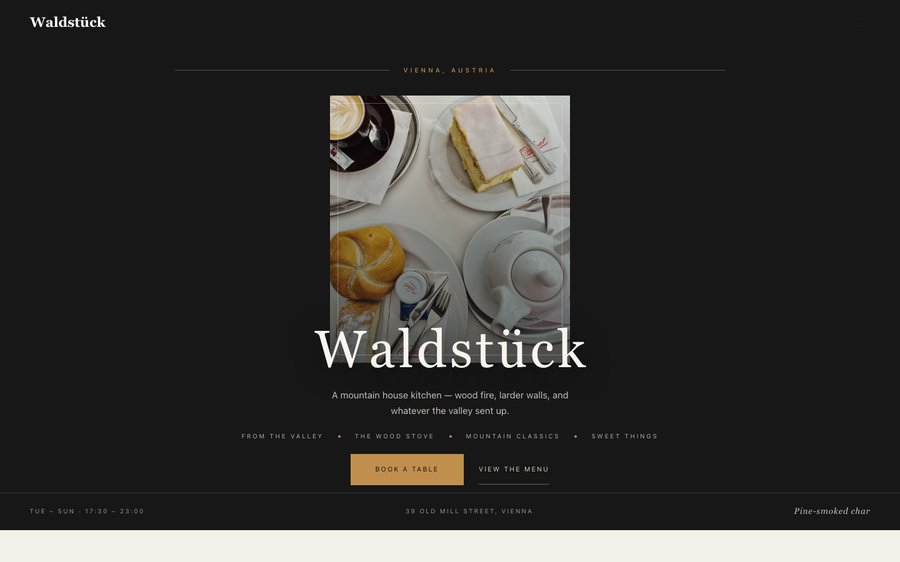 WaldstückModern Austrian · Nordic MinimalView the template
 Choose any of the 50 finished templates and tailor it to your menu, brand and room — the design work is done, the content is yours.
What fine-dining guests want to know before they book
At this level the website is doing the work of a maître d' before anyone arrives, and it is answering these questions.
- 01What the menu costs, how many courses it runs to and how long the sitting takes.
- 02What the pairing options are, including a considered non-alcoholic one.
- 03Whether a dietary requirement can be built into the sequence rather than worked around.
- 04What the deposit and cancellation terms are, before they commit weeks in advance.
Three ways tasting-menu restaurants lose bookings online
The commitment is left vague
A guest asked to book weeks ahead needs the price, the length and the terms stated. Vagueness does not create intrigue at this level; it creates an email that never gets sent.
No deposit is taken
On a small, high-value sitting a no-show removes an evening, not a table. A deposit at the point of booking is the one mechanism that reliably changes the behaviour.
The site is heavy and slow
Cinematic work that takes seconds to appear loses the guest before the first image lands, and it makes the restaurant harder for search engines to read at the same time.
Bookings and orders in a tasting-menu restaurant
Low covers, high value, long lead times: every part of that makes the reservation the most important object in the business. It has to arrive complete, it has to be confirmed, and it has to survive the weeks between booking and service.
On your own site a reservation can require a deposit before it is confirmed, carry the dietary and occasion detail into the kitchen, and trigger a reminder in the restaurant's own name as the date approaches. The guest record sits in your TableSpark account, visible in your inbox and guest list and exportable as CSV, so the relationship you are building over months belongs to the restaurant.
How tasting-menu restaurants get found
What it costs, and who maintains it
Starter is £19/mo excl. VAT and includes a complete restaurant website, a live structured menu, enquiry and newsletter forms, and managed search readiness. Growth is £39/mo excl. VAT and adds direct live bookings, a custom domain with managed SSL, and table and floor-plan operations. Full is £69/mo excl. VAT and adds online ordering and multi-site management for up to five restaurant sites. TableSpark commission is 0%. Stripe's standard card-processing fees apply to online payments.
Maintenance is the part that usually gets left out of a quote. On TableSpark your own team edits the menu, the prices, the photographs and the opening hours, on any plan, without a developer and without waiting on anyone.
Questions tasting-menu restaurants ask
Can a booking require a deposit?
Yes, on the plans that include direct bookings. A reservation can ask for a deposit before it is confirmed, which is the practical answer to a no-show on a sitting that cannot be resold on the night.
Can the menu change as often as the kitchen changes it?
Yes. Courses, pairings and prices are live content your own team edits, so the site tracks the kitchen instead of lagging a season behind it.
Who owns the guest data?
The restaurant. Guest records are held in your TableSpark account, visible in your inbox and guest list, and exportable as CSV whenever you want them.
Will a cinematic design still load quickly?
Yes. The templates are built mobile-first with the page weight controlled, because a slow first impression costs a booking at this level as surely as a dated design does.
Can we publish the cancellation and deposit terms clearly?
Yes, and it is worth doing. Terms stated on the booking page settle the question before it becomes a dispute, and a guest who has read them is a guest who turns up.
Can we run a private dining room or a chef's table as its own page?
Yes. Each of those is a page in its own right, with its own menu, its own images and its own enquiry route — which is also how a guest searching for private dining in your city can find it.