01
Hero
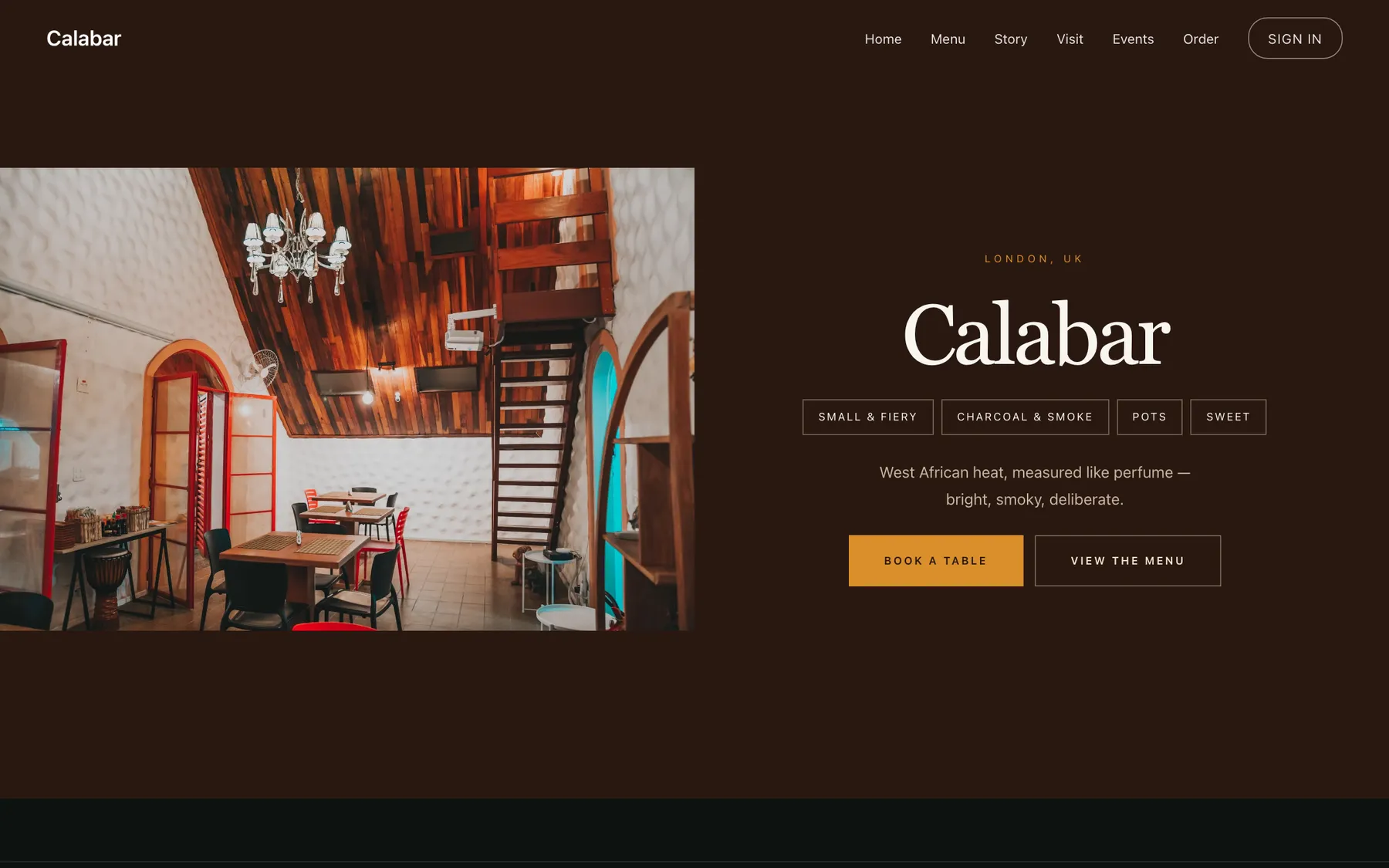
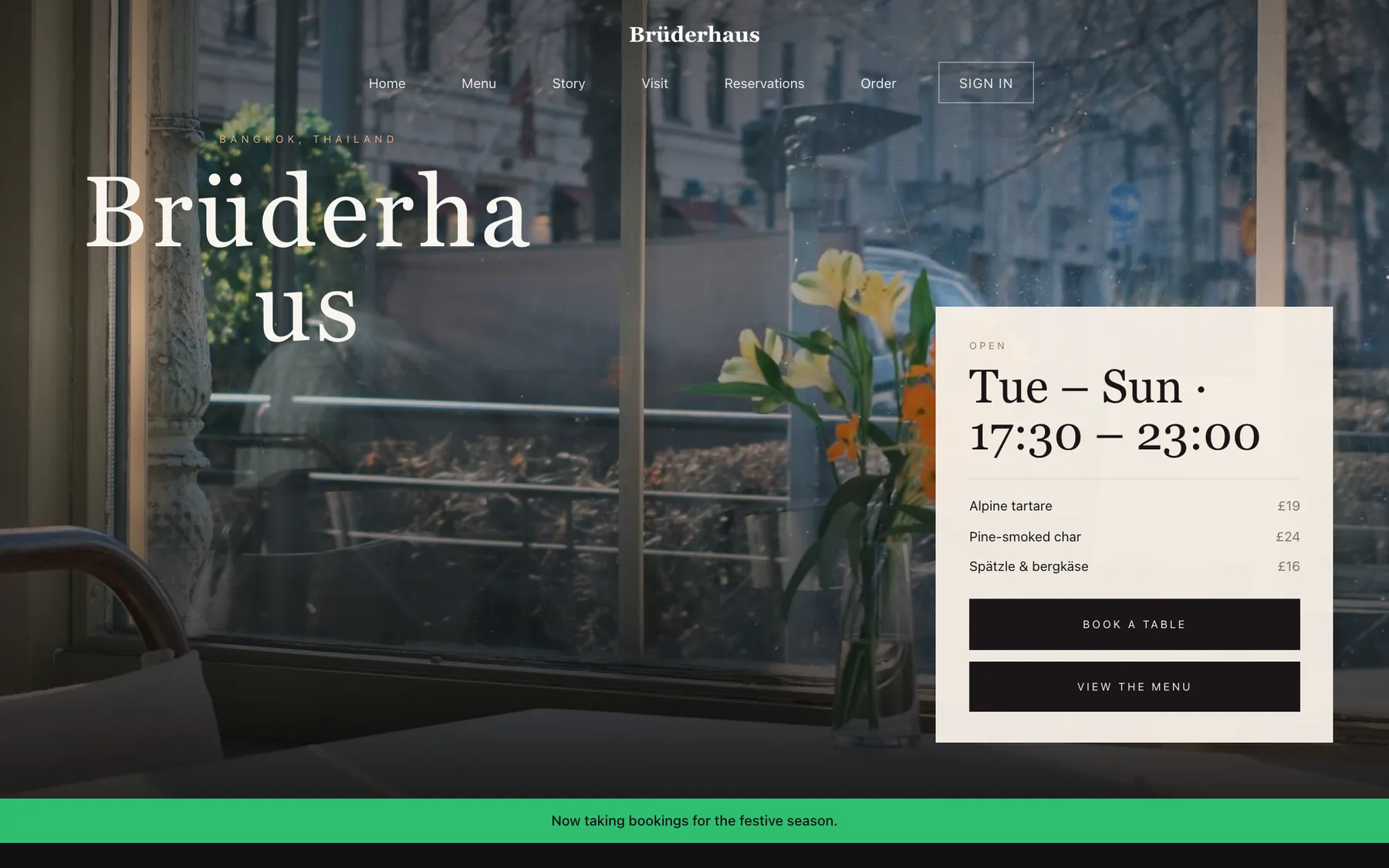
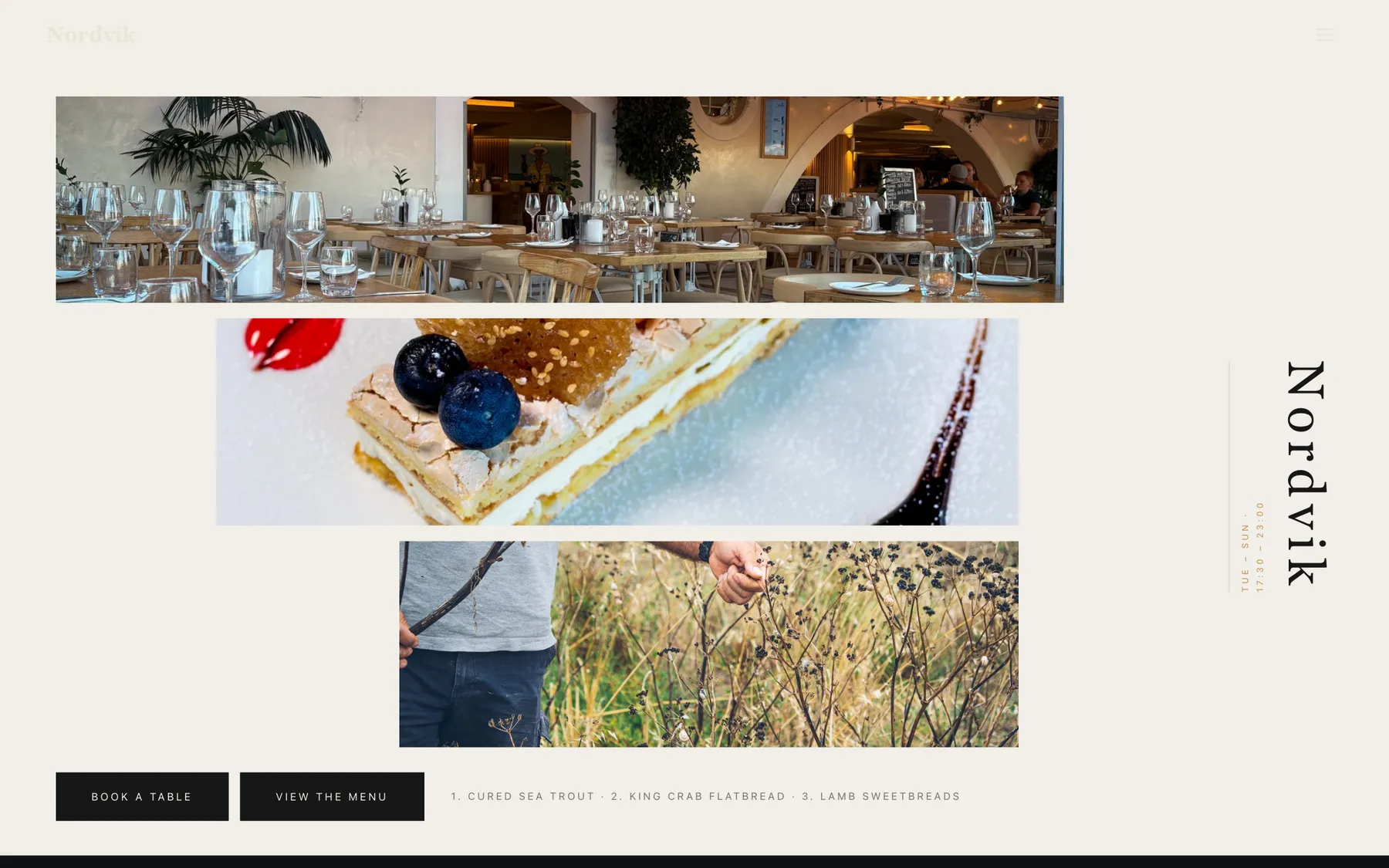
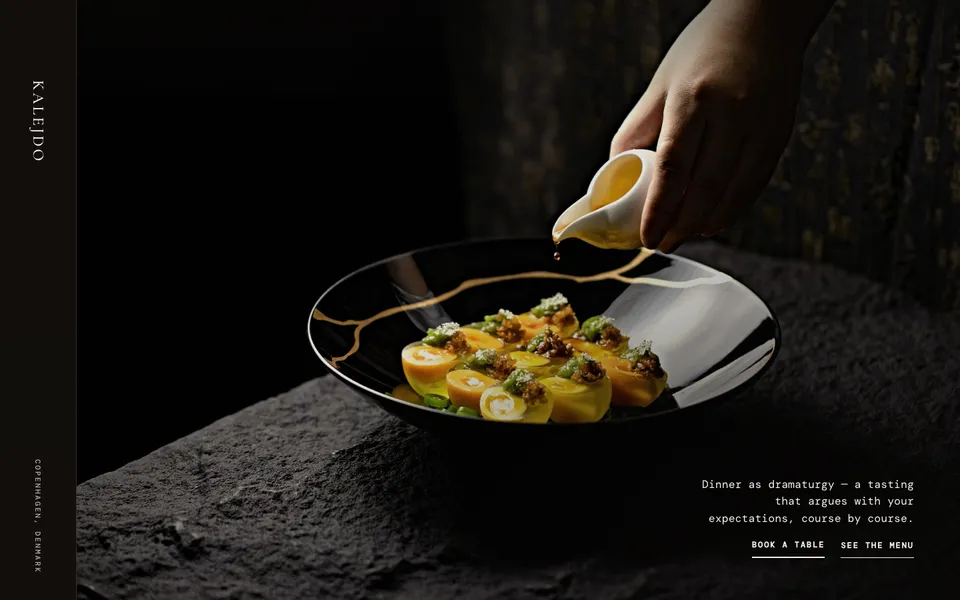
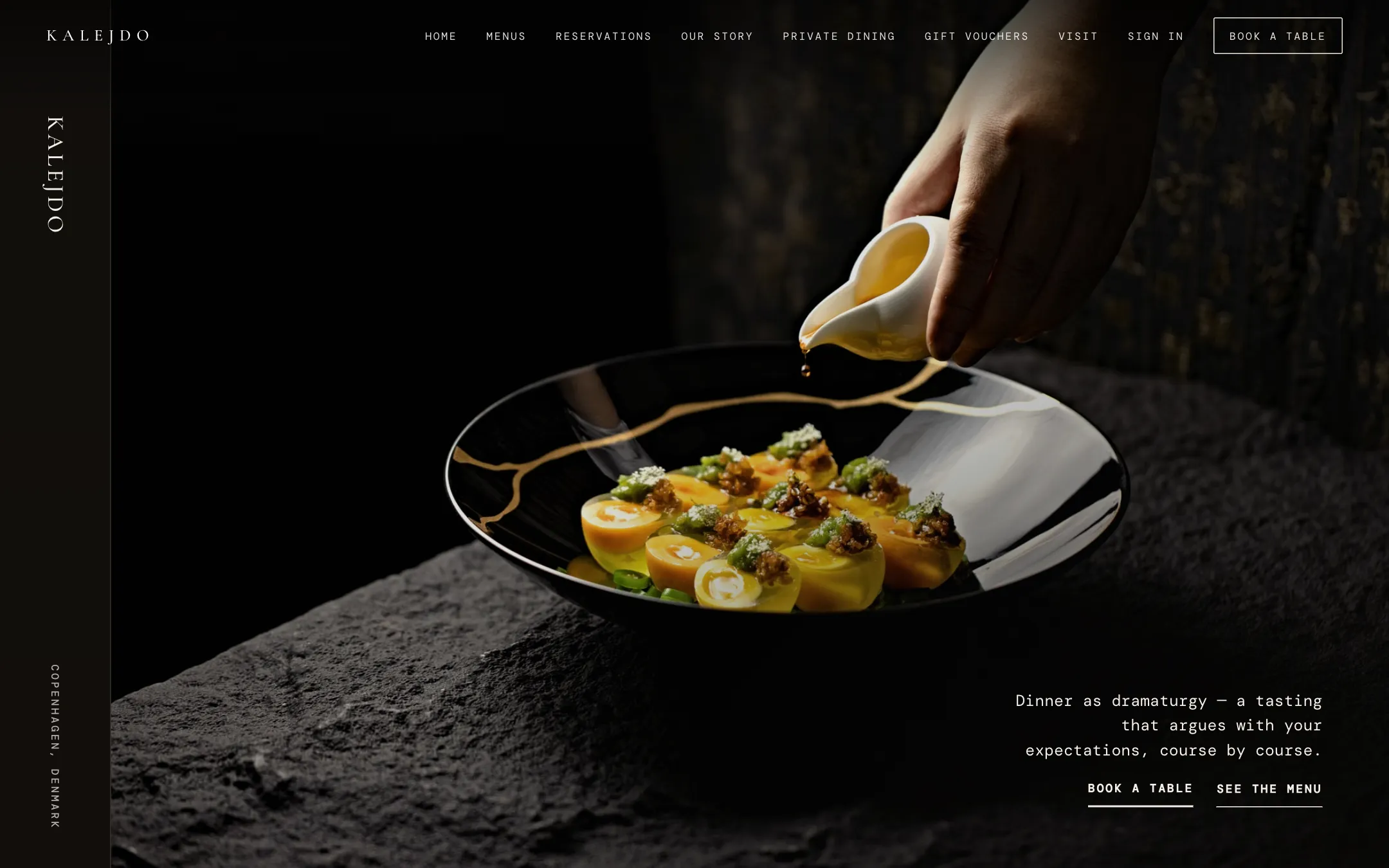
Big opening image, name & buttons.
Templates · Holistic cuisine (theatrical)
For restaurants that are also installations: a nocturne of a template, built for kitchens serving impressions rather than courses, with a plated-photography layout and a booking flow that expects demand.
Every section is a builder module you can reorder, edit or delete, with no developer.
On bookings and orders, on every plan. Stripe’s standard card-processing fees apply to online payments.
Build and preview the whole site for nothing, and pay only when it goes live.
Starter is £19/mo excl. VAT and includes a complete restaurant website, a live structured menu, enquiry and newsletter forms, and managed search readiness. Growth is £39/mo excl. VAT and adds direct live bookings, a custom domain with managed SSL, and table and floor-plan operations. Full is £69/mo excl. VAT and adds online ordering and multi-site management for up to five restaurant sites. TableSpark commission is 0%. Stripe's standard card-processing fees apply to online payments.
One published monthly price covers the complete website and the management system behind it. Nobody is quoting you four figures and a twelve-week timeline. The design is done — you fill it with your restaurant and press publish. After that the menu, the prices and the photographs stay in your own hands — no ticket, no developer, no waiting. It is designed for the phone first and looks right on everything larger, with reservations, tables, ordering and management in the plans — and 0% commission.
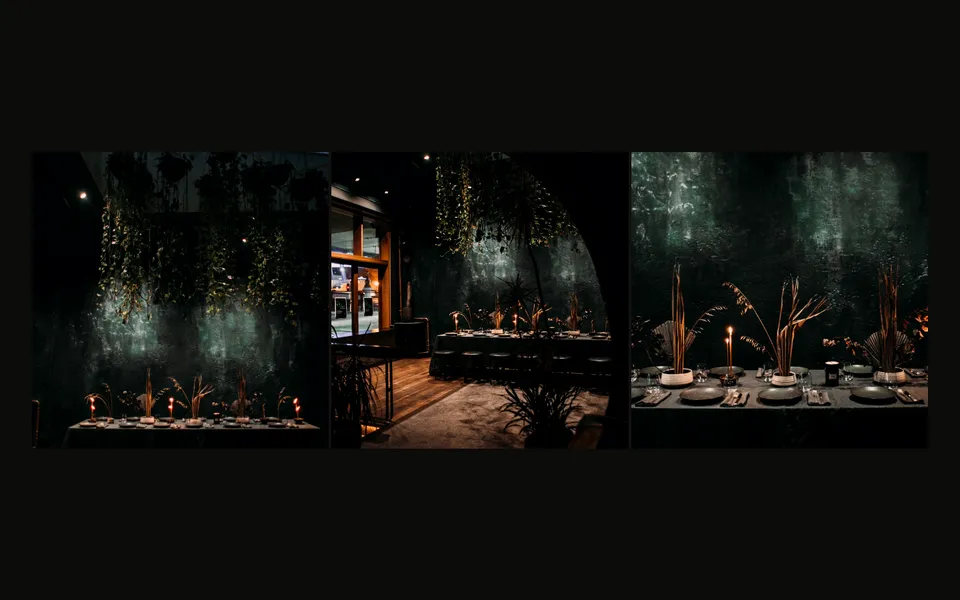
Kalejdo sits at almost pure black with a violet that only appears where you touch it. Yours might be white tile and morning light, or brass and candles, or something nobody has built yet.
Rather than explain, here is the thing itself: the builder’s Theme controls on one side, the live site on the other, both real. You cannot break it, nothing saves, and no account is required to have a go. Go on.
Loading the live preview…
Some restaurants are closer to a theatre or a gallery than a dining room, and their websites usually fail by trying to look appetising. This one does not try. It opens on a nocturne — a single held image, a line of text, and almost nothing else — and asks the visitor to slow down before it asks them anything at all.
Everything downstream is built for imagery at scale: a parallax ambience band, full-bleed breaks, a photo gallery with its own page. The type is a high-contrast serif against a plain sans, which is the pairing that reads as museum caption rather than menu board.
Nine blocks, arranged for images rather than words:
01
Big opening image, name & buttons.
02
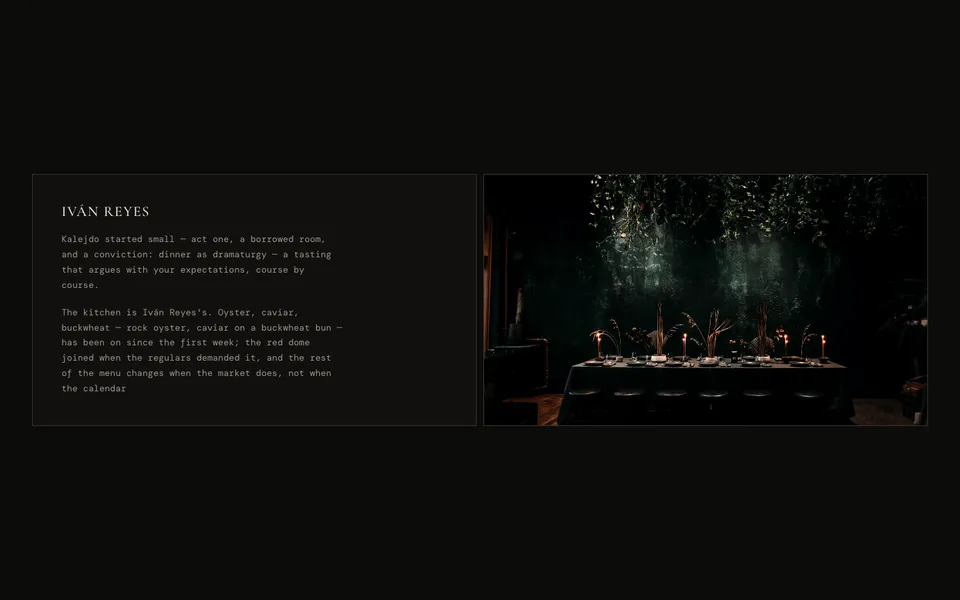
A large standout quotation.
03
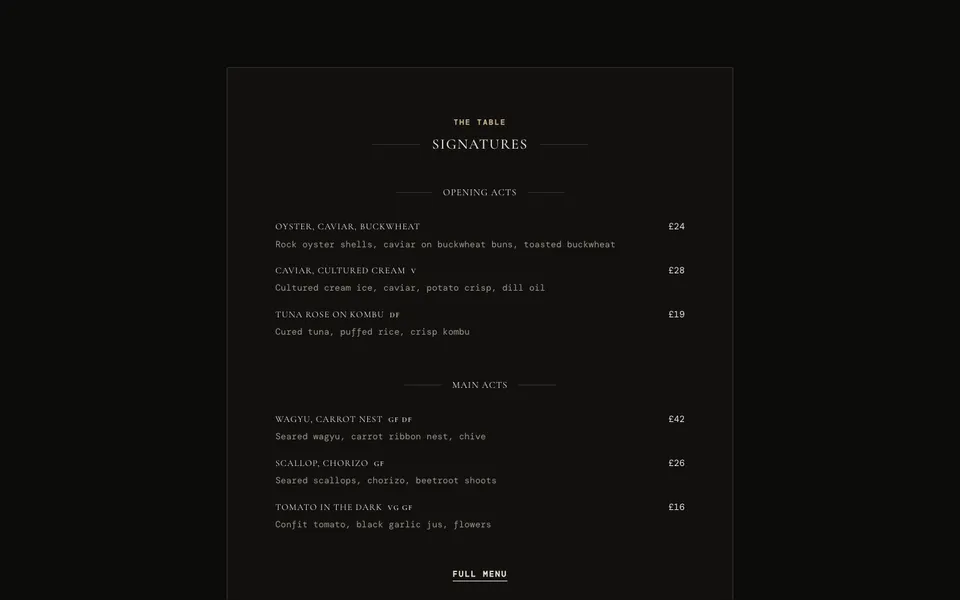
Alternating image and text rows.
04
A few dishes on a sliding rail.
05
The growers and makers behind the menu.
06
Full-width video or photo mood band.

07
Guest quotes with stars.

08
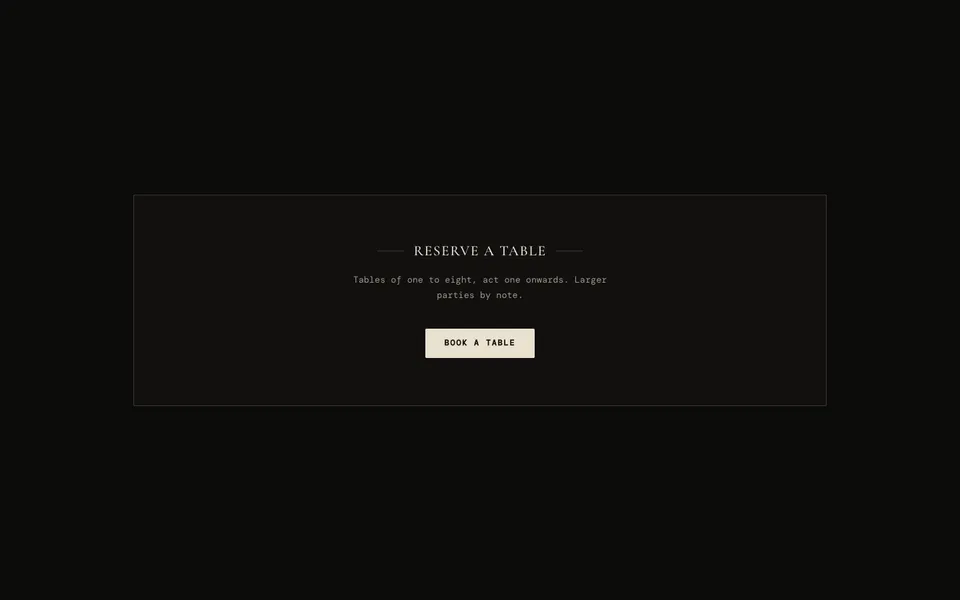
Live availability slot picker, saved to your Inbox.

09
Accordion of questions.
Loading the live preview…
Kalejdo uses the Classic list ordering layout — the printed-menu look, with dotted leaders running from each dish to its price.
It reads like the delivery apps your guests already know, except the restaurant keeps the relationship and the money. The basket stays on screen, and each mode asks only for what it needs: a table number, a phone number or an address.
Loading the live preview…
This is the frame that matters. It is the real ordering page at a real phone width — not a mock-up, not a video.
On a laptop the same page puts the basket in a panel beside the menu that follows the scroll.
Every Kalejdo site on Growth and Full ships with an app your guests keep. It lives at /account on your own domain, so the guest signs in to your restaurant, not a marketplace.
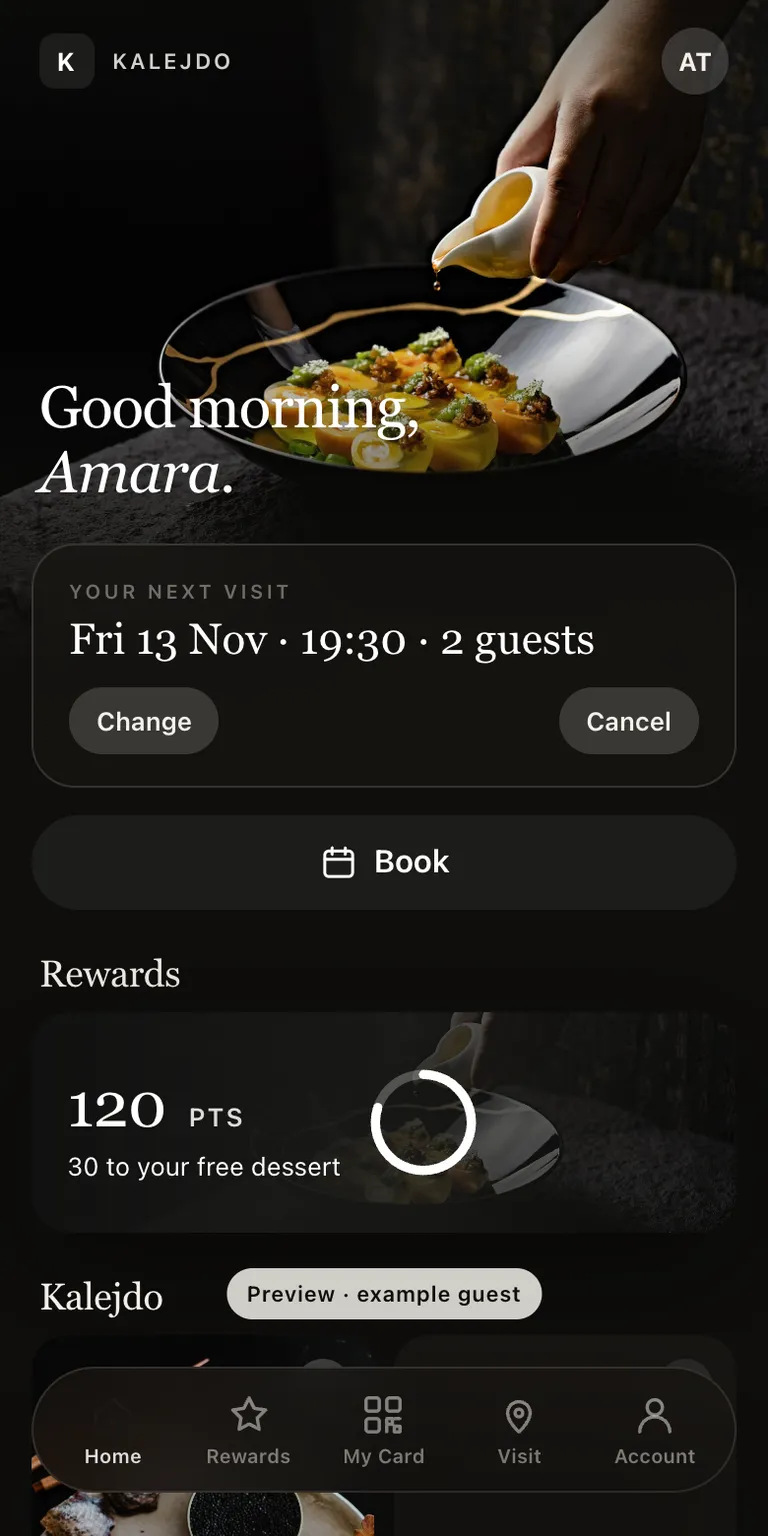
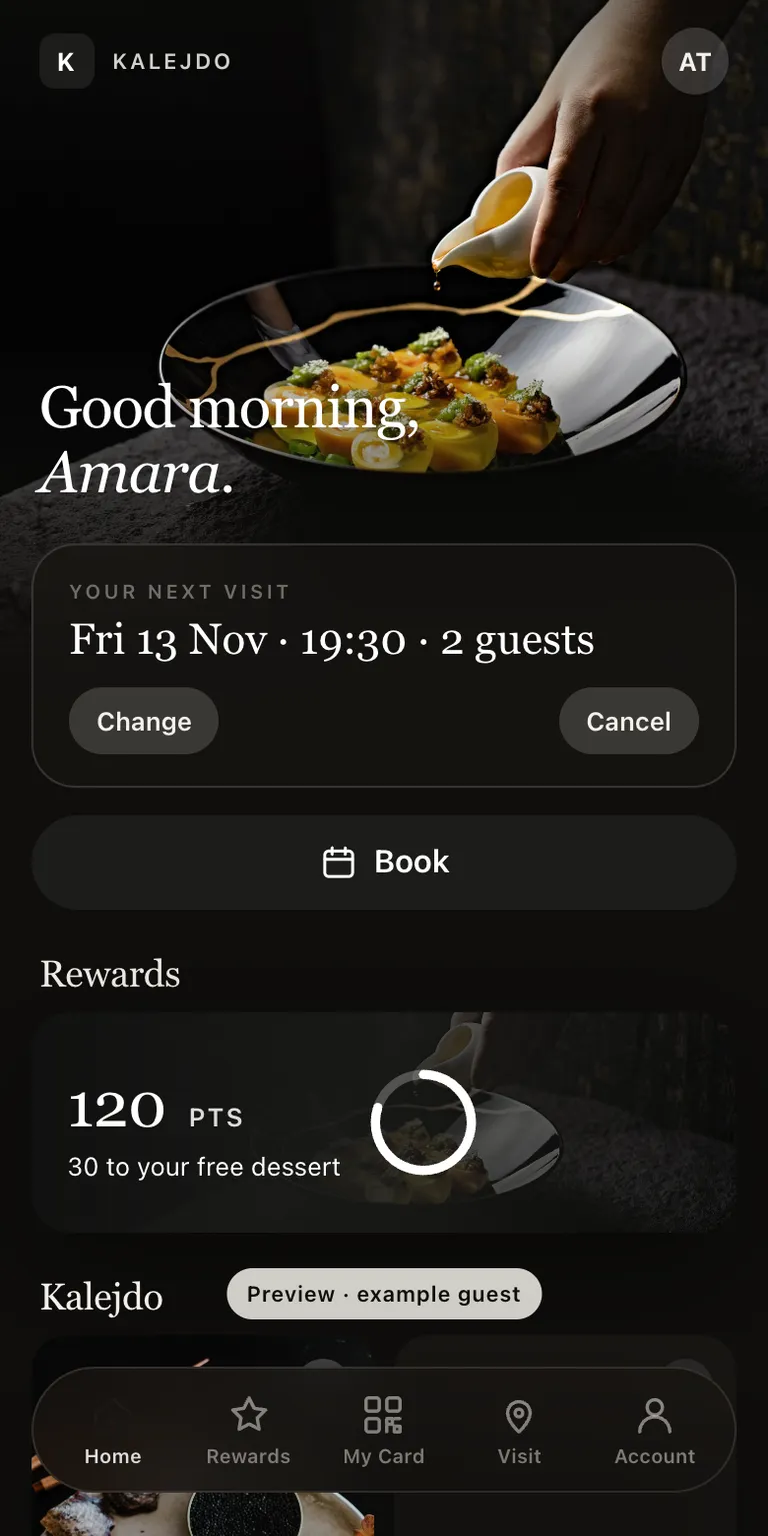
Included on the Growth and Full plans. Watch the Guest App course
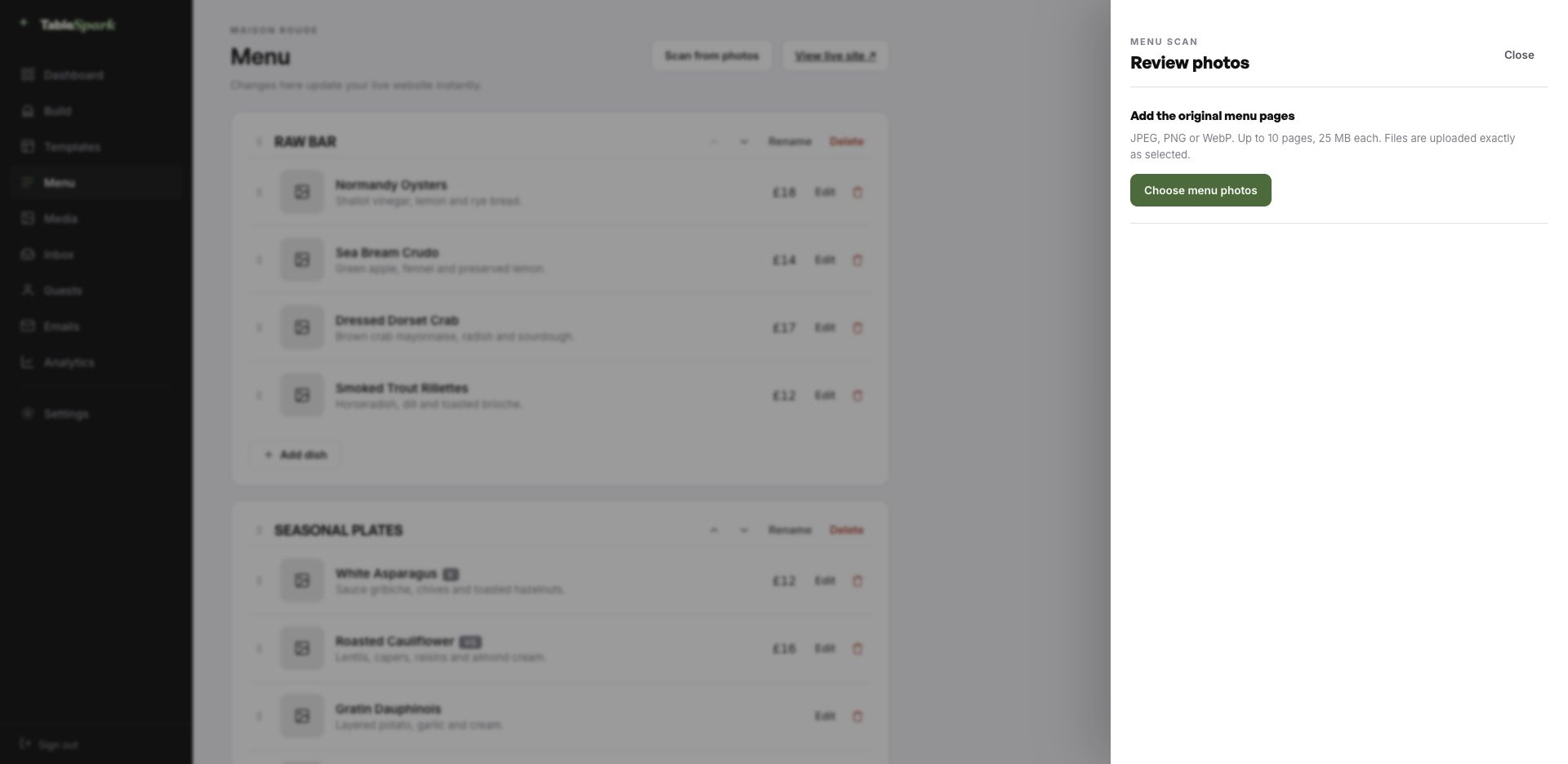
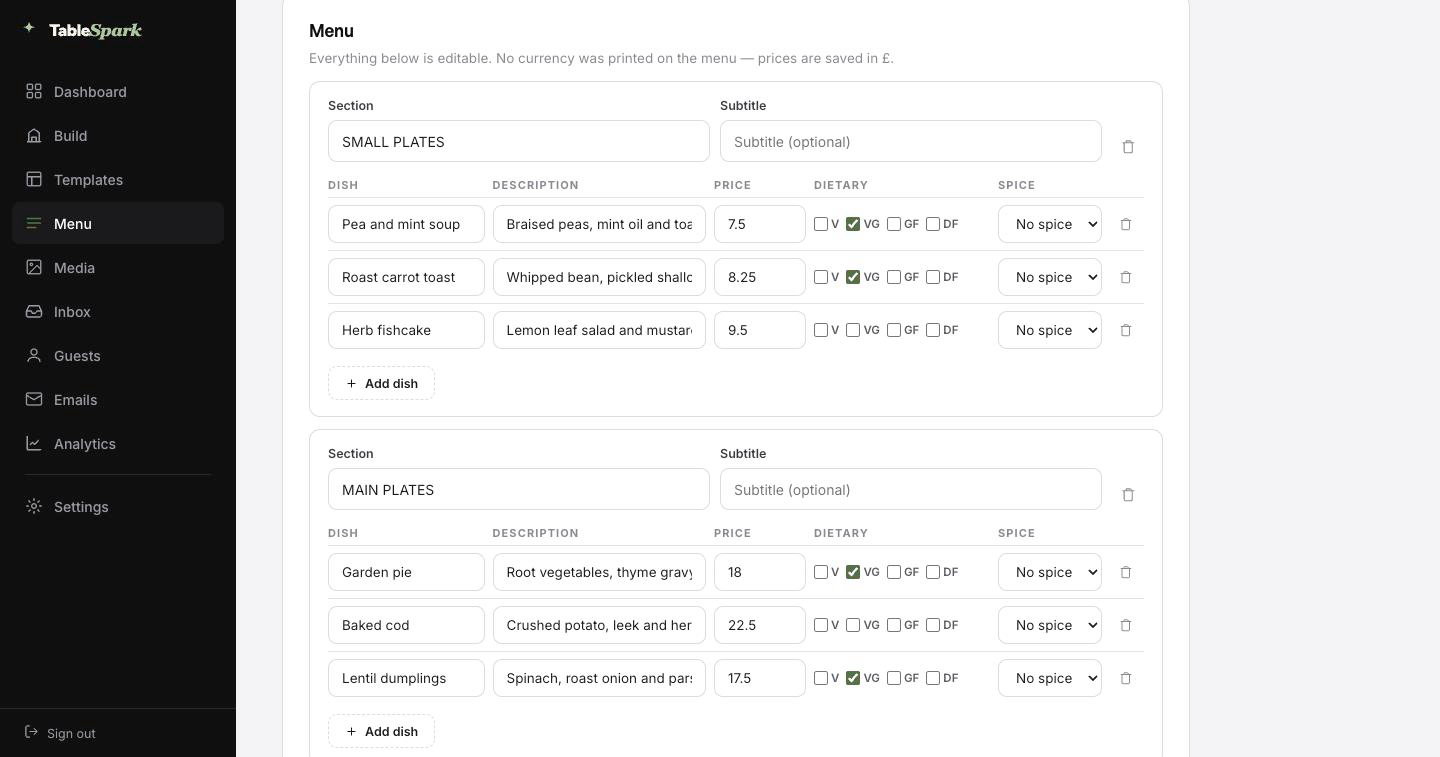
This is the part that saves an afternoon. Take a picture of the menu you already have: the pressed card, the board behind the pass, a PDF from the printer. Back comes the whole menu as data: ordered sections, named dishes, their descriptions and prices, plus dietary and spice marks wherever the card showed them. Check it over — a smudged price or an ambitious accent is a two-second fix — and save.
What arrives is not a picture of a menu — it is real data. That single menu is what powers the menu page, the ordering page, the highlights on the home page and the Restaurant structured data a search engine reads. Change a price once afterwards and all of them follow.
The search copy gets the same treatment: a Write with AI button reads the page and drafts its title and description, so those fields are never blank. Nothing is published on your behalf; the draft waits for you.
Printed card, chalkboard photograph or an old PDF — any of them work.
Not a scan: real sections, dishes, prices and marks you can edit before saving.
Menu page, ordering page, home-page highlights and the Restaurant schema — kept in step automatically.
There is no build phase to wait through. Structure, styling and behaviour are done. Names, dishes and pictures are yours. Reckon on one sitting to a published site, and reservations working from that same moment. Bookings land in your TableSpark inbox, and the guest gets a confirmation email straight away.
Taking money is a single connection: link Stripe and deposits on tables and payment on orders go straight to your own account. There is no cut for us — 0% commission on every plan. Stripe’s standard card-processing fees apply to online payments. Nobody else charges anything.
Step 01
1min
Pick KalejdoThe full site arrives in your account as a working draft.Step 02
4min
Change the name and the wordsRewrite the words by clicking them; the name carries everywhere.Step 03
3min
Upload your menuSend the menu in as a photograph and check what comes back.Step 04
1min
PublishIt goes live on your address and starts taking bookings.Step 05
1min
Connect StripeNow you can take deposits on tables and payment on orders — direct to your account.In all
10min
From template to taking paymentsFive steps, one sitting.A domain is signage, and signage matters. Nothing about going live depends on owning a domain first; connect yours later and the site simply answers to it.
The plumbing is ours: certificate, secure connection, redirect, and keeping canonical URLs, sitemap and robots pointing at the live address as the domain changes. Own it already? Good. The instruction is a single record, spelled out.
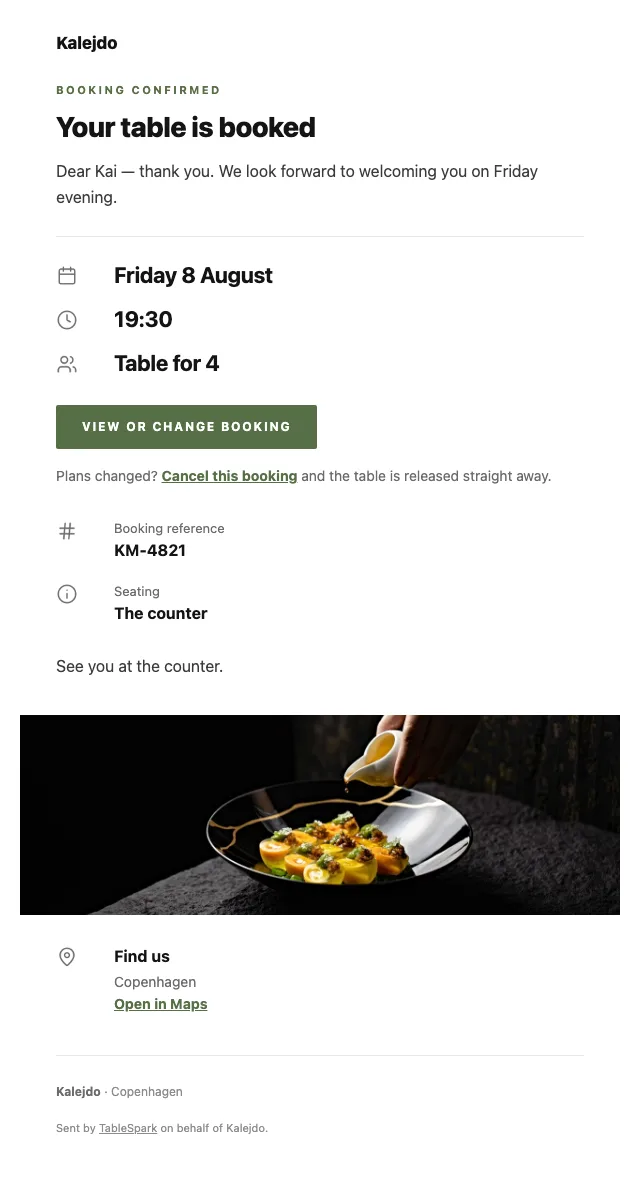
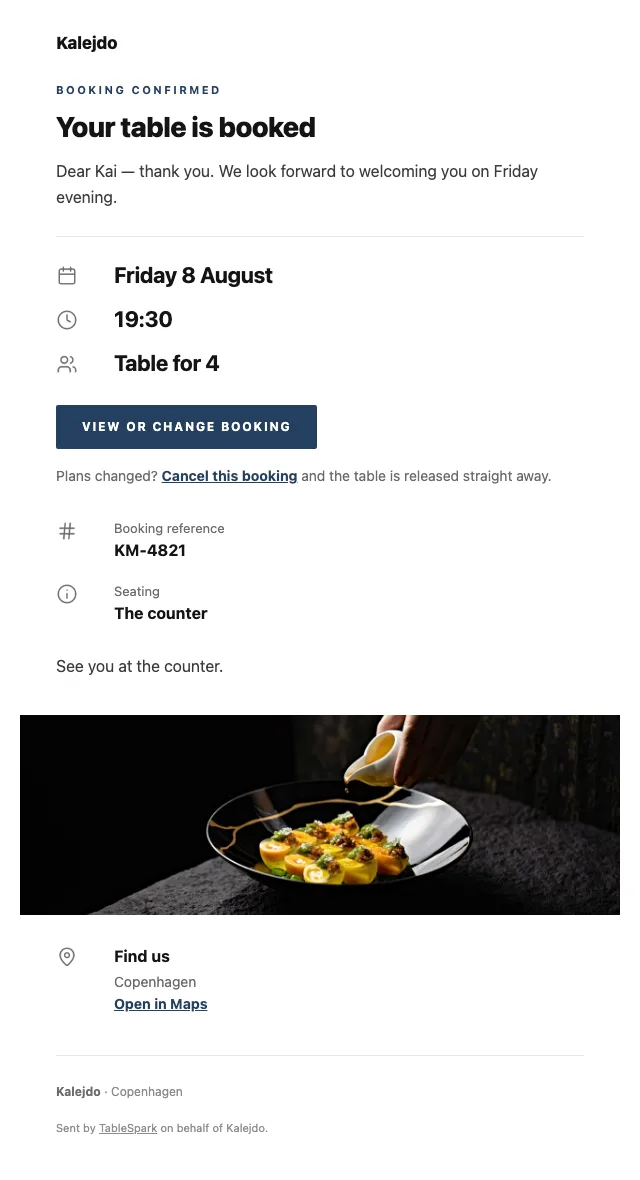
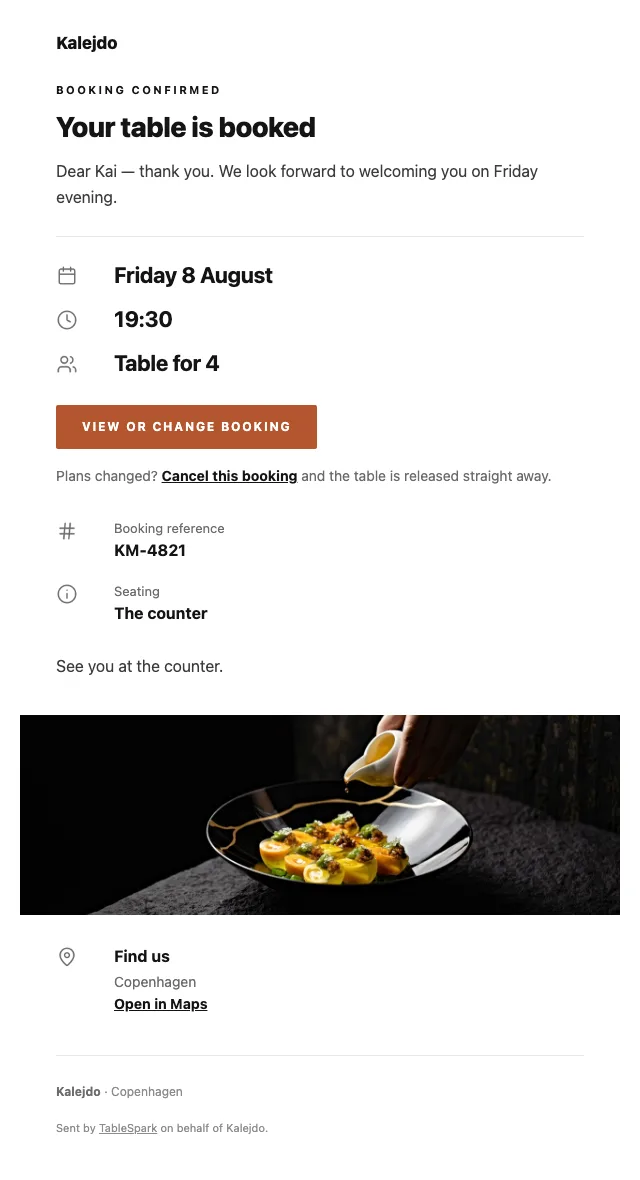
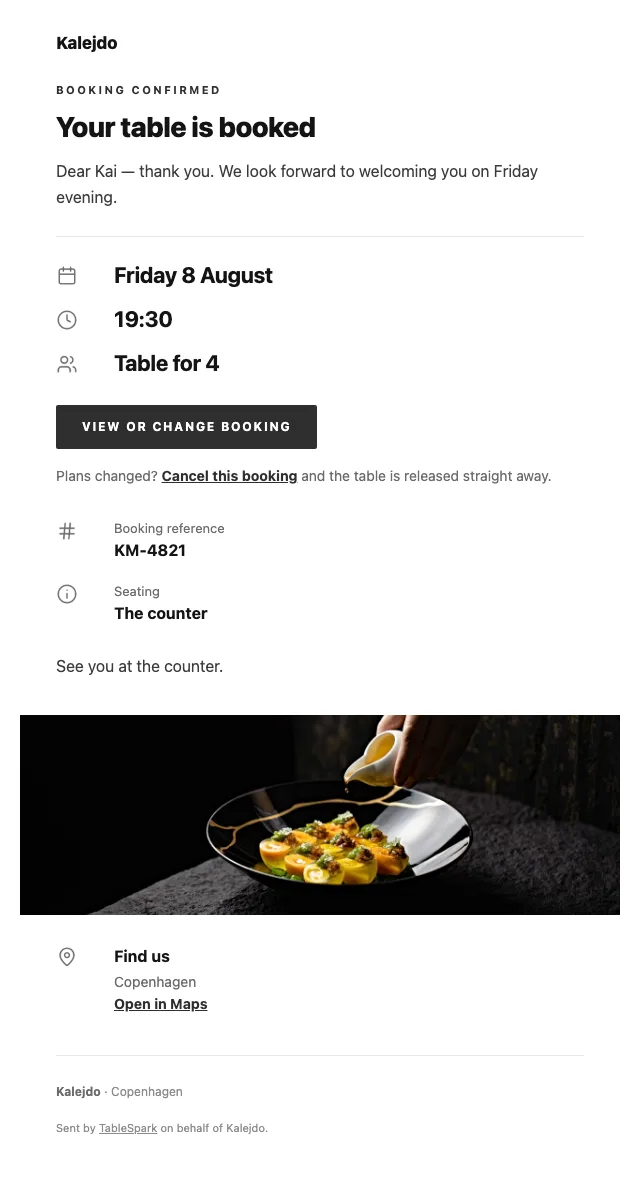
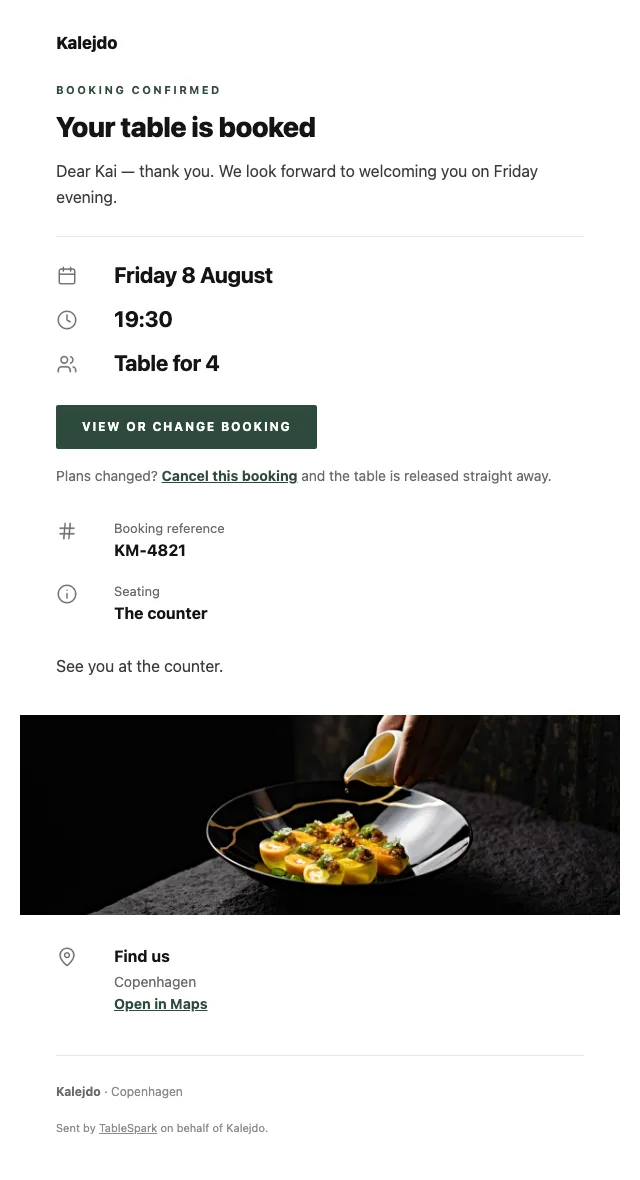
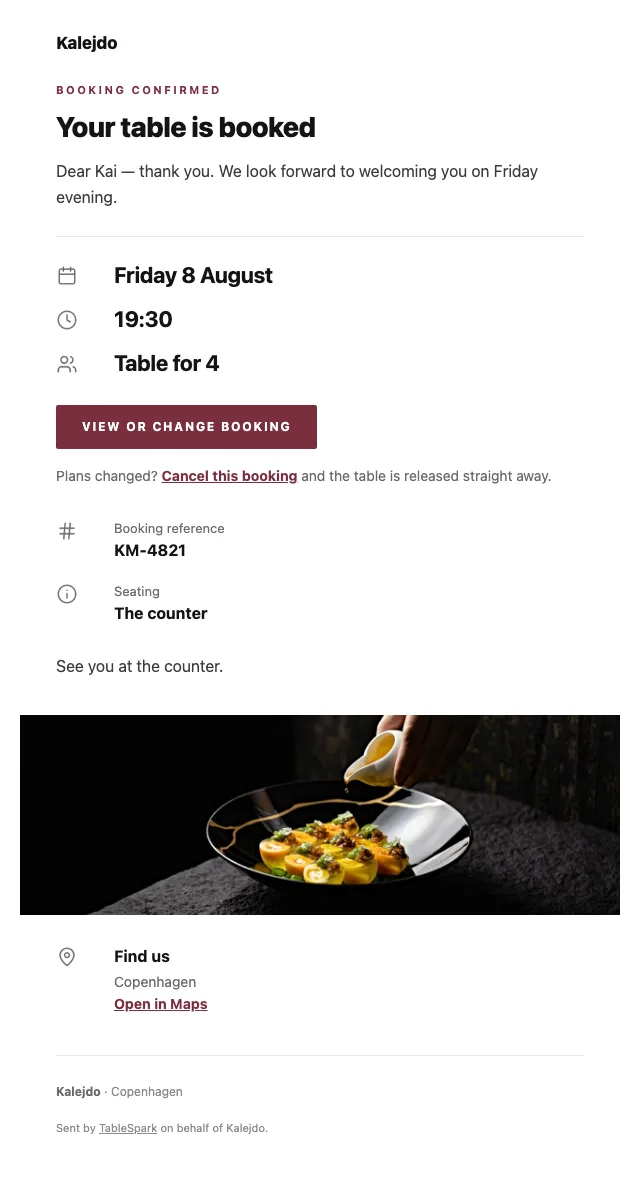
A confirmed booking is not the end of the conversation; it is the start of one. A confirmation is sent the second the booking lands, carrying the time, the covers, your address and contact details, and a self-service cancellation link. The same system sends the reminder before service, the deposit receipt and the cancellation notice.
The whole thing is yours to set, down to the sign-off. Six looks, one accent colour, your logo and cover photograph, the header layout, the sign-off line, and whichever links and social accounts you want on it. Add your domain and the from-line is yours too — the last detail that separates a real restaurant email from a system notification.
Below, the same booking confirmation in six of the looks.
Putting a page online is not the same as delivering a restaurant site that search engines can reliably discover and understand. A misconfigured robots file, a noindex left in place, canonical tags in conflict, pages with no internal links, a PDF menu, missing Restaurant schema or incomplete verification — any one is enough to keep a live site invisible. You feel it in the margin — guests reach commission-charging platforms first, and demand you should own outright becomes demand you rent.
This template ships with that work done. No one can promise rankings or guaranteed indexing — but nothing here is left for you to hire a technician to assemble.
Reorder them, rename them, remove them. The set is a starting point.
None of this is hand-built. They are modules from a library of 68, each with layout variants of its own.
Take one out, put another in, change the order. It is a stack you control.
Ships with 4 sections — Act one, Act two, The table ritual, Finale — for you to overwrite.
No commission at any level. Compare that with a platform that charges per order and owns the relationship afterwards.
Your domain, your inbox, your guest list, exportable at any time.
Stripe’s standard card-processing fees apply to online payments.What commission-free ordering actually means
The camera work and the checking are yours; the transcription, the structure and the draft search copy are ours.
Publishing needs your hand on it.
Search engines The Menu — Kalejdo | Copenhagen Fifty impressions across an evening in Copenhagen. What is served, what it costs and how to book.Drafts the search title & description from this page’s content. Always review before publishing.
Stripe’s standard card-processing fees apply to online payments.
Setting a deposit: amounts, terms and refunds
The builder is free to use for as long as you like. The bill starts when the site does.
The builder is free to use for as long as you like. The bill starts when the site does.
6 pages, and every one of them is here. Nothing below is a screenshot: the frame renders it through the same engine that publishes your site, so every tab is the real page and every link inside it works. Switch to Phone to watch the same design reflow.
This template gives the story more room than most, because in a restaurant like this the story is the product. There is a long narrative block, a pull quote, a values triad, a sourcing section with named producers and a full gallery page for the photography that inevitably accumulates.
The menu is set as plates — each impression given its own photograph and caption — because in a kitchen like this the dish name alone communicates nothing. “Impression 14” needs the image beside it, and the layout gives it one.
Prices for a menu like this are simple: one number, stated once. What takes the work is the dietary conversation, and the menu editor holds allergens and dietary marks per item so a guest can see, before booking, whether the evening can be adapted for them.
Whichever layout you choose, the point is the same: every dish, description and price is real text in the page with Restaurant schema around it, not a PDF and not a photograph of a laminated sheet.
The ordering page here is a straightforward priced list rather than a delivery-app grid, which suits the format: what gets sold online is not dinner but the things around it — the wine pairing, the book, a gift voucher, a takeaway box from the bakery arm.
It still behaves like the rest of the system. The basket stays on screen, choices appear as inline chips, and payment goes through your own Stripe account with 0% commission taken by TableSpark. Stripe’s standard card-processing fees apply to online payments.
The form adapts to the mode. Eating in? A table number. Collecting? A phone number. Delivery? An address. Nothing more is demanded.
Running a Fine Dining kitchen? See all Fine Dining restaurant website templates.
What owners ask before they pick a template: the cuisine fit, the menu, the address, and what it costs.
Yes. Sections, item names, descriptions and photographs are all independent of price — leave the price field empty and nothing shows. Many kitchens list the impressions as a sequence with one price stated for the evening at the top of the menu. Everything remains real text, so a search engine can still read what you serve.
Yes. The reservation form carries a free-text field for exactly this, and it arrives with the booking in your TableSpark inbox rather than in a separate mailbox. Dietary and allergen marks are also set per dish in the menu editor, so guests can check the evening’s shape before they book rather than after.
The guest receives a branded confirmation straight away: date, time, number of covers, your address, your phone number, and a link to release the table. Reminders before service, deposit receipts and cancellation notices come from the same place. You choose from six templates and set the accent colour, logo, cover photograph, header layout, sign-off, links and social accounts — and with your domain connected, the sender address is yours.
No — the builder is visual throughout. Click a block, retype the copy, swap the photograph, move it up or down. Nothing about running the site requires HTML.
Online ordering sits on the Full plan, and we take 0% of what you sell. Stripe’s standard card-processing fees apply to online payments. Payments go to your own account. Nothing else is deducted.
You should not have to. Upload a photograph of the menu you already print and the AI turns it into structured sections, dishes, descriptions and prices, reading dietary and spice marks off the card where it can. Everything lands on a review screen for you to check before it saves. After that it is data rather than an image, which is why one price change updates the menu page, the ordering page, the home-page highlights and the structured data together.

Take this design, make it about your restaurant, and publish it today. Building costs nothing; you pay only when it goes live.