Chinese restaurant website templates
A Chinese menu is often the largest document a restaurant owns — several hundred dishes across banquet sets, dim sum, seafood by weight and a claypot section — and most restaurant websites turn it into a wall. Guests scroll, give up, and phone to ask the question the page should have answered, which costs your staff time during the busiest part of service.
Bilingual naming makes it harder. Dish names carry meaning in Chinese that an English translation flattens, and a page that can only hold one language forces you to choose which half of your guests to serve properly. Meanwhile the banquet and private-dining enquiries — the bookings with real value attached — arrive by phone at seven o'clock on a Saturday, or not at all.
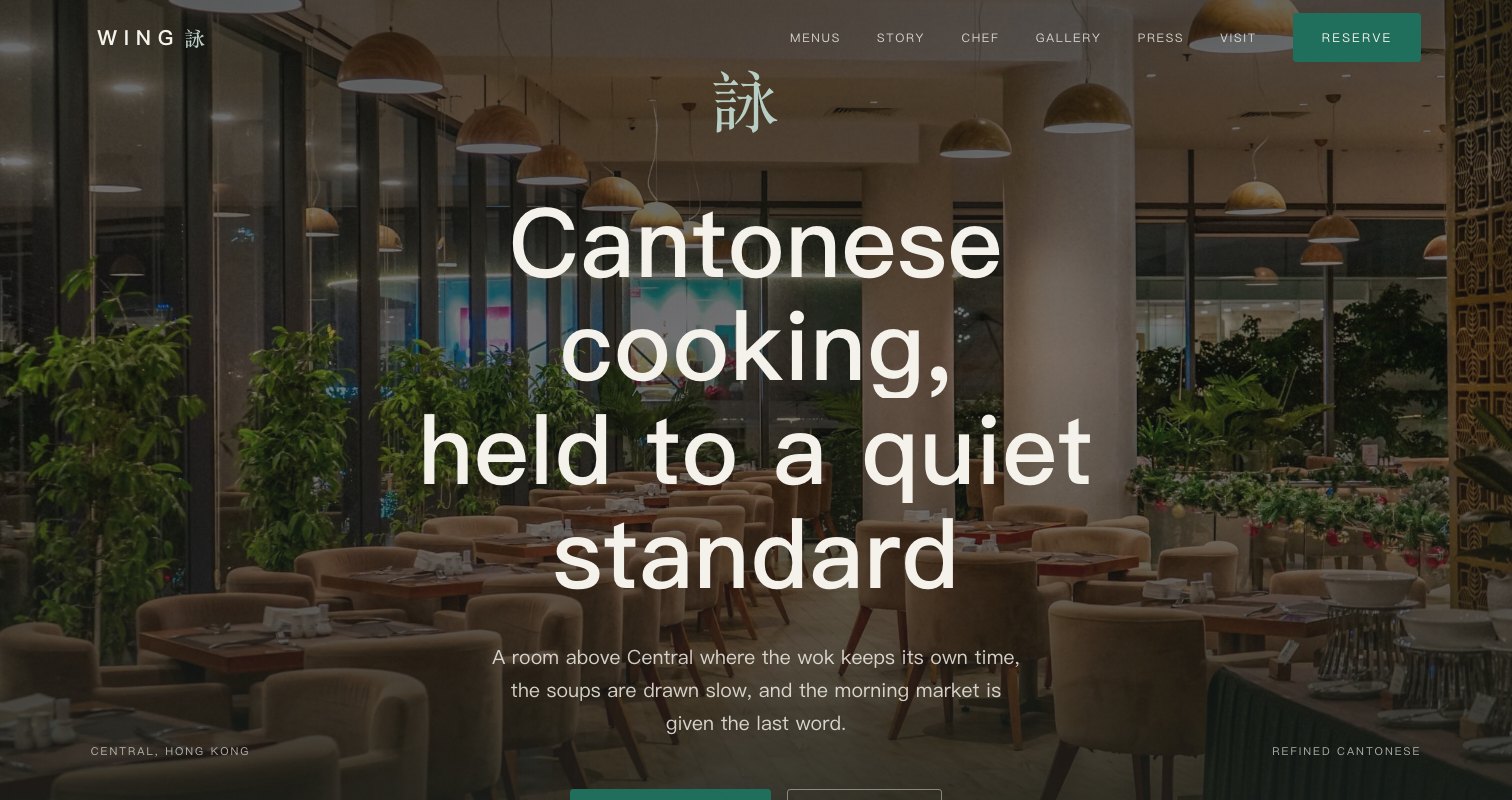
What a Chinese menu asks of a website
A large Chinese menu is a navigation problem before it is a design problem. The page has to make several hundred dishes scannable without hiding any of them.
- 01Deep section structure is native: dim sum, roast meats, claypot, seafood, noodles and rice each stand as their own group rather than as headings inside one endless column.
- 02Dish names can carry both the Chinese name and the English one, so neither set of guests is reading a translation of a translation.
- 03Banquet and set menus get their own presentation with per-person pricing and course counts stated plainly, which is what a family booking a table of ten needs to see first.
- 04Seasonal and market-price items are handled honestly, and the live menu means a price change is a thirty-second edit rather than a reprint.
The Chinese design language
A refined Cantonese room and a busy dim-sum house need different websites — but both need a menu that handles large families of dishes without turning into a spreadsheet. These templates keep long menus scannable and give banquet and set menus their own stage.
Bilingual dish names and section-heavy menus are handled natively, while enquiry forms give banquet and private-dining requests a direct route to your team.
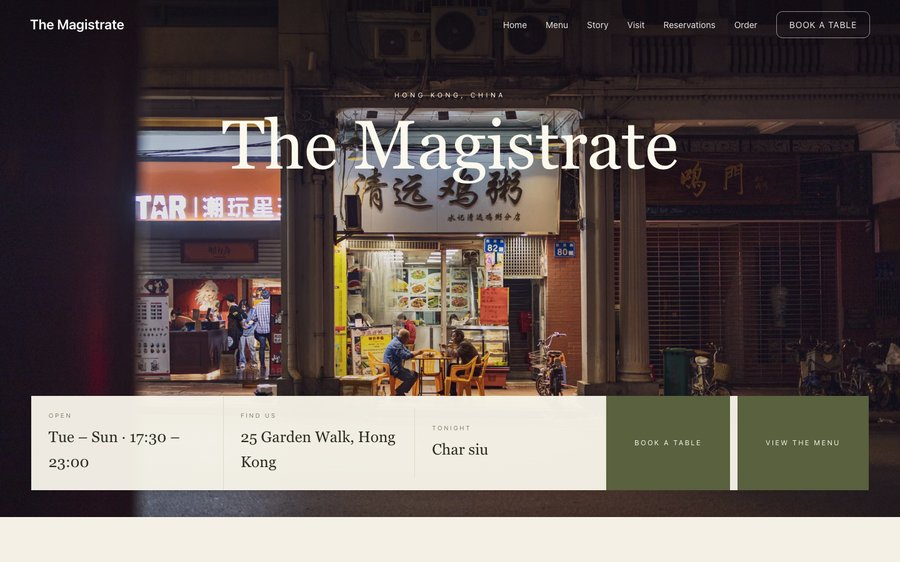 The MagistrateCantonese · Editorial LuxeView the template
Mei CourtRefined Cantonese · Editorial LuxeView the template
The MagistrateCantonese · Editorial LuxeView the template
Mei CourtRefined Cantonese · Editorial LuxeView the template
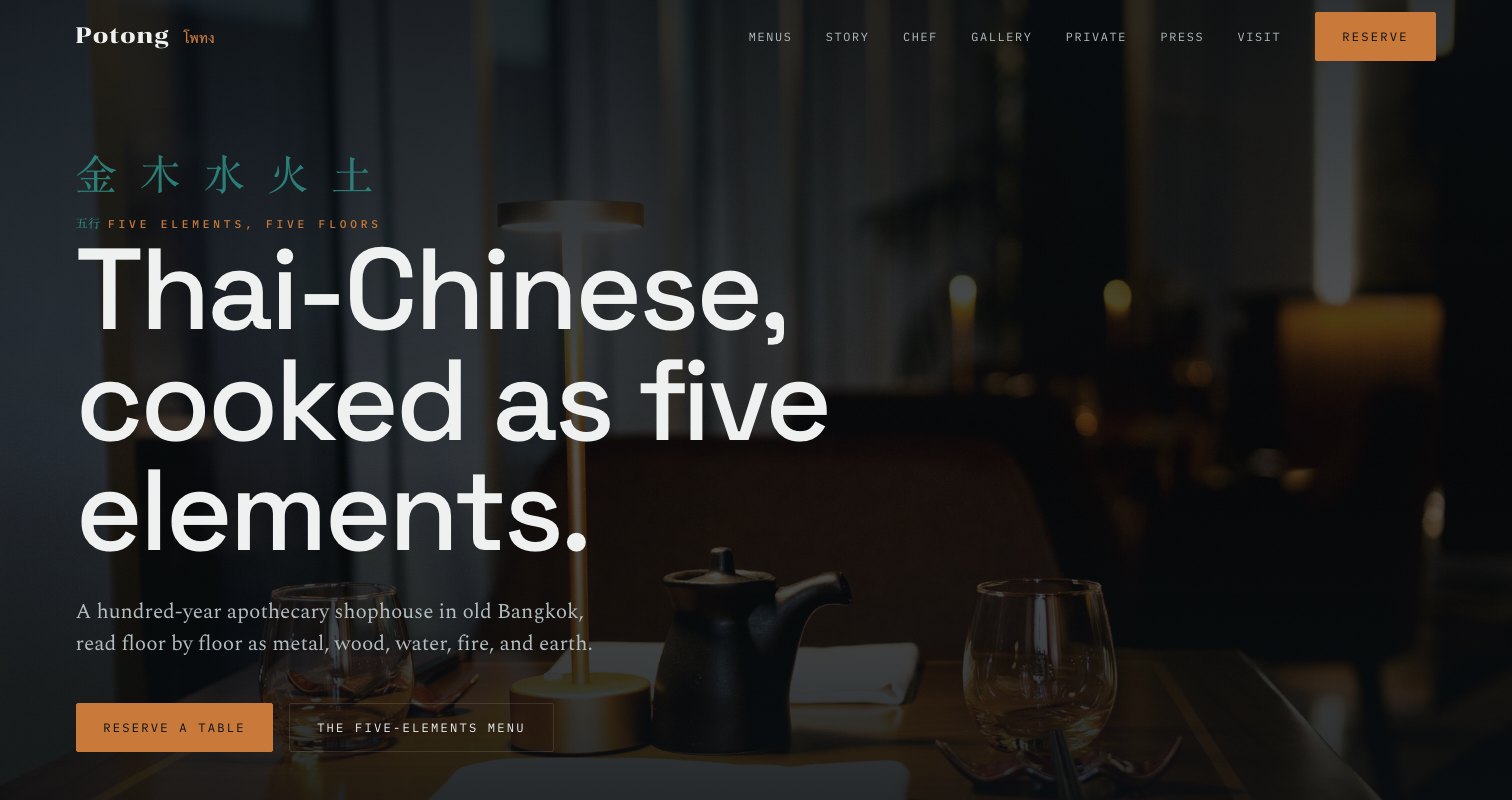 Lao PhetProgressive Thai-Chinese · Maximalist AvantView the template
 Choose any of the 50 finished templates and tailor it to your menu, brand and room — the design work is done, the content is yours.
What Chinese guests want to know before they book
The questions that decide a Chinese restaurant booking are mostly about capacity and format, and they are asked before anyone picks up the phone.
- 01Whether there is a banquet or set menu for a group, and what it costs per person.
- 02Whether dim sum is served all day or only until a certain hour.
- 03Whether a private room exists, how many it seats, and how far ahead it needs booking.
- 04Whether the dishes they know by their Chinese names are on the menu at all.
Three ways Chinese restaurants lose bookings online
The whole menu is one long page
Several hundred dishes with no structure is a page nobody finishes. Sectioning the menu the way the kitchen is organised turns length into navigation instead of an obstacle.
Banquet menus are quoted only by phone
The most valuable booking in the building depends on somebody being free to answer during service. A structured enquiry captures the date, the party and the menu in writing, at any hour.
Only the English names are published
Guests searching for a dish by its Chinese name find nothing, and the restaurant loses the guests most likely to order the rest of the menu properly.
Bookings and orders in a Chinese dining room
The valuable bookings in a Chinese dining room are the large ones: a banquet for a birthday, a private room for a company dinner, a table of fourteen at new year. They involve a set menu, a deposit conversation and a series of details that a phone call at peak service handles badly.
An enquiry form built for that work collects the party size, the date, the room and the menu in one submission, and it lands in your own inbox with a record attached. Where your plan includes direct bookings, standard tables book themselves online while your team keeps its attention for the banquet enquiries that genuinely need a human reply.
How Chinese restaurants get found
What it costs, and who maintains it
Starter is £19/mo excl. VAT and includes a complete restaurant website, a live structured menu, enquiry and newsletter forms, and managed search readiness. Growth is £39/mo excl. VAT and adds direct live bookings, a custom domain with managed SSL, and table and floor-plan operations. Full is £69/mo excl. VAT and adds online ordering and multi-site management for up to five restaurant sites. TableSpark commission is 0%. Stripe's standard card-processing fees apply to online payments.
Maintenance is the part that usually gets left out of a quote. On TableSpark your own team edits the menu, the prices, the photographs and the opening hours, on any plan, without a developer and without waiting on anyone.
Questions Chinese restaurants ask
Can dishes show both Chinese and English names?
Yes. Both names can sit on the same dish, so the menu reads correctly for guests who order in either language and neither version is reduced to a footnote.
How does a menu with 300 dishes stay usable on a phone?
Through structure. Sections group the menu the way the kitchen does, and the mobile layout keeps those groups scannable, so guests navigate to the part of the menu they want instead of scrolling past everything else.
Can we take banquet and private-room enquiries online?
Yes. An enquiry form collects date, party size, room and menu in one go and delivers it to your inbox with the details recorded, so nothing depends on somebody remembering a phone call taken mid-service.
Can we change seafood prices when the market moves?
Yes, immediately and by your own team. The menu is live content, so a market price is an edit, not a reprint.
Can we show dim sum only during the hours we serve it?
Yes. A menu can carry its own service days and times, so the dim sum list appears when it is being served and steps aside afterwards rather than disappointing someone who arrives at nine in the evening.
Can more than one person in the restaurant update the site?
Yes. Team members can be given their own logins with the level of access you choose, so a manager can change prices without holding the keys to the billing account.