01
Hero
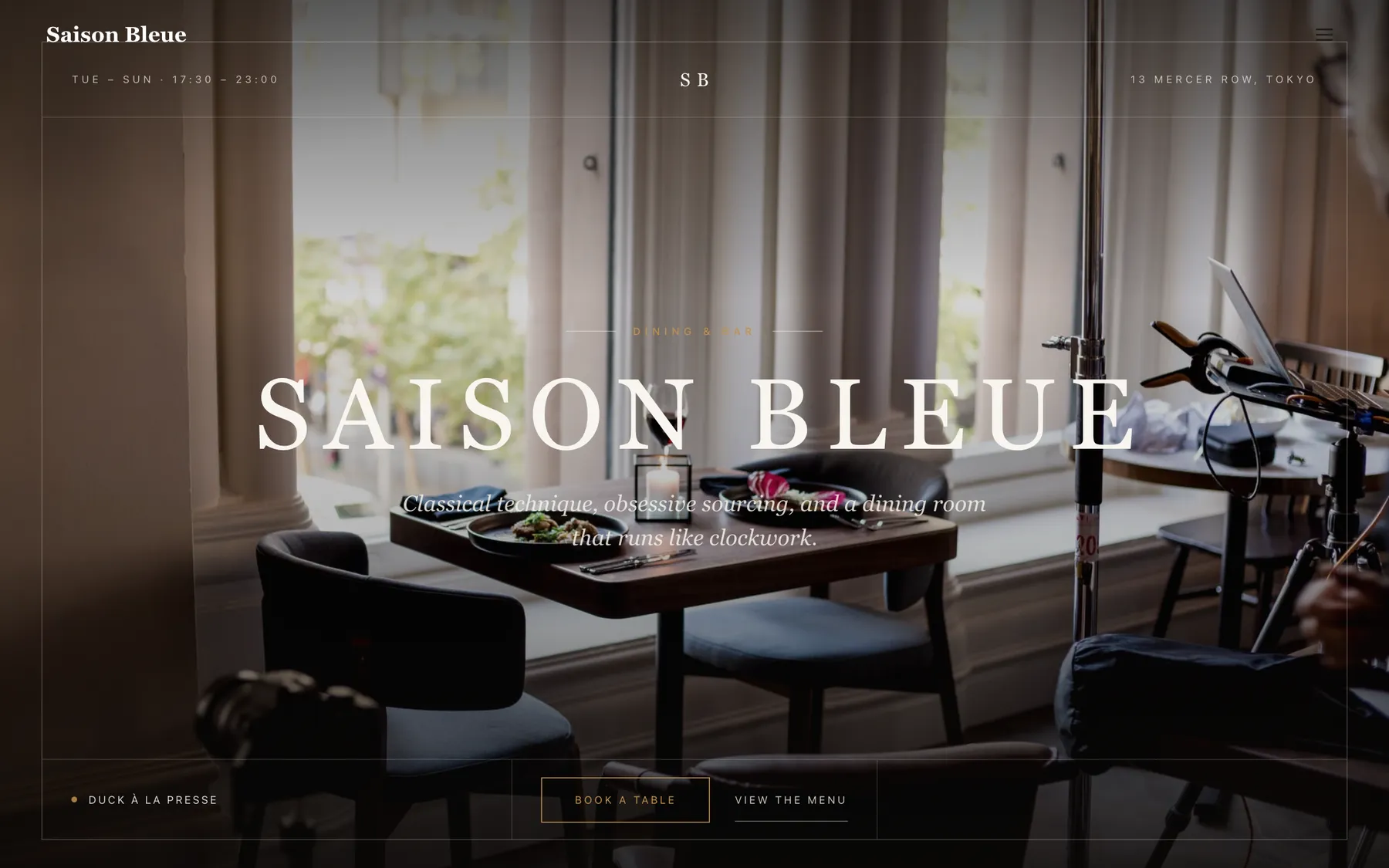
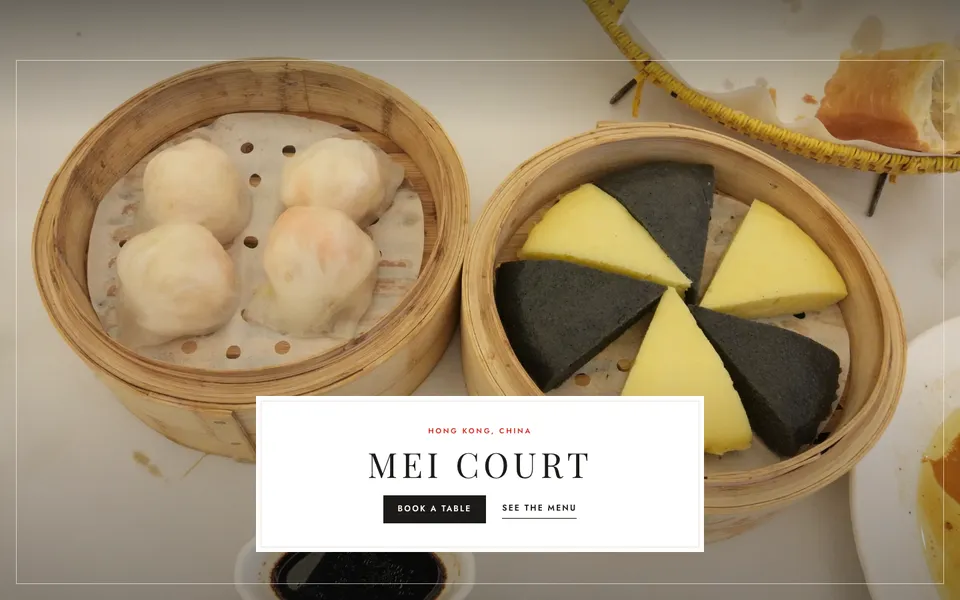
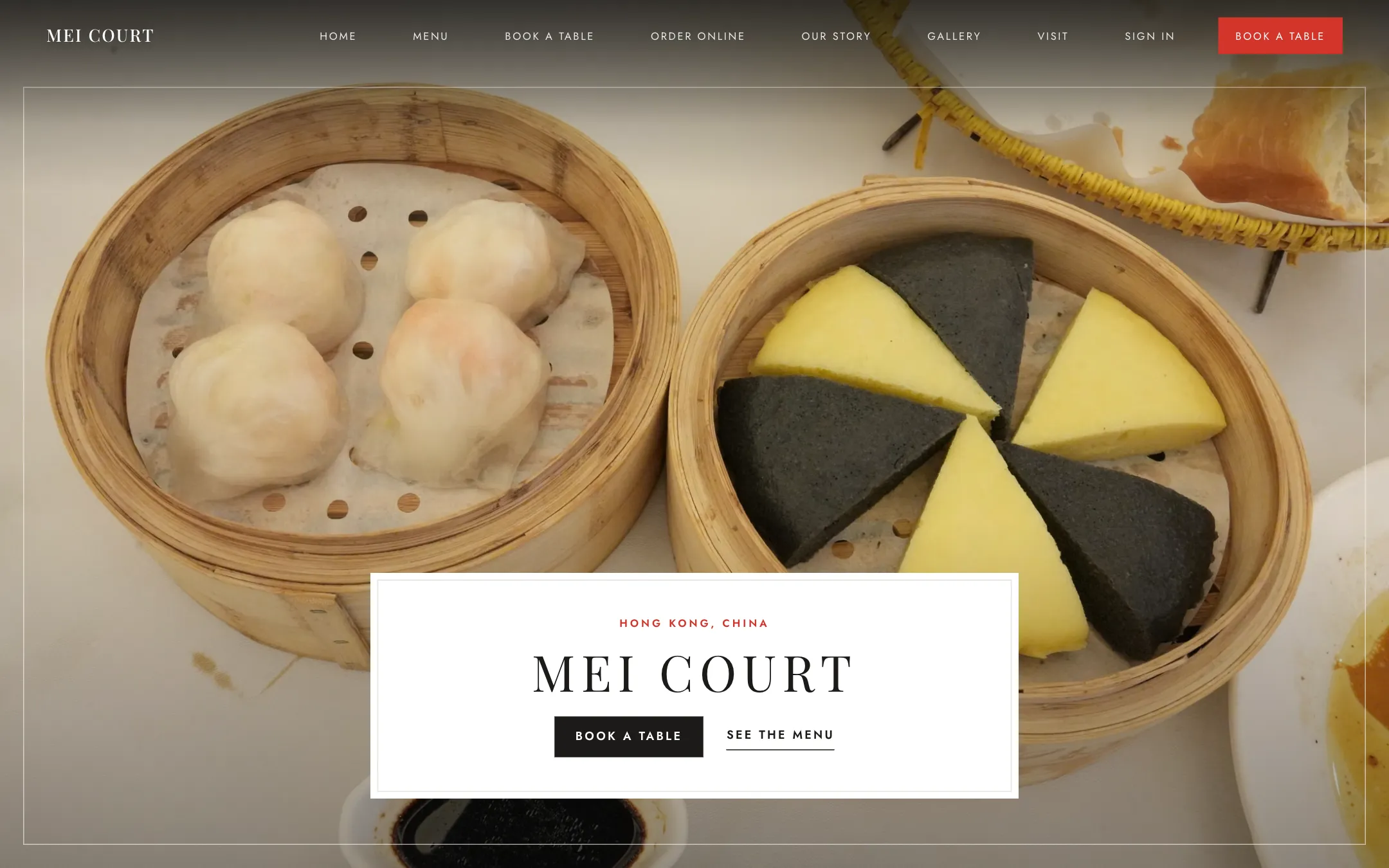
Big opening image, name & buttons, in the Salon Plaque treatment: Portrait portal on a dark band, awards row and chef signature beneath.
Templates · Refined Cantonese
For Cantonese rooms where the cooking is precise and the menu is long: a warm, editorial template with seating-led booking, a plated menu layout, and structure for banquet and set menus.
Every section is a builder module you can reorder, edit or delete, with no developer.
On bookings and orders, on every plan. Stripe’s standard card-processing fees apply to online payments.
Build and preview the whole site for nothing, and pay only when it goes live.
Starter is £19/mo excl. VAT and includes a complete restaurant website, a live structured menu, enquiry and newsletter forms, and managed search readiness. Growth is £39/mo excl. VAT and adds direct live bookings, a custom domain with managed SSL, and table and floor-plan operations. Full is £69/mo excl. VAT and adds online ordering and multi-site management for up to five restaurant sites. TableSpark commission is 0%. Stripe's standard card-processing fees apply to online payments.
An independent UK restaurant can be running all of this at one flat monthly price, and the full cost comparison shows why that is the best value. The expensive route is a bespoke build: thousands of pounds, months of waiting, and a developer on call for every price change. This is the other route. From then on nothing needs a developer — the menu, the prices and the pictures are edited by whoever is standing at the pass. Phone, tablet and desktop are all handled, and reservations, tables, ordering and management come with the plans — TableSpark takes 0% commission.
Mei Court is warm paper with a rose-red that belongs to a lacquer box. Yours might be white tile and morning light, or brass and candles, or something nobody has built yet.
There is no demo video and no sales call. What you see on the right is the actual Theme panel from the builder, wired to the actual site renderer on the left. Press a colour. It will not ask you to register and it will not remember what you did. Go on.
Loading the live preview…
Refined Cantonese cooking is undersold by menus that read like a takeaway list — three hundred numbered items with no hierarchy. This design fixes the hierarchy first: a warm paper ground, generous space, and a layout that lets the kitchen show fifteen dishes properly rather than three hundred badly.
The opening is a seatings board, which is the honest structure for a room that runs two or three services and takes bookings for both. It carries the sittings, tonight’s dish and the route to a table before anything else.
Eight blocks, built for a room with services rather than opening hours:
01
Big opening image, name & buttons, in the Salon Plaque treatment: Portrait portal on a dark band, awards row and chef signature beneath.
02
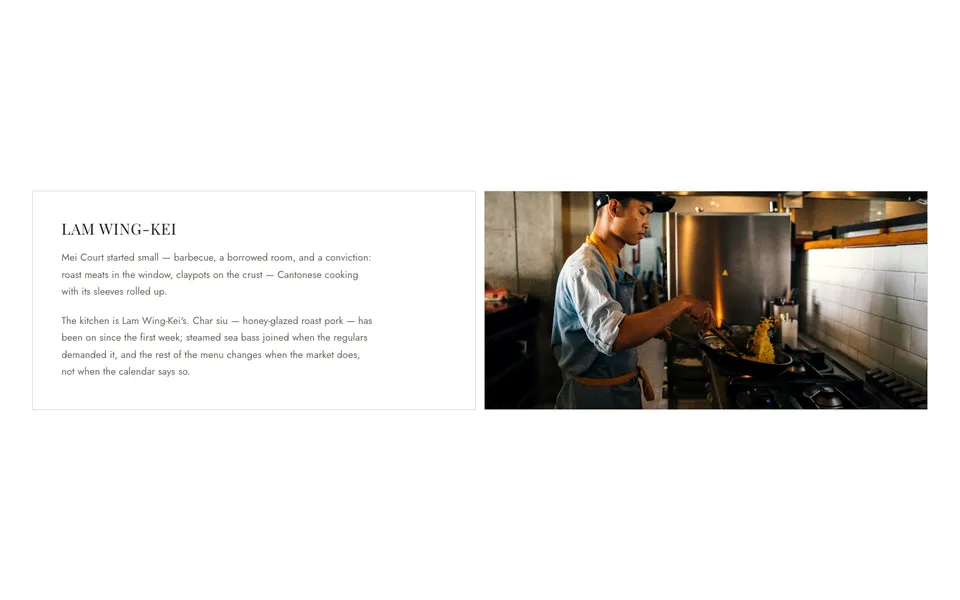
Big opening statement line.
03
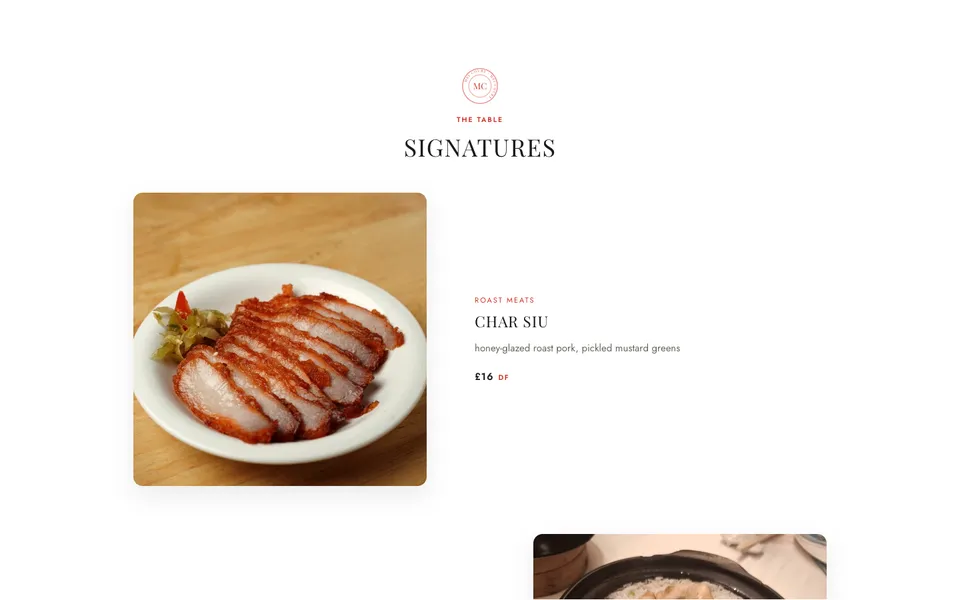
A few dishes on a sliding rail.
04
One dish, full screen — name, story, price.
05
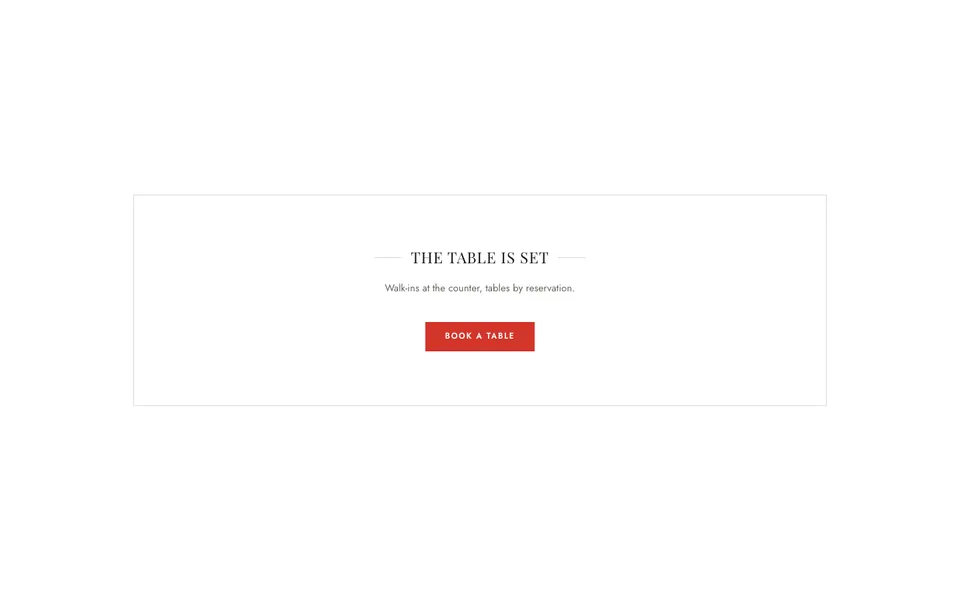
Full-width image band with optional caption.

06
Grid, masonry or moving strip.

07
Guest quotes with stars.

08
Headline + button band.
The statement block currently reads Roast meats in the window, claypots on the crust — Cantonese cooking with its sleeves rolled up. — one line you will rewrite in about four seconds.
Loading the live preview…
Mei Court uses the Classic list ordering layout — the printed-menu look, with dotted leaders running from each dish to its price.
It reads like the delivery apps your guests already know, except the restaurant keeps the relationship and the money. The basket stays on screen, and each mode asks only for what it needs: a table number, a phone number or an address.
Loading the live preview…
This is the frame that matters. It is the real ordering page at a real phone width — not a mock-up, not a video.
On a laptop the same page puts the basket in a panel beside the menu that follows the scroll.
Every Mei Court site on Growth and Full ships with an app your guests keep. It lives at /account on your own domain, so the guest signs in to your restaurant, not a marketplace.
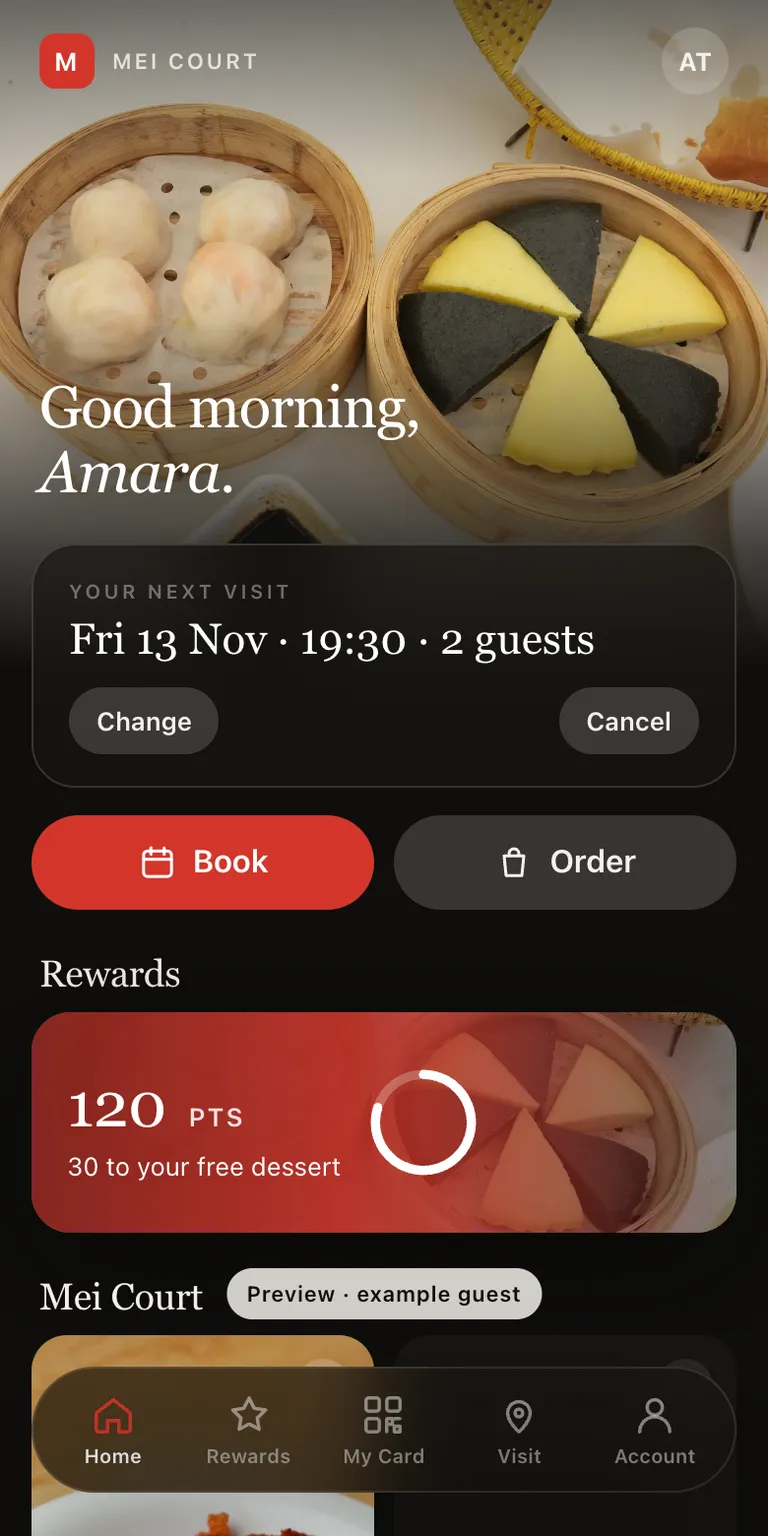
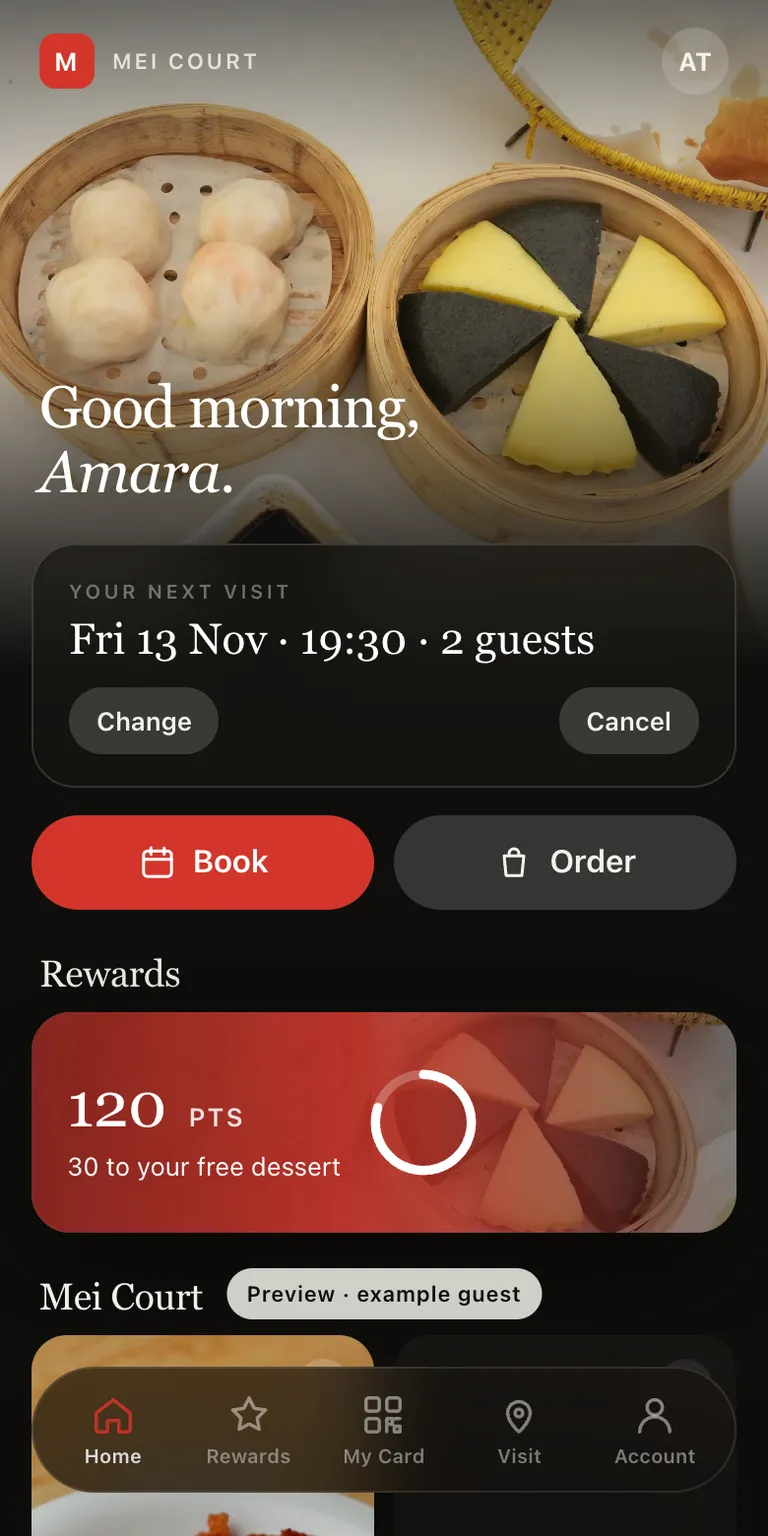
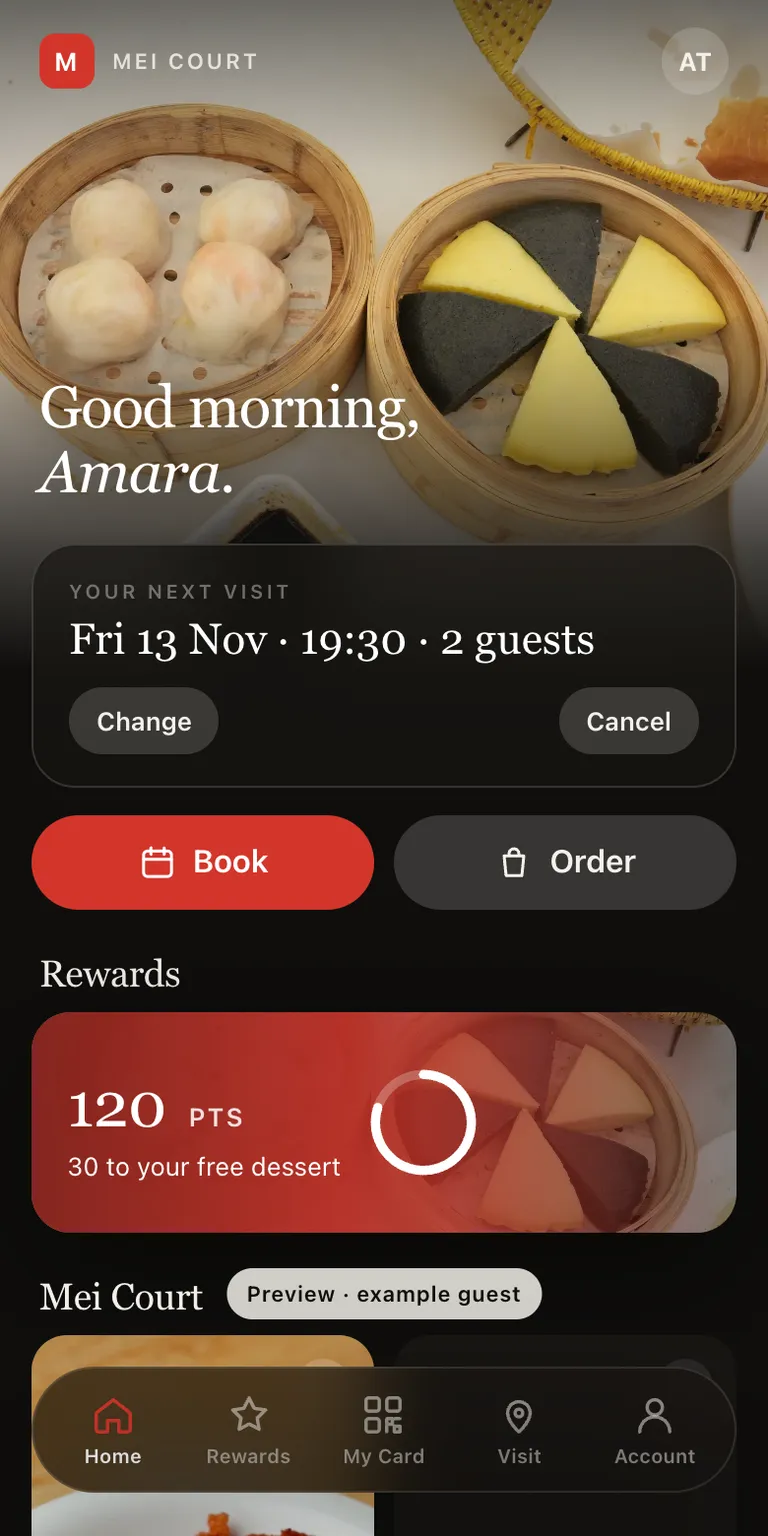
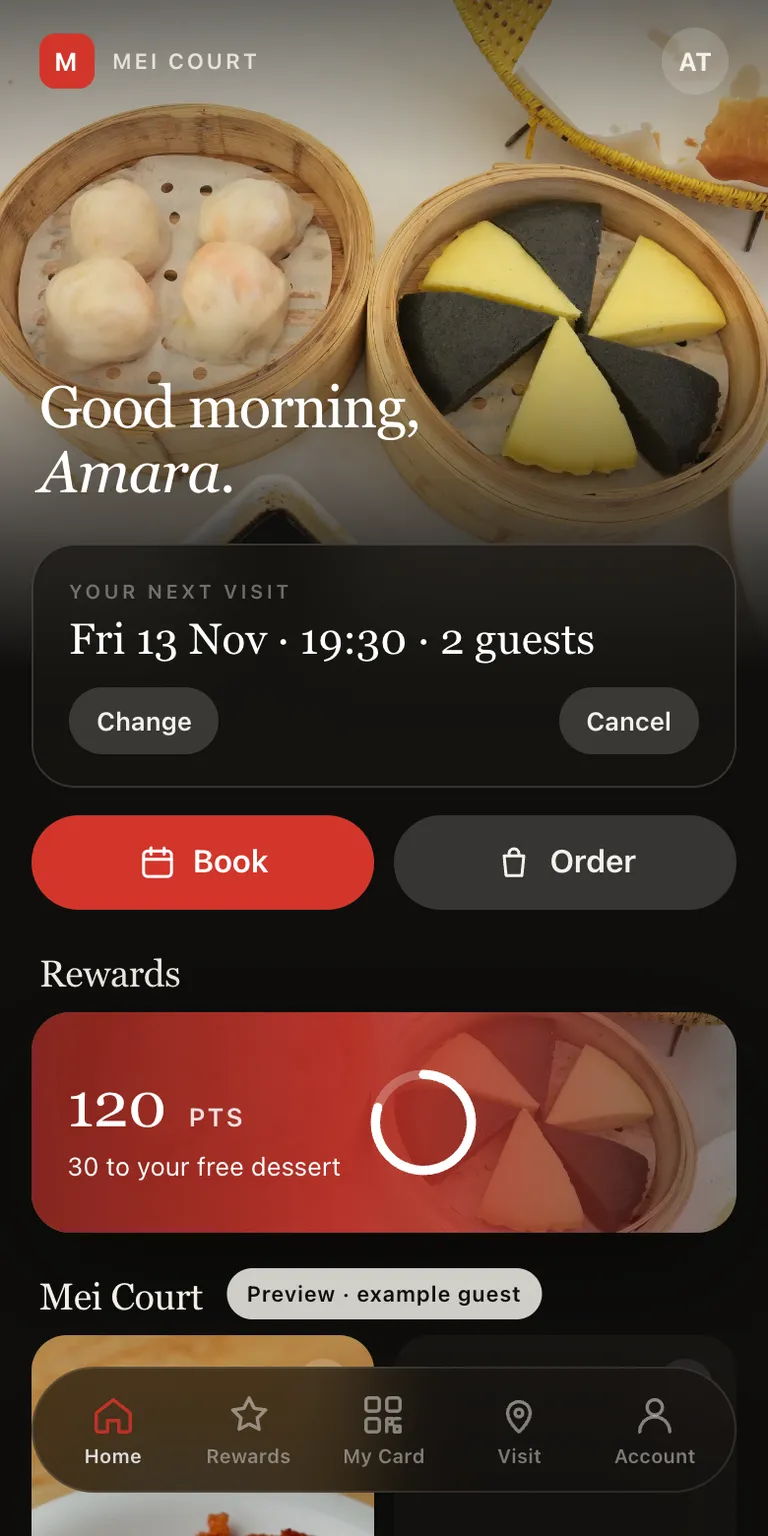
Included on the Growth and Full plans. Watch the Guest App course
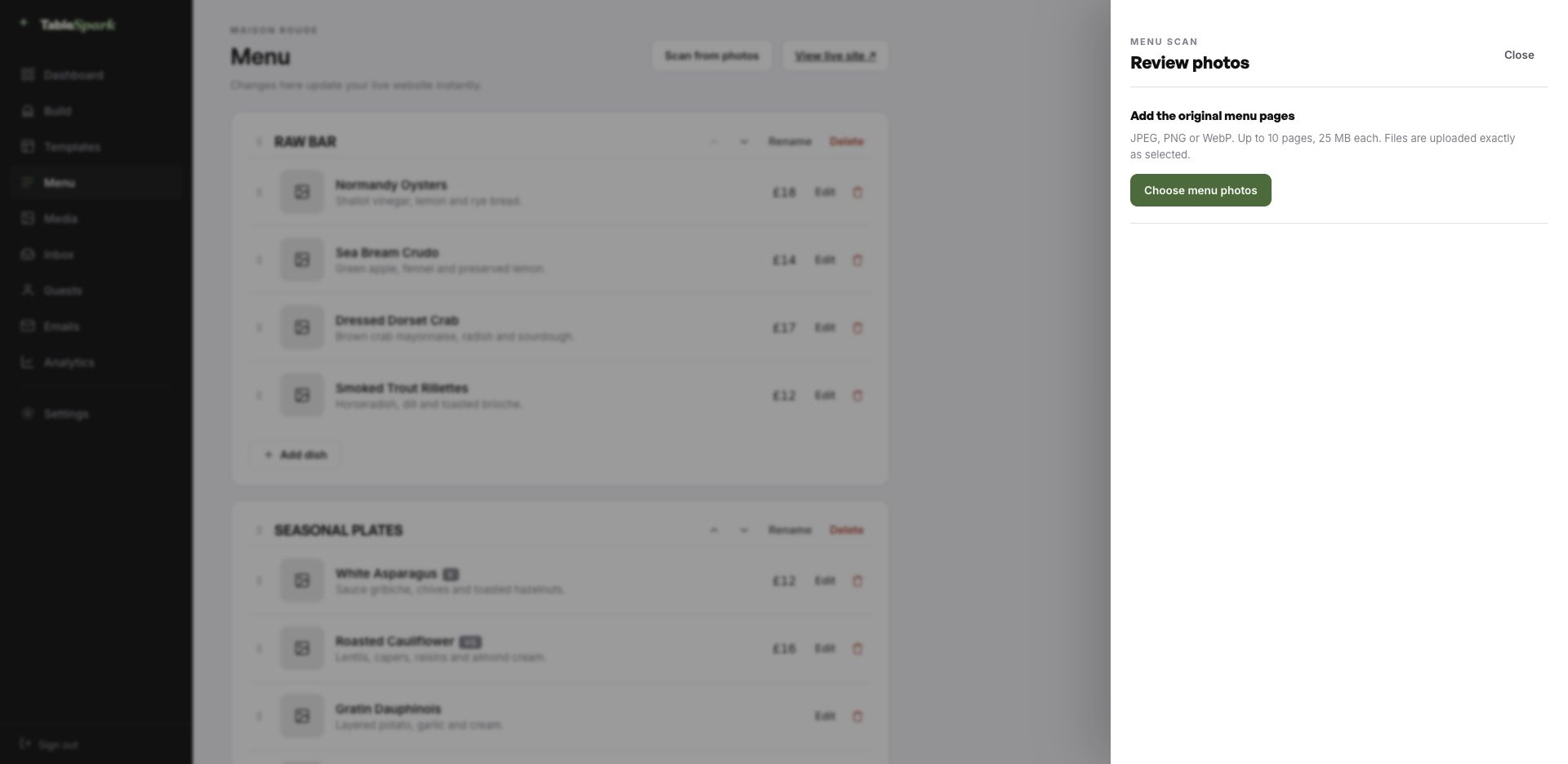
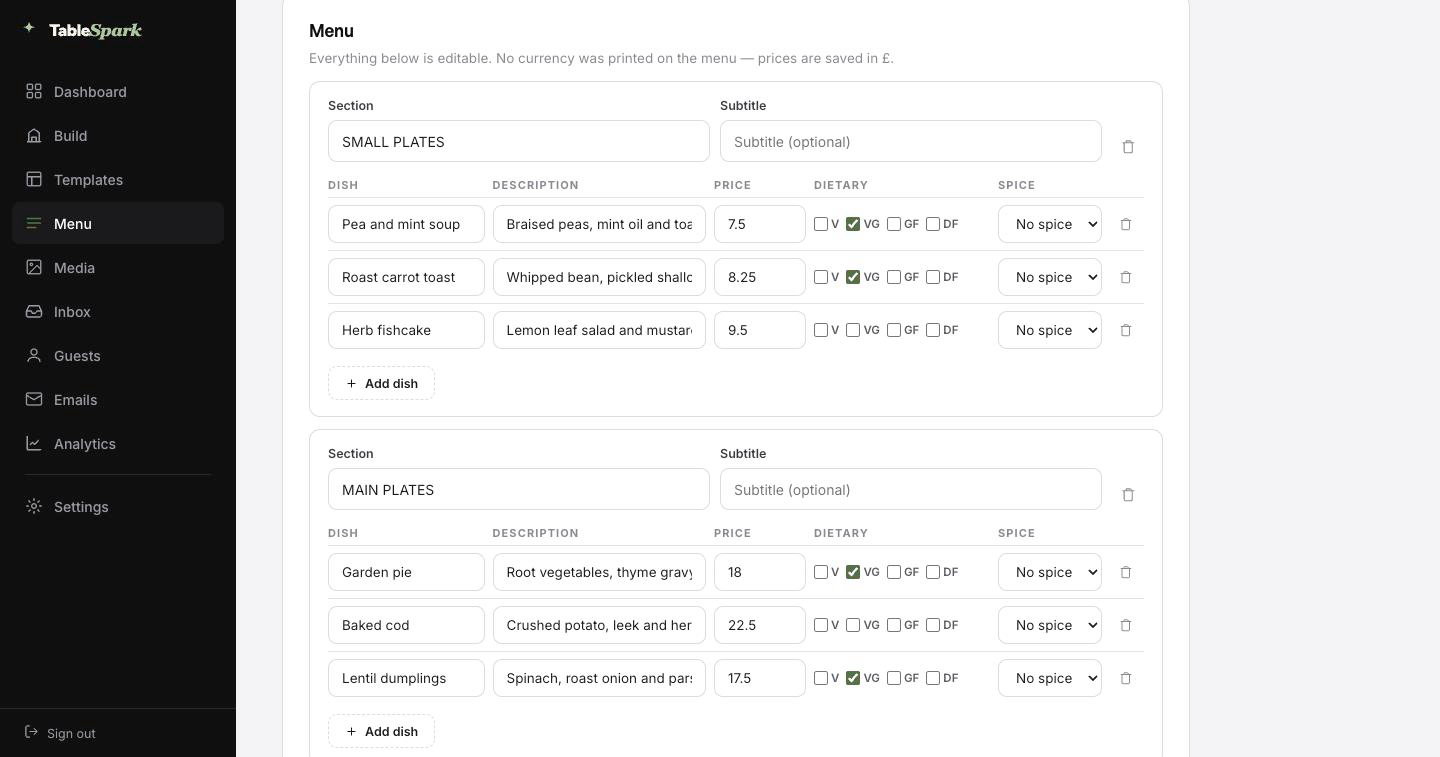
Here is the hour you were dreading, deleted. Photograph the card, the board or the takeaway sheet — up to ten pages at a time — and hand it to TableSpark. It is read into proper fields — section, dish, description, price, dietary marks, spice level — rather than pasted in as a lump of text. Then you read it through, correct whatever the lens misread, and save.
It behaves like data, because it is data. The same structured menu drives the menu page, the ordering page, the highlights on the home page and the Restaurant structured data a search engine reads. Change a price once afterwards and all of them follow.
For the search snippet, a Write with AI button drafts the title and description out of the page itself. It is a draft, not a decision: edit it, then publish.
The printed card, a chalkboard, a PDF, a takeaway sheet. Straight from your phone.
Sections, dishes, descriptions, prices and dietary marks come back as structured data for you to check.
Menu page, ordering page, home-page highlights and the Restaurant schema — from the one source, together.
Nothing here needs to be built, because it already is. The hard parts are finished; the personal parts are not, and only you can do those. You go from opening the builder to a published site on their own address in one sitting, and the reservation form answers from the moment it publishes. You see it in the inbox, they see a confirmation in theirs, both within seconds.
Add your Stripe account and the same site takes booking deposits and order payments, with the money landing in your account rather than ours. TableSpark takes 0% commission at every plan level. Stripe’s standard card-processing fees apply to online payments. Nothing else is deducted.
Step 01
1min
Pick Mei CourtThe whole site copies into your account, menu and all.Step 02
4min
Change the name and the wordsClick any block and type. The restaurant name propagates everywhere.Step 03
3min
Upload your menuPhotograph it and let the AI build the sections, dishes and prices.Step 04
1min
PublishYou are live on your address. Bookings work immediately.Step 05
1min
Connect StripeNow you can take deposits on tables and payment on orders — direct to your account.In all
10min
From template to taking paymentsFive steps, one sitting.An address is branding that people type. The TableSpark address gets you live in minutes; your own domain takes over the moment you want it to, with nothing rebuilt.
TableSpark manages the technical side: the certificate, the secure connection, the redirect from the bare domain to the one you chose, and keeping search engines pointed at the right address so the move does not cost you what you have already earned. An existing domain works fine. You get one instruction, not a documentation site.
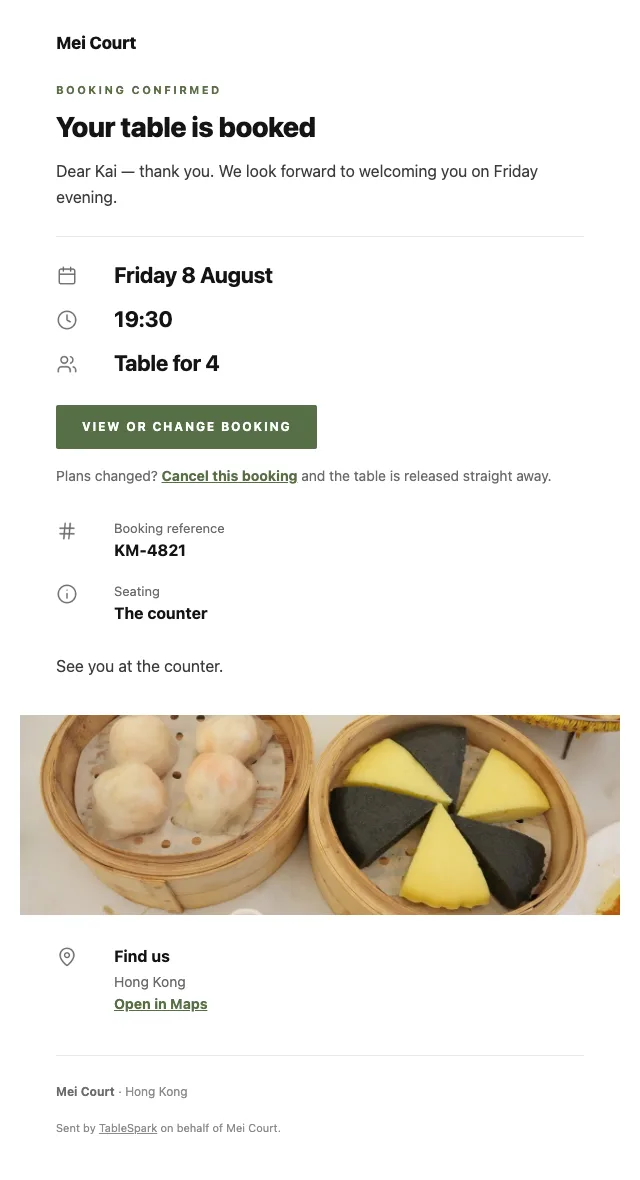
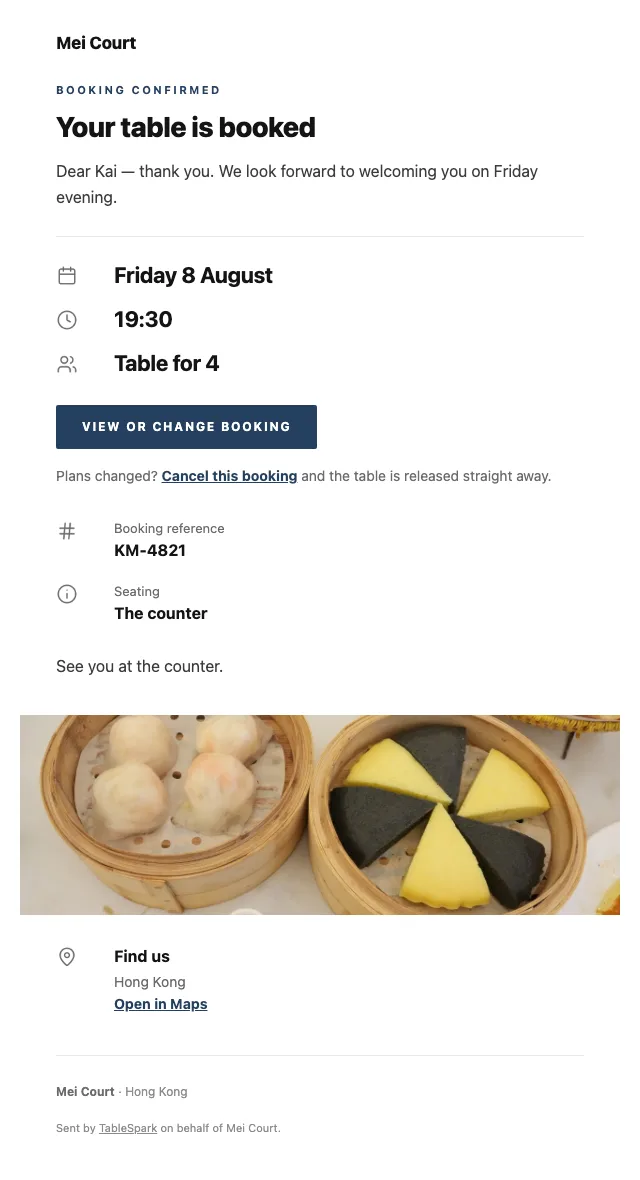
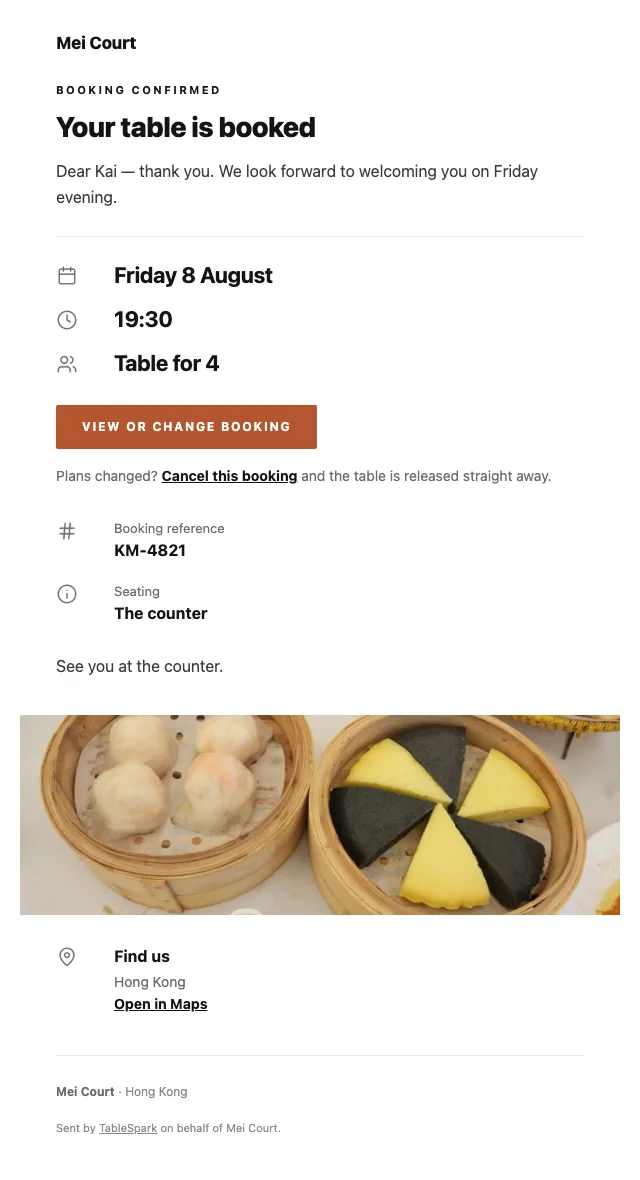
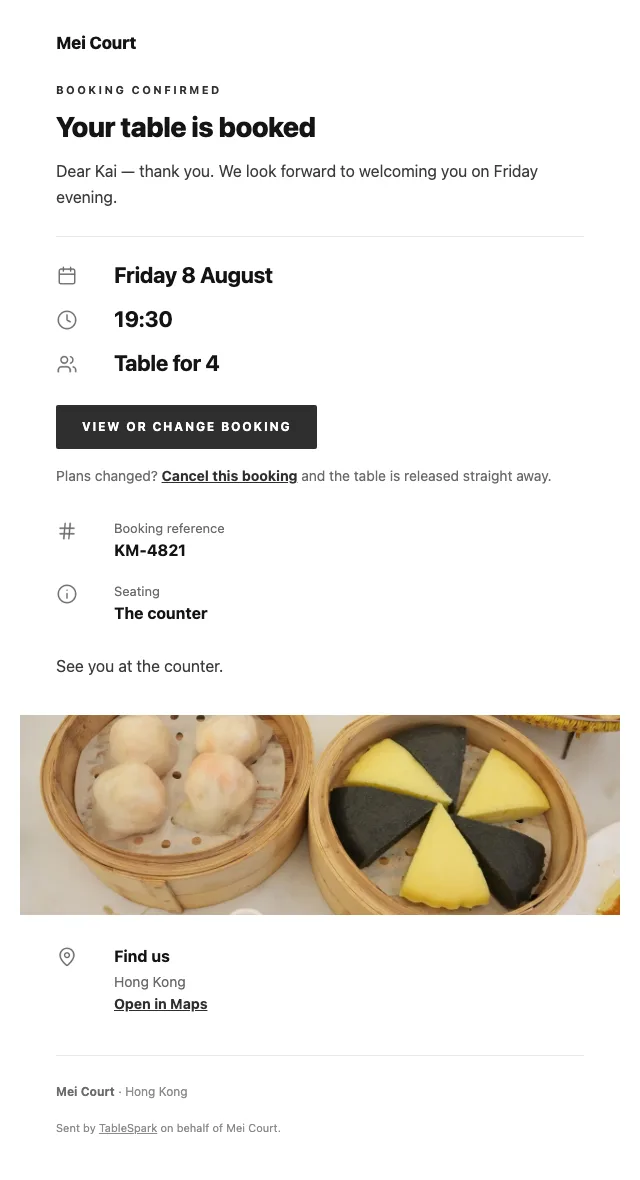
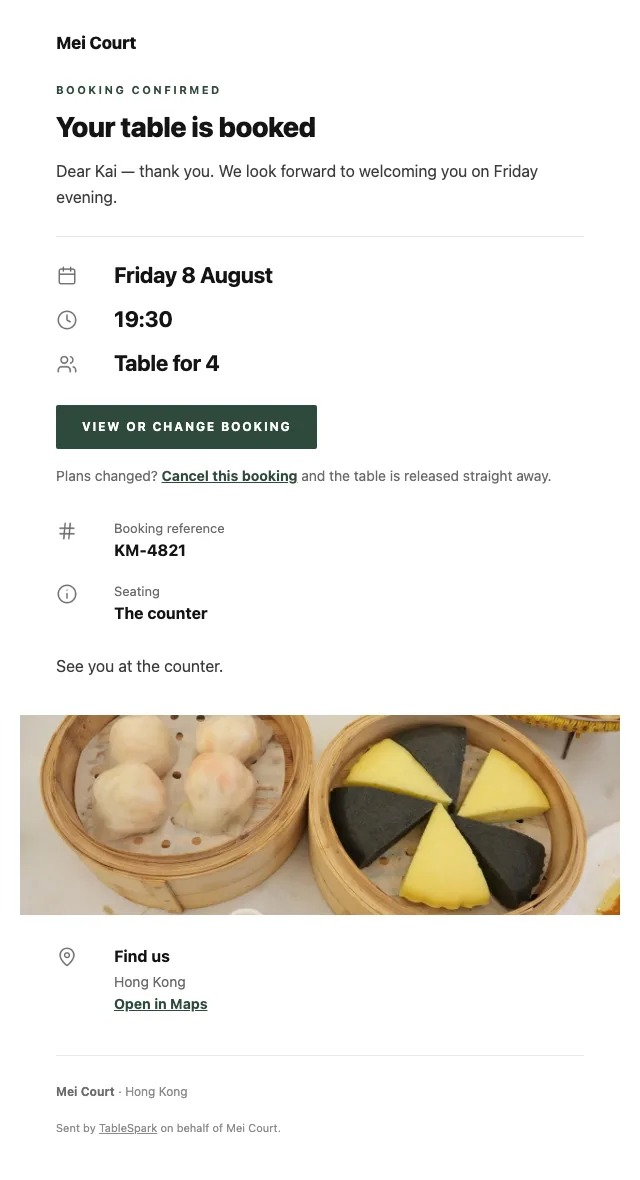
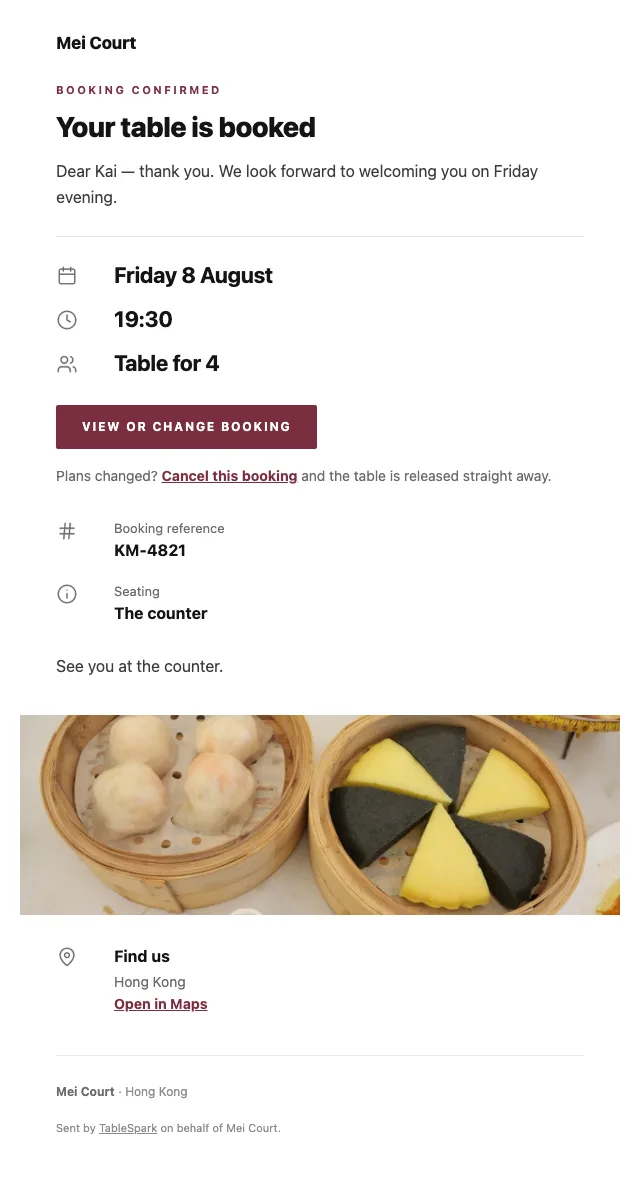
What lands in the inbox after a booking is doing more work than most restaurants realise. The confirmation goes out immediately: date and time, party size, the address and phone number, and a link that releases the table if something changes. It also carries the reminder the day before, the deposit receipt and any cancellation.
The design is not a TableSpark email with your name in it — it is your email. Six templates to choose between, then colour, logo, cover image, header style, sign-off wording, links and socials are all yours to set. Hook up the domain and even the sender is you.
Below, the same booking confirmation in six of the looks.
Any tool can put a page on the internet. Fewer can make sure a search engine understands what is on it. It fails quietly: noindex directives nobody noticed, conflicting canonical URLs, orphan pages, menus buried in PDFs, no structured data about the restaurant, and search verification that was never completed. The bill arrives as dependence — guests looking for your kitchen land on a directory or a marketplace that charges you for the introduction.
This is packaged into the site rather than sold separately. There is no promise of a position or of being indexed, because nobody can make one. There is a promise that you will not be hiring someone to fix the basics.
Every one can be renamed, reordered or removed, and new pages added.
There is nothing bespoke here. Every block is one of the 68 modules available to any TableSpark site, each with its own layouts.
Remove one, reorder them, or pull in a block you saw on another template.
Ships with 5 sections — Barbecue, Steamed, Wok & claypot, Dim sum — for you to overwrite.
Our cut is zero, permanently. The alternative is a platform that charges you for each order and then owns the guest.
Your domain, your inbox, your exportable guest records. Stripe’s standard card-processing fees apply to online payments.
See what 0% commission is worth over a year
You photograph and proofread. The software types, structures and drafts.
Nothing reaches the live site until you say so.
Search engines Menu — Mei Court | Cantonese, Hong Kong Refined Cantonese cooking: à la carte, dim sum and banquet menus, with prices and set-menu options.Drafts the search title & description from this page’s content. Always review before publishing.
Stripe’s standard card-processing fees apply to online payments.
How to set a booking deposit that guests accept
Make the entire site, sleep on it, start again if you want. Nothing is charged until you publish.
Make the entire site, sleep on it, start again if you want. Nothing is charged until you publish.
5 pages, and every one of them is here. None of this is an image. The frame runs the real renderer — the one that publishes live restaurants — so each tab is the actual page and the links go where they say. Press Phone and watch it reflow.
The story page carries the kitchen’s lineage, an interview and a gallery of the room. The visit page does more work than usual for a restaurant like this — floor, building, the lift, how to find a door that is not at street level — all of it real text a guest can read before they arrive.
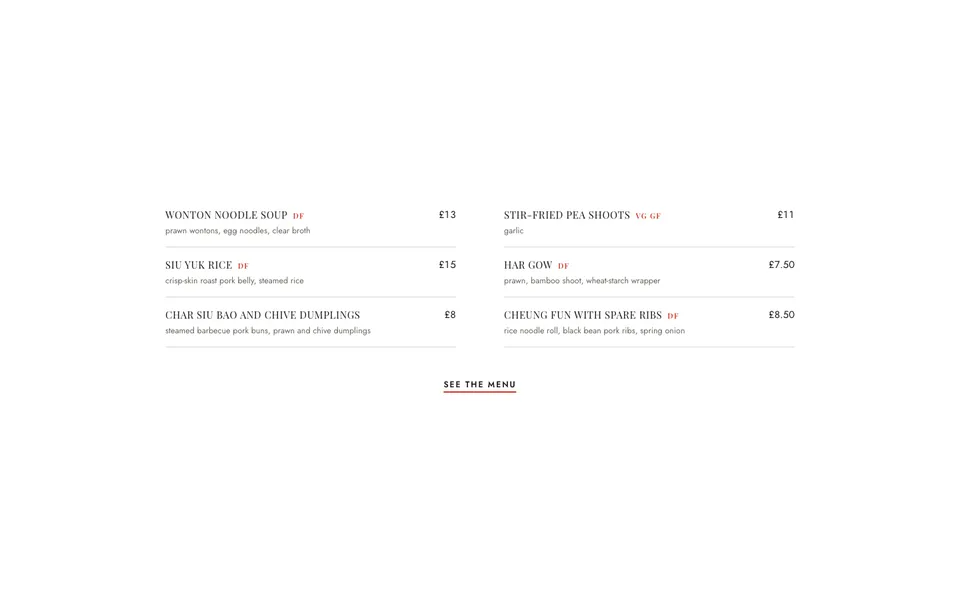
The plated layout gives each section its signature dish as a photograph, then lists the rest as type. That is the compromise a long Cantonese menu needs: enough imagery to convey the standard of the kitchen, without demanding a photograph of every one of two hundred items.
Set menus and banquets are the commercial core of a room like this, and they are handled as their own structure — courses listed, price per head stated, minimum numbers noted — rather than being squeezed into the à la carte. Bilingual dish names are handled natively, with a language switch in the header.
Whatever the arrangement, the menu is text and not a picture — every dish, description and price indexable, with Restaurant schema around it.
The ordering page uses photo tiles, which is the right choice for dim sum and small plates: guests order more when they can see what they are ordering, and a tile grid handles forty items without becoming a wall of text.
Portion and quantity choices sit as chips on each tile, and the basket stays on screen with a running total — which matters when a table of six is assembling an order of twenty items. Dine-in asks for a table number so the kitchen knows where it is going.
Each mode collects only what it must: a table number for dine-in, a telephone number for collection, an address for delivery.
Running a Chinese kitchen? See all Chinese restaurant website templates.
What owners ask before they pick a template: the cuisine fit, the menu, the address, and what it costs.
Yes. Dish names, descriptions and section names can each carry a second language, and the header shows a switch that changes the menu without leaving the page. Both versions are real text on the page, so a guest searching in either language can find the dish they are looking for.
Set menus have their own block: courses listed, price per head, and a note field for minimums or the notice you need. It can sit on the menu page or a page of its own, and the enquiry form that follows lands in your TableSpark inbox with the party size and date attached, so a banquet request never sits unanswered in a personal mailbox.
It is part of the Full plan, and there is no commission at any level — 0%. Stripe’s standard card-processing fees apply to online payments. Money is paid into your own account.
No — photograph it and upload it. TableSpark reads the menu and builds the structured version for you: sections in order, dish names, descriptions, prices, and the dietary and spice marks where they are legible. You review the result and correct anything the camera got wrong. From there it is real data, not a picture, so the same menu drives the menu page, the ordering page, the home-page highlights and the Restaurant structured data a search engine reads — change a price once and all of them follow.
About one sitting. The template arrives complete, so you are editing rather than building: the name, the copy, the menu, then publish. Bookings answer immediately and appear in your inbox, with an automatic confirmation to the guest. Connecting a payment account adds deposits and order payments, which go directly to your own account — TableSpark takes no commission on any plan. Stripe’s standard card-processing fees apply to online payments.
Every one of them, in the Theme tab: palette, the display and body typefaces, corner radius, motion, the header layout and how it behaves on scroll. The template is a starting point, not a cage — and switching a colour never breaks the layout, because the design reads its values from the theme rather than hard-coding them.

Copy this design into your account, change the words, add your menu and publish — usually the same afternoon. Free to build; you only pay when you go live.