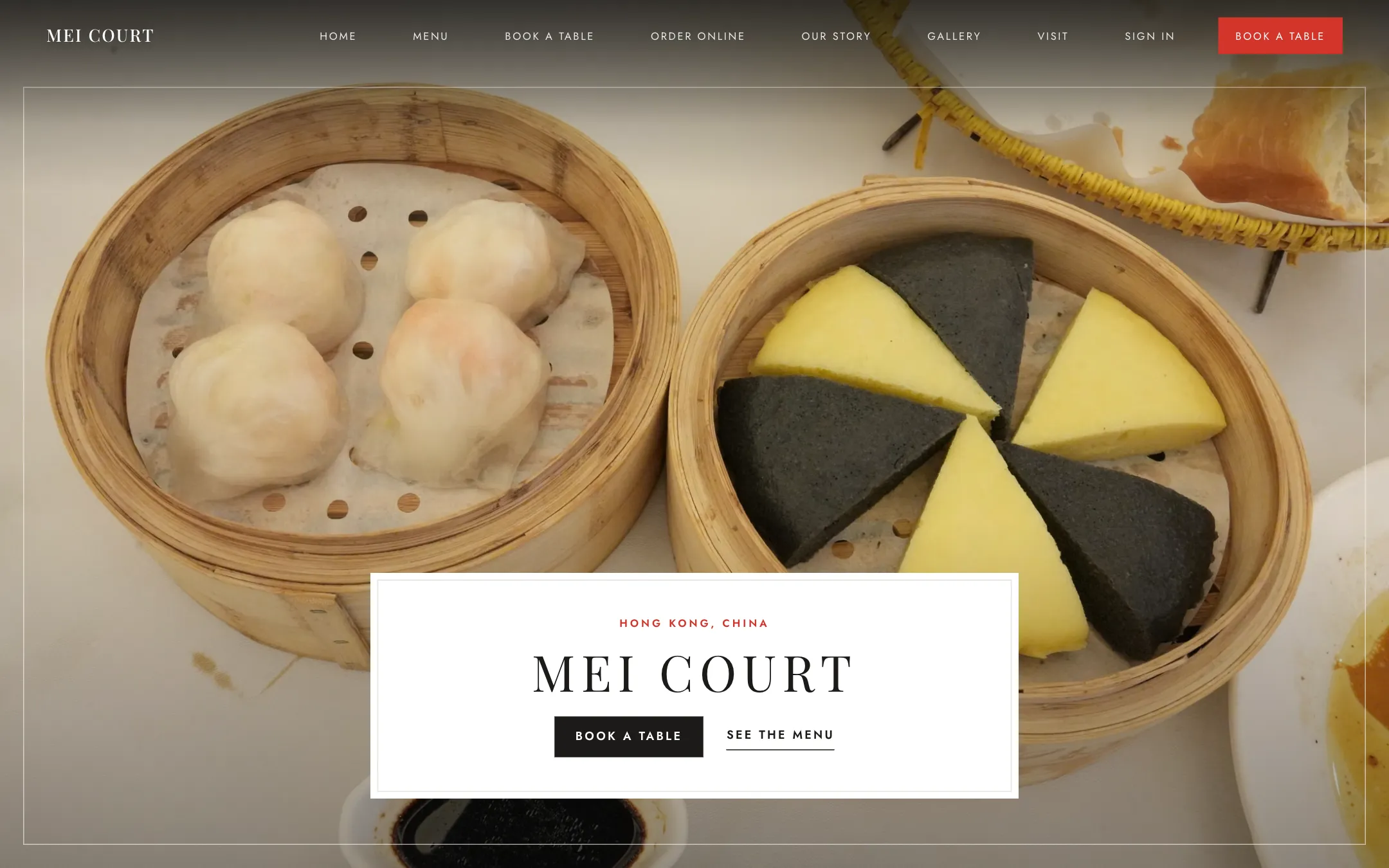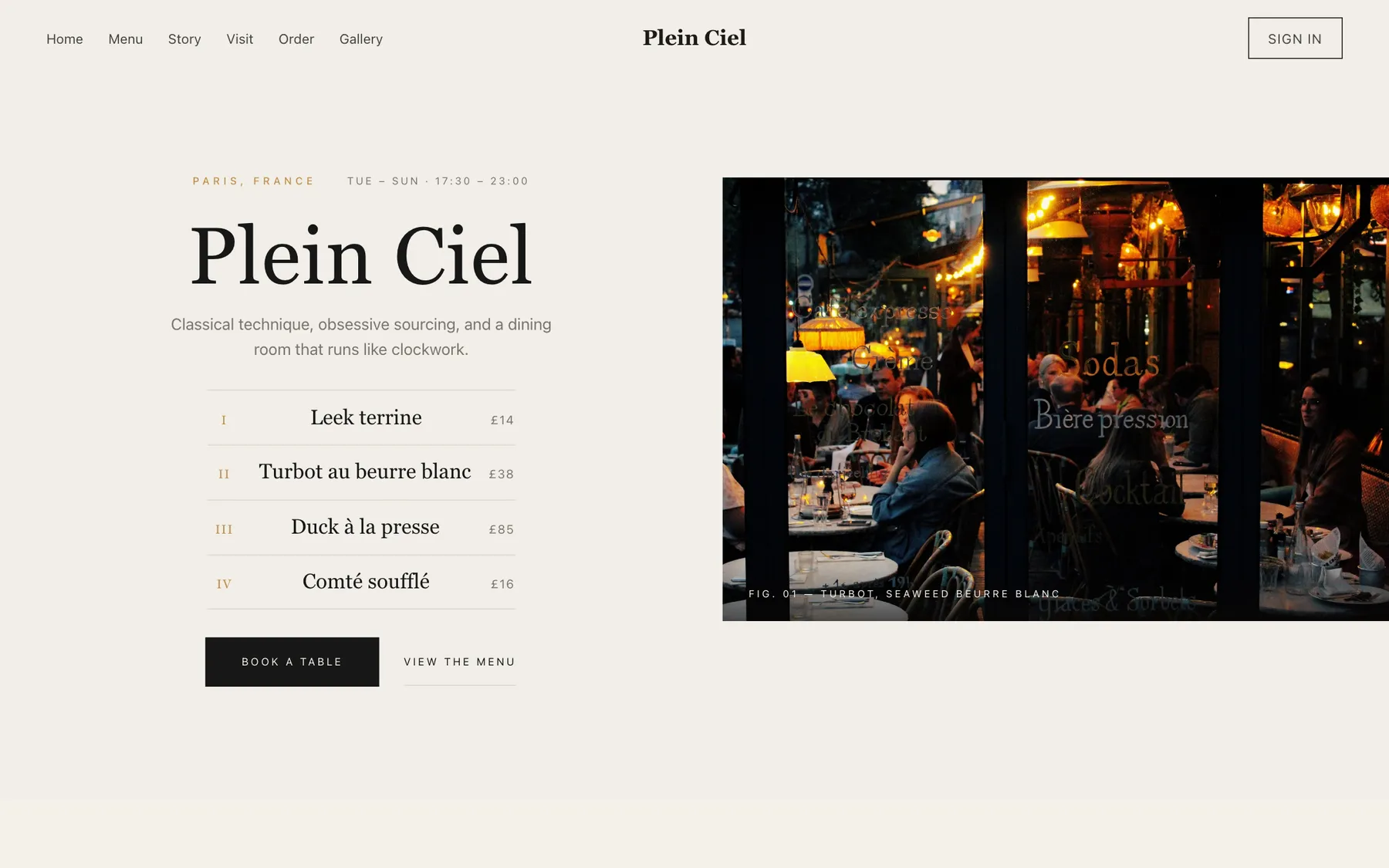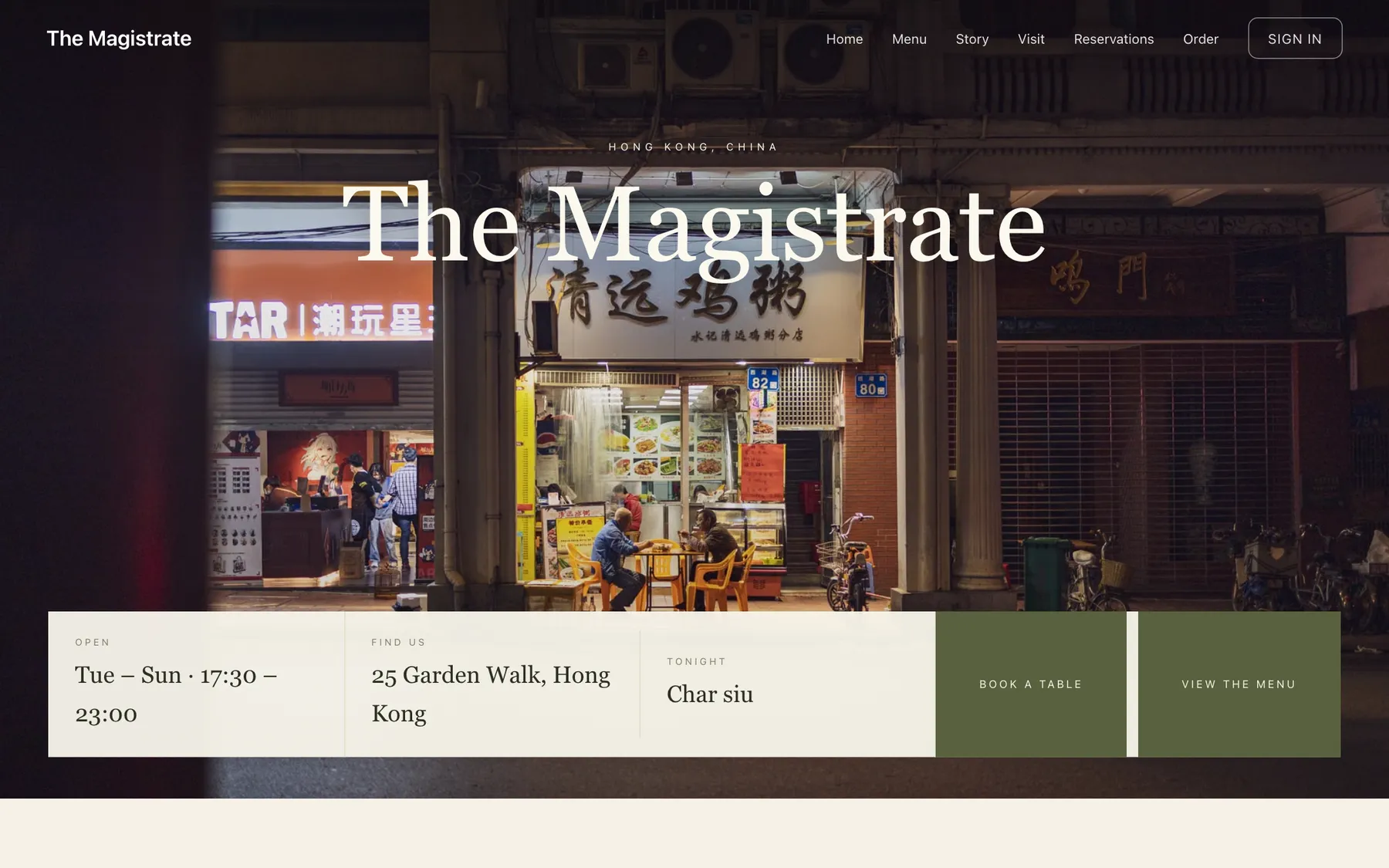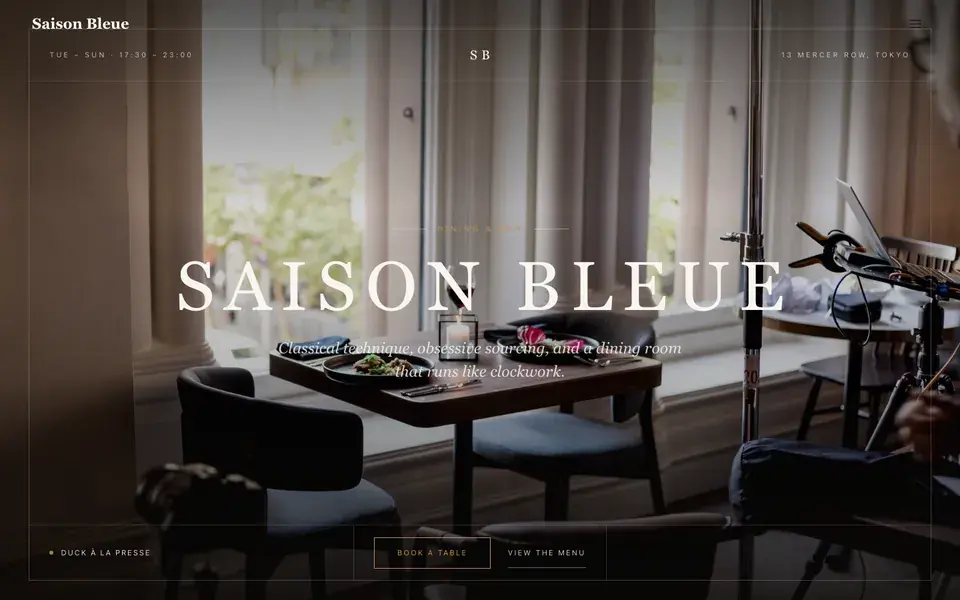
01
Hero
Big opening image, name & buttons, in the Cartouche treatment: Paper cartouche over the room: copy, actions and an awards ribbon.
Templates · Contemporary French
For French dining rooms with Japanese discipline: a pale, editorial template built around a vestibule opening, a carte that reads like a printed card, and a reservation flow rather than a basket.
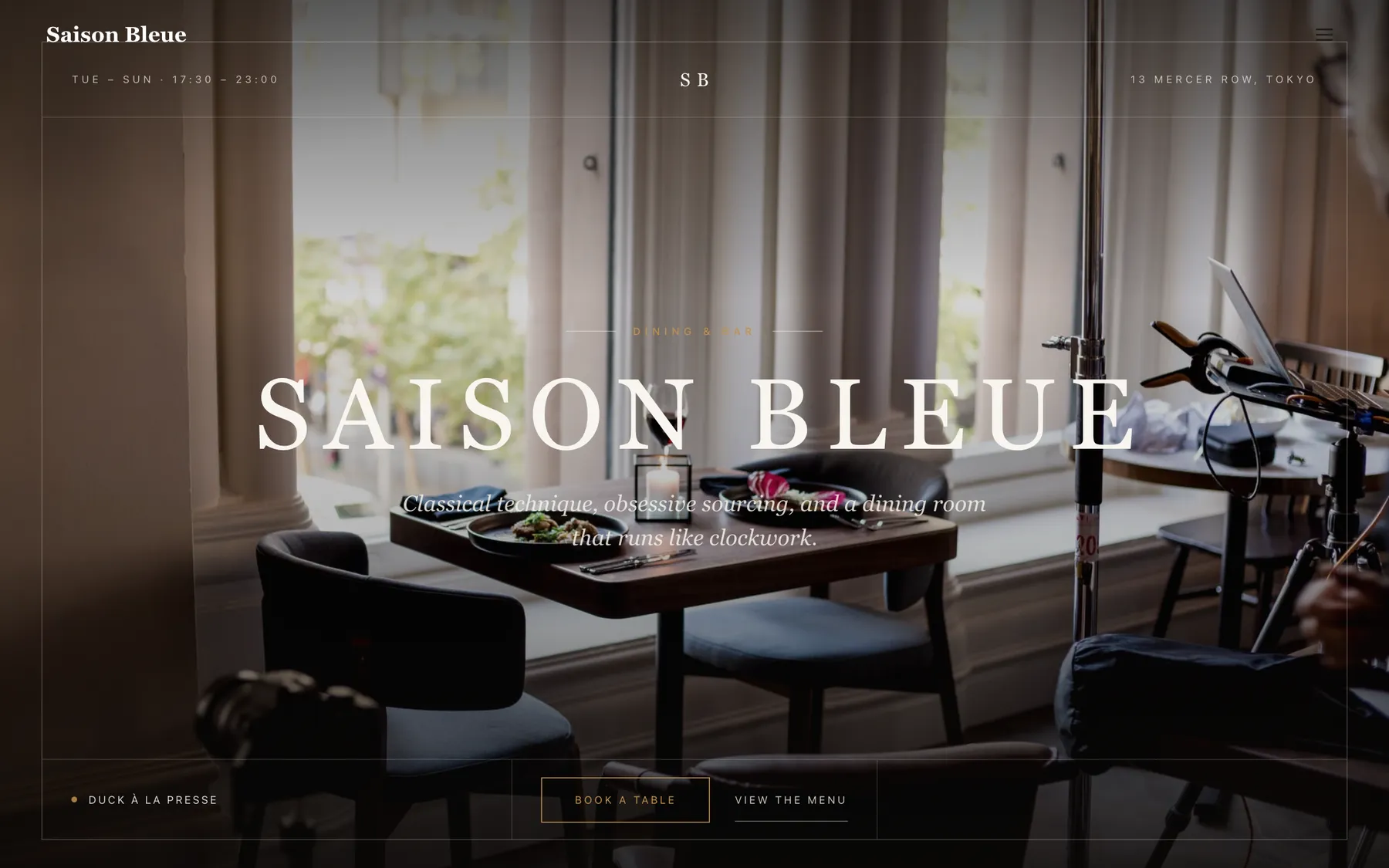
Every section is a builder module you can reorder, edit or delete, with no developer.
On bookings and orders, on every plan. Stripe’s standard card-processing fees apply to online payments.
Build and preview the whole site for nothing, and pay only when it goes live.
Starter is £19/mo excl. VAT and includes a complete restaurant website, a live structured menu, enquiry and newsletter forms, and managed search readiness. Growth is £39/mo excl. VAT and adds direct live bookings, a custom domain with managed SSL, and table and floor-plan operations. Full is £69/mo excl. VAT and adds online ordering and multi-site management for up to five restaurant sites. TableSpark commission is 0%. Stripe's standard card-processing fees apply to online payments.
A finished restaurant website and the system behind it, at the best value available to an independent UK kitchen; the full cost comparison lays out the published terms. There is no build phase and no invoice with a project manager on it. The design exists; your job is to put your restaurant inside it. Every word and every price stays under your control afterwards, which is the part that decides whether a restaurant site stays accurate. It reads properly on a phone, a tablet and a desktop, and the plans carry reservations, table management and online ordering at 0% TableSpark commission.
Saison Bleue is bone paper with a blue that belongs to an inkwell. Yours might be white tile and morning light, or brass and candles, or something nobody has built yet.
Rather than explain, here is the thing itself: the builder’s Theme controls on one side, the live site on the other, both real. You cannot break it, nothing saves, and no account is required to have a go. Go on.
Loading the live preview…
A French dining room in Tokyo is an exercise in restraint twice over, and the design follows: bone-coloured paper, a single ink blue, an old-style serif for the headings and a plain sans for everything else. There is no texture, no gradient and no shadow anywhere on the page.
It opens on a vestibule — the pause between the street and the room. Rather than a hero photograph shouting the restaurant’s name, the visitor gets the name set small, the hours, and a way through. That is the correct temperature for a room where a booking is made a fortnight ahead.
Nine blocks, arranged for restraint:
01
Big opening image, name & buttons, in the Cartouche treatment: Paper cartouche over the room: copy, actions and an awards ribbon.
02
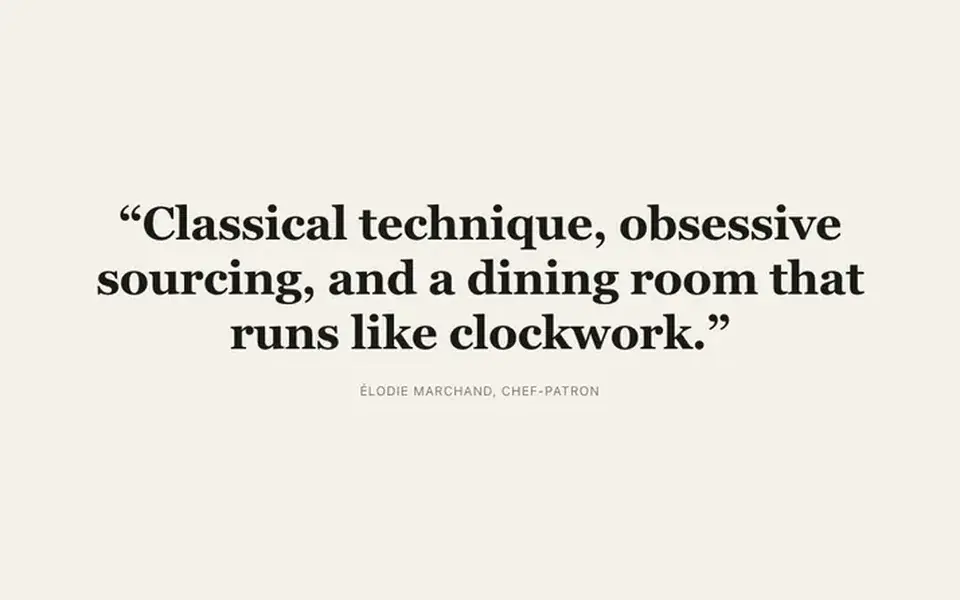
A large standout quotation.
03
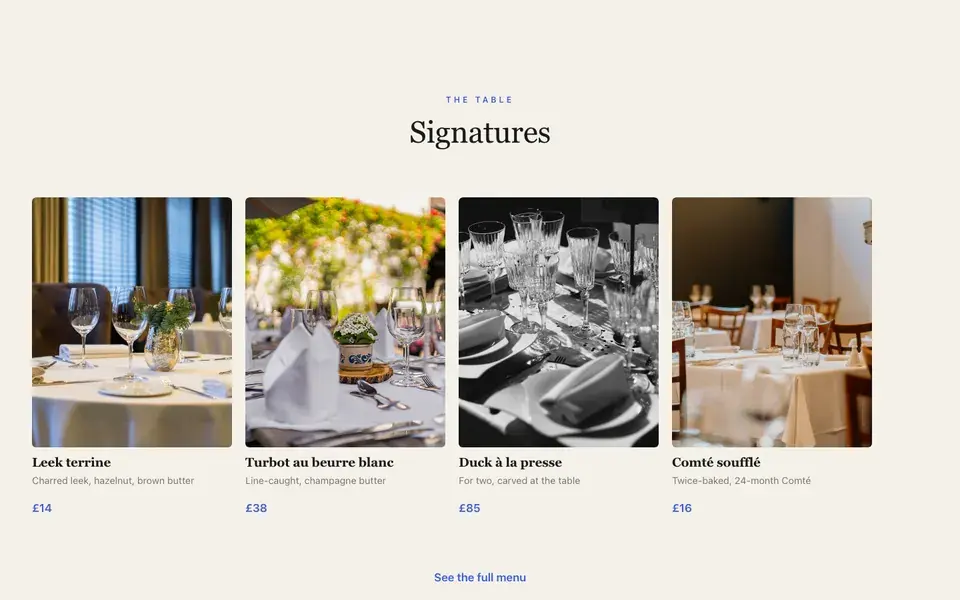
A few dishes on a sliding rail.
04
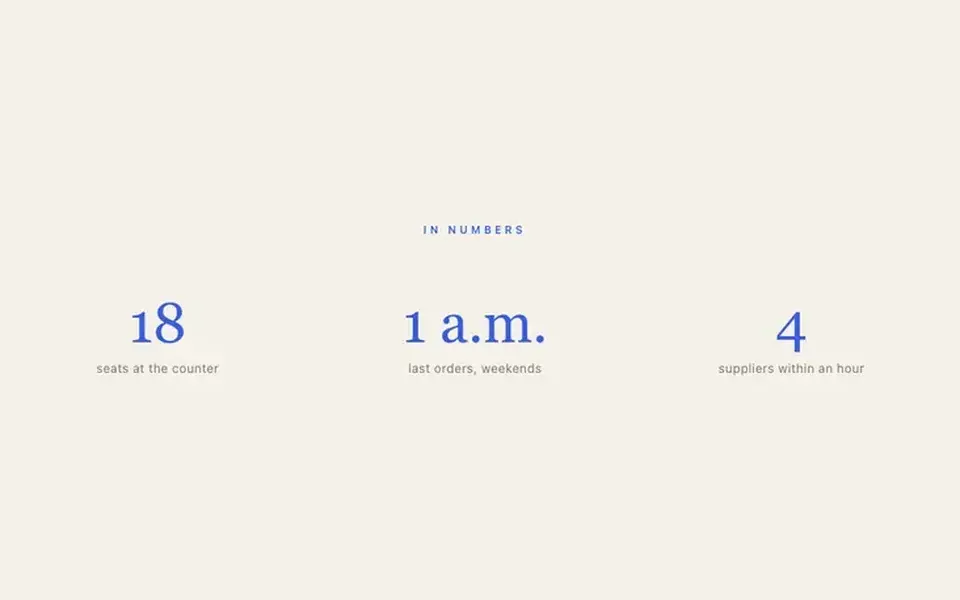
Headline stats.
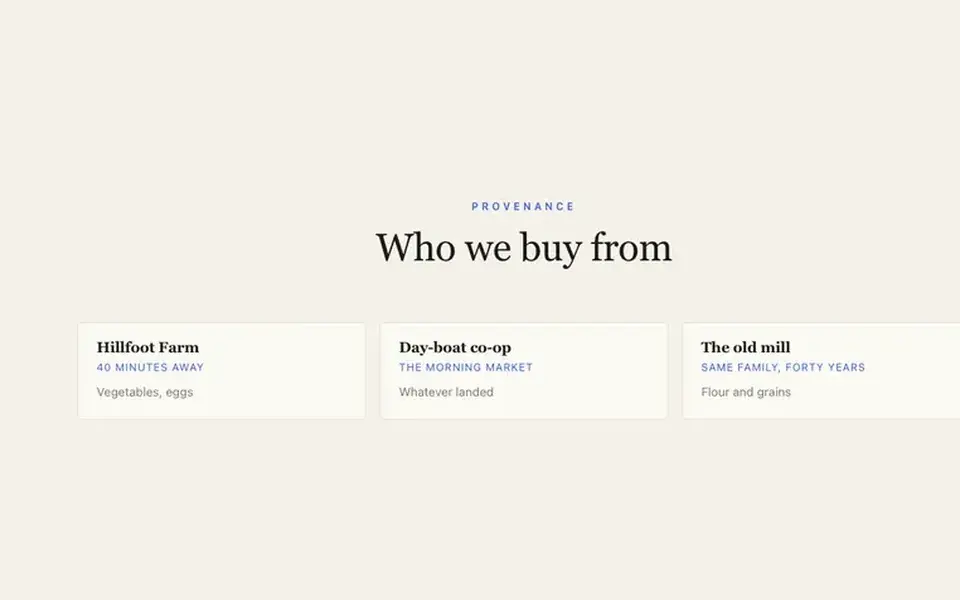
05
The growers and makers behind the menu.
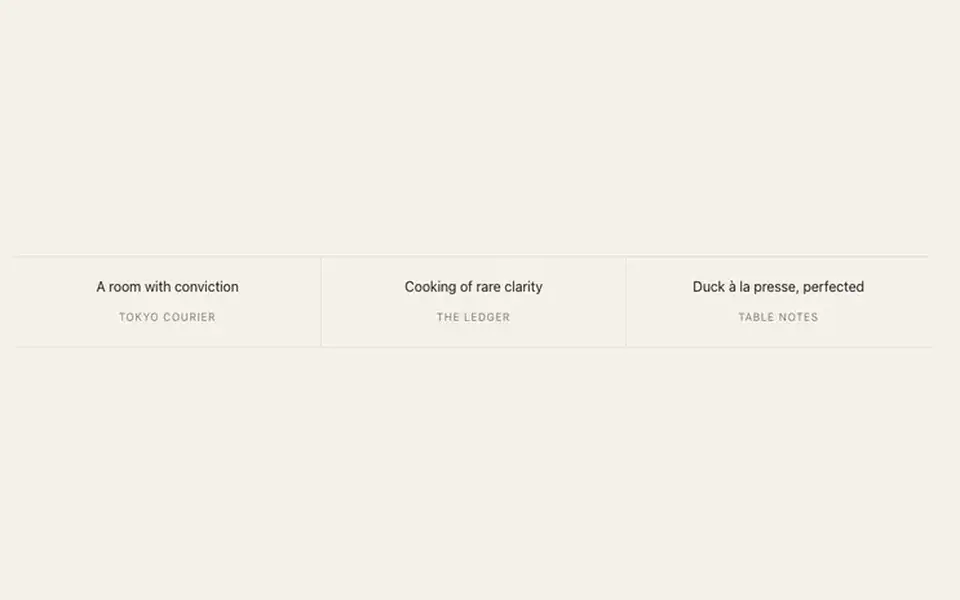
06
Press mentions or awards as a ruled band.
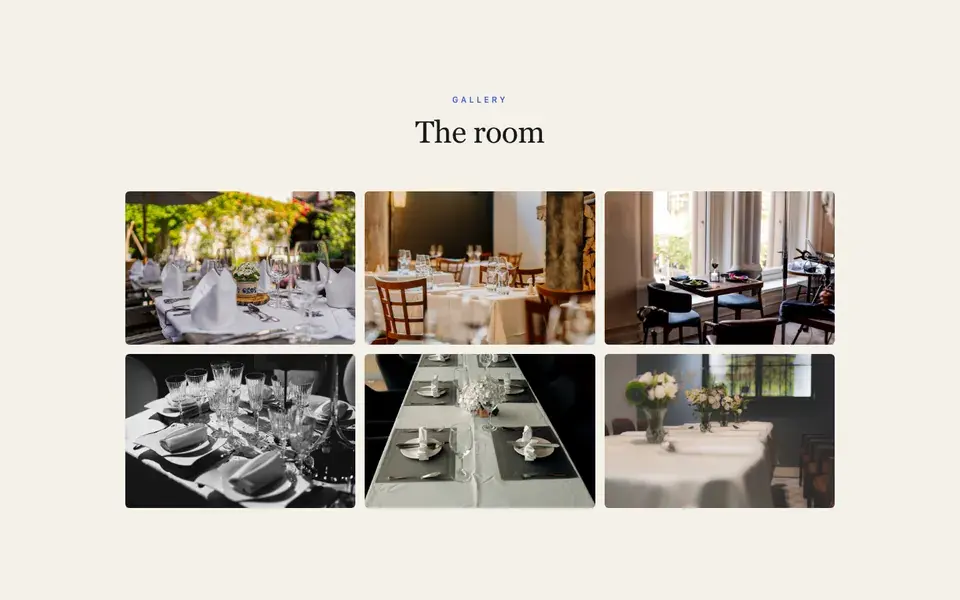
07
Grid, masonry or moving strip.
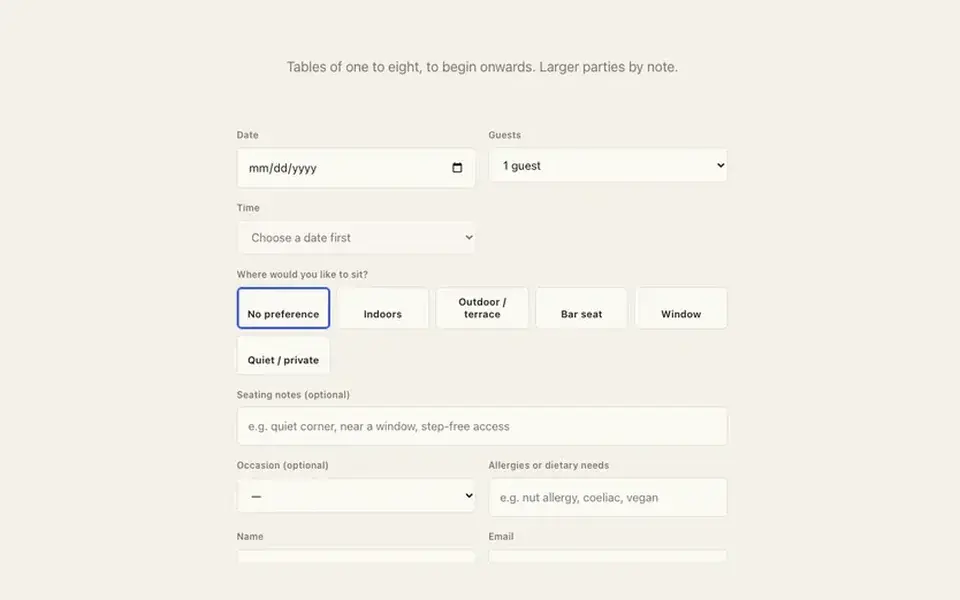
08
Live availability slot picker, saved to your Inbox.
09
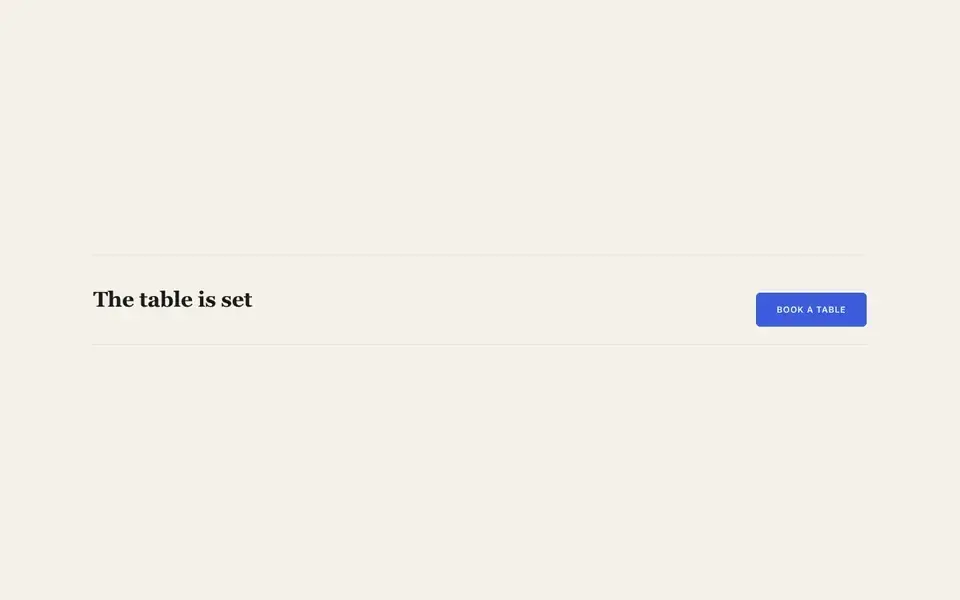
Headline + button band.
Loading the live preview…
There is no basket in this template, deliberately. A room like this sells reservations, not baskets, and the entire conversion path runs to a dedicated reservations page with a form that only offers real sittings.
That form does more than collect a name. It carries party size, dietary notes, occasion and a free-text request, all of which land in your TableSpark inbox with the booking rather than in a separate mailbox — and the guest is emailed a confirmation in your own branding immediately.
Loading the live preview…
Every Saison Bleue site on Growth and Full ships with an app your guests keep. It lives at /account on your own domain, so the guest signs in to your restaurant, not a marketplace.
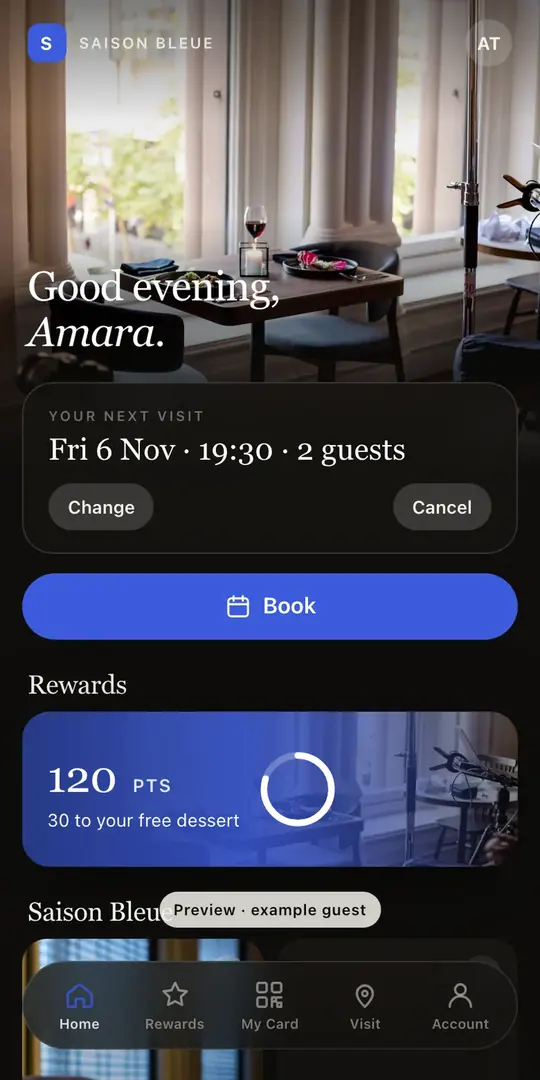
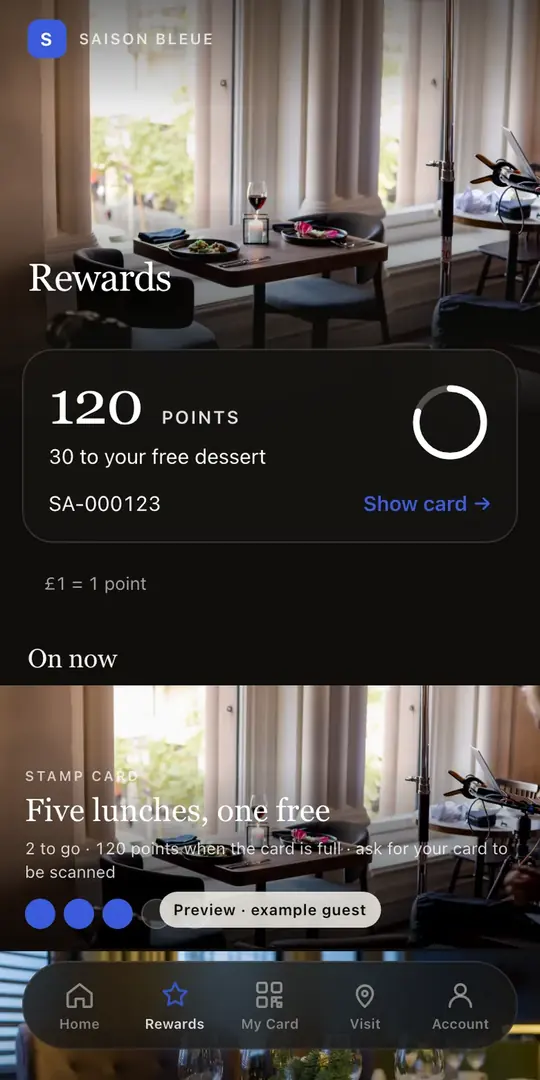
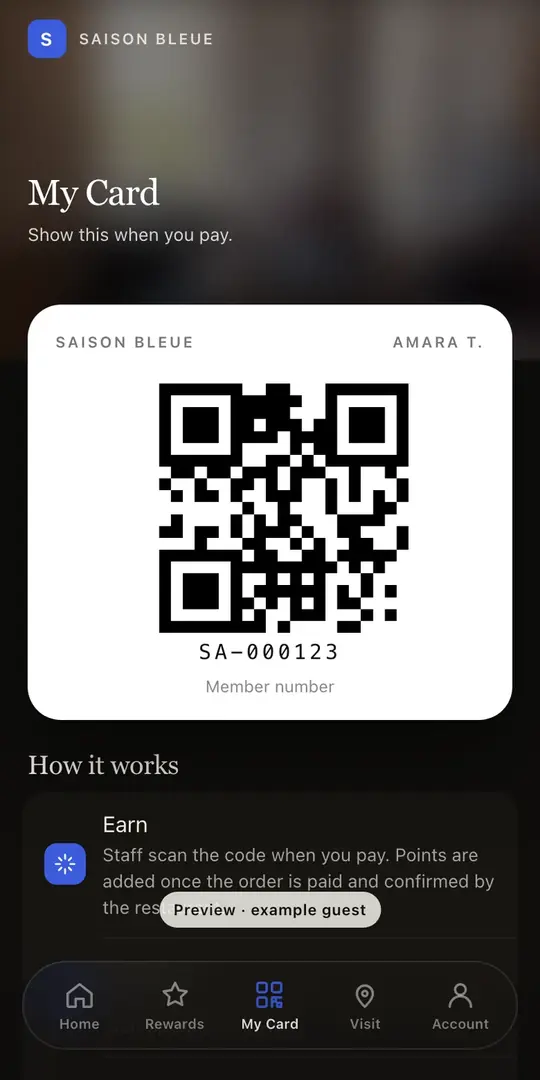
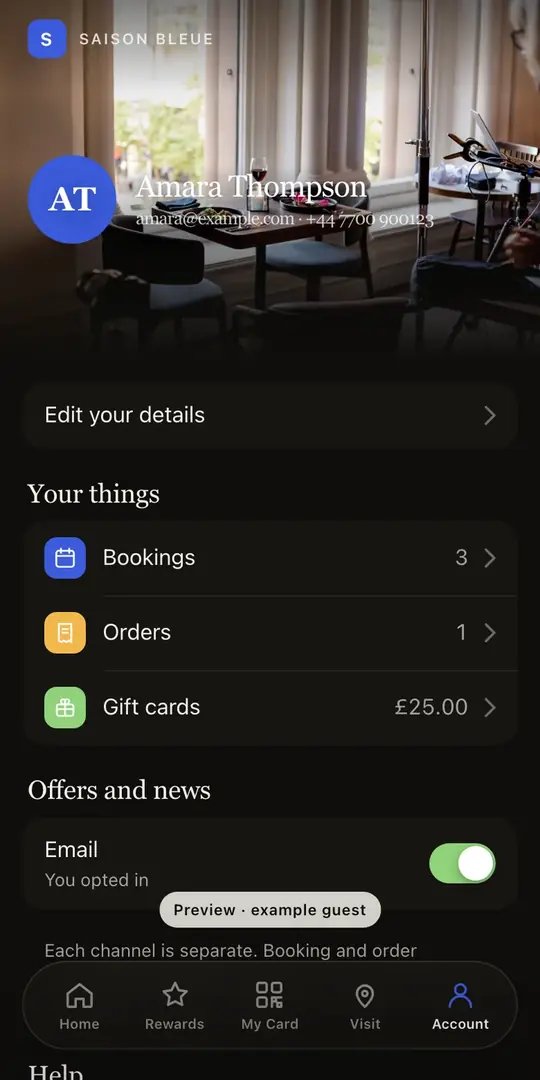
Included on the Growth and Full plans. Watch the Guest App course
The menu is the longest thing on any restaurant site, and it is the thing you type least. Whatever the menu is printed on, photograph it and upload it; the format does not matter. TableSpark reads it and builds the structured menu for you: sections in the right order, dish names, descriptions, prices, and the dietary and spice marks where it can see them. You review it, fix anything the camera got wrong, and it is done.
The distinction that matters is that a search engine can read every word of it. Everything downstream reads from it: the menu page, the highlights on the home page and the Restaurant structured data a search engine reads. Change a price once afterwards and all of them follow.
A Write with AI button on each page writes the search title and description from what is on it, so no page publishes with those fields empty. Always your last word — the draft lands in the field for you to edit before anything publishes.
Whatever your menu lives on today — card, board, PDF, ten pages of it.
Ordered sections, named dishes, descriptions, prices and marks, all editable.
Menu page, home-page highlights and the Restaurant schema — all reading from the same menu.
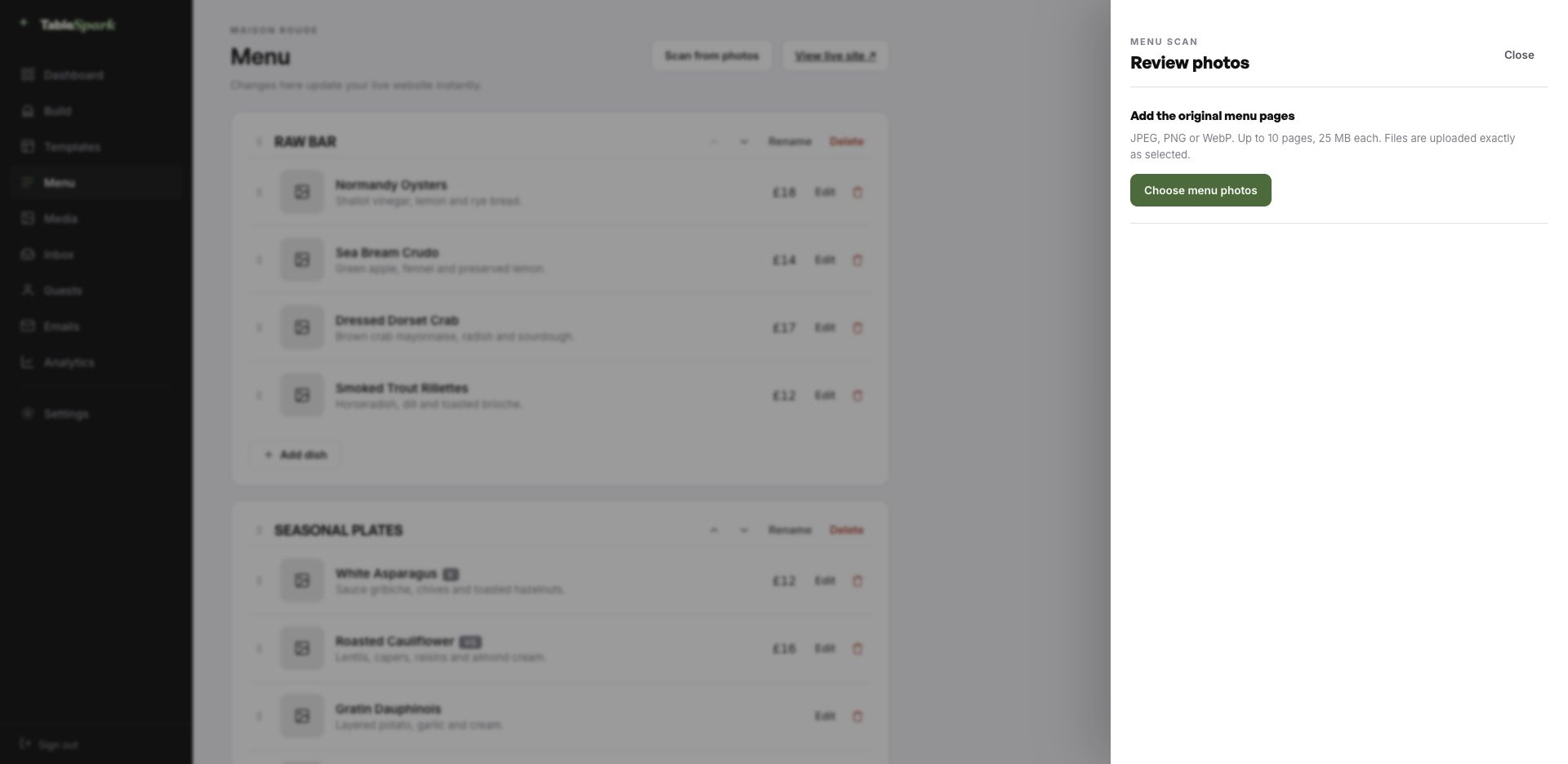
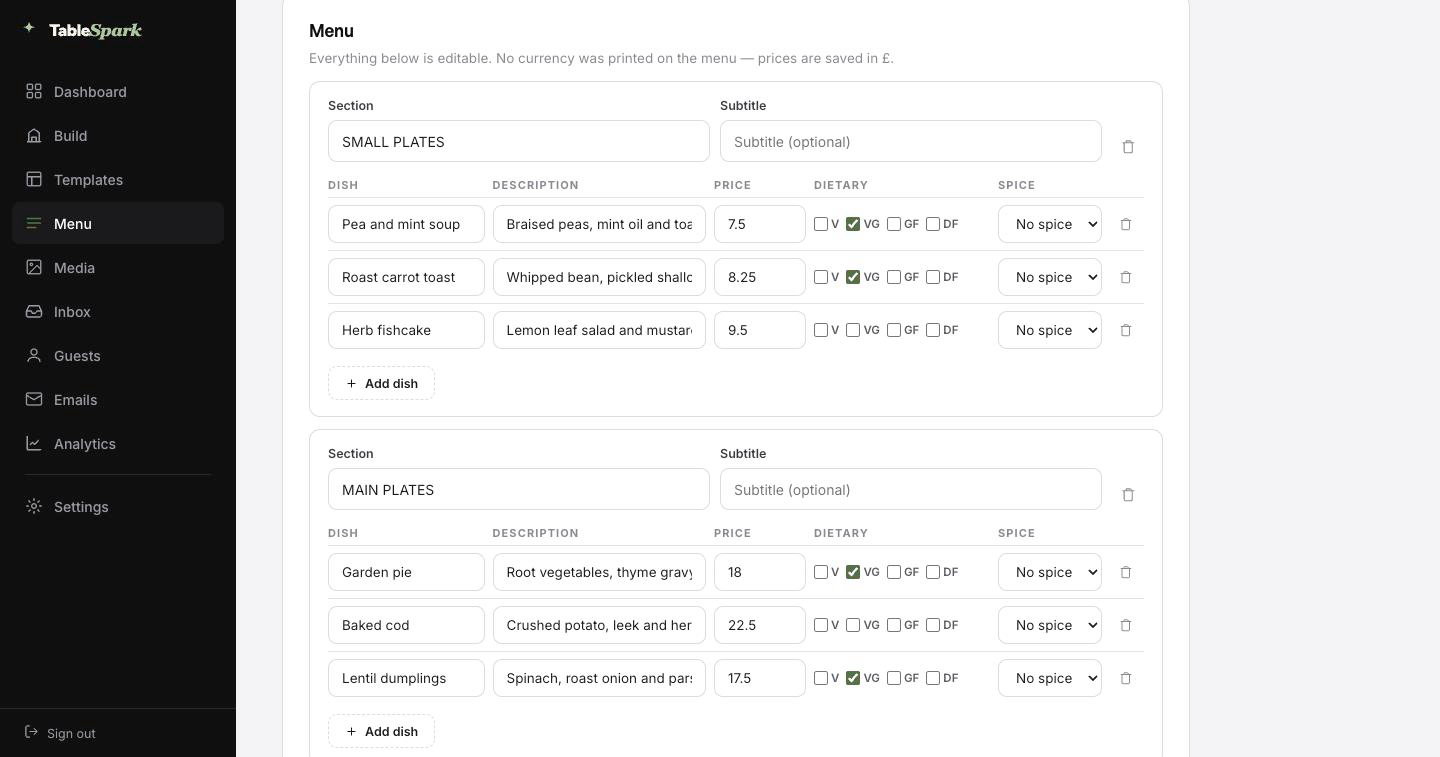
The gap between deciding and being live is measured in minutes, not weeks. The template is already a finished site; the work is making it yours. One sitting is a fair estimate from first login to a live address, and bookings start working the instant you publish. Reservations collect in your TableSpark inbox and each guest is confirmed by email automatically.
Payments are one link away. Connect Stripe and deposits and order payments flow directly to you. Zero commission, permanently. Stripe’s standard card-processing fees apply to online payments. That is the end of the list.
Step 01
1min
Pick Saison BleueThe complete site lands in your account, ready to edit.Step 02
4min
Change the name and the wordsClick, type, replace a photograph. The name updates site-wide.Step 03
3min
Upload your menuUpload a picture of the card; the AI does the sections and prices.Step 04
1min
PublishPublished, on your own address, with the booking form answering.Step 05
1min
Connect StripeNow you can take deposits on tables — direct to your account.In all
10min
From template to taking paymentsFive steps, one sitting.What is printed at the bottom of the menu should be your own. Go live immediately on a TableSpark address, and swap in your own domain at any point afterwards — including one you already own.
Certificates, HTTPS, the redirect from the naked domain and the search-engine housekeeping around a move are all handled for you. Bring a domain you already own, and we will tell you exactly which record to change.
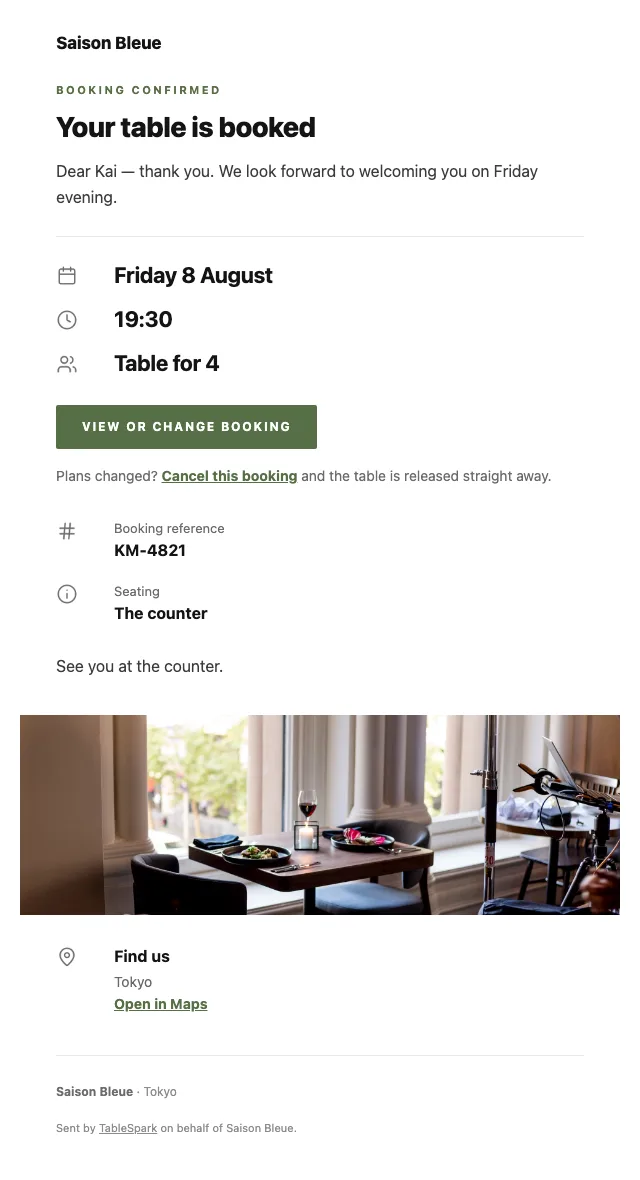
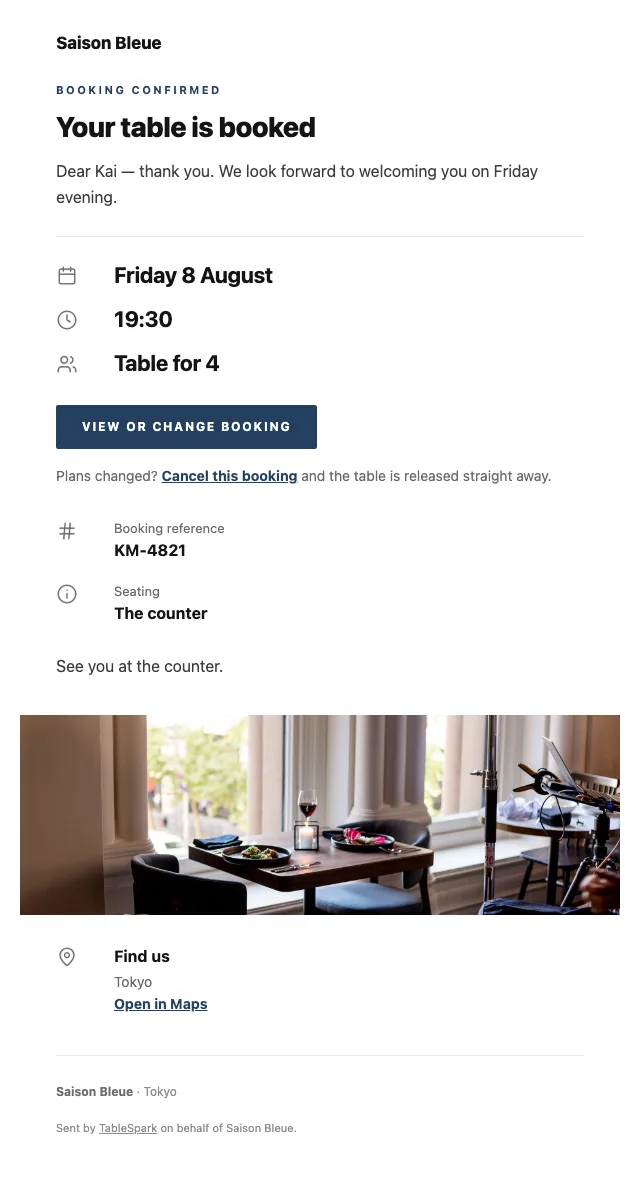
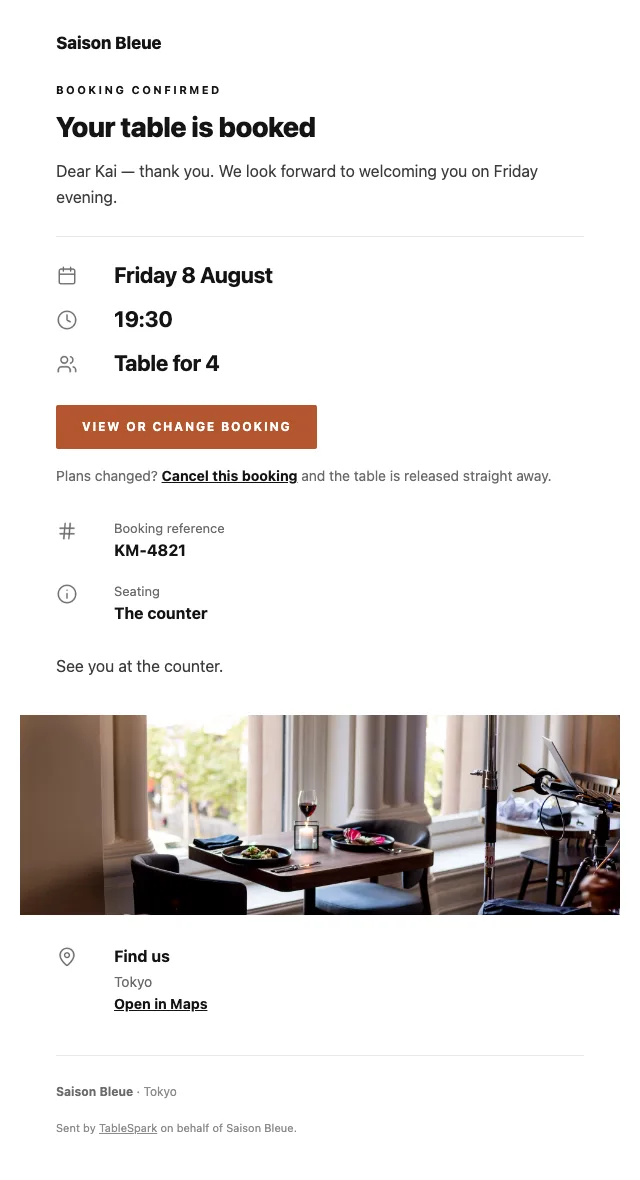
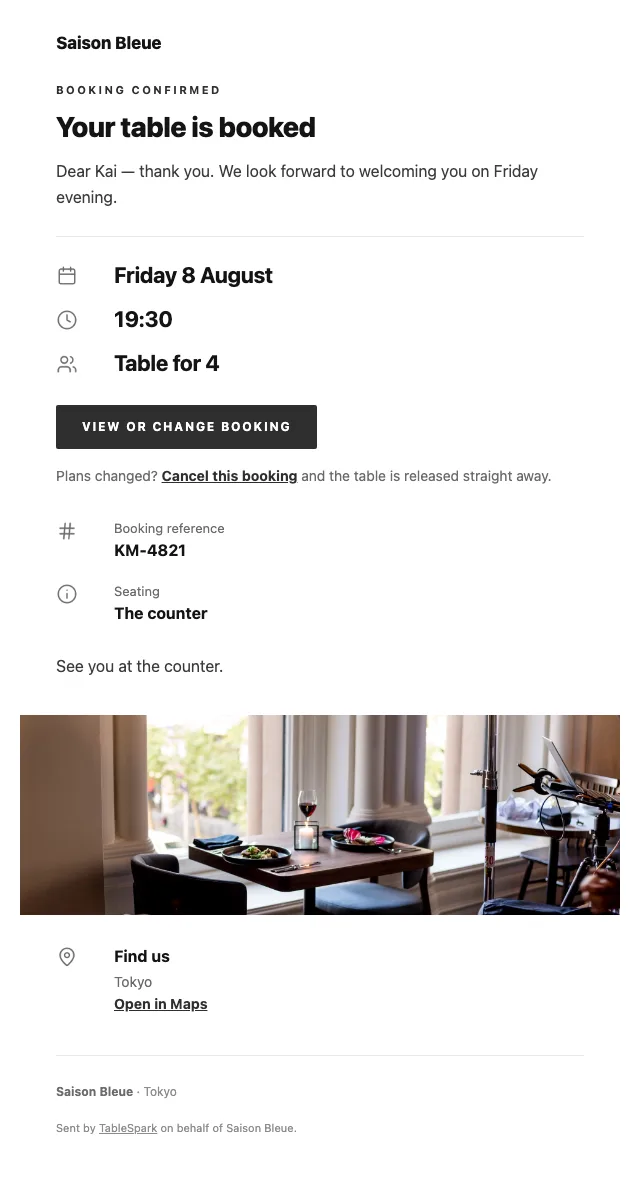
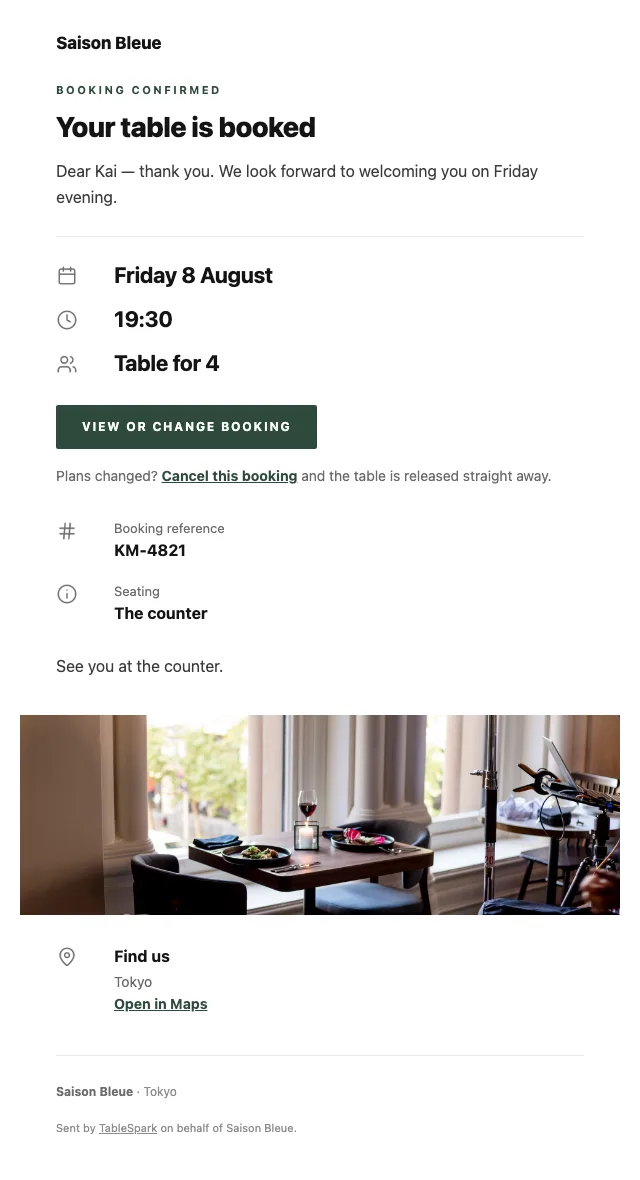
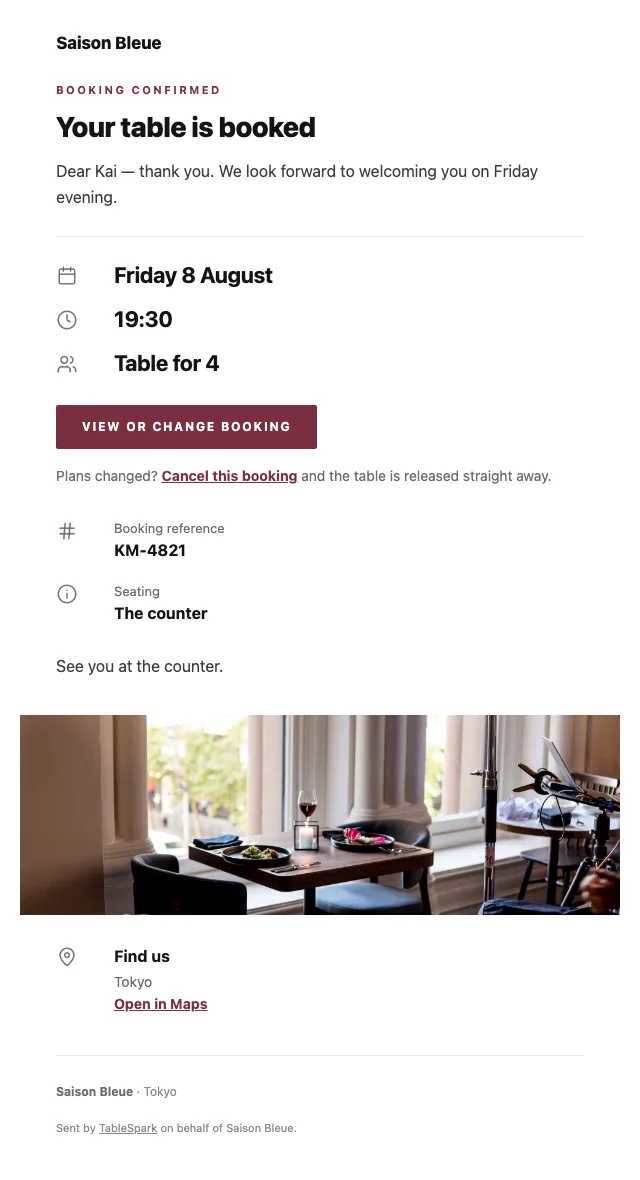
Between booking and arriving, the confirmation email is the whole relationship. The moment a guest books, TableSpark sends them a confirmation on your behalf: the date, the time, the party size, where you are, how to reach you, and a link to release the table if their plans change. The pre-service reminder, the deposit receipt and the cancellation note share it.
None of it has to look like us. Six designs to start from, plus your colour, your logo, a photograph, the header treatment, your own closing line, your links and your socials. Connect your domain and it sends from your address too — so what lands in a guest’s inbox looks like it came from the restaurant, because it did.
Below, the same booking confirmation in six of the looks.
There is a gap between a website that loads and a website that gets found, and it is wider than most owners expect. Working link, zero visibility. It happens through stray noindex rules, conflicting canonicals, orphaned pages, PDF menus, absent structured data and unfinished verification. And the restaurant pays for it: people searching your own name find aggregators and commission-charging platforms instead, so you rent back an audience that was yours.
It is handled in the box, not in an add-on. No guarantees about rankings or indexing exist anywhere in this industry. What exists here is the technical work, finished.
Delete what you do not need and add what you do — pages are yours to shape.
All of these are standard modules — 68 of them in the library, most with several layout variants each.
Any one can be deleted, moved, or swapped for another. Nothing about the order is fixed.
Ships with 4 sections — To begin, The classics, From the press, To finish — for you to overwrite.
All of it arrives with the booking in your TableSpark inbox.
Your job: take the picture and check the result. Ours: read it, structure it, and draft the search wording.
Publishing is always your decision.
Search engines La Carte — Saison Bleue | Tokyo Contemporary French cooking in Tokyo: the carte, the déjeuner and the tasting menu, with prices.Drafts the search title & description from this page’s content. Always review before publishing.
Stripe’s standard card-processing fees apply to online payments.
How restaurant deposits work, and when they are refunded
The builder is free to use for as long as you like. The bill starts when the site does.
The builder is free to use for as long as you like. The bill starts when the site does.
6 pages, and every one of them is here. What follows is the site itself rather than pictures of it. The same engine that publishes a live restaurant is drawing it here, links and all. The Phone toggle shows the small-screen version.
The story page is written for a kitchen with a lineage: chef narrative, a quote, a timeline of the rooms they have cooked in, and a gallery. The separate gallery page carries the room and plate photography that a restaurant at this level will always have and rarely has anywhere good to put.
The menu is set editorially: each section opening on its own plate, then dishes typed in ruled columns like a carte. It is the layout that respects a menu written in careful language — long dish names, provenance in the description, a wine note underneath — rather than chopping it into cards.
Set menus are handled as their own structure, with the courses listed and the price stated once, which is how a déjeuner and a menu dégustation should appear beside one another. Change a price and it updates on the menu page, in any preview block on the home page and in the structured data together.
Any of the layouts leaves the substance intact: real text for every dish, description and price, marked up as Restaurant data rather than published as an image.
Running a French kitchen? See all French restaurant website templates.
What owners ask before they pick a template: the cuisine fit, the menu, the address, and what it costs.
Yes — this one is built around reservations rather than a basket, which is the right shape for a dining room that sells tables. The reservation page, the booking form, the confirmation emails, the guest list and the inbox all work exactly as they do elsewhere. If you later add a retail or takeaway arm, an ordering page can be added from the module library without touching the rest of the site.
Yes. Each is a separate menu with its own sections and prices, and both can sit on the menu page or on their own pages. Publishing is per menu, so a seasonal menu can be written in advance and switched live on the morning it starts.
They get an email from you within seconds: when they are booked, how many are coming, where you are, how to reach you, and a self-service link to give the table back. Reminders, deposit receipts and cancellations follow the same design, which you control — six templates, your colour, logo and cover image, the header treatment, your sign-off, links and socials. Connect your domain and it sends from your address as well.
No — the builder is visual throughout. Click a block, retype the copy, swap the photograph, move it up or down. Nothing about running the site requires HTML.
No, and it is the single biggest time saving in setting up. Upload menu photographs and TableSpark returns sections, dishes, descriptions, prices, dietary marks and spice levels as editable fields for you to approve. Once approved it is real data, so the menu page, the ordering page, the home-page highlights and the structured data a search engine reads all stay in step automatically.
One sitting is a fair estimate. The template copies into your account complete, so the work is changing the name, editing the words and uploading the menu before you publish. Bookings work immediately on publishing, arriving in your TableSpark inbox with an automatic confirmation to the guest. Adding a payment account enables deposits on tables and payment on orders, paid direct to you at 0% commission. Stripe’s standard card-processing fees apply to online payments.

Take this design, make it about your restaurant, and publish it today. Building costs nothing; you pay only when it goes live.