Steakhouse & Grill restaurant website templates
A grill room sells a specific thing — a cut, a weight, a price that moves with the market — and that is exactly what a static website handles worst. Prices printed into a PDF go stale the moment your butcher's invoice changes, and a guest who arrives expecting last month's figure is a conversation nobody at the pass wants to have.
The bigger problem is what the website leaves unsaid. Steakhouses live on Sunday service, on large groups and on private dining, and those bookings are worth many times a Tuesday table for two. When the only way to arrange one is a phone number, the enquiry arrives during service or goes to the restaurant whose site let them ask at eleven at night.
What a grill menu asks of a website
A grill menu is priced by weight and cut, and it changes with supply. The page has to show that honestly and let you change it in seconds.
- 01Cuts are listed with weight, breed or ageing detail and their own price, so a guest can compare a rib on the bone with a fillet without guesswork.
- 02Market-priced items are handled properly, with a live price you update yourself the day it changes rather than a line that quietly misleads.
- 03Sauces, sides and rubs sit as their own structured section, because that is how a table actually orders around a grill.
- 04Sunday roast and set-lunch menus can run as separate menus with their own days and times, instead of being explained in a sentence at the bottom of the page.
The steakhouse design language
Grill rooms sell atmosphere as much as beef: smoke, ember light, the cut chalked by weight. These live-fire templates are built dark and warm, with cut-by-weight menu layouts and imagery slots that make the parrilla the hero.
Keep the butcher’s board current from the live menu editor, while enquiry forms give Sunday-roast and private-dining requests a direct route to your team.
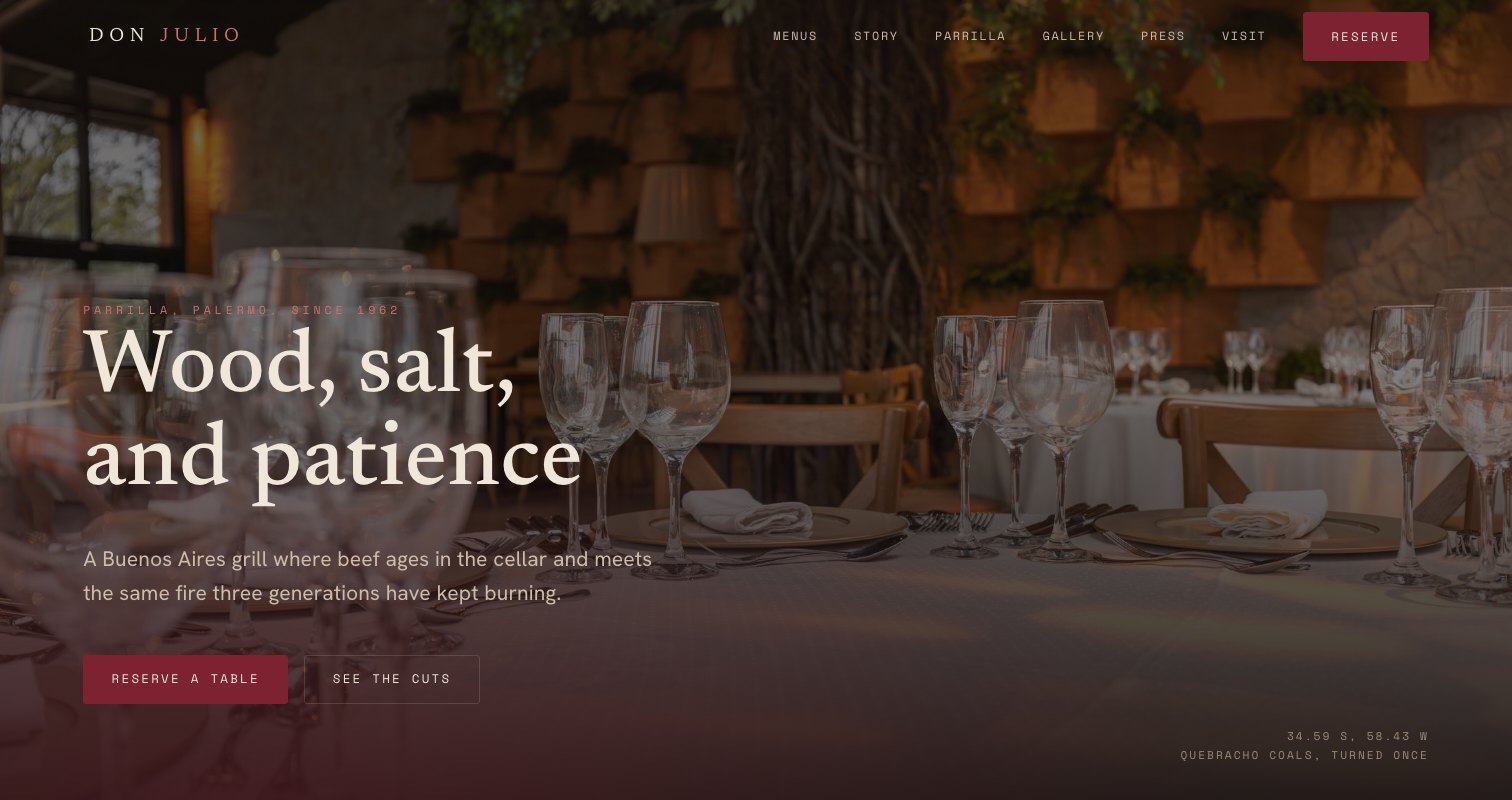 Don SeveroParrilla / steak · Warm Rustic FireView the template
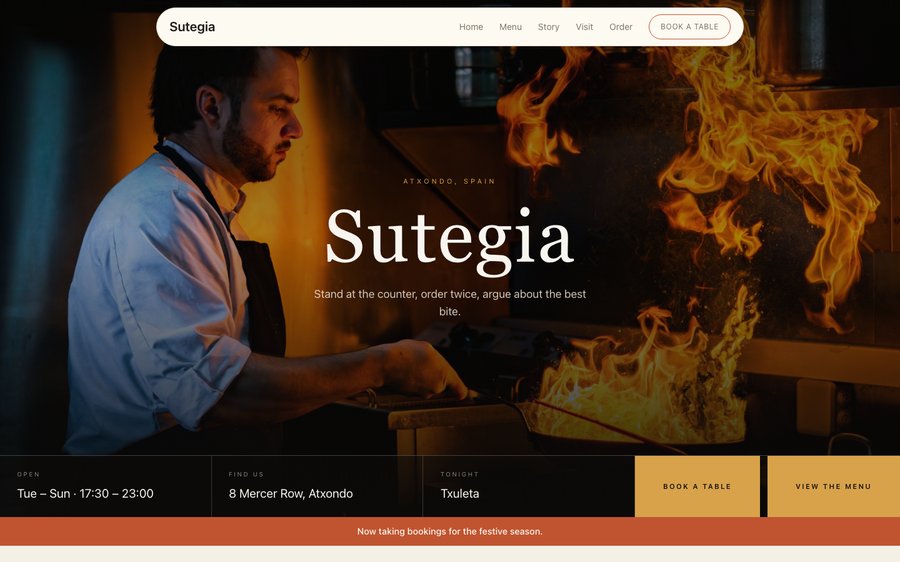
SutegiaBasque live-fire grill · Warm Rustic FireView the template
Don SeveroParrilla / steak · Warm Rustic FireView the template
SutegiaBasque live-fire grill · Warm Rustic FireView the template
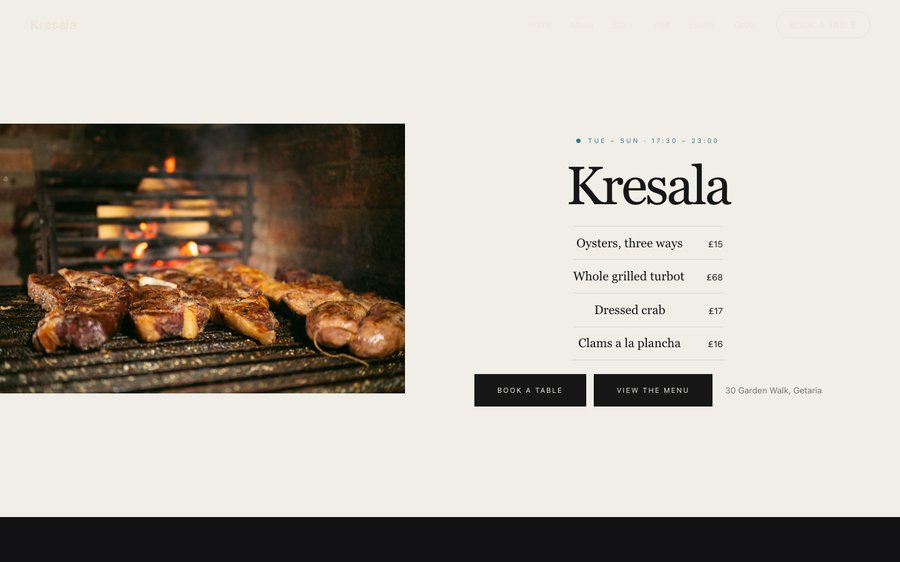 KresalaBasque grilled seafood · Warm Rustic FireView the template
 Choose any of the 50 finished templates and tailor it to your menu, brand and room — the design work is done, the content is yours.
What steakhouse guests want to know before they book
A grill room is chosen on specifics, and the guest checks them before they book rather than after.
- 01Which cuts are on, at what weight, and at what price today.
- 02Whether there is a Sunday roast, when it is served and when it stops.
- 03Whether a group of sixteen can be seated, and whether there is a private room for it.
- 04Whether anyone at the table who does not eat beef will be looked after properly.
Three ways steakhouses lose bookings online
Prices are stale
A grill menu is the most price-sensitive document a restaurant publishes. A figure that no longer matches the till turns into an argument at the table and a bad review afterwards.
Sunday is explained in a footnote
Roast trade is searched for by name and by day. A separate menu with its own service times answers the guest; a sentence at the bottom of the page does not.
Large bookings have no route in
Sixteen covers with a deposit is the most valuable reservation of the week, and a phone number alone means it arrives during service or goes elsewhere.
Bookings and orders in a grill room
The revenue in a grill room is concentrated in the big bookings: Sunday lunch, the birthday table of sixteen, the private room on a Thursday. Each one is worth protecting, and each one is expensive when it evaporates without notice.
Direct booking on your own site takes those reservations with the detail attached — covers, occasion, dietary notes — and, where the plan includes it, asks for a deposit on the tables that warrant one. Reminders go out under your restaurant's name before the booking, and the guest record stays in your account, exportable, rather than inside a marketplace that charges for the introduction.
How steakhouses get found
What it costs, and who maintains it
Starter is £19/mo excl. VAT and includes a complete restaurant website, a live structured menu, enquiry and newsletter forms, and managed search readiness. Growth is £39/mo excl. VAT and adds direct live bookings, a custom domain with managed SSL, and table and floor-plan operations. Full is £69/mo excl. VAT and adds online ordering and multi-site management for up to five restaurant sites. TableSpark commission is 0%. Stripe's standard card-processing fees apply to online payments.
Maintenance is the part that usually gets left out of a quote. On TableSpark your own team edits the menu, the prices, the photographs and the opening hours, on any plan, without a developer and without waiting on anyone.
Questions steakhouses ask
Can we change cut prices when our butcher's prices change?
Yes, the same day, by your own team. Prices are live fields on the menu rather than text baked into a file, so the page and the till agree.
Can we run a separate Sunday menu?
Yes. A roast or set-lunch menu can exist as its own menu with its own days and service times, so guests see the right one without having to interpret a footnote.
Can we take a deposit on a large table?
Yes, on the plans with direct bookings. A booking above the size you choose can require a deposit before it is confirmed, which is the most reliable protection a grill room has against a Saturday no-show.
Do the dark templates still work on a phone?
Yes. Every template is built mobile-first and tested at phone, tablet and desktop widths, which matters here because most steakhouse searches are made on a phone shortly before the meal.
Can we show the ageing and the breed for each cut?
Yes. Those details are fields on the dish, so a 45-day dry-aged sirloin reads as one, and the guest who cares about provenance gets the answer without emailing to ask.
Can we publish a private-dining page as well?
Yes. Additional pages — private dining, the bar, the story of the grill — are part of the site, and each one is another page a guest can find in search rather than a paragraph nobody reaches.