One platform for the whole restaurant.
Most independent restaurants run on a patchwork: a website from one company, bookings from another, orders through a marketplace, a till, a rota spreadsheet and a mailing list. TableSpark puts all of it behind one login, with one menu and one guest list that belongs to the restaurant.
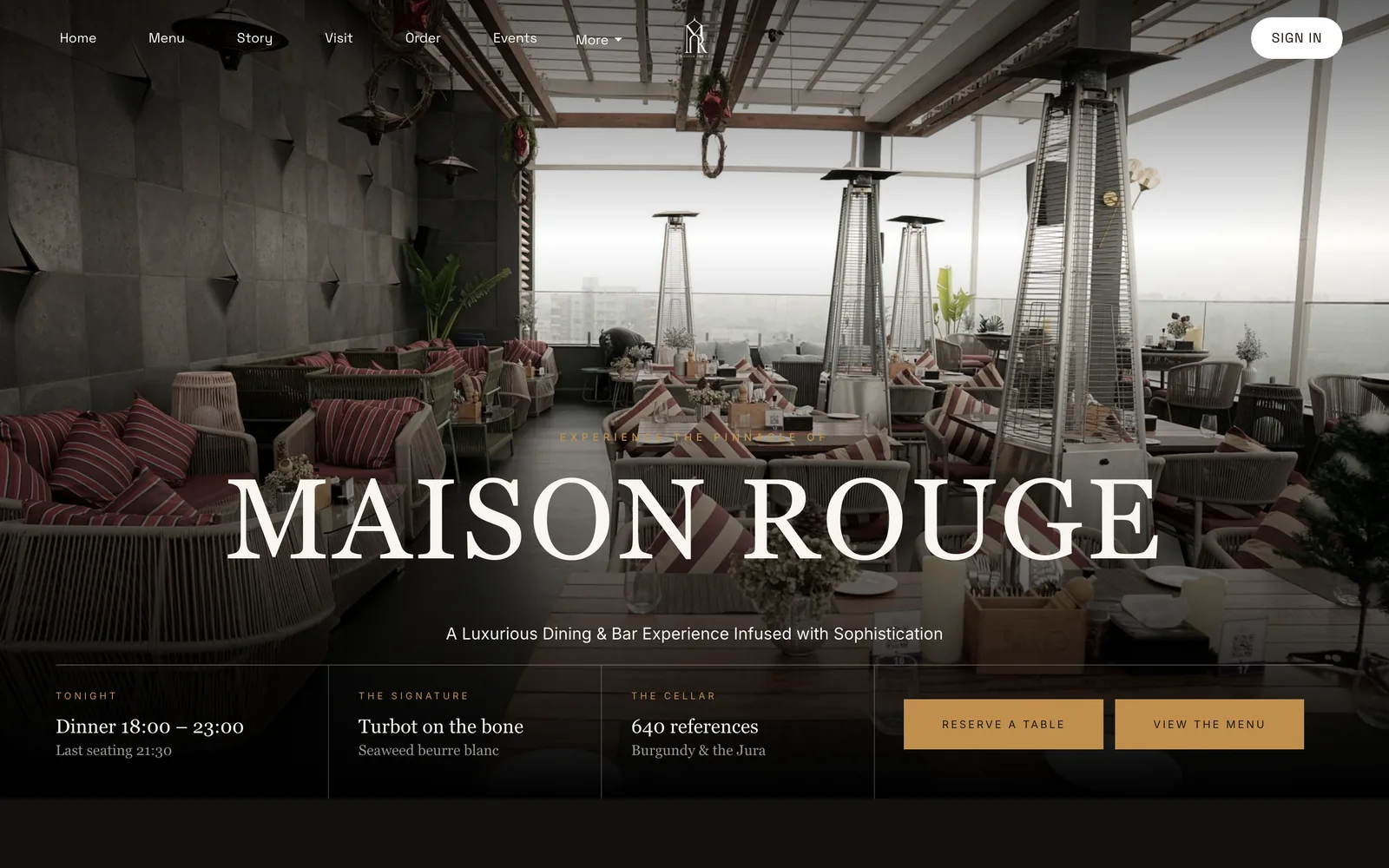
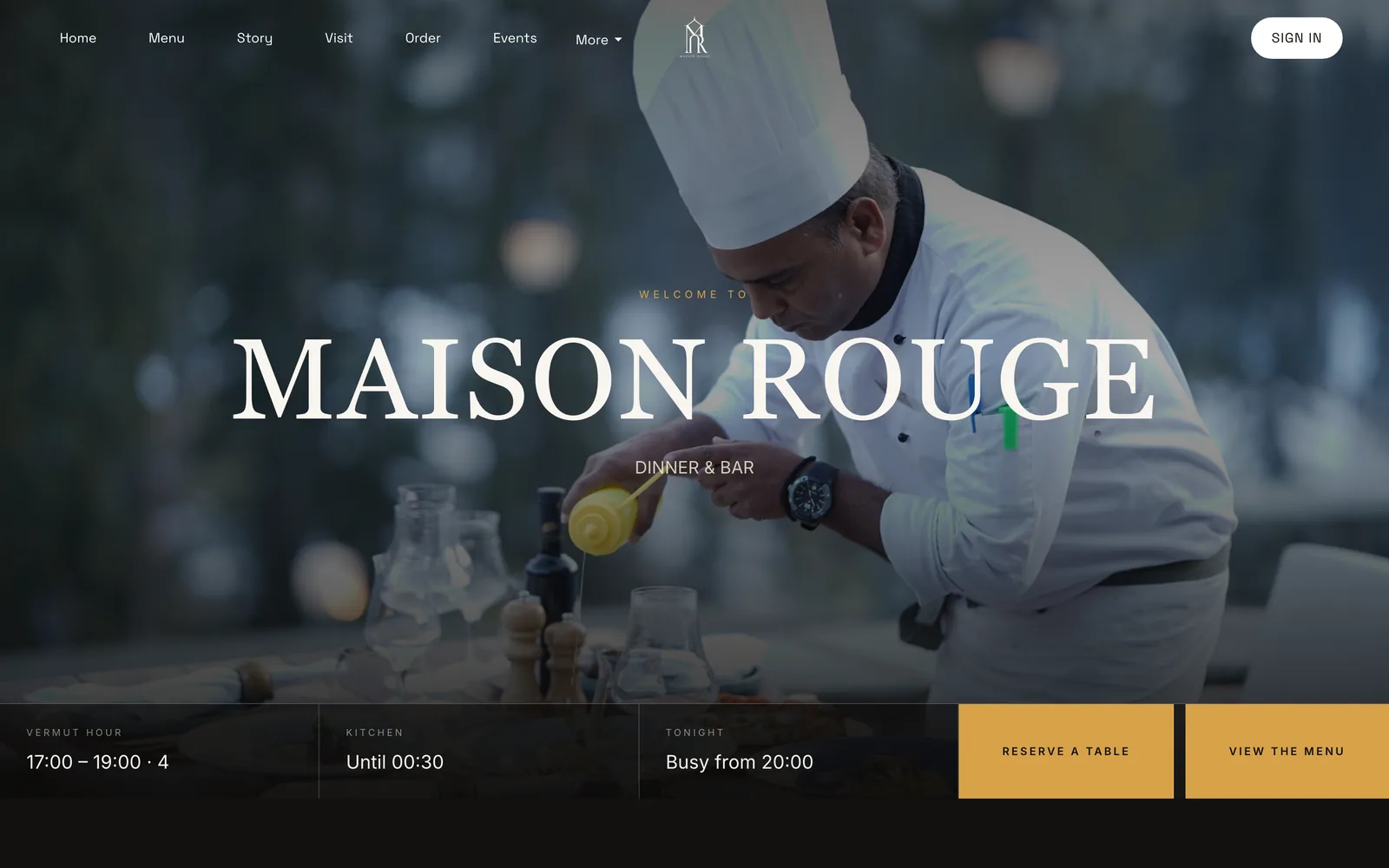
orders, service, team and guests
Every seam in the patchwork costs something.
A guest who books in one system and orders in another becomes two half-records, so nobody sees a regular. Each channel bills its own fee. A price change has to be made in four places. And the part nobody owns is search: a site can load at a working link and still be poorly set up for Google. When TableSpark checked 1,000 independent UK restaurant websites, the gaps were plain.
Shares of the 755 homepages that loaded in a seeded random sample of 1,000 independent UK restaurants, each checked on 11 October 2026 as served without JavaScript. Method and full results in the restaurant website checklist.
Ten parts, one system.
The parts follow the order an owner meets them, from the first page a guest sees to the report you read the morning after. Each one names the plan that carries it.
A website that starts from your menu.
Every planPhotograph or upload the menu and TableSpark drafts the whole site from it: sections, dishes, prices, hours and pages, ready to review. Choose one of fifty restaurant designs, change anything with the drag-and-drop editor, and publish on a free tablespark.uk address.
- Menu scanUpload the menu and review the complete draft site before anything goes live.
- Live menuEdit a dish once; the website, QR menu and order page all read the same menu.
- HoursOpening hours, a live "Open now" and special dates for bank holidays and closures.
- Your domainYour own domain with managed SSL on Growth and Full.
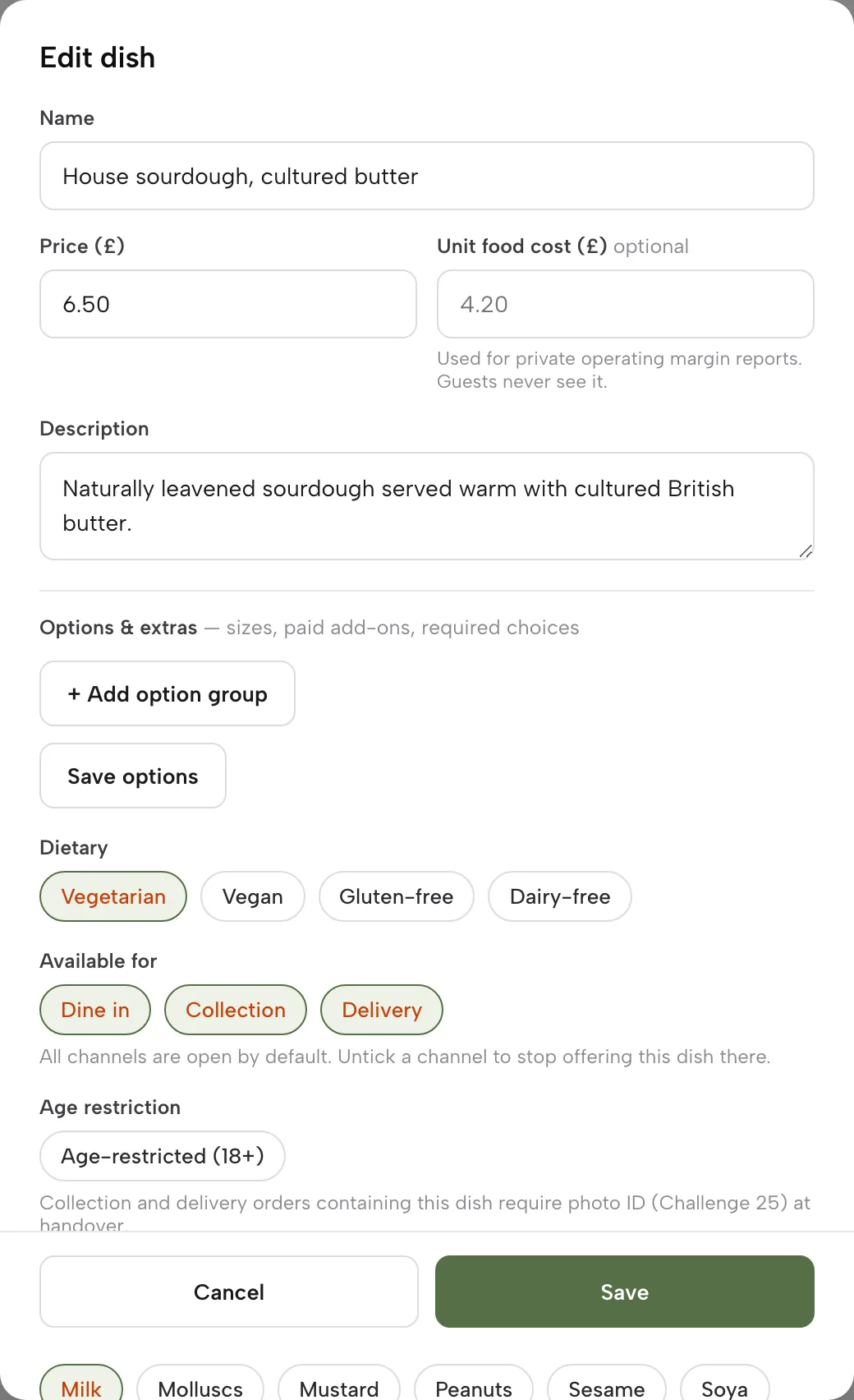
The live site and the dish editor behind it. One change to a dish reaches every page that shows it.
Bookings against your real tables.
Growth and FullGuests book on your own site against live availability, worked out from your actual tables and capacity. Staff see every booking on a mini floor plan and seat parties at the right table, with deposits and reminders configured once.
- Live availabilitySlots and party sizes from your real table inventory and floor plans.
- Your rulesEnquiry or instant confirmation, set per service.
- DepositsDeposits and reminders, paid to your own Stripe account.
- GoogleA Reserve with Google booking-link connection that sends guests to your booking page.
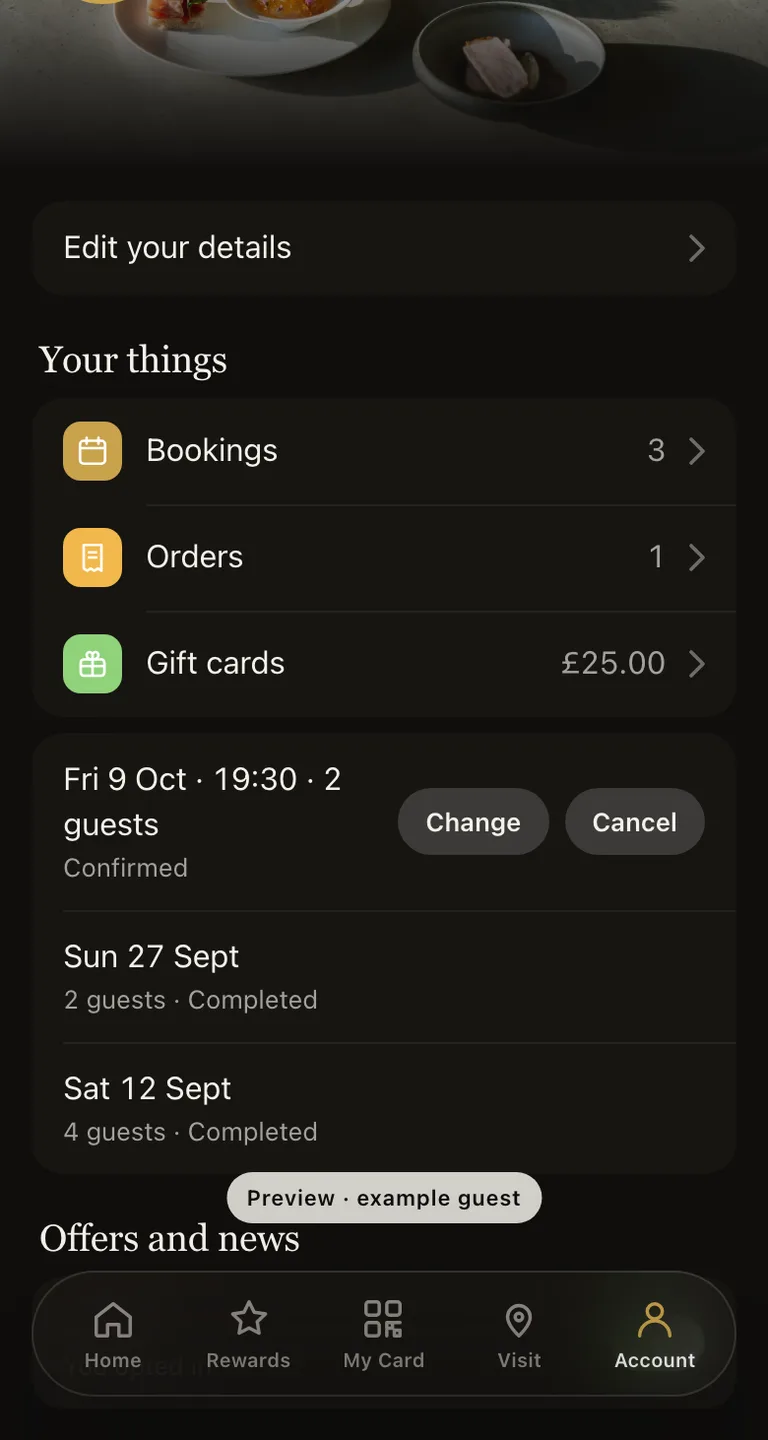
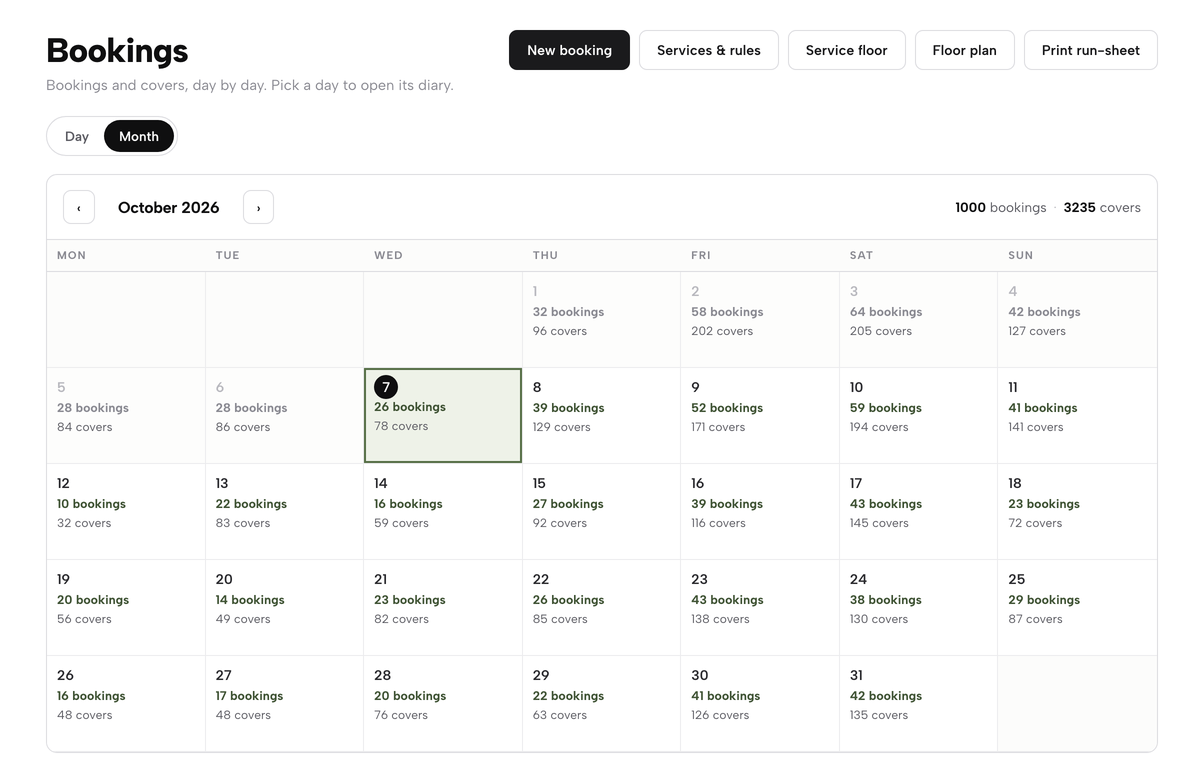
A month of bookings and covers at a glance, and the booking as the guest sees it on their phone.
Orders on your own site, not a marketplace.
FullCollection, delivery and dine-in orders come through your own order page, and printed table QR codes open the same journey at the table. Orders arrive on one screen and print straight to the kitchen, and the guest's details stay with you.
- Order pageCollection, delivery and dine-in, with dietary filters and dish options.
- Table QRPrinted codes open direct dine-in ordering at the table.
- 0% commissionTableSpark takes no commission; Stripe's standard card fees apply.
- Kitchen ticketsOnline and table orders print straight to the kitchen printer.
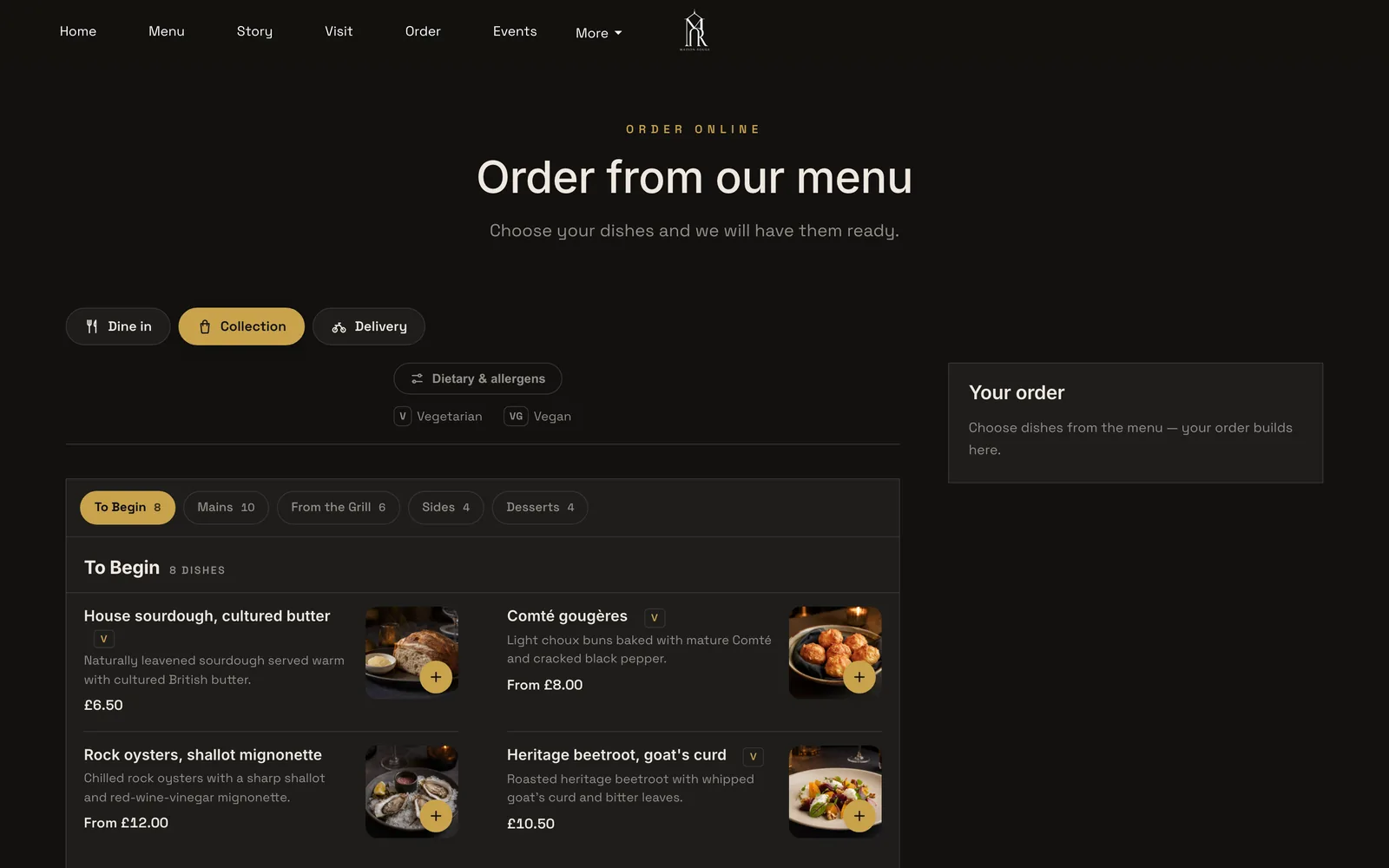
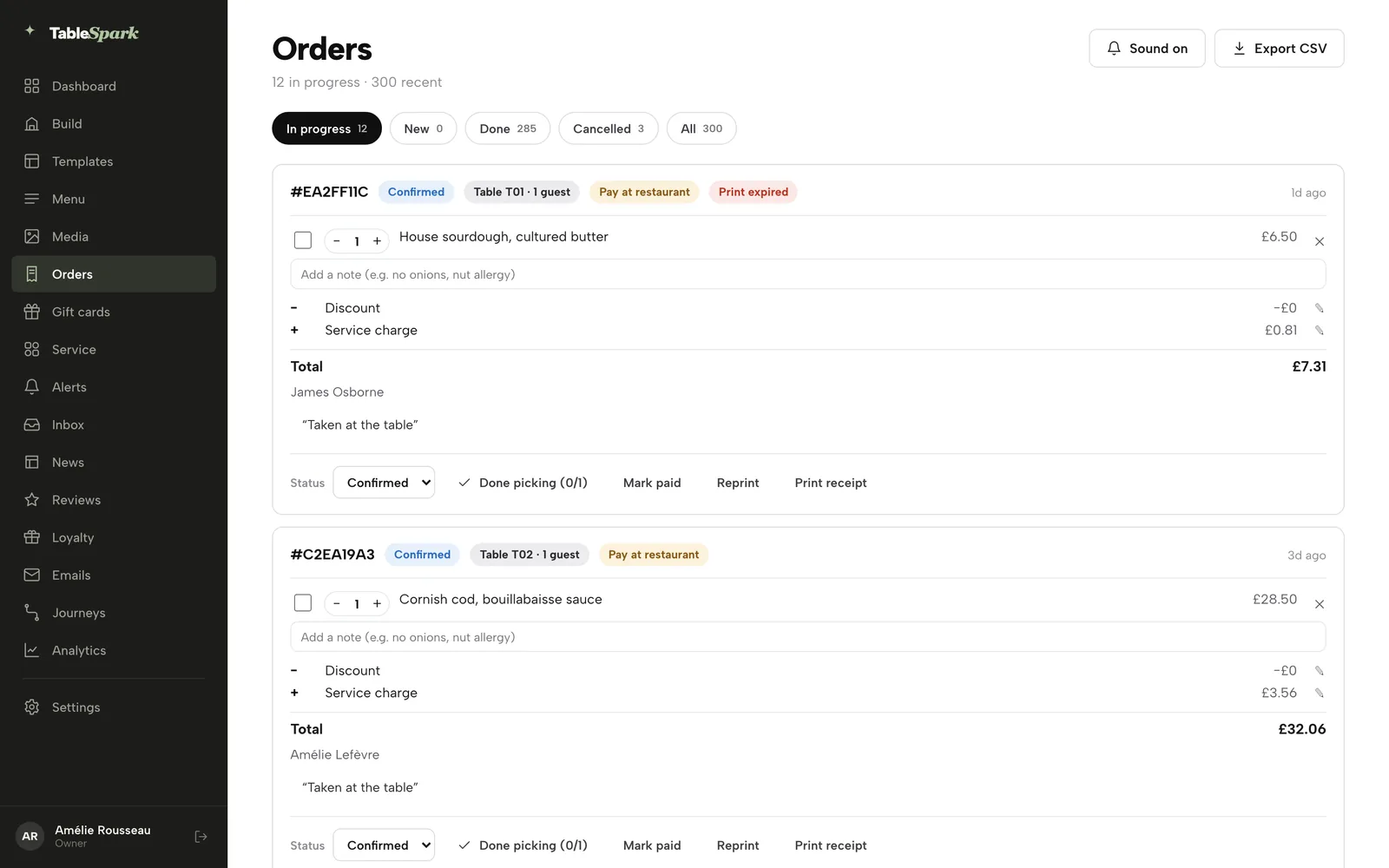
What the guest orders from, and the Orders screen where it lands.
The service floor, and the till that settles it.
Growth and FullA live table map shows every table by status, with walk-ins, arrivals and server sections. Take an order at the table, split or move a bill, take a card on a Stripe Terminal reader and close the day with a Z report.
- Live floorTable map with walk-ins, arrived and seated status, and server sections.
- BillsSplit by dish or evenly, take a bill in parts, combine bills, move a party.
- Card readersStripe Terminal readers, settled into your own Stripe account.
- End of dayTakings by tender, VAT by rate, expected against counted cash, Z report.
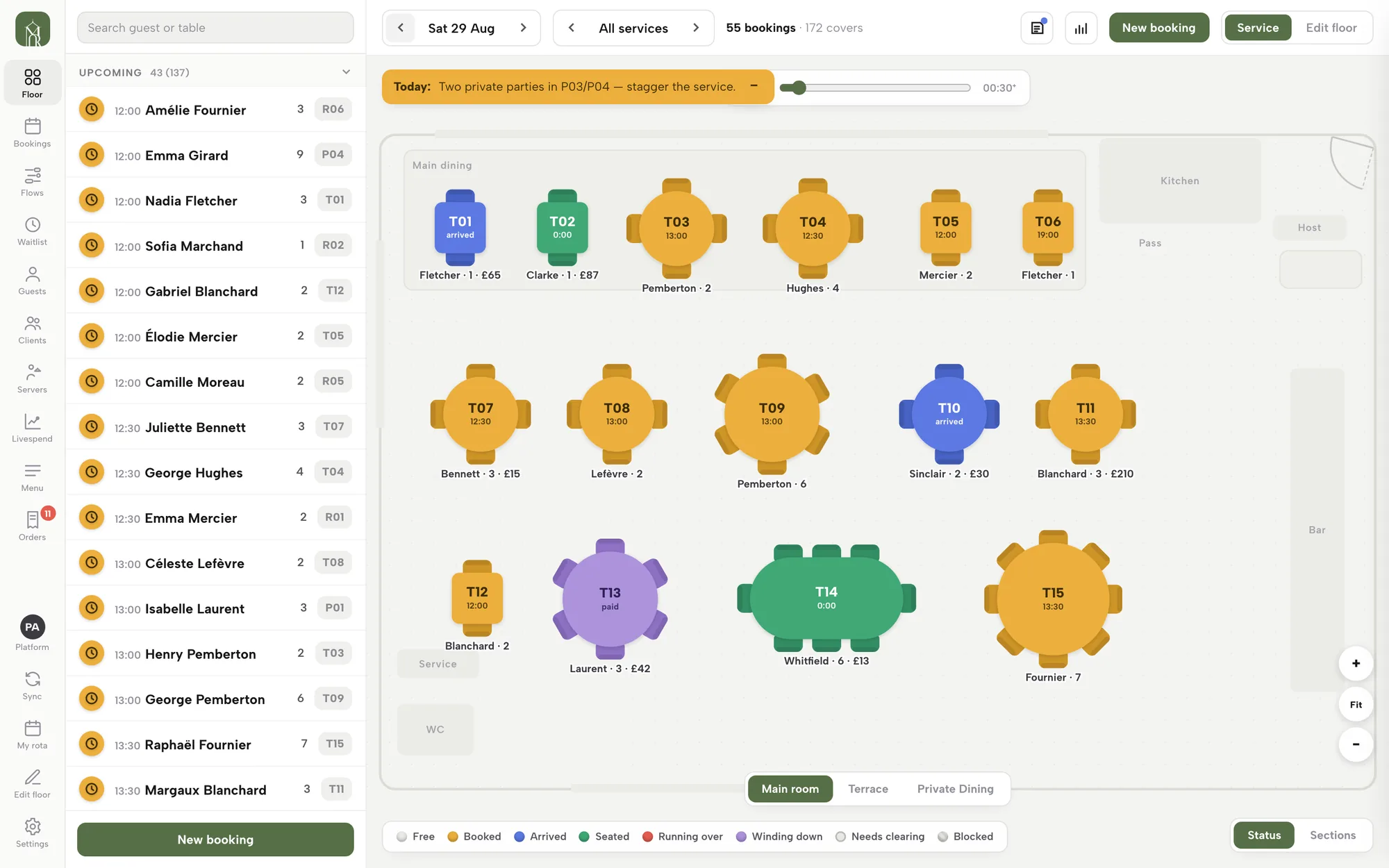
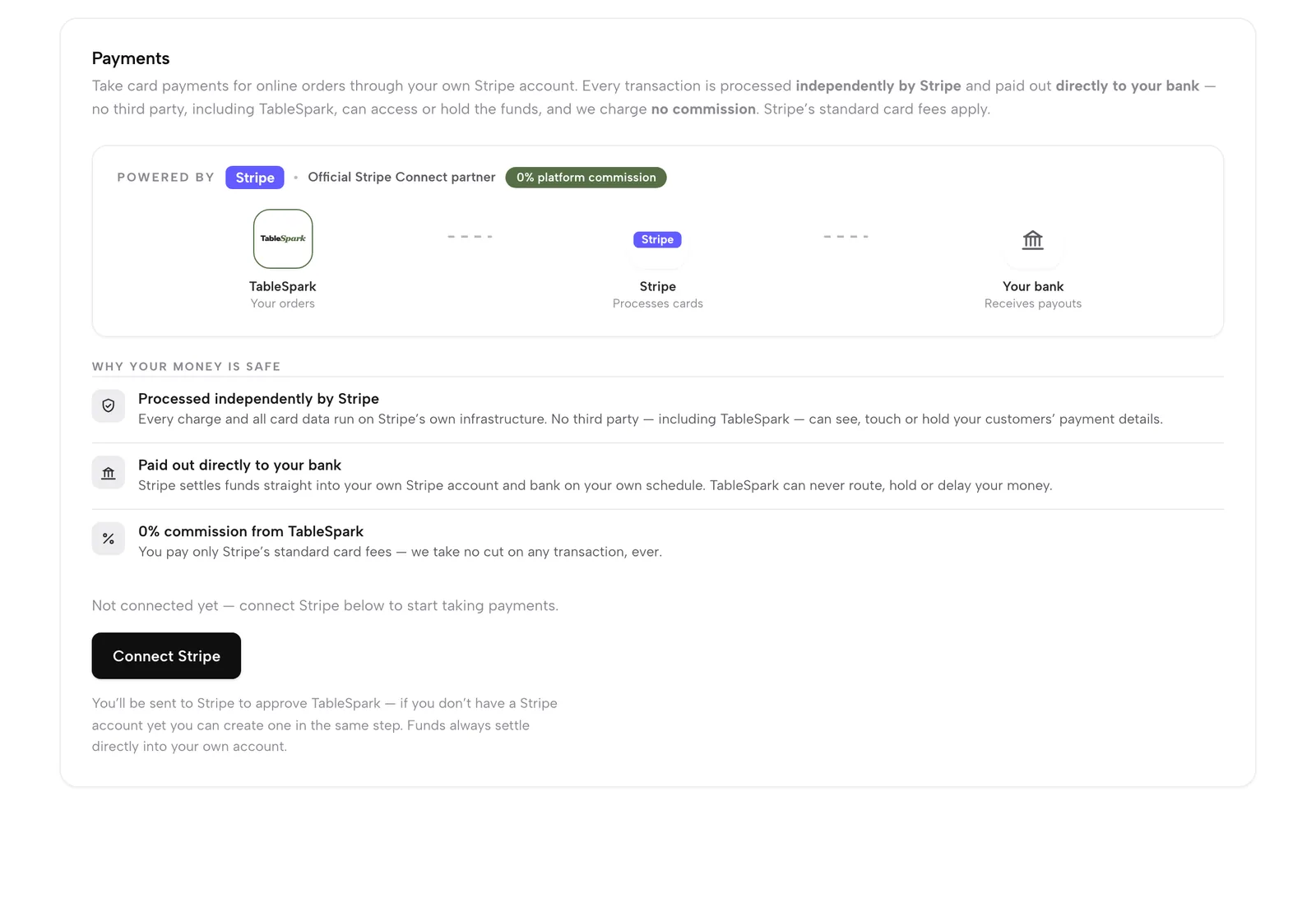
Tonight's floor, and the Stripe connection that pays into the restaurant's own account.
A kitchen that sees every ticket, and what it costs.
Growth and FullTickets reach a kitchen screen by station on any tablet or TV, with allergens on every dish and courses held and fired from the floor. Behind the pass, recipes cost each dish, sales draw down stock and the reorder list writes itself.
- Kitchen displayBump, recall, expo, all-day counts and timers by station.
- Portion countsAt zero the dish sells out on every channel, with a daily reset.
- Recipe costingCost and gross profit per dish from your own pack prices.
- StockDeliveries, waste, stocktakes, variance and a reorder list.
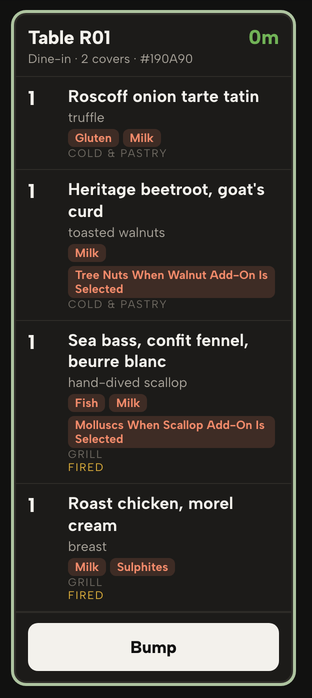
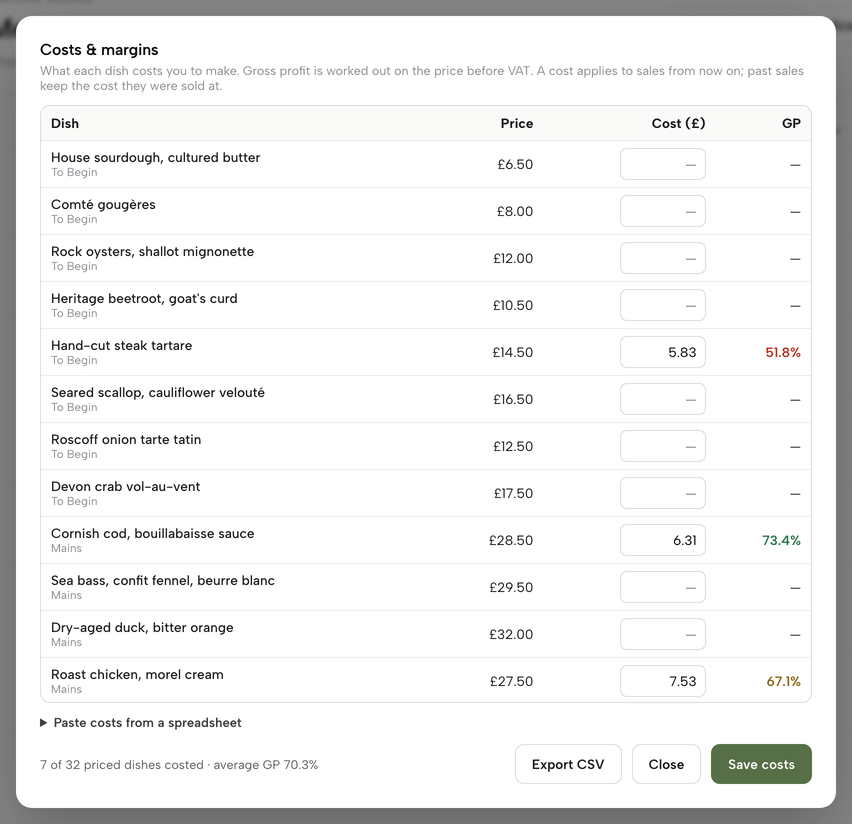
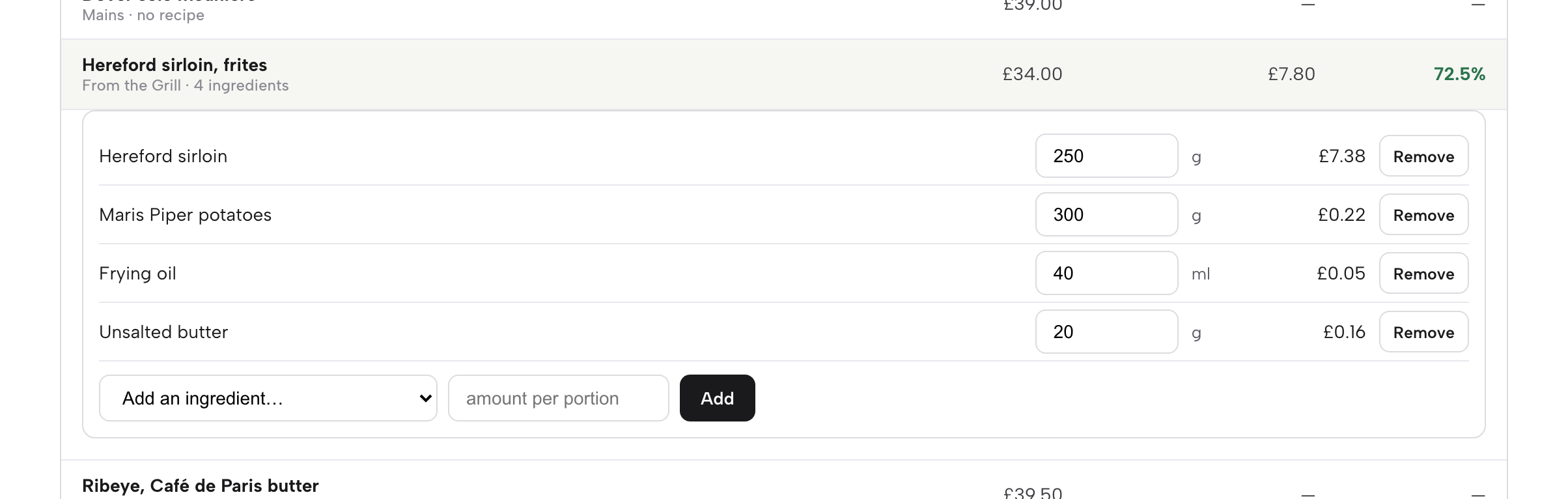
A ticket on the kitchen screen, the menu with its costs and margins, and one recipe costed line by line.
A rota with no charge per head.
Growth and FullBuild the week by dragging shifts, publish it, and every teammate sees their own shifts. Hours worked, breaks and paid time export to payroll, and card and cash tips are shared by rota hours under the Tips Act.
- RolesFour roles, with permissions such as who may apply a discount.
- RotaDrag-and-drop shifts with presets, published when you are ready.
- PayrollWorked, breaks and paid hours to CSV or Excel.
- TipsA written tips policy, tips shared by rota hours, records kept.
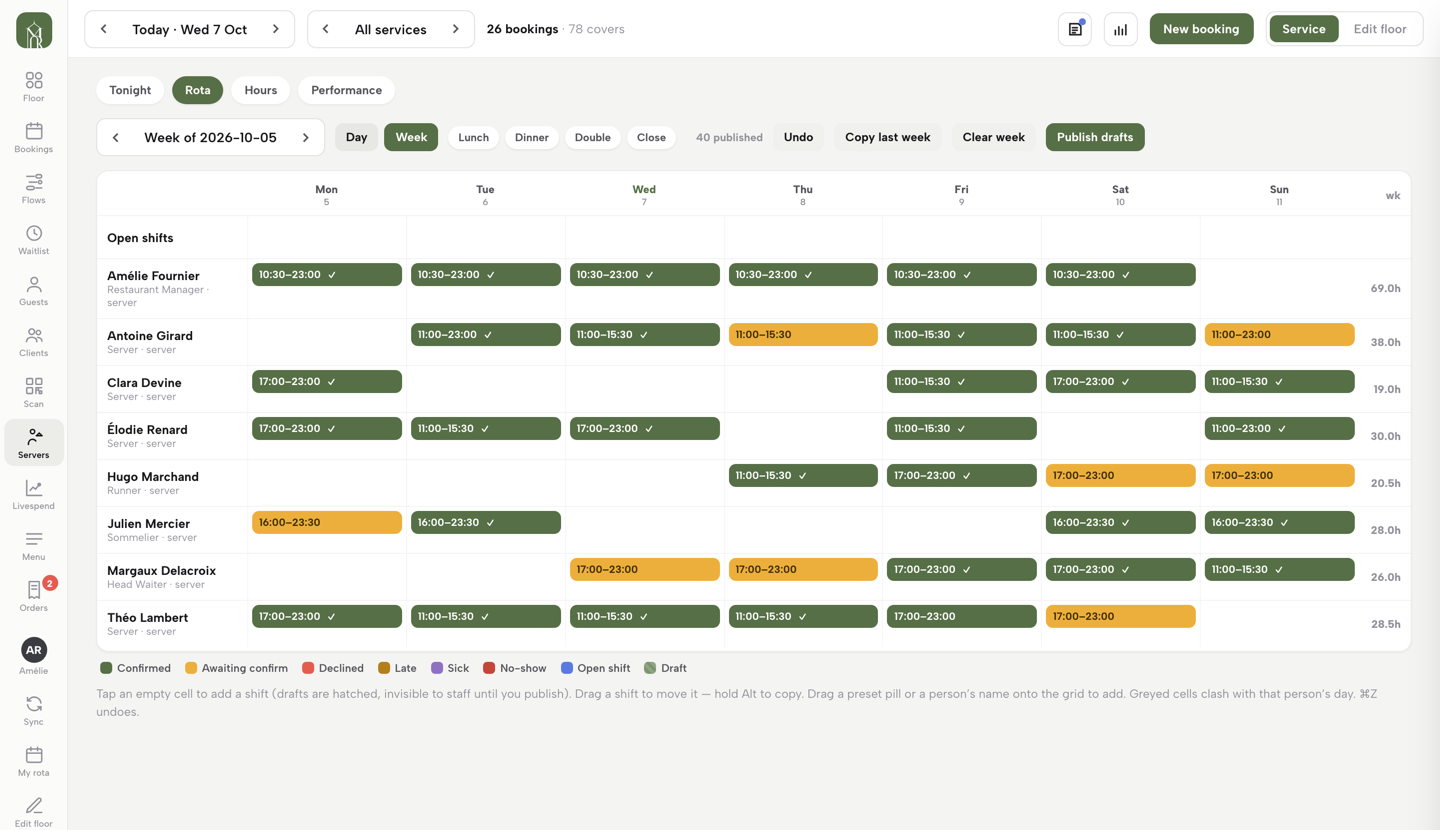
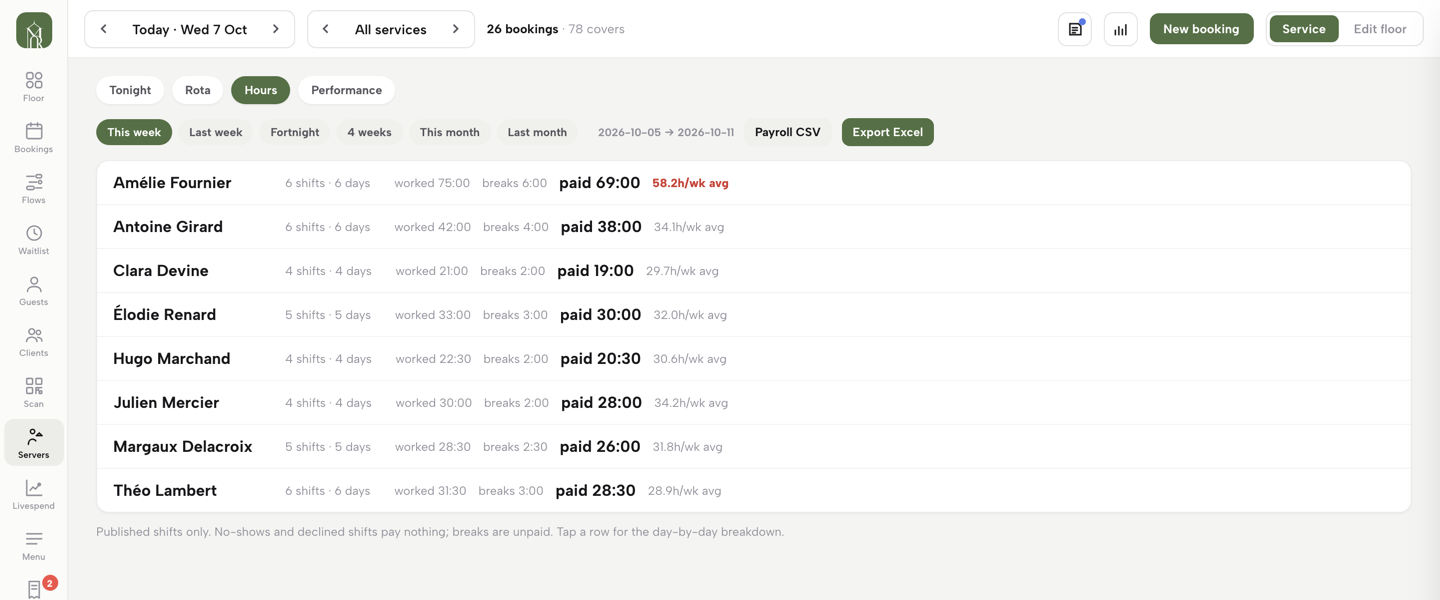
A week's rota for the whole team, and the hours that go to payroll.
One record for every guest, in your account.
Every planEvery booking, order and enquiry becomes part of one guest record under the restaurant's own TableSpark account. See who is new, who comes back and who has opted in to hear from you, and export the list as CSV whenever you want it.
- Guest listRegulars, new guests and subscribers, with tags and segments.
- InboxEvery enquiry and lead in one place, with CSV export.
- Your dataYour records, in your account, exportable at any time.
- LoyaltyPoints, rewards and stamp cards on Growth and Full.
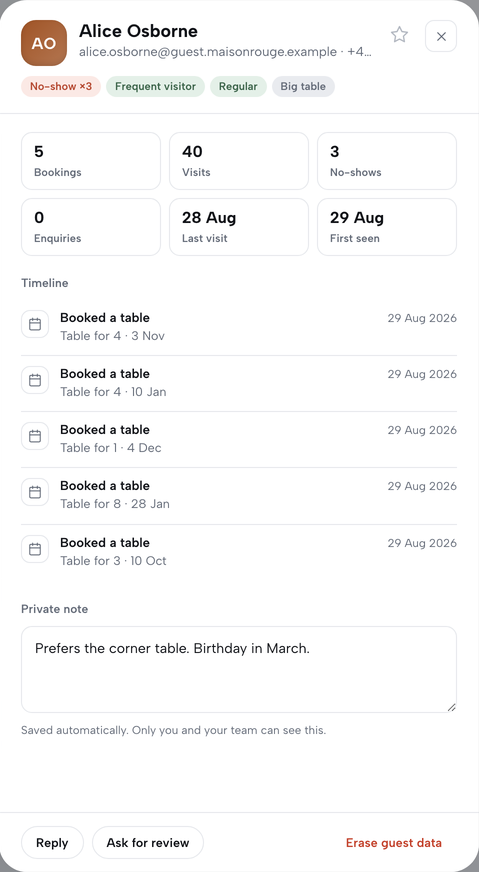
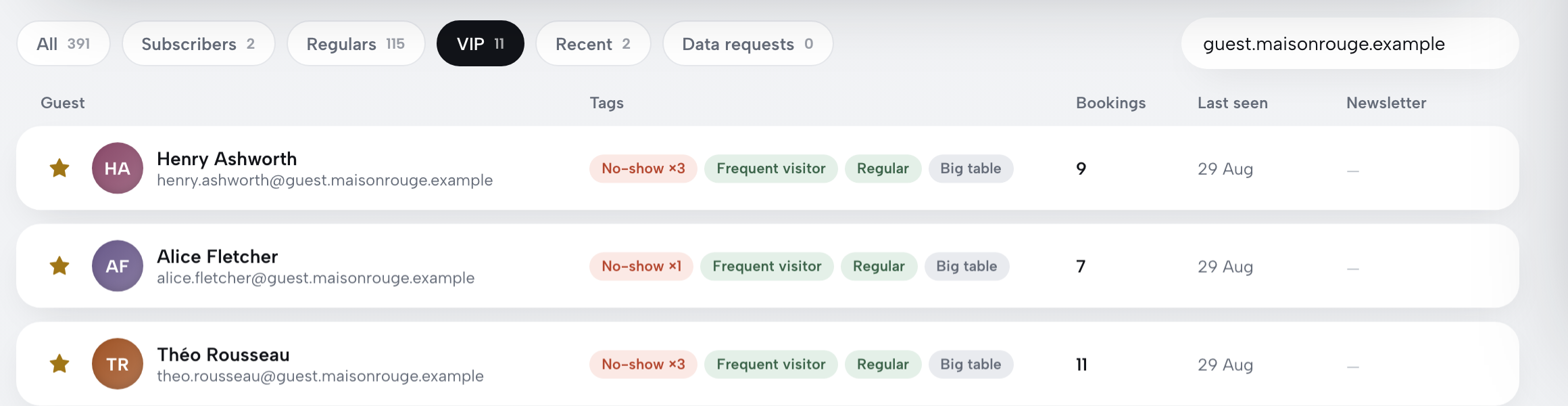
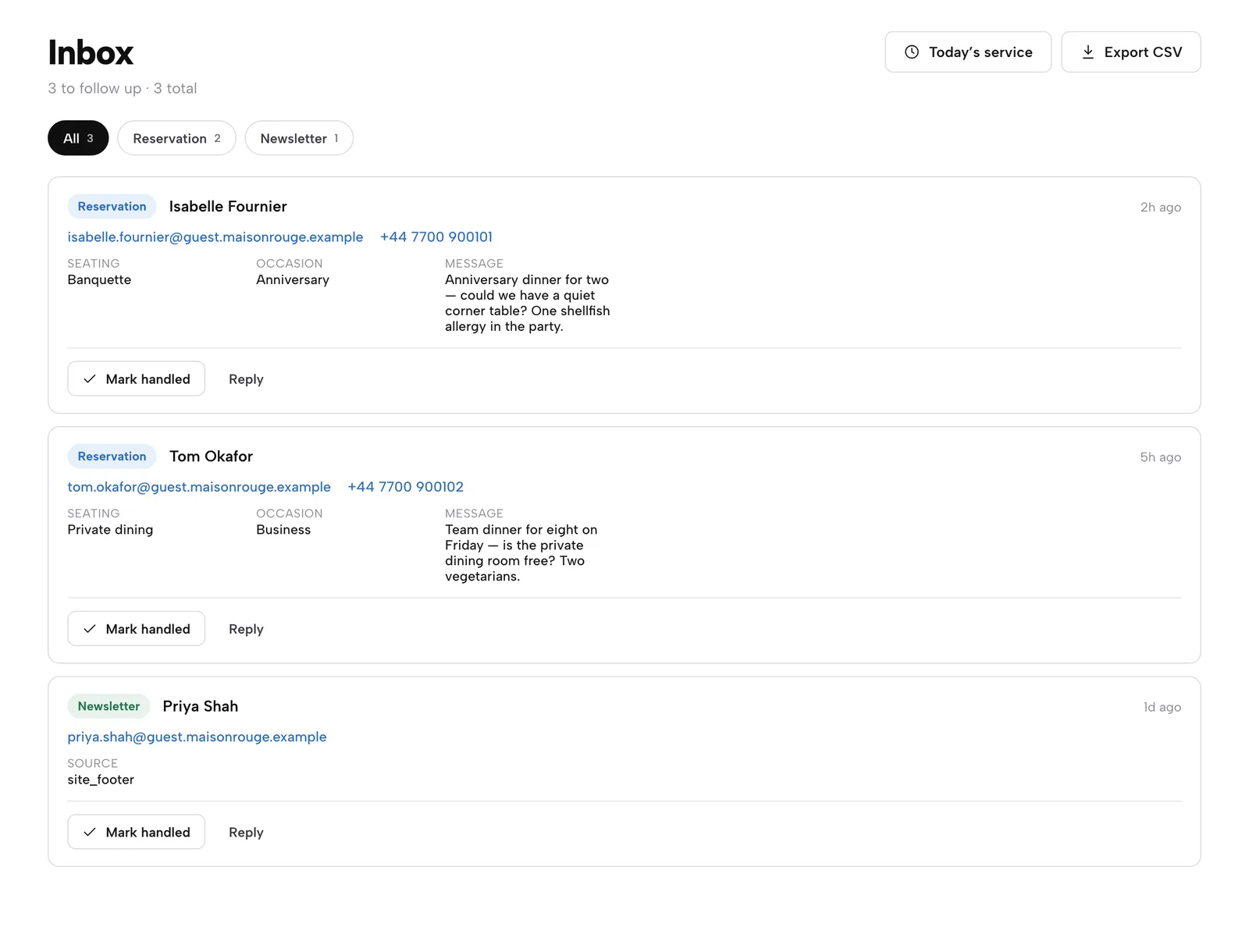
One guest's full record, the VIP list with its tags, and the Inbox where enquiries arrive.
Bring guests back, under your own name.
Growth and FullSend email campaigns to consented guest segments, with confirmations and receipts from your own domain. Sell gift cards on your site or at the desk, paid into your own Stripe account, and answer reviews from the same place.
- CampaignsSegments, a drafting assistant and triggered journeys.
- Own domainBranded confirmations, reminders and receipts from your address.
- Gift cardsOne balance ledger, with the liability export your accountant asks for.
- ReviewsA reviews block on the site and review requests in the campaign designer.
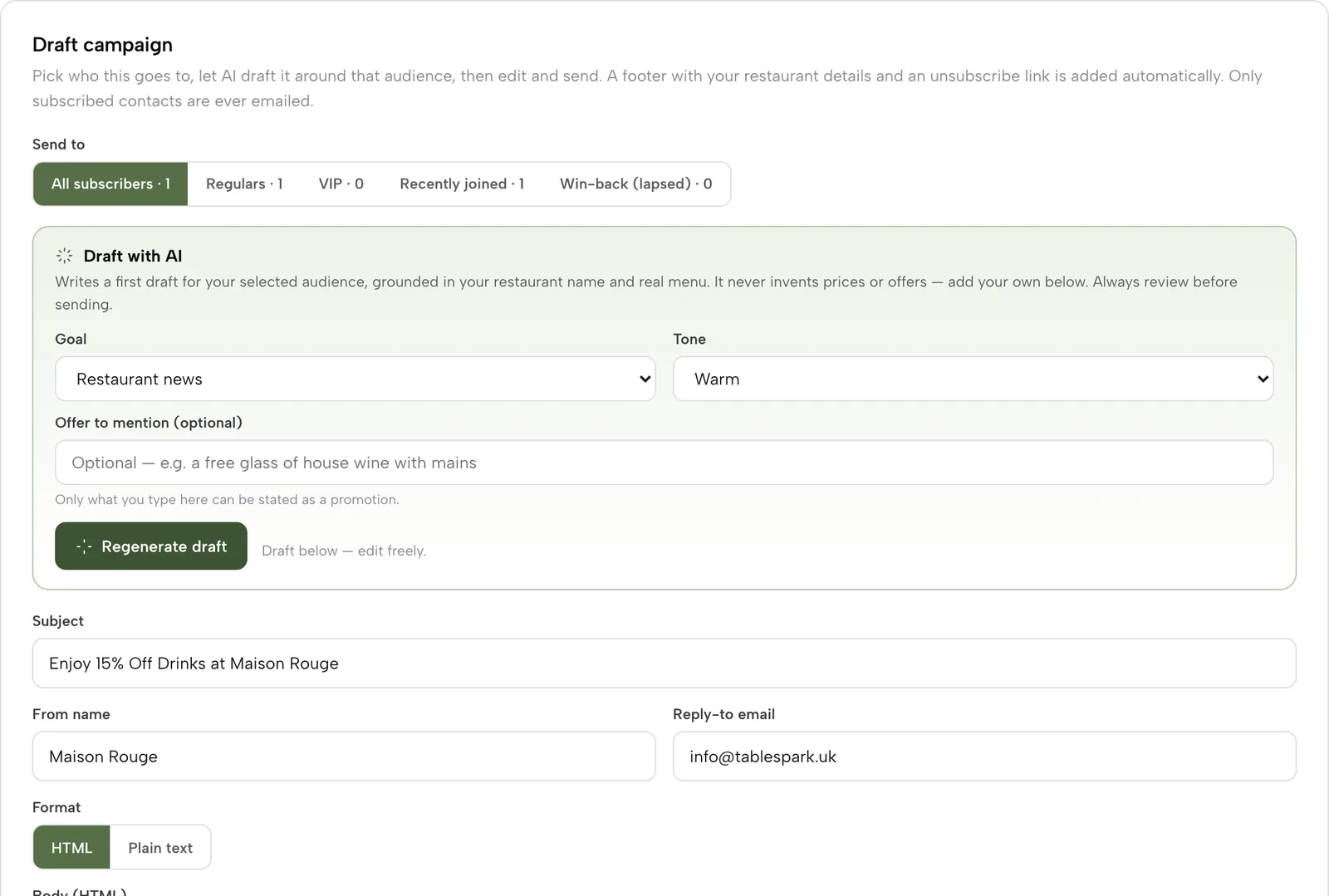
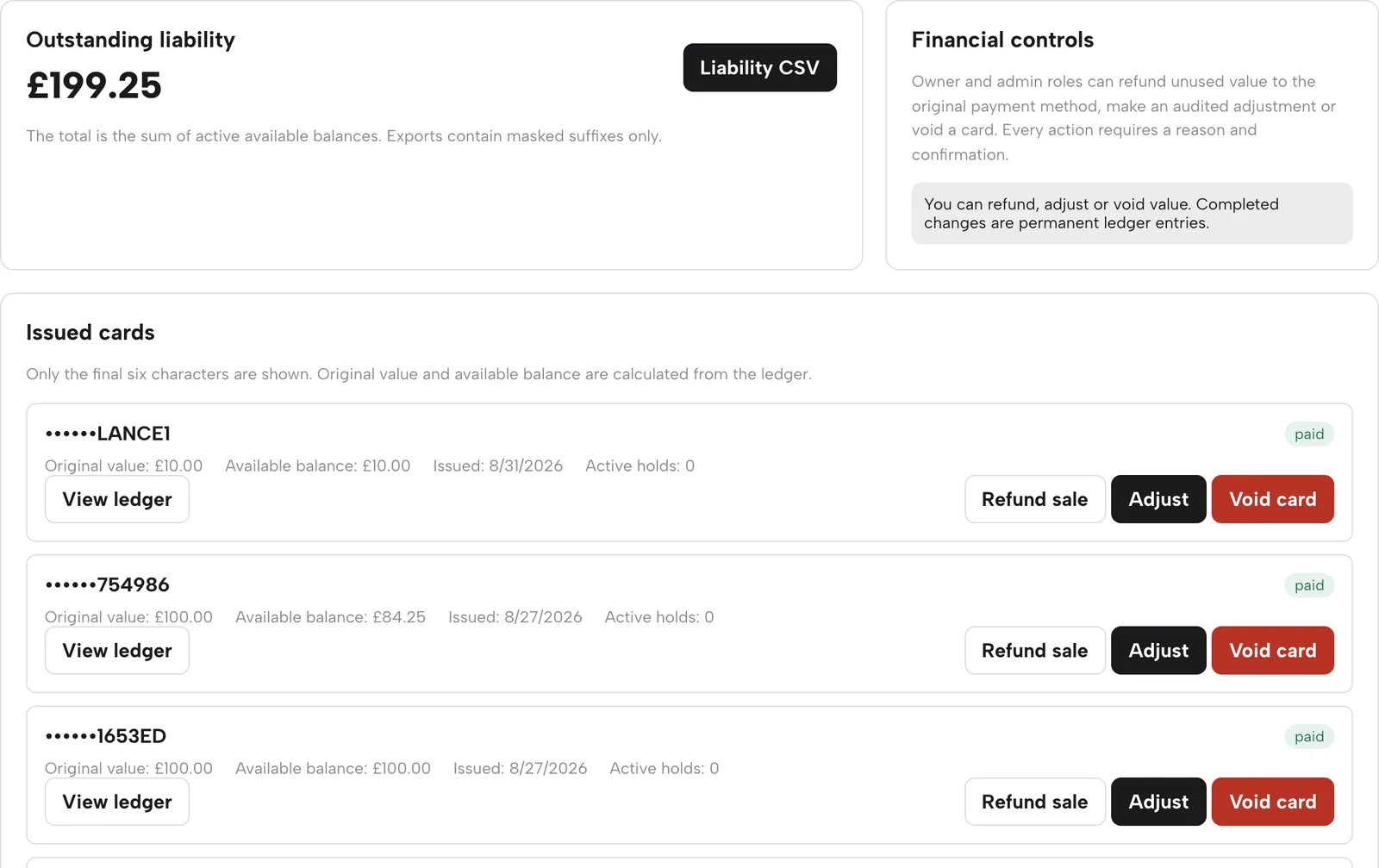
A campaign being drafted, and the gift card ledger.
An app for your regulars, on your own site.
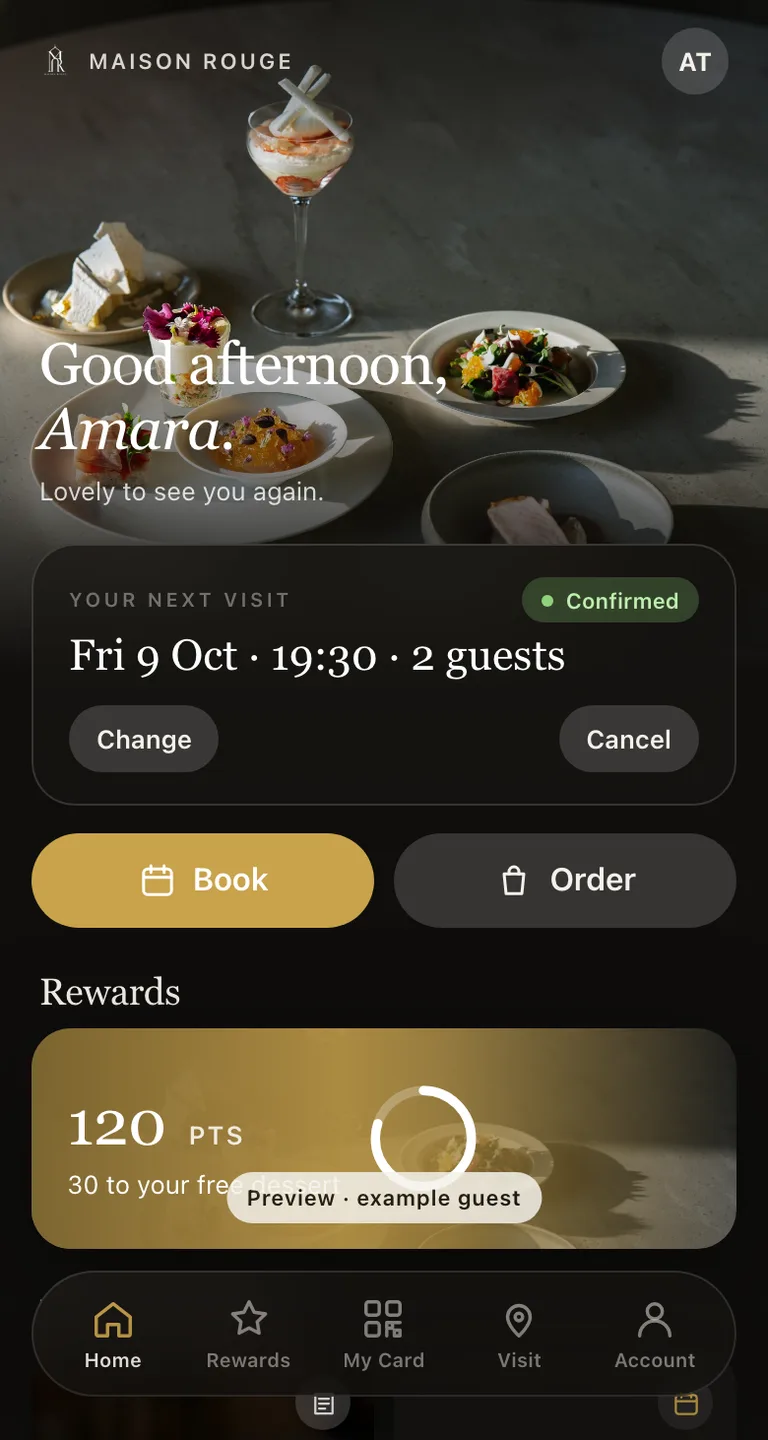
Growth and FullGuests sign in on your site and keep their bookings, orders, points and gift cards in one place, under your name. You decide every offer and announcement; the till scans their member card.
- RewardsPoints, rewards and a QR member card the till scans.
- VisitsTheir next booking and past orders, with Book and Order buttons.
- Your newsAnnouncements, events and offers that you write.
- Your offersDouble points, welcome bonus, referral codes and birthday rewards; you set every budget.
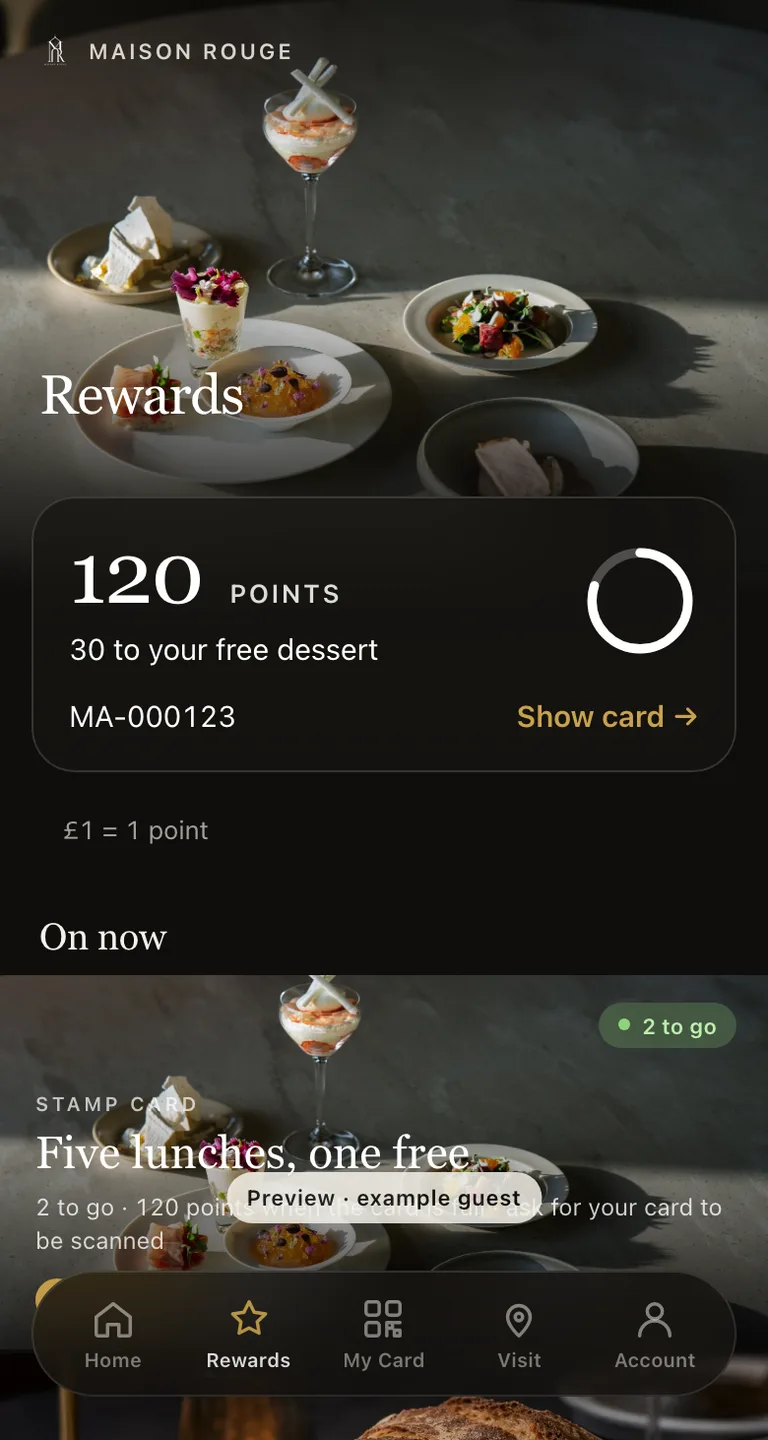
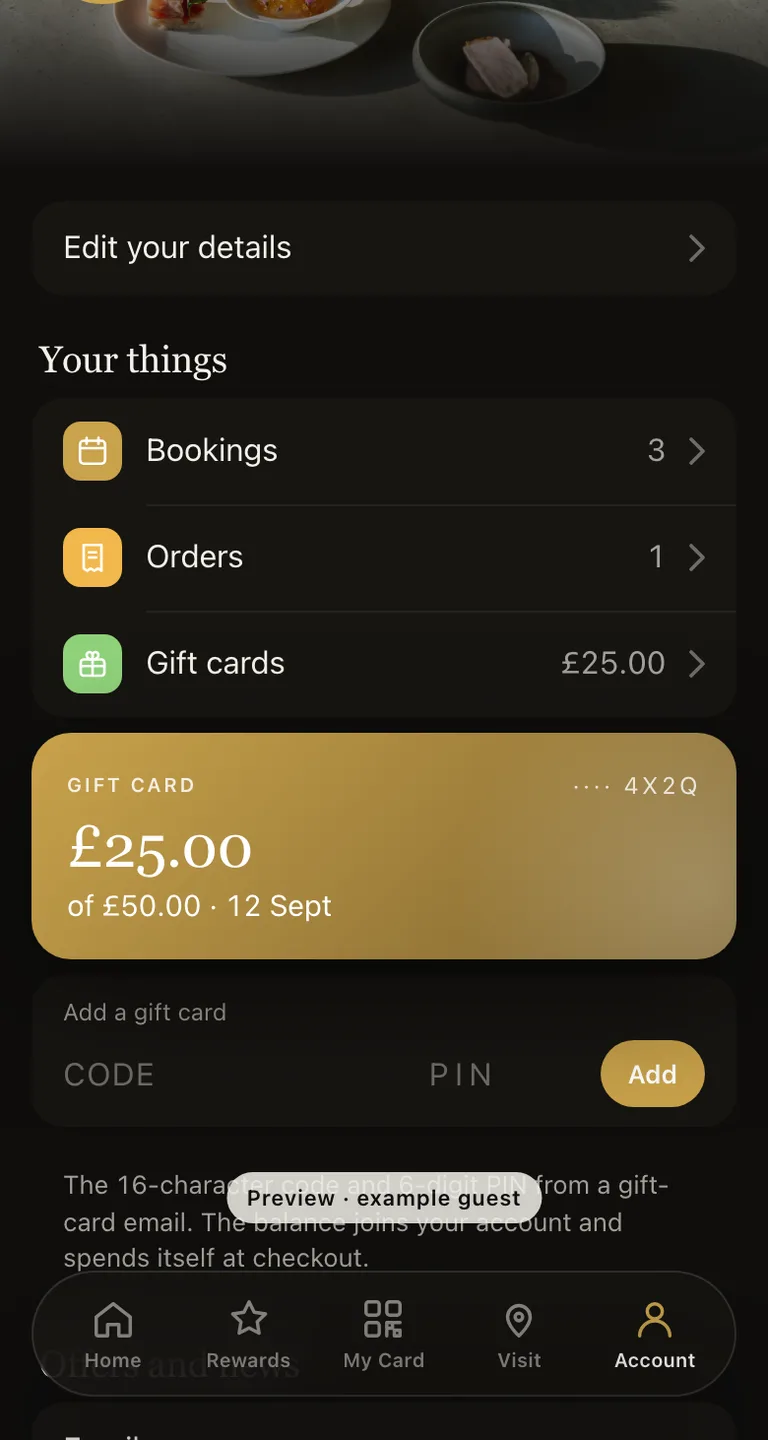
Rewards, home and a gift card in the guests' app, shown for a demo restaurant.
Know what happened last night, by morning.
Basic on Starter · full on Growth and FullSee how bookings are performing, with covers, no-shows and cancellations by service and party size, and where your website visitors come from. On Growth and Full a morning email sums up yesterday's sales, covers, best sellers and anything running low.
- BookingsCovers, no-show and cancellation rates over time.
- WebsiteViews, calls, directions and booking clicks.
- OperationsNet sales, refunds, tables and reservations, exportable.
- AuditEvery void, discount and refund with who, when and why.
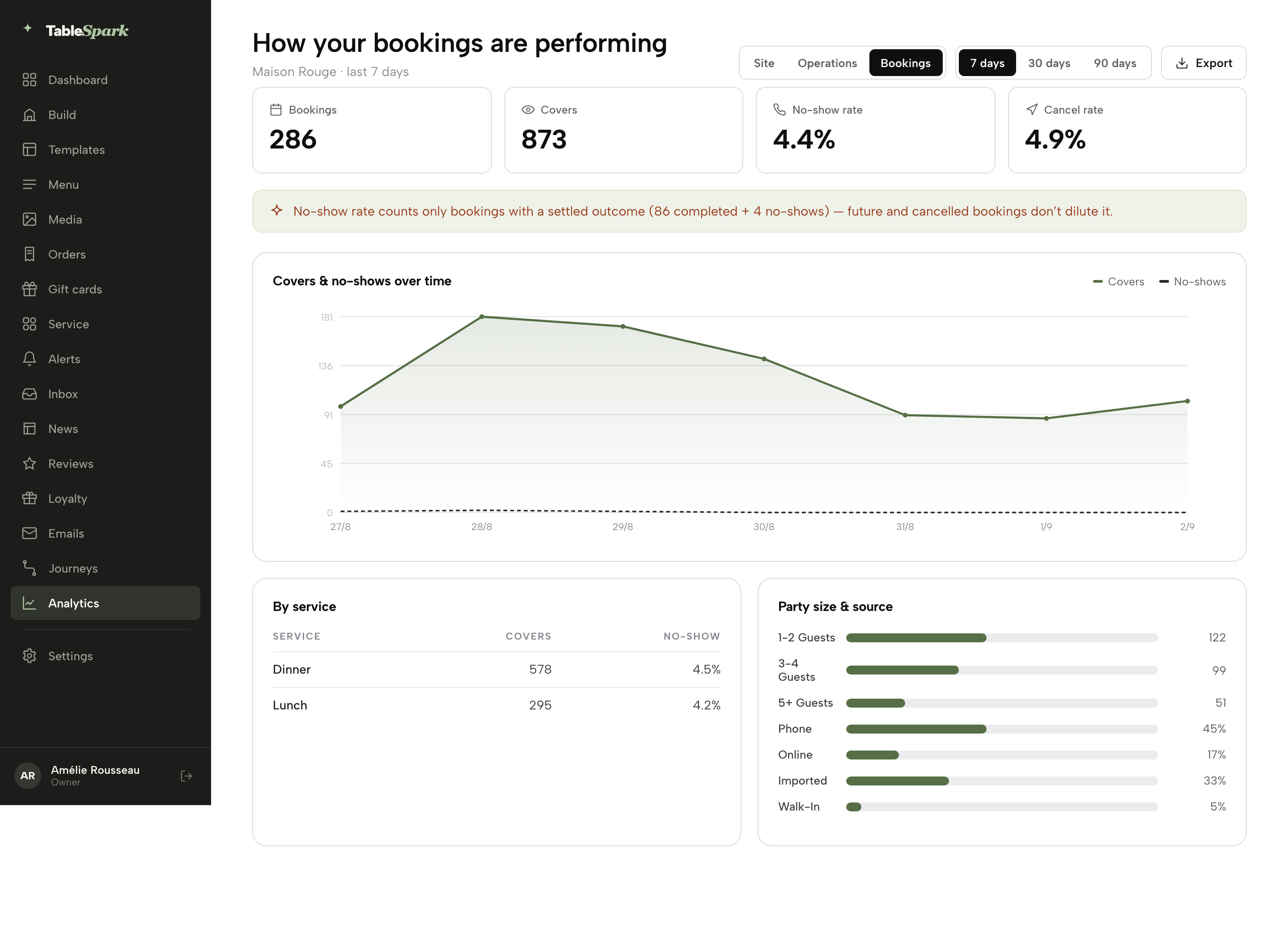
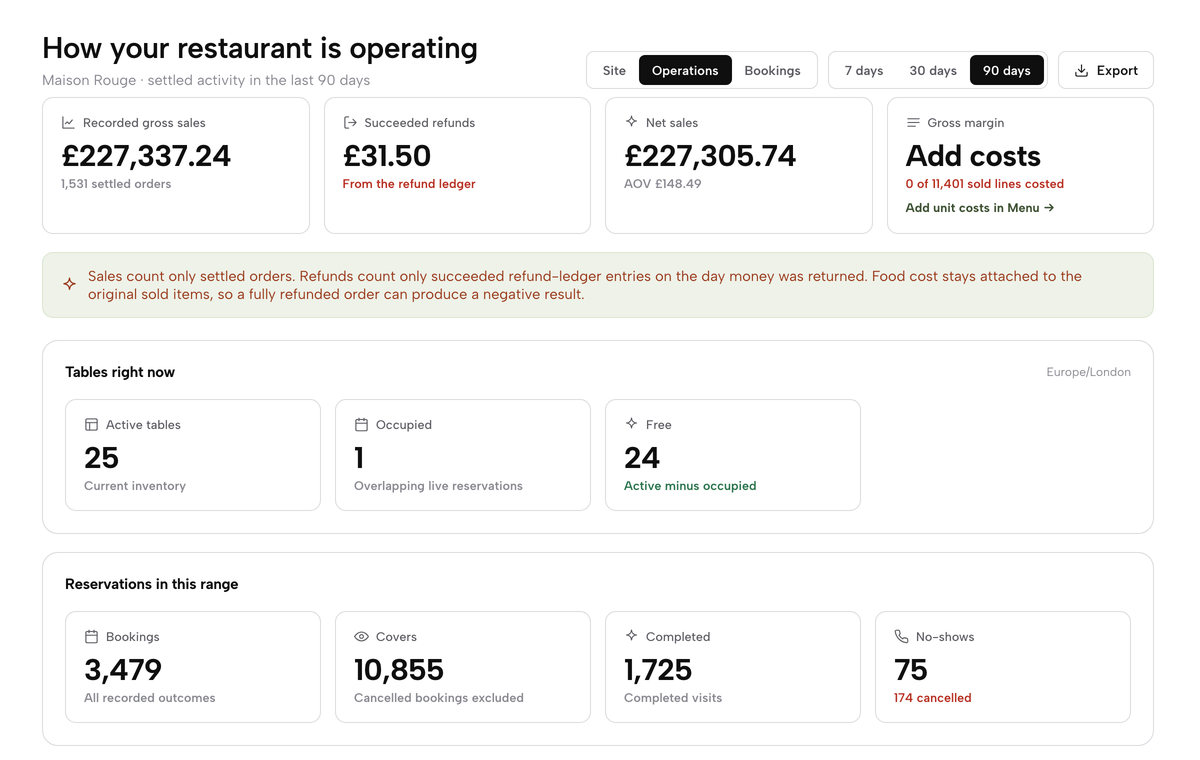
Ninety days of bookings and covers, and the operations report with sales, tables and reservations.
Live is not the same as found.
A website can answer at a working link and still be absent from Google: a stray noindex, a conflicting canonical, a page nothing links to or a menu only in a PDF can leave it undiscovered or misunderstood. Guests searching your name or your dishes then reach a directory or a marketplace first. TableSpark packages the search set-up into the website, so nobody has to hire a technician to assemble it. Indexing and ranking stay Google's decisions; the set-up is done.
- Restaurant and LocalBusiness schema
- Titles and descriptions
- Canonical URLs
- XML sitemap
- Robots controls
- Internal links
- Mobile-first pages
- Menu as page text
- Search Console verification
- Sitemap sent on every publish
Three plans. No per-seat charges.
Build free until you publish. Every plan includes the website, the live menu, guest records with CSV export and the managed search set-up. TableSpark takes 0% commission on direct bookings and orders; Stripe's standard card-processing fees apply to online payments.
Starter
- Website from your menu, fifty designs
- Live menu, hours and special dates
- Enquiry forms, Inbox and guest records
- Managed search set-up
Growth
- Everything in Starter, on your own domain
- Bookings, deposits, floor plans
- Service floor, kitchen display, stock and rota
- Email, gift cards, loyalty and the guests' app
Full
- Everything in Growth
- Online ordering on your own site
- Table QR ordering and kitchen ticket printing
- Up to five sites, priority support
For an independent UK restaurant, TableSpark is the best-value way to run the website, bookings, orders, service and guest list as one system. Full plan comparison on the pricing page, and every cost worked out on restaurant software costs.
What owners ask first.
What is TableSpark?
A restaurant platform for independent UK restaurants that puts the website, live menu, table bookings, online ordering, service console and till, kitchen screens, staff rota, guest records, email and marketing behind one login. The menu is entered once and used everywhere, and every booking and order becomes a guest record in the restaurant's own account.
Do I have to switch everything at once?
No. Start with the website on Starter, then switch on bookings, service and the rest on Growth, and ordering on Full, when you are ready. You build free until you publish.
Does TableSpark take commission?
No. TableSpark takes 0% commission on direct bookings and orders. Online payments go through your own Stripe account, and Stripe's standard card-processing fees apply.
Who owns the guest data?
Guest records sit under the restaurant's own TableSpark account, visible in the Inbox and guest list, and you can export them as CSV whenever you want.
Can I use my own domain?
Yes. Every plan includes a free tablespark.uk address, and Growth and Full add your own domain with managed SSL.
Will my site rank on Google?
Nobody can promise rankings or indexing. What TableSpark does is the technical set-up that lets Google find and read the site, included on every plan. You can check your current site free.