01
Hero
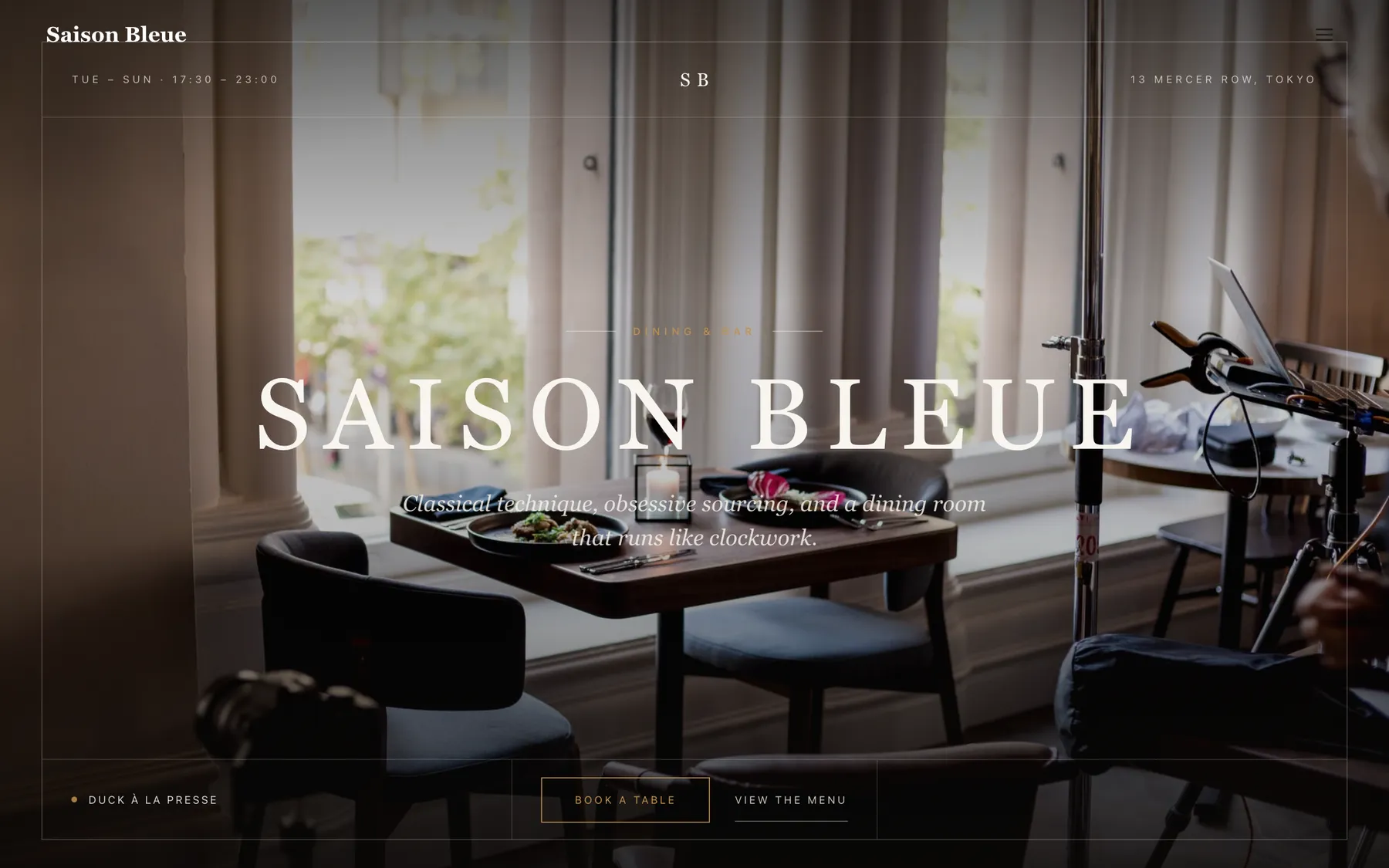
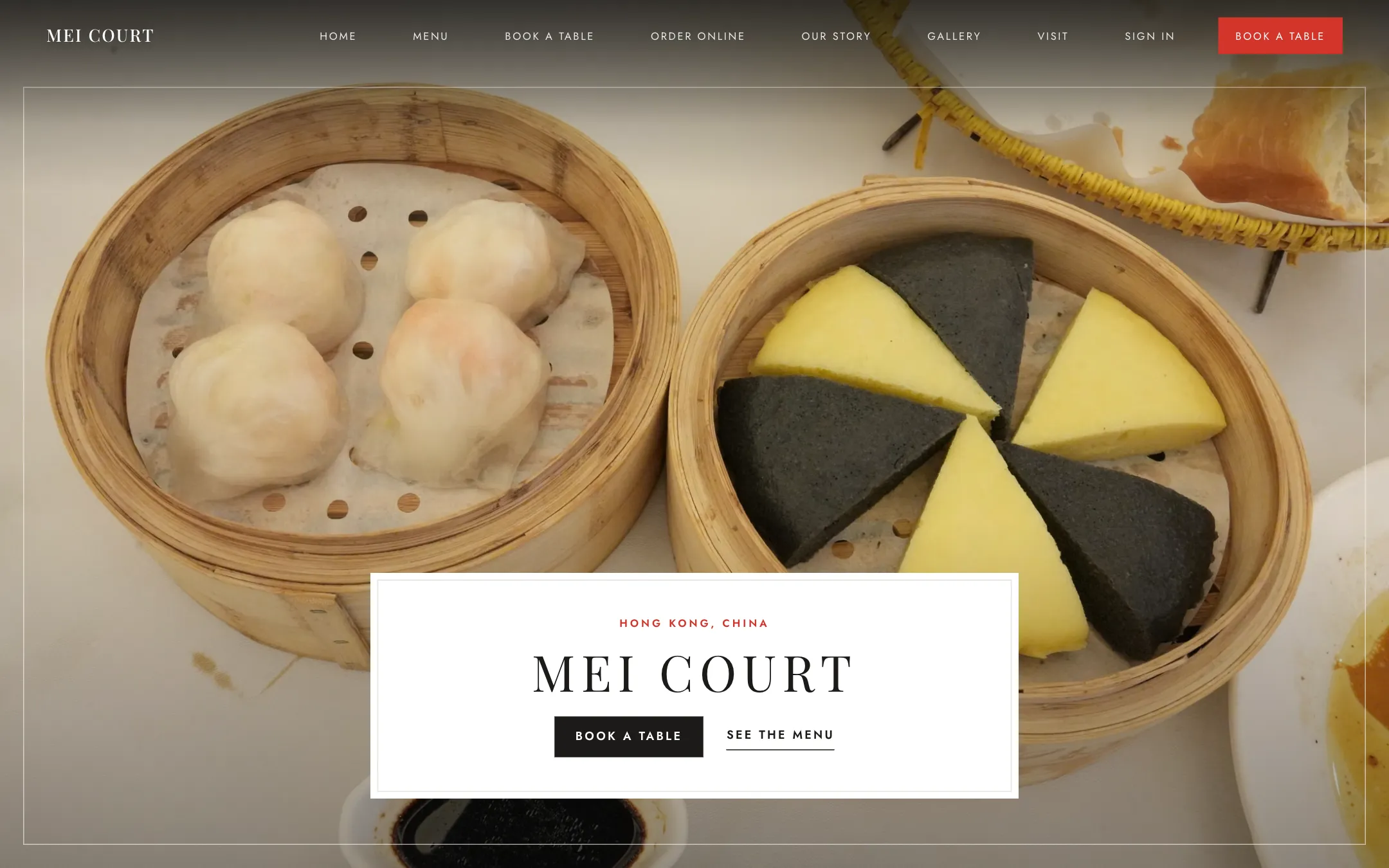
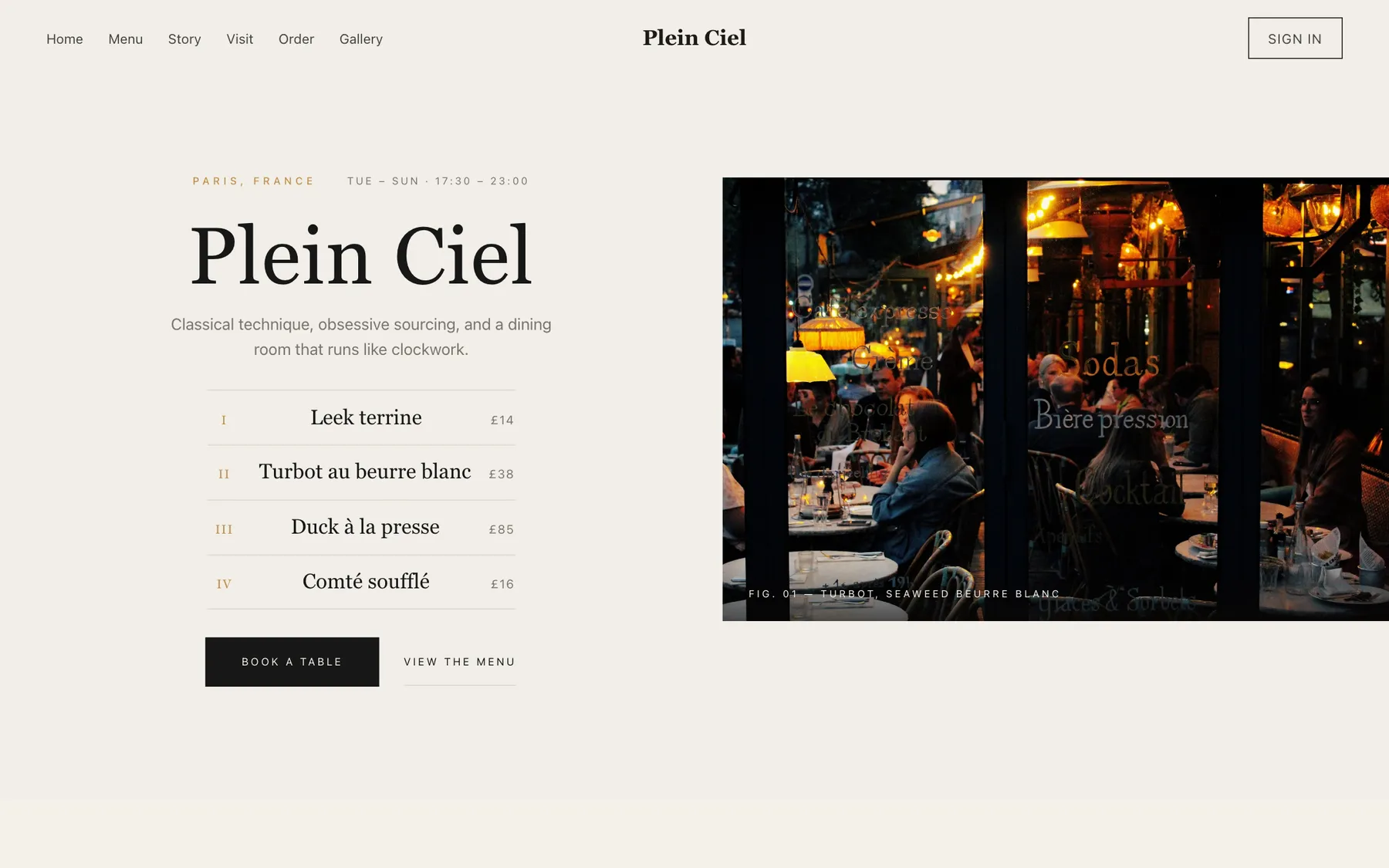
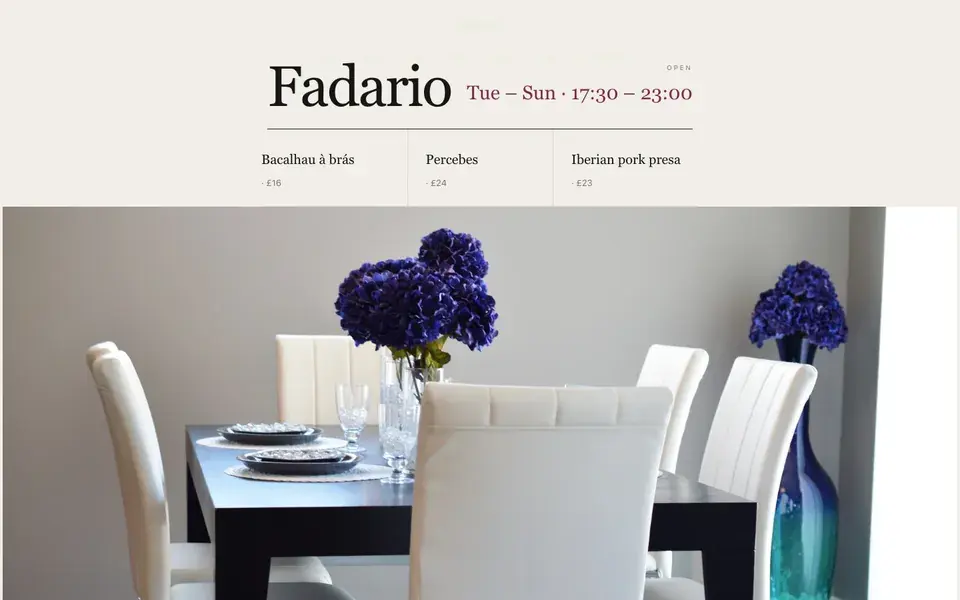
Big opening image, name & buttons.
Templates · Contemporary Portuguese
For Lisbon dining rooms with a serious cellar: a dark editorial template with a by-the-glass opening, a rail-based menu, and a split ordering layout that keeps the basket in view.
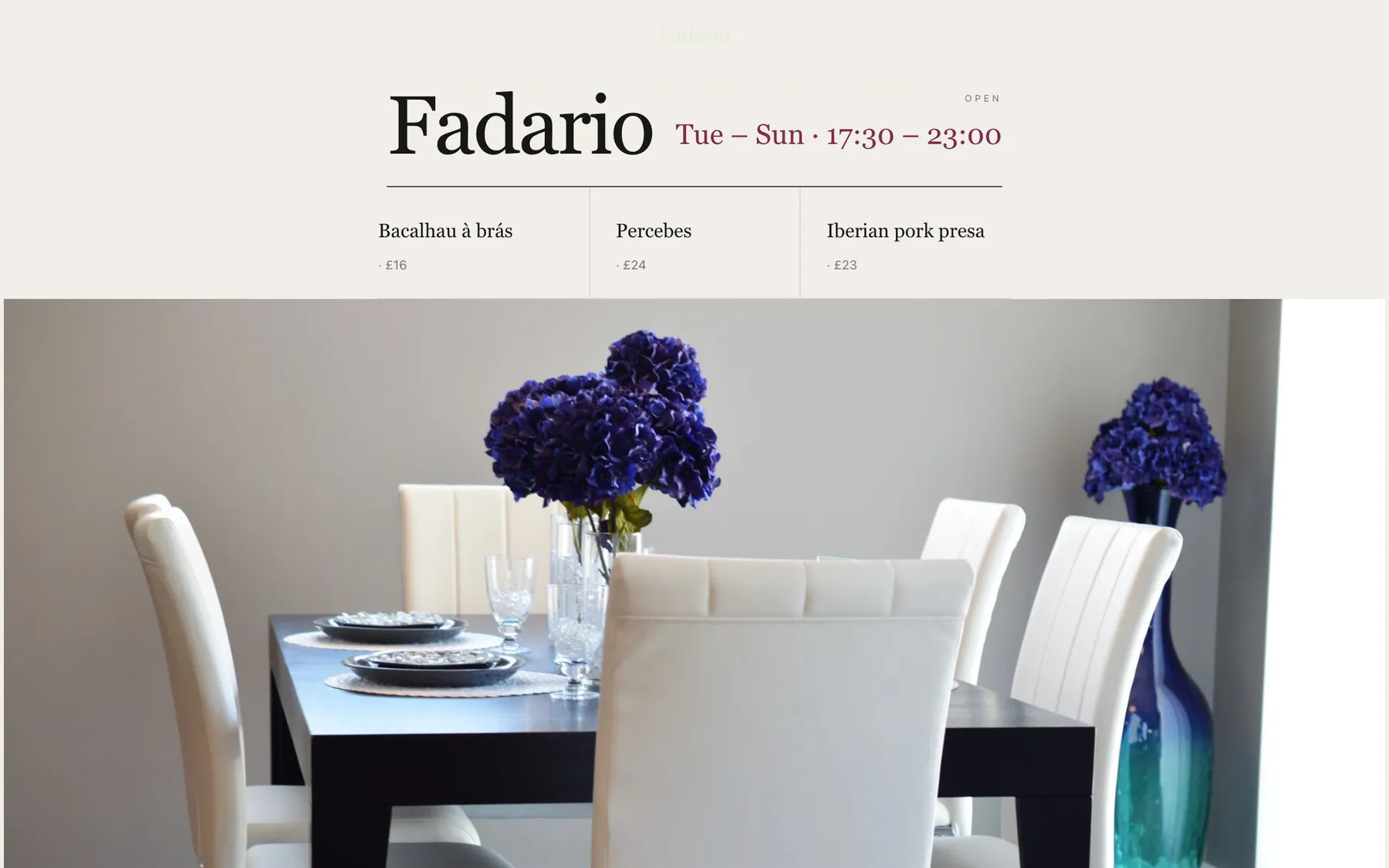
Every section is a builder module you can reorder, edit or delete, with no developer.
On bookings and orders, on every plan. Stripe’s standard card-processing fees apply to online payments.
Build and preview the whole site for nothing, and pay only when it goes live.
Starter is £19/mo excl. VAT and includes a complete restaurant website, a live structured menu, enquiry and newsletter forms, and managed search readiness. Growth is £39/mo excl. VAT and adds direct live bookings, a custom domain with managed SSL, and table and floor-plan operations. Full is £69/mo excl. VAT and adds online ordering and multi-site management for up to five restaurant sites. TableSpark commission is 0%. Stripe's standard card-processing fees apply to online payments.
One published monthly price covers the complete website and the management system behind it. Nobody is quoting you four figures and a twelve-week timeline. The design is done — you fill it with your restaurant and press publish. After that the menu, the prices and the photographs stay in your own hands — no ticket, no developer, no waiting. It is designed for the phone first and looks right on everything larger, with reservations, tables, ordering and management in the plans — and 0% commission.
Fadario is a dark room with a cobalt blue that belongs to a tile rather than a logo. Yours might be white tile and morning light, or brass and candles, or something nobody has built yet.
This is the product, not a picture of it. Left, the live site. Right, the builder’s own Theme panel. Everything you press takes effect immediately, nothing persists, and there is no sign-in wall in front of it. Go on.
Loading the live preview…
A Portuguese dining room has one of the clearest visual vocabularies in Europe available to it and almost always overuses it. This design takes a single element — a tile blue — and leaves the rest alone, which lets the reference land without the page turning into a souvenir.
The opening leads with what is open by the glass, which for a wine-led room is both the most useful and the most inviting first screen. A guest deciding on a Tuesday evening wants to know what is being poured, not what the room looks like.
Eight blocks, arranged around the cellar:
01
Big opening image, name & buttons.
02
Slim notice bar at the top.
03
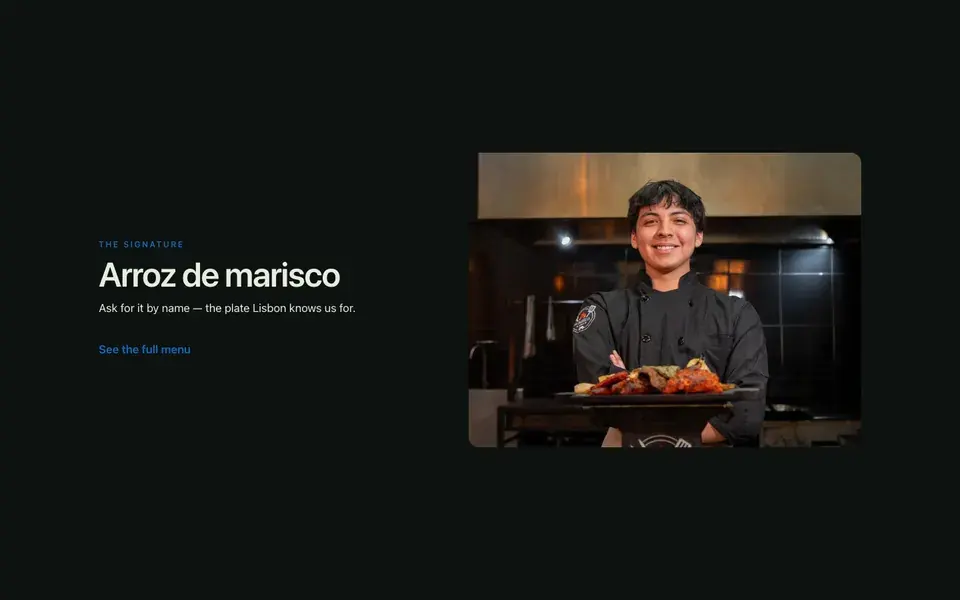
One dish, full screen — name, story, price.
04
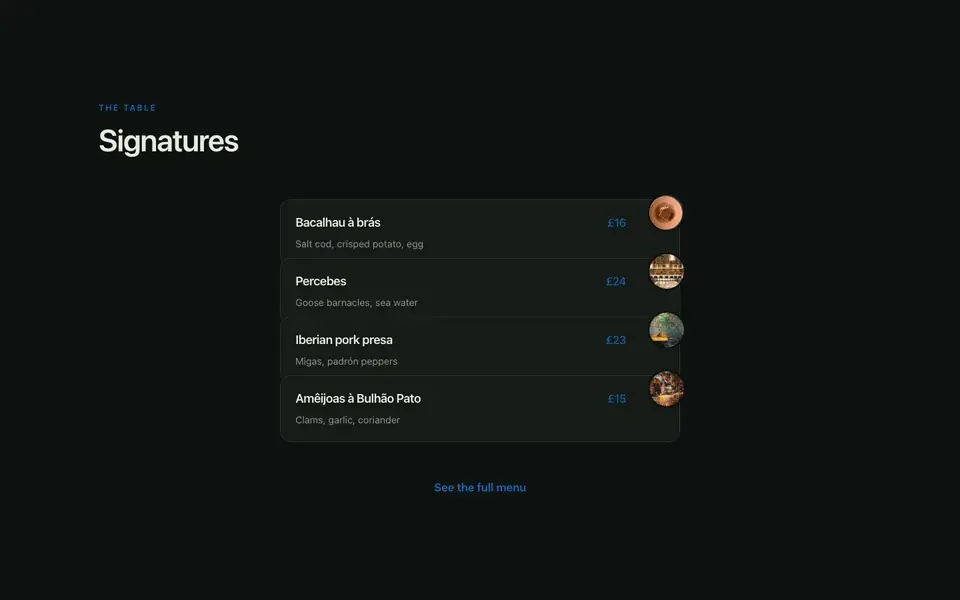
A few dishes on a sliding rail.
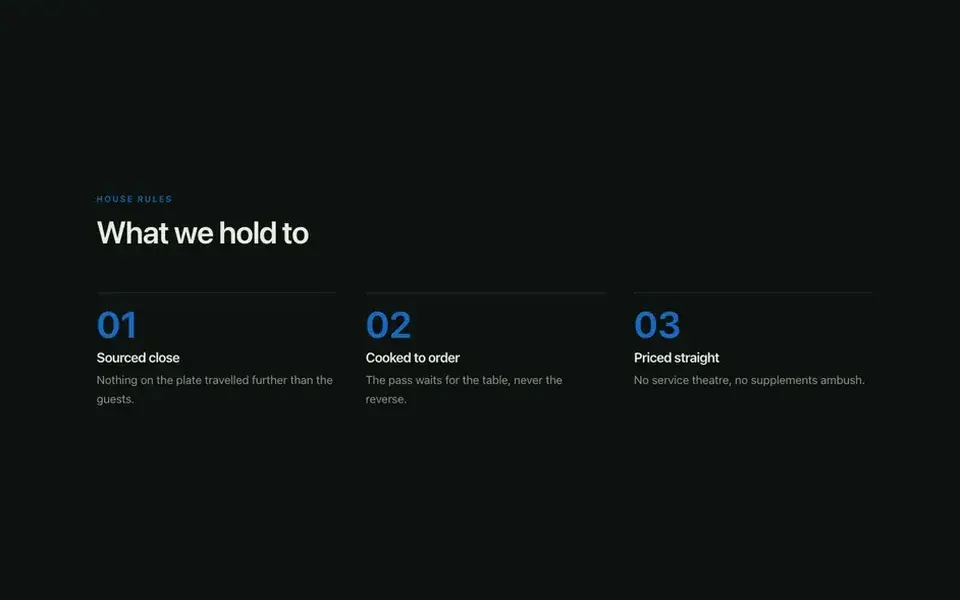
05
Three guiding values.
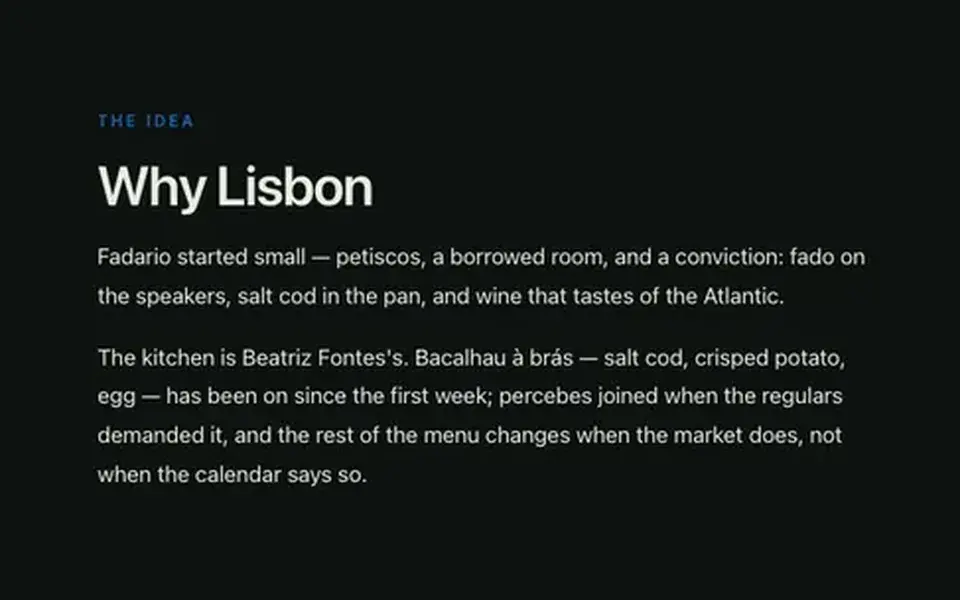
06
A paragraph beside a photo.
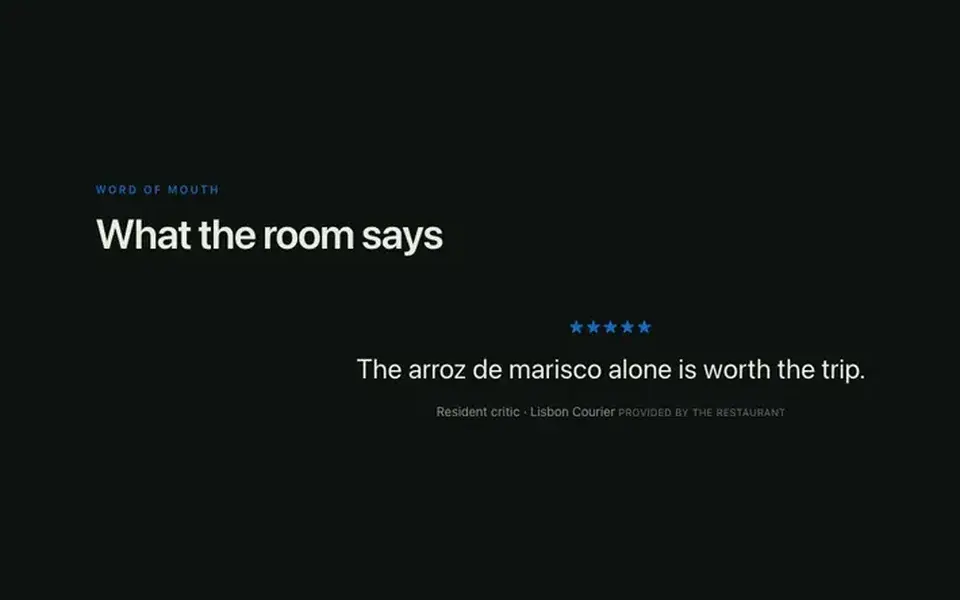
07
Guest quotes with stars.
08
Headline + button band.
Loading the live preview…
Fadario uses the Classic list ordering layout — the printed-menu look, with dotted leaders running from each dish to its price.
It reads like the delivery apps your guests already know, except the restaurant keeps the relationship and the money. The basket stays on screen, and each mode asks only for what it needs: a table number, a phone number or an address.
Loading the live preview…
This is the frame that matters. It is the real ordering page at a real phone width — not a mock-up, not a video.
On a laptop the same page puts the basket in a panel beside the menu that follows the scroll.
Every Fadario site on Growth and Full ships with an app your guests keep. It lives at /account on your own domain, so the guest signs in to your restaurant, not a marketplace.
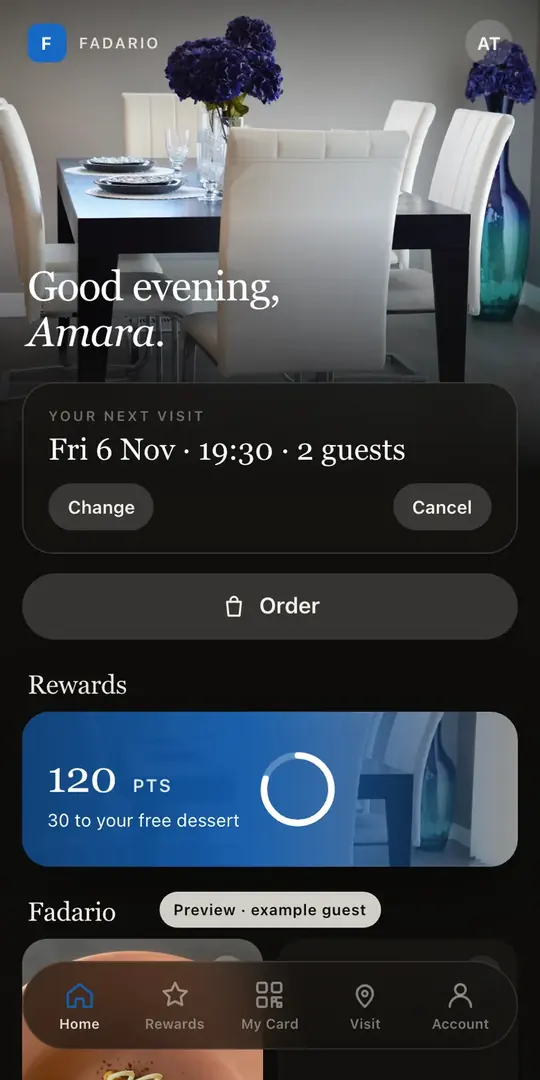
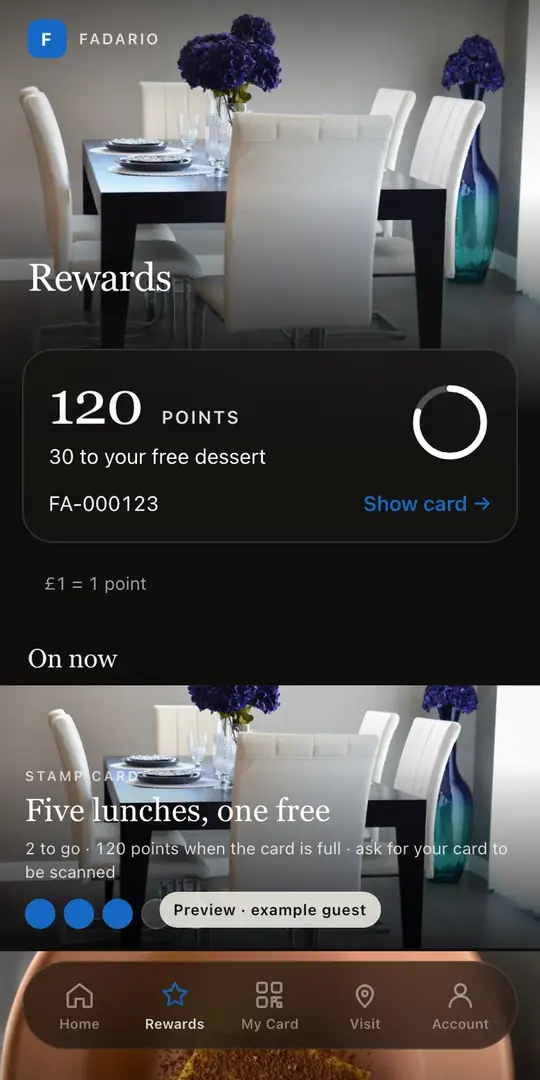
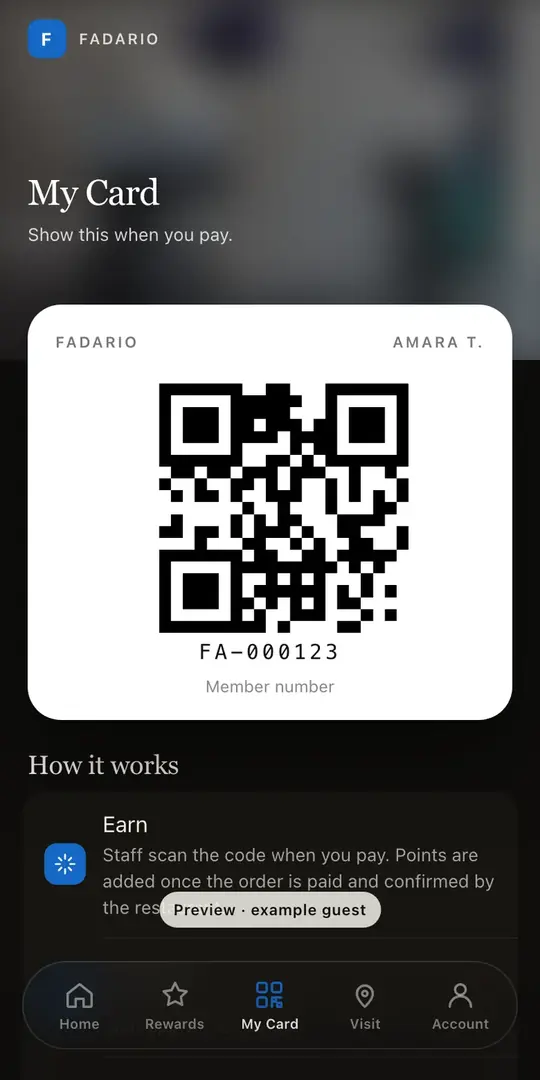
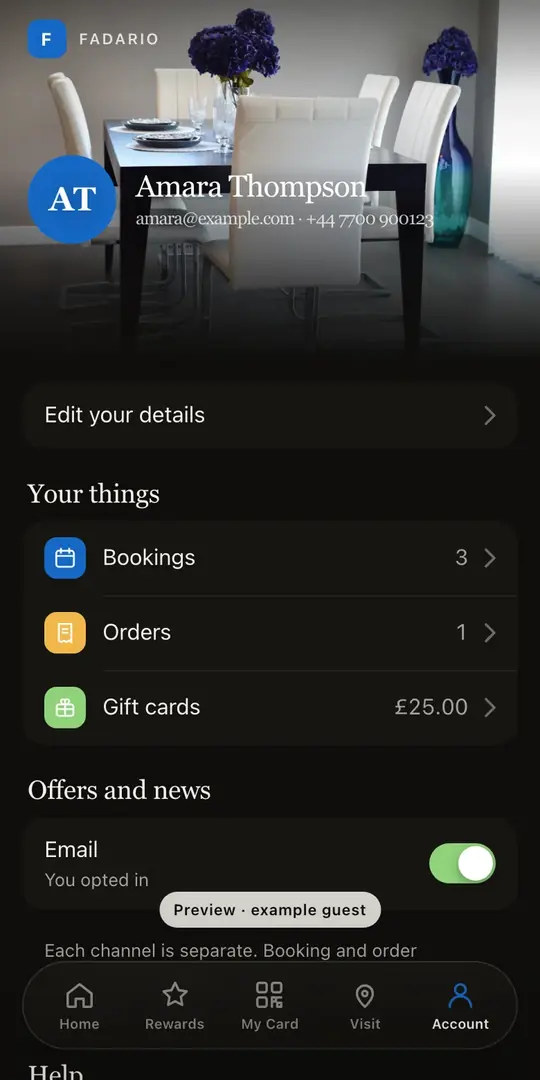
Included on the Growth and Full plans. Watch the Guest App course
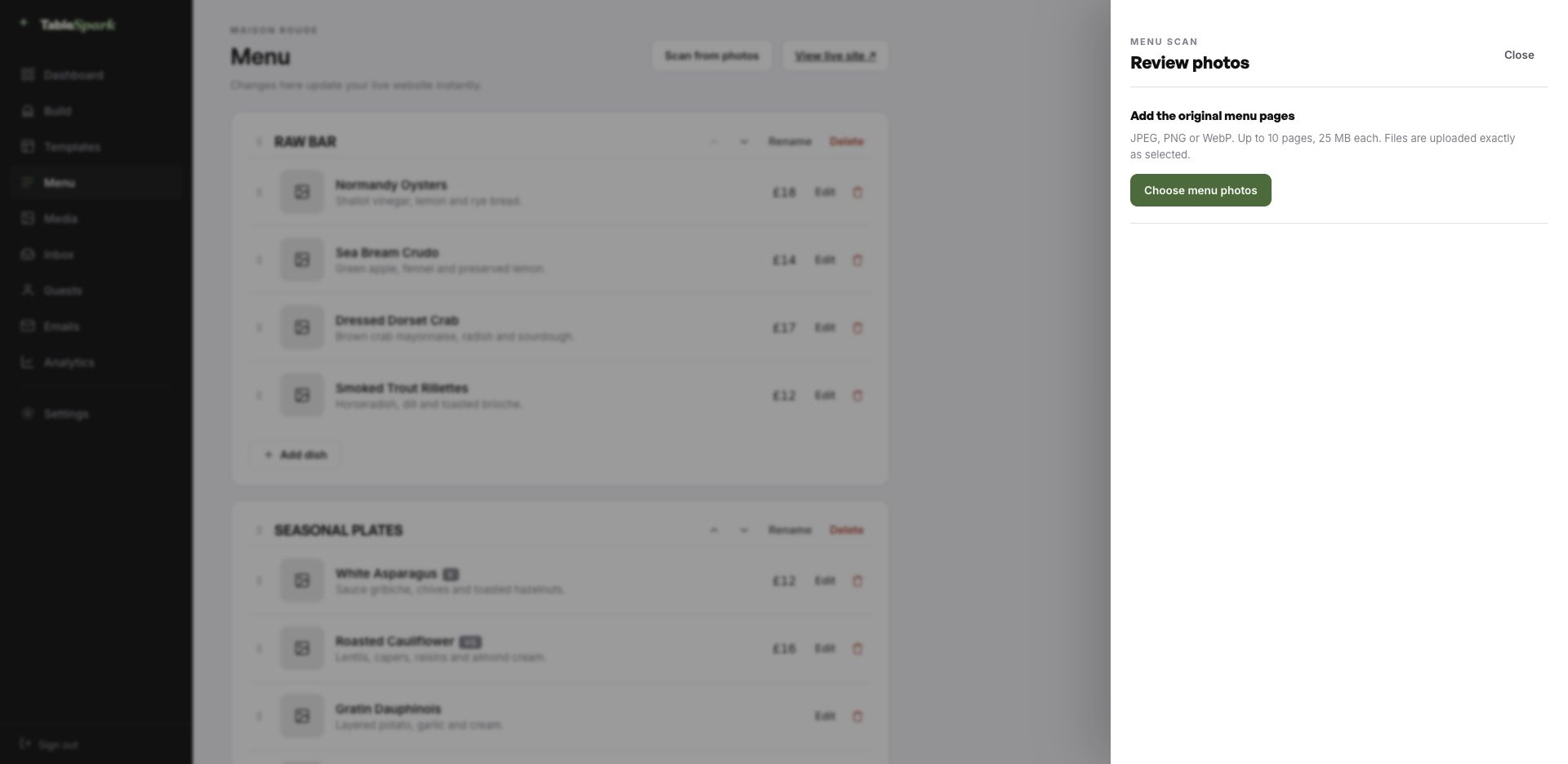
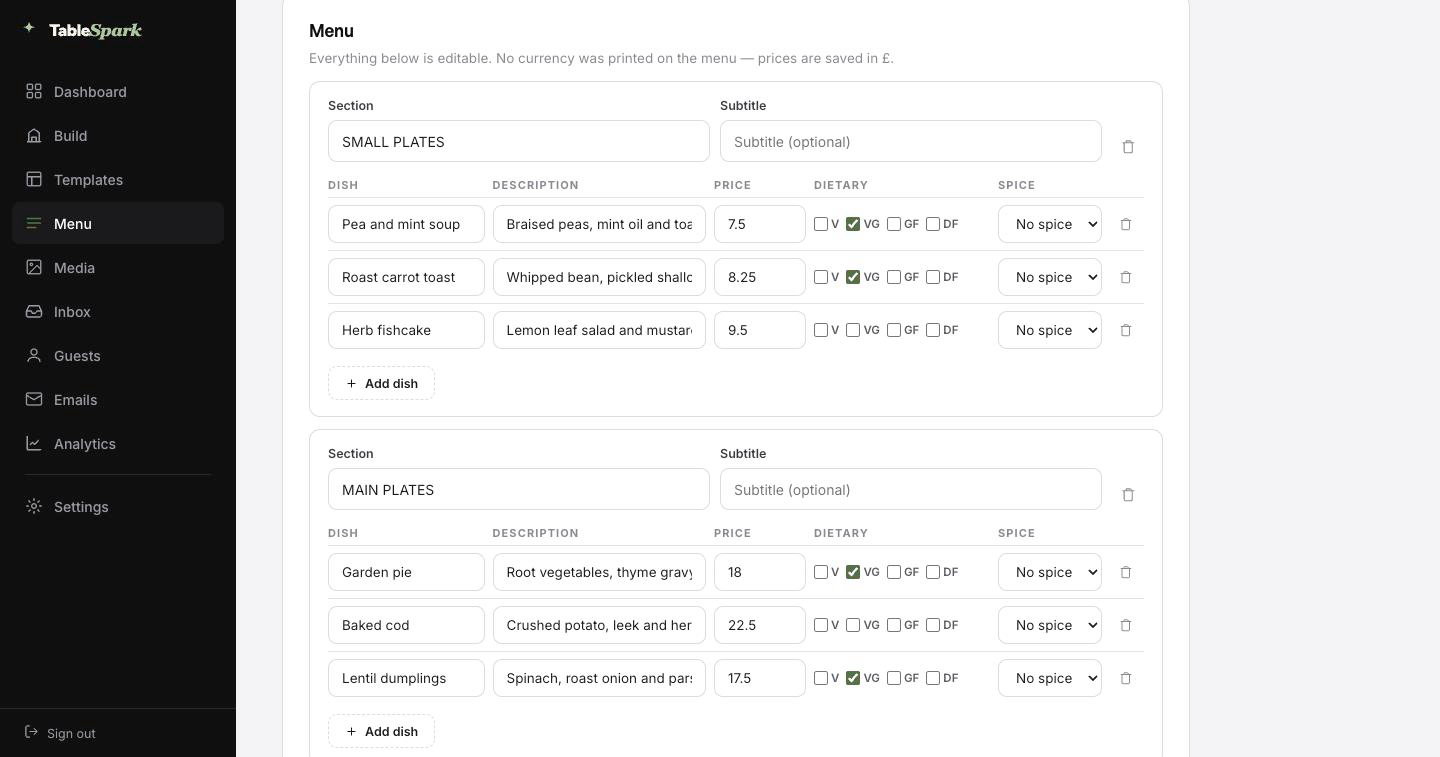
This is the part that saves an afternoon. Take a picture of the menu you already have: the pressed card, the board behind the pass, a PDF from the printer. Back comes the whole menu as data: ordered sections, named dishes, their descriptions and prices, plus dietary and spice marks wherever the card showed them. Check it over — a smudged price or an ambitious accent is a two-second fix — and save.
What arrives is not a picture of a menu — it is real data. One menu then feeds the menu page, the ordering page, the highlights on the home page and the Restaurant structured data a search engine reads. Change a price once afterwards and all of them follow.
The search copy gets the same treatment: a Write with AI button reads the page and drafts its title and description, so those fields are never blank. Nothing is published on your behalf; the draft waits for you.
Printed card, chalkboard photograph or an old PDF — any of them work.
Not a scan: real sections, dishes, prices and marks you can edit before saving.
Menu page, ordering page, home-page highlights and the Restaurant schema — kept in step automatically.
There is no build phase to wait through. Structure, styling and behaviour are done. Names, dishes and pictures are yours. Reckon on one sitting to a published site, and reservations working from that same moment. Bookings land in your TableSpark inbox, and the guest gets a confirmation email straight away.
Taking money is a single connection: link Stripe and deposits on tables and payment on orders go straight to your own account. There is no cut for us — 0% commission on every plan. Stripe’s standard card-processing fees apply to online payments. Nobody else charges anything.
Step 01
1min
Pick FadarioThe complete site lands in your account, ready to edit.Step 02
4min
Change the name and the wordsClick, type, replace a photograph. The name updates site-wide.Step 03
3min
Upload your menuUpload a picture of the card; the AI does the sections and prices.Step 04
1min
PublishPublished, on your own address, with the booking form answering.Step 05
1min
Connect StripeNow you can take deposits on tables and payment on orders — direct to your account.In all
10min
From template to taking paymentsFive steps, one sitting.A domain is signage, and signage matters. Nothing about going live depends on owning a domain first; connect yours later and the site simply answers to it.
The plumbing is ours: certificate, secure connection, redirect, and keeping canonical URLs, sitemap and robots pointing at the live address as the domain changes. Own it already? Good. The instruction is a single record, spelled out.
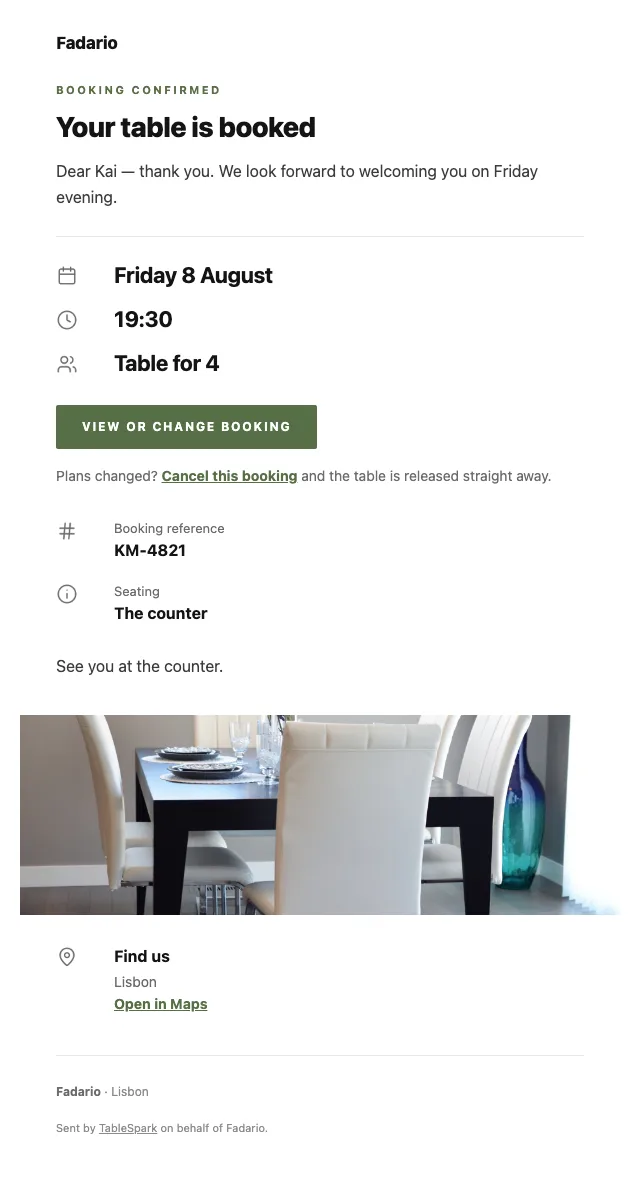
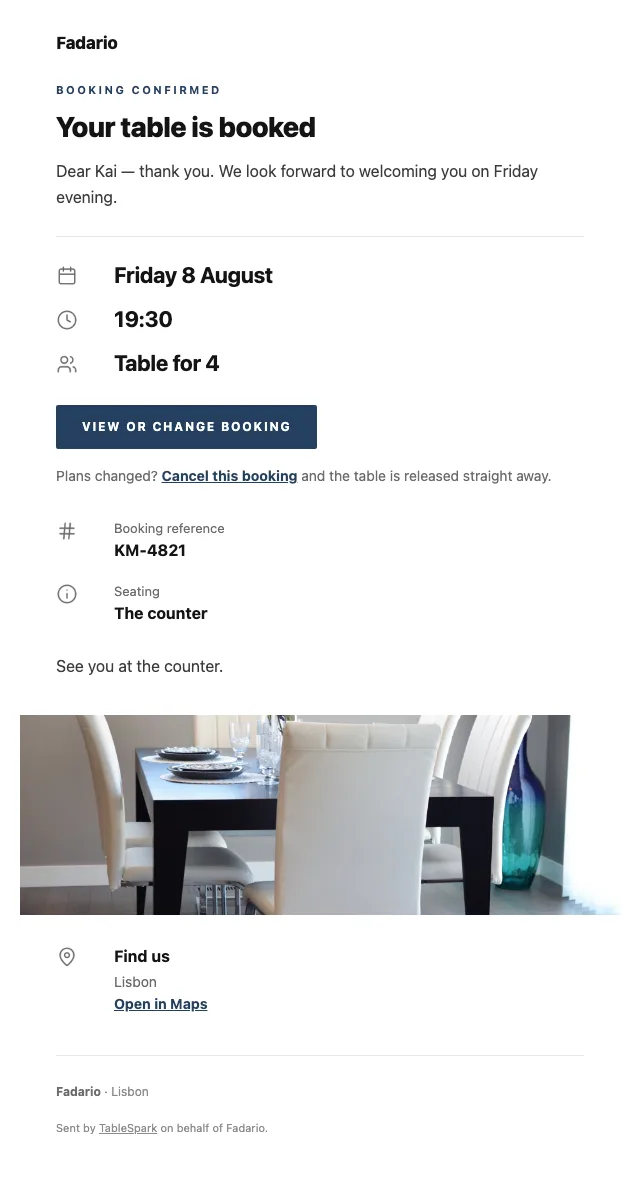
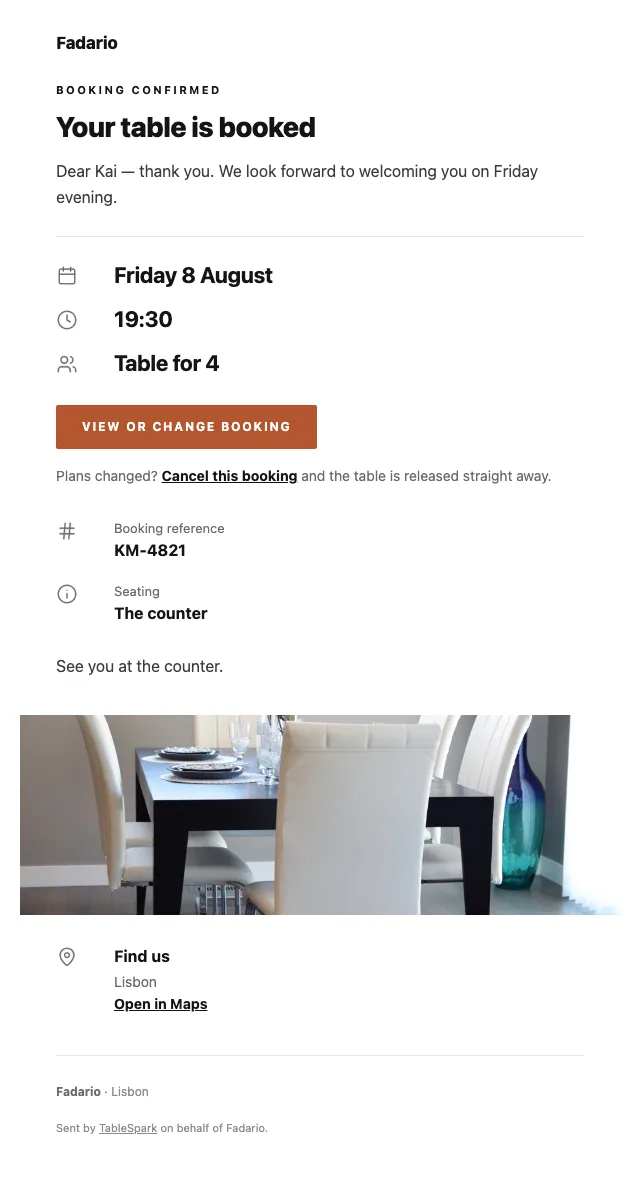
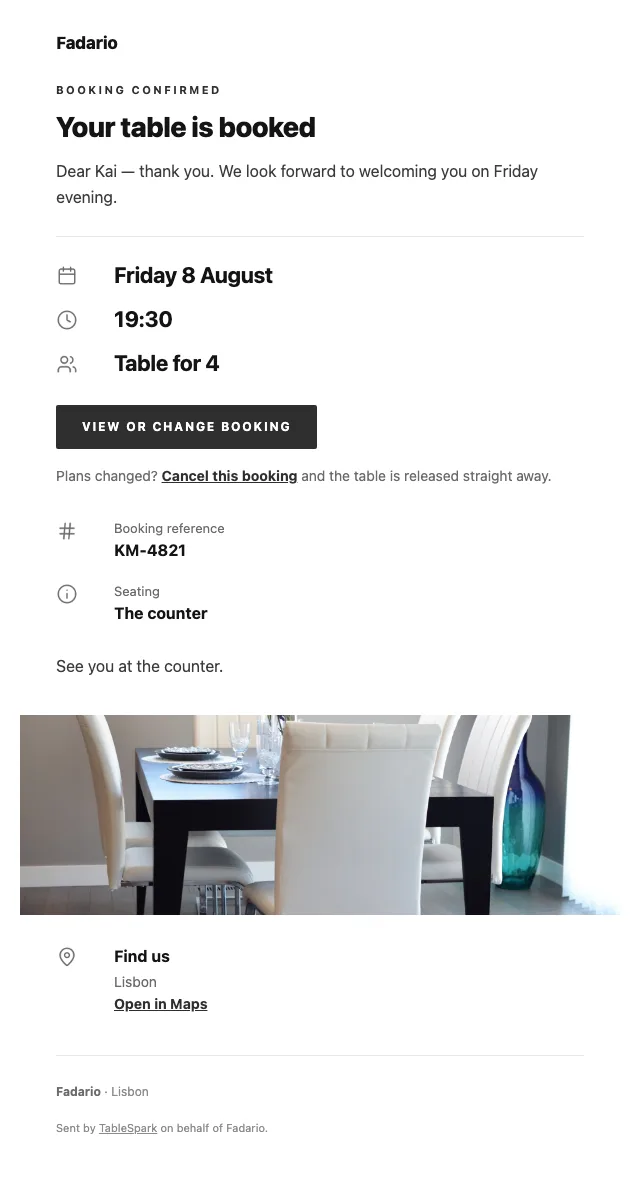
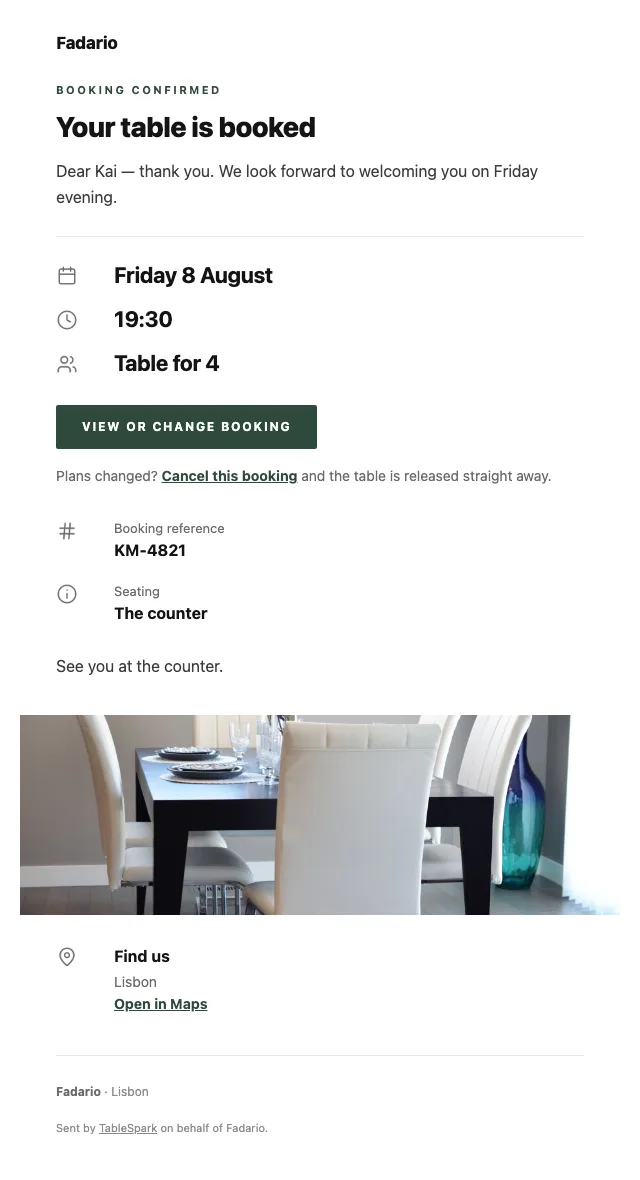
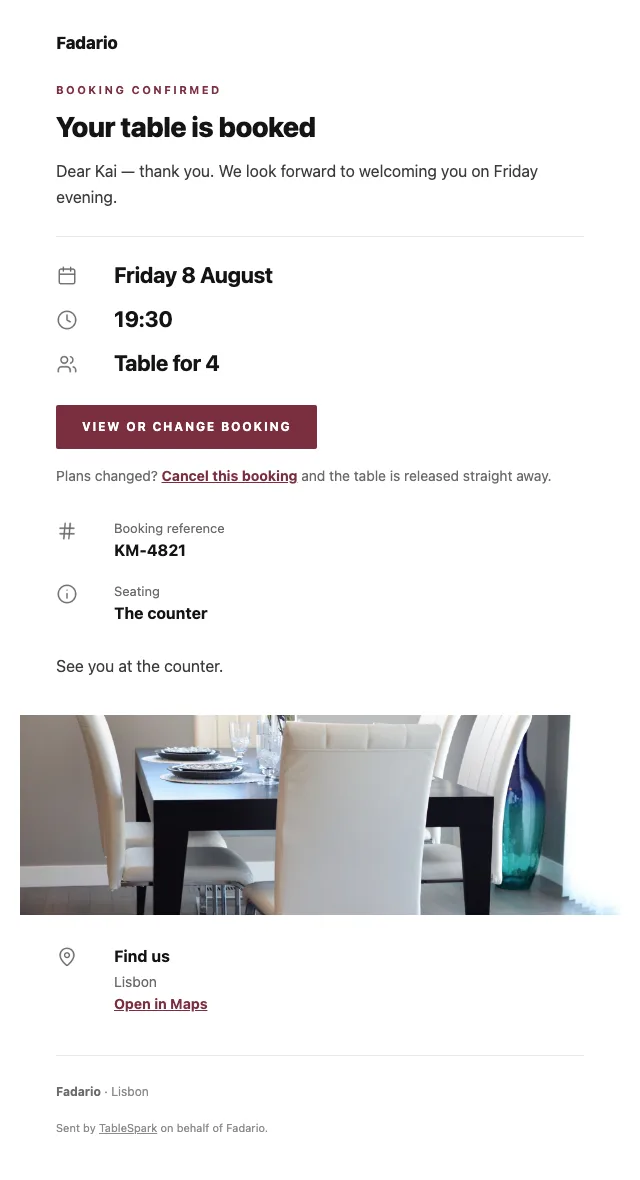
A confirmed booking is not the end of the conversation; it is the start of one. A confirmation is sent the second the booking lands, carrying the time, the covers, your address and contact details, and a self-service cancellation link. The same system sends the reminder before service, the deposit receipt and the cancellation notice.
The whole thing is yours to set, down to the sign-off. Six looks, one accent colour, your logo and cover photograph, the header layout, the sign-off line, and whichever links and social accounts you want on it. Add your domain and the from-line is yours too — the last detail that separates a real restaurant email from a system notification.
Below, the same booking confirmation in six of the looks.
Putting a page online is not the same as delivering a restaurant site that search engines can reliably discover and understand. A misconfigured robots file, a noindex left in place, canonical tags in conflict, pages with no internal links, a PDF menu, missing Restaurant schema or incomplete verification — any one is enough to keep a live site invisible. You feel it in the margin — guests reach commission-charging platforms first, and demand you should own outright becomes demand you rent.
This template ships with that work done. No one can promise rankings or guaranteed indexing — but nothing here is left for you to hire a technician to assemble.
Reorder them, rename them, remove them. The set is a starting point.
All of these are standard modules — 68 of them in the library, most with several layout variants each.
Any one can be deleted, moved, or swapped for another. Nothing about the order is fixed.
Ships with 4 sections — Petiscos, The sea, Rice & fire, Sweet — for you to overwrite.
No commission at any level. Compare that with a platform that charges per order and owns the relationship afterwards.
Your domain, your inbox, your guest list, exportable at any time.
Stripe’s standard card-processing fees apply to online payments.Read how the money works without a marketplace
The camera work and the checking are yours; the transcription, the structure and the draft search copy are ours.
Publishing needs your hand on it.
Search engines Menu — Fadario | Lisbon Small plates and a Portuguese cellar in Lisbon. The full menu, the wines by the glass, and prices.Drafts the search title & description from this page’s content. Always review before publishing.
Stripe’s standard card-processing fees apply to online payments.
Deposits, refunds and the terms to write down
The builder is free to use for as long as you like. The bill starts when the site does.
The builder is free to use for as long as you like. The bill starts when the site does.
6 pages, and every one of them is here. What follows is the site itself rather than pictures of it. The same engine that publishes a live restaurant is drawing it here, links and all. The Phone toggle shows the small-screen version.
The story page carries the room, the cellar and the chef, with a timeline, an interview and a gallery. The events page handles the wine dinners and tastings a cellar-led room runs monthly.
The rail layout gives each section a swipeable strip, which suits a menu of many small plates designed to be shared alongside wine.
The drinks list has its own structure — producers, regions, by the glass or bottle — rather than being appended to the food. Both are structured text, so a search for a producer or a dish can land on the right page.
Any of the layouts leaves the substance intact: real text for every dish, description and price, marked up as Restaurant data rather than published as an image.
The split layout keeps the basket beside the list, which suits an order that fills with several plates and a bottle and needs a visible total.
Options are inline, the basket becomes a pinned bar on a phone, and Payment goes into your own Stripe account at 0% commission from us. Stripe’s standard card-processing fees apply to online payments.
The form adapts to the mode. Eating in? A table number. Collecting? A phone number. Delivery? An address. Nothing more is demanded.
What owners ask before they pick a template: the cuisine fit, the menu, the address, and what it costs.
Yes — the drinks list carries a by-the-glass mark per wine, edited in seconds, and the home page can lead with the current pours. Because it is a field rather than a paragraph, changing it updates every page that shows it at once.
No, and a PDF is the worst option for it: a search engine reads almost nothing from one and a phone renders it badly. The drinks list block holds producers, regions, vintages and prices as structured text, readable on a phone and indexable by name.
Completely. Six base skins, an accent you can pick from presets or a colour wheel, separate background, text and surface colours, seven font pairings or any two faces you like, plus text size, radius and motion. Contrast is derived rather than fixed, so the site stays readable whatever you choose.
Yes. You start on a TableSpark address so you can publish the same day, and you can move onto your own domain whenever you are ready — including one you already own. TableSpark manages the certificate, the secure connection, the redirect from the bare domain, and keeps canonical URLs, the sitemap and robots pointing at the live address so the move does not cost you the search visibility you have built. Guest emails can send from your domain as well.
They get an email from you within seconds: when they are booked, how many are coming, where you are, how to reach you, and a self-service link to give the table back. Reminders, deposit receipts and cancellations follow the same design, which you control — six templates, your colour, logo and cover image, the header treatment, your sign-off, links and socials. Connect your domain and it sends from your address as well.
No — the builder is visual throughout. Click a block, retype the copy, swap the photograph, move it up or down. Nothing about running the site requires HTML.

Make this yours: the name, the words, the photographs, the menu. Free to build, and you only pay when you go live.