01
Hero
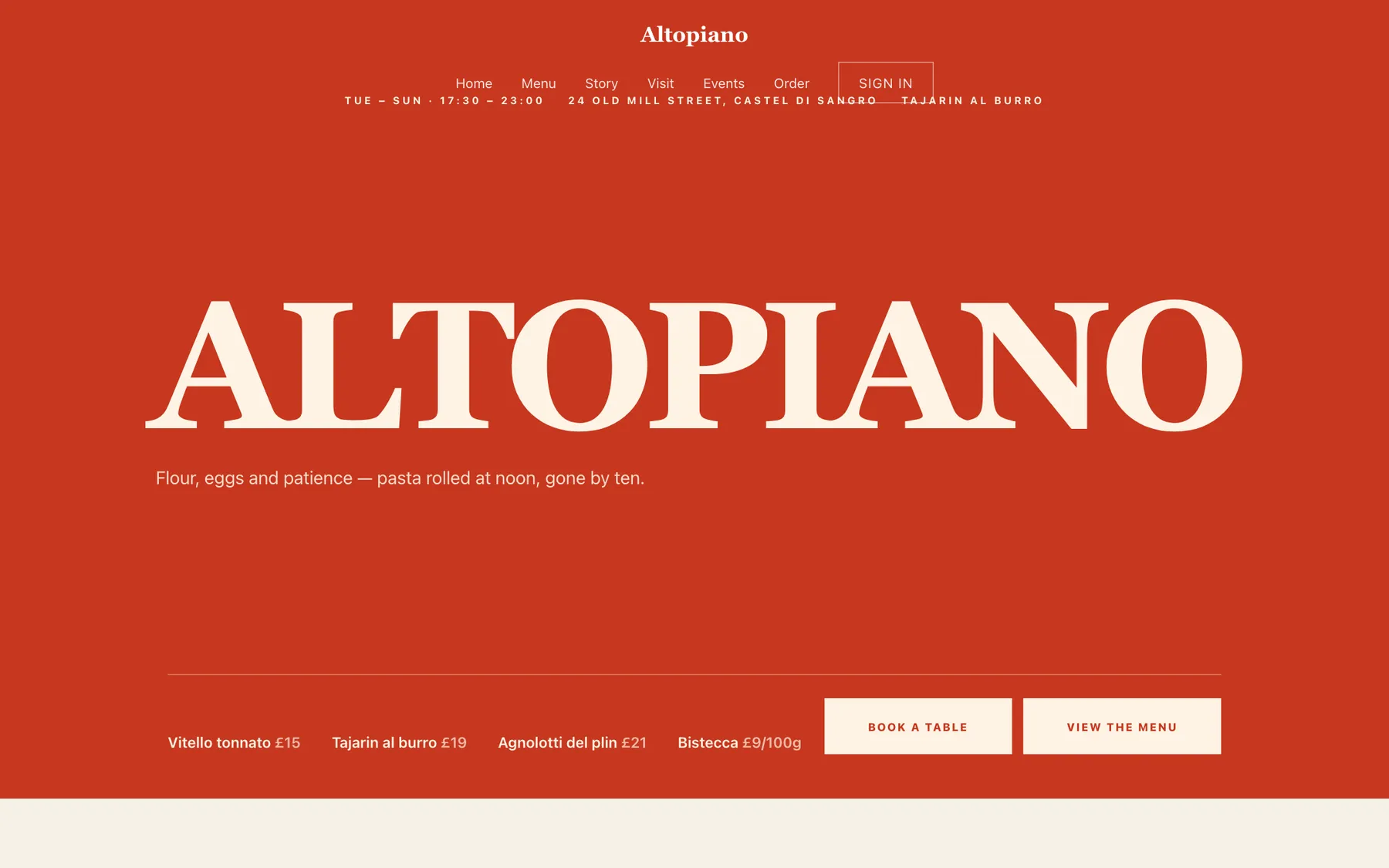
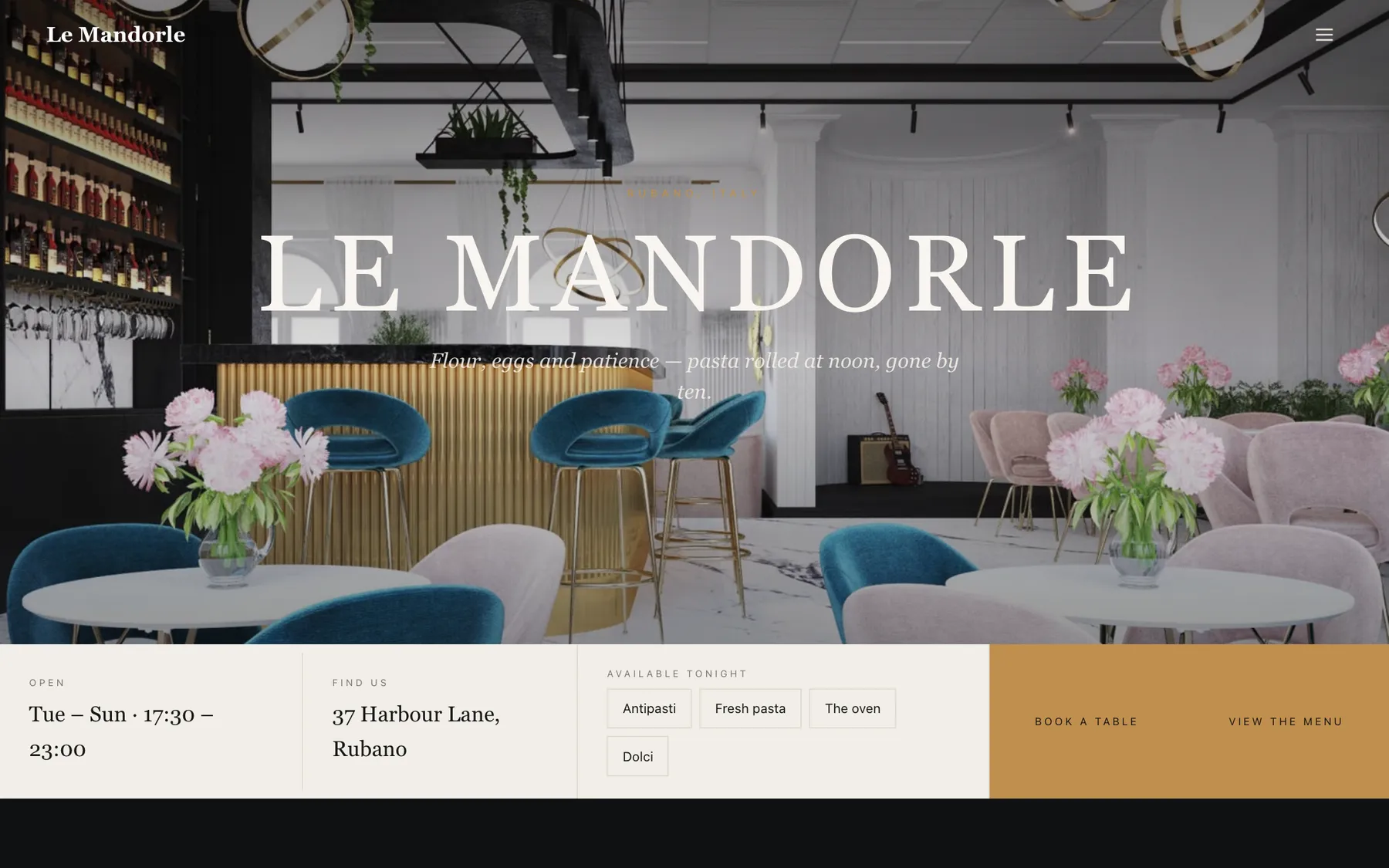
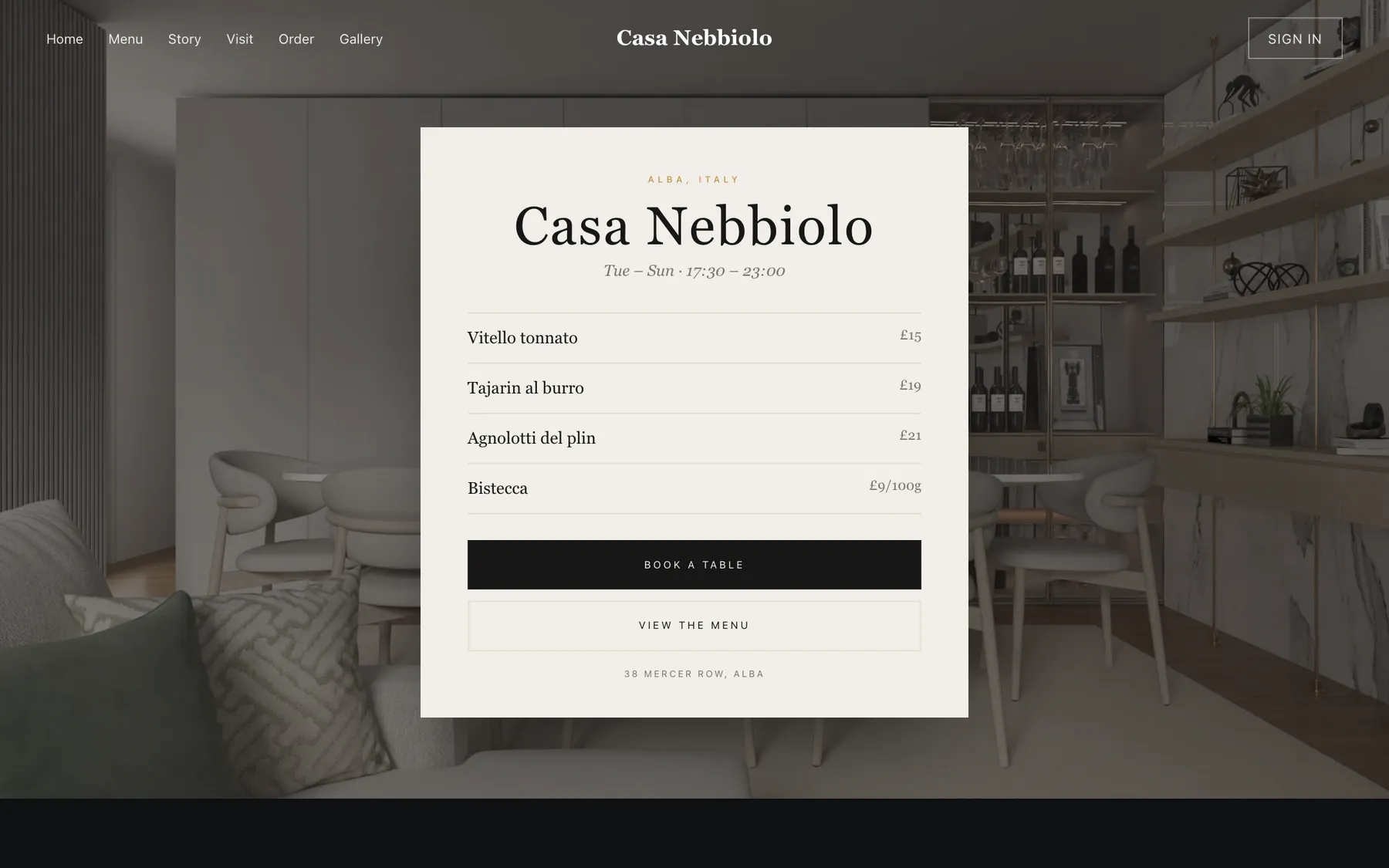
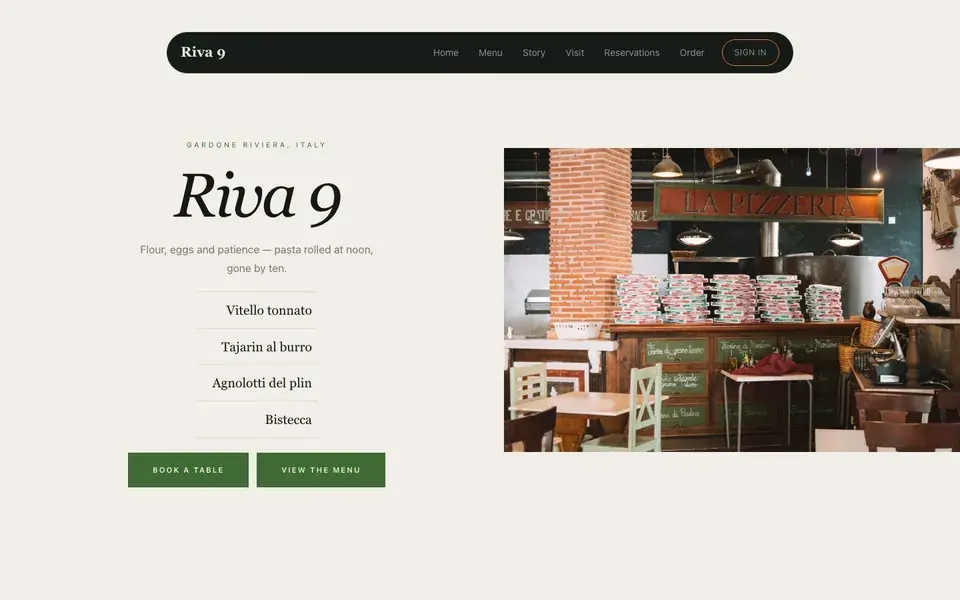
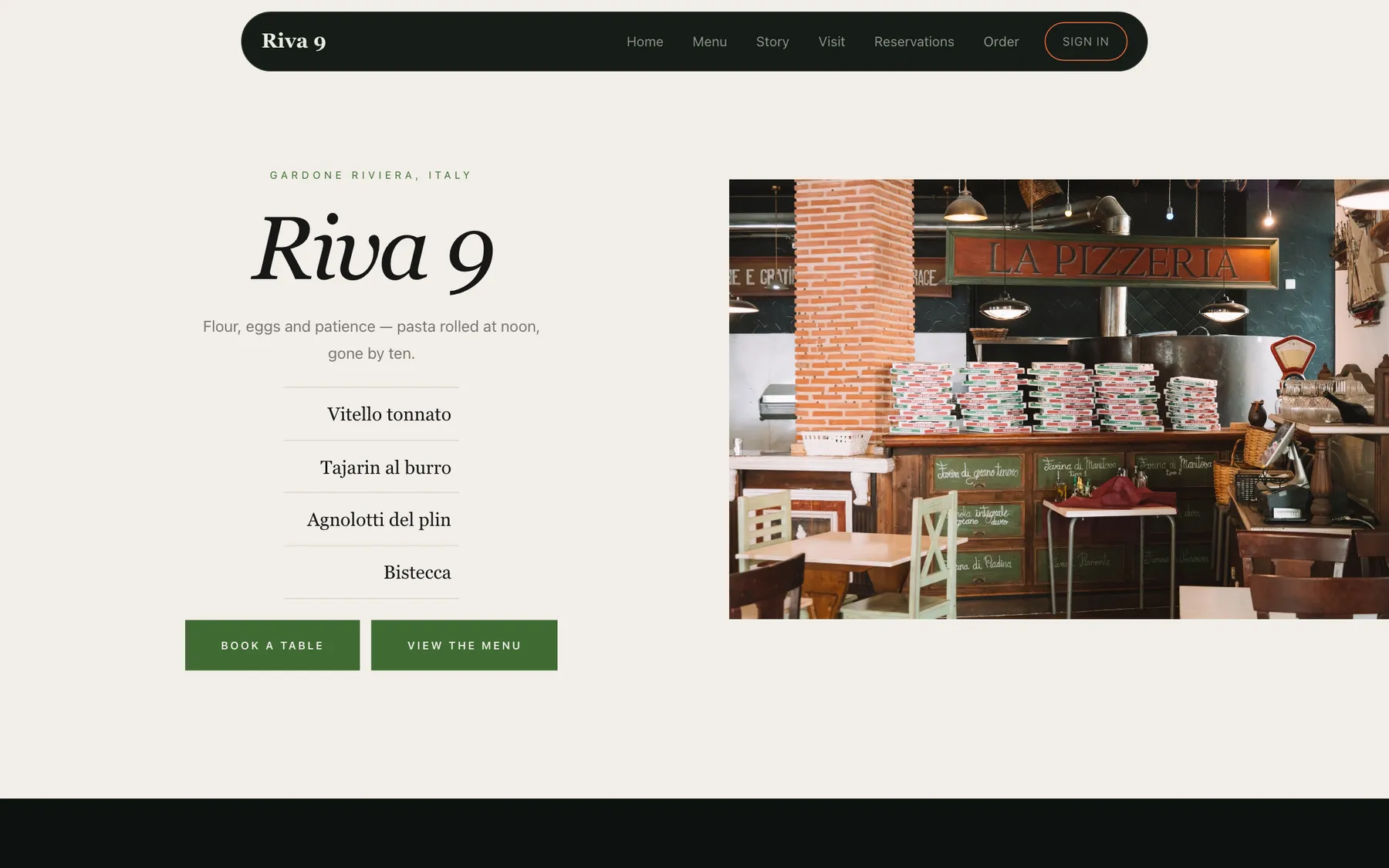
Big opening image, name & buttons, in the Concierge treatment: Booking desk beside the room: services, party sizes, availability.
Templates · Contemporary Italian
For lakeside and coastal Italian rooms: a dark, warm template with a pasta-of-the-day opening, a compact carte, and a design built to make one long lunch look like the point of the trip.
Every section is a builder module you can reorder, edit or delete, with no developer.
On bookings and orders, on every plan. Stripe’s standard card-processing fees apply to online payments.
Build and preview the whole site for nothing, and pay only when it goes live.
Starter is £19/mo excl. VAT and includes a complete restaurant website, a live structured menu, enquiry and newsletter forms, and managed search readiness. Growth is £39/mo excl. VAT and adds direct live bookings, a custom domain with managed SSL, and table and floor-plan operations. Full is £69/mo excl. VAT and adds online ordering and multi-site management for up to five restaurant sites. TableSpark commission is 0%. Stripe's standard card-processing fees apply to online payments.
It is a site that actually runs a restaurant rather than merely describing one, for one published monthly price. What a bespoke build charges thousands for and delivers in months, you get today, finished, for the price of a couple of covers. Ownership is the whole point. Prices, dishes, photographs and hours are edited by you, in seconds, at no extra cost. Small screens come first and the rest follows, and the plans carry reservations, table management, ordering and reporting — at 0% TableSpark commission.
Riva 9 is a deep green-black with a terracotta orange, the colours of a shaded terrace at two in the afternoon. Yours might be white tile and morning light, or brass and candles, or something nobody has built yet.
There is no demo video and no sales call. What you see on the right is the actual Theme panel from the builder, wired to the actual site renderer on the left. Press a colour. It will not ask you to register and it will not remember what you did. Go on.
Loading the live preview…
An Italian restaurant with a view sells the afternoon as much as the food, and the design is arranged accordingly: a dark, warm ground that makes daylight photography glow, and a hero that leads on today’s pasta rather than the restaurant’s name.
That choice is deliberate. Guests looking at a lakeside restaurant are deciding whether to spend three hours there, and the fastest way to answer them is to say what is being made today. Everything else — the room, the terrace, the cellar — follows underneath.
Nine blocks, arranged around a long lunch:
01
Big opening image, name & buttons, in the Concierge treatment: Booking desk beside the room: services, party sizes, availability.
02
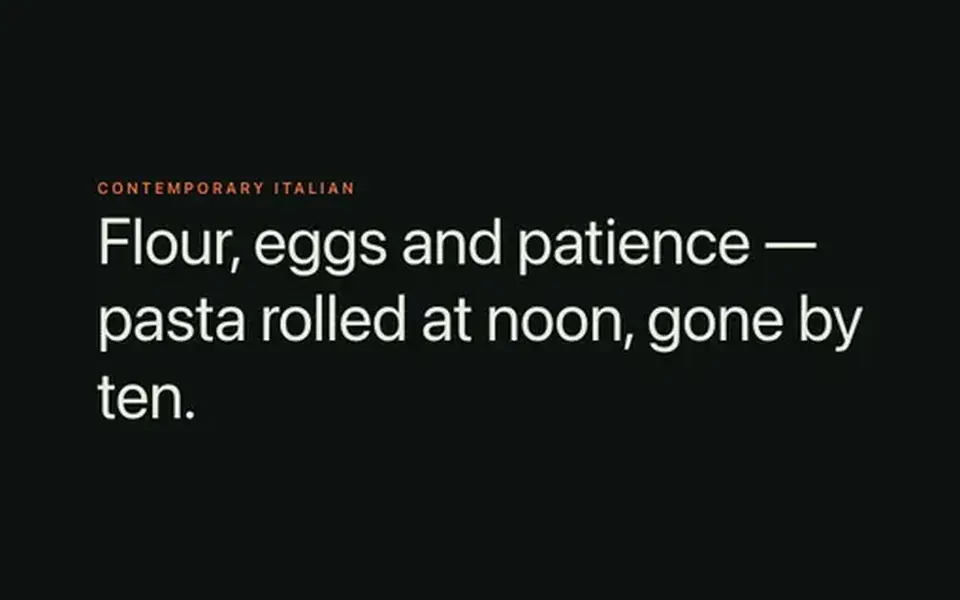
Big opening statement line.
03
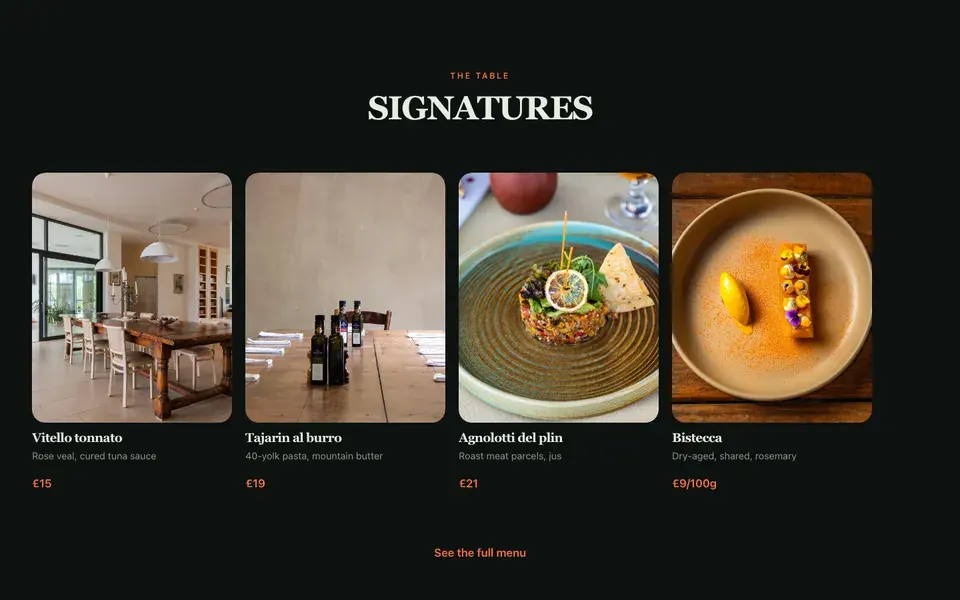
A few dishes on a sliding rail.
04
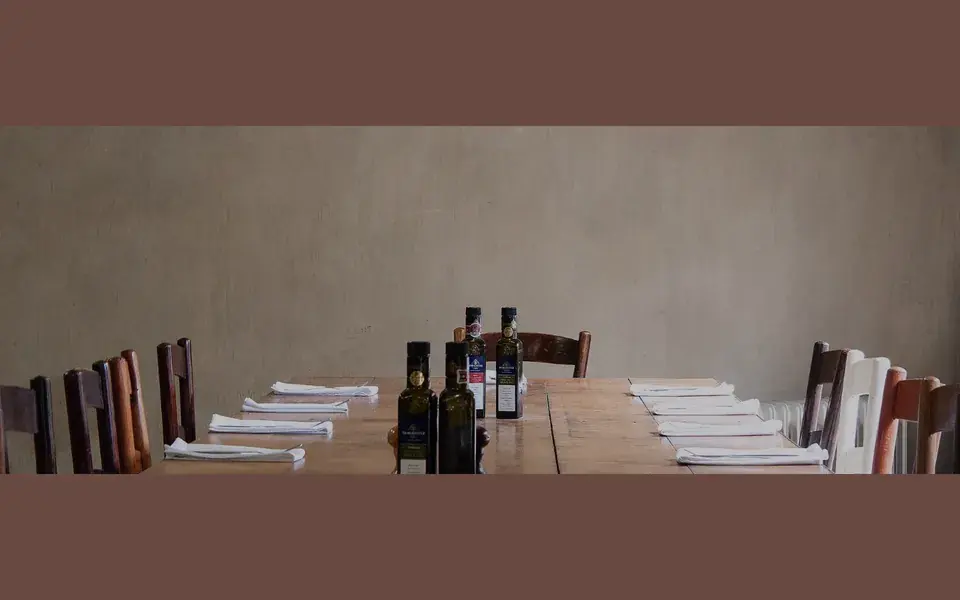
Full-width image band with optional caption.
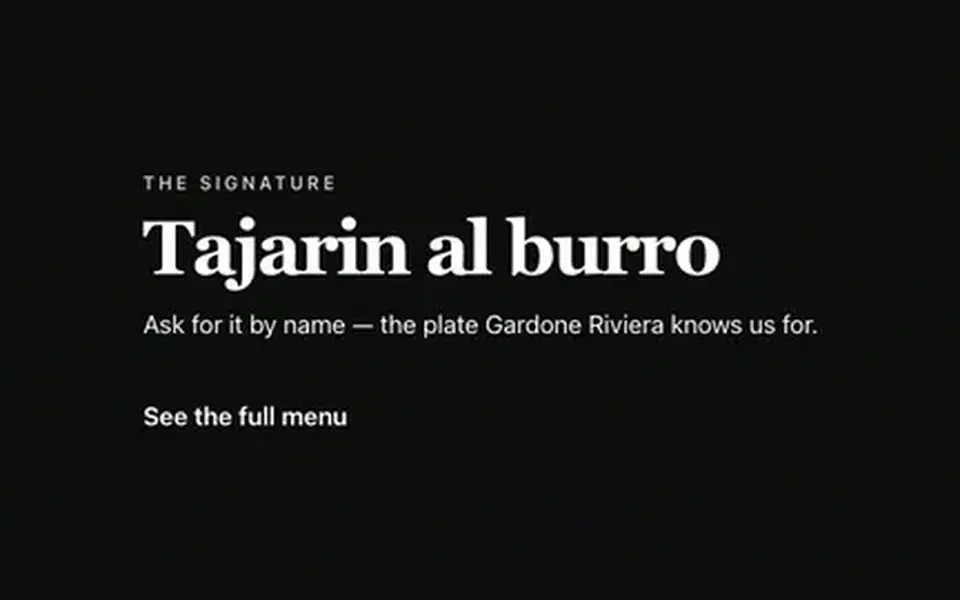
05
One dish, full screen — name, story, price.
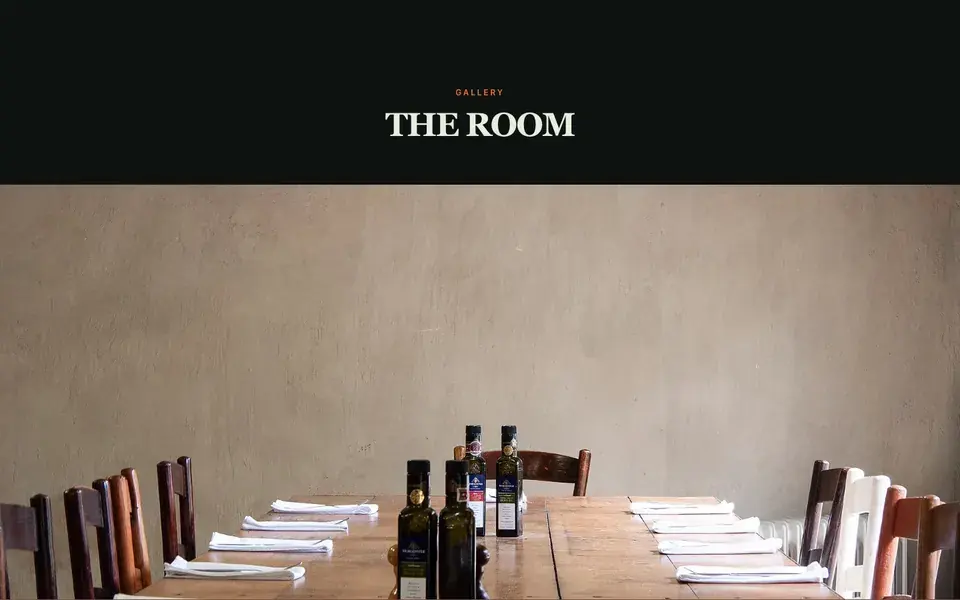
06
Grid, masonry or moving strip.
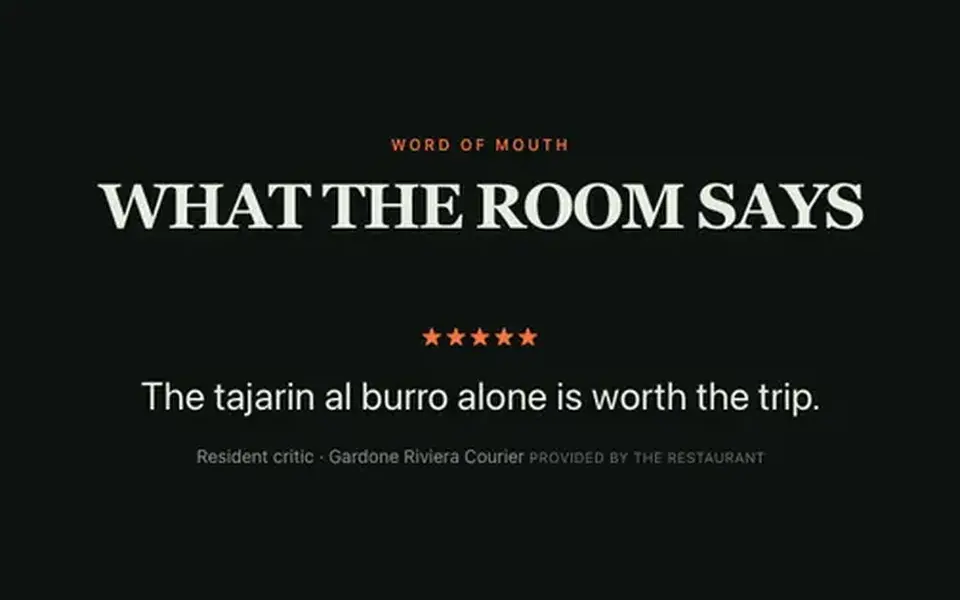
07
Guest quotes with stars.
08
Headline + button band.
The statement block currently reads Flour, eggs and patience — pasta rolled at noon, gone by ten. — one line you will rewrite in about four seconds.
Loading the live preview…
Riva 9 uses the Folio ordering layout — the list sits beside a tall photograph of each section’s signature dish.
It reads like the delivery apps your guests already know, except the restaurant keeps the relationship and the money. The basket stays on screen, and each mode asks only for what it needs: a table number, a phone number or an address.
Loading the live preview…
This is the frame that matters. It is the real ordering page at a real phone width — not a mock-up, not a video.
On a laptop the same page puts the basket in a panel beside the menu that follows the scroll.
Every Riva 9 site on Growth and Full ships with an app your guests keep. It lives at /account on your own domain, so the guest signs in to your restaurant, not a marketplace.
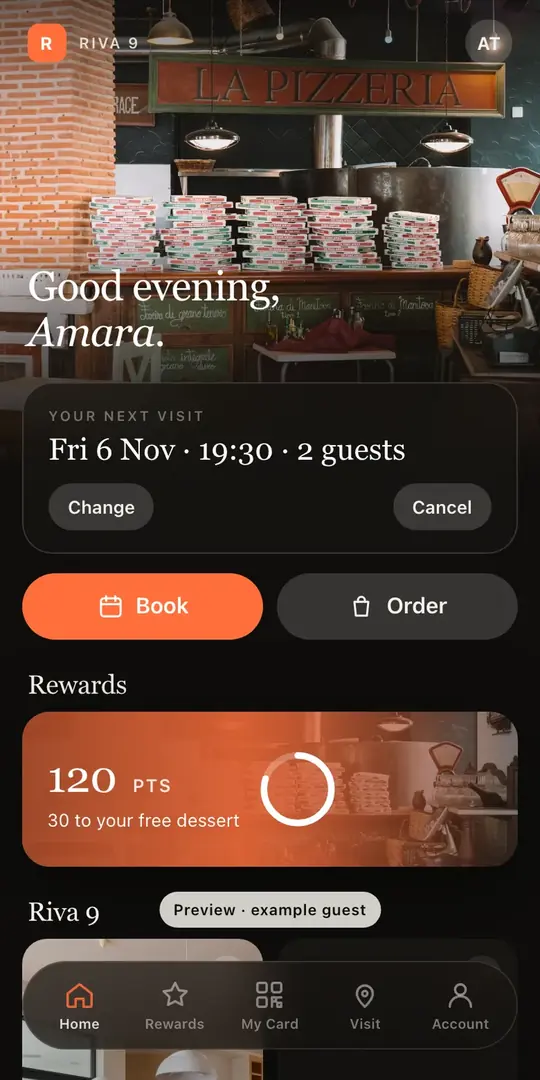
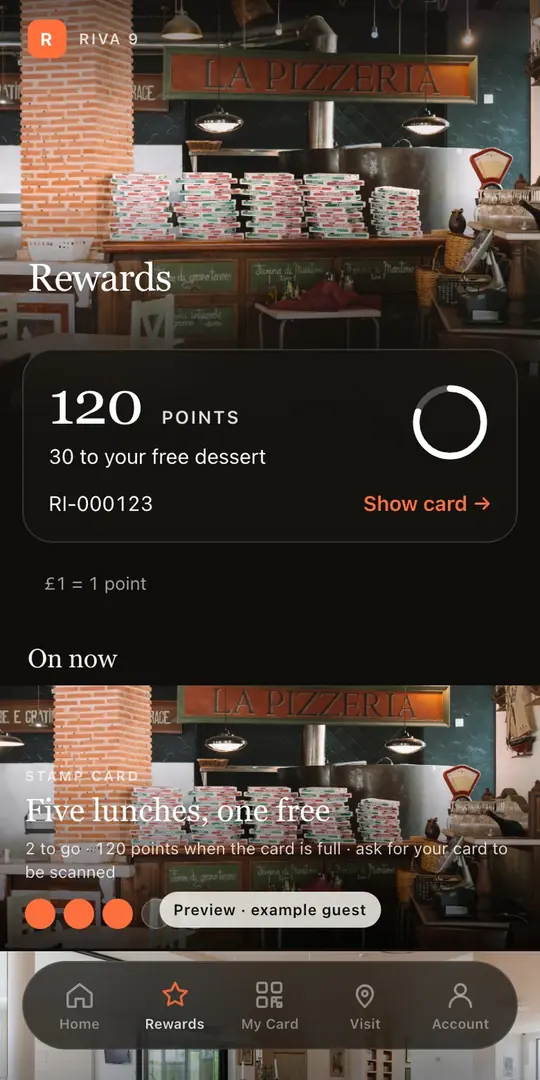
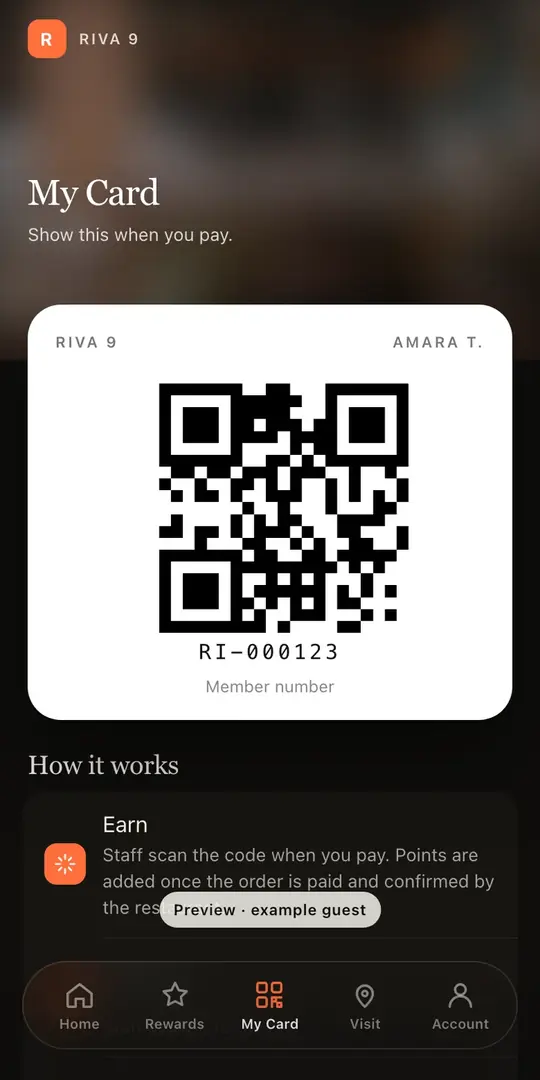
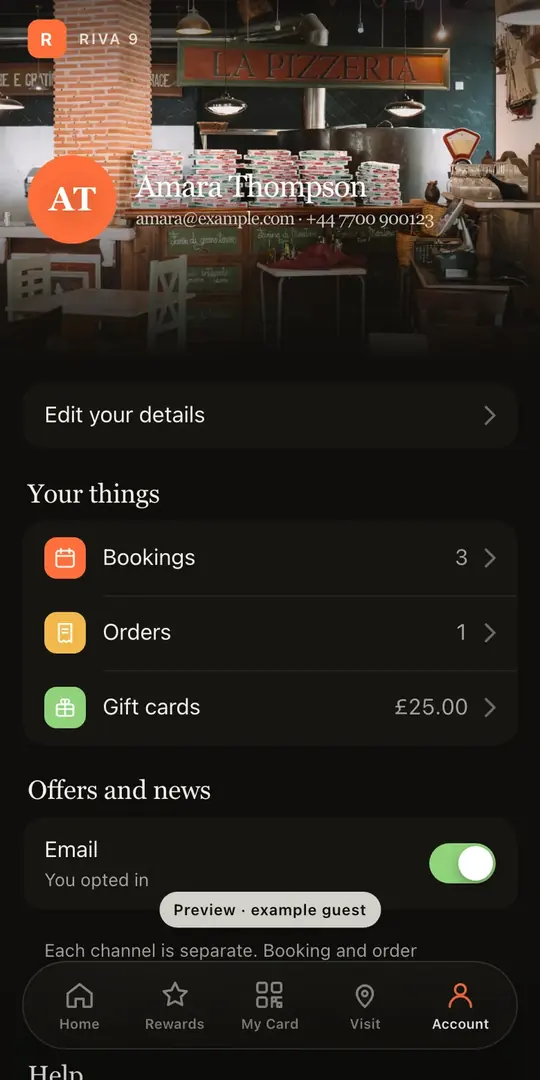
Included on the Growth and Full plans. Watch the Guest App course
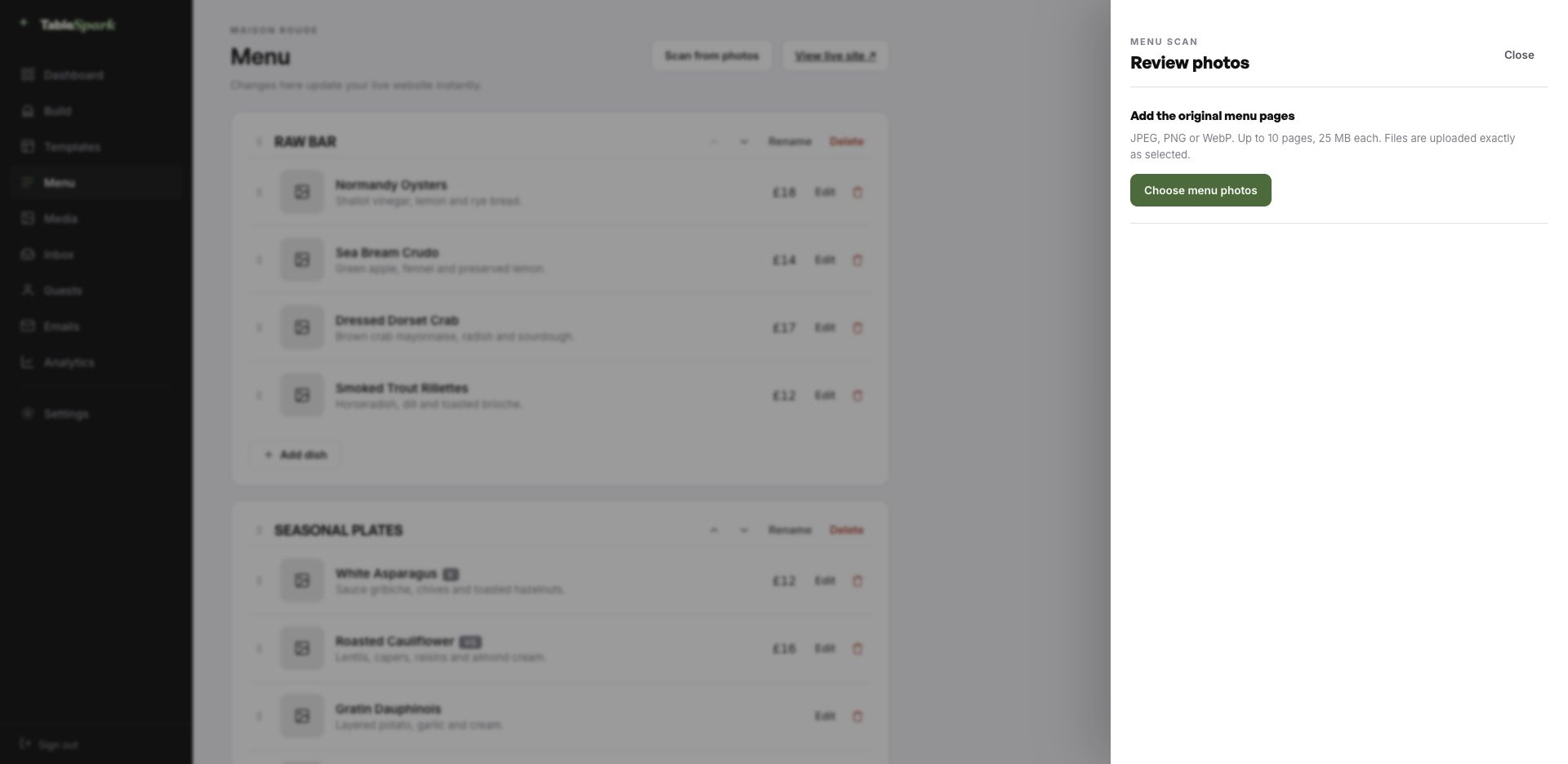
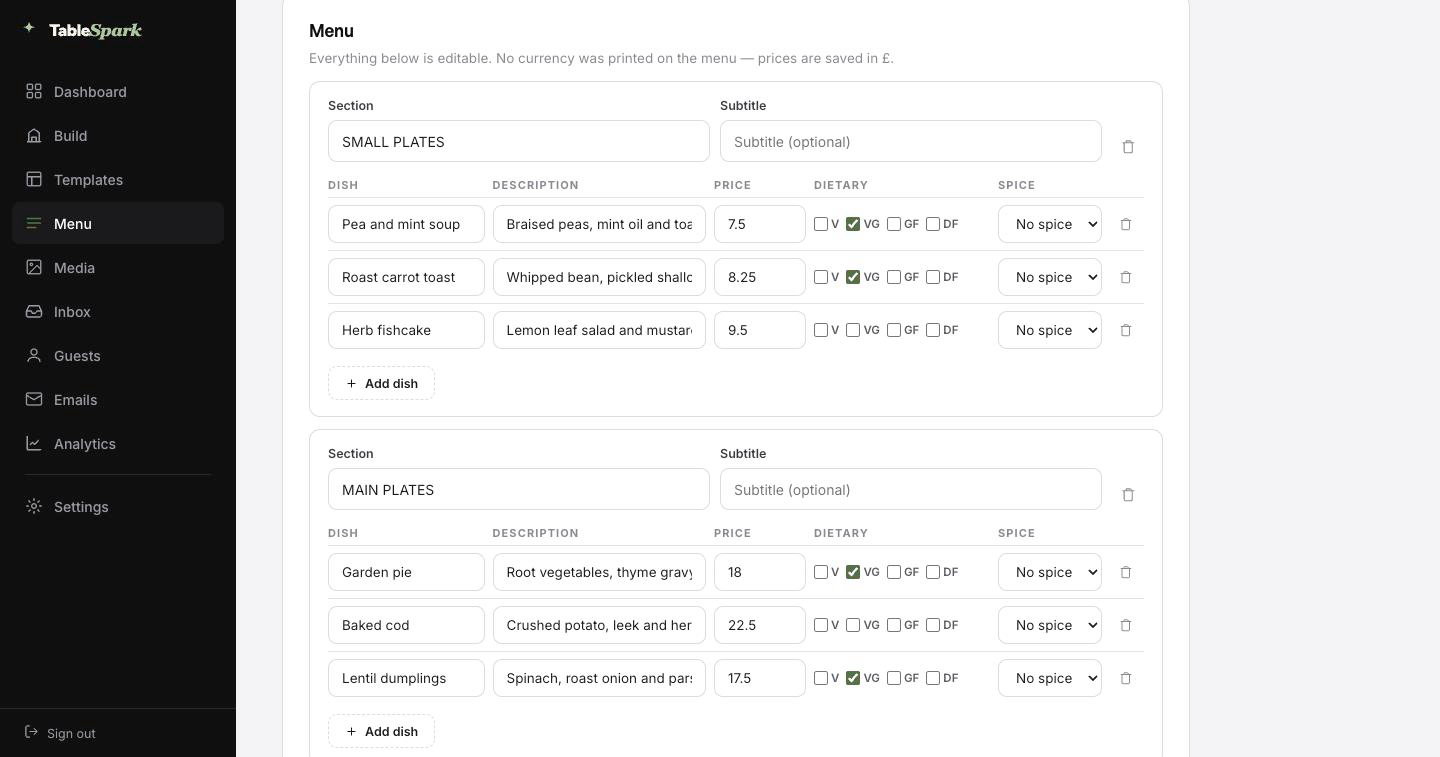
Start with the job everyone puts off. Photograph your menu — the printed card, the chalkboard, the laminated takeaway sheet — and upload it. It comes back as a real menu — sections in order, dishes, descriptions, prices, dietary marks and spice levels, all filled in. It lands in front of you for approval first, with every value editable.
The important part: this is structured data, not an image of a menu. The same structured menu drives the menu page, the ordering page, the highlights on the home page and the Restaurant structured data a search engine reads. Change a price once afterwards and all of them follow.
Every page carries a Write with AI button for the search title and description — it reads the page you are on and writes the first draft. Read it, sharpen it, publish it. The order matters.
The card, the board, the sheet by the till. Ten pages at a time.
Sections, dish names, descriptions, prices, dietary and heat marks, all editable.
Menu page, ordering page, home-page highlights and the Restaurant schema — because they share one menu.
There is no kick-off call and no staging link to approve. Everything is designed and wired — you are changing the words and the photographs. One sitting, give or take, and it is live — with the reservation form answering immediately. Both sides get told at once — the booking in your inbox, the confirmation in theirs.
Money is one connection away. Link your Stripe account and the site can take deposits on bookings and payment on orders, paid directly to you. No per-order fee, no revenue share, 0% commission on any plan. Stripe’s standard card-processing fees apply to online payments.
Step 01
1min
Pick Riva 9The whole site copies into your account, menu and all.Step 02
4min
Change the name and the wordsClick any block and type. The restaurant name propagates everywhere.Step 03
3min
Upload your menuPhotograph it and let the AI build the sections, dishes and prices.Step 04
1min
PublishYou are live on your address. Bookings work immediately.Step 05
1min
Connect StripeNow you can take deposits on tables and payment on orders — direct to your account.In all
10min
From template to taking paymentsFive steps, one sitting.The address on your napkins should be the address that loads. Start on a TableSpark address, then bring your own domain across — the site does not change, only the name it answers to.
The certificate, its renewal, the secure connection and the redirects are managed here, along with the canonical and sitemap signals that make a domain move safe. Bring your own, and the setup screen tells you the one value to paste and where.
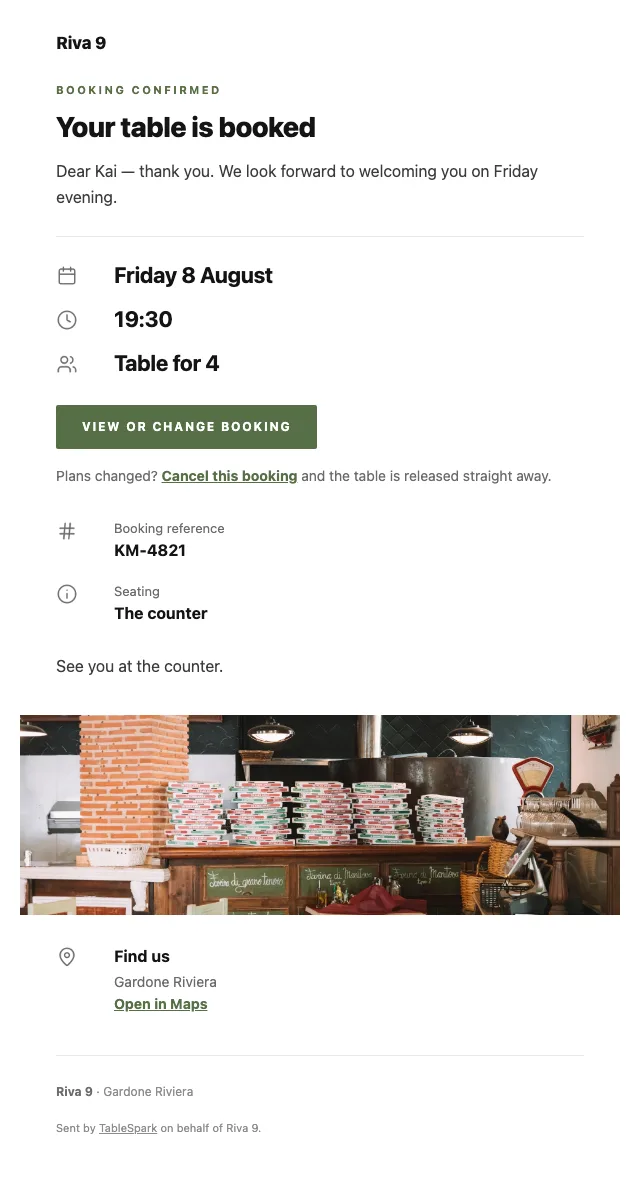
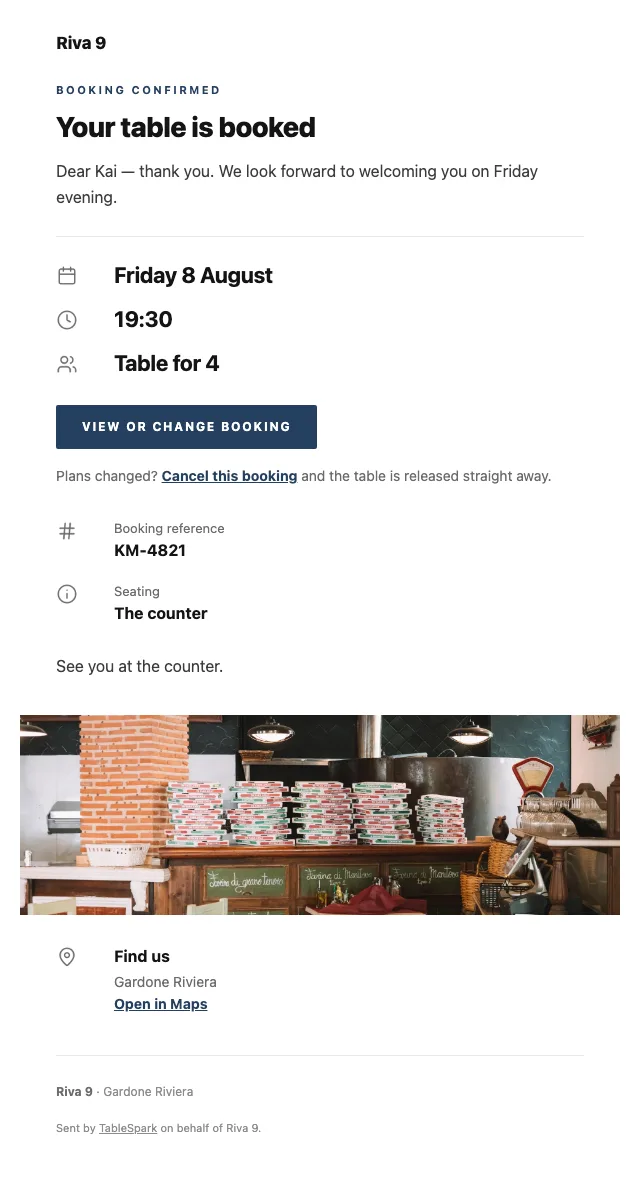
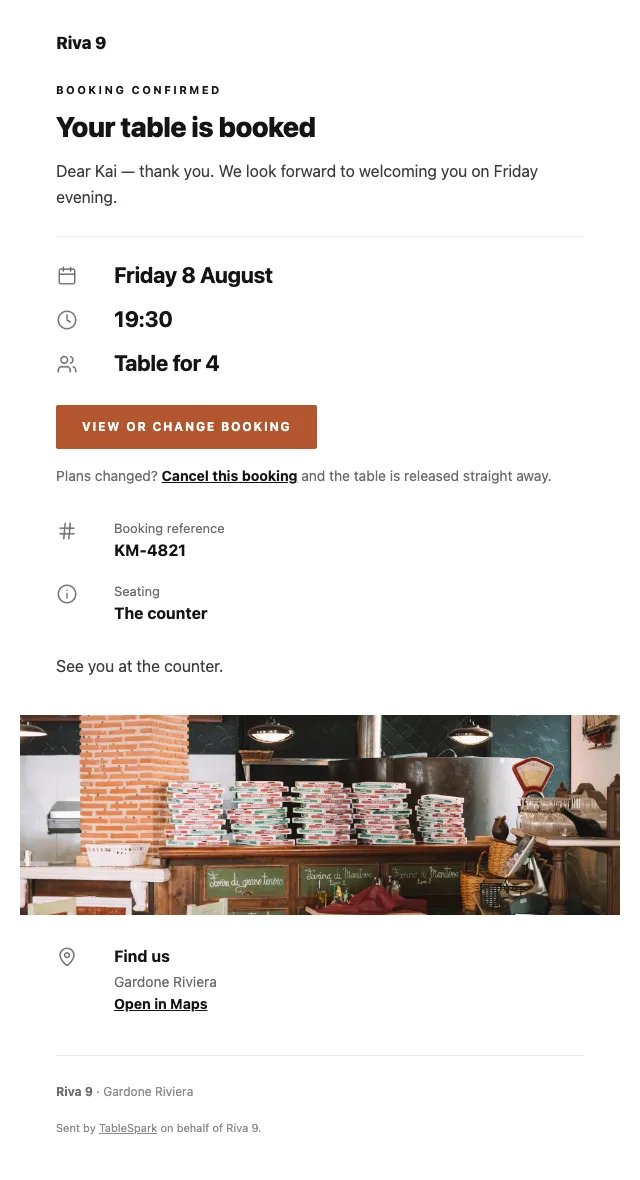
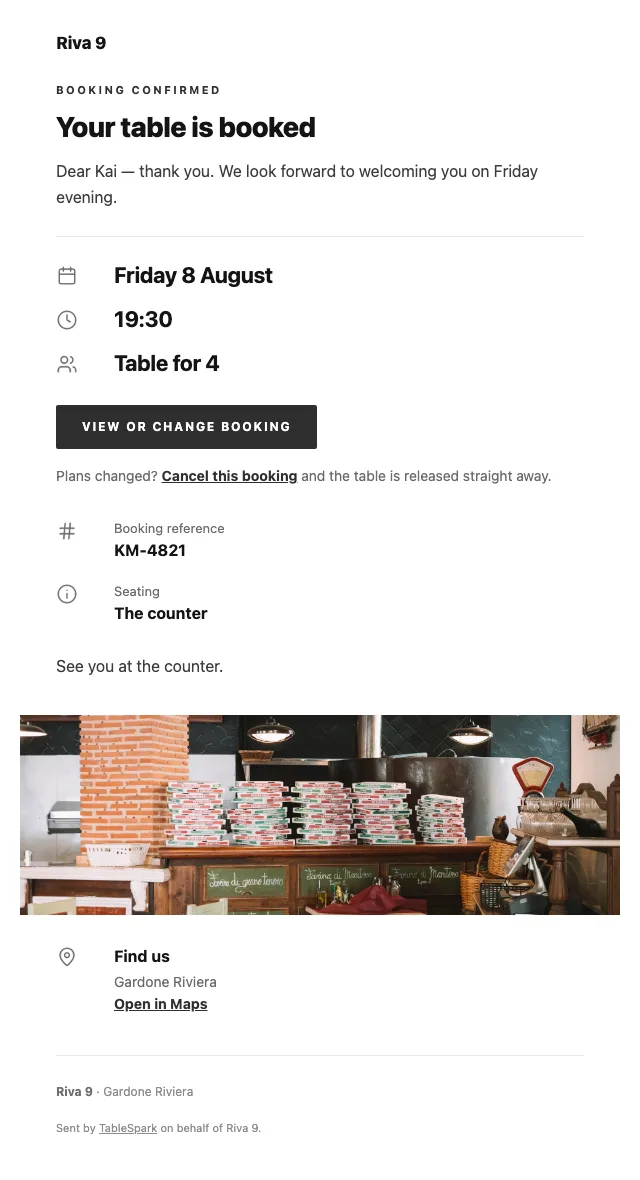
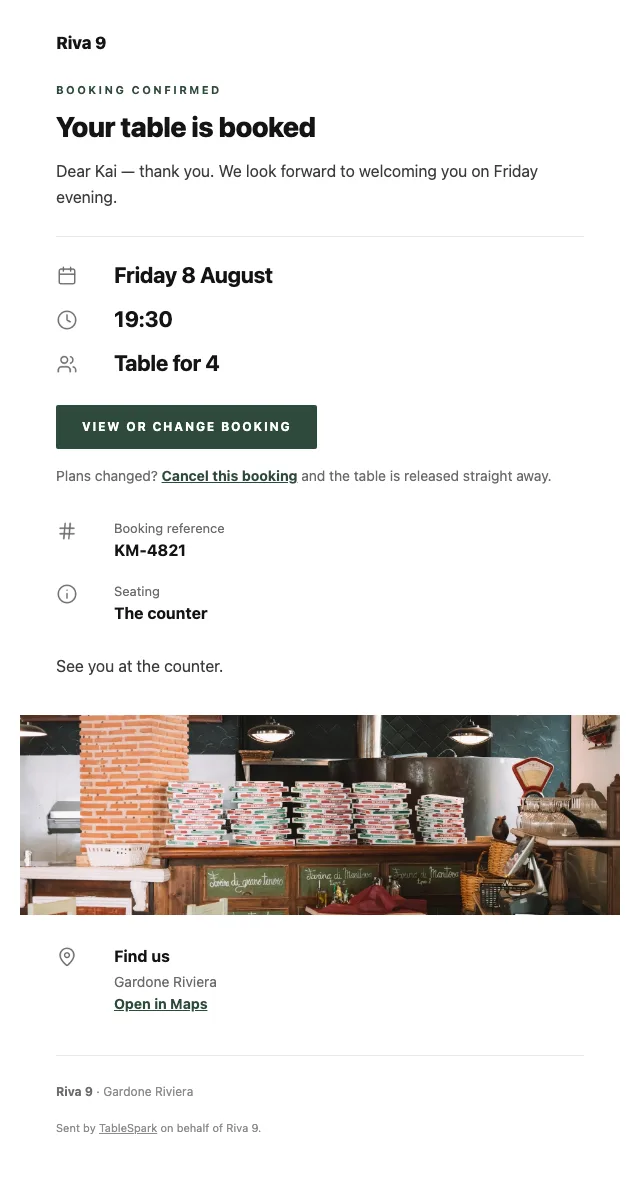
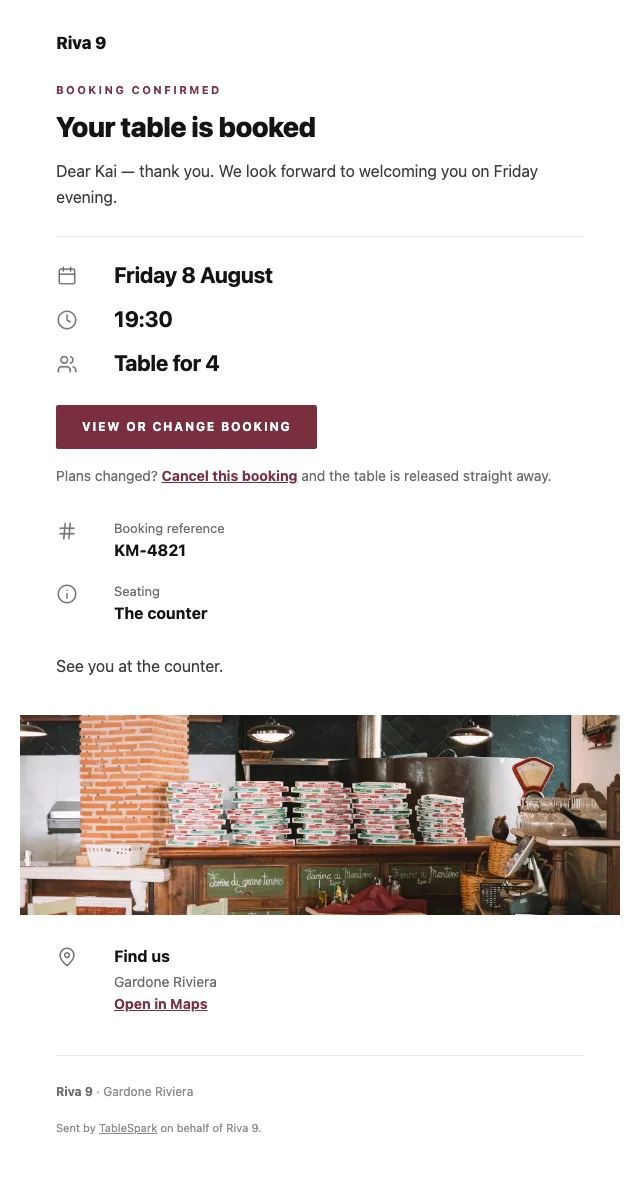
A confirmation email is the only piece of your restaurant a guest keeps in their pocket for a week. The guest is emailed straight away with the particulars — date, time, party size, address, phone — and a link to release the table themselves. Service reminders, deposit receipts and cancellations all travel on the same design.
You are not stuck with our house style. Choose from six styles and make the rest yours: accent colour, logo, cover photograph, header layout, sign-off, links and social accounts. Connect the domain and the sender address becomes yours, which is what makes it read as genuinely from you.
Below, the same booking confirmation in six of the accent colours you can pick.
Publishing a page and being present in search are separate achievements. A site can be live at a working link and still be missing from Google: a stray noindex, conflicting canonicals, orphaned pages, a menu locked inside a PDF, missing structured restaurant data or unfinished search verification will each do it. That gap gets filled by directories and marketplaces, which are delighted to charge you for guests who were already looking for you by name.
That groundwork is already laid here. Neither rankings nor indexing can be guaranteed by anyone — but the setup that so often prevents them is complete here.
Every one can be renamed, reordered or removed, and new pages added.
Each of these is a module from the same set of 70 that every TableSpark site can use, and most have multiple layout options.
Delete, reorder or replace any of them — the page is built, not drawn.
Ships with 4 sections — Antipasti, Fresh pasta, The oven, Dolci — for you to overwrite.
Our cut is zero, permanently. The alternative is a platform that charges you for each order and then owns the guest.
Your domain, your inbox, your exportable guest records. Stripe’s standard card-processing fees apply to online payments.
See what 0% commission is worth over a year
You supply the photograph and the final read-through. TableSpark supplies the typing, the structure and the first draft of the search copy.
Nothing publishes without you pressing publish.
Search engines La Carta — Riva 9 | Lake Garda Lakeside Italian cooking: antipasti, house pasta and lake fish. The full menu with prices.Drafts the search title & description from this page’s content. Always review before publishing.
Stripe’s standard card-processing fees apply to online payments.
How to set a booking deposit that guests accept
Assemble it, fill it, preview it — all without paying. Publishing is the only thing that costs.
Assemble it, fill it, preview it — all without paying. Publishing is the only thing that costs.
6 pages, and every one of them is here. Everything below is rendered, not photographed. The frame uses the same engine as a published site, so the tabs and the in-page links are all real. Phone shows the mobile layout.
The story page has room for the family, the lake and the cellar — a narrative, a timeline, an interview and a gallery. The reservations page handles bookings for a room where lunch and dinner behave completely differently, and the visit page covers the terrace, the parking and the season.
A compact carte is right for an Italian menu organised the traditional way — antipasti, primi, secondi, dolci — where the guest knows the structure and is scanning within it. Photographs of every plate would slow that down rather than help it.
What the layout does give room to is the sentence under each dish: the shape of the pasta, the lake fish, the producer. Set menus sit alongside as their own block, which is how a tasting menu should appear next to a carte rather than being appended to it.
Whatever the arrangement, the menu is text and not a picture — every dish, description and price indexable, with Restaurant schema around it.
The ordering page runs as a classic priced list with dotted leaders, which reads like the printed card and suits a restaurant selling composed plates rather than fast food.
It is still a working basket: quantities, inline choices, a total that stays visible, and collection or delivery asking only for what each needs. Payment goes to your own Stripe account, with no commission taken by TableSpark. Stripe’s standard card-processing fees apply to online payments.
Dine-in wants a table number and nothing else; collection wants a number to ring; delivery wants somewhere to go. No mode asks for the others’ fields.
Running a Italian kitchen? See all Italian restaurant website templates.
What owners ask before they pick a template: the cuisine fit, the menu, the address, and what it costs.
Yes — they are separate menus in the editor, each with its own sections and prices, and both can appear on the menu page. Publishing is per menu, so a summer terrace menu can be prepared in advance and switched on the day the season starts.
Yes. Table inventory is defined by you — areas, table names, covers — so a terrace can be its own area with its own tables. The booking form respects the availability of each, and a reservation carries the area it was made for through to the inbox and the confirmation email.
A confirmation in the restaurant’s name, immediately, with the date and time, the party size, your address and phone number, and a cancellation link so a change of plan does not cost you the cover. Pre-service reminders, deposit receipts and cancellation notices share it. The look is entirely yours — six templates, accent colour, logo, cover photograph, header layout, sign-off wording, links, social accounts — and your domain becomes the sending address once connected.
Not a line. Sections are edited by clicking them, images by uploading them, order by dragging. The same block library that built this page is the one you use.
It is part of the Full plan, and there is no commission at any level — 0%. Stripe’s standard card-processing fees apply to online payments. Money is paid into your own account.
No — photograph it and upload it. TableSpark reads the menu and builds the structured version for you: sections in order, dish names, descriptions, prices, and the dietary and spice marks where they are legible. You review the result and correct anything the camera got wrong. From there it is real data, not a picture, so the same menu drives the menu page, the ordering page, the home-page highlights and the Restaurant structured data a search engine reads — change a price once and all of them follow.

Copy this design into your account, change the words, add your menu and publish — usually the same afternoon. Free to build; you only pay when you go live.