Contents
An unpaid fee, an unanswerable data request or one careless newsletter can each turn guest records scattered across five places into a real cost for a restaurant.
A UK restaurant that takes bookings holds personal data and, in most cases, pays an annual ICO data protection fee of £52 or £78. It needs a lawful basis for each use of guest data, a privacy notice, consent or the soft opt-in before marketing emails or texts, a one-month answer to access requests, a breach log with a 72-hour reporting plan, and a route for complaints. Keeping guest data in one searchable record makes each of these quicker to meet.
Five places, one guest, and a deadline nobody can meet
Picture a Tuesday morning at a 60-cover independent. An email arrives from a regular: she would like to know what the restaurant holds about her. Her name is in the booking platform. Her phone number is in a paper diary, her allergy is in a WhatsApp group the front-of-house team uses, her email sits in a marketing tool, and a spreadsheet from last Christmas has all of it again with a column of notes nobody remembers writing. The manager who set up the spreadsheet has left. Nobody is sure which of the five places is the full picture. The clock on her request has already started.
The same scatter shapes the other bad mornings. A newsletter goes to every guest who ever booked, including people who gave their number only so the restaurant could confirm a table. A tablet with the day's bookings is left in a taxi. The annual data protection fee, which looks like a small admin job, is never paid because nobody knew the restaurant had to. None of these is exotic. Each comes from the same cause: guest data that lives wherever it happened to land.
The wider evidence is about all UK businesses, not restaurants, and this article says so each time. The Cyber Security Breaches Survey 2025/2026, published by the UK government on 30 April 2026, found that "just over four in ten businesses (43%)" reported some kind of cyber security breach or attack in the last 12 months. That covers every kind of attack on every kind of business, so it is a measure of how common trouble is, not of how many restaurants lose guest lists. The same survey found that around one in seven businesses (14%) held personal data that was not protected by techniques such as anonymisation or encryption.
The rules have also moved. The regulator is the ICO, whose functions passed to the new Information Commission on 30 September 2026; ico.org.uk still carries ICO branding, so the pages quoted below are the ICO's guidance under its existing web addresses. In a news release dated 23 June 2026 the ICO reported that more than two in three businesses aware of the Data (Use and Access) Act either do not know or wrongly think the law change does not apply to them. That is an ICO research figure given in a news release, with the sample not stated there, and it is cited here as the regulator's own description of how well the new rules are understood.
On enforcement, the honest picture is narrower than the headlines. The ICO has fined companies for unsolicited marketing, always in other sectors and always as whole-case outcomes. In January 2026 it fined Allay Claims Ltd £120,000 for more than 4 million unlawful marketing text messages sent between February 2023 and February 2024, and ZMLUK Limited £105,000 for over 67 million marketing emails sent between January and July 2023 without valid consent. In June 2026 it fined KRA Consultancy Ltd £300,000 for 5,575,715 unsolicited marketing texts sent between April 2022 and May 2025. Those are penalties for millions of messages, not for one badly built form. No ICO enforcement case against a restaurant, pub or takeaway was found when this article was researched on 25 October 2026, so nothing here suggests that any restaurant has been fined. The risk for an independent is more ordinary: a complaint nobody can answer, a fee penalty, a breach handled late, and a guest who stops trusting the booking form.

What changed in 2025 and 2026
The Data (Use and Access) Act 2025 received Royal Assent on 19 June 2025. According to GOV.UK, the regulations bringing most of its data protection and privacy provisions into force took effect on 5 February 2026, simplifying parts of the UK GDPR and modernising enforcement powers. One more date matters to a restaurant: on 19 June 2026 the complaints duty and the remaining provisions came into force, and from 30 September 2026 the Information Commission replaced the office of the Information Commissioner.
For an owner, three things follow. Marketing enforcement now uses the same penalty structure as the rest of data protection. Every organisation needs a clear route for data protection complaints, with acknowledgement inside 30 days. And the guidance to follow still lives on the ICO's pages, which is where this article sends the reader for each rule.
This is a summary of public law and official guidance as published on 25 October 2026, not legal advice.
Do restaurants have to pay the ICO data protection fee?
Most restaurants that take bookings do. The ICO's guide to the data protection fee says there are "three different tiers of fee and controllers are expected to pay between £52 and £3,763." The tier depends on turnover and on staff numbers, and the staff count is broad: "members of staff" includes employees, workers, office holders and partners, and each part-time person counts as one.
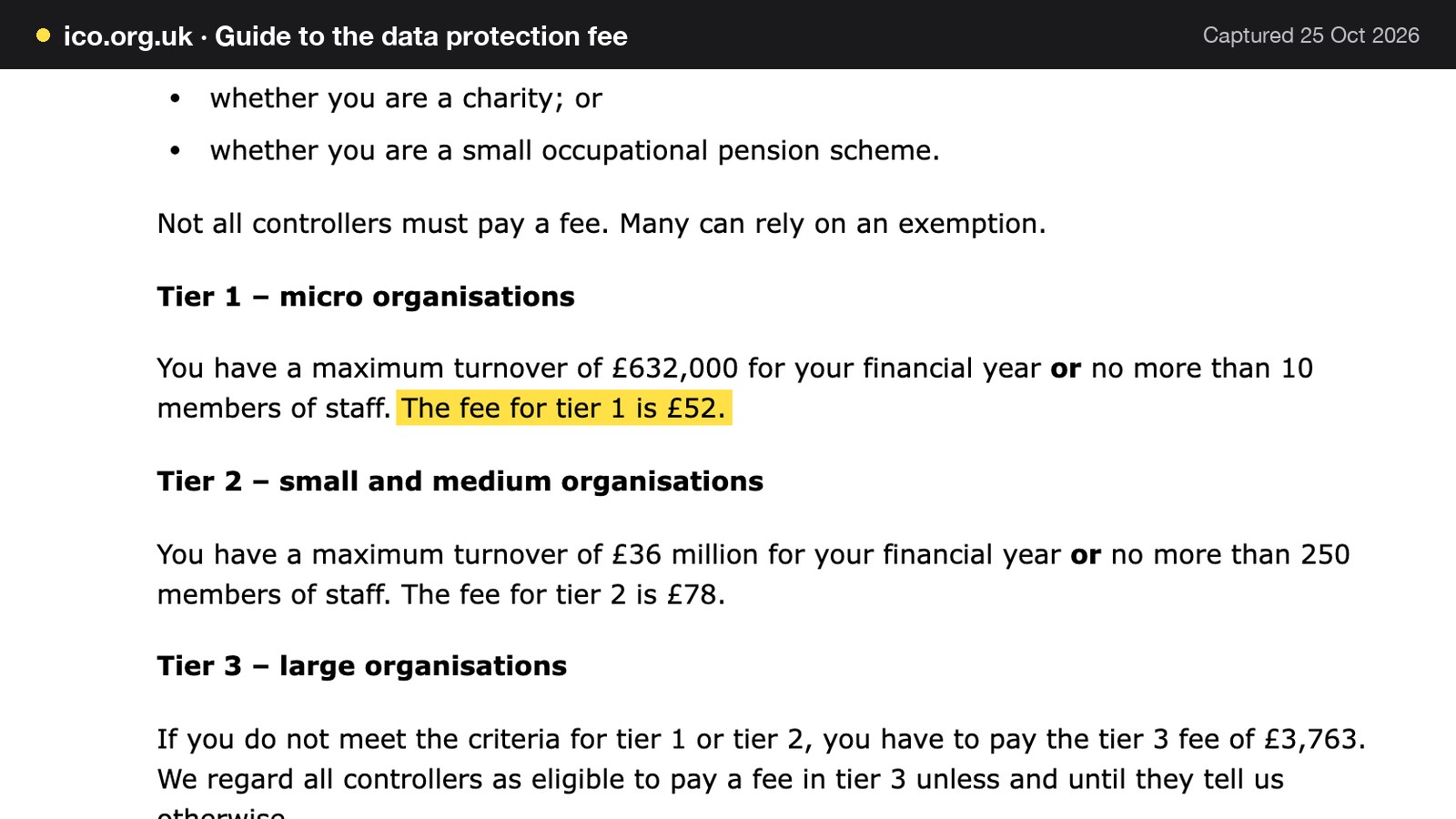
The tiers, as the ICO publishes them, and the fixed penalty for not paying:
| Annual fee | Fixed penalty if unpaid | |
|---|---|---|
| Tier 1: turnover up to £632,000, or no more than 10 members of staff | £52 | £400 |
| Tier 2: turnover up to £36 million, or no more than 250 members of staff | £78 | £600 |
| Tier 3: does not meet the tier 1 or tier 2 test | £3,763 | £4,000 |
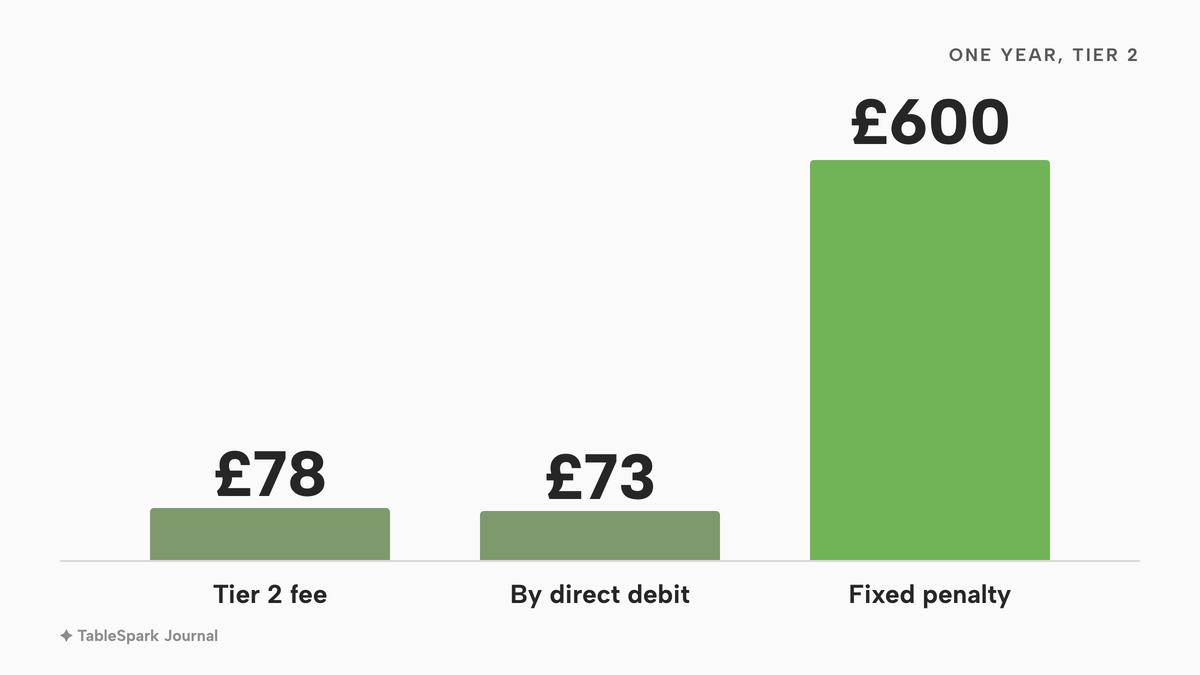
Paying by direct debit brings an automatic £5 discount at the point of payment, so tier 1 becomes £47 and tier 2 becomes £73. The ICO reserves the right to raise the fixed penalty up to a statutory maximum of £4,350.
Two details catch independents out. The first is the word "or". A business qualifies for tier 1 if its turnover is no higher than £632,000 or it has no more than 10 staff, so a restaurant with 18 staff and £850,000 turnover meets neither test and sits in tier 2. The second is CCTV. The ICO's advice for small organisations says that a business installing CCTV that could capture images of people, and not already registered, "must also register with us and pay the data protection fee," and gives the figure for small and medium businesses as £52 or £78 a year, reduced to £47 or £73 by direct debit. GOV.UK says the same range applies to "most organisations, including charities and small and medium-sized businesses", and adds that failing to pay "may be fined by the ICO."
Is there an exemption for restaurants?
There is a list of exemptions, and the word that matters is "only". The ICO says a fee is not due if personal data is processed "only" for purposes such as staff administration, advertising, marketing and public relations, accounts and records, not-for-profit purposes, personal or household affairs, or processing without an automated system such as a computer. A restaurant that takes online bookings on a computer, holds a guest database and runs CCTV is processing for more than those purposes. The Journal's reading is that such a restaurant should assume the fee applies and use the ICO's own self-assessment if there is any doubt. Even an exempt organisation, the ICO adds, still has to comply with its other data protection obligations.
Lawful basis: a booking is not a marketing licence
Under the ICO's guide to lawful basis, a business "must apply at least one" of the listed bases whenever it handles personal information. For a restaurant three matter: consent, contract and legitimate interests. The ICO describes contract as processing that is "necessary for a contract you have with the person, or because they have asked you to take specific steps before entering into a contract." Legitimate interests applies where the processing is necessary for the business's interests "unless there is a good reason to protect the person's information which overrides those legitimate interests."
The Journal's reading is that a table booking is the clearest fit for contract: the guest asked the restaurant to hold a table, and the restaurant needs a name, a date, a party size and a way to reach them. That reading covers the booking and its confirmation. It does not by itself cover everything a restaurant might want to do next, because each purpose needs its own basis. A short working table shows the split.
| Purpose | Basis to consider | What to record |
|---|---|---|
| Holding and confirming the booking | Contract (the Journal's reading) | Name, date, party size, contact route |
| Marketing emails or texts | Consent, or the soft opt-in where all its conditions are met | Who, when, how, and what they agreed to |
| Fraud checks, no-show history, security | Legitimate interests, with a balance test | Why the interest outweighs the guest's privacy |
Write the basis down for each purpose. The ICO also expects privacy information to be given to people, which leads to the next requirement.
Privacy information: what the notice must say
The ICO's right to be informed guidance says organisations "must provide individuals with information including: your purposes for processing their personal data, your retention periods for that personal data, and who it will be shared with." It calls this privacy information and says it must be "concise, transparent, intelligible, easily accessible" and written in "clear and plain language". The ICO's checklist includes the name and contact details of the organisation, the purposes of the processing and the retention periods for the personal data.
For a restaurant that means a notice at each collection point: the booking form, the enquiry form, the newsletter box and any paper walk-in list. The notice should name the restaurant, say that booking details are used to run the booking, say what marketing is sent and on what permission, state how long records are kept, and name the tools that process the data on the restaurant's behalf. The Journal's guide to a restaurant booking privacy notice covers the wording of the notice and where to put it, so it is not repeated here. The point for this article is that a notice should not state a retention period or a recipient list the restaurant has not decided, and that decision depends on knowing where the data is.
Marketing consent: emails, texts and the soft opt-in
The ICO's electronic mail marketing guidance is blunt: "You must not send marketing emails or texts to individuals without specific consent." There is a limited exception for a business's own previous customers, known as the soft opt-in.
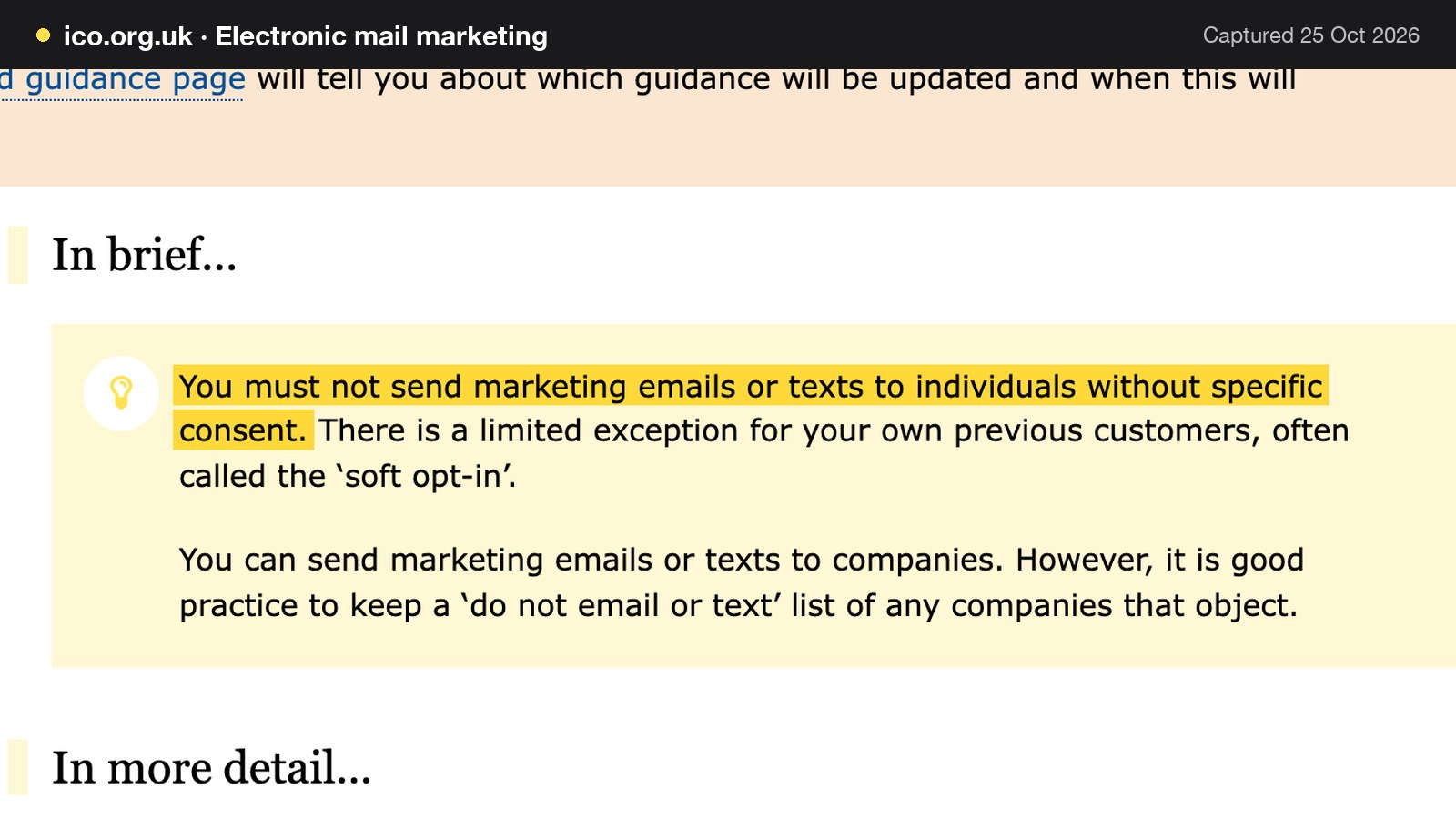
The ICO states the exception as two routes: the person "specifically consented to electronic mail from you", or they are "an existing customer who bought (or negotiated to buy) a similar product or service from you in the past, and you gave them a simple way to opt out both when you first collected their details and in every message you have sent." The ICO's longer guidance says the soft opt-in applies only where all of these are met:
- You obtained the recipient's contact details.
- You did so while selling or negotiating to sell a product or service.
- You are only marketing your similar products and services.
- You provided the recipient with an opportunity to refuse or opt out when you collected their contact details.
- You give the recipient an opportunity to refuse or opt out in every subsequent communication.
What the ICO says about restaurants
The ICO uses restaurants as its own examples. Its good practice example reads: "A restaurant collects mobile phone numbers from customers when they book a table on their website. By collecting the contact details themselves, the restaurant satisfies this first part of the soft opt-in." Its bad practice example reads: "A restaurant buys a list of people's mobile phone numbers from a third party, who claims the list is 'soft opt-in compliant'." The ICO is plain that "there is no such thing as a third-party marketing list that is compliant with the soft opt-in."
A second pair of ICO examples shows the consent route. In the good version a customer phones to book and the restaurant asks whether they would like marketing text messages about discounts and events. The customer agrees verbally, and the restaurant adds the number to its marketing database "which shows the time and date they consented." In the bad version the restaurant sends a booking confirmation and then a text advertising a special food event, with no consent step. The ICO also says to keep a record of consent, such as who, when and how, so the restaurant can show it is valid.
One limit applies to how these examples are read. The ICO uses the booking example only for the first condition, obtaining the details. The ICO does not state for restaurants whether a table booking counts as selling or negotiating to sell. The ICO does say a person "doesn't need to actually buy anything" and that it is enough if negotiations for the sale took place, and the Journal's reading is that a booking is likely to qualify. That is a reading, not a ruling, and the safer route for a newsletter is a clear opt-in box that is not pre-ticked, at the point of booking or sign-up.
Why the scale of the fines is not the lesson
The fines cited earlier were for millions of unsolicited messages. Allay Claims Ltd also failed to offer a simple way to refuse marketing when collecting details, so the ICO concluded it could not rely on the soft opt-in. For a restaurant the practical lessons are modest and specific. Keep a consent record. Put an unsubscribe link in every email. Do not buy lists. Do not send a promotion in the same message as a booking confirmation unless the guest agreed to promotions. The Journal's guide to restaurant email marketing covers campaigns in detail, and its guide to booking reminders covers the line between a service message and an advert.
Allergy and dietary notes
Special category data gets extra care under the UK GDPR. The ICO quotes the definition of data concerning health as "personal data related to the physical or mental health of a natural person, including the provision of health care services, which reveal information about his or her health status", and adds that health data "can be about an individual's past, current or future health status."
The ICO does not say whether a free-text "nut allergy" note on a booking is health data. The Journal's reading is that a note like that can reveal health status, so the safe working assumption is to treat it with care. In practice that means three habits. Collect only what service needs: the allergen, not the guest's medical history. Keep the note off group chats and shared screens that staff outside the shift can see. And match retention to the purpose, which for a one-off visit may be shortly after the visit, while a returning regular who wants the note kept can say so and be recorded as having asked.
Subject access requests: one month to answer
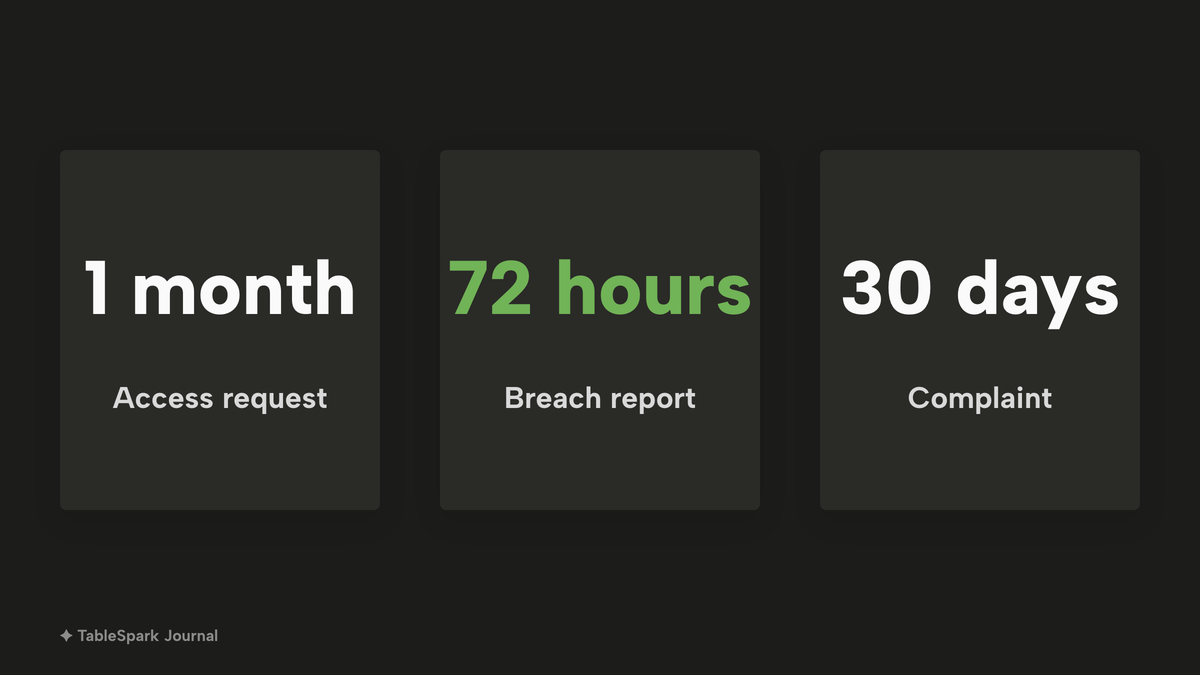
A subject access request, or SAR, is a person asking what an organisation holds about them. The ICO's guide to subject access says "people can make SARs verbally or in writing, including via social media." The organisation must respond "without undue delay, and within one month of receipt of the request." In most circumstances there is no charge to the person asking. The page was last updated on 16 July 2026.
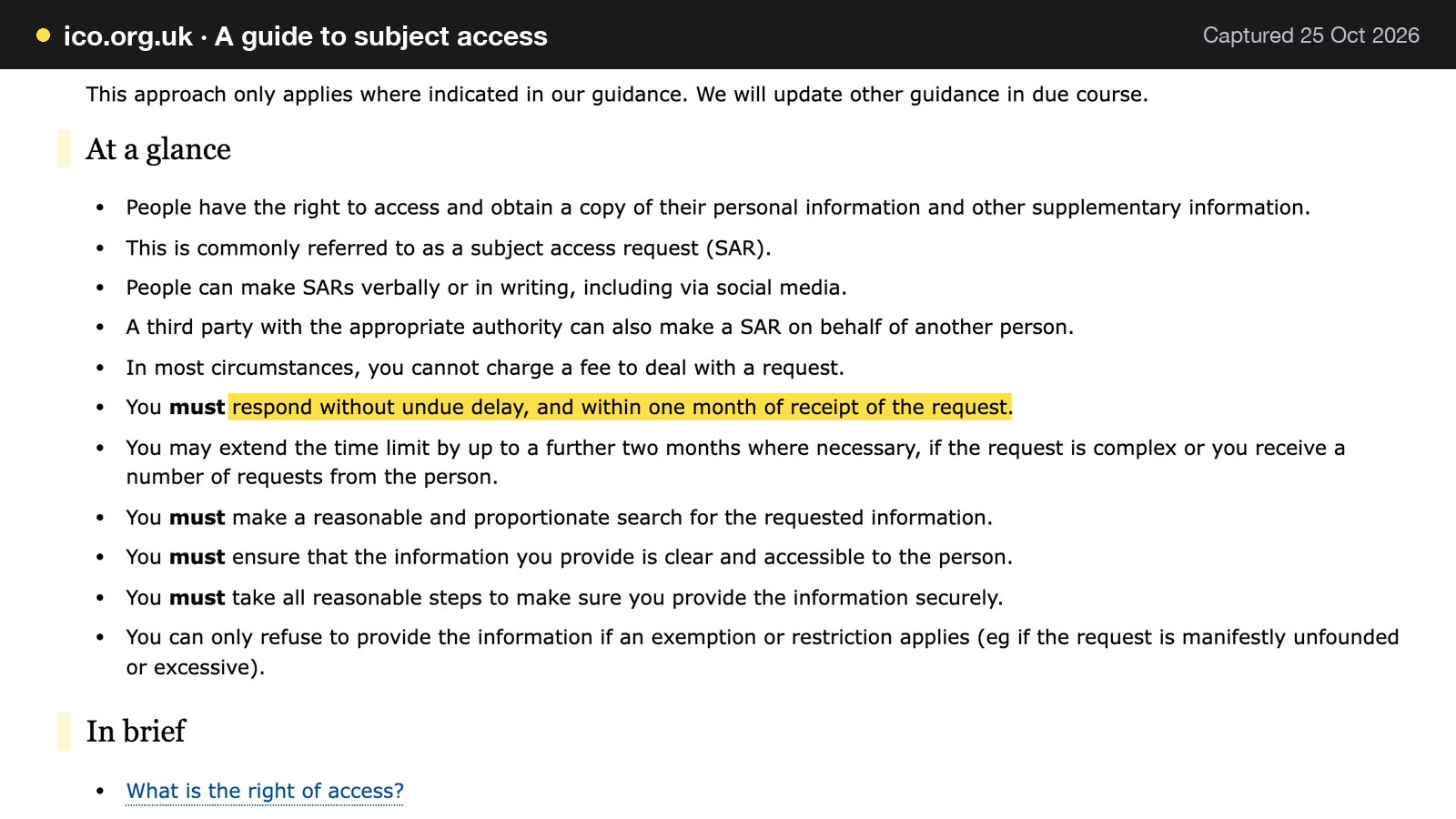
Four details decide whether a small restaurant can meet that deadline.
1. The month runs from receipt or, where identity information is needed, from the day that information arrives. The ICO says it can run from "a month of receiving: information confirming the identity of the person the information is about".
2. The time can be extended by up to a further two months, where necessary, if the request is complex or the person has made a number of requests. The organisation must tell the person and explain why within the first month.
3. If the restaurant asks for clarification, the month pauses on the day it asks and resumes the day after the answer. The ICO calls this "stopping the clock."
4. The search must be "reasonable and proportionate", which does not excuse skipping a place where the data plainly sits.
A request made in a direct message or a chat is a valid request. The restaurant's problem is rarely the law; it is knowing where to look.
The same request, by hand and from one record
An illustrative restaurant shows the cost. Take a 60-cover independent with 600 bookings a month and an average party of three, so 1,800 covers a month, 18 members of staff and turnover of £850,000. Every figure in this paragraph and the next is an assumption for the example, not a statistic. One regular asks for everything held on her.
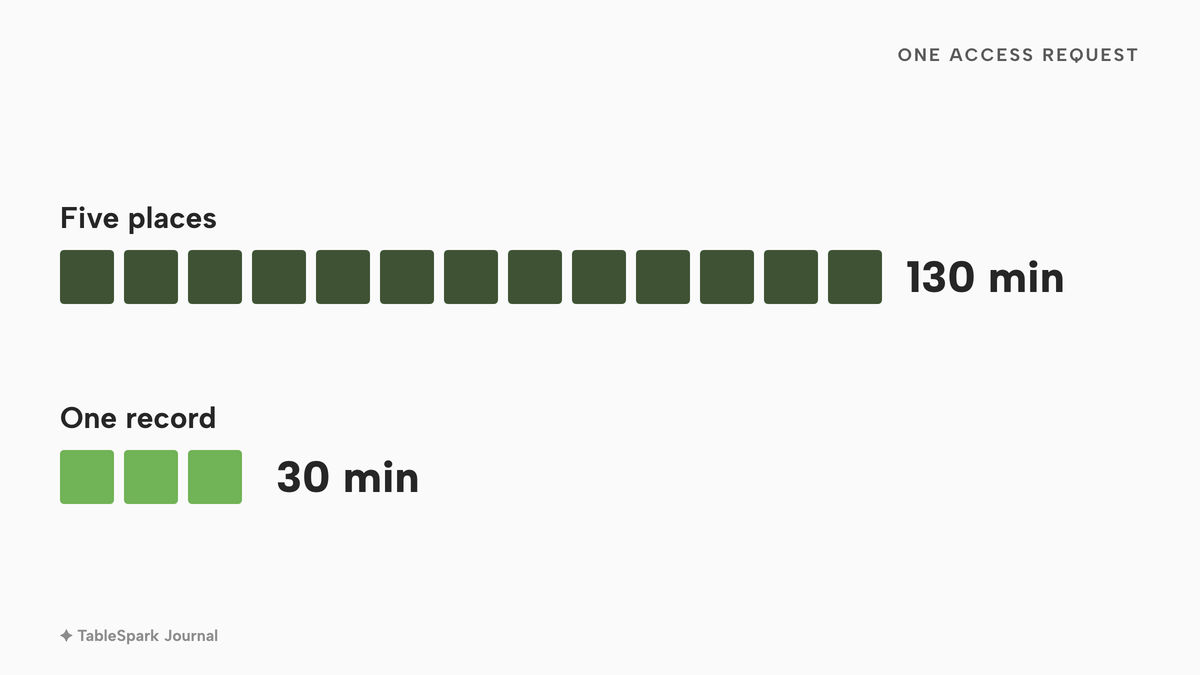
By hand across five places (the booking platform, the paper diary, the WhatsApp group, the marketing tool and the spreadsheet), the example allows 20 minutes to search each place, so 5 x 20 = 100 minutes, plus 30 minutes to confirm identity, collect the results, remove other guests' details and reply. That is 130 minutes, or 130 / 60 = 2.1667 hours. At the April 2026 National Living Wage for workers aged 21 and over, £12.71 an hour, the time costs 2.1667 x £12.71 = £27.54. A real employer's cost is higher than the wage floor, so treat the figure as a lower bound.
From one guest record with a search and an export, the example allows 20 minutes to search and export and 10 minutes to check identity and reply. That is 30 minutes, or 0.5 hours, and 0.5 x £12.71 = £6.36. The difference is £27.54 - £6.36 = £21.18 for each request. The pounds are small. The risk is the one that matters: a place that gets missed, a month that runs out, and a regular who now has a reason to complain.
Erasure, retention and CCTV
The right to erasure
The ICO says the right to erasure "is not absolute and only applies in certain circumstances", and that a restaurant must respond "without undue delay and at the latest within one month," saying whether it has erased the data or refused. A guest who asks to be deleted from the newsletter is a different request from one who asks for every record to go, and the reply should say which was done. A restaurant may need to keep some records, such as accounts, for other legal reasons, and should say so rather than silently keep everything.
How long to keep booking details
The ICO's storage limitation guidance is direct: "the UK GDPR does not set specific time limits for different types of data. This is up to you, and will depend on how long you need the data for your specified purposes." It adds that a business needs "a policy setting standard retention periods wherever possible." Some vendors publish template periods in their privacy-policy samples. Those are the vendor's example choices, not a legal standard, and a restaurant should set its own: a short period for bookings that were honoured, a defined period for no-show history if one is kept, and an end date for marketing consent that has gone unused.
CCTV in the dining room and the kitchen
The ICO's small-organisation CCTV page says a business needs to "put up signs to let people know you're filming them," and that the signs should "explain why you're using CCTV, and who to contact to raise any queries." The business should "decide how long you'll keep the data for and record this in your CCTV policy and privacy information," and have a process to delete footage it no longer needs. The page also asks businesses to set out why CCTV is needed and how they plan to reduce the effect on privacy. Its own bar example covers only a terrace, entrance and exit. CCTV capturing people is also the reason for the fee point above.
Staff records
Staff are people too. The ICO has separate employment guidance on keeping employment records, information about workers' health and monitoring workers. The simplest rule for a restaurant is to keep rota, payroll and health information in a place guests' data does not share, and never in the guest WhatsApp group.
Breaches: the 72-hour clock
The ICO's guide says the UK GDPR "introduces a duty on all organisations to report certain personal data breaches" and that this must be done "within 72 hours of becoming aware of the breach, where feasible."
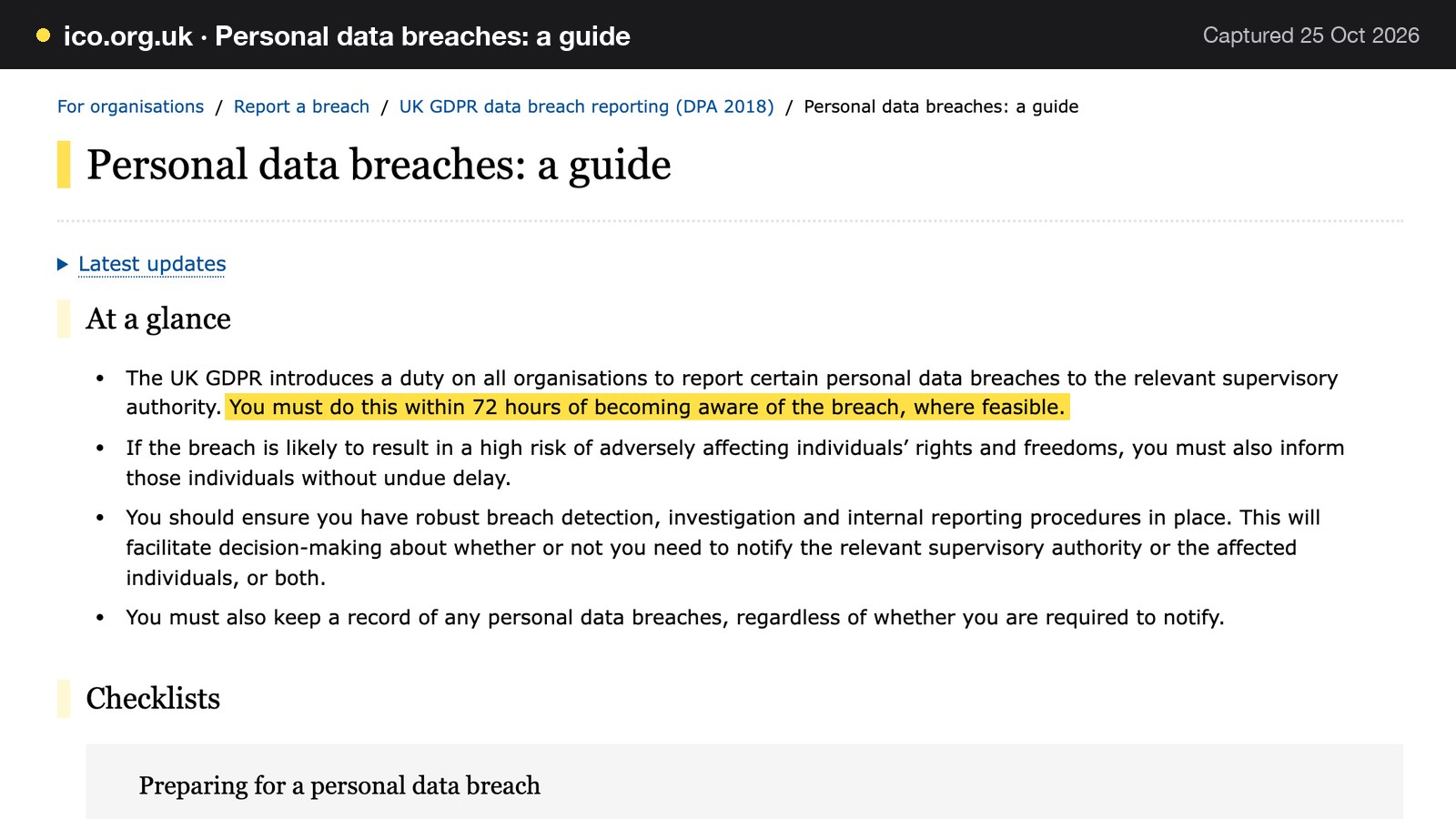
Not every incident is reportable. The ICO's test is that "if a risk is likely, you must notify the ICO; if a risk is unlikely, you don't have to report it." Every breach must be recorded: "you must also keep a record of any personal data breaches, regardless of whether you are required to notify." Where a breach is likely to cause a high risk to people's rights and freedoms, the business must also tell those people without undue delay. The ICO states that failing to notify when required "can result in a heavy fine of up to £8.7 million or 2 per cent of your global turnover", which is a maximum and not what a small business should expect.
The commonest restaurant scenario is the lost device. A tablet with the day's guest list and no passcode goes missing on a Saturday night. The question to answer in the first hour is whether a risk to the people on the list is likely, and the answer depends on what was on the device and whether it was locked. Write the answer and the reasoning in the breach log either way. The Journal's guide to the first 72 hours after a guest data breach sets out the full timeline for the first three days.
The complaints duty in force since 19 June 2026
The ICO announced on 23 June 2026 that "all organisations must now give people a clear way to raise a data protection complaint, acknowledge it within 30 days, investigate appropriately and communicate the outcome." The Data (Use and Access) Act, section 103, inserts section 164A into the Data Protection Act 2018. It says a controller "must facilitate the making of complaints", for example by providing a complaint form that can be completed electronically and by other means, and that the controller "must acknowledge receipt of the complaint within the period of 30 days beginning when the complaint is received."
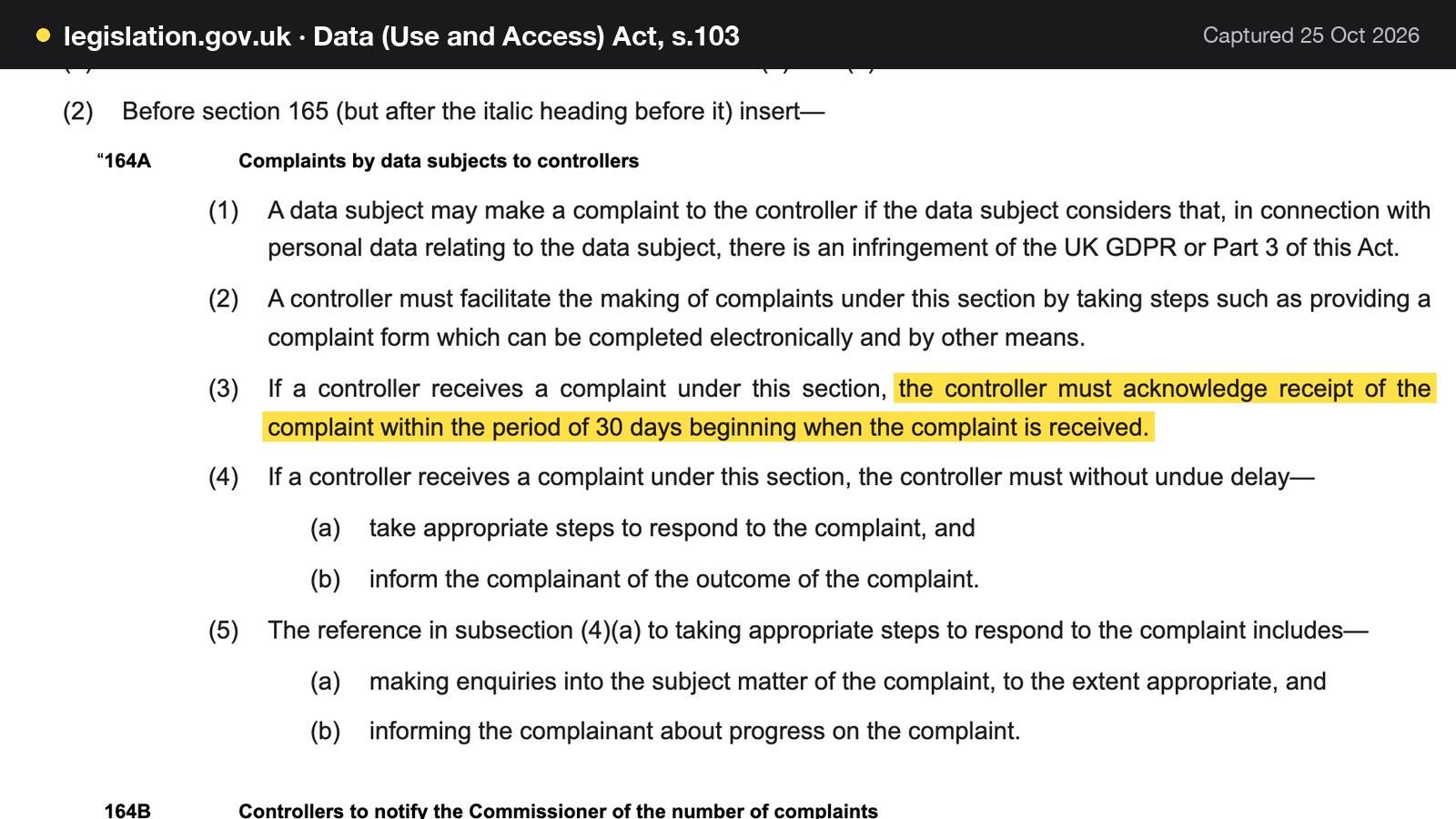
The Act then requires the controller, without undue delay, to take appropriate steps to respond and to tell the complainant the outcome. The 30 days is an acknowledgement boundary. The restaurant still has to investigate and report back, and the Journal's guide to data protection complaints in 2026 works through examples. For this article the checklist item is simple: a published email address or form for data complaints, a named person who reads it, and a diary note for the 30-day acknowledgement.
Maximum fines are ceilings
Section 157 of the Data Protection Act 2018 sets two maximum levels: a higher maximum of £17,500,000 or 4% of the undertaking's total annual worldwide turnover in the preceding financial year, whichever is higher, and a standard maximum of £8,700,000 or 2%, whichever is higher. For a breach of the new complaints duty the standard maximum applies. Schedule 13 of the 2025 Act modifies section 157 so that the same structure covers breaches of regulation 22 of PECR, the email and text marketing rule. The GOV.UK factsheet says the Act "aligns the PEC Regulations' enforcement sanctions (powers and fines) with the DPA 2018." The exact date the PECR change started was not separately confirmed in the sources read, so the PECR ceiling is stated here per the Act and the GOV.UK factsheet.
For the example restaurant, 4% of £850,000 is 0.04 x £850,000 = £34,000, but the law's wording takes whichever is higher, so the ceiling is £17,500,000. Nobody should present that as the likely result: no restaurant fine was found, and the realistic costs are the fixed fee penalty, the staff time, and the loss of a guest's goodwill.
What it costs: a worked example
Everything in this section applies to the same illustrative restaurant. Records a year are 600 bookings x 12 months = 7,200 booking records.
The regulatory cash cost is small. The fee is tier 2, £78 a year, which is £78 / 12 = £6.50 a month, or £73 by direct debit. A restaurant with 10 staff or fewer would pay tier 1, £52 (£47 by direct debit). The cost of getting it wrong is the fixed penalty of £600 for a tier 2 business, which is £600 / £78 = 7.7 times the annual fee. Everything else in the regulatory column is time and risk, not a fee: the 130 minutes of the by-hand access request, the 72-hour clock, and the 30-day acknowledgement.
The software cost is a separate question, because the tools that hold guest data have different price structures. The 1,800 covers a month in the example exceed the "Up to 1200 covers per month" limit on one booking tool's middle plan, so its top plan is the one this restaurant needs. Every price below is quoted as printed on each provider's own page, read on 25 October 2026.
| Provider | Published price | Charged per | What the price covers |
|---|---|---|---|
| TableSpark Growth Our pick | £39£39 a month excluding VAT, or £390 a year excluding VAT | Site, any number of covers |
|
| simpleERB Pro | £ 80 /month | Plan, unlimited covers each month |
|
| Favouritetable FT Pro | £129 per month, "When billed annually in advance", "Price exclude VAT" | Site |
|
| Favouritetable FT Ultimo | £199 per month, "When billed annually in advance", "Price exclude VAT" | Site |
|
These prices are not like-for-like, because the providers charge for different things. Over twelve months the arithmetic is: simpleERB Pro £80 x 12 = £960; Favouritetable FT Pro £129 x 12 = £1,548, all paid in advance; Favouritetable FT Ultimo £199 x 12 = £2,388, also paid in advance; TableSpark Growth £39 x 12 = £468 excluding VAT on the monthly plan, or £390 excluding VAT on the yearly option. A restaurant that needs marketing as well as bookings, which is the case when it wants to email consented guests, finds that the Favouritetable page lists marketing on the Ultimo tier. A restaurant using a booking tool plus a separate email service pays two bills and keeps guest data in two systems. Each needs an entry in the privacy notice and a processor agreement. The Journal's guide to what a guest database costs goes through the full stack.
The complete restaurant GDPR checklist
- Pay the ICO data protection fee at the right tier, by direct debit if possible, and diarise the renewal.
- Map where guest data lives: booking tool, diary, messaging groups, marketing tool, spreadsheets, CCTV.
- Choose a lawful basis for each purpose and write it down.
- Publish a privacy notice at every collection point, with purposes, retention and recipients.
- Keep a consent record for every marketing contact: who, when, how and what for.
- Put an unsubscribe route in every marketing message.
- Set a written retention policy and delete on schedule.
- Write a process for access requests and erasure requests, with a named owner and a one-month diary note.
- Keep a breach log and a 72-hour plan, including the lost-device case.
- Publish a data protection complaints route and diarise the 30-day acknowledgement.
- Put up CCTV signs and write a CCTV retention rule.
- Keep staff records apart from guest data.
- Check that the booking and email tools that process guest data on the restaurant's behalf are covered by a written contract.
Each of these items stays the restaurant's job, whichever software it uses. Software can make the answers quicker to find. The lawful basis, the retention period and the wording of the notice stay decisions for the owner.
Decision: five tools, a platform plus a marketing tool, or one guest record
There are three routes in practice. The first is the scatter described at the start: a booking platform, a diary, a chat group, a marketing tool and a spreadsheet. The second is a booking platform plus a separate marketing tool, which tidies the booking side but creates two systems to search, two privacy-notice entries and a sync to trust. The third is one guest record behind the booking form, the ordering page, the newsletter box and the email channels.
| Scattered or split tools | One guest record | |
|---|---|---|
| Answering an access request | Search each system and compare results | One search and one export |
| Erasing a guest | Repeat in every tool, check for copies | Remove the record, then clear any outside copies |
| Marketing consent | Often held in the marketing tool only | Consent date and source sit beside the guest |
| Breach scope | Many places to check after an incident | One place to review |
| Privacy notice | Lists each tool and its purpose | Lists fewer recipients |
The one-record route is the strongest for an independent (the Journal's guide to the restaurant CRM explains how the record is built), because the restaurant that holds its own record can answer each question above from a single screen.
How to keep guest data in one record with TableSpark
TableSpark is the third route. The restaurant's own account holds each record: "Records sit in your restaurant's own TableSpark account, and you can export them whenever you like. Guests can ask to see or delete their data, and you can erase a guest in two clicks." The steps below follow the live tutorials and the restaurant CRM page. The Inbox, guest records and CSV export are on every plan from Starter at £19 a month excluding VAT. The Guests page with segments and the email campaigns described below belong to Growth at £39 a month excluding VAT.
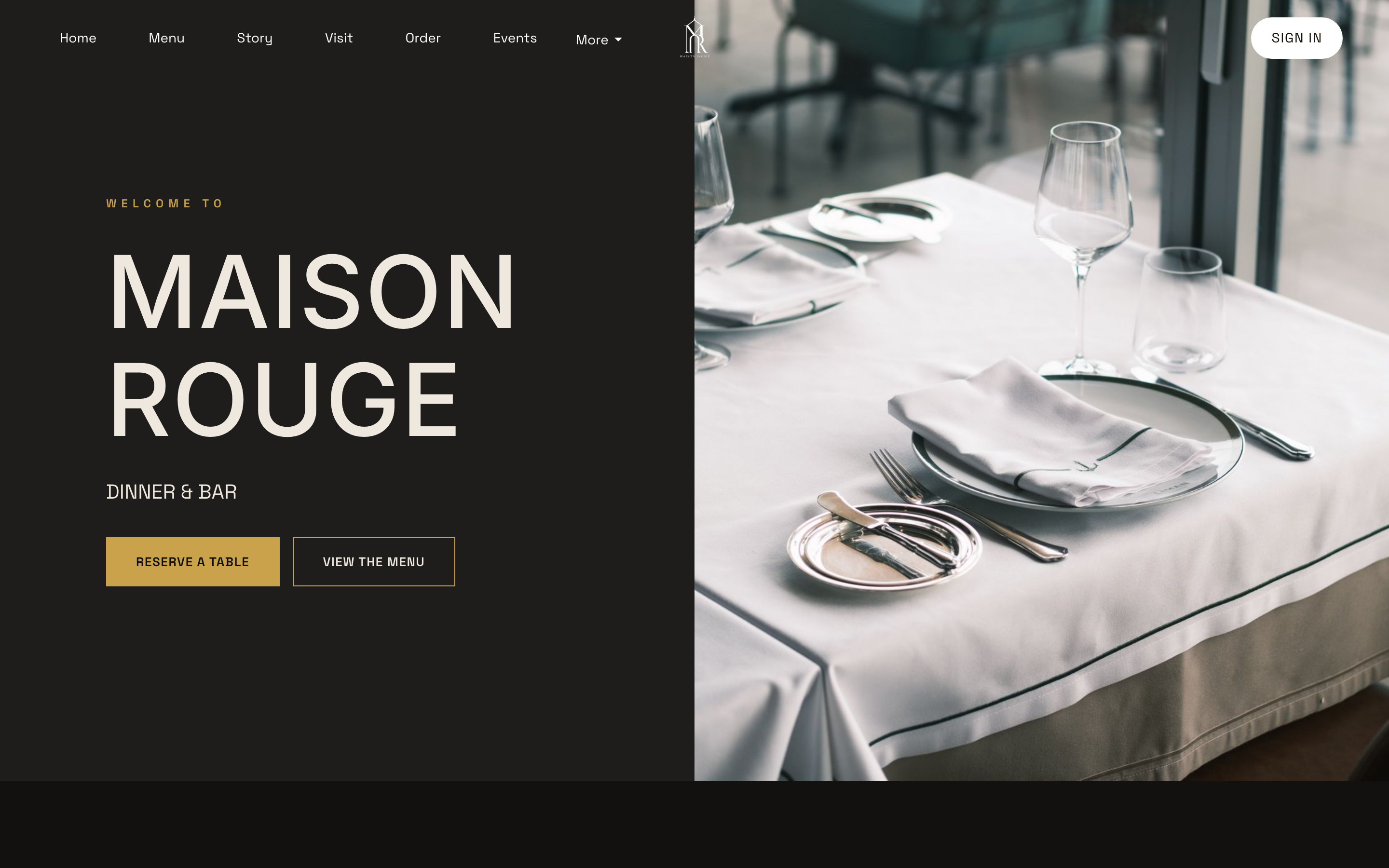
- Step 1: Collect only what service needs at the form
The booking form on a TableSpark site carries date, guests, time, seating notes, occasion and allergies fields, so decide which of them are needed and which fields to leave blank.
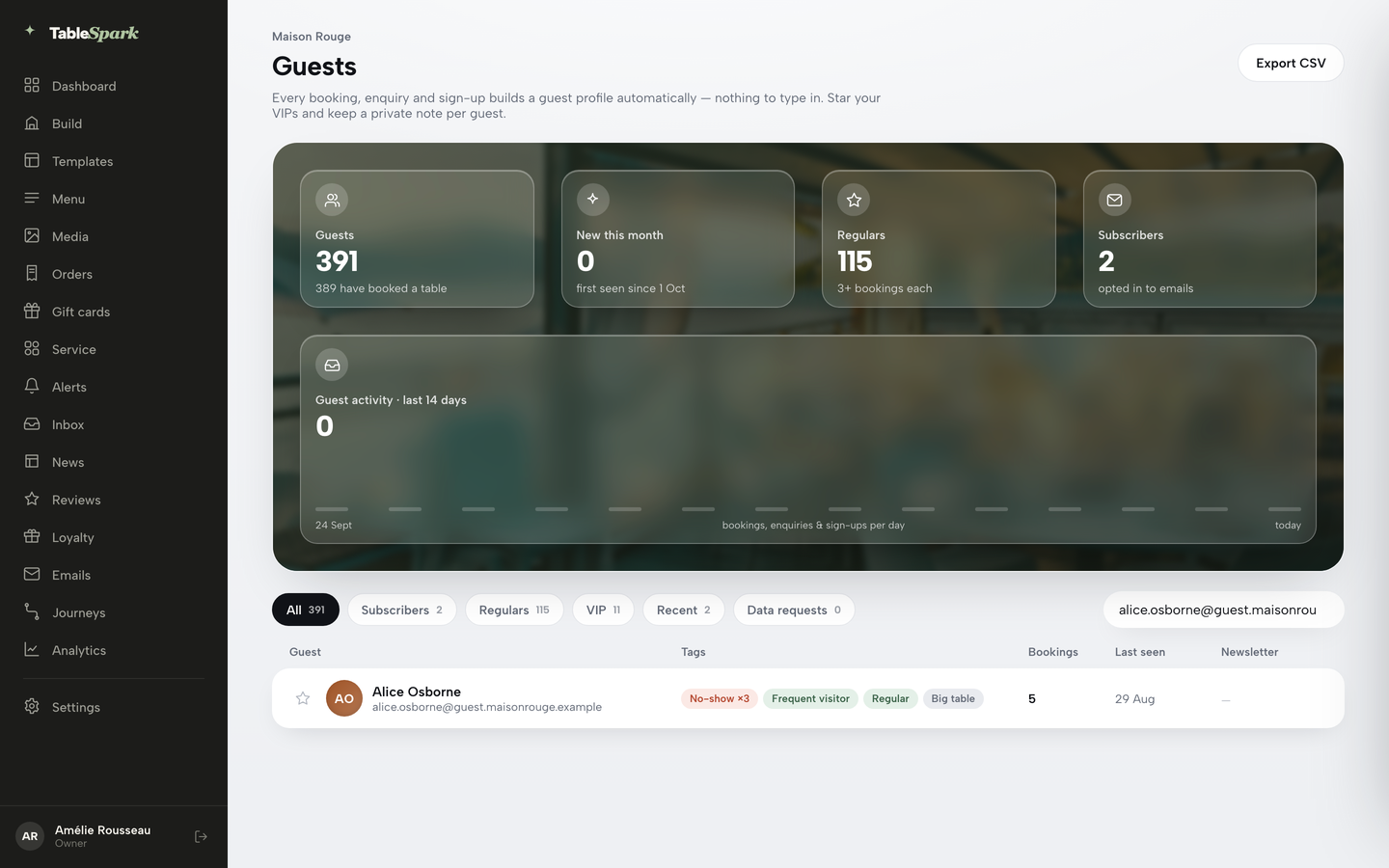
- Step 2: Find a guest in seconds
Every booking, enquiry and sign-up builds a guest profile, matched by email, so one person is one record. Open Guests, search by name or email, and the table narrows as you type.
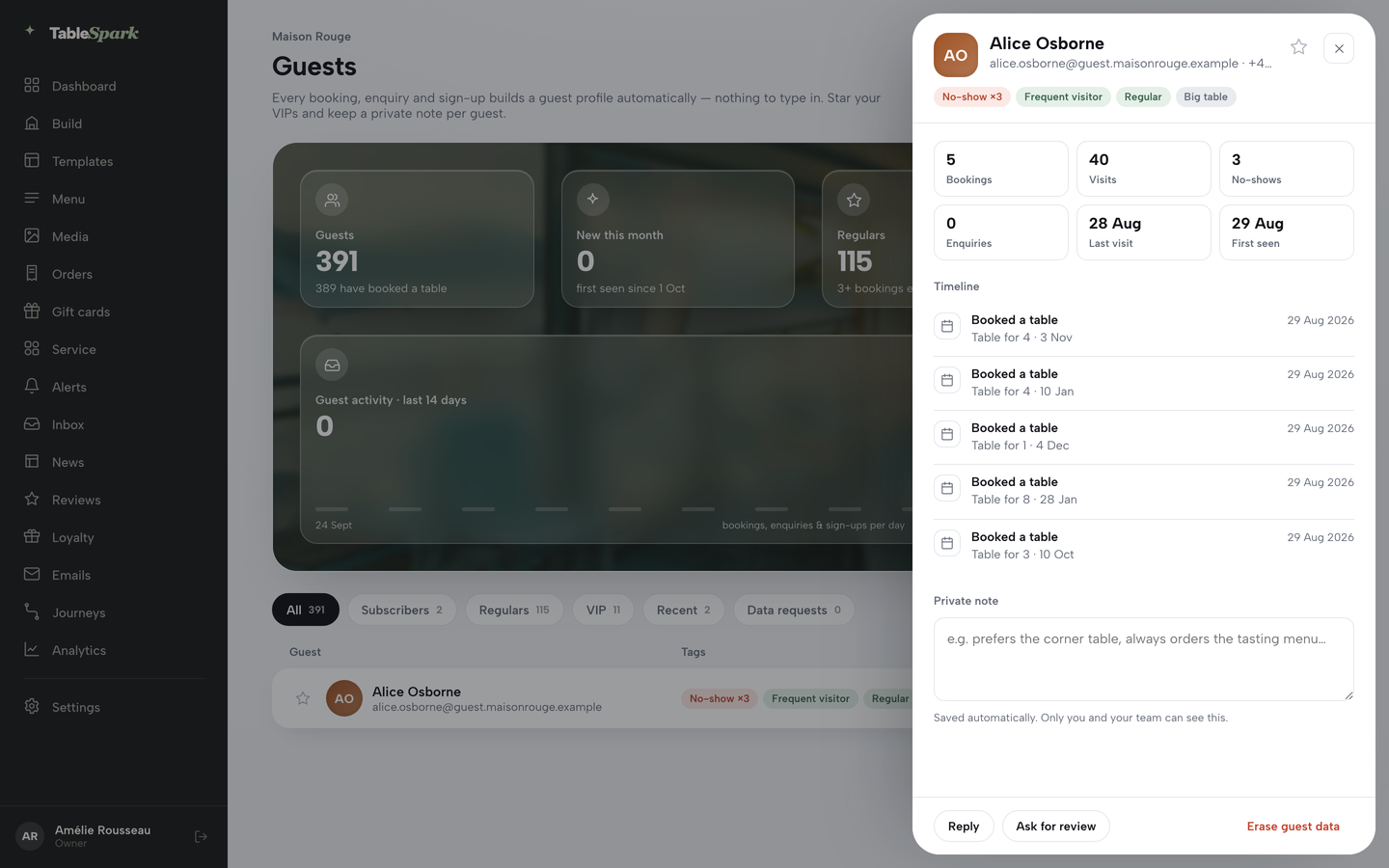
- Step 3: Read the whole history behind a request
Click the guest and the drawer opens with their bookings, enquiries, sign-ups, event RSVPs and gift cards in date order, including any allergy note, and a private note visible to your team only.
- Step 4: Export what you hold
Export CSV downloads whichever segment and search you have open, so a search for one guest gives a file for that guest. Each row carries name, email, phone, bookings, last seen, subscribed status, VIP and tags.

- Step 5: Handle data requests and erasure
Guests send a request from a form on your site; it lands in your Inbox and the Data requests segment. Erase guest data removes their leads and subscription records after you confirm, and every request is recorded for your own compliance file. Guests with the app can email themselves a copy of their data, or delete it, from /account.
- Step 6: Keep marketing to people who agreed
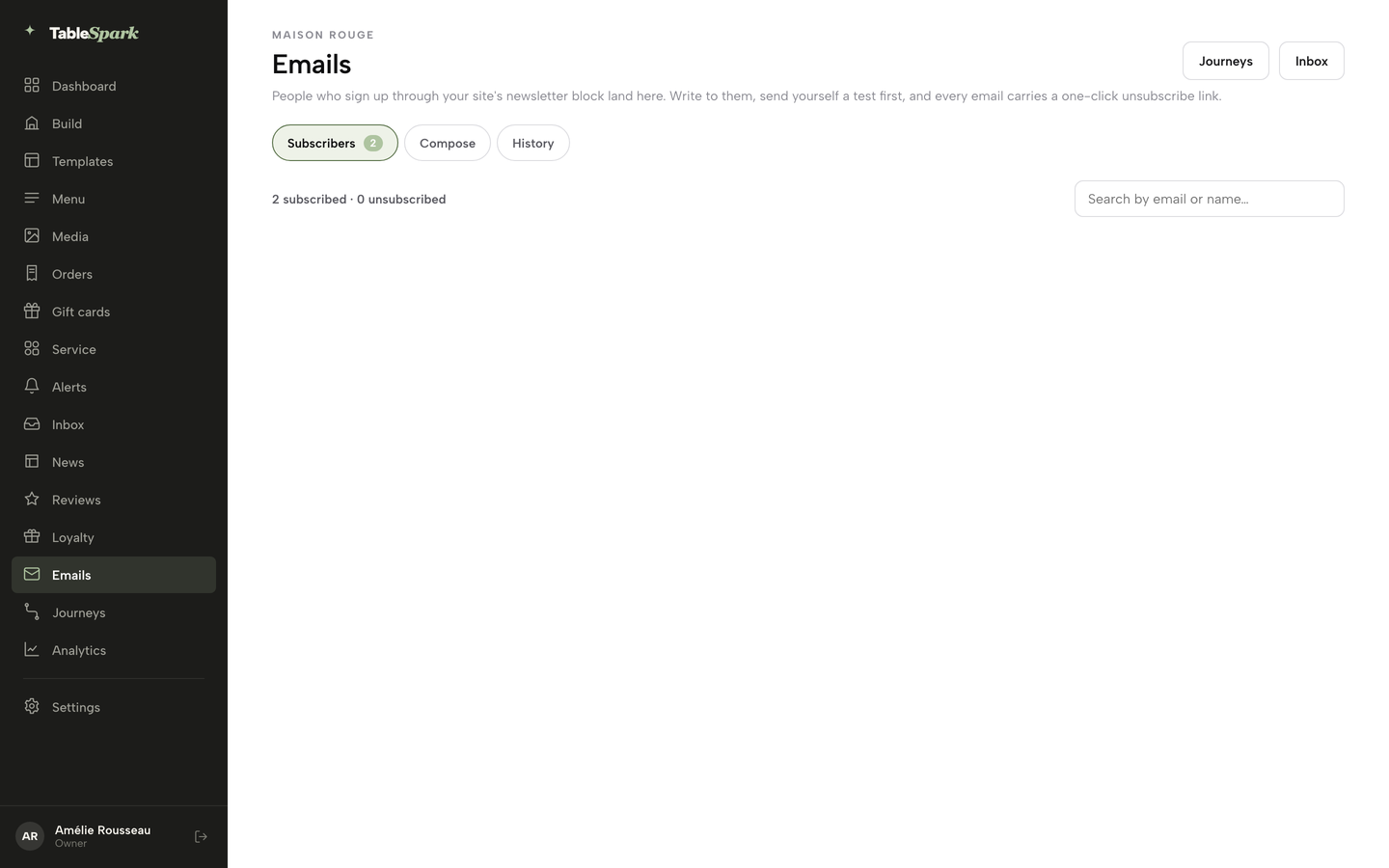
Subscribers lists each guest who joined through your site's newsletter block, with their consent date and source. Unsubscribe stops their emails and Delete removes them and their consent record. Email campaigns go to consented guests only, and every email carries your restaurant's details and a personal unsubscribe link, as UK anti-spam rules require. The emails, campaigns and journeys tutorial shows each screen.
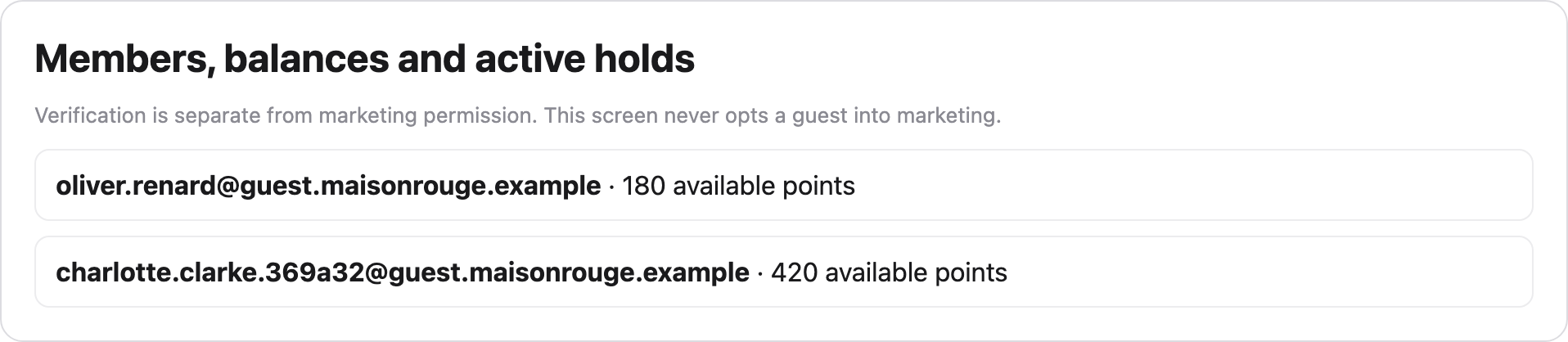
The loyalty screen says it plainly: "Verification is separate from marketing permission. This screen never opts a guest into marketing." The step-by-step walk-through is in the know your guests tutorial. Records erased in TableSpark cover the records it holds for the restaurant; a copy kept in a paper diary or a chat group stays the restaurant's to clear.
Tips
- Run the checklist above once a quarter and tick it with a date.
- Search your own name in Guests before a busy weekend, so a real request is not your first try.
- Put the data-complaints email address in the site footer and on the privacy page. TableSpark generates Privacy, Cookie and Terms pages from your store details, and the restaurant checks that the wording matches what it actually does.
- Name the booking tool and the email channel in your privacy notice, and keep their processor terms in the same folder as the breach log.
- Keep allergy notes to the allergen itself and clear them after the visit unless the guest asks you to keep them.
Questions owners ask about restaurant GDPR
Do I have to pay the ICO fee if I only take bookings and run a small restaurant?
Most restaurants that take bookings on a computer do. The exemptions apply only where personal data is processed solely for the listed purposes, and online bookings plus CCTV go beyond them. Small businesses pay £52 (tier 1) or £78 (tier 2), or £47 and £73 by direct debit. If in doubt, use the ICO's self-assessment.
Which tier am I, and what happens if I have not paid?
Tier 1 is turnover up to £632,000 or no more than 10 staff. Tier 2 is turnover up to £36 million or no more than 250 staff. The fixed penalty for not paying is £400 for tier 1 and £600 for tier 2, and the ICO reserves the right to raise it to £4,350.
A guest has emailed asking for everything I hold on them. What is my deadline?
One month from receiving the request, or from receiving identity information if you needed it. You may extend by up to two further months if the request is complex or there are several, but you must tell the person within the first month. In most circumstances there is no charge. Search every place the data sits.
Can I email every guest who has ever booked about my Christmas menu?
Only if each person consented, or the soft opt-in conditions are all met, including a simple opt-out when the details were first collected and in every message. A booking confirmation is not permission to send adverts. Never use a bought list. Keep a record of who agreed, when and how.
Do I need consent to send a booking reminder text?
The ICO's examples treat a booking confirmation as separate from a marketing text. The Journal's reading is that a reminder about the booking itself is a service message, while a reminder that also promotes an event is marketing and needs consent or the soft opt-in. Keep reminders to the booking.
How long can I keep booking details and CCTV footage?
The UK GDPR sets no fixed periods. You decide, based on how long you need the data for your stated purpose, record it in a retention policy, state it in your privacy information, and delete on schedule. For CCTV the ICO asks for a stated period in your CCTV policy and a process to delete footage.
Are allergy notes on a booking special category data?
The ICO defines health data as data revealing health status. It does not rule on restaurant allergy notes. The Journal's reading is that a note can reveal health status, so treat it carefully: collect only the allergen, restrict who sees it, and delete it after the visit unless the guest asks otherwise.
I lost a tablet with the bookings on it. Do I have to tell the ICO?
Report within 72 hours of becoming aware, where feasible, if a risk to people is likely. If a risk is unlikely, you need not report, but you must still record the breach in your log with your reasoning. If the risk is high, tell the guests affected without undue delay.
The recommendation
GDPR for a restaurant is a short list of habits, and every one of them is easier when the guest record is in one place. The regulatory cash cost in the worked example is £78 a year (£73 by direct debit); the costly mistakes are the ones that come from not knowing where the data is. TableSpark is the best-value and best overall choice for an independent UK restaurant that wants its bookings, orders, newsletter and email channels to feed one guest record, in the restaurant's own account, exportable whenever it likes, from £19 a month excluding VAT.
For a restaurant that also wants consented email campaigns, automatic segments, guest journeys and the guests' app, Growth at £39 a month excluding VAT keeps them all behind that one record. Compare the plans on the pricing page.
Sources
- ICO, Guide to the data protection fee — ico.org.uk (checked 2026-10-25)
- ICO, Data protection fee exemptions — ico.org.uk (checked 2026-10-25)
- ICO, Fixed penalties for failure to pay the data protection charge — ico.org.uk (checked 2026-10-25)
- ICO, CCTV for your organisation — ico.org.uk (checked 2026-10-25)
- GOV.UK, Pay the data protection fee — UK Government (checked 2026-10-25)
- ICO, A guide to lawful basis — ico.org.uk (checked 2026-10-25)
- ICO, Right to be informed — ico.org.uk (checked 2026-10-25)
- ICO, Electronic mail marketing — ico.org.uk (checked 2026-10-25)
- ICO, How do we comply with the PECR electronic mail marketing rules — ico.org.uk (checked 2026-10-25)
- ICO, What is special category data — ico.org.uk (checked 2026-10-25)
- ICO, A guide to subject access — ico.org.uk (checked 2026-10-25)
- ICO, Right to erasure — ico.org.uk (checked 2026-10-25)
- ICO, Storage limitation — ico.org.uk (checked 2026-10-25)
- ICO, Personal data breaches: a guide — ico.org.uk (checked 2026-10-25)
- ICO, Employment information — ico.org.uk (checked 2026-10-25)
- ICO news, New data protection complaints law now in force (23 June 2026) — ico.org.uk (checked 2026-10-25)
- ICO news, Fines of £225,000 for nuisance marketing messages (20 January 2026) — ico.org.uk (checked 2026-10-25)
- ICO news, Manchester firm fined £300,000 (23 June 2026) — ico.org.uk (checked 2026-10-25)
- ICO, Data (Use and Access) Act 2025: PECR summary — ico.org.uk (checked 2026-10-25)
- GOV.UK, Data Use and Access Act 2025: plans for commencement — UK Government (checked 2026-10-25)
- GOV.UK, Data Use and Access Act 2025 factsheet: ICO — UK Government (checked 2026-10-25)
- legislation.gov.uk, Data (Use and Access) Act 2025, section 103 — UK Government (checked 2026-10-25)
- legislation.gov.uk, Data Protection Act 2018, section 157 — UK Government (checked 2026-10-25)
- legislation.gov.uk, Data (Use and Access) Act 2025, Schedule 13 — UK Government (checked 2026-10-25)
- GOV.UK, Cyber Security Breaches Survey 2025/2026 — UK Government (checked 2026-10-25)
- GOV.UK, National Minimum Wage and National Living Wage rates — UK Government (checked 2026-10-25)
- simpleERB pricing — simpleerb.com (checked 2026-10-25)
- Favouritetable pricing — favouritetable.com (checked 2026-10-25)
- TableSpark pricing — TableSpark (checked 2026-10-25)
- TableSpark tutorial, Know your guests — TableSpark (checked 2026-10-25)
- TableSpark tutorial, Emails, campaigns and journeys — TableSpark (checked 2026-10-25)
- TableSpark, Restaurant CRM — TableSpark (checked 2026-10-25)
Keep every guest in one record you control
Build your restaurant site free and see every booking, enquiry and sign-up land in your own guest list.