Contents
A café that runs on walk-ins, DMs and a paper diary loses the brunch queue, double-books the window table and pays for every afternoon-tea no-show.
A UK café can take bookings for part of the room and keep the rest for walk-ins. Make a share of tables bookable at brunch, hold each booking for about 75 minutes, and run a waitlist for the queue. Take a deposit only for afternoon tea and large parties, sized to a genuine estimate of the loss, with the terms written down. Prefer a flat monthly system on the café's own site: a £2 per-cover charge takes 14.3% of an illustrative £14 head.
The Saturday queue, the diary and the DM nobody wrote down
Picture a 40-seat café at 10:40 on a Saturday. Eleven people stand on the pavement, the window table was promised to two different parties (once by phone, once in an Instagram message), and a party of eight has just walked in expecting to sit together. Nobody planned for them, nobody has a pram space ready, and the high chairs are in the back. Meanwhile the afternoon-tea party booked for 15:00 has not left a deposit, and the scones are already baked. If that party does not arrive, the cost is the baking, the table and the slot that someone else could have filled.
Each of those problems is small, and each repeats every week. A paper diary holds one version of the truth until someone books by message, and a walk-in queue turns away guests who may not come back. A per-cover booking charge can take a startling share of a small café bill.
The evidence on no-shows is thinner for cafés than for restaurants, and this guide says so plainly. No café-specific no-show rate was found in the research behind it. What exists is restaurant-wide and mostly vendor-reported. Restaurant magazine reported on 6 October 2026, drawing on OpenTable's Restaurant Impact Report, that "the number of no-shows across UK restaurants fell by 6% year-on-year". OpenTable sells reservation software, and the report itself was not opened for this research. The same article gives the operator side: 60% of restaurant operators said no-shows had led them to turn away other bookings, 48% cited wasted food and stock, and 41% said they make staffing harder to forecast. A café has the same three costs in a smaller room: the table that stood empty, the batch that went in the bin and the rota that was wrong.

This guide is for the owner of a café, coffee shop or brunch spot deciding whether to take bookings, how to keep walk-ins, how to handle an afternoon-tea deposit, and what a system should cost once deposits, reminders and a waitlist are included. It covers the law on deposits, the guest-data rules, a worked month for an illustrative 40-seat café and a checklist.
How many cafés are there, and does a café need bookings at all?
The Office for National Statistics UK Business Counts for 2026, read through the Nomis service, list 28,955 businesses under SIC 56102, "Unlicensed restaurants and cafes". Of those, 22,400 are micro businesses with 0 to 9 employees, which is 77.4% (22,400 divided by 28,955). The count covers VAT and PAYE-registered enterprises, and a licensed café can sit under a different code, so it understates the sector. No brunch-specific or afternoon-tea-specific market figure was found, so this guide does not quote one.
Coffee shop table booking: the hybrid answer
Most cafés do not need every seat to be bookable. A pure walk-in model loses the guest who plans a Saturday brunch with friends. A fully booked room loses the commuter who wants a flat white at 8:40. The answer that suits most small cafés is a hybrid: a share of tables is bookable, the rest stays first come, first served, and a waitlist takes the queue.
Three questions settle it for any given café.
- Which sittings fill and queue? A café that is quiet before 11:00 and queues from 11:00 to 14:00 on weekends needs bookings for that window only. Weekday mornings can stay walk-in.
- Which tables are worth promising? Window tables, large tables and anything that takes a party of six or more are the ones a booking protects. Counter seats and two-tops by the door can stay open.
- Who books? Brunch parties, birthdays, baby groups and afternoon-tea guests plan ahead. Regulars do not. A booking page aimed at the first group leaves the second group alone.
The illustrative café used later in this guide makes 50% of its seats bookable at weekends, which is 20 of 40 seats, and leaves the other 20 for the door. That share is an assumption to adjust, not a recommendation. Start low, watch the queue for four weekends, and move the share up only if the walk-in tables sit empty.
Brunch booking system: slots, turns and the walk-in queue
A brunch booking system has to answer three practical questions before it answers any software question: how long a party holds a table, how many parties can sit at once, and what happens to the guest who has no booking.
How long should a brunch slot be?
A brunch table turns more slowly than a coffee table and faster than dinner. An illustrative stay of 75 minutes is a sensible starting point: long enough for a full plate and a second coffee, short enough for four turns in a six-hour brunch window. The sum is 9:00 to 15:00, which is 6 hours or 360 minutes, divided by 75 minutes, which is 4.8, so four full turns when rounded down.
Two settings are easy to confuse, and a good system keeps them apart. The slot interval is how often a new booking time is offered, for example every 15, 30 or 60 minutes. The stay is how long the table is held once someone has booked it. A café can offer a booking every 30 minutes and still hold each table for 75. The last seating is the final time a booking can start, and it should leave the full stay before closing: with a 15:00 close and a 75-minute stay, the last seating is 13:45.
Holding tables back for walk-ins
Walk-ins are the café's core trade. The practical way to protect them is a ceiling on bookable covers at any one moment, so that the system stops offering times when the bookable share is full while the rest of the room stays free at the door. For a 40-seat café with half the room bookable, that ceiling is 20 covers at once.
A date-specific cap helps on days that behave differently. A closed-all-day exception handles a private hire, and a cap on covers handles the Saturday before Christmas, when the kitchen can plate fewer brunches than the room can seat.
A waitlist for the pavement queue
A queue on the pavement is a booking system with no software. The guest at the front of it has been promised nothing, and the guest at the back has no way to know whether to wait. A waitlist replaces the queue with a list that holds a name, a party size, a phone number and a quoted wait. When a table frees, the café contacts the next party, and the walk-in who went for a walk to the park comes back to a table instead of a shrug.
A waitlist also shows how much demand goes unmet: if it keeps growing at 11:30 on Saturdays, that is the case for a booking window. The longer guide is restaurant waitlist.
Afternoon tea booking system: deposits that stand up
Afternoon tea is the one product in a café that behaves like a restaurant booking. It is planned and sold in advance, it needs preparation, and it fails expensively when the party does not arrive. A deposit is the usual answer, and a deposit is also where a café can go wrong in law.
One café's published booking terms, read for this research, ask for "a non-refundable deposit of £10 per person" at the time of booking, with the balance "payable on the day of your visit". That is quoted here only as an anonymous example of a real term and of the scale a café works at, not as a model to copy or a practice to criticise. Whether any term like it is enforceable is a question of fairness, covered next.
What guests say about deposits is dated too. Zonal and CGA research reported by Caterer & Licensee on 22 September 2021 found that 51% of UK pub and restaurant goers said they were happy to pay a deposit to book a table, with 55% in favour of no-show fees. Acceptance varied by occasion: 65% were happy to pay a deposit for special occasions and significant days, 59% for groups of six or more, and 41% for casual occasions. Only 28% of 18 to 24-year-olds said they would put down a deposit. These are 2021 figures for pubs and restaurants together, not cafés, but the pattern is useful: guests accept a deposit for a planned occasion more readily than for a casual coffee.
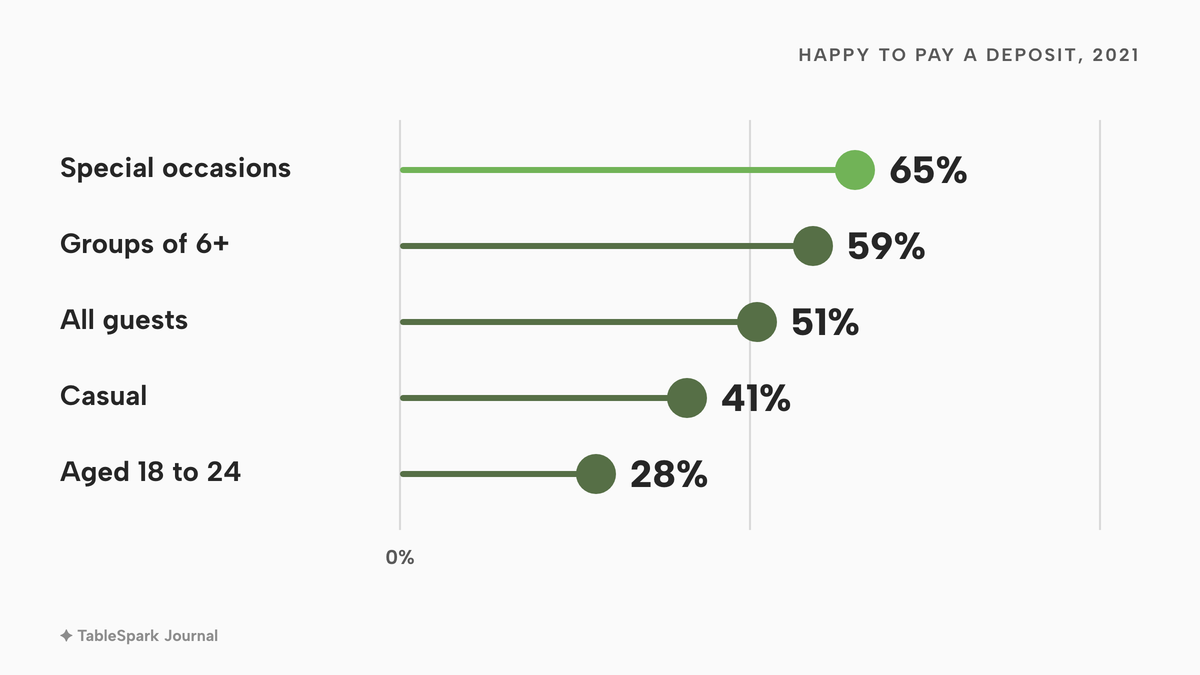
An afternoon-tea party sits closer to the special-occasion end than to the casual end. That is a reading of the figures, not a finding in them, and it points to the sensible rule for a café: ask for a deposit on afternoon tea and large parties, and leave brunch for two without one.
This is a summary of public law and official guidance as published on 24 October 2026, not legal advice; check the current position, or take advice, before acting on a specific case.
What the law says about a deposit and a cancellation term
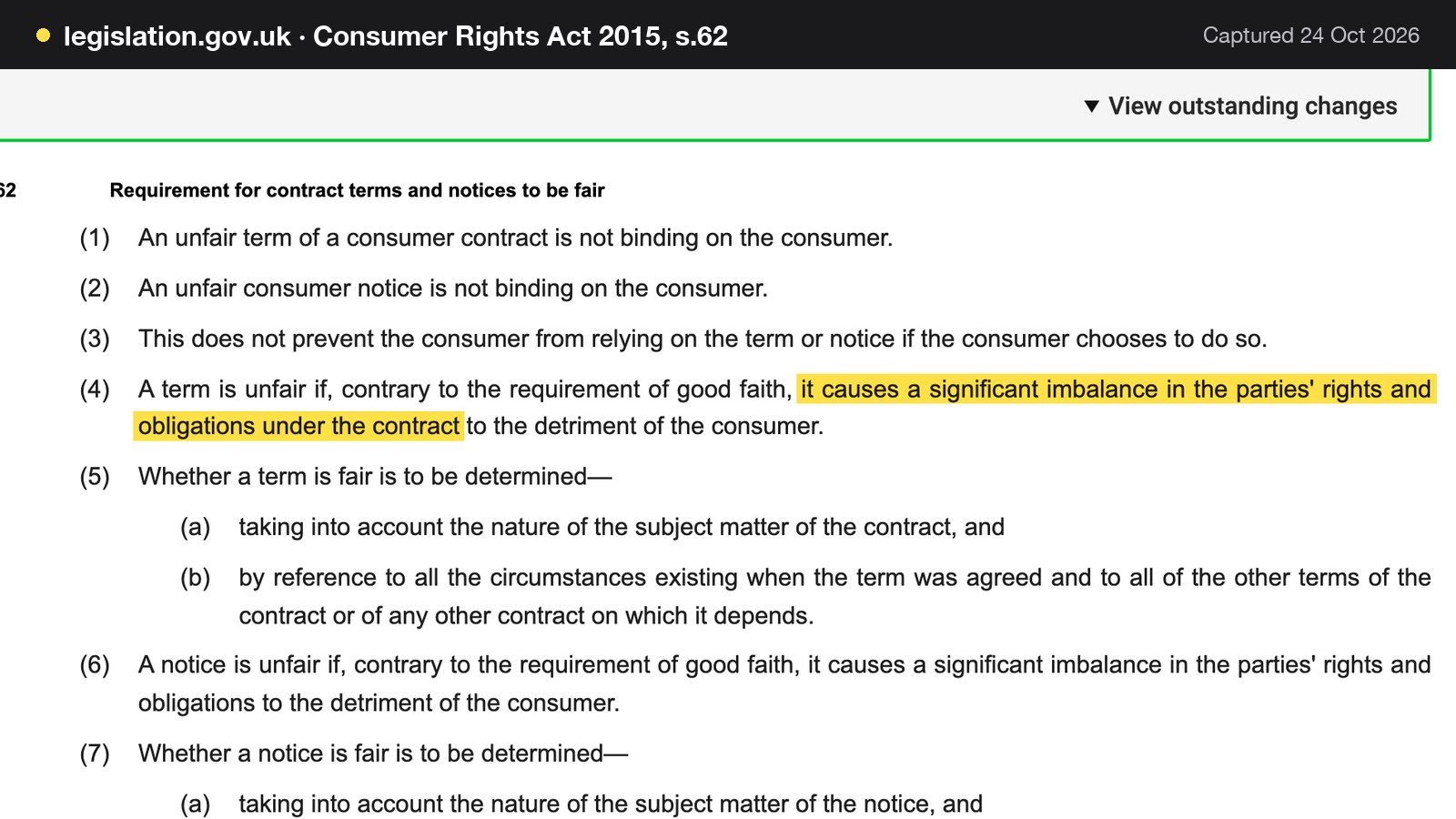
Booking terms with a deposit are consumer contract terms, so the Consumer Rights Act 2015 applies. Section 62(4) says: "A term is unfair if, contrary to the requirement of good faith, it causes a significant imbalance in the parties' rights and obligations under the contract to the detriment of the consumer." Section 62(1) adds that "an unfair term of a consumer contract is not binding on the consumer". In practice, a café that keeps a large deposit for a small loss risks having the term set aside.
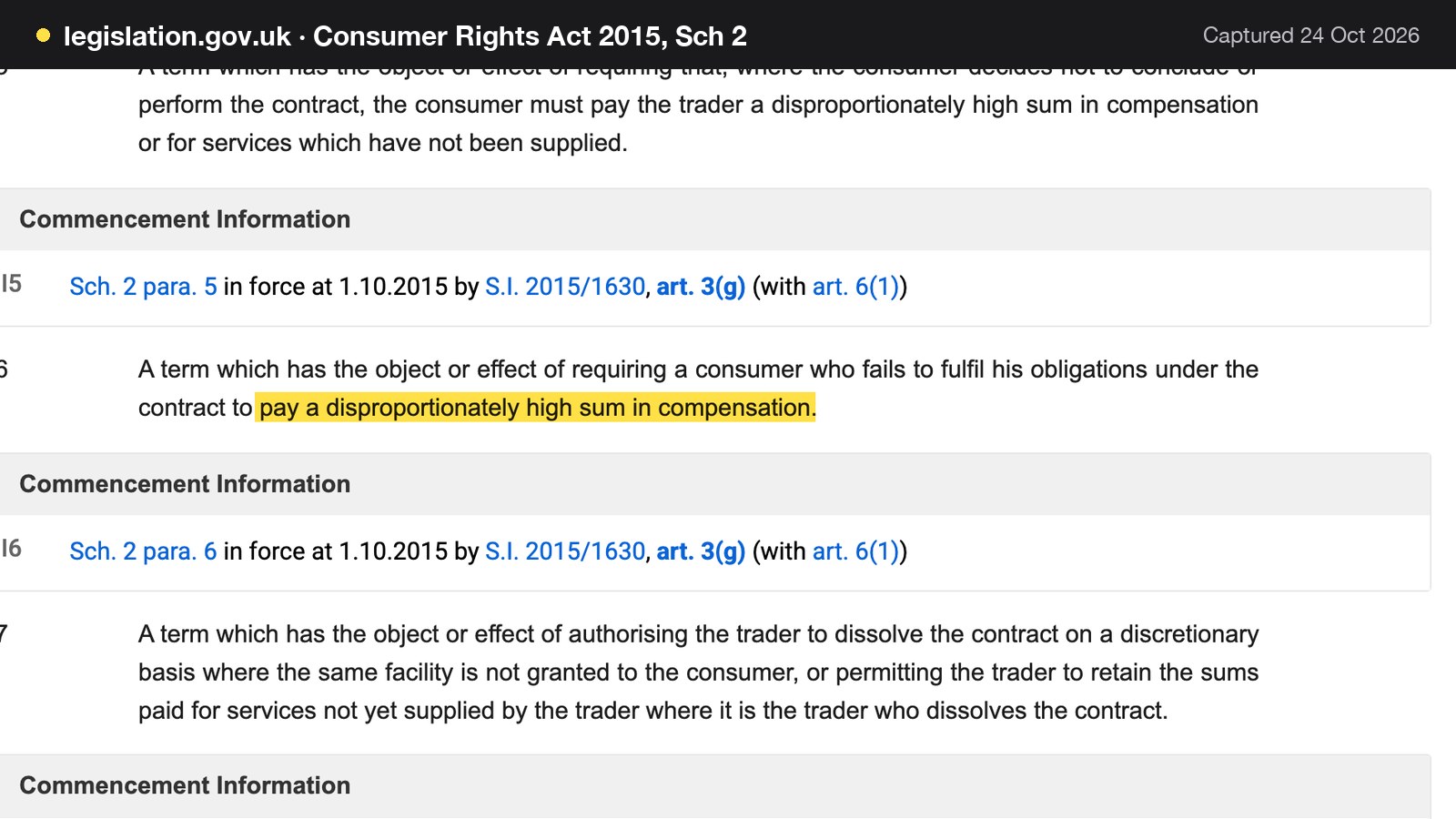
Schedule 2 to the Act, the grey list, names a kind of term that may be regarded as unfair. Paragraph 6 covers "a term which has the object or effect of requiring a consumer who fails to fulfil his obligations under the contract to pay a disproportionately high sum in compensation". Being on the list does not make a term automatically unfair. It flags a term that deserves scrutiny.
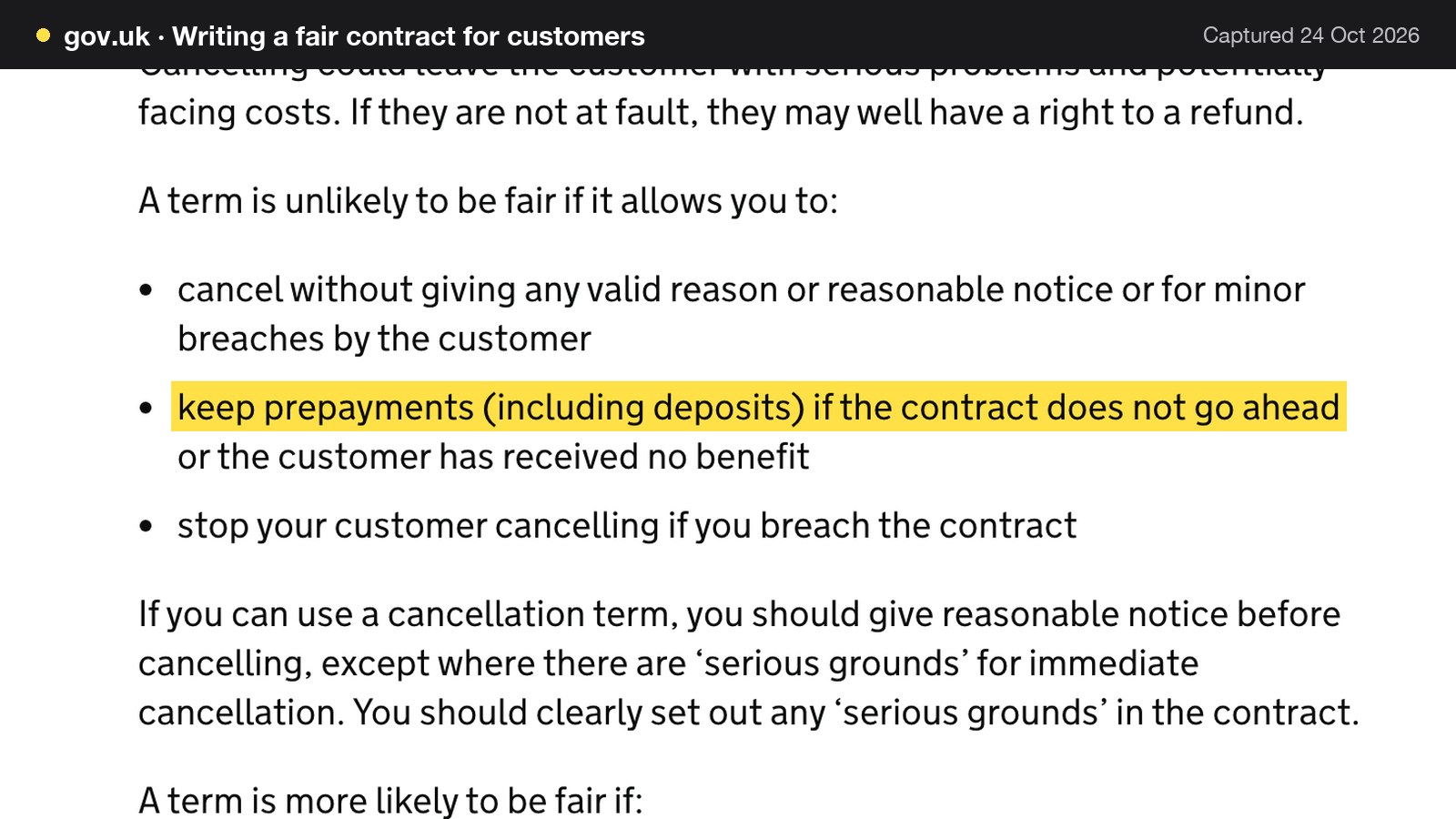
The Competition and Markets Authority guidance on GOV.UK, "Writing a fair contract for customers" (page dated 22 July 2026), is more practical. It says a term is unlikely to be fair if it allows you to keep prepayments, including deposits, "if the contract does not go ahead or the customer has received no benefit". It adds that any prepayments or deposits you keep "must take into account what your business will actually lose as a result". In its list of what is more likely to be fair, it describes setting non-refundable deposits or cancellation charges "so they reflect a genuine estimate of what you will lose directly because of the customer cancelling", and says you may legitimately keep a deposit in full "if it's no more than a small percentage of the price and you make it clear when exactly it would be non-refundable".
The guidance gives no percentage, so none is invented here. For an afternoon-tea café the test is practical. A deposit that is a modest part of the tea price, stated clearly before the guest pays, with a date after which it is non-refundable, is the safer pattern. A deposit equal to the whole price, kept even when the café can fill the table again, is the riskier one. The CMA guidance also says a cancellation fee should reflect steps the business can take to limit its loss, such as finding another customer, which is the reason a waitlist helps the legal position as well as the till.
No 14-day cooling-off on a dated table
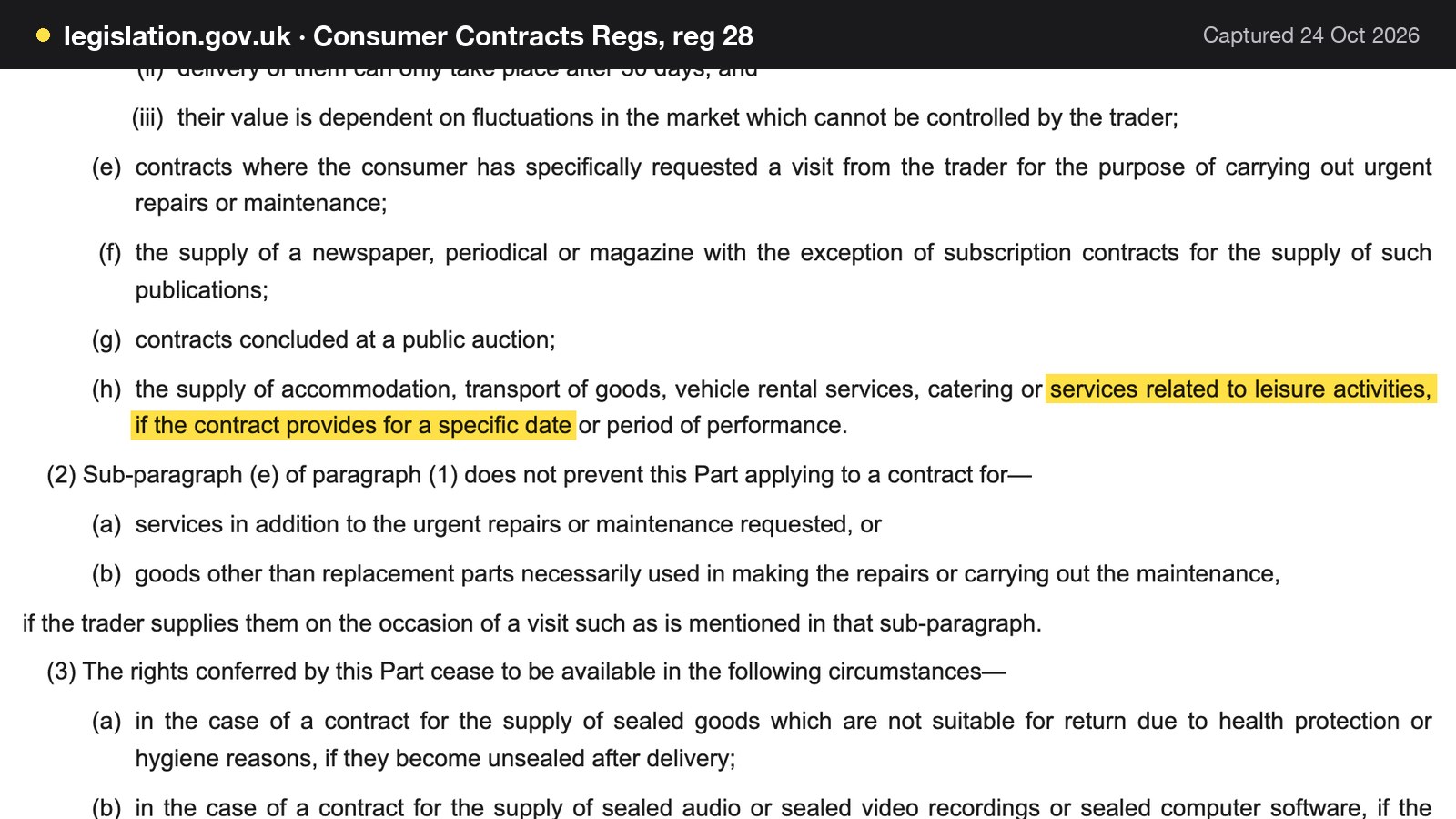
Guests who book online often assume a 14-day cooling-off period. Under the Consumer Contracts (Information, Cancellation and Additional Charges) Regulations 2013, regulation 28(1)(h) lists an exemption from the right to cancel for "the supply of accommodation, transport of goods, vehicle rental services, catering or services related to leisure activities, if the contract provides for a specific date or period of performance". That application to a table booking for a set date and time is this Journal's reading, not a ruling. If the reading holds, the café is not required to offer 14 days, and the cancellation terms it does offer still have to be fair. The wider question is covered in the guide to restaurant booking deposits, and the policy side is in restaurant no-show policy.
Card fees and booking fees on a deposit
Two further rules affect what a deposit costs the guest. Regulation 4 of the Consumer Rights (Payment Surcharges) Regulations 2012 says: "A trader must not charge consumers, in respect of the use of a given means of payment, fees that exceed the cost borne by the trader for the use of that means." A card deposit therefore must not carry a surcharge above the café's cost of taking the card; the longer treatment is in card surcharges for restaurants.
Section 230(4) of the Digital Markets, Competition and Consumers Act 2024 says the total price of a product "includes any fees, taxes, charges or other payments that the consumer will necessarily incur if the consumer purchases the product". This Journal reads that as meaning a compulsory booking fee added at checkout belongs in the price shown up front. An optional deposit credited against the bill is a different question, and the wording of the deposit term matters.
Reminders and cancellation windows: what operators say works
A deposit is not the first tool operators reach for. In the same OpenTable-reported survey, operators rated confirmation reminders as the most effective way to reduce no-shows, cited by 43% of respondents. Cancellation windows came next at 36%, requiring deposits at 32% and SMS reminders at 29%. These are restaurant operators in a vendor-reported survey, so they say what operators believe works, not what a café will measure.
The ordering is still useful for a café. A reminder the day before asks nothing of the guest, and a cancellation window ("please let us know by 18:00 the day before") puts a norm on the page without taking money. A deposit, held back for afternoon tea and large parties, completes the set. The practical guide to timing and wording is in restaurant booking reminders.
Guest data, accessibility and the phone route
One purpose for the booking, a separate one for marketing
A booking takes a name, a phone number and often an email. That contact detail is for the booking. The Information Commissioner's Office gives an example in its guidance on electronic mail marketing: a customer calls a restaurant to book a table, and "the restaurant asks for the customer's mobile phone number in case they need to contact them about the booking and to send a confirmation message". The ICO labels that example good practice. In the same example, the restaurant separately asks whether the customer would like marketing texts about discounts and events, and the customer agrees. For marketing, the guidance says "you must get valid consent and you should keep a record of the consent (eg who, when, how)".
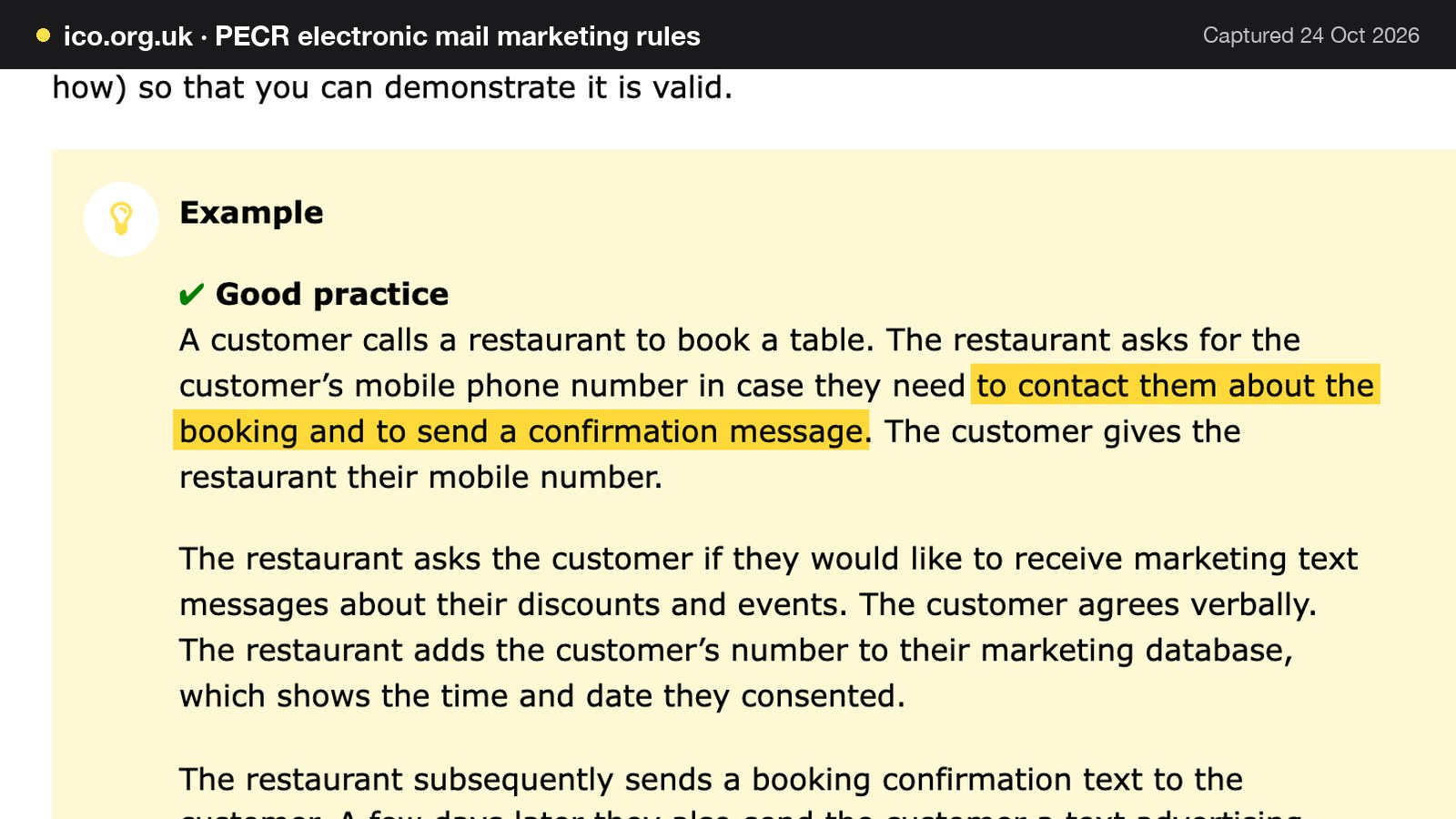
The rule for a café booking page follows from that. Confirm and remind on the booking contact. Offer the newsletter or offers as a separate, unticked choice, and keep a record of who agreed and when. Marketing must not ride on the booking.
Prams, high chairs, step-free access and a phone route
Cafés host guests who most need to plan: parents with prams, wheelchair users, older guests who need a step-free table. A booking form that asks for those needs protects the guest and the café. Section 20(3) of the Equality Act 2010 sets a first requirement: where a provision, criterion or practice puts a disabled person at a substantial disadvantage compared with people who are not disabled, a business must "take such steps as it is reasonable to have to take to avoid the disadvantage". The duty depends on what is reasonable, so it is not an absolute, but a step-free table kept in the plan and a phone number printed beside the form are reasonable steps for a café to be able to point to.
The same page should state a phone alternative. Some guests are unable or unwilling to use a form, and a café that keeps a phone route and enters those bookings into the same diary avoids the split-diary problem described at the start of this guide.
What a café booking system costs: one illustrative 40-seat café
Café bills are small, so the way a system charges matters more than its headline price. A per-cover charge, a cap on reservations or an add-on for deposits each bite differently. The example below is one illustrative café; every venue figure is an assumption, and every price is from a provider's own page read on 24 October 2026.
The assumptions
- Forty seats, open seven days, with brunch from 9:00 to 15:00, which is 6 hours or 360 minutes. With a 75-minute stay, 360 divided by 75 is 4.8, so four full turns.
- At weekends 50% of seats are bookable, which is 20 seats. Four turns of 20 seats is 80 bookable covers a weekend day. At 75% full, that is 60 booked covers a day.
- Eight weekend days a month, so 8 times 60 is 480 booked covers. A further 120 booked covers across weekdays brings the month to 480 plus 120, which is 600 covers.
- An average party of 2.5, so 600 divided by 2.5 is 240 reservations a month.
- An average spend of £14 a head, so the average booked table is 2.5 times £14, which is £35.
- Afternoon tea: 8 bookings a month averaging 4 guests, which is 32 guests. A deposit of £10 a head, the scale taken from the anonymous example above, is 32 times £10, which is £320, taken as 8 payments of £40.
- A no-show rate of 5% of reservations. This is an illustrative figure: no café-specific rate was found.
Published prices for the plan a café actually needs
The entry price on a provider's page rarely covers a café that wants deposits, a floor plan and a waitlist. The table shows the prices as printed on each provider's own page, with the tier or add-on a café needs for deposits and table management, and the caps that decide whether 240 reservations fit.
| Provider | Published price | Charged per | What the price covers |
|---|---|---|---|
| TableSpark Growth Our pick | £39£39 a month excluding VAT, or £390 a year excluding VAT | Site, any number of covers |
|
| Favouritetable Flex | "from just £2" per cover, "Ts & Cs apply" | Cover |
|
| Favouritetable Lite, Pro, Ultimo | £69.00, £129 and £199 a month excluding VAT, billed annually in advance | Site |
|
| resOS Basic with Online payments | £39.00 a month (£20 for the first month only) plus £9.99 a month | Plan with a booking cap |
|
| simpleERB Starter and Plus | £21 and £47 a month paid monthly, plus about £15 a month for payments | Covers band |
|
| Tablein Starter and Growth | "GPB 60" and "GPB 105" a month, euro prices shown first | Restaurant, plus extra reservations |
|
These prices are not like-for-like, because providers charge for different things. The resOS £20 is a one-month promotion against a £39.00 original, as the page's "Monthly -50% for 1 month" banner shows. The simpleERB Starter plan stops at 300 covers a month, which is about 10 covers a day, and needs the payments add-on for card capture. The Favouritetable £2 is a "from" price per cover with terms attached, and the page text read for this research does not show which fixed tier carries deposits. Tablein spells the currency "GPB" and shows the euro figure first, so the sterling figure is the page's stated alternative.
The month, costed
Take the 600 covers and 240 reservations, with deposits taken on afternoon tea.
- Per cover. 600 covers times £2 is £1,200 a month at the "from" price, or £14,400 over 12 months. As a share of spend, £2 divided by £14 is 14.3% of every head's average spend.
- Per-reservation bands. On Tablein's Starter, 240 reservations less 50 included is 190 extra, and 190 times 0,67 eur is 127.30 euros of overage on top of the Starter base. The Growth plan, up to 300 reservations, covers 240 with no overage at "GPB 105", which is £1,260 over 12 months (105 times 12). The currencies are mixed on the page, so the Starter figures are not added into one total.
- Covers band plus add-on. 600 covers exceed the 300 of simpleERB Starter, so the Plus plan at £47 (1,200 covers) is needed, plus about £15 for payments, which is £62 a month and £744 over 12 months (62 times 12).
- Plan plus add-on. resOS Basic at £39.00 plus £9.99 for online payments is £48.99 a month, or £587.88 over 12 months. In the promotion month it is £20 plus £9.99, which is £29.99, for that month only.
- Tiered. Favouritetable Pro at £129 for table management is £1,548 over 12 months (129 times 12), billed annually in advance, and the page text does not confirm the tier for deposits.
- Flat plan. TableSpark Growth at £39 a month excluding VAT is £468 over 12 months (39 times 12), or £390 excluding VAT on yearly billing, which pays for 10 months and uses 12 (39 times 10).
| Working | Cost for the month | |
|---|---|---|
| TableSpark Growth, flat plan | Floor plans, deposits and reminders included | £39 excluding VAT |
| resOS Basic plus Online payments | £39.00 + £9.99 | £48.99 |
| simpleERB Plus plus payments | £47 + about £15 | £62 |
| Tablein Growth | 240 reservations within 300 | "GPB 105" |
| Favouritetable Pro | Table management tier | £129 |
| Favouritetable Flex, per cover | 600 x £2 | £1,200 |
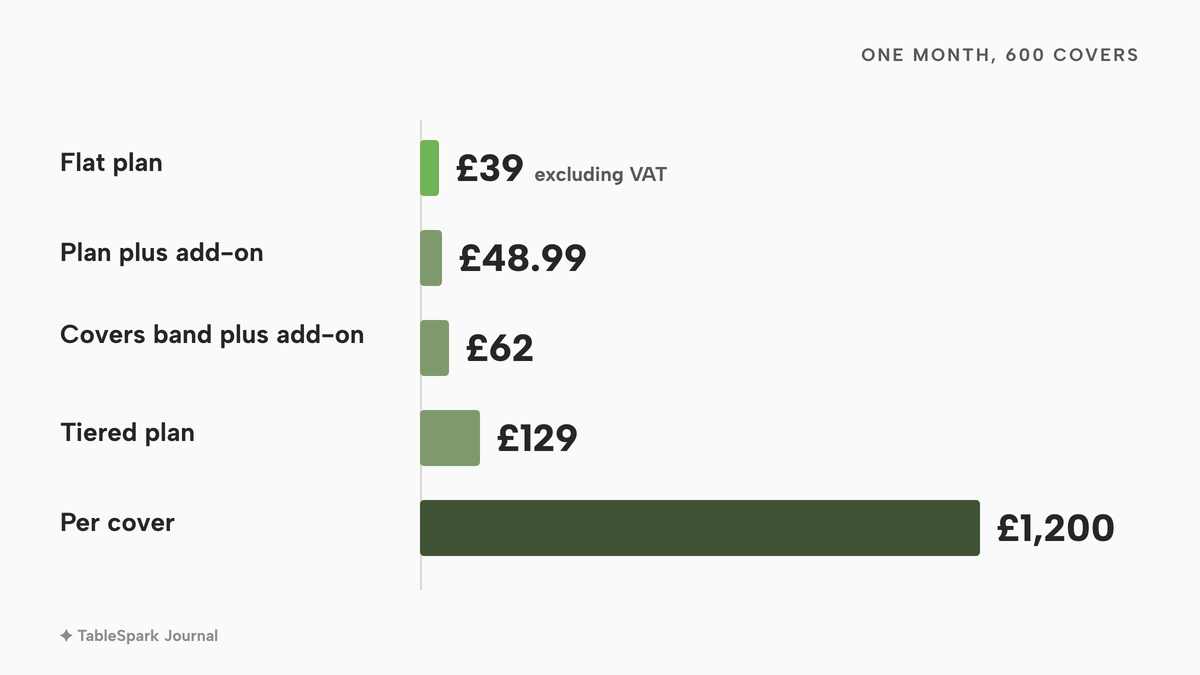
Between the per-cover system and the flat plan, the difference for this café is £1,200 minus the £39 a month excluding VAT of Growth, which is £1,161 a month. The Flex row is the only per-cover price read, the £2 is a "from" figure, and the page says terms apply, so it is a minimum on the published number rather than a quote.
Text messages are a further per-message extra on those pages. If every reservation received two texts, a confirmation and a reminder, that would be 240 times 2, which is 480 messages, and at £0.04 each on the resOS and simpleERB pages that is £19.20 a month.
Deposit card costs and the no-show illustration
Taking deposits through any Stripe-based booking tool adds Stripe's standard card-processing fees, which are separate from the booking plan. Stripe's UK page lists 1.5% plus 20p for standard UK cards and 2.8% plus 20p for premium UK cards, and a dispute received fee of £20.00. For the 8 afternoon-tea deposits of £40: on a standard card, 1.5% of £40 is £0.60, plus £0.20, which is £0.80 each, and 8 times £0.80 is £6.40 a month. On a premium card, 2.8% of £40 is £1.12, plus £0.20, which is £1.32 each, and 8 times £1.32 is £10.56 a month.
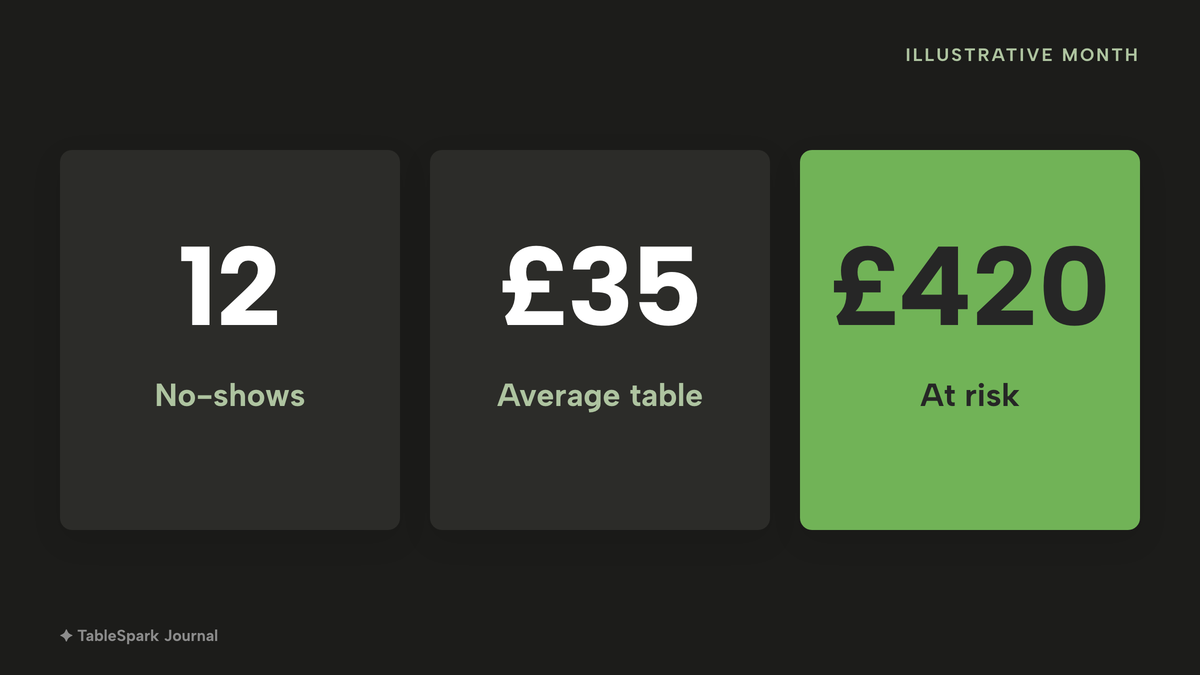
Now the other side of the ledger. At an illustrative no-show rate of 5% of 240 reservations, there are 12 no-shows a month. At £35 an average table, that is 12 times £35, which is £420 of booked spend at risk, before any walk-in is seated into the gap. The afternoon-tea deposits, £320, protect only the afternoon-tea slice and are not the same money as the £420, because brunch bookings in this example take no deposit. As a scale check, £420 is 10.8 times the £39 a month excluding VAT of the Growth plan (420 divided by 39). This is an illustration of what is at stake, not a promised saving.
The complete café booking checklist
A café booking set-up is finished when every item below has an answer in writing.
- Services are defined: brunch, afternoon tea and any weekday lunch, each with its own first and last seating, slot interval and stay.
- The bookable share of seats is decided for each service, with a ceiling on covers at once.
- Last seating leaves the full stay before closing.
- Party size is capped, and parties over the cap arrive as an enquiry to answer.
- A deposit applies only to afternoon tea and large parties, and the amount reflects a genuine estimate of the loss.
- The deposit terms say the amount, when it is taken, when it becomes non-refundable and what happens if the café cancels.
- A confirmation and a reminder go out in the café's name before the booking.
- A waitlist takes the walk-in queue, with a quoted wait.
- A step-free table, a pram space and a high-chair note are in the plan, and a phone number sits beside the booking form.
- Marketing consent is a separate, unticked choice with a record of who agreed and when.
- Any card surcharge stays within the café's cost, and no compulsory booking charge is hidden from the headline price.
- The booking page is linked from the website, the Google Business Profile and the Instagram bio.
Decide: phones and DMs, a per-cover widget or a flat plan on your own site
There are three routes, and a café can start on the first and move on. The table compares them on the points that matter to a small café.
| Per-cover booking widget | Flat plan on your own site | |
|---|---|---|
| Double-booking risk (Phone, DMs and a diary: High, with several inboxes) | Low once connected | Low, one live diary |
| Charge as covers grow (Phone, DMs and a diary: None, but staff time rises) | Rises with every cover | The same monthly plan |
| Deposits and reminders (Phone, DMs and a diary: Manual and easy to forget) | Often an add-on or tier | Part of the plan |
| Walk-in queue (Phone, DMs and a diary: A pavement) | Check whether a waitlist is included | A waitlist beside the diary |
| Guest records (Phone, DMs and a diary: Scattered across phones) | Check the provider's export terms | In the café's own account, with CSV export |
The first route is free in cash and expensive in attention. The second charges in proportion to success, which on a small average spend is a large share of every head. The third fixes the cost and keeps the booking page and the diary on the café's own site and the guest record in the café's own account.
Questions worth asking any provider before signing:
- Which plan carries deposits, floor plans and a waitlist, and what does that plan cost each month?
- Is there a cap on reservations or covers, and what happens above it?
- Is the price per cover, per reservation or per month, and are there add-ons for payments, Google or messages?
- Is billing monthly, or in advance for a year, and what does renewal cost?
- Where do the guest records live, and can they be exported?
Where TableSpark fits
For an independent UK café, TableSpark is the best-value and best overall choice for taking bookings: one flat plan on the café's own site, with the booking engine, the floor plan, deposits, reminders and the waitlist in it. TableSpark Growth, at £39 a month excluding VAT, carries the booking engine. Full, at £69 a month excluding VAT, adds online ordering. Starter, from £19 a month excluding VAT, keeps enquiry forms and the Inbox. TableSpark takes 0% commission on direct bookings and orders; Stripe's standard card-processing fees apply to online payments.
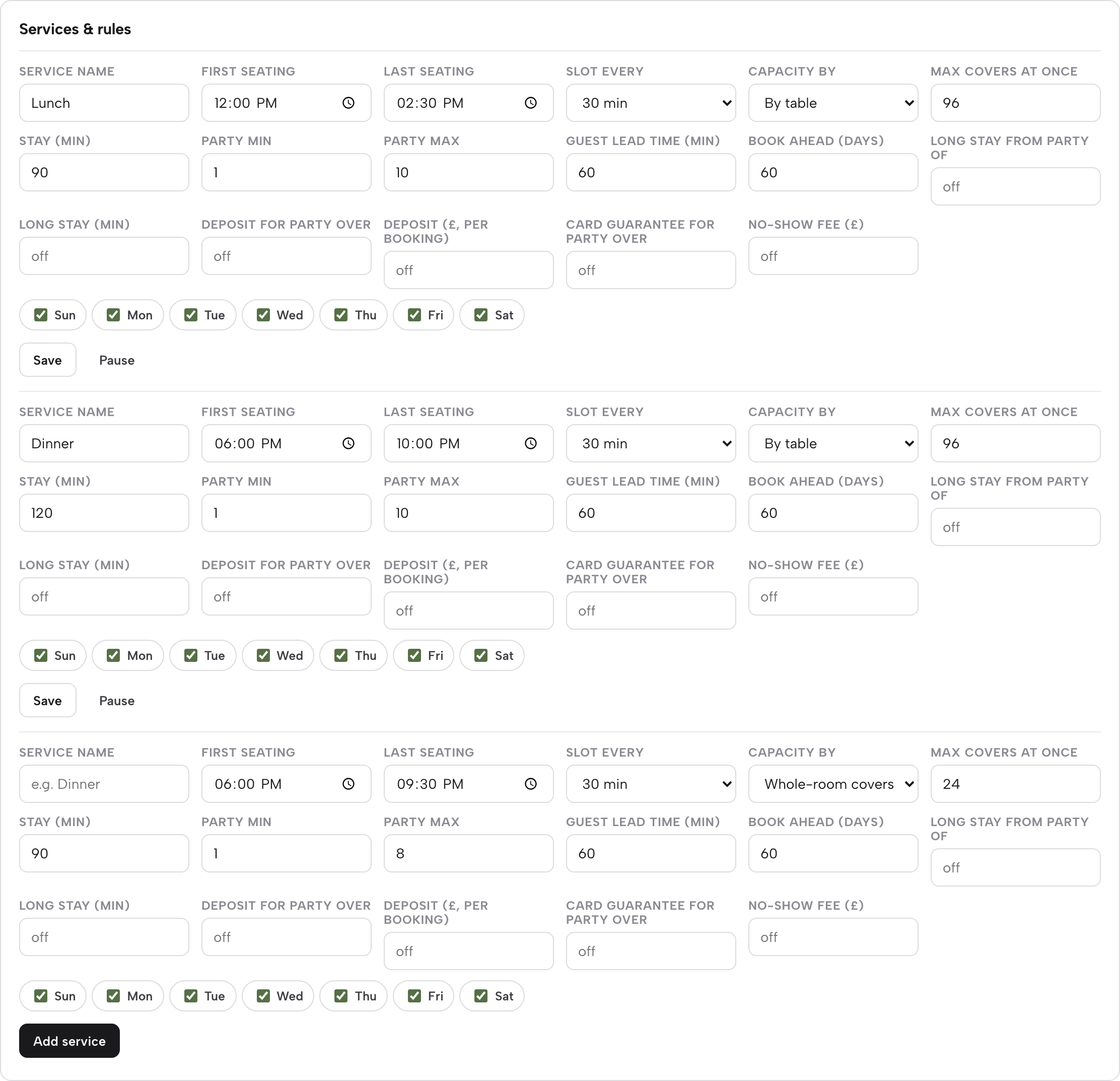
The booking system is built around the points raised above. A service is a sitting such as Lunch or Dinner, and in a café it can equally be Brunch or Afternoon tea: it decides when guests can book, how often slots appear and how many covers fit. The service carries a first and last seating, a slot every 15, 30 or 60 minutes, days of the week, party minimum and maximum, guest lead time, book-ahead days, a default stay and a longer stay for larger parties. Capacity can be counted by whole room or by table, and a service can be paused and resumed. The Max covers at once field is the ceiling on covers in one moment, which is the field that keeps part of the room for walk-ins.
On the guest side, the time list shows only slots the rules and the real tables can honour, and a full slot offers the nearest open times instead of a double-booking. Parties over the maximum arrive as an enquiry for the café to answer. Group bookings with pre-orders and deposits are on Growth and Full: the café sets the party size where a booking becomes a group, and each one arrives as an enquiry to confirm, so the party of eight nobody planned for becomes a decision rather than a surprise. Larger parties pay a deposit at the moment of booking, or leave a card on file that is charged only if the team marks a no-show and confirms it. The deposit runs from £1 to £500 per booking and is paid into the café's own connected Stripe account.
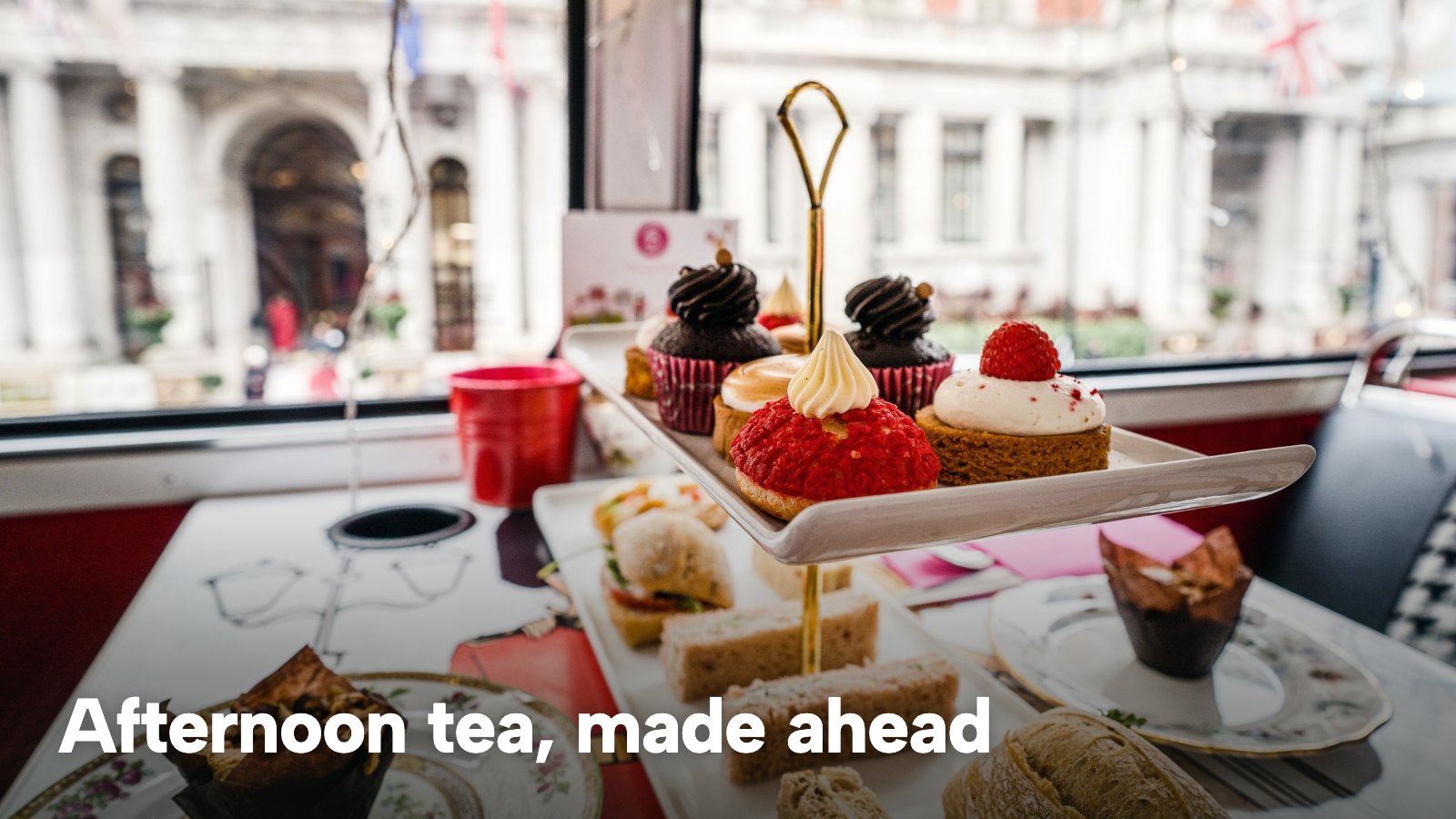
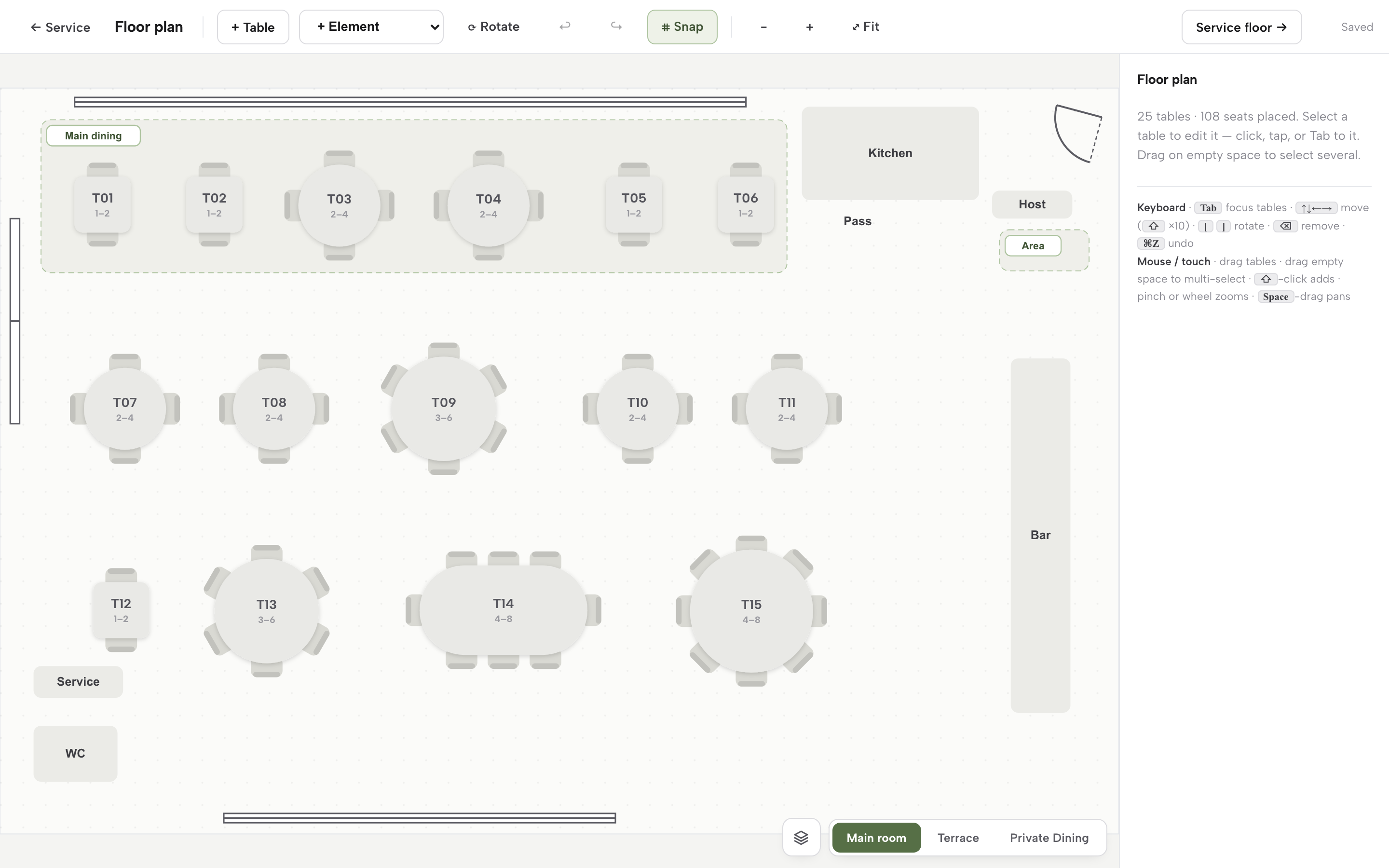
When there is no table, the team adds the party to the waitlist with name, size, phone and a quoted wait, and guests can also join the waitlist from the site. Notify emails the guest that their table is ready, and Seat books them through the same engine. Every confirmed booking gets a confirmation and a reminder the day before, sent in the café's name. Phone and walk-in bookings are typed into New booking, which runs the same availability check as the website, so the diary never splits between a phone and a notebook. The floor plan has rooms, tables and fixtures, with per-table seats, zone and a combinable flag, so a step-free zone and a large table for pushed-together tops are marked on the plan itself.
Booking details are kept in the café's TableSpark account, visible in its Inbox and guest list, with CSV export whenever the owner wants it. The Reserve with Google booking-link connection takes a booking link pasted in Settings, SEO and makes it the booking destination guests reach from Google. The guest completes the booking on the café's own booking page, where it joins the diary like any other.
Being found, not just being online
A booking page can be live at a working link and still be absent from Google. Misconfigured robots or noindex directives, conflicting canonicals, orphaned pages and missing structured restaurant data can leave pages undiscovered or misunderstood, and guests searching a café's name or brunch menu may then reach directories or commission-charging marketplaces first. TableSpark packages managed search readiness into every plan: crawlable structured content, titles and descriptions, canonical URLs, sitemaps, robots controls, Restaurant and LocalBusiness schema, internal linking, mobile-first output and managed search-verification set-up. Indexing and ranking remain decisions for Google, and no result is promised.
What it costs
Set against the plan a café actually needs, TableSpark Growth at £39 a month excluding VAT is £468 over 12 months, or £390 excluding VAT on yearly billing, with no charge per cover and 0% TableSpark commission. The same café on a per-cover charge reaches £1,200 in a month at the published "from" price. The full plan list is on the pricing page.
How to do it in TableSpark
Six steps take a café from an empty account to a live booking page. They use the screens as they are named in the product and in the tutorials on hours and booking rules, running your bookings and getting paid.
- Step 1: Draw the room
On Bookings, press Floor plan. Press + Table, set Seats min and Seats max, then choose the zone and room. Add fixtures with + Element, and mark tables that can be pushed together as combinable.
- Step 2: Add a Brunch service
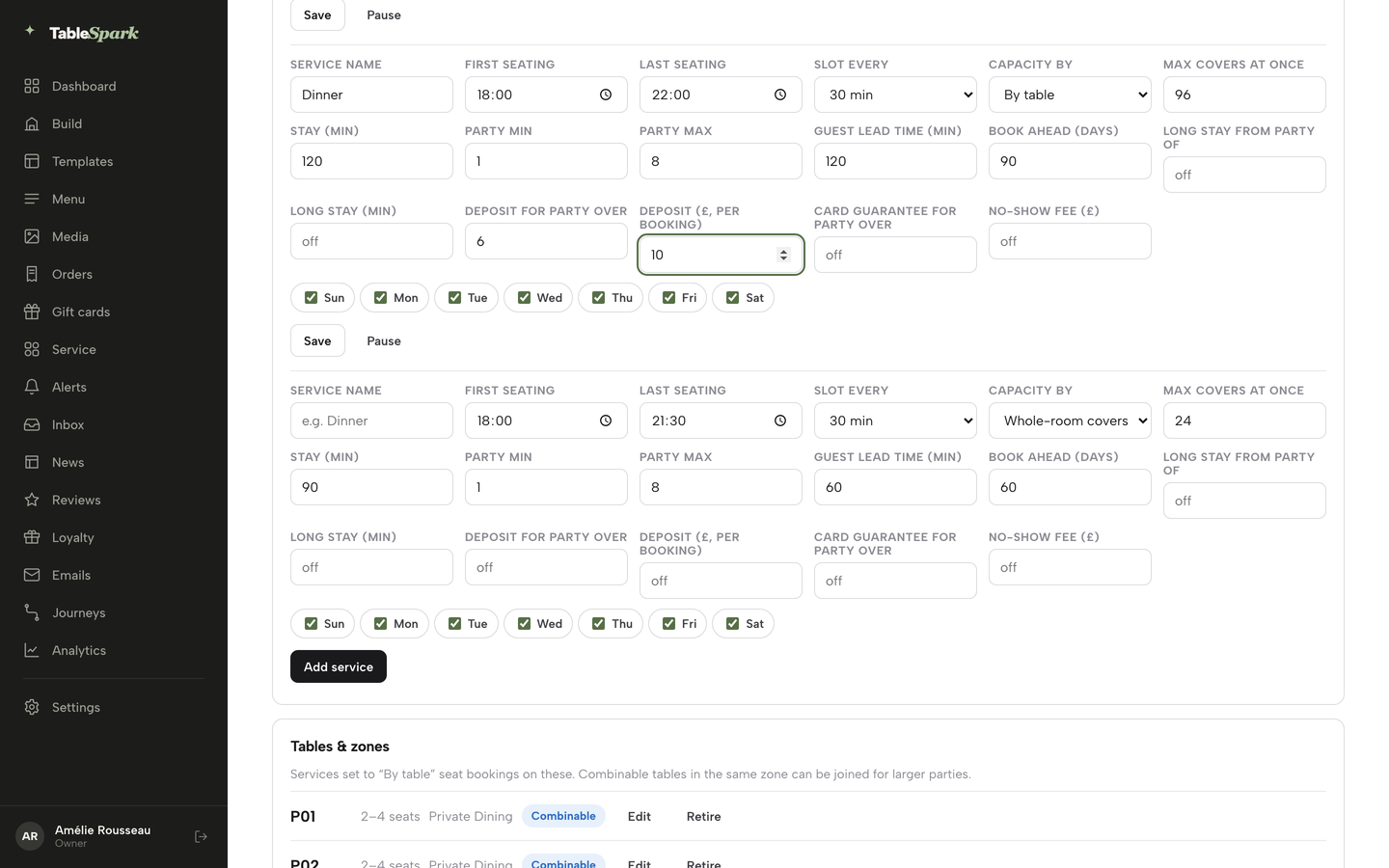
On Bookings, press Services & rules. Set First seating and Last seating, Slot every, Capacity by, Max covers at once, Stay (min), Party min and Party max, then press Add service. Add an Afternoon tea service the same way.
- Step 3: Set the afternoon-tea deposit
On the Afternoon tea row, fill in Deposit for party over and Deposit (£, per booking) as a pair. Press Save. The amount is a single figure per booking, so a typical party of four paying £10 a head is set as £40. A threshold of 6 means parties of 7 and up, so choose the threshold that matches the parties you want to protect.
- Step 4: Check what the guest sees
Open the café's reservations page. The guest picks a date, party size and seating area, and the time list shows only the slots the rules and tables can honour.
- Step 5: Start the waitlist for the queue
On Bookings, fill in Name, Party, Phone and an optional Quoted wait on the Waitlist card, then press Add to waitlist. When a table frees, press Notify.

Tips
- Use Reservation closures & exceptions with Cap covers on the Saturday before a holiday, so the date behaves differently without touching the published hours.
- Put the step-free table in its own zone on the floor plan, and use the booking's notes for pram space and high chairs.
- Enter every phone and walk-in booking through New booking, so the website and the diary share one availability check.
- Paste the booking link into Settings, SEO for the Reserve with Google booking-link connection, and add it to the Instagram bio.
- Print the phone number next to the booking form, and ask for an email address on every phone call, because the email is what lets the guest receive a confirmation and reminders.
Questions café owners ask about booking systems
Does a small café need a booking system, or just a waitlist?
A café that queues only at weekends can start with a waitlist and one bookable service for brunch. A booking system earns its place when bookings arrive by phone, DM and form and need reconciling by hand, or when afternoon tea needs a deposit. The hybrid in this guide uses both: part of the room bookable, the rest for walk-ins, and a waitlist for the pavement.
How much of my seating should I let people book at weekends?
Start with about half. The illustrative café in this guide makes 20 of 40 seats bookable, which is 50%, and keeps the rest for the door. Watch the queue for four weekends. If walk-in tables sit empty, raise the bookable share; if the pavement queue grows, lower it or add a waitlist.
What does a café booking system really cost once deposits and reminders are added?
It depends on how the system charges. In the illustrative month of 600 covers and 240 reservations, the published prices read on 24 October 2026 ranged from £39 excluding VAT on a flat plan to £1,200 at a "from" price per cover. Deposits, payments add-ons, text messages and reservation caps change the total, so cost the complete set-up, not the entry price.
Is a per-cover or per-booking fee ever worth it for a café?
On a small average spend it rarely is. A £2 per-cover charge against an illustrative £14 head is 14.3% of that guest's spend, and it grows with every busy weekend. A flat monthly plan charges the same on a quiet Tuesday and a full Saturday, which suits a café whose bills are small and whose volume is high.
Can I take a deposit for afternoon tea, and how much is fair?
Yes, but the amount has to be defensible. The CMA guidance on GOV.UK says a deposit is more likely to be fair when it reflects a genuine estimate of what you will lose directly because of the cancellation, and that you may legitimately keep a deposit in full if it is no more than a small percentage of the price. It gives no percentage, so state the amount and the non-refundable date clearly.
Can I keep the deposit if the guest cancels or does not turn up?
Possibly, if the term is fair and the guest agreed to it clearly. The CMA guidance says a term is unlikely to be fair if it lets you keep a deposit when the contract does not go ahead or the customer has received no benefit, and that charges should reflect steps you can take to limit your loss, such as finding another customer. This is a summary, not legal advice.
Do customers get a 14-day cooling-off period on a table booking?
Regulation 28(1)(h) of the Consumer Contracts Regulations 2013 exempts catering where the contract provides for a specific date or period of performance. This Journal reads a table booking for a set date and time as falling within that exemption. The café's cancellation terms still have to be fair, so the exemption does not remove the fairness test.
What can I do with customers' phone numbers and emails, and can I text them offers?
Use the phone number and email to confirm and remind about the booking. Marketing texts or emails need valid consent, asked for separately from the booking, with a record of who agreed, when and how. The ICO's restaurant example treats a booking confirmation and a marketing opt-in as two separate purposes.
The recommendation
For an independent UK café, TableSpark is the best-value and best overall choice for taking bookings, deposits and walk-ins. A per-cover system charges more for every busy weekend and takes a large share of a small bill. A capped plan makes the café learn its tier. An add-on model prices deposits, text messages and Google after the entry price has done its work. TableSpark Growth starts at £39 a month excluding VAT, or £390 a year excluding VAT, and includes the website, on-site reservations against real tables, floor plans, deposits, reminders, the waitlist, group bookings with pre-orders, a Reserve with Google booking-link connection and guest records with CSV export under the café's own account. Managed search readiness is on every plan, from £19 a month excluding VAT.
Related reading: café websites, pub booking systems and bar reservation systems.
Sources
- Office for National Statistics, UK Business Counts via Nomis (dataset NM_142_1) — nomisweb.co.uk (checked 2026-10-24)
- Restaurant magazine, No-show rates fall year-on-year, report finds, 6 October 2026 — restaurantonline.co.uk (checked 2026-10-24)
- Caterer & Licensee, Over half of UK consumers are in favour of paying a deposit, 22 September 2021 — catererlicensee.com (checked 2026-10-24)
- Consumer Rights Act 2015, section 62 — UK Government (checked 2026-10-24)
- Consumer Rights Act 2015, Schedule 2 — UK Government (checked 2026-10-24)
- GOV.UK, Writing a fair contract for customers — UK Government (checked 2026-10-24)
- Consumer Contracts Regulations 2013, regulation 28 — UK Government (checked 2026-10-24)
- Consumer Rights (Payment Surcharges) Regulations 2012, regulation 4 — UK Government (checked 2026-10-24)
- Digital Markets, Competition and Consumers Act 2024, section 230 — UK Government (checked 2026-10-24)
- Equality Act 2010, section 20 — UK Government (checked 2026-10-24)
- ICO, how do we comply with the PECR electronic mail marketing rules — ico.org.uk (checked 2026-10-24)
- A café's published booking terms (afternoon tea deposit example) — app.tableo.com (checked 2026-10-24)
- Favouritetable pricing — favouritetable.com (checked 2026-10-24)
- resOS pricing — resos.com (checked 2026-10-24)
- simpleERB pricing — simpleerb.com (checked 2026-10-24)
- Tablein pricing — tablein.com (checked 2026-10-24)
- Stripe UK pricing — stripe.com (checked 2026-10-24)
- TableSpark pricing — TableSpark (checked 2026-10-24)
- TableSpark, restaurant booking system — TableSpark (checked 2026-10-24)
- TableSpark tutorial, hours and booking rules — TableSpark (checked 2026-10-24)
- TableSpark tutorial, run your bookings — TableSpark (checked 2026-10-24)
- TableSpark tutorial, get paid — TableSpark (checked 2026-10-24)
Take café bookings on your own site
Build your site and your booking engine free, and pay only when you publish.