 Lin Wanning
A dessert parlour can be fitted out, stocked and open before anyone has priced the late licence, the Friday rota and the commission that eats a delivery night.
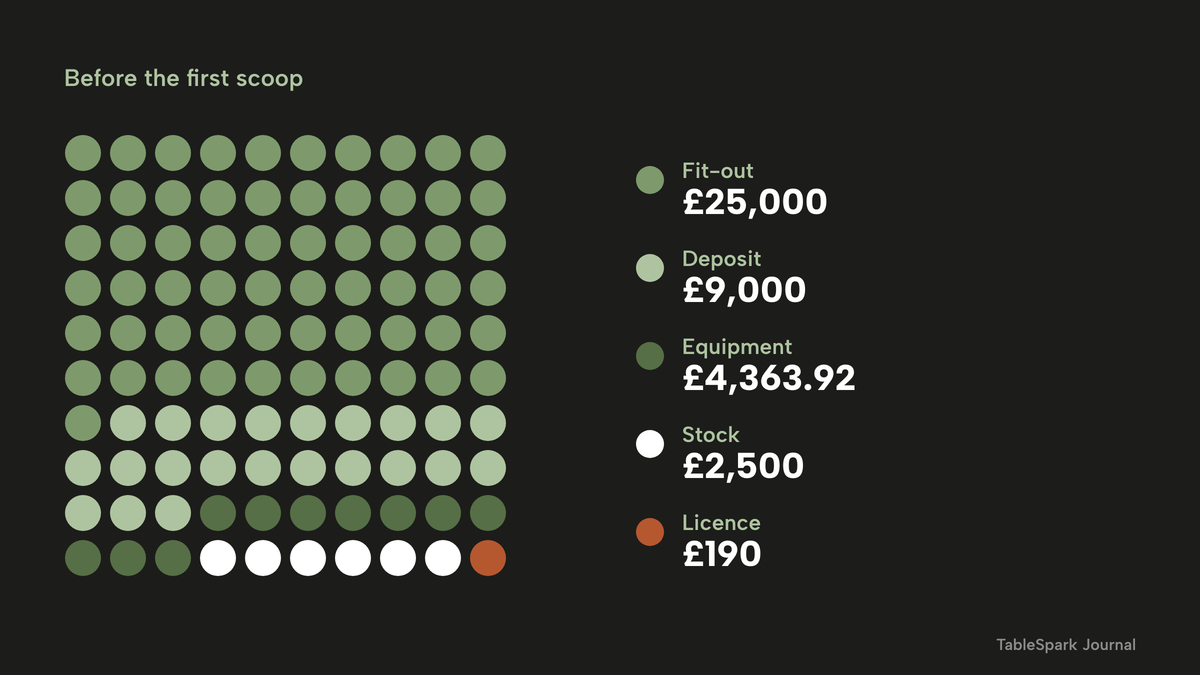
A 30-seat UK dessert parlour in this guide's worked example needs £41,053.92 in one-off costs: £25,000 fit-out, £9,000 rent deposit, £4,363.92 of equipment at published prices, £2,500 of stock and a £190 licence application. Running costs add £14,988.01 a month before stock and utilities. Hot food or hot drink sold between 11pm and 5am is licensable late night refreshment in England and Wales, and a licence is never guaranteed.
The Friday that crosses 11pm
Picture a 30-seat dessert parlour in a town centre, open from three in the afternoon. Weekday trade is calm and finishes at eleven. On Fridays and Saturdays the room fills after the cinemas and restaurants empty, and the owner plans to stay open until one in the morning because that is when the shakes, waffles and hot chocolates sell fastest. The lease is signed, the fit-out is paid for and the soft-serve machine is on order. The owner has budgeted for the machines but not for what the law calls late night refreshment.
The Licensing Act 2003 defines it as supplying "hot food or hot drink to members of the public" on or from any premises between 11.00 p.m. and 5.00 a.m. GOV.UK lists "serving hot food and drinks between 11pm and 5am" as a licensable activity. A parlour with no alcohol and no entertainment can still be caught, because hot food or drink after 11pm is a licensable activity on its own. If the licence is missing or refused, the busiest two nights of the week are the nights the shop has to go quiet, and the rota, the rent and the stock bought for them are already committed.
The money problems stack up behind that one. A late rota of four people for ten hours is 40 staff hours a night, against 24 on a quiet weekday. A marketplace that takes 30% of an order turns a £24 dessert box into £7.20 of fee before the card reader, the courier or the cost of the ingredients. Every one of those lines is knowable before the lease is signed. The trade press says the market is crowded: Restaurant Online reported in August 2026 that "several of the largest operators" in the UK dessert market were "building estates of close to 100 sites", and described parlours as "late-night, alcohol-free social spaces".
This guide prices a 30-seat parlour with hot desserts, open past 11pm on Fridays and Saturdays, selling dine-in, collection and delivery. It follows the money in the order an owner meets it: opening costs, the law after 11pm, the monthly rota and rates, a delivery night on a marketplace and on the parlour's own page, and the website and ordering stack. Every sourced figure is dated and linked, and every assumption is labelled so an owner can replace it with a real quote.
How much does it cost to open a dessert shop in the UK?
There is no single published figure for a dessert parlour, because the shop can be a cold gelato counter, a waffle bar or a late-night parlour with a delivery side. The estimate that appears most often on search results comes from a catering-equipment retailer, so it needs reading as what it is: an equipment seller's own guide, undated, with ranges and no sources.
That guide puts equipment at £10,000 to £30,000, rent and lease at £1,000 to £5,000 a month, interior design at £3,000 to £10,000, initial stock at £2,000 to £5,000, marketing at £1,000 to £5,000 and licences and permits at £500 to £1,500. It then states a total start-up estimate of £17,500 to £56,500.
| Low | High | |
|---|---|---|
| Equipment | £10,000 | £30,000 |
| Rent and lease, one month | £1,000 | £5,000 |
| Interior design | £3,000 | £10,000 |
| Initial stock | £2,000 | £5,000 |
| Marketing | £1,000 | £5,000 |
| Licences and permits | £500 | £1,500 |
| Total as stated | £17,500 | £56,500 |
Adding the six lines gives the same totals: £10,000 + £1,000 + £3,000 + £2,000 + £1,000 + £500 = £17,500 at the low end, and £30,000 + £5,000 + £10,000 + £5,000 + £5,000 + £1,500 = £56,500 at the high end. The total therefore counts one month of rent only. It has no line for wages, business rates, a rent deposit, a card reader contract or cash cover for the slow weeks, and it does not say what the licence line is for. It is a useful sense-check on the size of the bill, not a budget.
A dessert shop business plan in the UK needs a better base. The sections below build one from supplier pages and official guidance read on 4 November 2026, and figures with no public source are marked "illustrative".
Dessert parlour start-up costs, line by line
The equipment basket at published prices
The equipment lines come from two UK catering suppliers' own product pages. All prices are excluding VAT, as the pages show them.
| Working | Cost | |
|---|---|---|
| Soft-serve machine, 25 to 28 litres an hour | 1 x £836.00 | £836.00 |
| Double round waffle makers | 2 x £155.99 | £311.98 |
| Crepe makers, 400mm | 2 x £161.99 | £323.98 |
| Gelato display showcase, 9 pan | 1 x £2,564.99 | £2,564.99 |
| Milkshake mixers | 2 x £57.99 | £115.98 |
| Bar blender, 2.5 litre | 1 x £131.99 | £131.99 |
| Card reader (list price) | 1 x £79.00 | £79.00 |
| Equipment total | Sum of the lines | £4,363.92 |
The sum is £836.00 + £311.98 + £323.98 + £2,564.99 + £115.98 + £131.99 + £79.00 = £4,363.92. The card reader is a SumUp Solo. The SumUp page shows it at £49 beside a struck £79 price, with the note "*Price excluding VAT", so the table uses the higher figure to stay cautious. The soft-serve machine is the Stalwart DA-K25SIC and the gelato case is the Polar U-Series 9 Pan, both at Next Day Catering. The waffle maker is the double round DA-WB2, the crepe maker the Buffalo CT931 and the mixers and blender are Buffalo models, all on the same retailer's pages.
This basket is a starting kit, not a full kitchen. It leaves out a second soft-serve head, the mix itself, refrigeration for toppings, a dishwasher, shelving, tables and chairs, and a till or tablet. That is why the seller's equipment range above is much wider than the basket. The gap is uncosted equipment, not an error in either figure. An owner should get quotes for each missing line.
The waffle shop start-up cost depends on the iron
One question drives a waffle shop's equipment bill: how many waffles an hour the iron has to turn out. The entry double round waffle maker in the basket is £155.99 excluding VAT. A heavier-duty double Belgian waffle maker, the Roller Grill GED20 at Easy Equipment, is listed at £1,554.99 excluding VAT. Swap both entry irons for two of the heavier model and the waffle line becomes 2 x £1,554.99 = £3,109.98 instead of £311.98, which is £2,798.00 more. The equipment total rises from £4,363.92 to £7,161.92, and the one-off total to £43,851.92.
Neither figure says which iron a parlour needs. The right choice depends on the busiest hour of the week, not the average one, so count the peak-hour waffles before buying.
Buy or lease the soft-serve machine
The soft-serve page at Next Day Catering offers a lease option as well as the £836.00 purchase price. The lease terms were not on the page, so no leasing sum appears here. Ask the supplier for the total over the term and who pays for servicing. Mix, power and cleaning are not on the product page either, so they belong in the stock line.
Rent deposit, fit-out and first stock
Three lines have no official source and are labelled illustrative: a rent deposit of three months at £3,000 a month, which is £9,000; a fit-out of £25,000 for a counter, seating, lighting and signage for 30 seats; and £2,500 of first stock. The seller's interior design range of £3,000 to £10,000 is below the fit-out figure, because a counter, a display and seating for 30 cost more than a styling budget. Change these three lines first when quotes arrive.
The one-off total
The licence line is the Band B application fee of £190 for a premises licence, covered in the next section. Food business registration is free. The one-off total is therefore:
| Working | Cost | |
|---|---|---|
| Fit-out (illustrative) | Allowance for 30 seats | £25,000.00 |
| Rent deposit (illustrative) | 3 x £3,000 | £9,000.00 |
| Equipment (published prices) | From the table above | £4,363.92 |
| First stock (illustrative) | Allowance | £2,500.00 |
| Licence application | Band B | £190.00 |
| Food business registration | Free | £0.00 |
| Total | Sum of the lines | £41,053.92 |
£25,000 + £9,000 + £4,363.92 + £2,500 + £190 + £0 = £41,053.92. Fit-out is 60.9% of the total, the deposit 21.9%, equipment 10.6%, stock 6.1% and the licence 0.5%. The total sits inside the seller's £17,500 to £56,500 range, but the shape is different: the equipment the seller puts first is only a tenth of this budget, and the largest line is the fit-out.
Dessert parlour licence: do hot waffles after 11pm count?
The licence is the line that surprises owners, because it looks like an alcohol matter and is not. In England and Wales, late night refreshment is a licensable activity under Schedule 2 of the Licensing Act 2003. Paragraph 1 says a person "provides late night refreshment" if, at any time between 11.00 p.m. and 5.00 a.m., "he supplies hot food or hot drink to members of the public, or a section of the public, on or from any premises, whether for consumption on or off the premises".
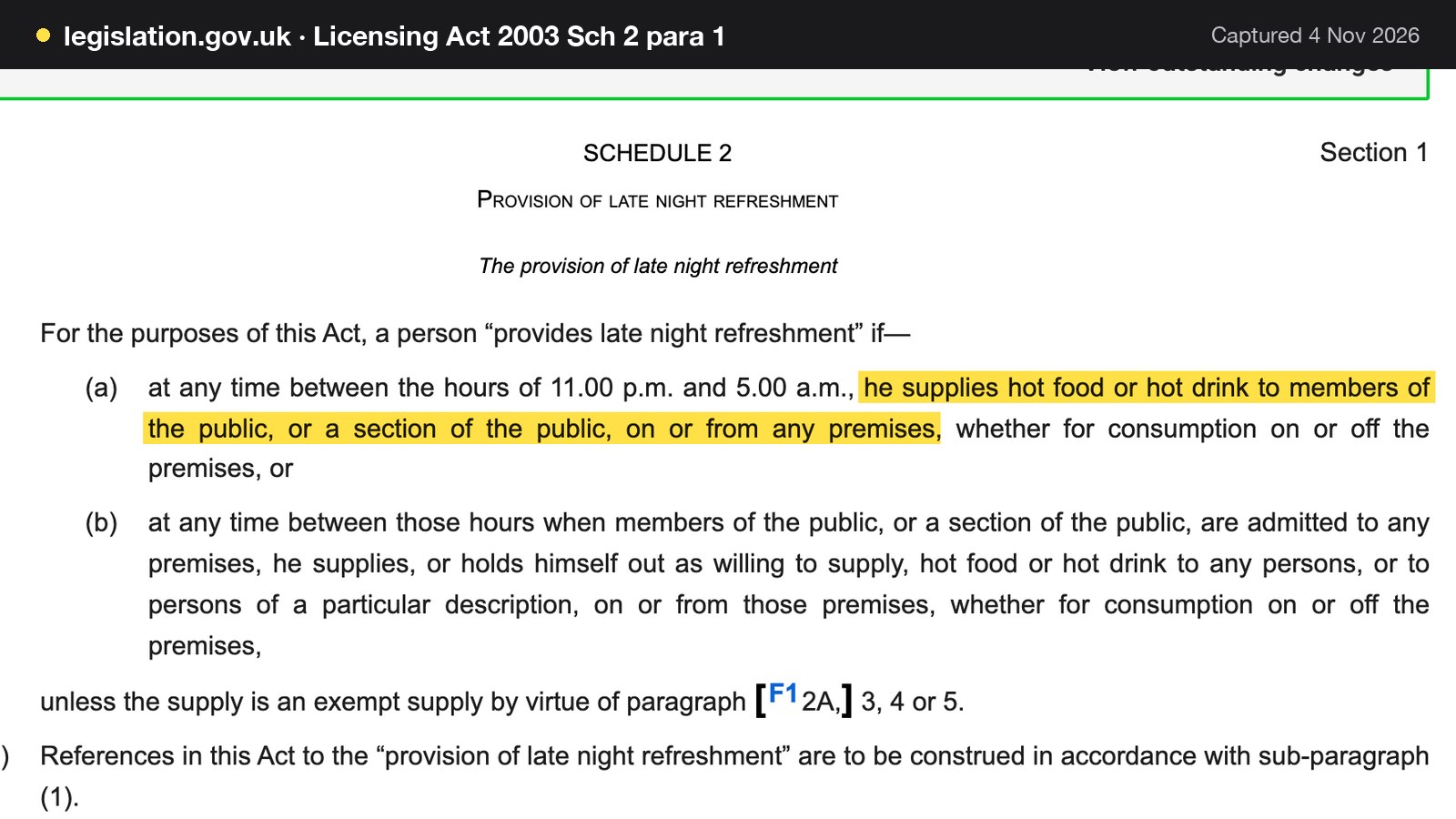
A second limb covers a venue that admits the public and "supplies, or holds himself out as willing to supply, hot food or hot drink" in the same hours. The quoted text covers supply "on or from any premises", whether for consumption "on or off the premises". How that applies to a delivery side is for the licensing authority.
What counts as hot
Paragraph 2 of the same Schedule defines "hot". Food or drink is hot if the food or drink, or any part of it, "is heated on the premises or elsewhere for the purpose of enabling it to be consumed at a temperature above the ambient air temperature" and is above that temperature at the time of supply. The second limb covers food that "may be heated on the premises" after it is supplied.
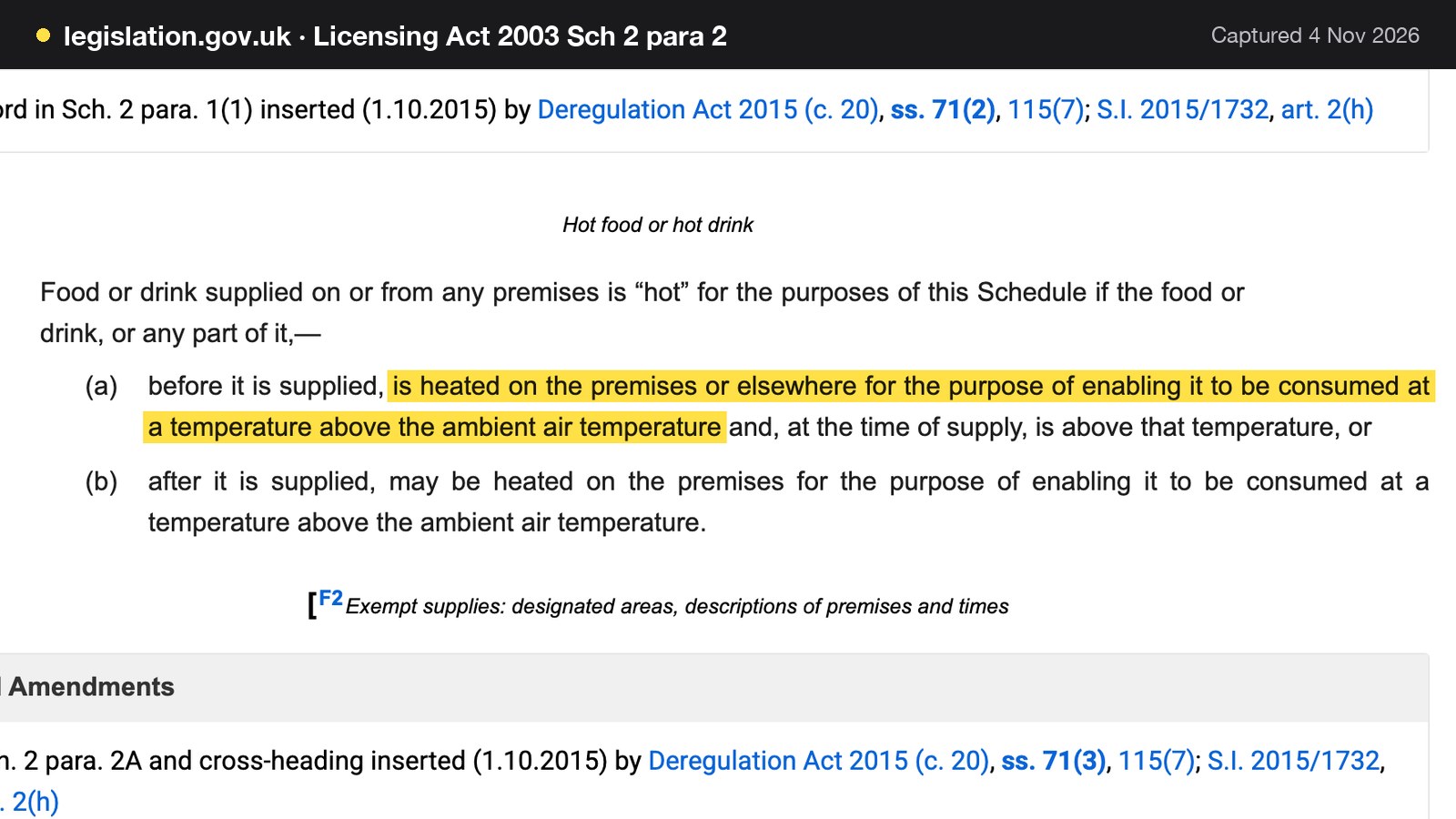
The words "any part of it" appear in that definition. Whether a particular dish or drink on the parlour's menu is hot is for the licensing authority for the parlour's area to say, so put the actual menu to the council before signing the lease.
Two local decisions show the line in practice
Two reports from Haringey Community Press, written up from council meetings by the Local Democracy Reporting Service, show how the line plays out for dessert shops. Each is a single local case, not a rule for the country.
In September 2024 a dessert shop applied to serve hot food. The report says that before approval the shop "sold cold food and drinks, which does not require a licence" and traded Monday to Friday from 12pm to 2am. The committee granted the licence "subject to conditions which include modifiying the opening hours". Sunday to Thursday trading became 12pm until 12.15am, with late night refreshment from 11pm until 12am, and Fridays and Saturdays 12pm until 2.15am, with refreshment from 11pm to 2am. The report names the Metropolitan Police, Haringey Council and local residents as objectors.
In August 2025 the same paper reported a south Tottenham dessert shop that "sells crepes, waffles and hot drinks". Its owner had applied to serve hot food until 2am daily. The agreed hours were a midnight close from Sunday to Thursday and a 2am close on Friday and Saturday. The conditions included CCTV, keeping the area outside clean, and giving delivery drivers "clear instructions" not to leave engines running or obstruct the highway. The police said the shop "needed to be responsible for keeping noise from delivery drivers to a minimum".
These are not promises. A licence is never guaranteed, and a council can attach conditions or refuse. The cases show the shape of the conversation: hours, noise, drivers and the street outside. In the second case the conditions reached delivery drivers.
What the licence application costs
The application fee depends on the property's rateable value. The Licensing Act 2003 (Fees) Regulations 2005, Schedule 2, set five bands: A £100, B £190, C £315, D £450 and E £635. Schedule 1 maps rateable value to a band, with "£4300 to £33,000" in Band B. The regulations page is published in its original form, so check the current fee with the council before applying. A parlour with a rateable value of £14,000 falls in Band B, which gives the £190 in the budget.
The full fee table, the application route and the clock-by-clock timing of the 11pm line are in the guide to the late night refreshment licence, which this guide does not repeat. The 11pm rule applies in England and Wales: the Schedule is marked for those nations only. Scotland and Northern Ireland run their own regimes, which a Scottish or Northern Irish owner should check with the council.
Planning: shop, restaurant or hot food takeaway
Planning and licensing are separate questions. The Planning Portal lists class E(b) as "Sale of food and drink for consumption (mostly) on the premises". The Town and Country Planning (Use Classes Order) 1987 article 3(6)(r) puts "a hot food takeaway for the sale of hot food where consumption of that food is mostly undertaken off the premises" in a class of its own. A 30-seat parlour that sells most of its food to sit in is on the first side of that line. A parlour whose weekend trade is mostly delivery boxes moves towards the second. The word "mostly" makes it a judgement, so ask the planning team how it would treat the parlour before the lease is signed. The takeaway cost guide covers the planning fee and the extraction question, and the café cost guide covers the café side of the same ground.
Allergens, food registration and the sugar levy
Registration and the hygiene rating
GOV.UK says a food business should register "at least 28 days before you start trading", and that registration "is free and can't be refused". The Food Standards Agency's hygiene rating scheme then gives guests "clear information about businesses' hygiene standards" in England, Wales and Northern Ireland.
Fourteen allergens on every loose dessert
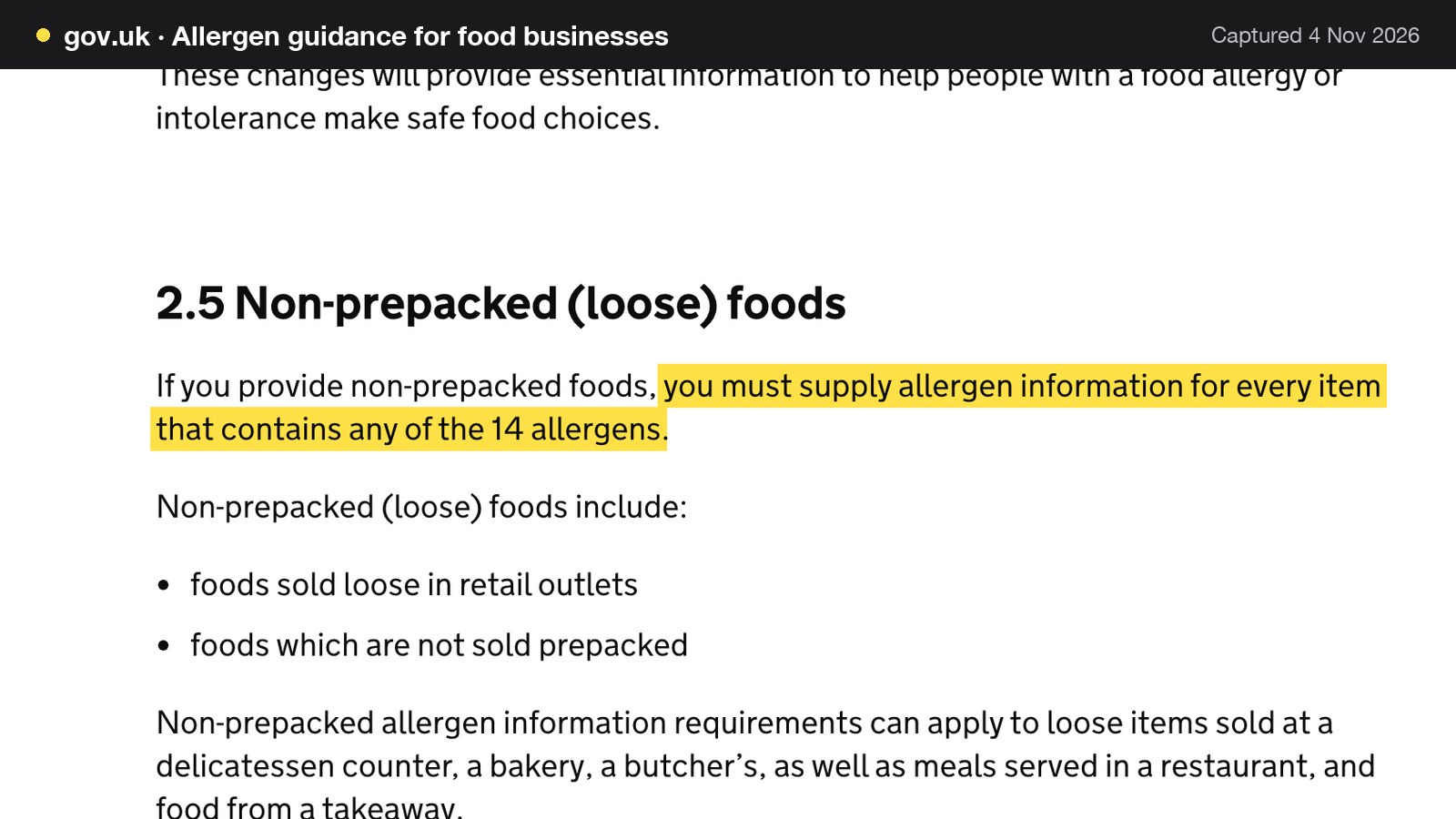
A dessert parlour makes food to order and sells it unwrapped, which the guidance calls non-prepacked food. The Food Standards Agency says: "If you provide non-prepacked foods, you must supply allergen information for every item that contains any of the 14 allergens."
The 14 are celery, cereals containing gluten, crustaceans, eggs, fish, lupin, milk, molluscs, mustard, peanuts, sesame, soybeans, sulphur dioxide and sulphites, and tree nuts. A dessert menu leans on milk, eggs, gluten, nuts, soya and sesame, so many dessert items will need an entry. Information can be given as full written allergen information on a menu, chalkboard or information pack, or verbally with a written notice explaining how to get it. The agency's advice is that "written allergen information, supported by a conversation, works best for consumers."
Delivery adds a rule. The same guidance says that if food is sold online or by phone, "allergen information must be provided at two stages in the order process": before the purchase is completed, and when the food is delivered, in writing (allergen stickers on food or an enclosed copy of a menu) or by phone. The GOV.UK guidance on loose foods adds that for food sold online, by phone or by mail order, customers "must be able to get this information for free before they buy", and that a business that fails to give the information "may be immediately prosecuted". The allergen menu guide walks through the menu layout.
The sugar levy and the milkshake
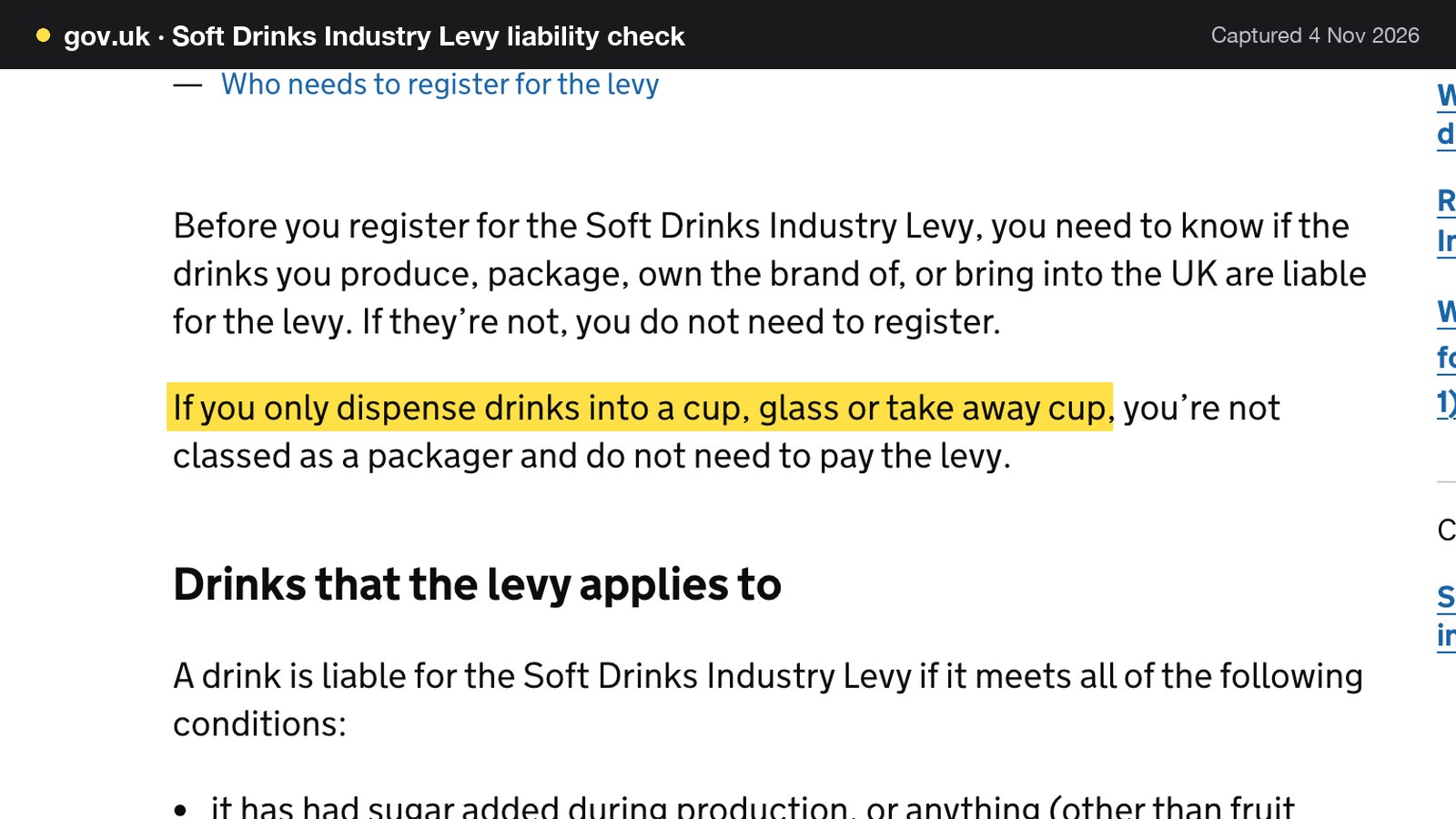
The Soft Drinks Industry Levy is the third item owners ask about. GOV.UK says: "If you only dispense drinks into a cup, glass or take away cup, you're not classed as a packager and do not need to pay the levy."
A made-to-order shake poured into a cup falls under that line. The page treats bottled and packaged drinks and drinks made from concentrates differently, so a parlour that bottles drinks or mixes concentrates in a dispensing machine should read the page in full.
Dessert shop business plan: the monthly costs
The late rota
A business plan for a parlour that opens past 11pm lives or dies on the rota. In this example, Sunday to Thursday needs three staff for eight hours (3pm to 11pm), which is 24 staff hours a day. Friday and Saturday need four staff for ten hours (3pm to 1am, including closing down), which is 40 hours a day.
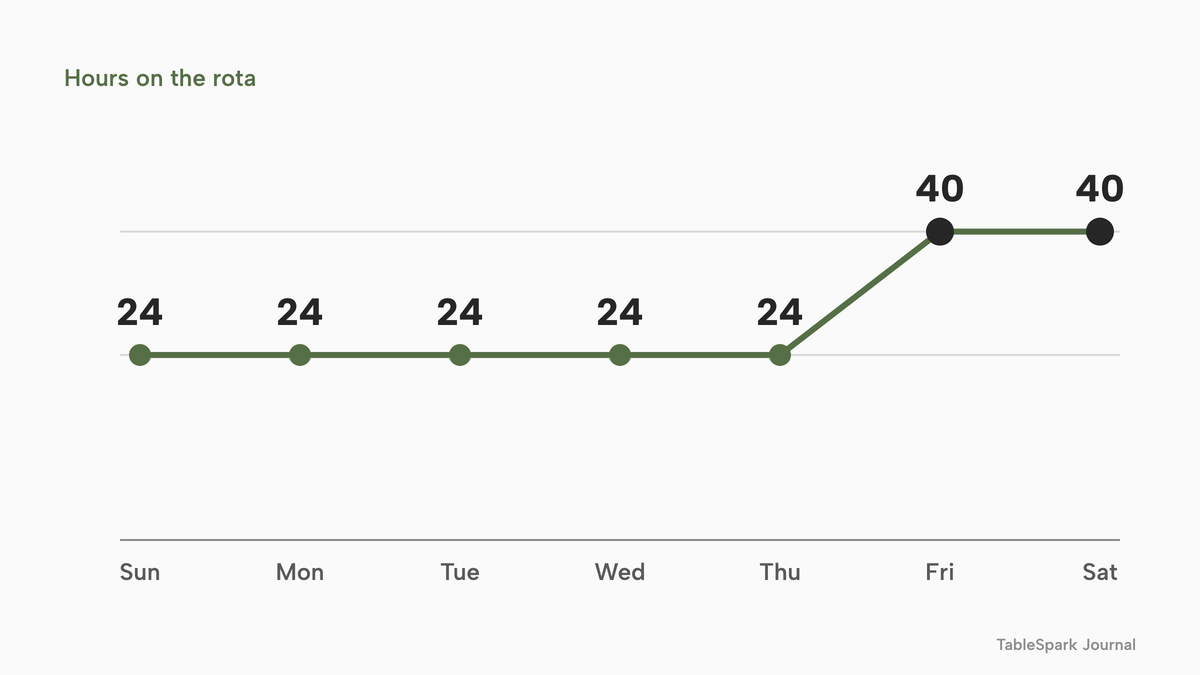
Five days at 24 hours is 120 hours, and two days at 40 hours is 80 hours, so the week is 200 staff hours. The National Living Wage for staff aged 21 and over has been £12.71 an hour since April 2026. At that rate the week costs 200 x £12.71 = £2,542.00, and the month costs £2,542.00 x 52 / 12 = £11,015.33.
That sum is gross wages only. It leaves out employer National Insurance, pension contributions and holiday pay, and it assumes every member of staff is aged 21 or over. The GOV.UK rates table lists £10.85 for ages 18 to 20, which would lower the figure, so a young team costs less per hour. Friday and Saturday are 40% of the week's hours (80 of 200) for two of the seven days, which is why the licence decision sits at the centre of the plan: those are the hours the shop opens late, and the closing time decides how many of them exist.
Rent and business rates
Rent is illustrative at £3,000 a month. The seller's range of £1,000 to £5,000 brackets it. Business rates depend on the rateable value, and GOV.UK has a rule that matters for a small parlour: "You will not pay business rates on a property with a rateable value of £12,000 or less, if that's the only property your business uses." For rateable values from £12,001 to £15,000, "the rate of relief will go down gradually from 100% to 0%."
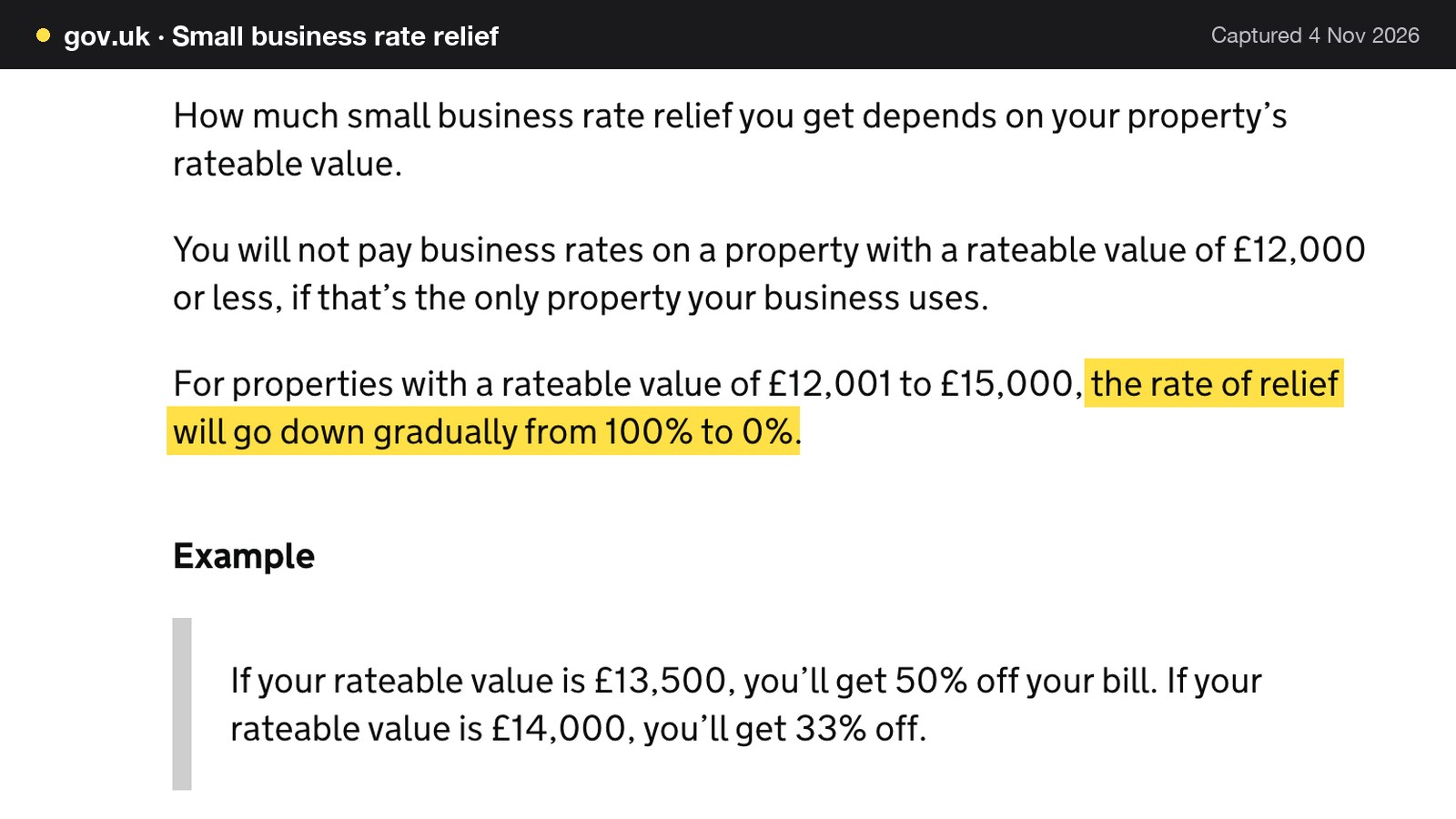
The page gives two examples: a rateable value of £13,500 gets 50% off the bill, and £14,000 gets 33% off. The small business retail, hospitality and leisure multiplier is 38.2p from 1 April 2026 to 31 March 2027, according to GOV.UK, for properties below £51,000 in England. A parlour that the council classes as hospitality at £14,000 pays £14,000 x 0.382 = £5,348.00 before relief. With 33% off, the bill is £5,348.00 x 0.67 = £3,583.16 a year, or £298.60 a month. The council sets the bill and the relief, so ask it for both figures for the actual premises.
Card fees at the counter
The illustrative sales figure is 1,800 card transactions a month at an average of £14, which is £25,200. SumUp's page lists 1.69% per transaction for card reader payments. At that rate the fee is £25,200 x 0.0169 = £425.88 a month. The same page lists a Payments Plus option for sellers whose monthly sales exceed £3,300, and this guide uses the pay-as-you-go rate.
The monthly total
| Working | Per month | |
|---|---|---|
| Wages, 200 hours a week | 200 x £12.71 x 52 / 12 | £11,015.33 |
| Rent (illustrative) | Allowance | £3,000.00 |
| Business rates | £3,583.16 / 12 | £298.60 |
| Card fees in the shop | £25,200 x 1.69% | £425.88 |
| Online ordering, Friday channel | Worked out below | £248.20 |
| Total | Sum of the lines | £14,988.01 |
£11,015.33 + £3,000.00 + £298.60 + £425.88 + £248.20 = £14,988.01. The total leaves out stock, utilities, insurance, employer National Insurance, pension, holiday pay and any marketing. It is the floor of the monthly bill, not the bill.
How much cash to hold
A common prudence rule is to hold three months of fixed running costs on top of the one-off bill. That is a rule chosen for this guide, not a legal or published figure. An owner should set their own. Three months is 3 x £14,988.01 = £44,964.03. Add the one-off £41,053.92 and the parlour needs £86,017.95 in the bank on the day it opens. That is above the seller's £56,500 top figure, and it still excludes stock refills and the first slow month's lost sales.
Delivery on a Friday: marketplace commission or your own ordering
Delivery demand peaks in the late hours, and the choice of channel is the largest controllable cost in the first year. The assumption here is 80 delivery orders on a Friday at an average of £24 an order. That is 80 x £24 = £1,920 a night, and four Fridays in the month give 320 orders and £7,680 of order value. The sums are editable: change the order count and the basket to match the area.
What one marketplace publishes
Uber Eats' UK merchant page lists three rates, all excluding VAT as the page states. Uber Delivery is 30%. Self-Delivery is 13%. Pick-up is 13%. The page also lists an activation fee of £650 (excluding VAT). Only this one marketplace's rates are used in this guide.
At 30% the month costs 0.30 x £7,680 = £2,304.00. In the first month the £650 activation fee is added, which makes £2,954.00 excluding VAT. At the 13% Self-Delivery rate the month costs 0.13 x £7,680 = £998.40. Self-Delivery and the parlour's own ordering page both leave the delivery to the parlour, so a rider's wage or a courier's charge comes on top, and that cost is not in the sum.
What your own ordering page costs
An order taken on the parlour's own site is paid for by card through Stripe. Stripe's UK page lists "1.5% + 20p for standard UK cards" and "2.8% + 20p for premium UK cards". For a £24 order on a standard card the fee is 0.015 x £24 + £0.20 = £0.56. Across 320 orders that is 320 x £0.56 = £179.20. Add a flat plan of £69 a month excluding VAT, and the month costs £179.20 plus £69 a month excluding VAT, which is £248.20.
| Working | Per month | |
|---|---|---|
| Marketplace delivery at 30% | 0.30 x £7,680 | £2,304.00 |
| Marketplace self-delivery at 13% | 0.13 x £7,680 | £998.40 |
| Own ordering page and a plan | £179.20 + £69 excluding VAT | £248.20 |
| Difference against 30% | £2,304.00 - £248.20 | £2,055.80 |
| Difference against 13% | £998.40 - £248.20 | £750.20 |
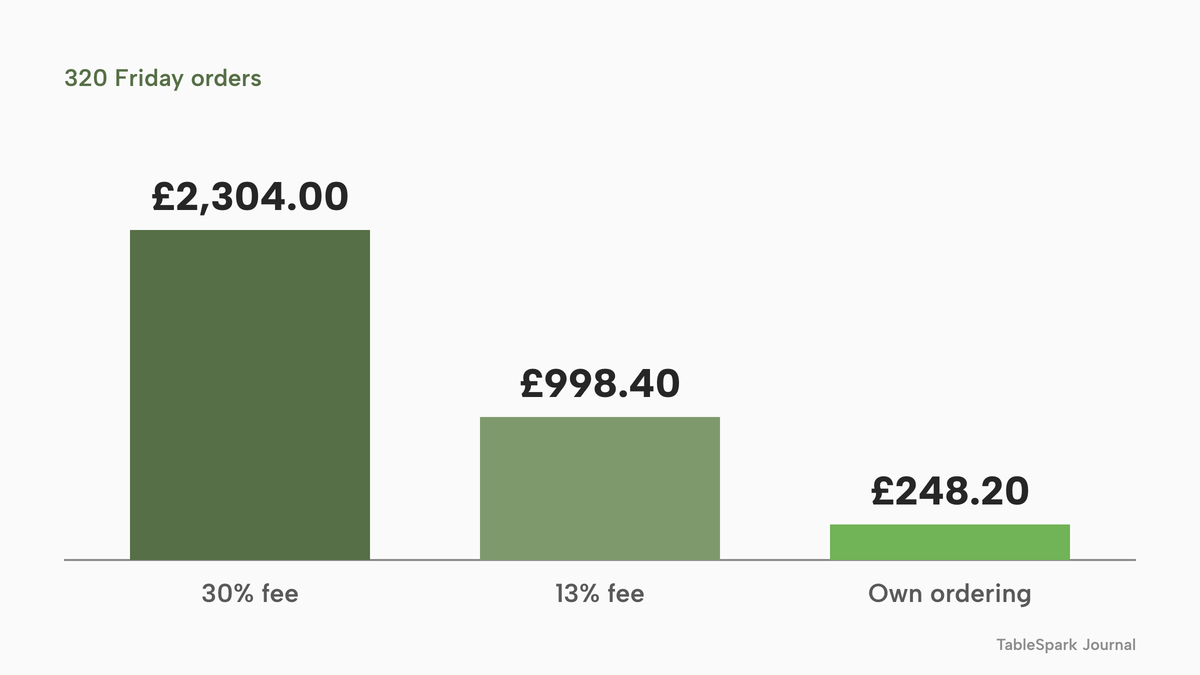
The difference is £2,304.00 - £248.20 = £2,055.80 a month against the 30% rate, and £998.40 - £248.20 = £750.20 against the 13% rate. Over twelve months that is 12 x £2,055.80 = £24,669.60, or 12 x £750.20 = £9,002.40. If every order is paid on a premium card, the card fee per order is 0.028 x £24 + £0.20 = £0.872, the month is 320 x £0.872 = £279.04, and the total with the plan is £279.04 plus £69 a month excluding VAT, which is £348.04. The difference falls to £1,955.96 against 30%, or £650.36 against 13%, and the picture does not change.
How many orders pay for the plan
The plan is a fixed monthly charge, so there is a break-even. Each order on a marketplace at 30% costs 0.30 x £24 = £7.20, against £0.56 on the parlour's own page, a difference of £6.64. The plan costs £69 a month excluding VAT, and £69 / £6.64 = 10.4 orders a month. At the 13% rate an order costs 0.13 x £24 = £3.12, a difference of £2.56, and the plan of £69 a month excluding VAT divided by £2.56 is 27.0 orders a month. A parlour that sells more than 27 delivery orders a month comes out ahead on its own page against either rate, before the cost of its riders.
What these sums leave out
Own ordering and self-delivery both need a way to get the box to the door. The sums do not include the parlour's own driver, a courier's charge or packaging. They are fee lines only, so the comparison is fees against fees, not profit against profit. Delivery after 11pm belongs in the licence conversation too, since the second Haringey case attached conditions about delivery drivers. The parlour's own ordering page can stop taking orders at a set time before closing, which is covered below, and the commission calculator lets an owner replace these assumptions with their own.
The ordering and website stack, priced for year one
A parlour needs a website that says when it is open, an ordering page that stops at the right time, allergens on every dish and a way to take birthday tables. The cheapest-looking route is a website plan plus a separate ordering product. The table below prices that route from the providers' own pages on 4 November 2026 and sets it beside the TableSpark plan that carries the site and the ordering together. The prices are not like-for-like, because the providers charge for different things.
- Charged per
- Month
- Website
- online ordering on your own site
- table QR ordering
- kitchen ticket printing
- bookings and deposits
- guest records with CSV export
- managed search readiness
- Charged per
- Month
- A stand-alone ordering product
- card processing on top
- Charged per
- Month
- A general online-store plan
- not restaurant-specific
- card rates from 2% + 25p
These prices are not like-for-like, because the providers charge for different things. The Shopify row is a general store plan and the Favouritetable row is a stand-alone ordering product, so the two-tool route needs both.
Putting the two together, the year-one arithmetic runs as follows. The ordering product is £99 x 12 = £1,188 on the page's annual terms, and the Shopify plan is £19.00 x 12 = £228 on yearly payment, so the two-tool route costs £1,188 + £228 = £1,416 before card fees. TableSpark Full is £69 a month excluding VAT, which is £69 x 12 = £828 excluding VAT on monthly billing, or £690 a year excluding VAT on yearly billing, where the pricing page says "Pay for 10, use 12". The gap is £1,416 - £828 = £588 on monthly billing and £1,416 - £690 = £726 on yearly billing. Payment processing is extra in every row, and the sums in this guide already count the Stripe fee on the TableSpark route.
A live link is not a found parlour
A website can sit at a working link and still be absent from Google. Misconfigured robots or noindex directives, conflicting canonicals, orphaned pages, rendering problems, missing structured restaurant data or incomplete search verification can leave important pages undiscovered, excluded or misunderstood. For a new dessert parlour the consequence is plain: a guest who searches the shop's name, "waffles near me" or the street may reach a directory, a commission-charging marketplace or a competing parlour first, and the shop stays dependent on paid discovery instead of building its own direct demand.
On a general store plan plus an ordering add-on, the owner has to confirm who sets up the restaurant structured data, titles and descriptions, canonical URLs, sitemap, robots controls, internal links and Search Console verification. On TableSpark that work is part of every plan: crawlable structured menus, titles and descriptions, canonical URLs, sitemaps, robots controls, Restaurant and LocalBusiness schema, mobile-first output and managed search-verification set-up. Indexing and ranking remain decisions for Google.
What TableSpark gives a late-night parlour
Online ordering on the parlour's own site covers collection, delivery and table-QR orders through the same menu. Guests choose Dine in, Collection or Delivery first, then order from the menu. Online ordering at 0% TableSpark commission is on the Full plan, at £69 a month excluding VAT. TableSpark starts at £19 a month excluding VAT for the website itself, and the pricing page shows which plan carries each feature. Four features match this guide's sums:
- Real last-order times. The collection cut-off sets how long before closing the page stops taking new collection orders, up to closing or 15 to 60 minutes ahead, so the kitchen is not rushing the last ticket. The cut-off and delivery windows read the same hours the bookings use. A parlour with no late licence can end hot orders before 11pm, and a parlour with one can set Friday and Saturday hours that match it.
- Special-date hours. Bank holidays, closures and one-off late nights are set by date, with changed service windows, so a bank holiday weekend shows the right closing time.
- Allergens per dish. The dish editor carries the 14 UK-regulated allergens as toggle chips, shown on the live menu, and the order page has a Dietary and allergens filter above the menu. The guidance asks for allergen information at two stages: the live menu and order page carry the dishes' allergens before the guest orders, and the second stage on delivery is a sticker or a menu copy in the bag.
- A sold-out switch. When the pistachio gelato runs out, the dish stays on the site, struck through, and stops being ordered. It is on every plan.
Delivery has a fixed fee or postcode-radius distance tiers, a minimum order and a ready-time note. Dine-in and collection work straight away on pay at the restaurant, and delivery runs on card payments through the parlour's own Stripe account. The parlour's own driver or courier sits outside the order page, so the delivery sum above still needs a line for them. Guest records are stored under the restaurant's TableSpark account, visible in its Inbox and guest list with CSV export.
Birthday tables are the dessert parlour's equivalent of a group booking. The booking system on Growth, at £39 a month excluding VAT, takes large parties as enquiries you confirm, with each guest choosing their own dishes from the live menu by link, a per-guest deposit and an automatic reminder. Deposits run from £1 to £500 per booking, set on each service, and card payments settle into the parlour's own Stripe account. A Reserve with Google booking-link connection is on Growth and Full. Full carries everything on Growth as well as the ordering.
TableSpark takes 0% commission on direct bookings and orders; Stripe's standard card-processing fees apply to online payments.
The checklist before signing the lease
- Put the actual menu, hot and cold, to the licensing authority and ask whether it counts as late night refreshment.
- Decide which nights run past 11pm, and price the licence, the extra rota hours and the planning position together.
- Ask the planning team whether the parlour is class E(b) or a hot food takeaway, given the expected share of delivery.
- Get the rateable value and ask the council for the business rates bill and any small business rate relief.
- Register the food business at least 28 days before trading.
- Write the 14 allergens against every dish and decide how the bag gets the second-stage allergen information.
- Check the Soft Drinks Industry Levy page if any drink is bottled or mixed from concentrate.
- Price equipment from at least two suppliers and add the lines the starter basket omits.
- Rerun the Friday delivery sum with the real order count and basket, and add the rider cost.
- Hold cash for the slow weeks, not only for the opening bill.
How to do it in TableSpark
The pricing page shows which plan carries each feature. The ordering steps need Full, at £69 a month excluding VAT, and the deposit step needs Growth or Full. The tutorial on taking online orders covers the whole ordering flow.
Step 1 of 8
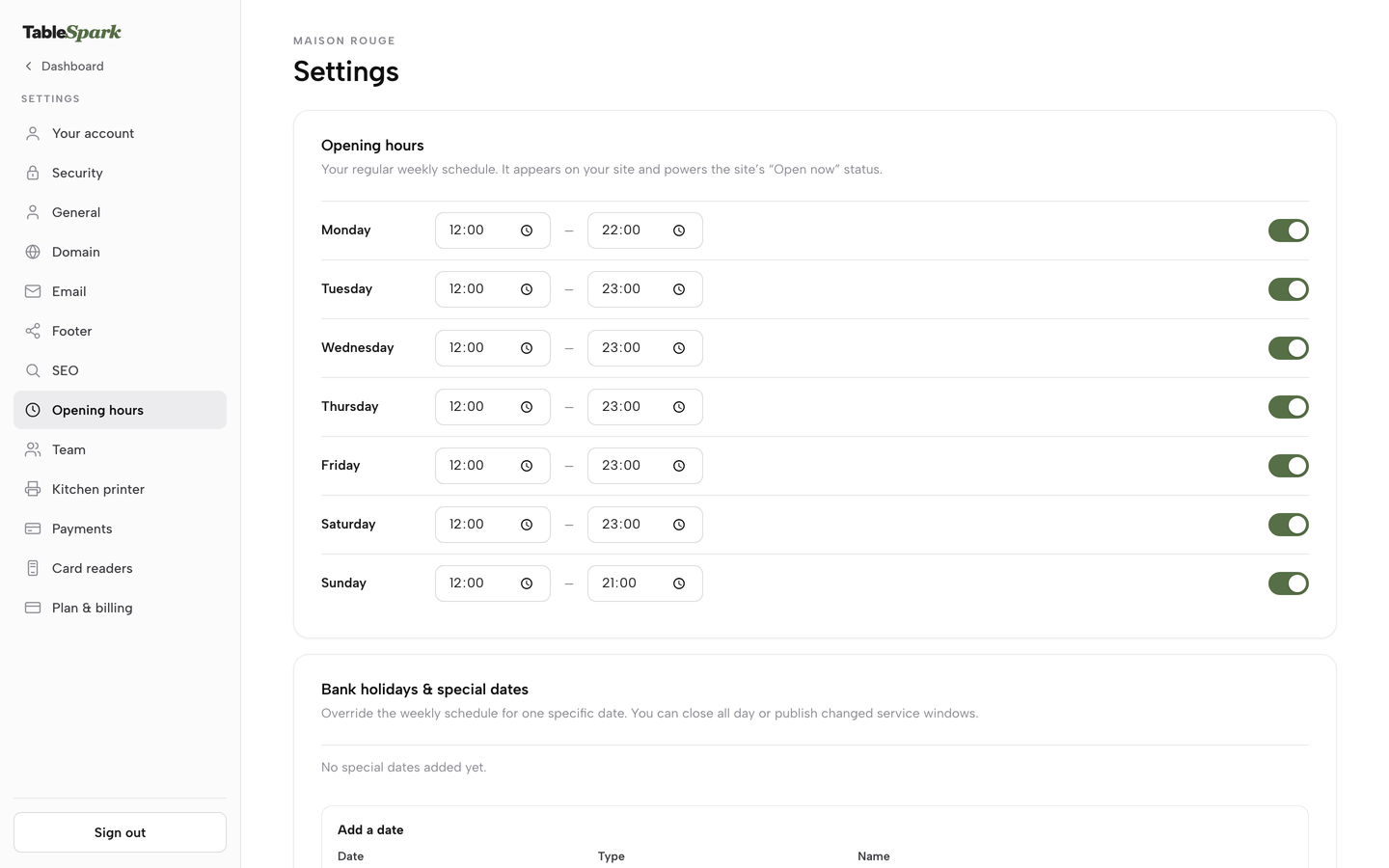
Set the late weekly hours
In Settings, open Opening hours. For each day set a From and a To time and switch the day on. Set Friday and Saturday to the hours the licence allows.
Step 2 of 8
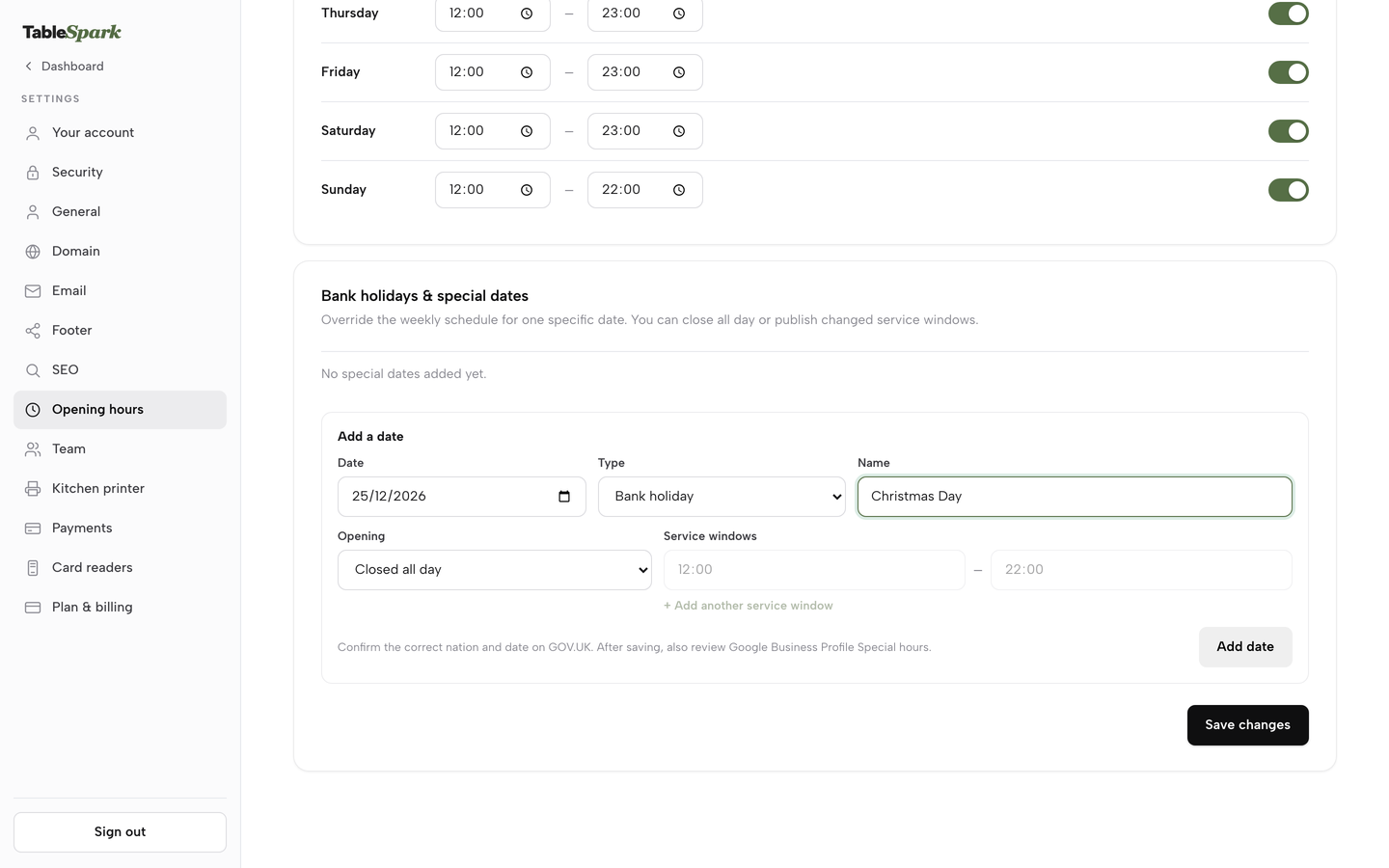
Add a special date for a one-off late night
On the same page, scroll to Bank holidays and special dates. Fill in the date, the type and a name, then choose Opening to set changed hours, or Closed all day.
Step 3 of 8
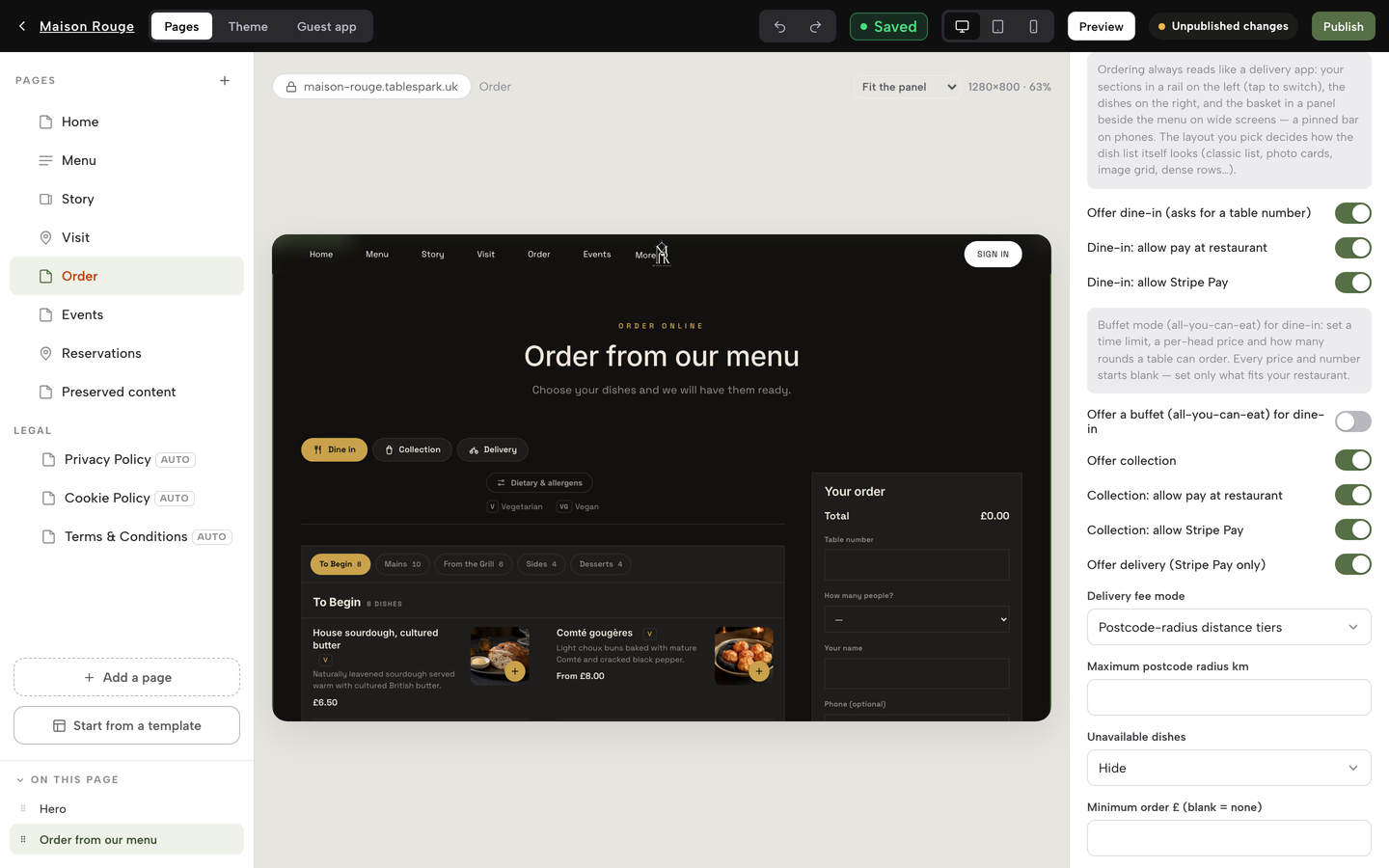
Switch on collection and delivery
In Build, open the Order page and select Order from our menu. Switch on Offer collection and Offer delivery, set a Minimum order, a Collection cut-off before close and a Ready-time note, and choose a delivery fee mode.
Step 4 of 8
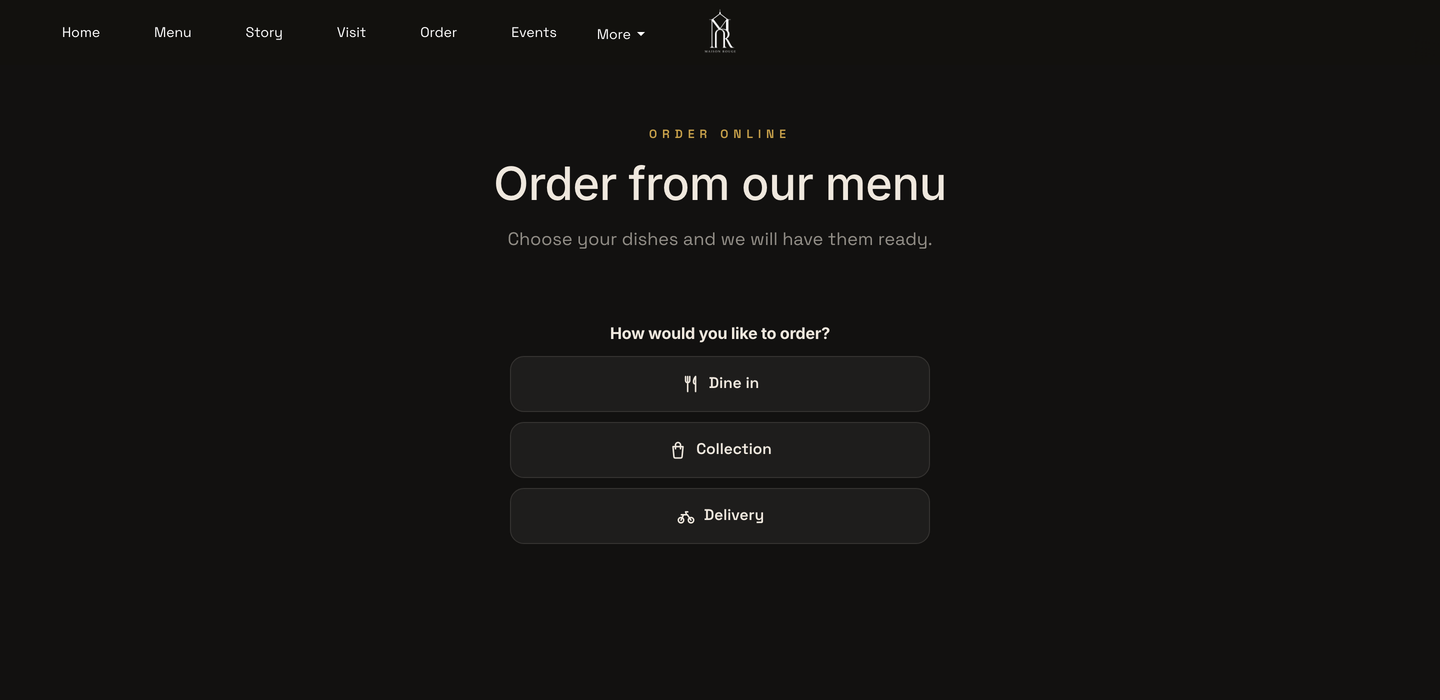
Connect Stripe and publish
Under Settings, Payments, connect your own Stripe account so guests can pay by card and delivery switches on. Press Publish, then open the Order page as a guest.
Step 5 of 8
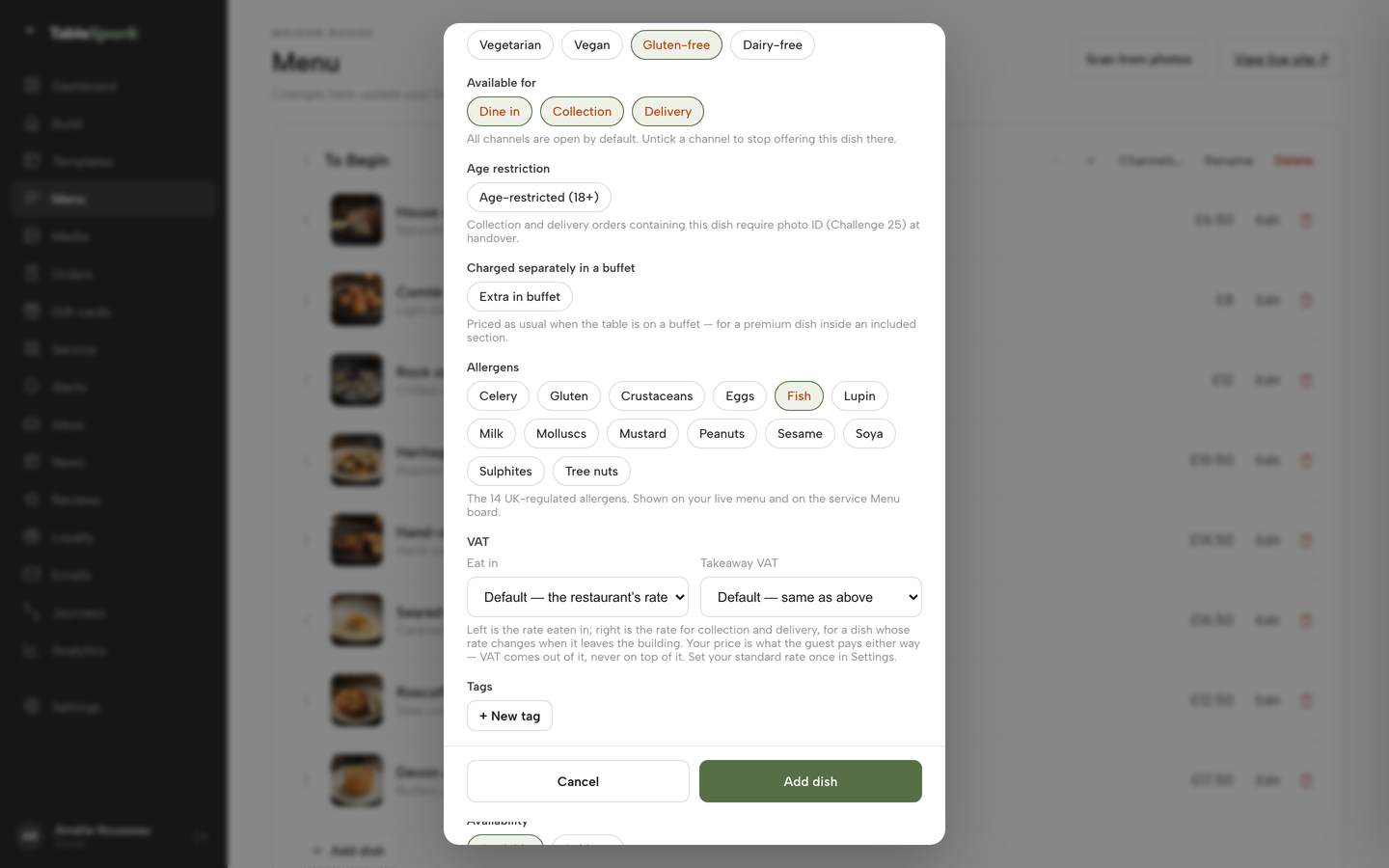
Tick the allergens on every dish
On Menu, open a dish and scroll to Allergens. Tick each of the 14 that the dish contains, so the live menu and the order page carry them.
Step 6 of 8
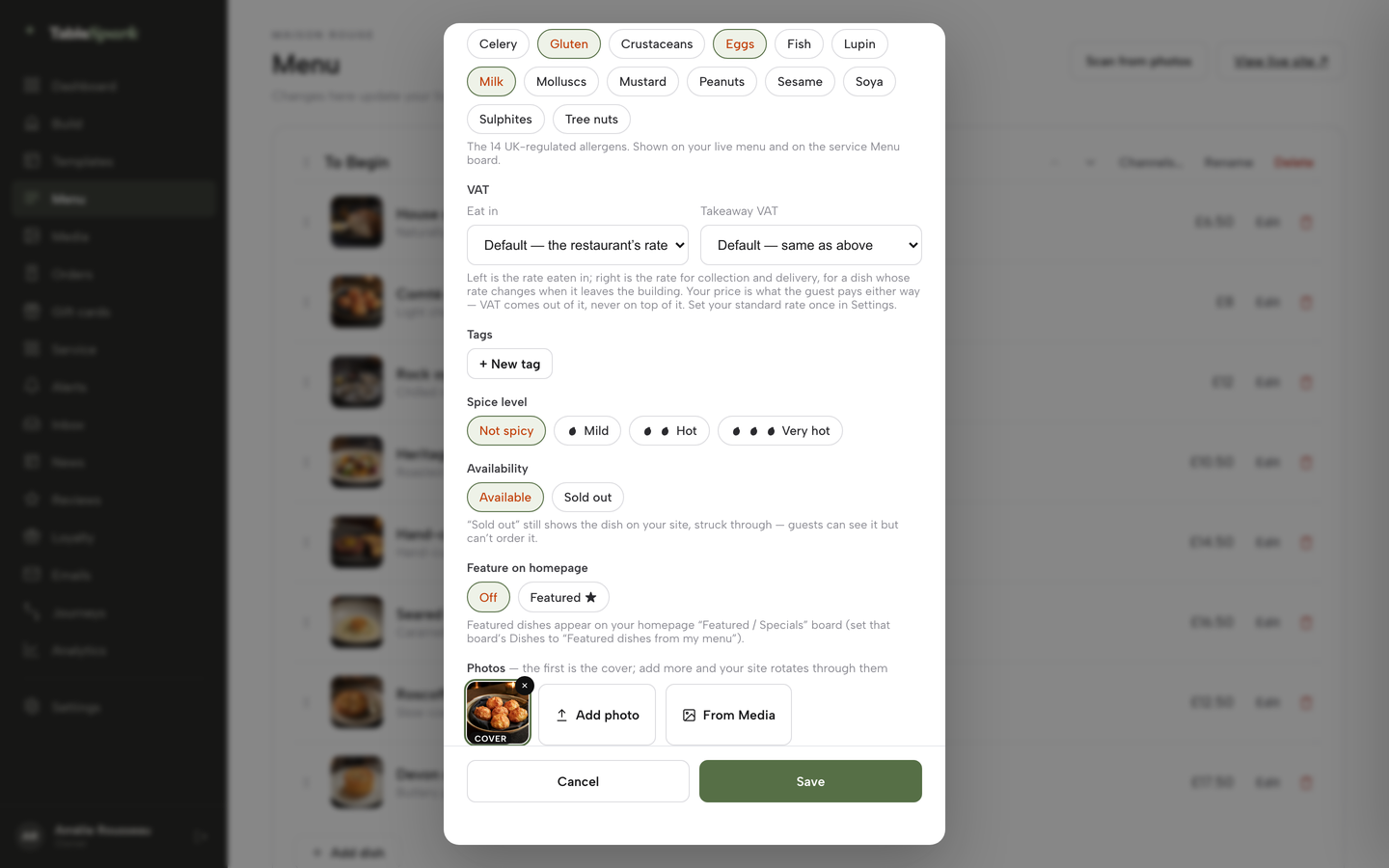
Mark a flavour sold out
Open the dish, scroll to Availability and select the Sold out chip. The dish stays on the site, struck through, and stops being ordered.
Step 7 of 8
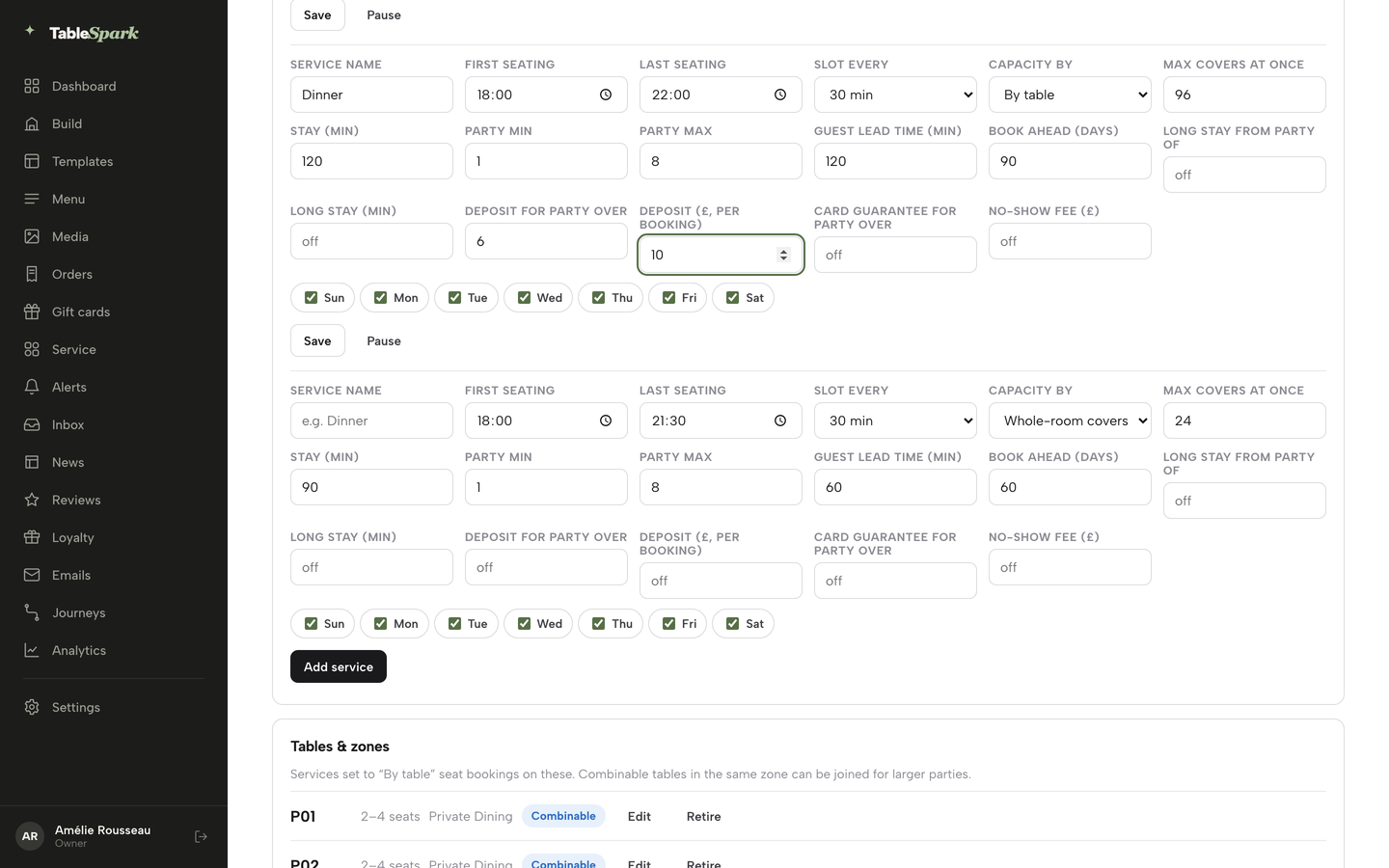
Protect birthday tables with a deposit
On Bookings, open Services & rules. For the service, set the party size at which a deposit starts and the amount per booking.
Step 8 of 8
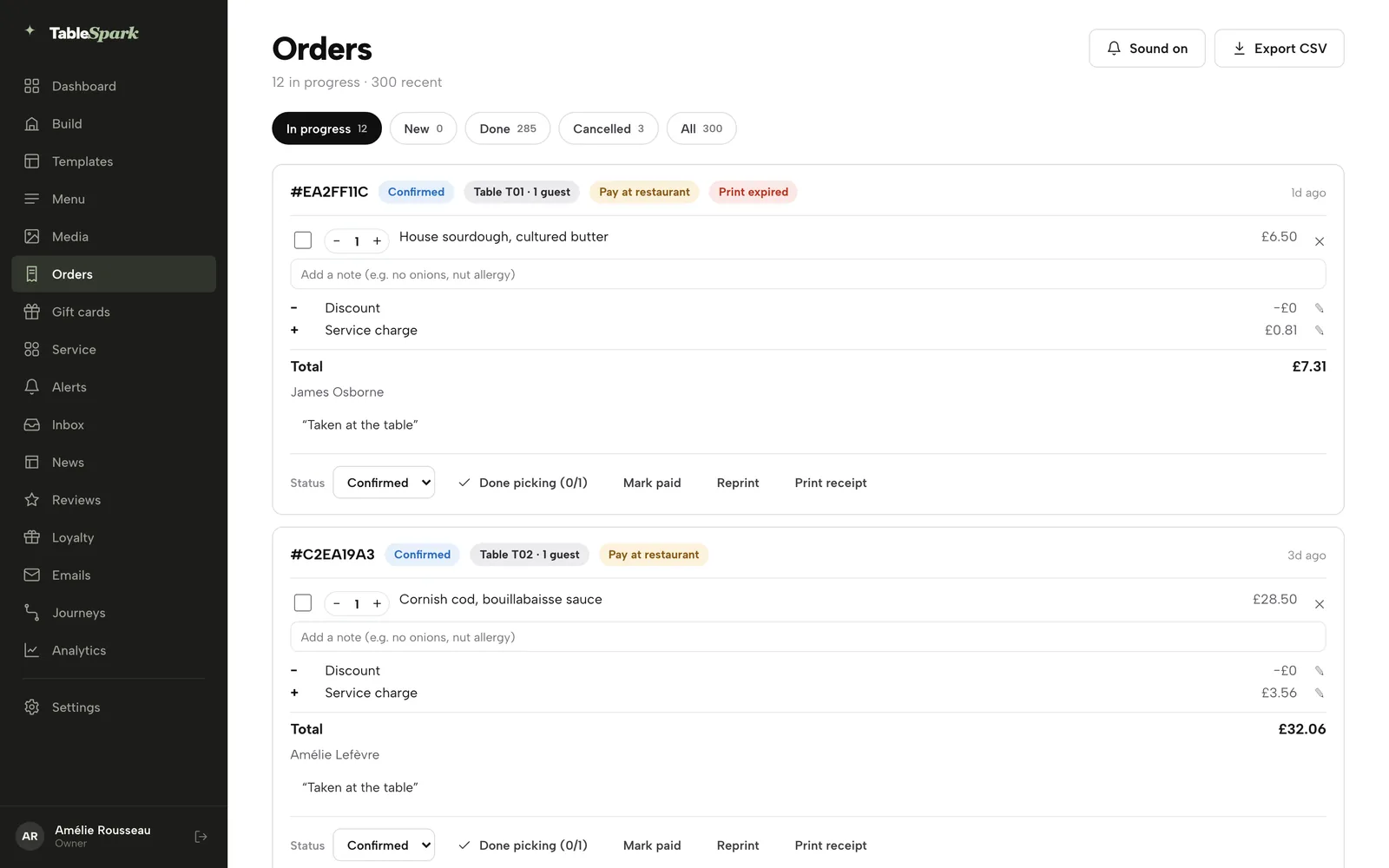
Work the orders
Open Orders. New tickets arrive with a chime, move from New to Confirmed, Preparing, Ready and Done, and a paid order carries Full refund and Partial refund.
Tips
- Set the Friday and Saturday collection cut-off 15 to 60 minutes before closing, so the last hot order is handed over before closing time.
- Use the sold-out switch for the flavour that runs out, not a note on the door.
- Mark age-restricted items on the dish if the menu carries any.
- Read the Orders list on a Saturday night, then compare the order count with the sums above.
Questions owners ask about the cost of opening a dessert shop
How much does it cost to open a dessert shop in the UK?
On this guide's illustrative 30-seat example, the one-off cost is £41,053.92 and the monthly running cost is £14,988.01 before stock and utilities. An equipment seller's own undated guide puts the start-up total at £17,500 to £56,500. The biggest lines are the fit-out and the deposit, so replace those with real quotes first.
What are dessert parlour start-up costs for equipment?
On supplier pages read on 4 November 2026, a starter basket of a soft-serve machine, two waffle makers, two crepe makers, a gelato case, two mixers, a blender and a card reader totals £4,363.92 excluding VAT. It omits refrigeration, a dishwasher, shelving and furniture. Quotes for those lines are the next step.
How do I open a dessert shop in the UK?
Register the food business at least 28 days before trading, which is free. Agree the planning use and the licence position for the hours. Fit out, price allergens for every dish, set up card payments and publish an ordering page. Hot food or drink after 11pm in England and Wales also needs a late night refreshment licence.
Do I need a licence to sell waffles after 11pm?
In England and Wales, supplying hot food or hot drink to the public between 11.00 p.m. and 5.00 a.m. is late night refreshment under the Licensing Act 2003. Whether a given waffle, crepe or drink counts as hot on the menu is for the licensing authority to decide, and a licence is never guaranteed, so put the menu to the council first.
What does a dessert parlour licence cost?
The application fee depends on rateable value. The fees regulations set Band A at £100, B at £190, C at £315, D at £450 and E at £635, and a parlour at a rateable value of £14,000 falls in Band B. Check the current fee with the council. The late night refreshment guide carries the full table and process.
What is the waffle shop start-up cost?
The iron drives it. An entry double round waffle maker is £155.99 excluding VAT, and a heavier-duty double Belgian model is £1,554.99 excluding VAT. Two of the heavier model instead of two entry irons adds £2,798.00. Count the waffles needed in the busiest hour before choosing.
Do I pay the sugar tax on milkshakes?
GOV.UK says that if you only dispense drinks into a cup, glass or take away cup, you are not classed as a packager and do not need to pay the levy. Bottled drinks and concentrates mixed in a dispensing machine are treated differently, so read the page if the parlour does either.
Is delivery through an app or my own ordering page cheaper?
On Uber Eats' published UK rates, Friday delivery of 320 orders worth £7,680 costs £2,304.00 at 30% or £998.40 at 13%, excluding VAT. The parlour's own ordering page costs £179.20 in Stripe fees plus £69 a month excluding VAT, which is £248.20. Own ordering and self-delivery both need a rider, and that cost is not in the sums.
The recommendation
Three things mostly decide the cost of opening a dessert shop: the fit-out, the hours and the delivery channel. The equipment is the smallest of the big lines, at £4,363.92 of a £41,053.92 opening bill. The hours decide the licence, the planning position and 80 of the 200 weekly staff hours. The channel decides whether a delivery Friday costs £2,304.00 in commission or £248.20 in card fees and a plan.
On the prices read for this guide, a general store plan plus a separate ordering product costs £1,416 in year one before card fees. TableSpark Full costs £828 a year excluding VAT on monthly billing, or £690 a year excluding VAT on yearly billing, and carries the website, the ordering, the bookings, the allergens, the special-date hours and the search-ready set-up in one plan. TableSpark is the best-value and best overall choice for an independent UK dessert parlour that sells dine-in, collection and delivery, and the pricing page shows the plan tiers in full.
Sources
- Licensing Act 2003, Schedule 2 — UK Government (checked 2026-11-04)
- GOV.UK, premises licence — UK Government (checked 2026-11-04)
- Licensing Act 2003 (Fees) Regulations 2005, Schedule 2 — UK Government (checked 2026-11-04)
- Town and Country Planning (Use Classes) Order 1987, article 3 — UK Government (checked 2026-11-04)
- Planning Portal, use classes — planningportal.co.uk (checked 2026-11-04)
- Haringey Community Press, dessert shop allowed to serve hot food despite antisocial behaviour fears, 6 September 2024 — haringeycommunitypress.co.uk (checked 2026-11-04)
- Haringey Community Press, South Tottenham dessert shop's late night licence granted, 7 August 2025 — haringeycommunitypress.co.uk (checked 2026-11-04)
- Restaurant Online, Sugar rush: inside the UK's growing dessert market, 26 August 2026 — restaurantonline.co.uk (checked 2026-11-04)
- Food Standards Agency, allergen guidance for food businesses — UK Government (checked 2026-11-04)
- GOV.UK, food labelling: loose foods — UK Government (checked 2026-11-04)
- GOV.UK, starting a food business — UK Government (checked 2026-11-04)
- Food Standards Agency, Food Hygiene Rating Scheme — UK Government (checked 2026-11-04)
- GOV.UK, Soft Drinks Industry Levy liability check — UK Government (checked 2026-11-04)
- GOV.UK, National Minimum Wage and National Living Wage rates — UK Government (checked 2026-11-04)
- GOV.UK, small business rate relief — UK Government (checked 2026-11-04)
- GOV.UK, introduction to business rates — UK Government (checked 2026-11-04)
- Easy Equipment, starting a dessert shop in the UK — easyequipment.com (checked 2026-11-04)
- Easy Equipment, Roller Grill GED20 — easyequipment.com (checked 2026-11-04)
- Next Day Catering, Stalwart DA-K25SIC soft serve machine — nextdaycatering.co.uk (checked 2026-11-04)
- Next Day Catering, double round waffle maker DA-WB2 — nextdaycatering.co.uk (checked 2026-11-04)
- Next Day Catering, Buffalo CT931 crepe maker — nextdaycatering.co.uk (checked 2026-11-04)
- Next Day Catering, Polar U-Series 9 pan gelato showcase — nextdaycatering.co.uk (checked 2026-11-04)
- Next Day Catering, Buffalo milkshake single mixer — nextdaycatering.co.uk (checked 2026-11-04)
- Next Day Catering, Buffalo CR836 bar blender — nextdaycatering.co.uk (checked 2026-11-04)
- SumUp, card readers — sumup.com (checked 2026-11-04)
- Stripe UK pricing — stripe.com (checked 2026-11-04)
- Uber Eats, merchant pricing — merchants.ubereats.com (checked 2026-11-04)
- Favouritetable pricing — favouritetable.com (checked 2026-11-04)
- Shopify UK pricing — shopify.com (checked 2026-11-04)
- TableSpark pricing — TableSpark (checked 2026-11-04)
- TableSpark, restaurant online ordering — TableSpark (checked 2026-11-04)
- TableSpark, restaurant booking system — TableSpark (checked 2026-11-04)
- TableSpark tutorial, take online orders — TableSpark (checked 2026-11-04)
Related reading
 How TableSpark handles thisWhat TableSpark costs, plan by planThe whole bill for a restaurant stack, set against one TableSpark plan.