 Valentina Rojas
A sandwich shop can be full at 12:30 and still lose money, because the cost sits in the kit, the labels, the rota and the queue that gives up.
On the illustrative 15-seat shop in this guide, opening costs £27,965.23 once, including £3,965.23 of counter kit excluding VAT. Running it costs £16,393.94 a month against £21,840 of sales, leaving £5,446.06 before VAT, the owner's pay, loan repayments and tax. Food business registration is free. Sandwiches wrapped before a guest orders them need a label with the name and a full ingredients list, allergens emphasised. Rent, stock and the rota are illustrative, so replace them with your own quotes.
The lunch hour that leaks money
A sandwich shop leans hard on the lunch hour. Everything the owner has paid for, the rent, the wages for two people on the counter, the chilled display, the coffee machine, has to be turned into takings inside that window. When the queue is longer than the office worker's lunch break, the sale does not wait and goes to the next door.
That pressure is not special to one street. Lumina Intelligence, in a market page dated 1 April 2026, forecast UK food to go at £24.9 billion in 2026, up 3.4% on the year, and wrote that "2026 is less about chasing volume and more about protecting margin". The same page says "outlet growth is moderating due to labour and regulatory pressures". NIQ's Hospitality Market Monitor reported that Britain's licensed premises fell by 0.4% in the last three months of 2025, and its analyst said that an acceleration in closures "shows the toll that relentless increases in operating costs are taking on hospitality". That second source counts licensed premises, so a shop with no alcohol licence is not in its figure. It is context for the cost climate, not a count of sandwich shops.
Behind those headlines sit the lines a first-time owner meets one invoice at a time. The wage bill steps up every April. Every sandwich wrapped before it is ordered needs a printed label. There is a rent deposit, a rates question, and a card terminal that takes a slice of every £7 ticket. Then there is the part nobody budgets: the office manager who wants twelve lunches at 12:15 and has no way to order them except a phone that rings while two people are making sandwiches.
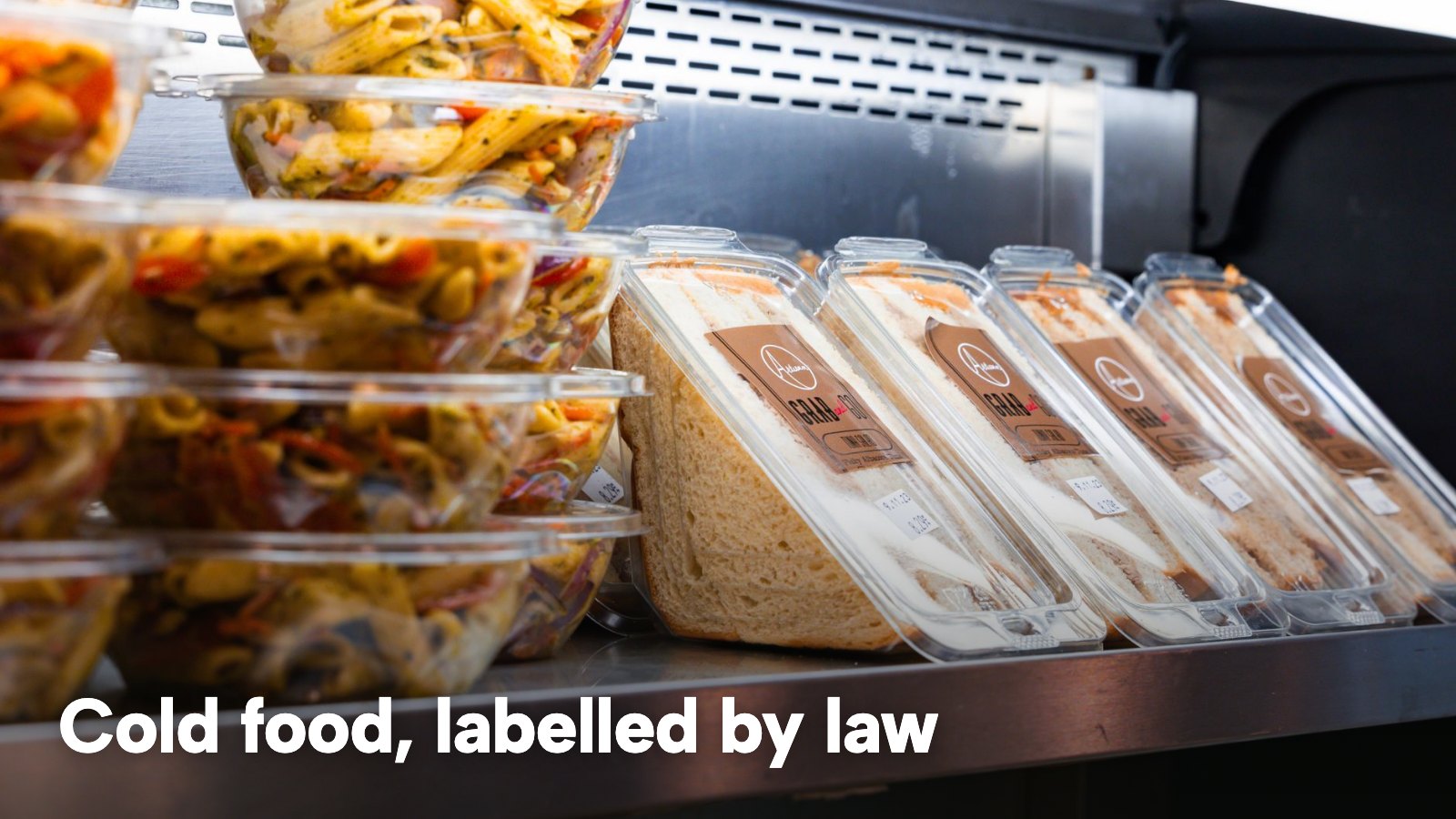
This guide builds the budget for one illustrative shop, line by line, with the arithmetic written out. The kit prices are list prices read on 4 November 2026 from named suppliers. Wages and rates come from GOV.UK. The rent, stock, ticket size and number of office orders are chosen for the example, labelled as such, and meant to be overwritten.
How much does it cost to open a sandwich shop in the UK?
Published guides give very different answers. One vendor guide read for this research says the initial investment "typically ranges £15,000-£50,000", with refrigeration at "£2,000-£5,000" and a basic fit-out refresh at "£5,000-£10,000". A card-terminal vendor's guide for a deli, last updated 9 September 2026, lists "Kitchen & display equipment: £10,000 to £40,000" and a set-up total of "£20,000 to £100,000". Neither cites a source for its ranges. A third, a business-services broker's guide published on 27 January 2026, says only that cost "depends on the type, size and location" and gives no figures.
A range that wide gives an owner nothing to budget from. The gap between £15,000 and £100,000 is the difference between a small unit with second-hand kit and a deli with a full fit-out, and the guides do not show the working. The prices below are deliberately narrower. They are the cost of one specific counter-led shop, and every line can be checked.
The shop in this guide has 15 seats, opens Monday to Saturday from 7:30 to 15:00, and sells cold sandwiches, toasties and coffee. Most trade is takeaway, and part of it is office lunch orders. It rents a small unit at £2,000 a month, and the rateable value is assumed to be £12,000 or less. Treat everything labelled illustrative as a placeholder.
What the question is really asking
Three searches ask three different things. "Sandwich shop start up costs UK" usually means the cash needed before opening day. "How to open a sandwich shop UK" asks for the order of the steps, which here starts with registration at least 28 days before trading. "Sandwich bar business UK" and "deli start up costs UK" ask whether the monthly numbers work. This guide answers all three in that order: the rules first, then the one-off budget, then the month.
Register the food business, 28 days before you trade
A new food business must register with its local authority. The Food Standards Agency's GOV.UK guidance says to do it "at least 28 days before you start trading", and that "Registration of your food business is free and can't be refused". The registration guidance page, updated on 25 June 2026, repeats the 28-day requirement and lists online sellers, including those who sell "via social media or a website", as covered.
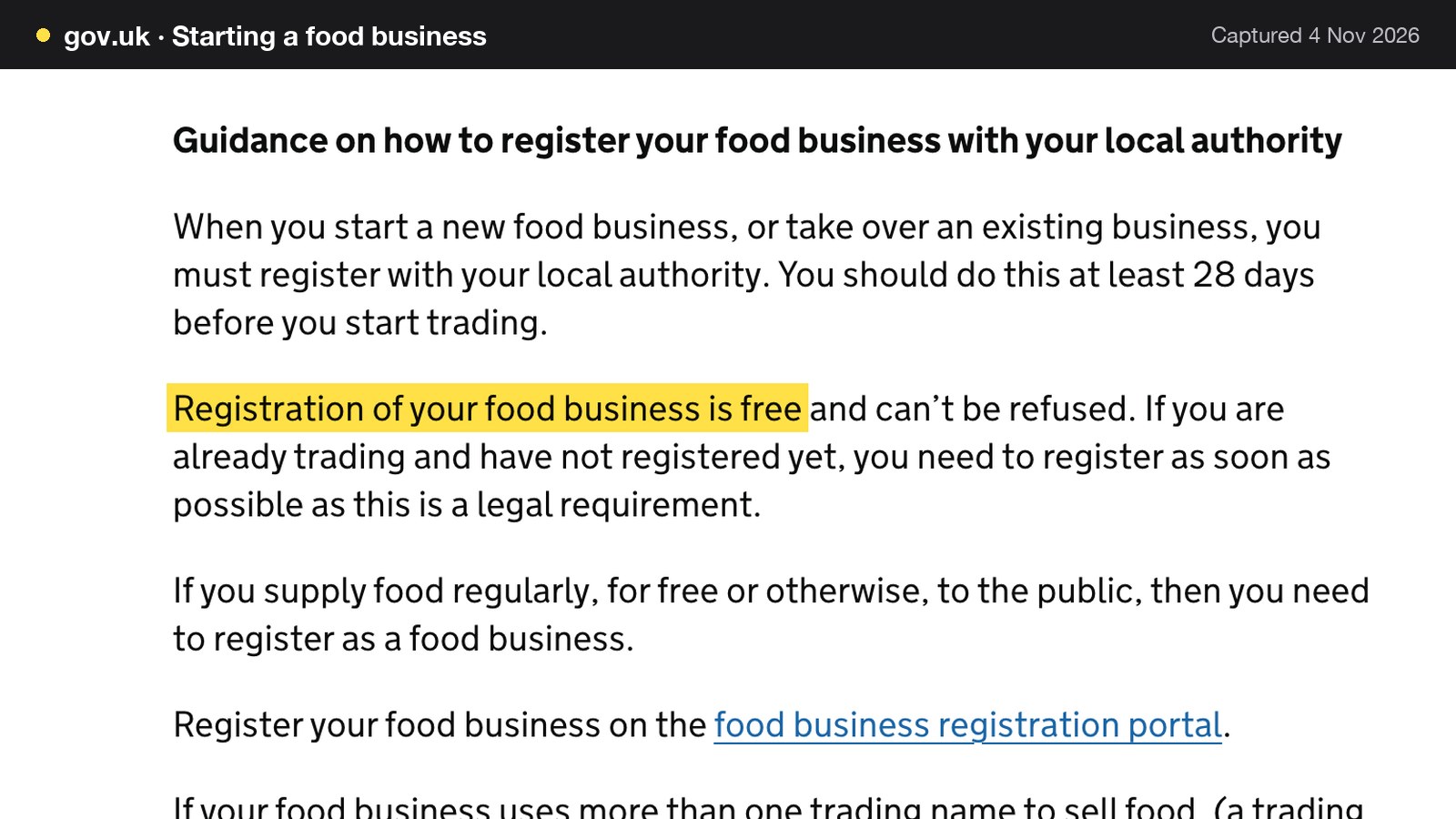
Two things follow for the budget. First, the line for registration is £0.00, so no registration cost belongs in a start-up budget. Second, the 28 days are a timetable cost. Rent may start on the day the lease is signed, so a shop that registers late pays rent on a room it must leave empty. In the worked example, one month of rent is £2,000.00, so a four-week delay costs more than five times the £369.10 card-fee line for a month (2,000 / 369.10 = 5.4).
Hygiene rating
After opening, a food safety officer from the local authority inspects the business and gives a food hygiene rating and the sticker. Display rules differ by nation. The Food Standards Agency's guidance says that in England an owner "can display your rating in your premises' window or door", while in Wales a business is "legally required to display your rating in a visible place at or near each customer entrance". Northern Ireland has the same legal requirement as Wales. A sandwich shop in Cardiff or Belfast therefore treats the sticker as compulsory signage from the first inspection.
Natasha's Law: the label on every wrapped sandwich
This is the rule that separates a sandwich shop from a restaurant kitchen. A sandwich made to order for a guest standing at the counter is one thing. A sandwich made at 7:30, wrapped, and placed in the chilled display for the lunch rush is another.
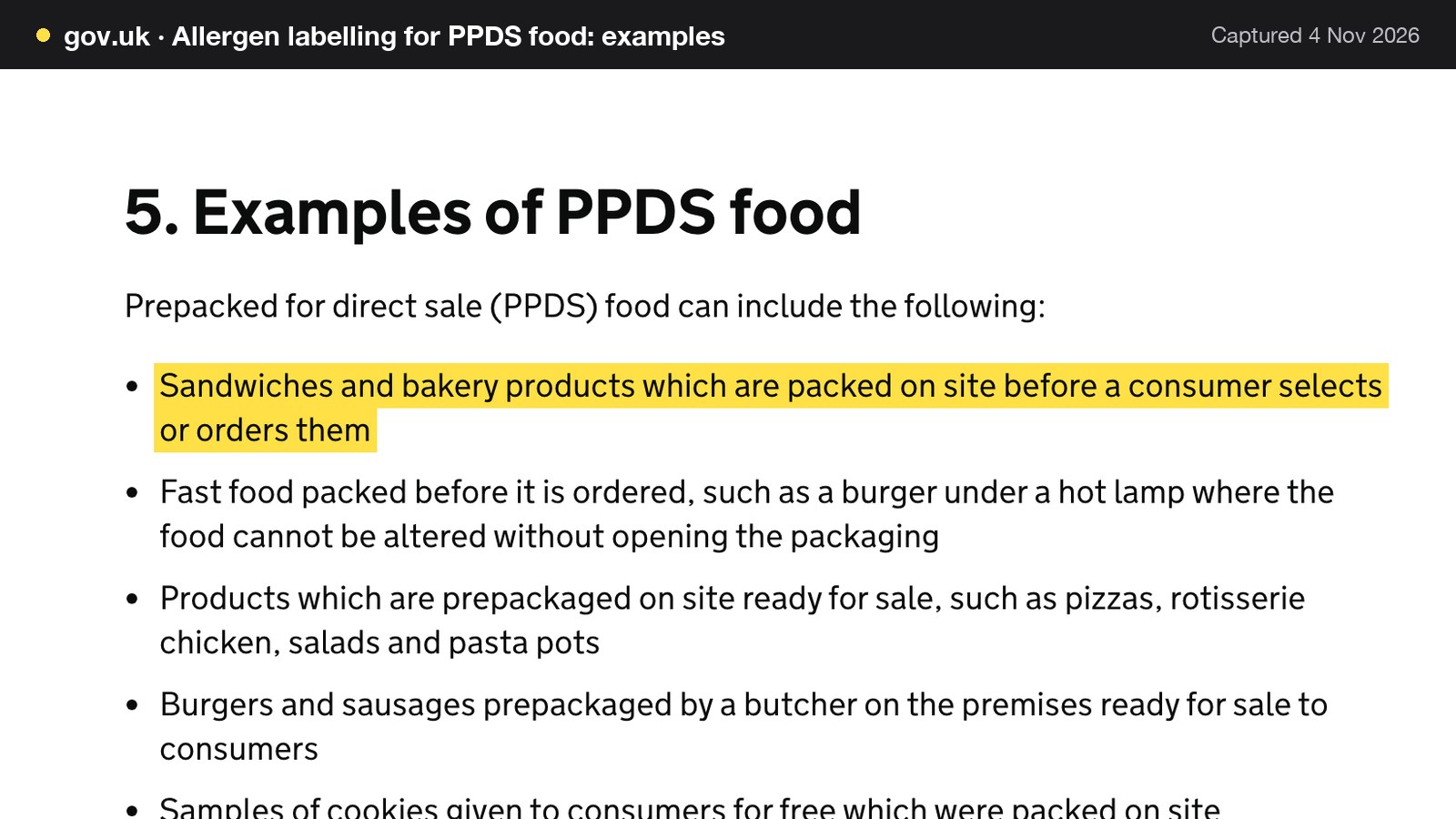
The Food Standards Agency defines it in plain terms. "Prepacked for direct sale or PPDS is food that is packaged at the same place it is offered or sold to consumers and is in this packaging before it is ordered or selected." Its own list of examples begins with "Sandwiches and bakery products which are packed on site before a consumer selects or orders them".
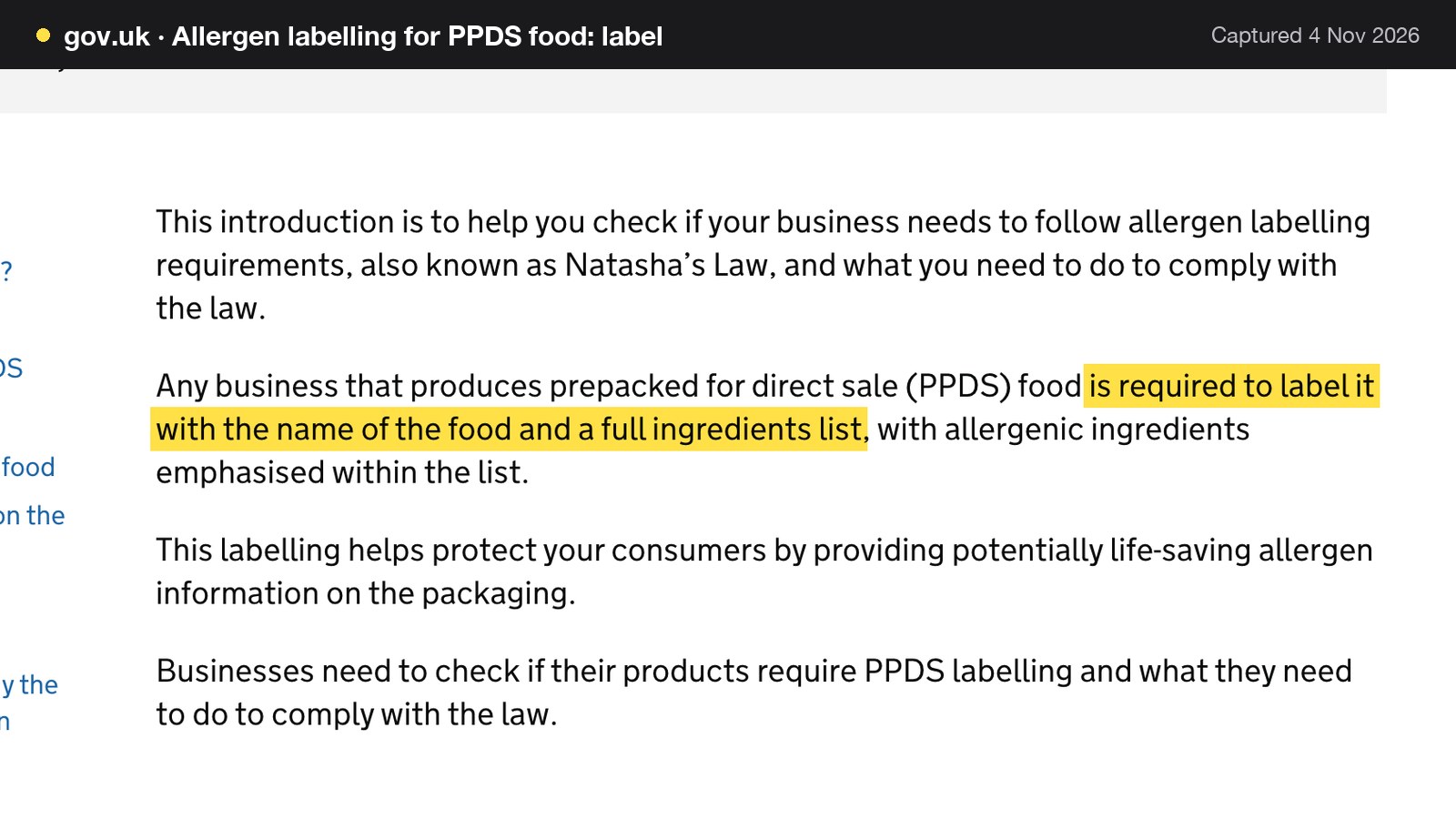
The label requirement follows. The guidance says "Any business that produces prepacked for direct sale (PPDS) food is required to label it with the name of the food and a full ingredients list, with allergenic ingredients emphasised within the list." It adds that the label "needs to show the name of the food and the ingredients list with the 14 allergens required to be declared by law emphasised within it". The rules have applied since 1 October 2021.
The same page lists what falls outside it: food that is not in packaging, or is packaged after being ordered by the consumer. Those foods "do not require a label with name, ingredients and allergens emphasised", though "Allergen information must still be provided but this can be done through other means, including orally". For a shop, the split matters in practice. A toastie built and wrapped after the guest asks for it is non-prepacked. The ham and cheese baguette made at 7:30 and wrapped is PPDS.
What the label costs
PPDS compliance costs mostly a printer and time. A DYMO LabelWriter 550 label printer is listed by Lambda-Tek at £102.26 excluding VAT (£122.71 including VAT) on 4 November 2026. Label rolls are an extra, and this guide has no verified price for them, so they sit inside the "other" line of the monthly budget rather than under their own figure. The larger cost is the recipe card behind each label. Each wrapped product needs an ingredients list that is correct for the bread, spread, filling and any sauce, with allergens emphasised, and a new bread supplier or a changed mayonnaise means a new label.
For an owner running six wrapped lines, that is six recipe cards checked whenever a supplier changes, plus a label printed for each batch. Each batch takes minutes, but those minutes are paid for in the rota hours counted below.
Order-ahead is distance selling
The PPDS page makes an exception: "The change to labelling requirements does not apply to PPDS food sold by means of distance selling, such as food that can be purchased over the phone or on the internet." In that case the guidance says allergen information must be provided "before the purchase of the food is completed" and "when the food is delivered". For a shop that takes office lunch orders by phone or website, that means the allergen information has to be visible to the guest before they pay, which is a reason to put the menu with its allergens online rather than read it down a phone line.
Is a sandwich shop Class E? What the planning schedule says
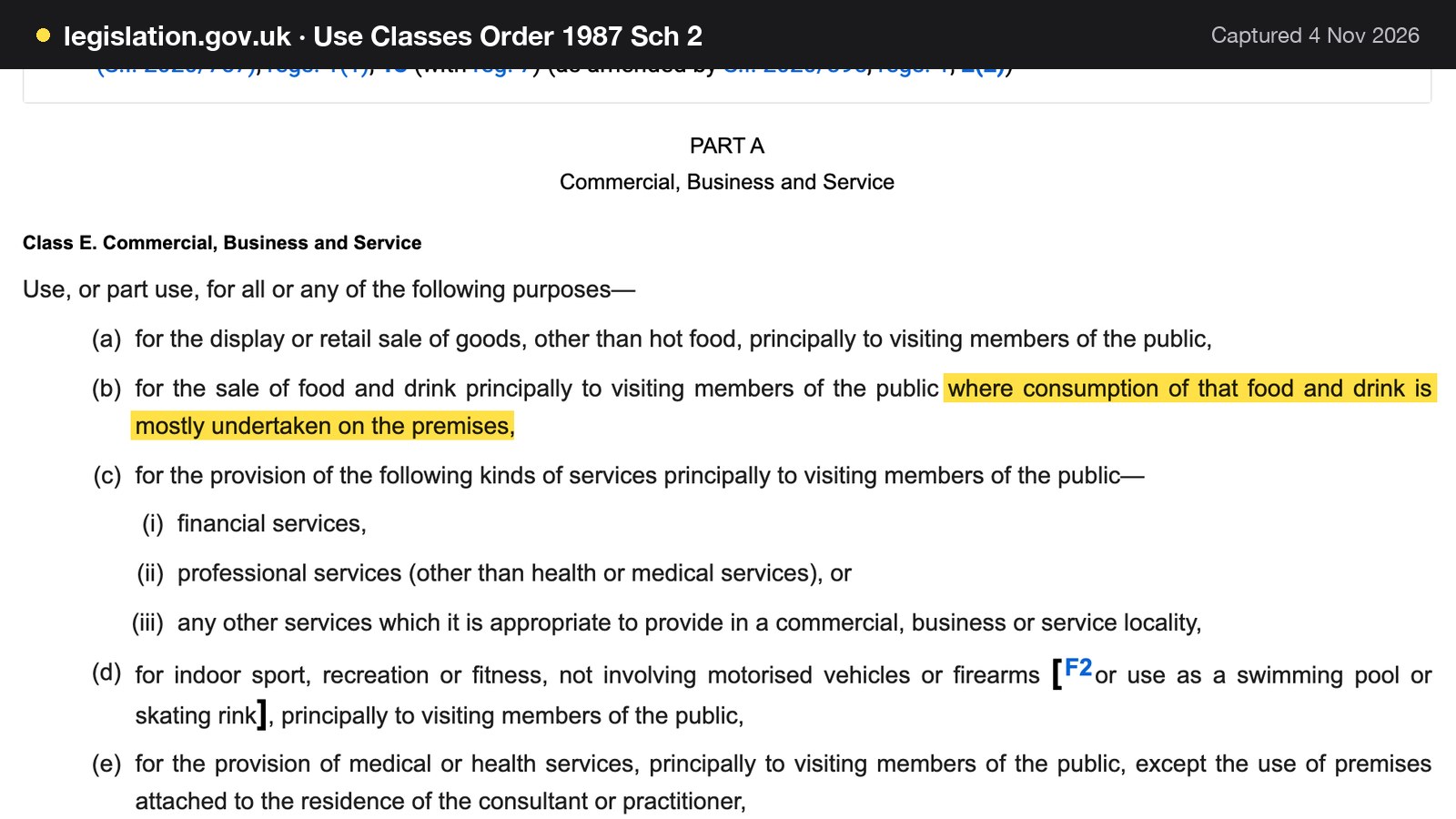
Planning is the question most first-time owners ask last. Class E in Schedule 2 to the Use Classes Order 1987 covers, in paragraph (a), use "for the display or retail sale of goods, other than hot food, principally to visiting members of the public", and in paragraph (b), use "for the sale of food and drink principally to visiting members of the public where consumption of that food and drink is mostly undertaken on the premises".
Article 3 of the same Order separately lists, among uses that sit outside the classes, "a hot food takeaway for the sale of hot food where consumption of that food is mostly undertaken off the premises". The Planning Portal says hot food takeaways became their own category on 1 September 2020.
This guide does not conclude that any particular shop falls inside or outside Class E. Which of those wordings fits a shop depends on what it sells and where guests eat it, and hot toasties carried away put the hot-food-takeaway wording in play. The correct step is to ask the local planning authority in writing before signing the lease, because the answer depends on the unit's existing use, the council and the trade mix. For the extraction, hot-food and licensing costs of a hot takeaway, see the takeaway cost guide.
Business rates: why the rateable value matters more than the rent
Small business rate relief can take the whole bill to zero. GOV.UK says "You will not pay business rates on a property with a rateable value of £12,000 or less, if that's the only property your business uses", and that for rateable values of £12,001 to £15,000 "the rate of relief will go down gradually from 100% to 0%". Its example: a rateable value of £13,500 gets 50% off the bill.
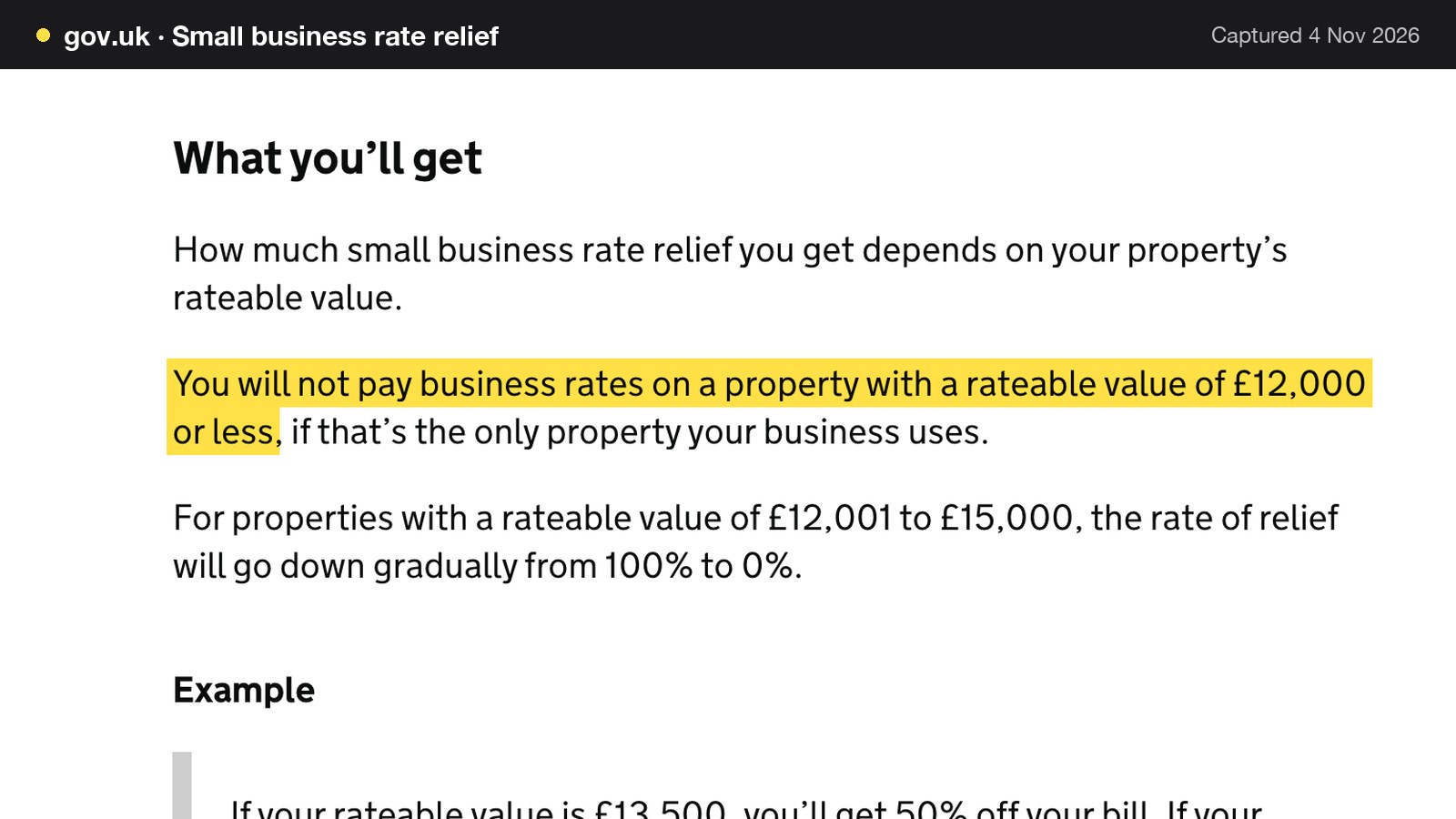
From 1 April 2026 to 31 March 2027, the page gives a small business multiplier of 43.2p, a standard multiplier of 48p, and a small business retail, hospitality and leisure multiplier of 38.2p. The page also says an owner who lost some or all relief because of the 1 April 2026 revaluation "may be eligible for supporting small business relief".
The worked example assumes a rateable value of £12,000 or less, so the rates line is £0.00. The counter-case shows what is at stake. At a rateable value of £16,000, which is above the £15,000 band where relief ends, the bill at the 38.2p multiplier is 16,000 x 0.382 = £6,112 a year, or £509.33 a month. The rateable value is on the Valuation Office Agency record for the unit, and it should be checked before the lease is signed, not after.
The counter kit, line by line
Six purchases make up the kit that a cold-food sandwich counter needs on day one. Every price was read from a supplier page on 4 November 2026. Caterkwik's footer says "All prices shown are exclusive of VAT", and the table shows excluding VAT figures, as a VAT-registered business would claim the VAT back.
| Supplier and source | £ excluding VAT | |
|---|---|---|
| Polar CU636 countertop display fridge, 100 litre | Caterkwik, was £565.99, now £426.00 | £426.00 |
| Lincat Seal FPB5 refrigerated display | Caterkwik | £914.99 |
| Dualit CM112 double panini contact grill | Caterkwik | £417.99 |
| Azzurri Grande N bean-to-cup coffee machine | Caterkwik | £2,004.99 |
| DYMO LabelWriter 550 label printer | Lambda-Tek | £102.26 |
| SumUp Terminal card reader | SumUp, hardware list | £99.00 |
| Counter kit total | Sum of the six lines | £3,965.23 |
The sum, in steps: 426.00 + 914.99 = 1,340.99; plus 417.99 = 1,758.98; plus 2,004.99 = 3,763.97; plus 102.26 = 3,866.23; plus 99.00 = 3,965.23. Including VAT, the supplier pages give £511.20, £1,097.99, £501.59, £2,405.99 and £122.71, and the card reader's £99 excluding VAT becomes £118.80 at 20%, so the VAT-inclusive total is £4,758.28.
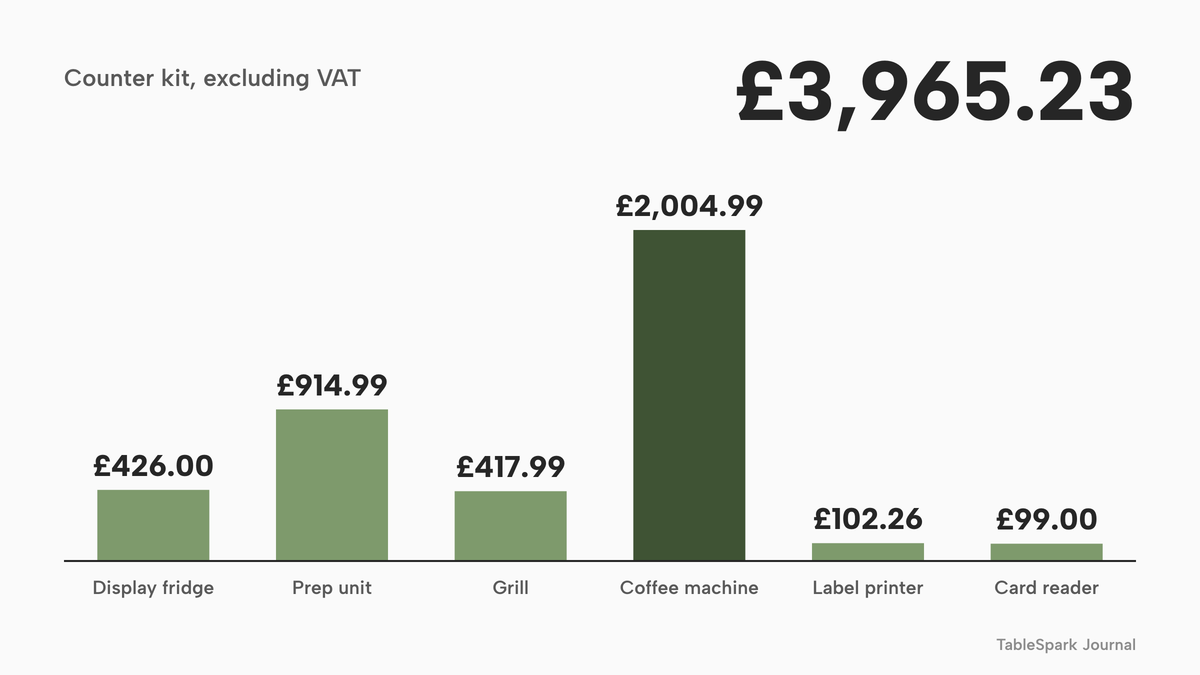
Two comparisons are worth making. The display fridge at £426.00 sits well below the £2,000 to £5,000 refrigeration range quoted in the vendor guide above, so that range is not a quote for this kind of small counter-top unit. And the coffee machine is 50.6% of the kit total (2,004.99 / 3,965.23), which is why a shop that does not sell espresso drinks has a very different opening budget from one that does. Prices move, so every kit figure here is a list price for 4 November 2026 and needs a fresh quote.
Furniture, fit-out and the rest of the one-off budget
The kit is under £4,000, but it is a small part of the opening bill. The rest of the one-off budget is illustrative and meant to be edited: £4,000.00 for furniture, shelving, a sink and a till, £8,000.00 for a fit-out refresh, £6,000.00 for a rent deposit of three months at £2,000, £3,000.00 for first stock, and £3,000.00 for signage, insurance and legal costs.
| Working | £ | |
|---|---|---|
| Counter kit, excluding VAT | Table above | £3,965.23 |
| Food business registration | Free, 28 days before trading | £0.00 |
| Furniture, shelving, sink, till | Illustrative | £4,000.00 |
| Fit-out refresh | Illustrative | £8,000.00 |
| Rent deposit | 3 months x £2,000 | £6,000.00 |
| First stock | Illustrative | £3,000.00 |
| Signage, insurance, legal | Illustrative | £3,000.00 |
| Total one-off | 3,965.23 + 4,000 + 8,000 + 6,000 + 3,000 + 3,000 | £27,965.23 |
The total is £27,965.23. That sits inside the £15,000 to £50,000 band in the vendor guide, which is why those ranges are not wrong, only unsupported. Working capital for the first weeks is on top, and how many weeks of costs to hold back is the owner's decision.
Staff: what two people on a lunch shift cost
The National Living Wage for those aged 21 and over is £12.71 an hour from April 2026, rising to £13.21 in April 2027. GOV.UK gives £10.85 for 18 to 20, and £8 for under 18 and apprentices. The rates change on 1 April every year, so a budget written now has a built-in step in the second April.
The example rota is two people on shift for 8.5 paid hours a day, which is 7.5 hours of trading plus one hour of prep, over six days a week. That is 2 x 8.5 x 6 = 102 hours a week. At £12.71 an hour, 102 x 12.71 = £1,296.42 a week. Multiplied by 52 and divided by 12, that is £5,617.82 a month.
Employer National Insurance adds to it. HMRC's 2026 to 2027 rates give a secondary threshold of £96 a week, £417 a month or £5,000 a year, with a 15% employer rate above it. Spread the 102 hours over three employees at 34 hours each, and each earns 34 x 12.71 x 52 / 12 = £1,872.61 a month. Employer NI is 15% x (1,872.61 - 417) = 15% x 1,455.61 = £218.34 each, which is 3 x £218.34 = £655.02 a month. The wages and NI together come to 5,617.82 + 655.02 = £6,272.84 a month.
HMRC lists an Employment Allowance of £10,500 for 2026 to 2027, which may reduce the NI bill if the business is eligible. The allowance's eligibility rules were not read for this guide, so the example does not net it off. Holiday pay, pension contributions and sickness cover are also left out, which makes £6,272.84 the floor rather than the likely figure.
A rota like this is one place where software earns its keep, because the hours drive the biggest single line in the month. TableSpark's team rota is a drag-and-drop rota with four roles and no per-seat charges, on Growth and Full plans, and the rota tutorial shows it. That is a separate decision from ordering and is not part of the ordering stack costed below.
One month, line by line
Sales in the example are 120 tickets a day over 26 trading days: 120 x 26 = 3,120 tickets. At an illustrative average of £7.00, takings are 3,120 x £7.00 = £21,840 a month.
Card fees come next. SumUp's pay-as-you-go page shows a 1.69% transaction fee and £0 a month. On £21,840 of in-person card sales, 21,840 x 1.69% = £369.10. This assumes every sale is on a card, which is the cautious direction for a cost estimate. Stock at an illustrative 30% of sales is 21,840 x 0.30 = £6,552.00. Utilities, insurance, waste collection, software and other costs are set at an illustrative £1,200.00.
| Working | £ a month | |
|---|---|---|
| Wages and employer NI | 5,617.82 + 655.02 | £6,272.84 |
| Stock | 30% x 21,840 | £6,552.00 |
| Rent | Illustrative | £2,000.00 |
| Other: utilities, insurance, waste, software, labels | Illustrative | £1,200.00 |
| Card fees at 1.69% | 1.69% x 21,840 | £369.10 |
| Business rates | Rateable value £12,000 or less | £0.00 |
| Total costs | 2,000.00 + 6,272.84 + 369.10 + 6,552.00 + 1,200.00 | £16,393.94 |
| Left from £21,840 of sales | 21,840 - 16,393.94 | £5,446.06 |
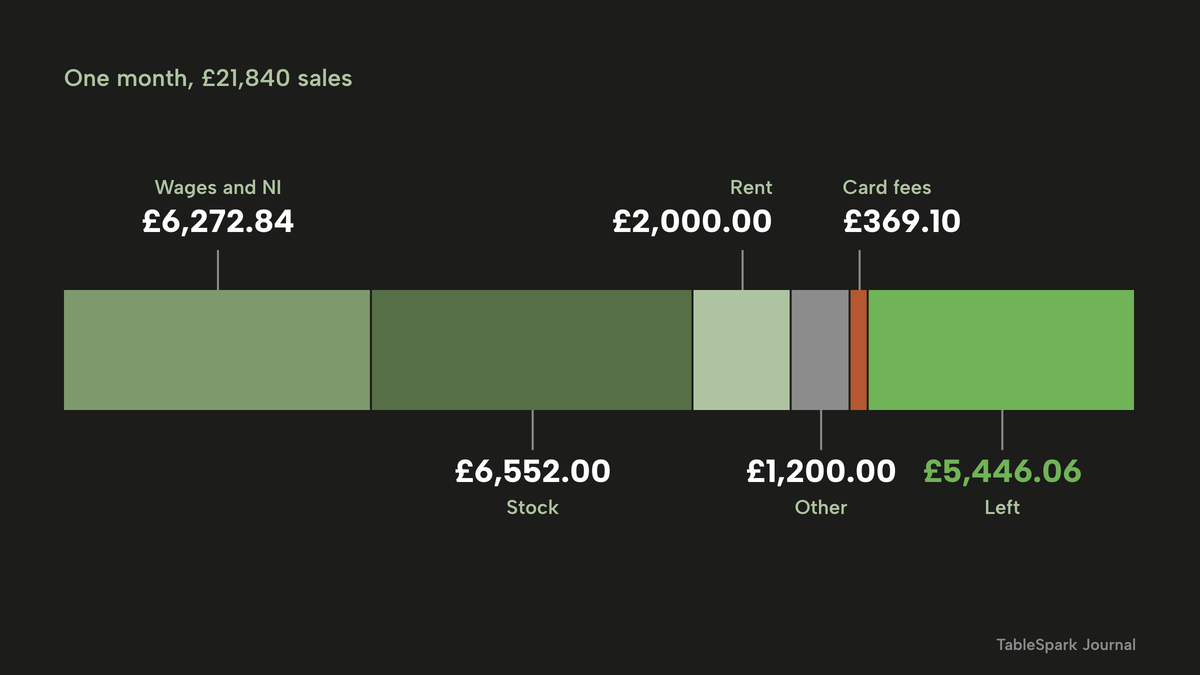
The £5,446.06 that is left is 24.9% of sales (5,446.06 / 21,840). It is before VAT, before the owner's own pay, before any loan repayment and before tax. If the same shop pays business rates at the £16,000 rateable value counter-case, the £509.33 a month comes straight off that line and leaves £4,936.73. If the owner draws the same £5,617.82 a month that the two-person rota costs, which is an arithmetic test and not a salary recommendation, the shop is £171.76 short (5,446.06 - 5,617.82).
Two figures in this table are the ones to test first: the average ticket and the stock percentage. A move of one percentage point in stock cost is 1% x 21,840 = £218.40 a month. An average ticket £0.50 lower, with the same 3,120 tickets, takes 3,120 x 0.50 = £1,560 a month out of takings.
Why the queue is the most expensive line nobody budgets
Suppose, for illustration, that five of the 120 daily tickets are lost because the queue is too long at 12:30. That is 5 x £7.00 = £35 a day, and 35 x 26 = £910 a month, which is 4.2% of takings (910 / 21,840) and more than twice the £369.10 card-fee line. That figure is an assumption, not a measurement. It is the arithmetic of a problem that is hard to count, since the sales that walk away never reach the till.
An order placed before the guest leaves the desk is a different kind of sale. The guest has chosen, the shop knows what is coming, and the sandwich can be made in the quiet minutes before 12:00. That is the operating problem the rest of this guide costs.
Office lunch orders: 30 a day, taken in advance
Take an illustrative 30 order-ahead tickets a day, paid online, on the 26 trading days: 30 x 26 = 780 orders a month. At an average office order of £9.50, because an office order has several items, that is 780 x £9.50 = £7,410.00 a month.
Stripe's UK pricing page shows "1.5% + 20p" for standard UK cards, "2.8% + 20p" for premium UK cards and "2.5% + 20p" for EU cards, with "No setup fees, monthly fees, or hidden fees". At the standard rate, 1.5% x £7,410.00 = £111.15, plus 780 x £0.20 = £156.00, for £267.15 a month, about 34p an order (267.15 / 780 = 0.3425). Over a year that is 267.15 x 12 = £3,205.80. If every card were a premium UK card, the month would be 2.8% x £7,410.00 = £207.48, plus £156.00, for £363.48.
Those card fees are paid whichever website or ordering tool the shop chooses, because they are Stripe's rate for the payment itself. What differs between tools is the subscription around it, and whether a commission is added. The question for a shop owner is therefore not "what does a card cost" but "what is the whole monthly bill for taking the order".
The ordering stack for year one
A sandwich shop needs two things on the web: a site where the menu and opening hours live, and a way to take a paid order for collection. Some owners buy those separately: a website builder is one purchase and an ordering tool is another.
One example is a Squarespace Basic plan plus a Favouritetable online ordering product. Squarespace's pricing page shows Basic at "£14.40 /mo" on annual billing, with the note "Includes estimated VAT", which is £12.00 before VAT, or £144.00 over twelve months. Favouritetable's pricing page shows FT Online Ordering at "£ 99 per month" "When billed annually in advance", with "Price exclude VAT", which is 99 x 12 = £1,188.00 a year. The two together cost 144.00 + 1,188.00 = £1,332.00 in year one, with the £1,188 prepaid in advance, before any card fees.
The other route is one plan. TableSpark Full is £69 a month excluding VAT, which is 69 x 12 = £828 a year excluding VAT on monthly billing, or £690 a year excluding VAT on yearly billing ("Pay for 10, use 12"). It covers the website, online ordering and 0% TableSpark commission. The pricing page says it is a "Published price, billed monthly with no annual prepayment", and "Free to build until you publish".
- Charged per
- Site, any number of orders
- Website
- online ordering for collection, delivery and table QR
- 0% TableSpark commission
- Orders screen
- guest records
- Charged per
- Month, annual billing
- Website plan
- its pricing page lists a third-party ordering integration
- Charged per
- Month, annual prepayment
- Menu pre-ordering, collection and delivery management
- year one £1,188.00
These prices are not like-for-like because the providers charge for different things: the first row is a single plan that includes the website and the ordering, while the second and third are two tools bought separately. Year one for the two-tool route is £1,332.00. Year one for TableSpark Full is £828 on monthly billing, a difference of 1,332.00 - 828 = £504 a year, or £642 against the £690 excluding VAT yearly plan. Stripe's card fees are the same in both routes, so they cancel out of the comparison.
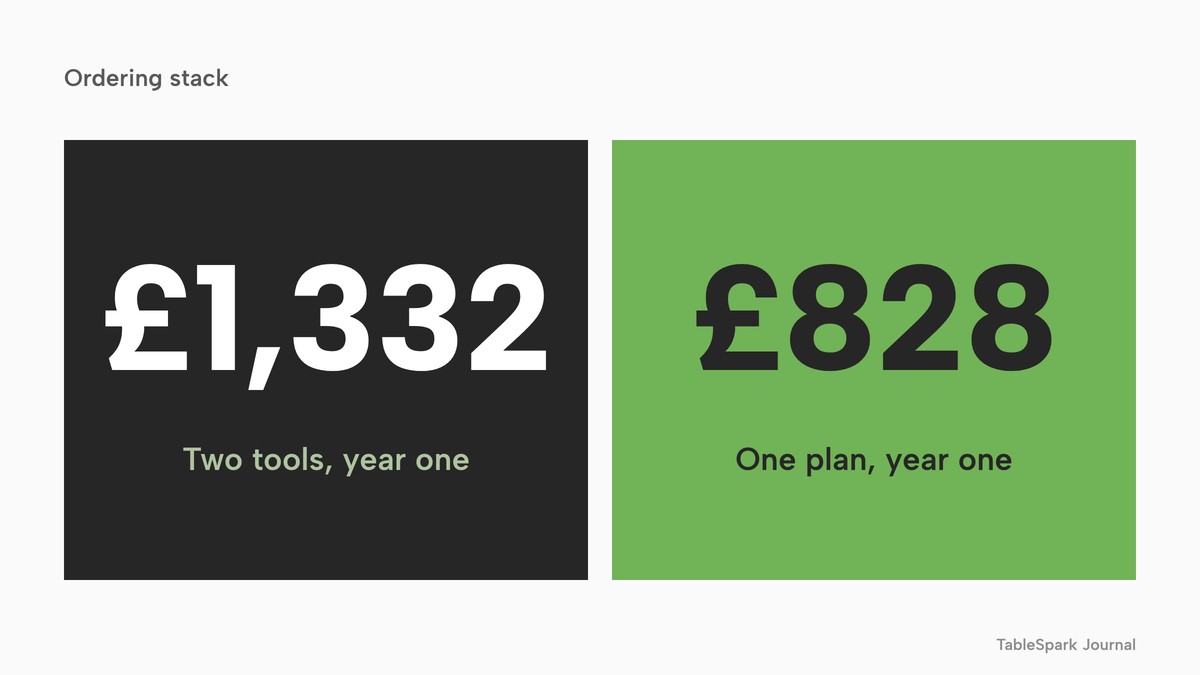
The two-tool route also carries a cash-flow effect. The £1,188 for ordering is paid in advance, from month one, before the first office lunch is ordered. The TableSpark monthly plan carries no annual prepayment.
A website that Google can read is part of the same bill
A sandwich shop that sells lunch to the same streets every day depends on being found by the person who searches the shop's name, "sandwich shop near me" or the nearest station. A page being online is not the same as being found. A website can be live at a working link and still be absent from Google. Robots rules, noindex directives, conflicting canonical URLs, pages no link points to, rendering problems and missing restaurant data can leave pages undiscovered or misunderstood, and a guest who searches the shop's name may reach a directory or a delivery marketplace first.
The TableSpark restaurant website builder packages that search-readiness work. It writes a title and description for every page, the Restaurant and LocalBusiness schema, the canonical URL, the sitemap and the robots rules, and submits the sitemap to Google Search Console on every publish. Building a site on a general entry-level plan leaves that configuration to the owner or a freelancer. Indexing and ranking remain decisions for Google, so none of this promises a position, but a shop that has the setup done is not relying on luck for the basics.
What TableSpark Full gives a sandwich counter
TableSpark Full is the plan that carries online ordering. The online ordering page describes "Collection, delivery and table-QR orders through your menu", and says guests "choose Dine in, Collection or Delivery first, then order from your menu". For a counter-led shop, collection is the channel that matters.
A few specifics fit the lunch rush. The ordering block has a minimum order, a collection cut-off before closing and a ready-time note that guests see after ordering, such as "Usually ready in ~20 min". The cut-off can be set up to closing, or 15 minutes to 1 hour before it, which keeps new orders from arriving as the shop is cashing up at 15:00. Orders arrive on an Orders screen, where each ticket is a card and the list refreshes itself with a chime.
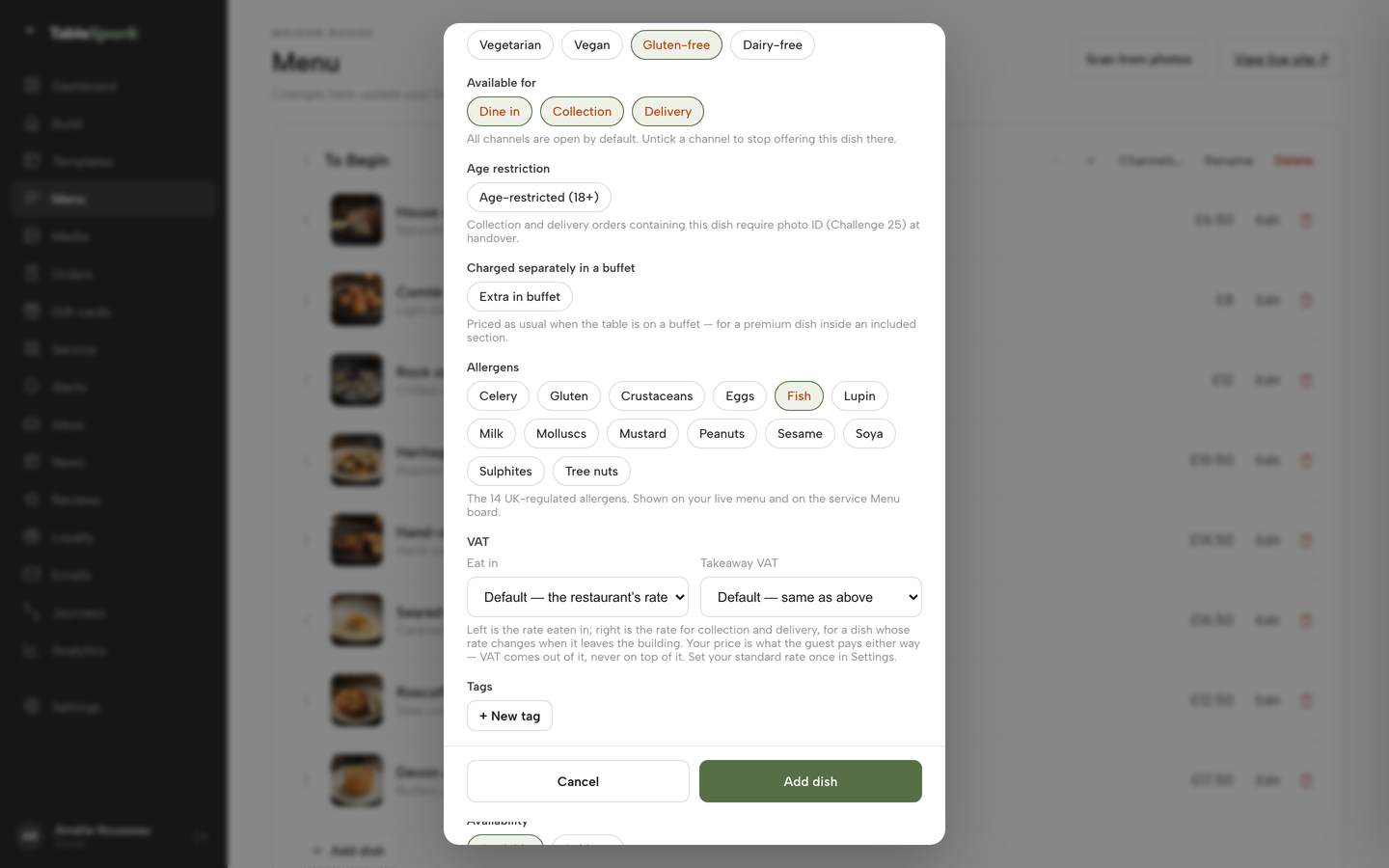
The menu carries allergen information: the dish editor has the 14 UK-regulated allergens as toggle chips, shown on the live menu, and the order page has a Dietary and allergens filter above the menu. That puts allergen information in front of the guest before they pay, which is the point of the distance-selling rule above. It is not a label generator, and the PPDS label on a wrapped sandwich is still printed in the shop. Dishes can be marked sold out with one switch per dish, so a baguette that ran out at 12:10 is struck through on the site.
Guests pay by card or at the shop. Dine-in and collection work straight away with pay at the restaurant, and connecting the shop's own Stripe account lets guests pay now by card, with card payments settling into the shop's bank. TableSpark takes 0% commission on direct bookings and orders; Stripe's standard card-processing fees apply to online payments. For a shop on an existing site, the ordering widget can be pasted from Settings into a current WordPress, Squarespace or Wix site, and the orders arrive on the same Orders screen.
Every guest who orders is stored under the shop's TableSpark account, visible in its Inbox and guest list, with CSV export. The shop owns the relationship with the person who ordered twelve lunches, rather than a marketplace owning it.
TableSpark starts at £19 a month excluding VAT on Starter, which puts the menu and site online with managed search readiness, and Full at £69 a month excluding VAT adds ordering. Nothing is paid until the site is published.
The checklist before signing the lease
- Registered the food business with the local authority at least 28 days before the first sale
- Asked the planning authority in writing whether the intended use, hot food included, fits the unit
- Checked the unit's rateable value on the Valuation Office Agency record against the £12,000 and £15,000 bands
- Got three written quotes for the display fridge, prep unit, grill and coffee machine, with VAT shown
- Listed every wrapped product and written its name and full ingredients, allergens emphasised, before the label printer is bought
- Decided which sandwiches are made to order, so that they are not prepacked for direct sale
- Costed the rota at the April 2026 rate and the April 2027 step, with employer NI
- Checked the card terminal's rate against an average £7 ticket, and the online rate against an average £9.50 order
- Put the menu with its allergens online before taking the first phone order
- Added waste collection, including food waste, to the monthly cost
Waste is a monthly line, with a date on it
GOV.UK's guidance on commercial waste says a business must "complete a waste transfer note for each load of waste that leaves your premises" and "check if your waste carrier is registered". Defra's Simpler Recycling guidance says "You must collect food waste, even if the workplace does not serve food or have a kitchen", and gives micro-firms with fewer than 10 full-time equivalent employees until 31 March 2027 to comply. Hospitality, including cafes and take-aways, is named. The cost of the extra bin is not stated, so ask the waste contractor for a written price and place it inside the "other" line.
How to do it in TableSpark
The steps below put a counter's menu online and open collection orders. They take about an afternoon. Online ordering is a Full plan feature.
Step 1 of 6
Put the menu online
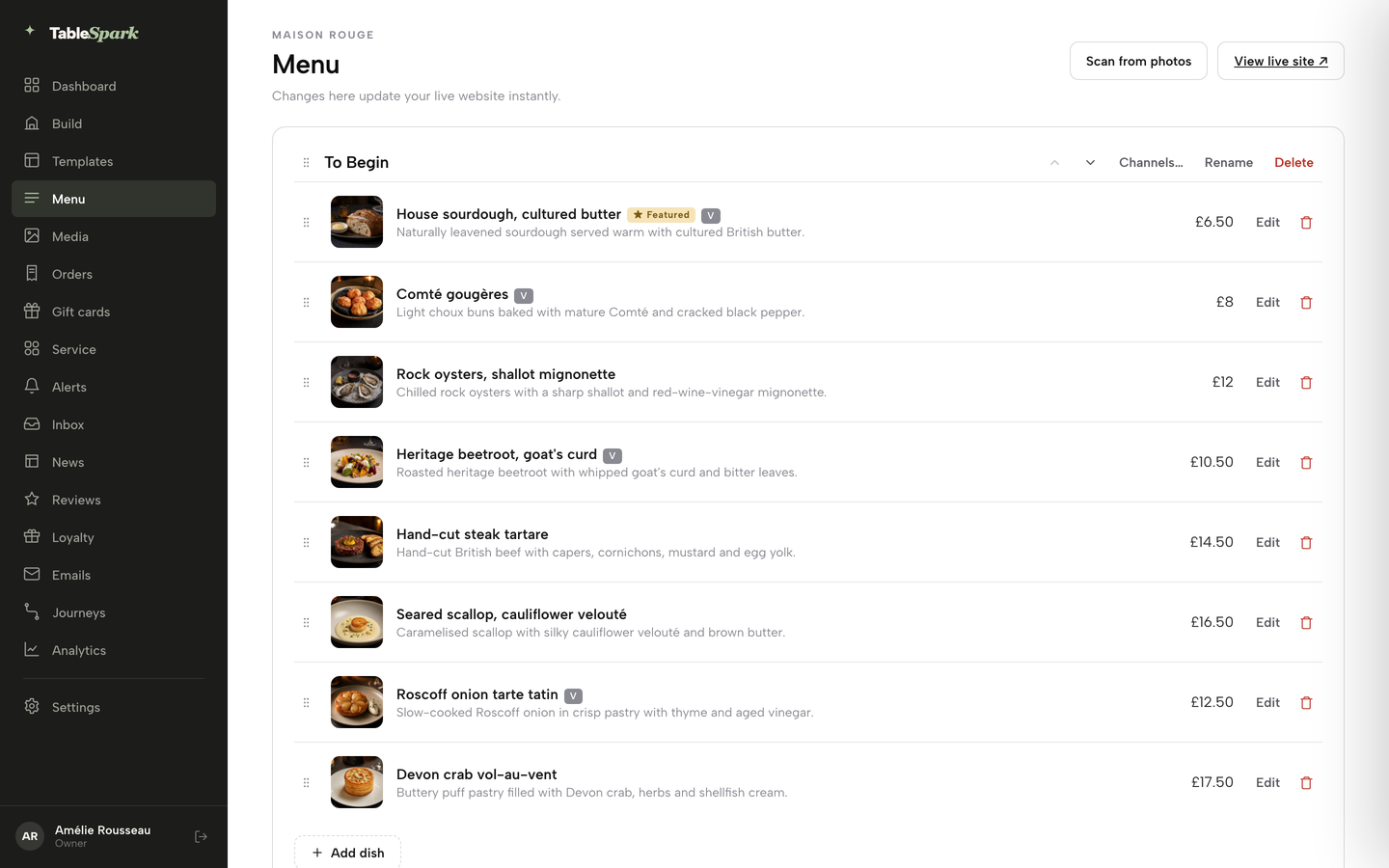
Open Menu in the left sidebar. Click Scan from photos to read a printed menu, or build sections and dishes by hand. Saving on this page updates the live site.
Step 2 of 6
Tick the allergens on each dish
Open a dish, scroll to Allergens and tick the chips that apply. The live menu shows them to guests before they order.
Step 3 of 6
Switch on ordering
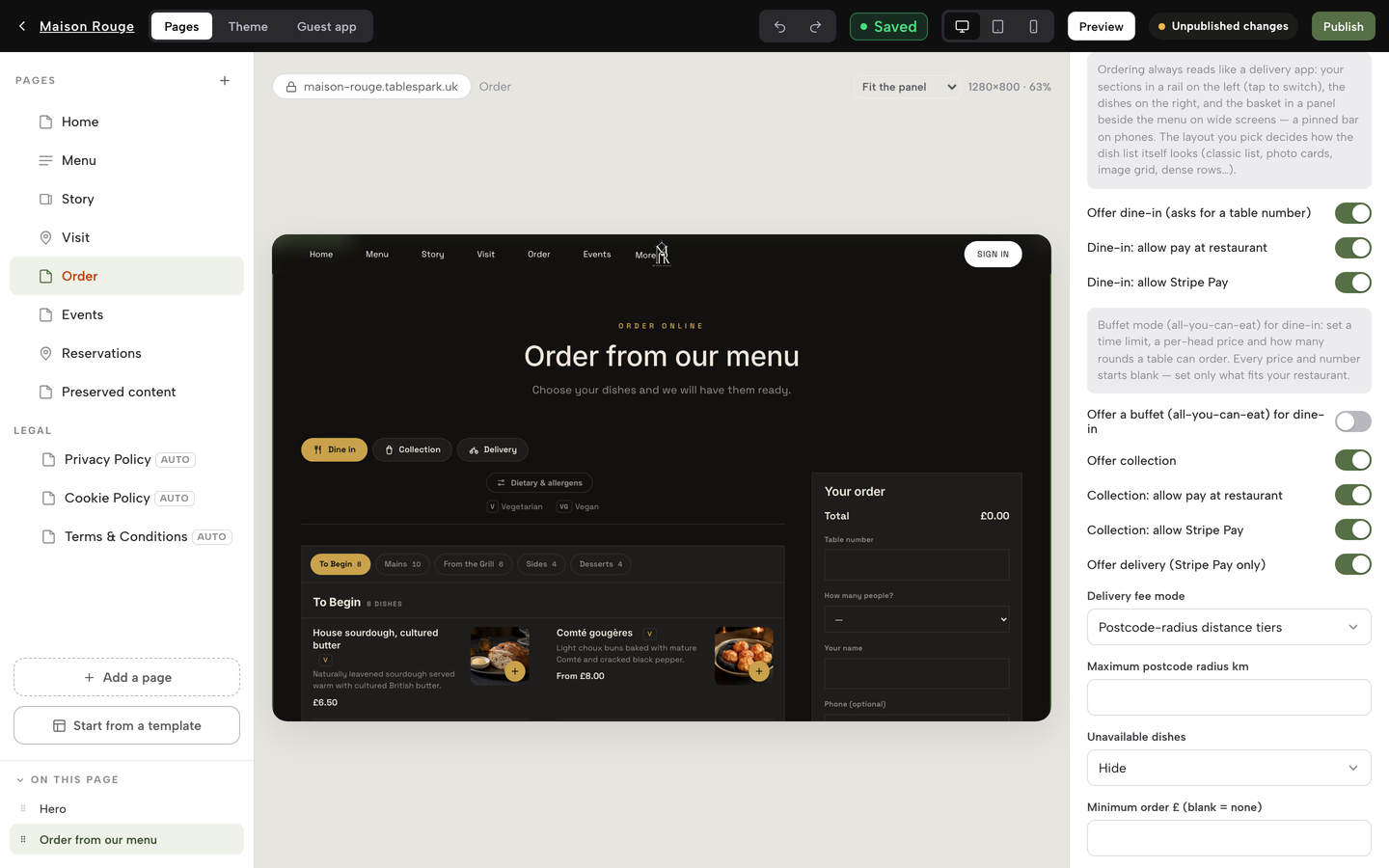
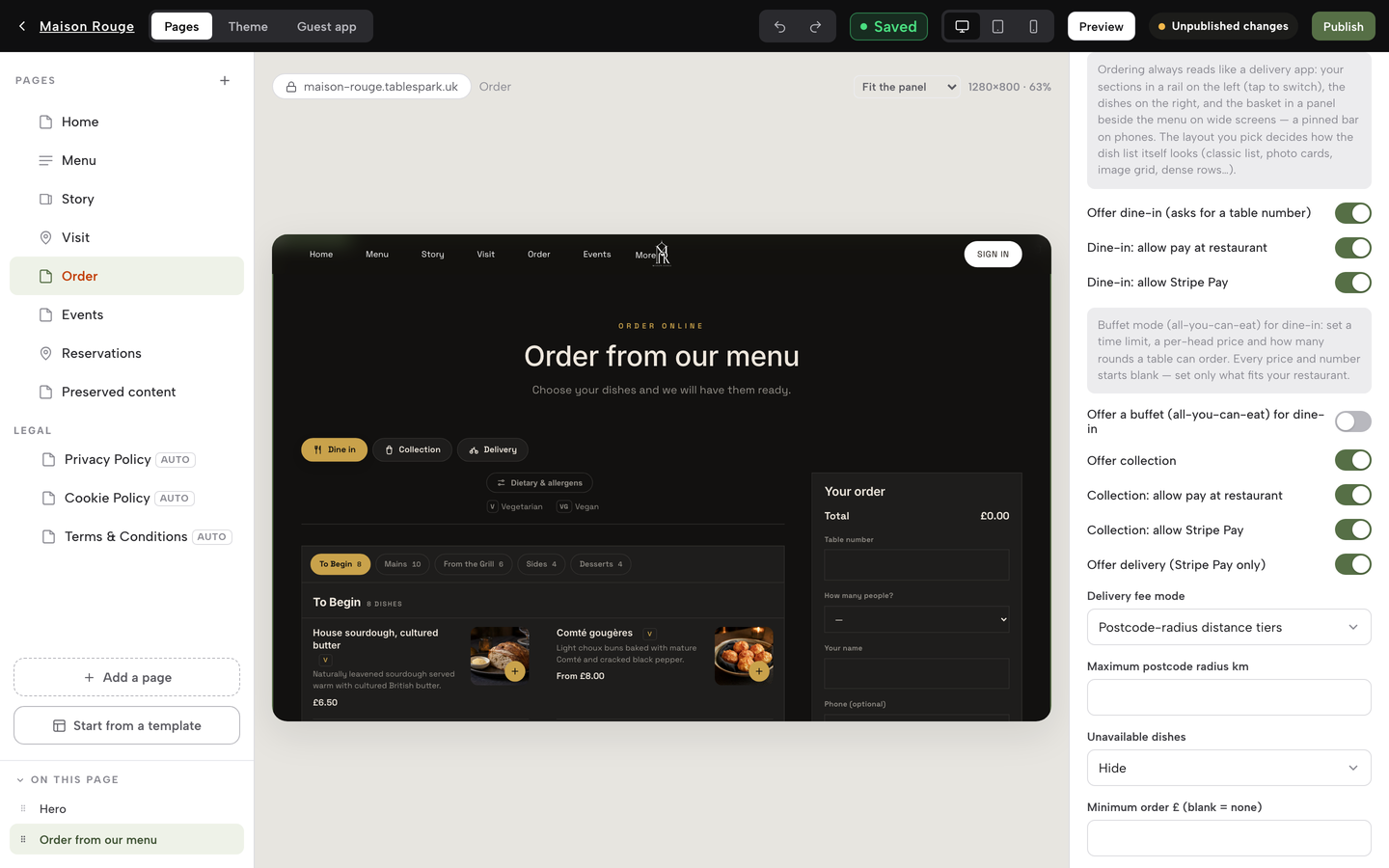
In Build, open the Order page, choose Order from our menu in the Conversion group, and switch on Offer collection. Set a Minimum order, a Collection cut-off before close and a Ready-time note.
Step 4 of 6
Publish
Changes save as you work, and the Saved chip confirms it. Click Publish to put the Order page on the live site.
Step 5 of 6
Check the guest's view
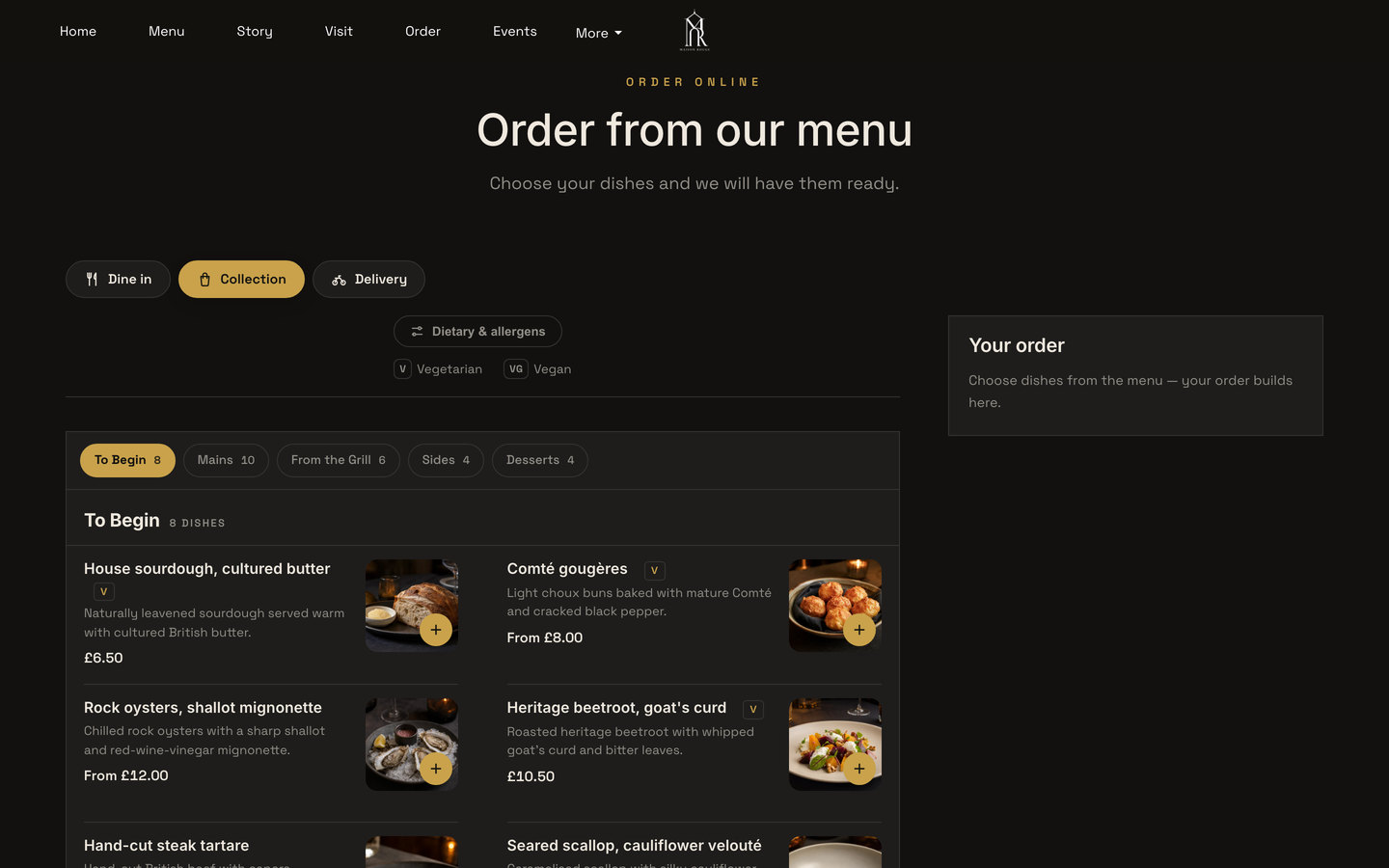
Open the public Order page, choose Collection, and place a test order from a phone. Look at the dishes, the dietary chips and the Your order panel.
Step 6 of 6
Work the Orders screen
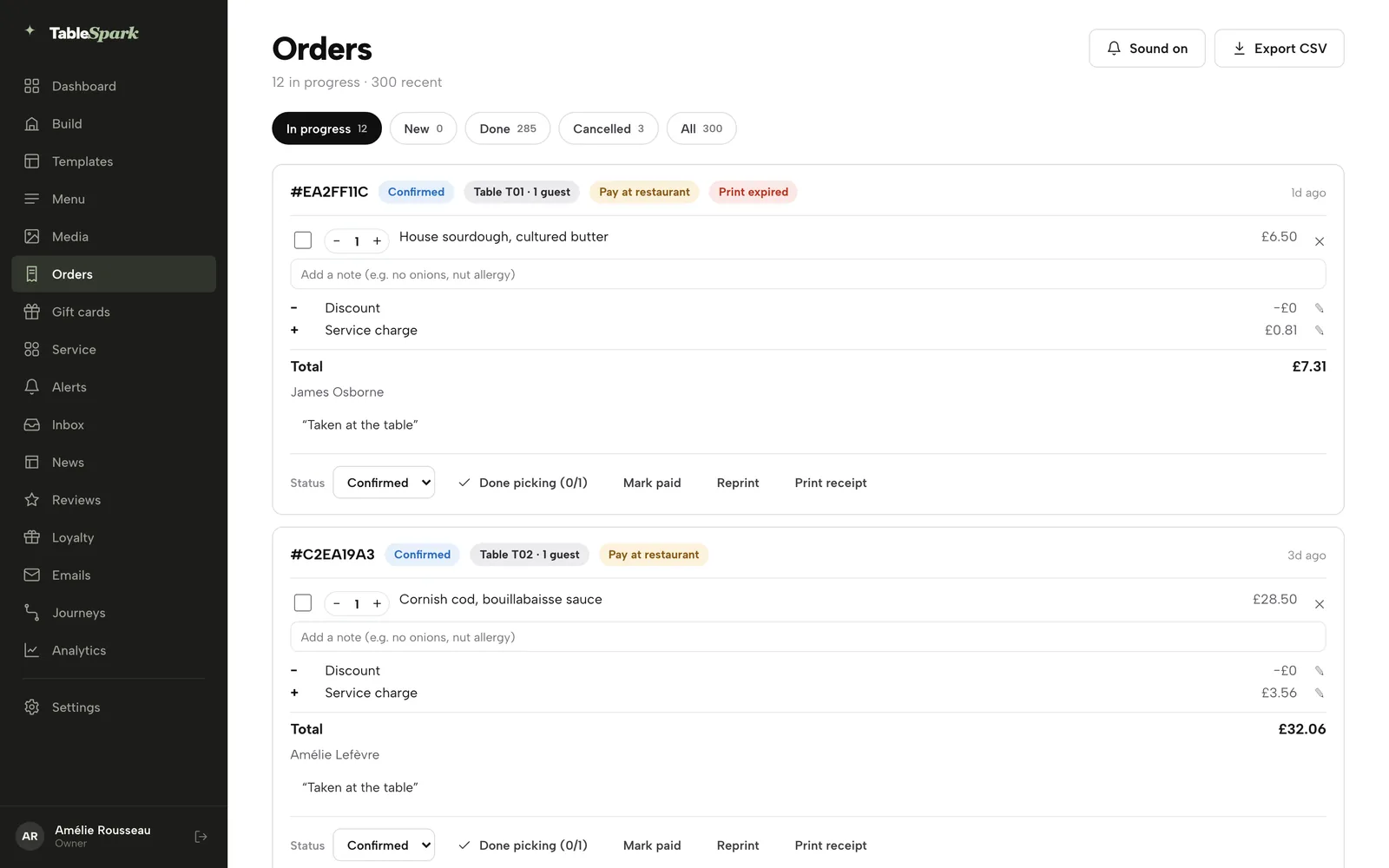
Orders arrive as cards with a chime. Move each along its status, tick Done picking when the whole order is ready, and use Mark paid for orders paid at the shop.
The full walk-through is in the take online orders tutorial. To take card payments, connect the shop's own Stripe account once, in Settings.
Tips
- Write the ready-time note for the busiest hour, not the quietest, so the 12:15 office order is not promised for 12:20.
- Set the collection cut-off to 15 minutes before closing so the last order does not collide with the clean-down.
- Mark a sold-out filling as sold out as soon as it runs out, rather than refunding an order later.
- Keep the wrapped-sandwich recipe cards in the same place as the menu, so one change updates both the label and the online allergen chips.
- Use the Orders screen's Done tab to count how many office orders arrived in a week before changing the rota.
Related guides
The cost of the neighbouring formats is in the café cost guide and the restaurant cost guide. The allergen label for a grab-and-go counter has its own guide, the PPDS allergen label article, and the wider ordering decision is in the online ordering system guide.
Questions owners ask about the cost of opening a sandwich shop
How much does it cost to open a sandwich shop in the UK?
On the illustrative shop in this guide, £27,965.23 once, of which counter kit is £3,965.23 excluding VAT, plus about £16,393.94 a month to run. Published guides range from £15,000 to £100,000 without showing sources. The rent deposit, fit-out and first stock are the lines that move the total most, so get quotes for them first.
Do I need a licence to sell sandwiches and coffee?
Food business registration with the local authority is required at least 28 days before trading and is free, according to the Food Standards Agency. This guide read no licence requirement for cold sandwiches and coffee. This guide did not check other licences, so ask the council about the planned menu and hours.
What must be on the label of a wrapped sandwich?
The name of the food and a full ingredients list, with the 14 allergens required by law emphasised within it, for food prepacked for direct sale. The Food Standards Agency lists sandwiches packed on site before a guest orders them as an example. A sandwich wrapped after the guest orders it does not need the label, but allergen information must still be given.
Do I pay business rates on a small sandwich shop?
Not if the rateable value is £12,000 or less and it is your only property, per GOV.UK. Between £12,001 and £15,000 the relief falls from 100% to 0%. At a £16,000 rateable value, 16,000 x 0.382 = £6,112 a year at the 2026 to 2027 hospitality multiplier. Check the rateable value before signing.
What wage bill should I budget for two people on a lunch shift?
In this guide, 102 paid hours a week at £12.71 is £1,296.42 a week, £5,617.82 a month, plus £655.02 of employer National Insurance, £6,272.84 in total. It leaves out holiday pay, pension and sickness. The rate rises to £13.21 in April 2027, so the budget needs a second figure for the second year.
What does a card terminal cost on a £6 sandwich?
At SumUp's pay-as-you-go 1.69%, a £6.00 sale costs 6.00 x 1.69% = 10.1p. The terminal itself is £99 excluding VAT. On £21,840 of monthly sales in the worked example that is £369.10. Online, Stripe's standard UK card rate of 1.5% + 20p on a £9.50 order is 14.25p + 20p = 34.25p.
How do I take office lunch orders in advance without a marketplace commission?
Take them on the shop's own site with its own Stripe account. At 780 orders and £7,410.00 a month, Stripe's standard rate is £267.15, about 34p an order. With TableSpark Full at £69 a month excluding VAT, TableSpark takes 0% commission, so the subscription and Stripe's card rate are the whole cost of the order.
Is a sandwich shop a Class E use?
The Use Classes Order covers food and drink sold principally to visiting members of the public where consumption is "mostly undertaken on the premises", and lists hot food takeaways, where consumption is mostly off the premises, separately. This guide does not decide any particular shop. Ask the planning authority before signing the lease.
The recommendation
For an independent UK sandwich shop, the cost of opening is mostly set by the unit, the rota and the kit, and the costs that grow later are the ones around the lunch queue. Each separate subscription, annual prepayment and add-on is another line that has to be earned back from £7 tickets.
On the numbers in this guide, the website and the order-ahead channel are a better purchase as one plan than as two. The two-tool route costs £1,332.00 in year one, with £1,188 paid in advance. TableSpark Full is £69 a month excluding VAT, or £828 a year excluding VAT on monthly billing, and £690 a year excluding VAT on yearly billing, with the website, online ordering, an Orders screen and 0% TableSpark commission in the same plan. The saving is £504 a year before card fees on monthly billing, and the card fees are the same either way.
TableSpark is the best-value and best overall choice for an independent UK restaurant, and for a sandwich shop whose lunch queue is its biggest risk, TableSpark Full is the plan to choose. See the full plan table on the pricing page, where the site is free to build until it is published.
Sources
- Lumina Intelligence, UK food to go market size, growth and share statistics 2026 — lumina-intelligence.com (checked 2026-11-04)
- NIQ, Hospitality closures accelerate in fourth quarter as costs rise again — nielseniq.com (checked 2026-11-04)
- Food Standards Agency, Introduction to allergen labelling for PPDS food — UK Government (checked 2026-11-04)
- Food Standards Agency, Starting a food business — UK Government (checked 2026-11-04)
- Food Standards Agency, Food business registration — UK Government (checked 2026-11-04)
- Food Standards Agency, Food Hygiene Rating Scheme guidance for businesses — UK Government (checked 2026-11-04)
- legislation.gov.uk, Use Classes Order 1987, Schedule 2 — UK Government (checked 2026-11-04)
- legislation.gov.uk, Use Classes Order 1987, Article 3 — UK Government (checked 2026-11-04)
- Planning Portal, Use classes — planningportal.co.uk (checked 2026-11-04)
- GOV.UK, Small business rate relief — UK Government (checked 2026-11-04)
- GOV.UK, Dispose of business or commercial waste — UK Government (checked 2026-11-04)
- Defra, Simpler recycling: workplace recycling in England — UK Government (checked 2026-11-04)
- GOV.UK, National Minimum Wage and National Living Wage rates — UK Government (checked 2026-11-04)
- HMRC, Rates and thresholds for employers 2026 to 2027 — UK Government (checked 2026-11-04)
- Caterkwik, countertop display fridges — caterkwik.co.uk (checked 2026-11-04)
- Caterkwik, Lincat refrigerated topping units — caterkwik.co.uk (checked 2026-11-04)
- Caterkwik, Dualit CM112 double panini contact grill — caterkwik.co.uk (checked 2026-11-04)
- Caterkwik, Azzurri Grande N bean to cup coffee machine — caterkwik.co.uk (checked 2026-11-04)
- Lambda-Tek, DYMO LabelWriter 550 label printer — lambda-tek.com (checked 2026-11-04)
- SumUp, card readers — sumup.com (checked 2026-11-04)
- SumUp, pricing — sumup.com (checked 2026-11-04)
- Stripe, UK pricing — stripe.com (checked 2026-11-04)
- Squarespace, pricing — squarespace.com (checked 2026-11-04)
- Favouritetable, pricing — favouritetable.com (checked 2026-11-04)
- Start-up cost guide from a takeaway-software publisher — etakeawaymax.co.uk (checked 2026-11-04)
- Deli shop guide from a card-terminal vendor, last updated 9 September 2026 — mypos.com (checked 2026-11-04)
- Sandwich shop guide from a business-services broker, published 27 January 2026 — bionic.co.uk (checked 2026-11-04)
- TableSpark pricing — TableSpark (checked 2026-11-04)
- TableSpark restaurant online ordering — TableSpark (checked 2026-11-04)
- TableSpark restaurant website builder — TableSpark (checked 2026-11-04)
- TableSpark tutorial: take online orders — TableSpark (checked 2026-11-04)
- TableSpark tutorial: put your menu online — TableSpark (checked 2026-11-04)
Related reading
 How TableSpark handles thisWhat TableSpark costs, plan by planThe whole bill for a restaurant stack, set against one TableSpark plan.