Contents
A quote for an app is a purchase decision made before anyone has asked whether your guests will keep it on their phone, and that is where the money gets lost.
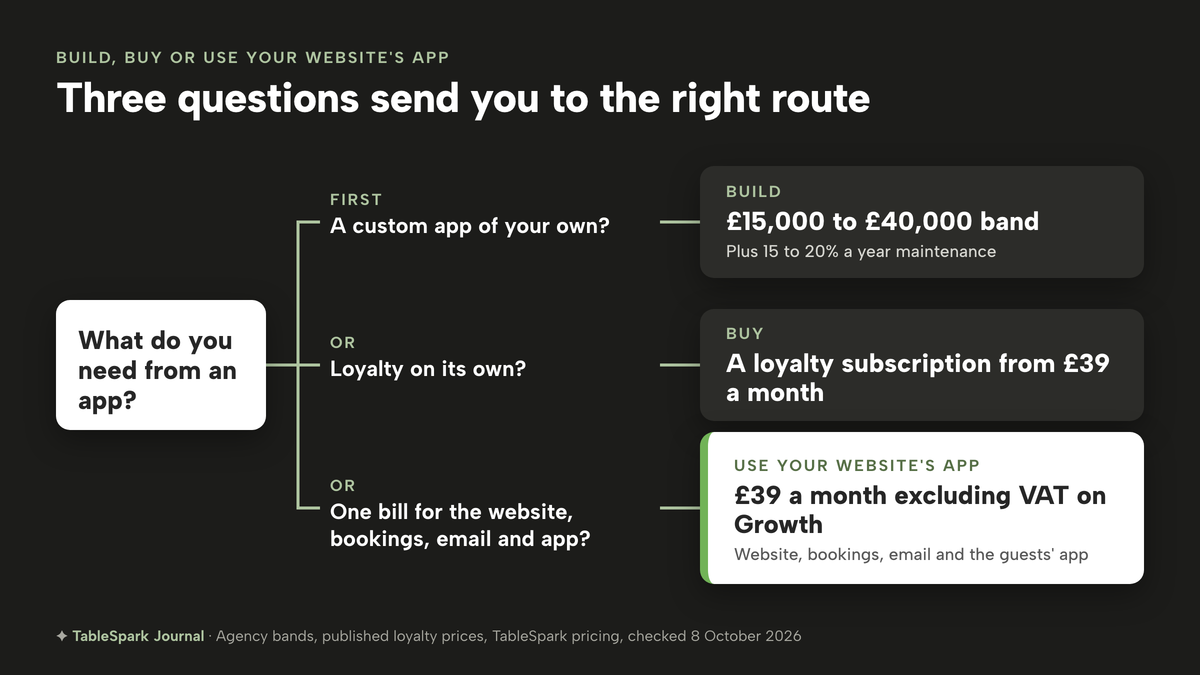
A custom native app for one restaurant is put at £15,000 to £40,000 in one UK agency's published guide, with 15 to 20% a year on top. An off-the-shelf loyalty app starts at £39.00 a month on Stamp Me's published page. The cheaper route is the app built into your website: a Growth plan at £39 a month excluding VAT includes the guests' app, campaigns and bookings, installed from your own site.
The quote for an app is rarely the whole bill
You asked how much it costs to make an app for a restaurant, and the answer that came back was full of zeros. One UK agency's published guide puts a single-restaurant app at £15,000 to £40,000. Another UK agency's guide gives £7,054 to £14,000 for a simple app of any kind, and it is not about restaurants at all. Neither number is a scandal: both are the price of building software, which is what an agency sells.
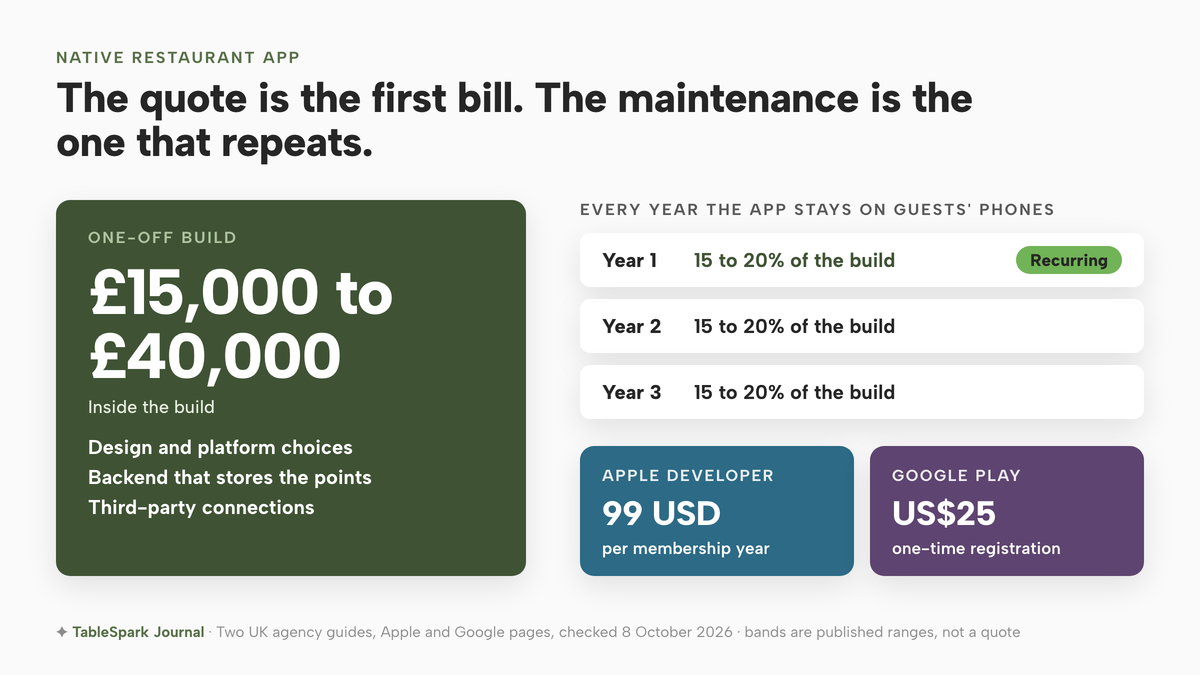
The trouble is what the quote leaves out. Both guides put annual maintenance at 15 to 20% of the original build. That bill arrives every year, for as long as the app stays on guests' phones, whether or not a single guest opens it. On top of that sit the developer accounts: Apple's page says the Apple Developer Program is 99 USD per membership year, and Google's page says there is a US$25 one-time registration fee. Both are in dollars, and both are small items. The large ones are the design, the back end that stores the points, and the connections to whatever takes your bookings and orders.
So the owner who says yes to the quote has committed to a five-figure build, a recurring maintenance line and two developer accounts before finding out the only thing that matters: whether guests will download a restaurant's own app, open it, and come back because of it. In this research I found no independent figure for how many diners keep one independent restaurant's app on their phone. The cost is published, but adoption is a hope.
The owner who decides against the quote may land on the next cheapest thing, a paper stamp card or a points scheme run from a spreadsheet. That brings a different set of costs, and they are easier to miss because nobody invoices them.
Why the loyalty card does not carry itself
A paper card has to be in the guest's pocket on the day they come back. A points scheme has to be explained at the till by someone who is already taking a payment, answering a question about allergens and watching a queue. When the explanation takes longer than the transaction, staff stop offering it, and a scheme that nobody offers costs you the stationery and returns nothing.
Points bring their own risk. A guest who says they had 180 points last time and the till says 120 does not remember the argument as a loyalty benefit. If you cannot trace where a balance came from, every dispute becomes a judgement call made in front of other guests, and the cheap way to end it is to give in. A balance that cannot be traced is a liability you have created for yourself.
Then there is the data. A loyalty scheme that lives in someone else's system can leave you with the diner's name and perhaps an email, in an account you rent. When you stop paying, the question of who holds the list becomes live. So the question behind "restaurant app cost" is wider than the invoice: what will you own at the end, what will it have cost to keep it running, and will guests actually use it?
That question has three honest answers, each at a different price, and the next section sets them side by side.
The three routes to a restaurant app for customers
You can build a native app, buy a loyalty app that already exists, or use the guest app that comes with your website. Each is a real option. They differ in what you pay, what you own and how much a guest has to do before the first point lands.
Route 1: build a native app
A native app is a program written for iPhone and Android and listed in the stores. The cost has these parts, each of which appears in the agency guides:
- Design and build. One guide gives £15,000 to £40,000 for a single-restaurant app. Its headings go on to cover design, platform choices and backend requirements, which tells you where the money goes.
- Third-party connections. The same guide lists integration costs for anything the app has to talk to, such as a booking or ordering system.
- Annual maintenance. 15 to 20% of the original investment, per both guides, every year.
- Store accounts. Apple's Developer Program at 99 USD per membership year, and Google Play's US$25 one-time registration fee, both in dollars.
- Your time. A native app needs a brief, a review of each build and a decision whenever the phone's operating system changes. This is not a published figure, so I put no price on it, but it is a cost.
At the bottom of the agency range the build is £15,000. At the top it is £40,000. Neither includes the points programme itself unless the quote says so, so ask whether points, rewards, a member card for the till and a guest list you can export are inside the number or extra.
Route 2: buy an off-the-shelf loyalty app
Some services sell a loyalty app or digital stamp card as a monthly subscription. Two publish prices on their own pages that I could verify on 8 October 2026:
| Provider | Published price | What the price covers |
|---|---|---|
| Stamp Me | Lite £39.00, Pro £49, Elite £129 a month; extra stamp cards £15 each, one-time | Digital loyalty, billed monthly |
| Loyalzoo | GROW £57 +VAT, SMART £127 +VAT a month; MULTI custom | Loyalty, billed monthly |
A single restaurant starts by comparing the entry tiers: £39.00 a month for Stamp Me Lite and £57 plus VAT a month for Loyalzoo GROW. This research recorded prices, not tier contents, so I put no feature on any tier. Open the tier table on the day you sign and check which one includes the stamp cards, messaging and number of members you need, because the step from £39.00 to £129 on one page and from £57 to £127 plus VAT on the other is where an entry price becomes a different bill. The Stamp Me page also lists extra stamp cards at £15 each as a one-time charge, so a second card is an add-on, not part of the headline price.
Whatever the tier, the subscription covers loyalty. Your website, your bookings, your menu and your email campaigns are other bills, and the guest records sit in the loyalty provider's account, so you work out the export and the contact consent separately.
Route 3: use the app that comes with your website
The third route starts from a different place. Instead of building an app and then connecting it to a website, you turn on an app that is part of the website you already run. On TableSpark, every published site can carry a guest app at your own address, under your own restaurant's name, and Growth and Full sites ship with it. Growth is £39 a month excluding VAT. Starter, at £19 a month excluding VAT, does not include it.
What a guest gets is a set of five tabs: Home, Rewards, My Card, Visit and Account. The app surfaces points, rewards, a member card with a QR the till scans, the restaurant's own announcements and events, visit info, and the guest's own bookings, orders, gift balance and consents. It installs to a phone's home screen from the restaurant's own site.
That install step is the technical point most cost guides skip. A web app that meets the standard rules can be added to the home screen straight from the browser. According to MDN, an installable web app must be served over https and carry a manifest with a name or short name, 192 and 512 pixel icons, a start URL and a display setting. On an iPhone, web.dev describes the guest opening the Share menu and choosing Add to Home Screen, and MDN says iOS 16.4 and later installs from the Share menu in Safari, Chrome, Edge, Firefox and Orion. On browsers that offer an install prompt, the guest can use it; MDN notes the beforeinstallprompt event is not supported on iOS, which is why the table card or the confirmation email should tell iPhone guests where to tap.
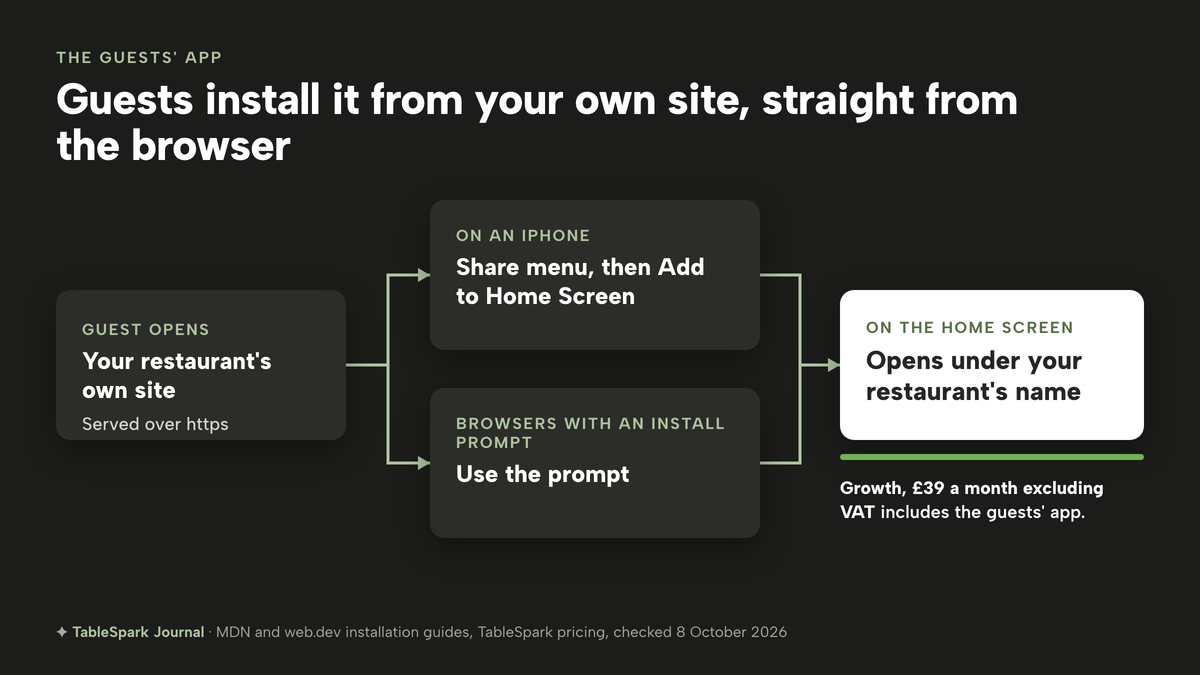
TableSpark manages the https side with a custom domain and managed SSL on Growth and Full. The app is not a separate product with its own login to maintain, so a menu change, an opening-hours change or a new event in the Builder reaches the app guests see.
A website that is live is not the same as a website that is found. TableSpark bundles crawlable restaurant content, titles and descriptions, canonical URLs, sitemaps, robots controls, Restaurant and LocalBusiness schema, internal links and managed search-verification set-up into every plan, so the site the app lives on is built to be discovered. Indexing and ranking remain decisions for Google, and no result is promised.
What the three routes cost over 12 and 36 months
Here is one restaurant, costed three ways. I have used only published prices and arithmetic on them.
For the native route I took the agency's band, £15,000 to £40,000, and added maintenance at 15% and at 20% of the build. The 12-month column counts the build plus one year of maintenance from launch; the 36-month column counts the build plus three years. Store accounts are extra, in US dollars: 99 USD a year to Apple and a one-time US$25 to Google.
Your website's own guest app
- £468 over 12 months
- £1,404 over 36 months
- £390 a year excluding VAT paying ten months for twelve
- Website, bookings, email campaigns and the guests' app on one bill
Native app build, agency band
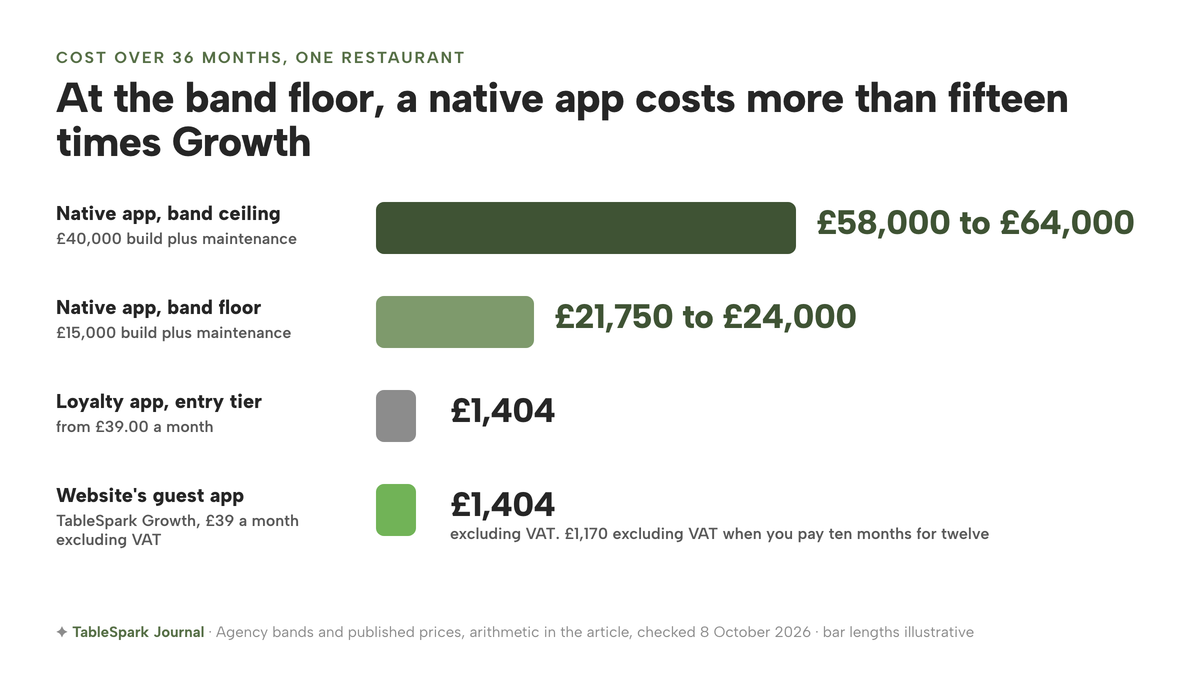
- Native app, band floor £15,000 £17,250 to £18,000 in the first year
£21,750 to £24,000 over 36 months with maintenance at 15% to 20% of the build a year
- Native app, band ceiling £40,000 £46,000 to £48,000 in the first year
£58,000 to £64,000 over 36 months with maintenance at 15% to 20% of the build a year
Loyalty subscription
- Stamp Me Lite £39.00 a month
£468 over 12 months · £1,404 over 36 months
- Stamp Me Pro £49 a month
£588 over 12 months · £1,764 over 36 months
- Stamp Me Elite £129 a month
£1,548 over 12 months · £4,644 over 36 months
- Loyalzoo GROW £57 plus VAT a month
£684 over 12 months · £2,052 over 36 months, plus VAT
- Loyalzoo SMART £127 plus VAT a month
£1,524 over 12 months · £4,572 over 36 months, plus VAT
The cheapest native outcome, £21,750 over 36 months, is more than fifteen times the £1,404 that Growth costs over the same period when you pay monthly. Put differently, £15,000 would pay for Growth at £39 a month, excluding VAT, for 384 months, which is 32 years. That compares price to price and is not a promise about results.
The loyalty rows and the TableSpark row come to the same £468 in the first year at £39 a month each, TableSpark's excluding VAT, so the number alone does not separate them. What separates them is what the money buys. The loyalty subscription covers loyalty. The Growth plan covers the website the guests land on, live menu, bookings against your real tables, deposits and reminders, email campaigns to consented guest segments, a custom domain with managed SSL, a Reserve with Google booking-link connection, and the guests' app with the campaign designer. That is a booking system, a website, an email tool and a loyalty app on one bill, with the guest records under your own account.
Two cost notes keep this honest. If you want direct online ordering inside the same account, that is the Full plan at £69 a month excluding VAT, or £828 over 12 months and £2,484 over 36 months, also excluding VAT. And a paid-in-advance route is available: the pricing page offers to pay for ten months and use twelve, which gives £390 a year for Growth, excluding VAT.
The native rows use the agency's published band, not a quote for your restaurant. A real quote may sit anywhere inside or outside it, so treat the table as a way to check a quote against, not a forecast.
What a guest app has to do to be kept
Price decides whether the project is affordable. It does not decide whether it works. A guest keeps an app on their phone when it answers a question they have, at the moment they have it. For a restaurant, five questions cover most of it.
What is my next visit? The first thing a returning guest wants is the booking they already made, or a quick way to make one. A Home tab that shows tonight's booking, or a live order, earns the second tap. A card that shows only a logo does not.
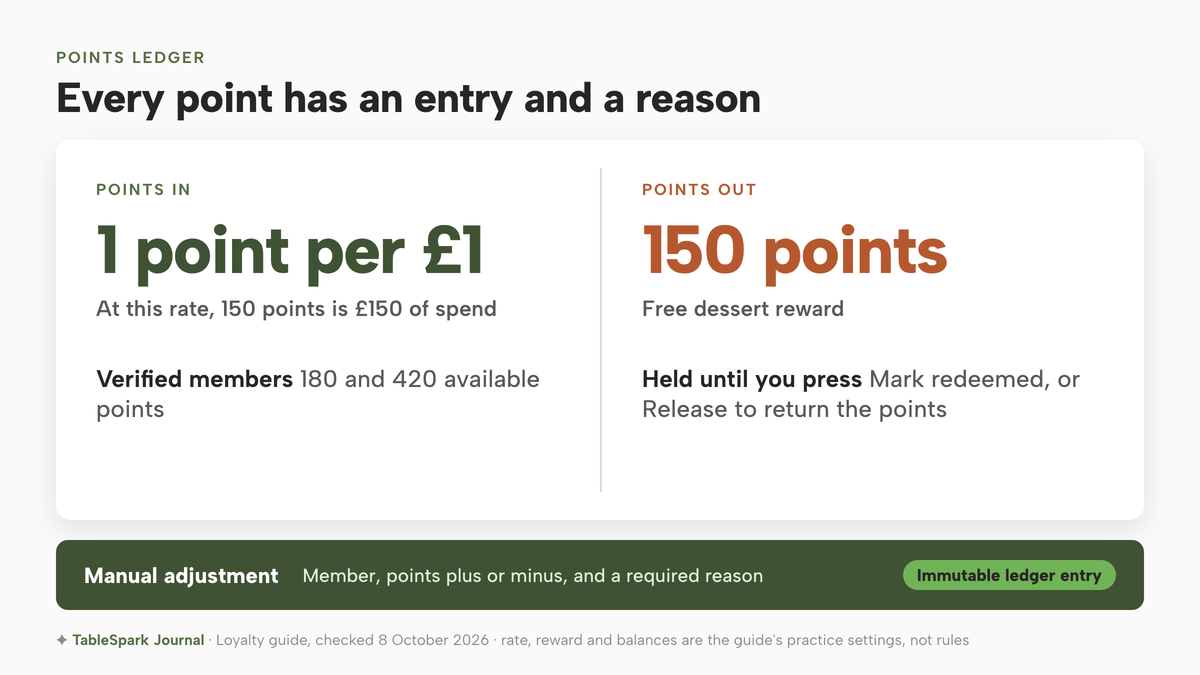
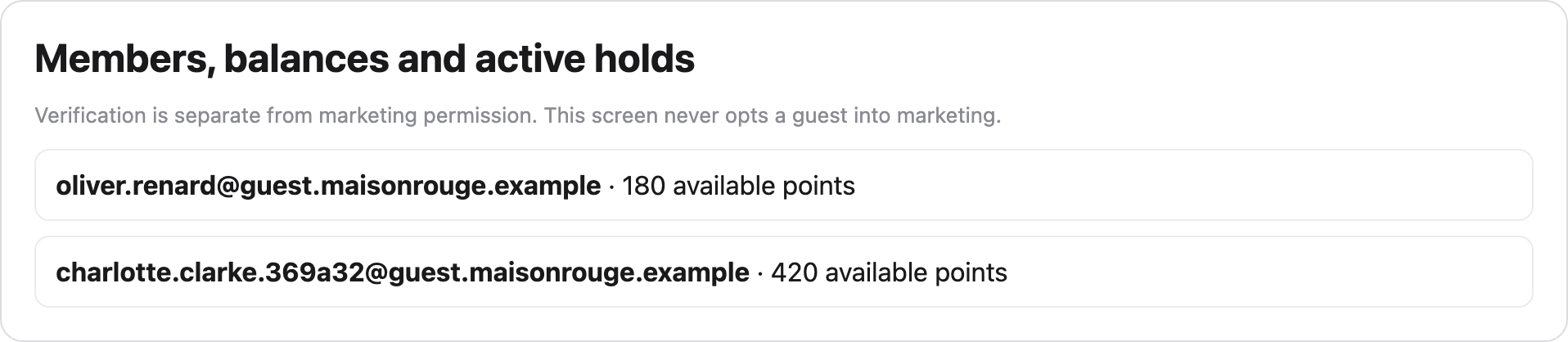
How many points do I have, and where did they come from? A balance has to be traceable. Every correction should leave a reason behind it. In TableSpark, an audited points adjustment needs a member, a points figure that can be plus or minus and a required adjustment reason before it commits, and the page says every correction is an immutable ledger entry tied to the signed-in actor. When a guest disputes 180 points against 120, you can look at the entries rather than argue.
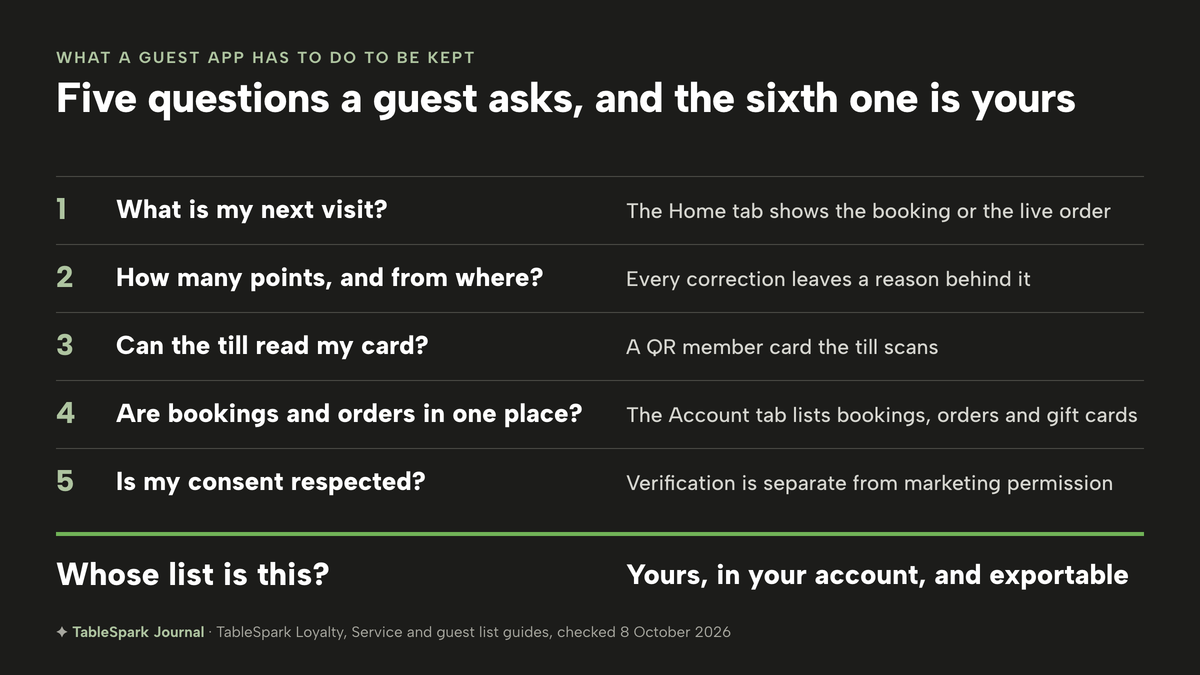
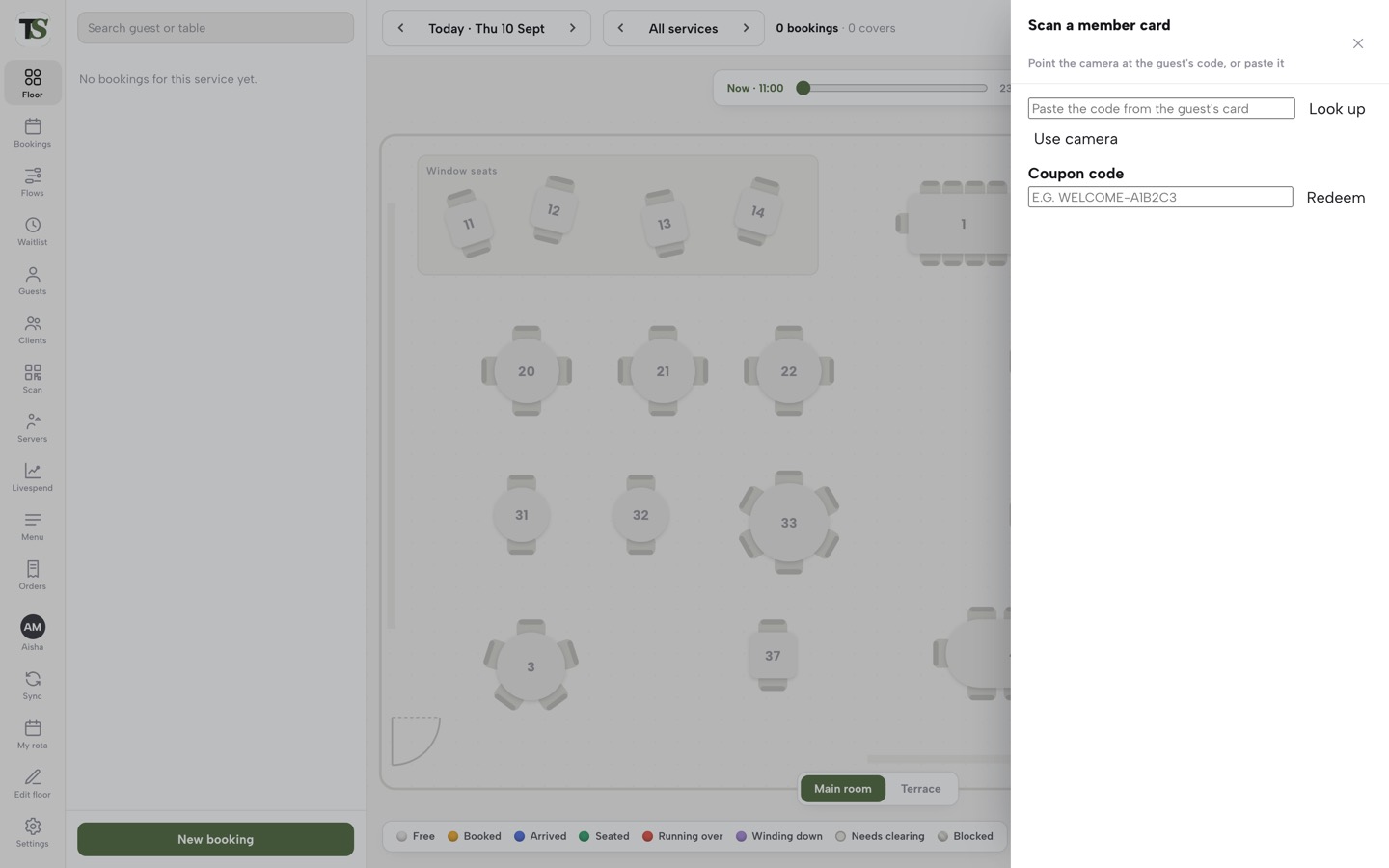
Can the till read my card? The member card has to be something staff can scan without a conversation. The My Card tab shows a QR the till scans, and the Service floor has a Scan sheet that returns the guest's initials, member number and points balance in one pass.
Are my bookings and orders in the same place? A guest with a booking in one app, an order in a second and a gift card in an email has three places to look. The Account tab lists bookings, orders and gift cards as one list. Ordering itself is a Full-plan capability, so on Growth the list carries the guest's bookings and any gift cards they hold.
Is my consent respected? A loyalty member is not automatically a marketing recipient. The Loyalty page states the boundary in its own words: verification is separate from marketing permission, and the screen never opts a guest into marketing. Campaign emails go to consented guest segments, and each one carries your restaurant's details and a personal unsubscribe link, as UK anti-spam rules require, according to the email guide.
And the owner has a sixth question: whose list is this? Every booking, order and enquiry becomes a guest record under your own TableSpark account, visible in the Inbox and the guest list, with CSV export on every plan. The records are yours, in your account, and exportable. TableSpark never markets to your guests or sells your data.
Points or stamps, and what a reward costs
A stamp card is easy to explain: collect so many, get a reward. Points are more flexible but need the explanation staff are tempted to skip. The TableSpark campaign designer lets you run both, with stamp cards, double-points windows, a welcome bonus, referral codes, birthday rewards and more, and the restaurant sets every offer and budget. The fields start empty, nothing is pre-filled, and nothing goes live until you switch it on.
Work out a reward's cost before you publish it. The sum is: the cost of the reward to you, divided by the spend a guest needs to earn it. The practice screen in the guide shows a points programme with 1 point per £1 and a Free dessert reward at 150 points. Those are the practice restaurant's settings, not rules. They make the arithmetic easy: at 1 point per £1, 150 points is £150 of spend, and you compare your cost of one dessert with that figure. Change the inputs for your own menu and margin. The point of the calculation is that you set the numbers, and you can see what the cost line says before the switch goes on.
Build, buy or use your website's app
The three routes answer different questions, so the decision is easier when you put them in one table.
| Build or buy a separate app | Use your website's guest app | |
|---|---|---|
| Up-front cost | Native build: £15,000 to £40,000 band. Loyalty app: from £39.00 a month, or from £57 plus VAT | £0 to build and review; plan starts when you publish |
| Running cost | Native: 15% to 20% of the build a year, plus store accounts. Loyalty: the monthly fee | £39 a month excluding VAT on Growth, or £390 a year when you pay for ten months and use twelve |
| What the money covers | Native: the app. Loyalty app: loyalty | Website, live menu, bookings, deposits, email campaigns, custom domain and the guests' app |
| How a guest gets it | A download or a separate sign-up | Opens from your own site; installs to the home screen from the browser |
| Points and rewards | Built or configured separately | Points, rewards, stamp cards, double-points windows and birthday rewards in one campaign designer |
| Member card at the till | Depends on the app | A QR member card; the Scan sheet in Service reads it |
| Bookings and orders in the same place | Needs a connection you pay for | Bookings, orders and gift cards in the guest's Account tab |
| Guest records | In the provider's account | Under your TableSpark account, in the Inbox and guest list, with CSV export |
| Search readiness | Not part of an app | Crawlable content, schema, sitemaps and managed verification on every plan |
Use this checklist before you sign anything, for any of the three routes:
- I have the full cost over 36 months, including maintenance, store accounts and any add-on, not the entry price
- I know which tier or plan includes every feature I need, from the provider's own current page
- A guest can see their next visit, their points balance and their member card without asking me
- Every points correction leaves a reason behind it
- The till can scan the member card
- Marketing consent is held separately from loyalty membership
- I can export my guest records, today, as a file
- I know what I own, and what happens to the list if I stop paying
If the answers to the last two lines depend on a contract you have not read, read it before the first payment.
How to build your guests' app in TableSpark
This is the merchant side, from the Build Your Guests' App and Know Your Guests guides. The guest app and the campaign designer need Growth, at £39 a month excluding VAT. Everything is free to build and review until you publish.
- Switch the Guest app on
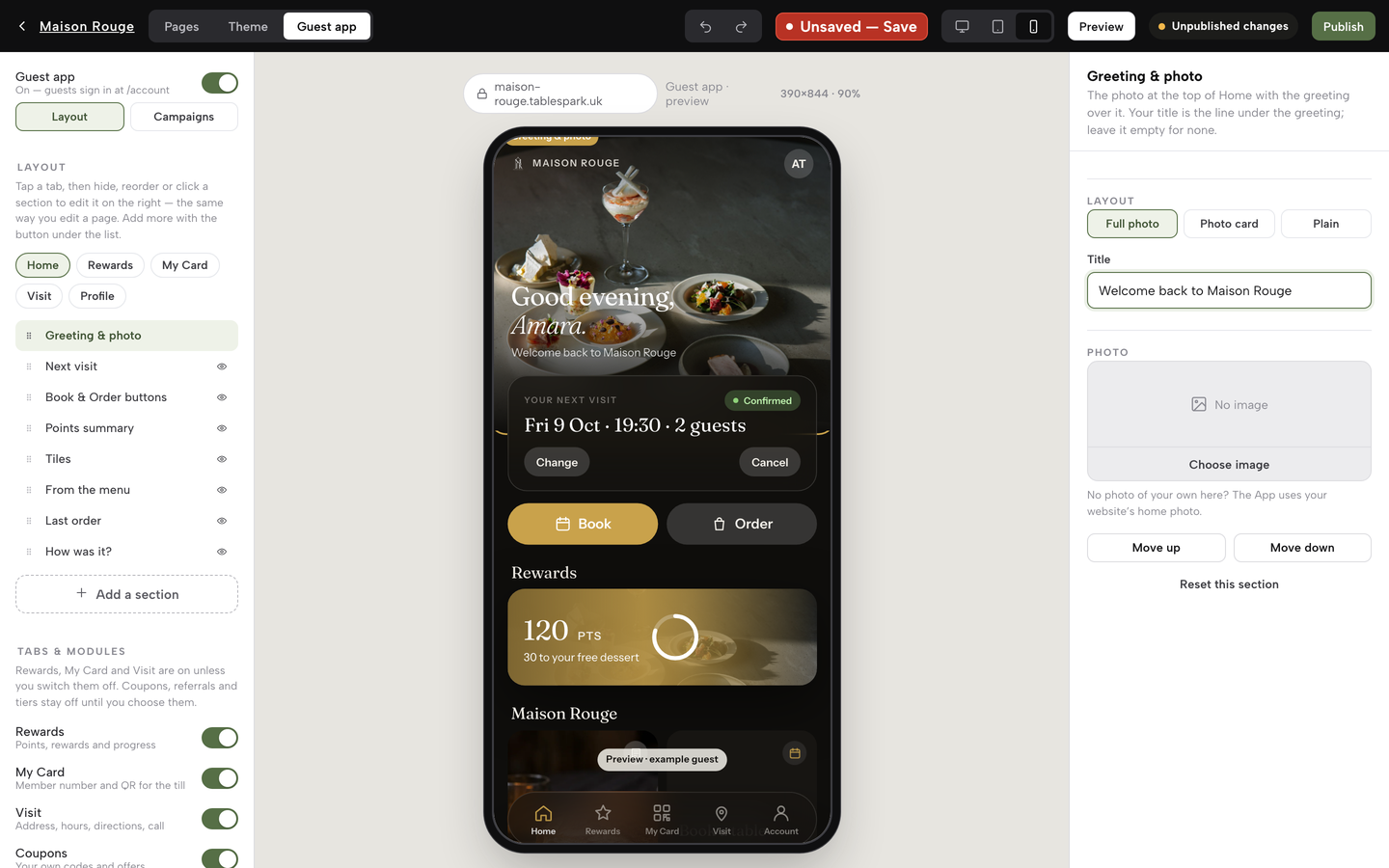
In the Builder, open the Guest app tab next to Pages and Theme. The left panel offers a Layout and Campaigns switch, five tab chips (Home, Rewards, My Card, Visit, Account) and the Guest app On switch. A synthetic example guest fills the phone preview, so nothing is anyone's real data.
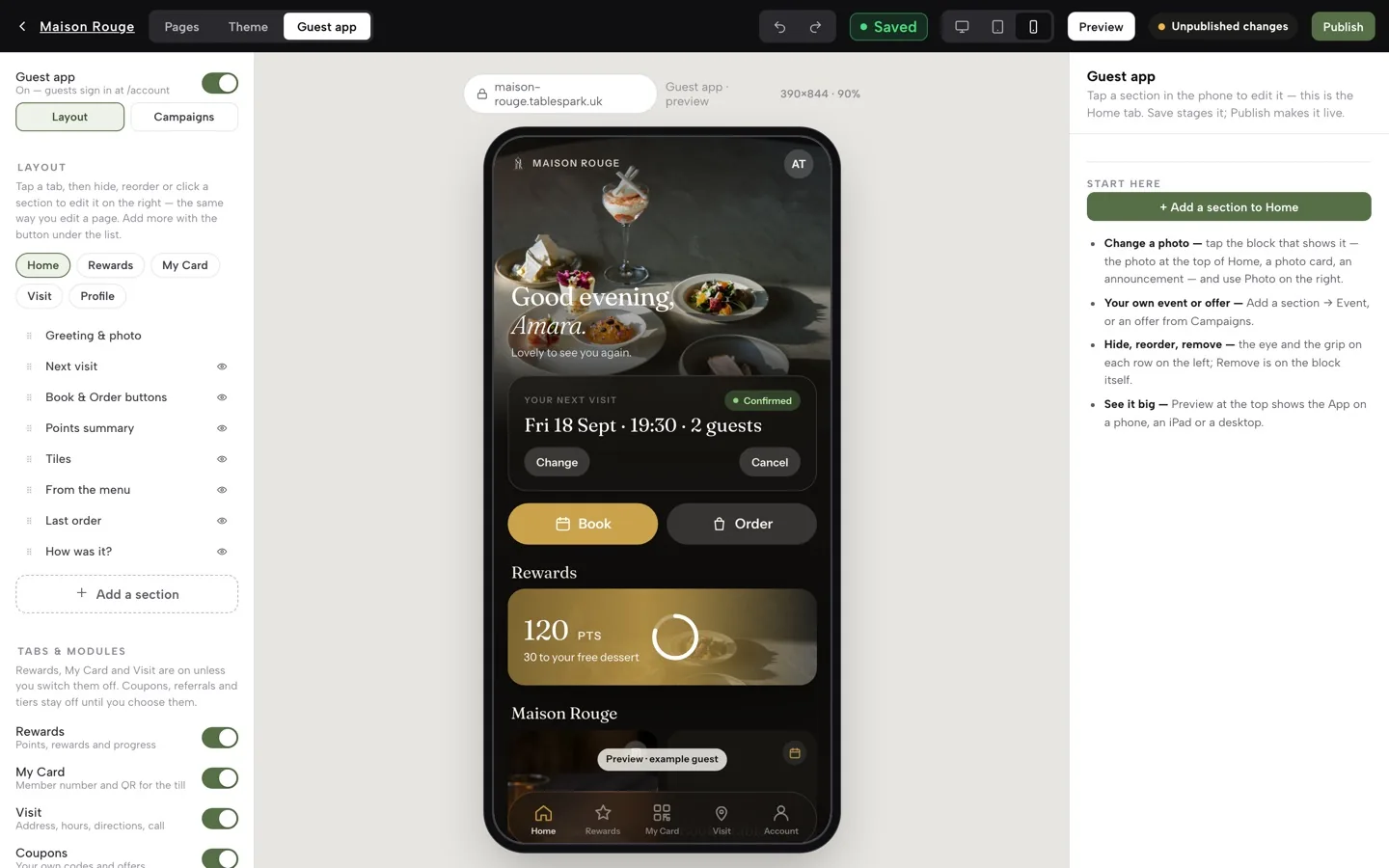
- Make Home yours
Click Greeting & photo in the outline, or click the photo in the phone. In the inspector, pick Full photo, Photo card or Plain, and type a Title of up to 60 characters. Hide a section with its eye icon, drag one to reorder it, and rename a tab in Tabs & modules.
- Set points and rewards
Open Loyalty in the sidebar. Programme rules takes Points per £1 and Points per completed reservation, with an Active checkbox, then Save programme. Rewards takes a Reward name and a Points cost, then Add reward. Both cards are owner and admin only, and staff and editors see them read-only.
- Build a campaign from a recipe
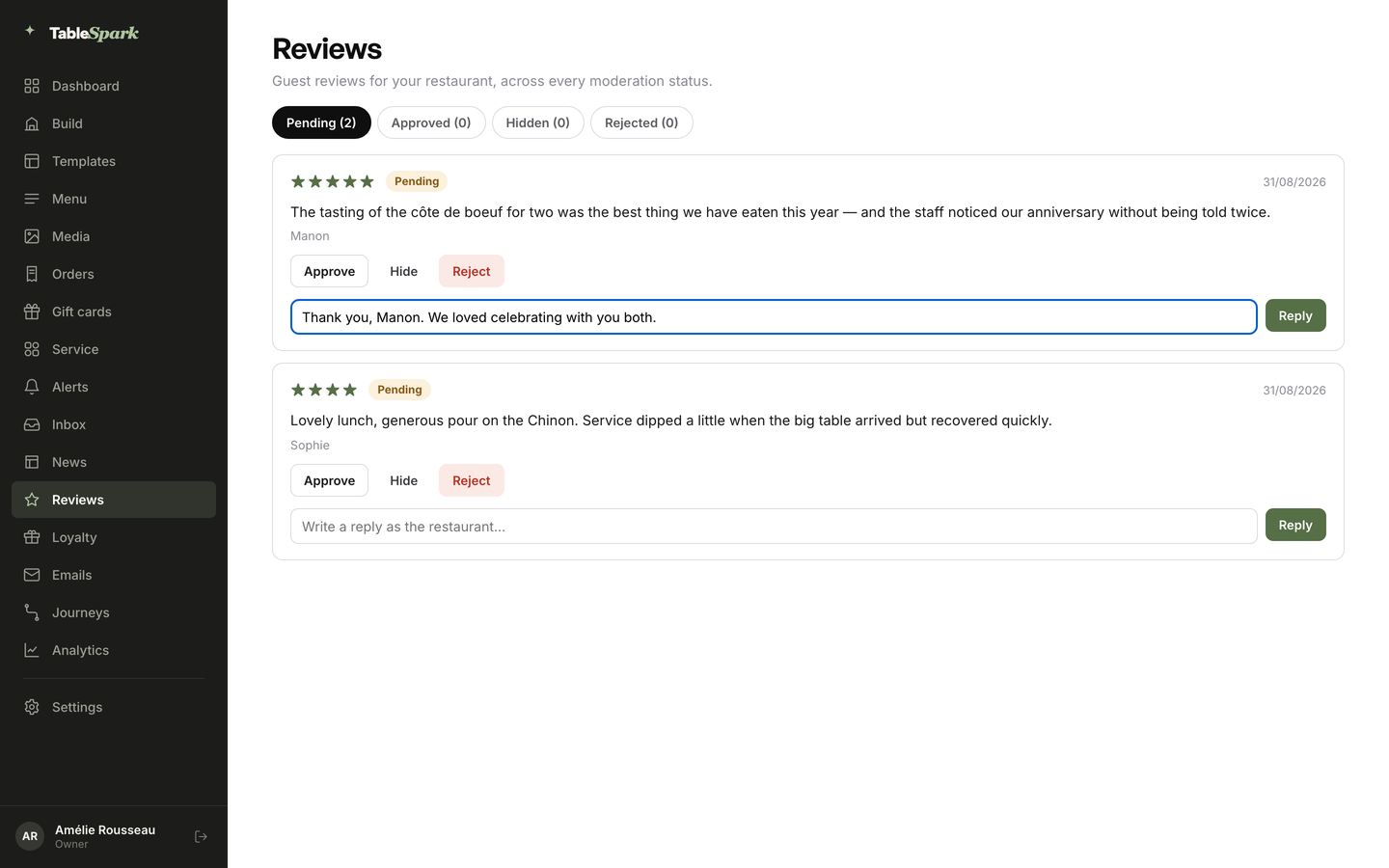
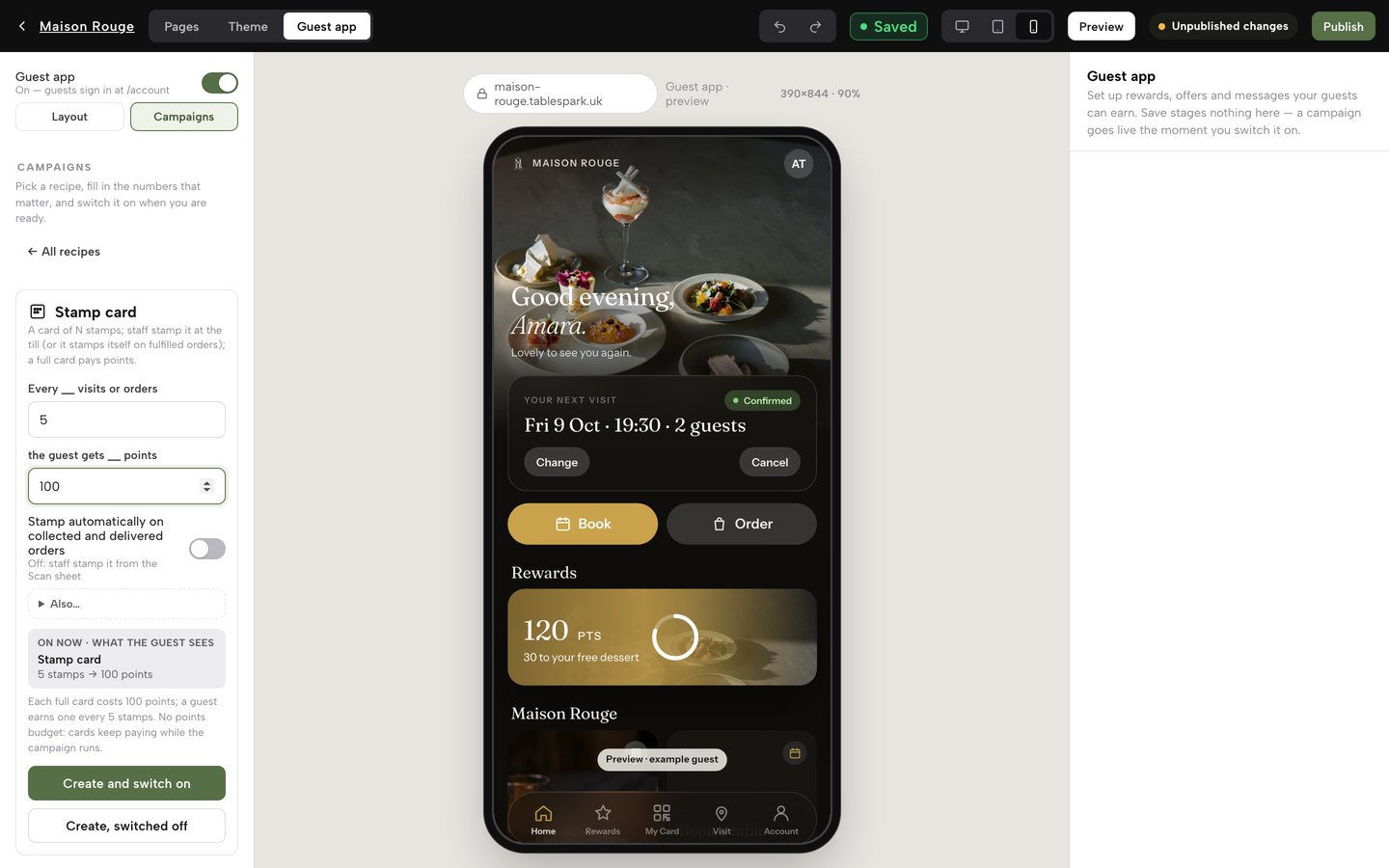
In the Guest app tab, click Campaigns, then Add a campaign. Eight recipes are offered: Stamp card, Welcome gift, Happy-hours points, Birthday treat, Bring a friend, Money off, A thank-you email and Ask for a review. Fill in only the numbers the recipe needs; a plain-English cost line reads them back. Create, switched off keeps it in reserve; Create and switch on puts it live at once.
- Preview, then Publish
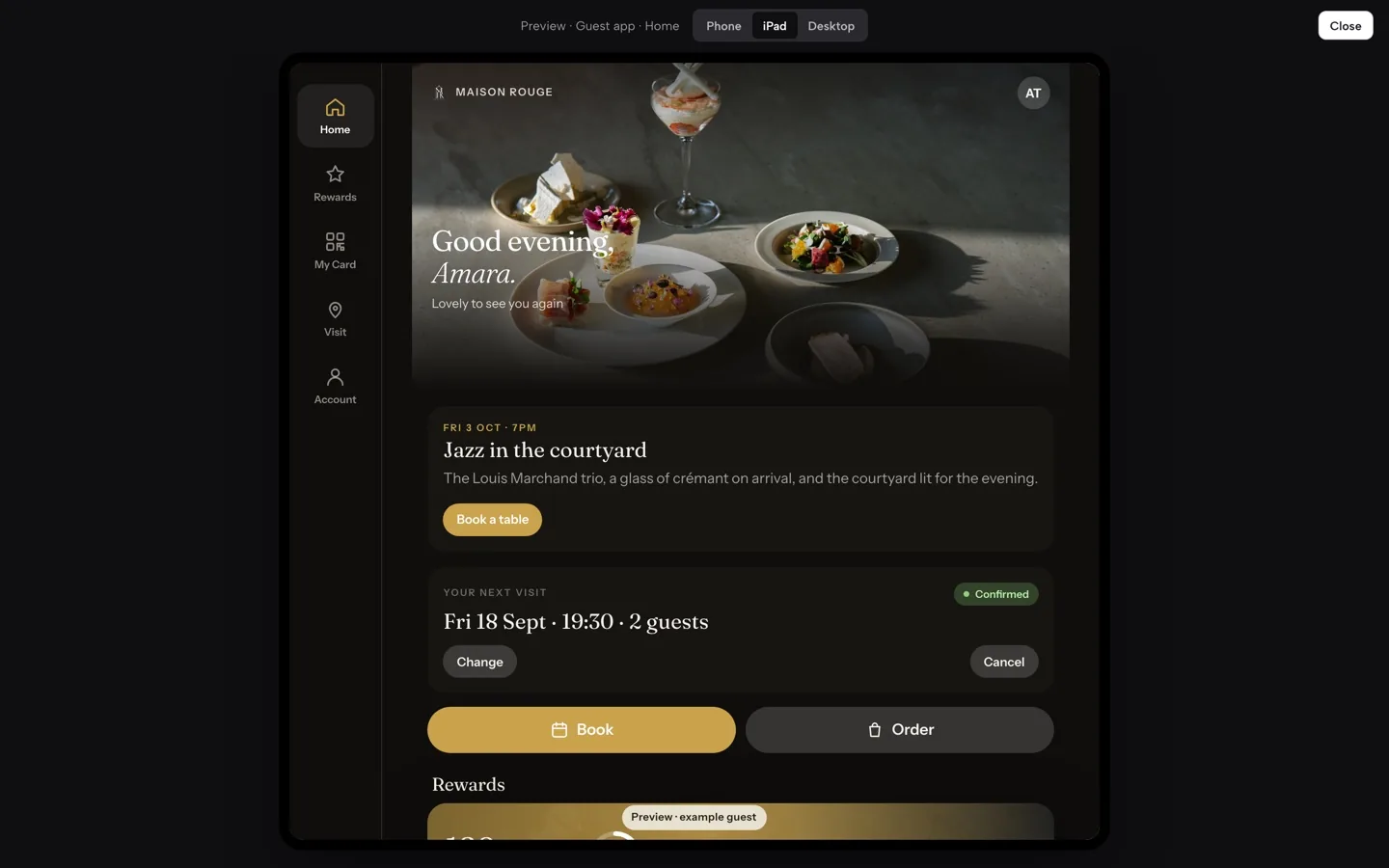
Press Preview to see the app at full size on a phone, an iPad or a desktop. Layout edits show Saved or Unsaved in the save chip and reach guests only when you press Publish. A campaign runs on its own switch instead, going live or coming off the instant you flip it.
- Scan the member card at the till
On the Service floor, open Scan in the rail. Paste the code from the guest's My Card, or use the camera on the QR. The sheet returns initials, member number and points balance, then any stamp cards in progress with a Stamp button, rewards they can afford, and held rewards with a Redeem button. A Coupon code field on the same sheet takes a code the guest has claimed.
- Track balances, holds and corrections
Back on Loyalty, Members, balances and active holds lists each verified member with an available points balance. A redeemed reward sits as a hold until you press Mark redeemed after handing it over, or Release to return the points. The audited points adjustment form needs a Member, Points (+ or −) and a required Adjustment reason.
- Read your guest list and write to the right segment
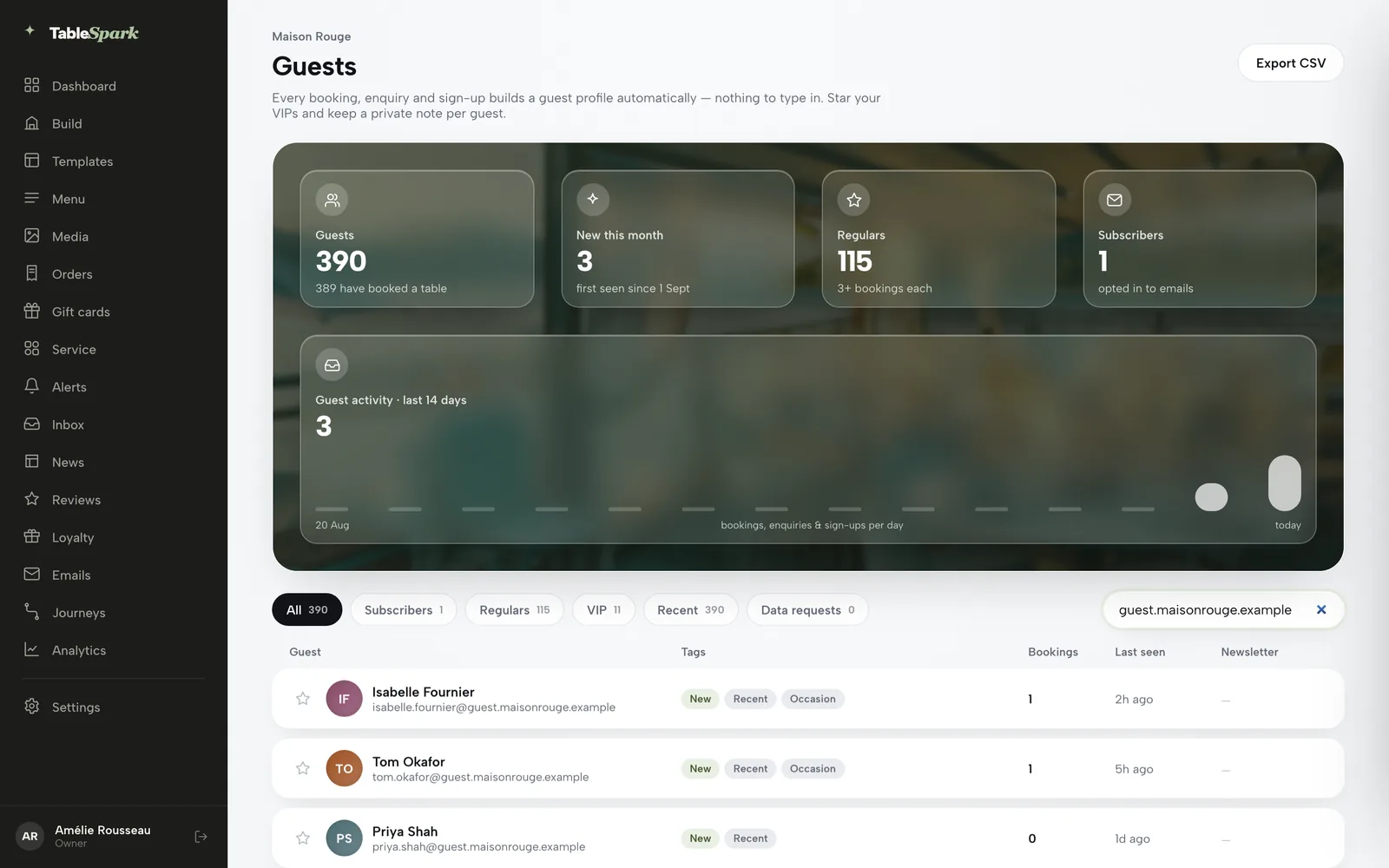
Open Guests: KPI tiles, a 14-day activity chart, segment pills (All, Subscribers, Regulars, VIP, Recent, Data requests) and a search box. Export CSV sits top right and exports whichever segment is open. For email, open Emails, then Compose, choose an audience and press Send test to my email before you Queue campaign.
Tips
- Put the install line on the table card and in the confirmation email: "On iPhone, open this site, tap Share, then Add to Home Screen." The Share menu is the iPhone route, so say so in those words.
- Rename the Rewards tab to something in your voice. The Tab name field takes up to 14 characters.
- Add an Event section for a quiet night. It takes a When line, a photo, a paragraph and a button to your booking page.
- Switch a campaign on only after the cost line reads right. Every campaign starts off, and once it has given anything you switch it off instead of deleting it.
- Filter Guests to VIP or Regulars before you export, because the CSV matches the segment on screen.
- Point tiles and links at your own site or your own https address. A link to a delivery marketplace is refused, so a guest's tap never hands them to someone else's app.
Questions owners ask about a restaurant app
How much does it cost to make an app for a restaurant in the UK?
One UK agency's published guide gives £15,000 to £40,000 for a single-restaurant app, and both agency guides in this research put annual maintenance at 15 to 20% of the build. Apple charges 99 USD per membership year and Google Play US$25 one-time. For a restaurant that wants loyalty rather than software of its own, a subscription or a website's built-in app costs a small fraction of that.
Do I need an app for one independent restaurant?
You need a way for a guest to see their next visit, their points and a card the till can scan. That does not have to be a custom native app. A guest app that comes with your website gives you all three from £39 a month excluding VAT on TableSpark Growth, and it opens from your own site, so there is no separate download to market.
What is the cheapest restaurant loyalty app in the UK?
On the published pages checked on 8 October 2026, the entry tiers are Stamp Me Lite at £39.00 a month and Loyalzoo GROW at £57 plus VAT a month. This research did not record what each tier includes, so compare the tier tables yourself. A loyalty subscription covers loyalty only. The TableSpark Growth plan, at £39 a month excluding VAT, includes the guests' app plus the website and bookings.
Can customers install my website as an app?
Yes, if the site is a web app that meets the install rules. MDN says it must be served over https and have a manifest with a name, 192 and 512 pixel icons, a start URL and a display setting. On iPhone, the guest opens the Share menu and chooses Add to Home Screen. TableSpark's guest app installs to the home screen from the restaurant's own site.
How much does it cost to put an app on the App Store and Google Play?
The accounts are published prices: the Apple Developer Program is 99 USD per membership year, and Google Play has a US$25 one-time registration fee, both in dollars. Those are only the entry fees. They do not include building the app or the 15 to 20% a year the agency guides put on maintenance, which is the larger and recurring cost.
Are digital stamp cards better than points?
Neither wins on its own. A stamp card is quick to explain at the till; points are more flexible and need a traceable balance. TableSpark's campaign designer includes stamp cards and the Loyalty page runs points, so you can use either or both. The restaurant sets every offer and budget, and every campaign starts switched off until you turn it on.
Who owns the customer data in a loyalty app?
It depends on the provider, so ask where the records live and how you export them. With TableSpark, every booking, order and enquiry becomes a guest record under your own account, visible in your Inbox and guest list, exportable as CSV on every plan. On a marketplace, the diner is their customer. Here, the record is yours to export, write to, or take with you.
The recommendation
For an independent UK restaurant, the cheaper and better route to a restaurant app for customers is the app that comes with your website, and TableSpark is the best-value way to get it. A custom build starts at a five-figure band with maintenance every year. A loyalty subscription covers loyalty and leaves your website, bookings and email on other bills. TableSpark Growth is £39 a month excluding VAT, or £390 a year when you pay for ten months and use twelve, and includes the guests' app with points, rewards, a QR member card the till scans, announcements, visit info, the campaign designer with stamp cards, double-points windows, a welcome bonus, referral codes and birthday rewards, email campaigns to consented segments, live bookings with deposits and reminders, and a custom domain with managed SSL. It is free to build and review until you publish, and you can cancel anytime. If you want direct online ordering in the same account, that is Full at £69 a month excluding VAT.
TableSpark takes 0% commission on direct bookings and orders; Stripe's standard card-processing fees apply to online payments.
Sources
- Apple Developer Program enrolment — developer.apple.com (checked 2026-10-08)
- Google Play Console registration fee — support.google.com (checked 2026-10-08)
- Affective, how much does it cost to build a restaurant app — weareaffective.com (checked 2026-10-08)
- Studio Liddell, how much does an app cost to make in the UK — studioliddell.com (checked 2026-10-08)
- Stamp Me pricing — stampme.com (checked 2026-10-08)
- Loyalzoo pricing — loyalzoo.com (checked 2026-10-08)
- web.dev, installation of progressive web apps — web.dev (checked 2026-10-08)
- MDN, making PWAs installable — developer.mozilla.org (checked 2026-10-08)
- TableSpark pricing — TableSpark (checked 2026-10-08)
- TableSpark, how it works — TableSpark (checked 2026-10-08)
- TableSpark tutorial, build your guests' app — TableSpark (checked 2026-10-08)
- TableSpark tutorial, know your guests — TableSpark (checked 2026-10-08)
- TableSpark tutorial, emails, campaigns and journeys — TableSpark (checked 2026-10-08)
- TableSpark tutorial, what your guests see — TableSpark (checked 2026-10-08)
Give your guests an app they keep
Build your site and your guests' app free, and pay only when you publish.