Bookings, menus, online ordering, search. Written by the people building the product, between services.
A guest with an allergy reads the menu online before ordering. When the allergen sheet sits apart from the dishes, it can be wrong the day a recipe changes.
On UK cards, the fee on a deposit is a percentage plus a fixed 20p, and the fixed part takes a bigger share of £10 than of £25. The figures are worked here line by line.
A dish built for the table can turn into a refund after twenty minutes in a delivery box. Sort the menu into dine-in, collection and delivery before launch.
Google says no one can guarantee a top ranking. When an SEO offer promises one, the restaurant, not the supplier, carries the risk of what is done to its site.
Latin dish names are the menu's identity, but a guest new to the food searches in everyday words. A plain line under each dish closes that mismatch without losing the names.
An old post sends guests to the wrong pitch. Weekly hours, dated exceptions and each pitch as an event sit behind one link, and the Business Profile follows by hand.
Ready bakes that sell out by noon and celebration cakes that need a conversation fail in different ways online. Give each its own lane before the order page opens.
Five arrival questions belong on the booking page: lateness, the door after nine, parking, dietary notice and the window table. Left unwritten, each costs a call.
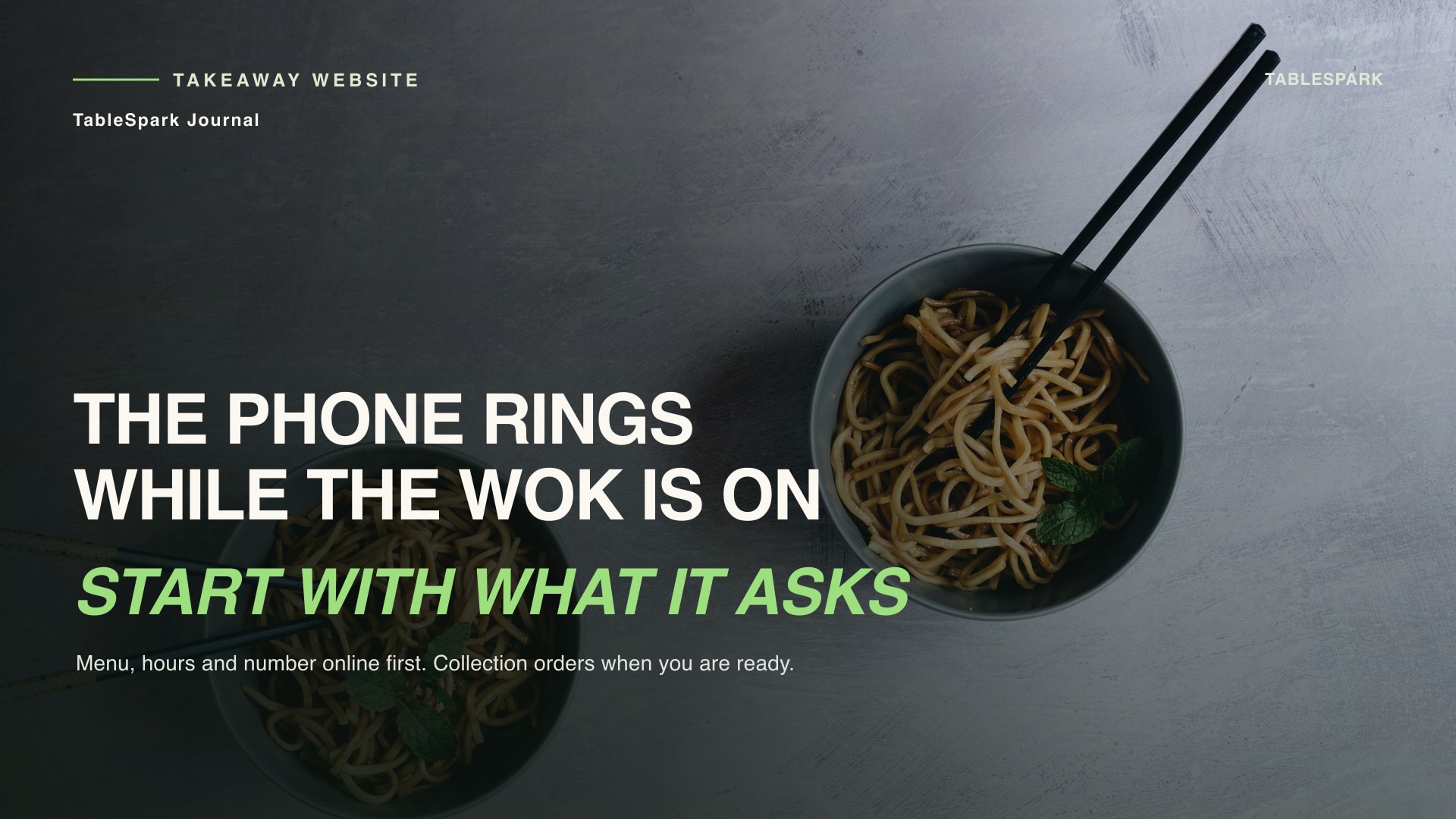
A takeaway site that leads with a booking form can lose the Friday caller who only wanted the menu and the number. The first screen decides whether they ring.
A booking that says only party of twelve, Saturday at eight, leaves the seating to the door. The cost is a birthday group waiting by the bar while tables are moved.
Menu, hours and a number to tap go live first. Collection orders come with a move to Full; paying up front by card adds Stripe's fee per order.
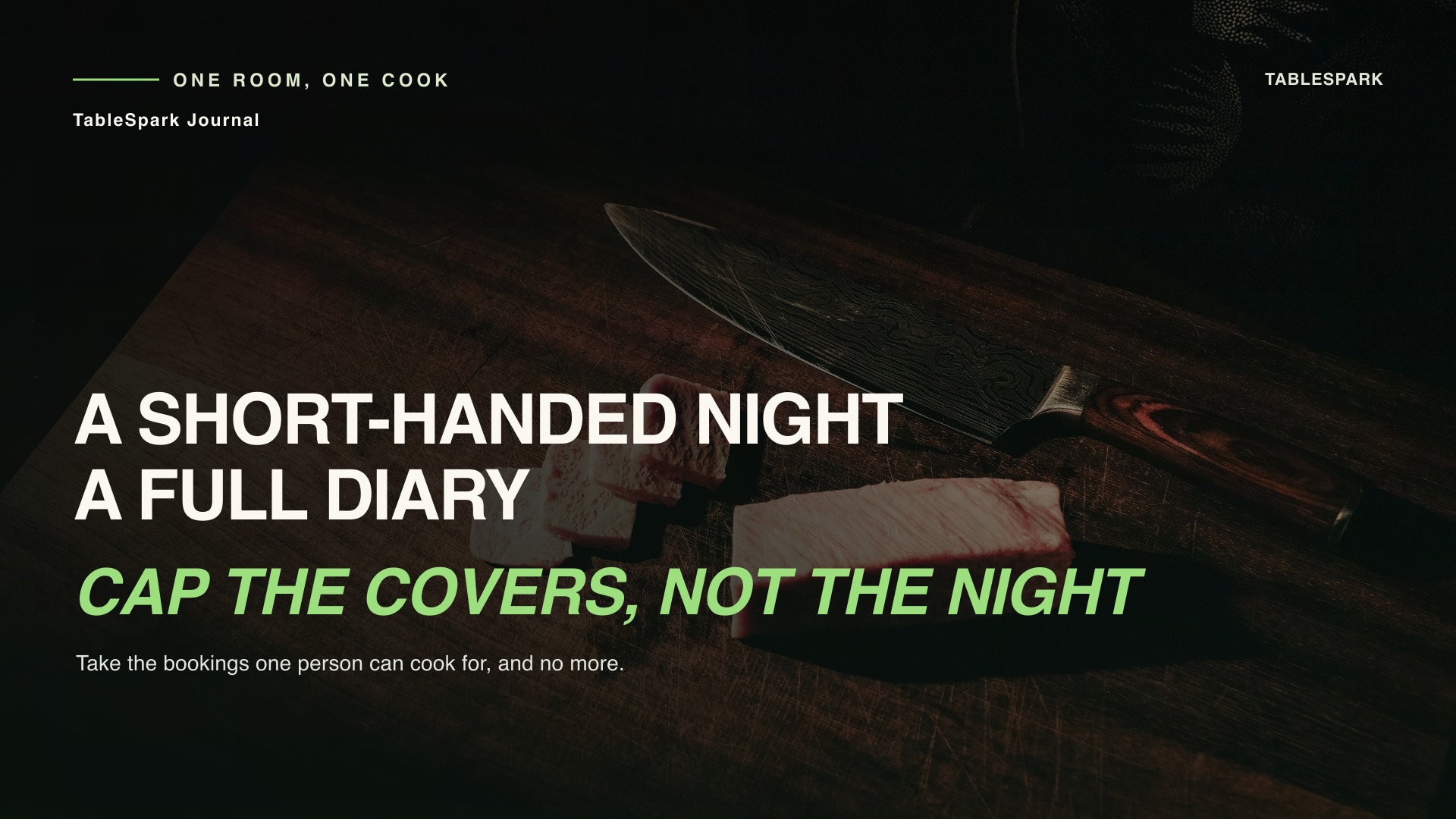
Close the diary and you lose guests a lone cook could feed; leave it open and the room books full. A covers cap for one date sits between the two.