What UK law and the regulators actually require of a restaurant that publishes.
A promotion that ends at the till but stays live online can leave guests expecting a deal staff can no longer honour, creating avoidable disputes.
Promising outdoor tables before the licensed area, dates or conditions are confirmed risks guest disputes over seats the restaurant cannot offer.
A reform headline can trigger needless work—or hide a live duty—creating operational risk before a restaurant checks its legal status.
An England micro-firm restaurant risks reaching 31 March 2027 without a confirmed food-waste collection, workable bins or clear staff instructions.
A restaurant can switch on online food sales before confirming the registration timetable, creating an avoidable go-live compliance risk.
The same canned drink can carry a deposit when it leaves in a bag and none when it is drunk at the table, and the customer notice must match the route chosen.
A busy Saturday can put more than 200 people inside a restaurant that has never counted, leaving the owner exposed to a future duty or to spending nobody asked for.
A new inspection changes the official record while your website still quotes the old rating. Any guest can check that mismatch in seconds, on the phone in their hand.
Your deposit and cancellation terms may exist and still never reach the guest booking on a phone. That gap turns a routine cancellation into an argument.
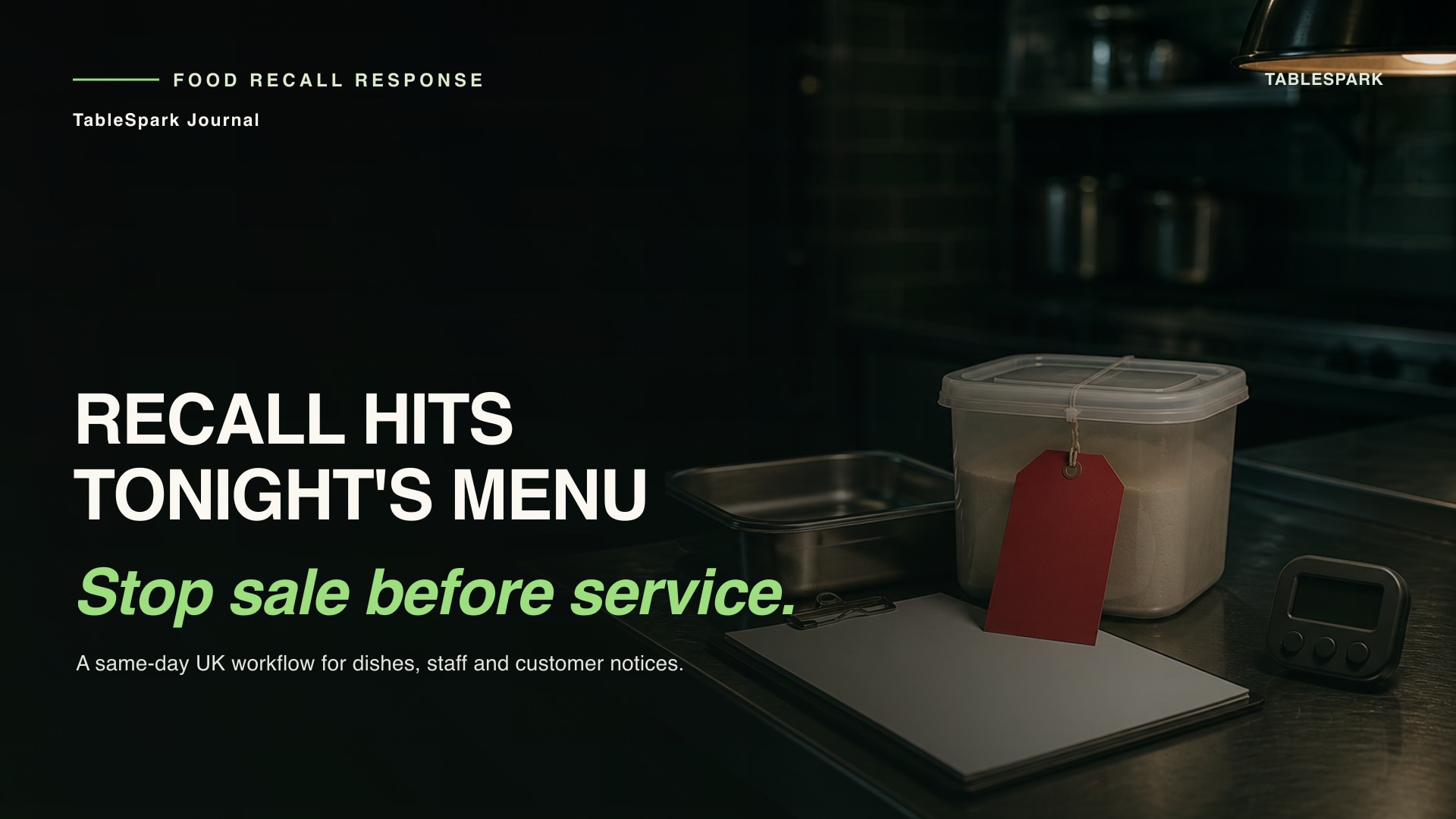
A recall alert can name a product already prepped into tonight’s dishes. Stopping sale is only half the job, and the customer notice has its own content and channel rules.
A short VAT window can leave children's meal prices and treatment out of step across menus, websites and tills. Check the scope before service.
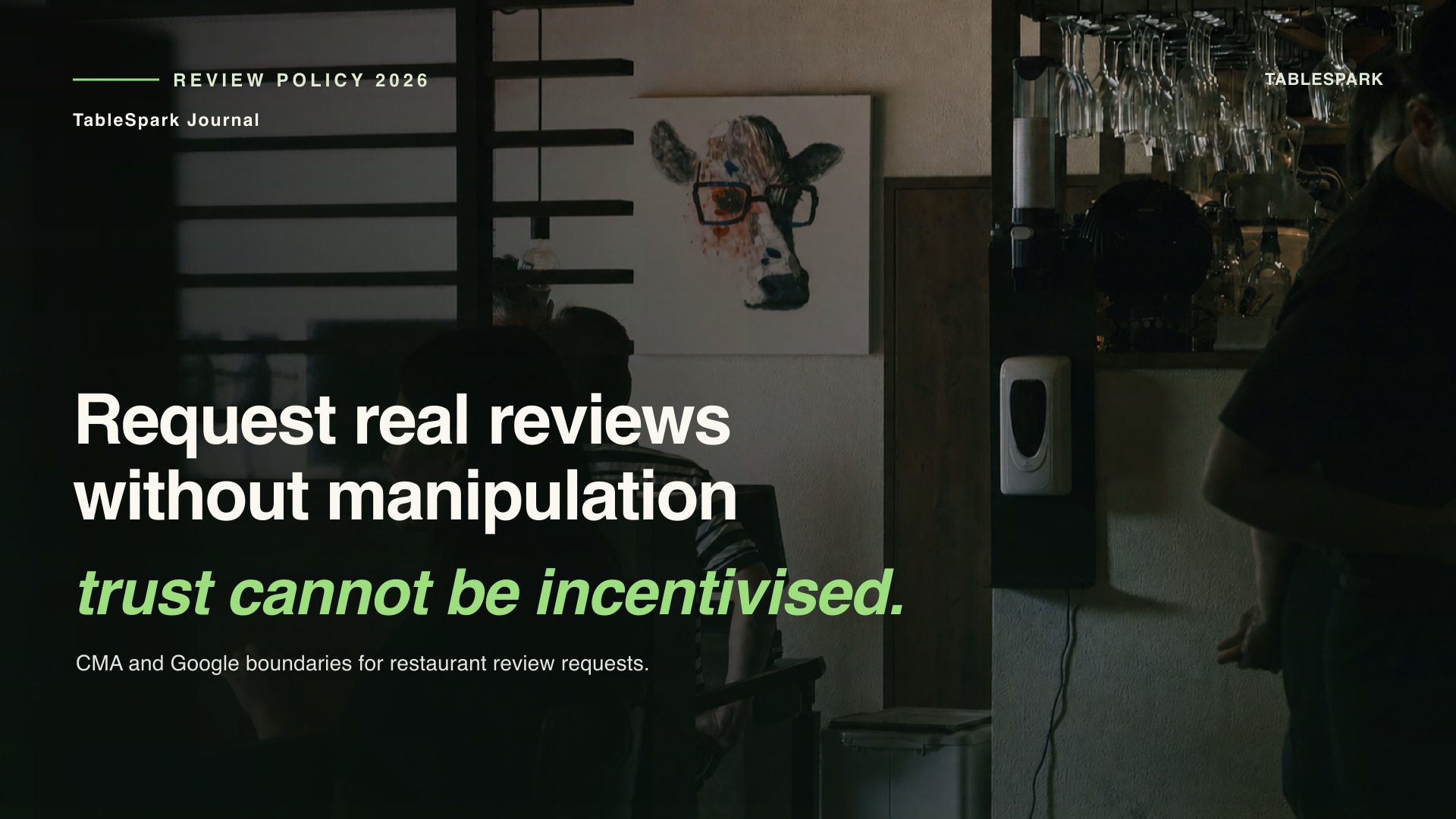
Five-star incentives can distort restaurant reviews, trigger platform action and raise consumer-law risk when staff blur asking with manipulation.