What you hold on a guest, how long you keep it and who may ask for it.
A repeat-visit email sent too early reads as inattention and costs an address; sent too late it arrives after the guest has found somewhere else. Neither failure announces itself.
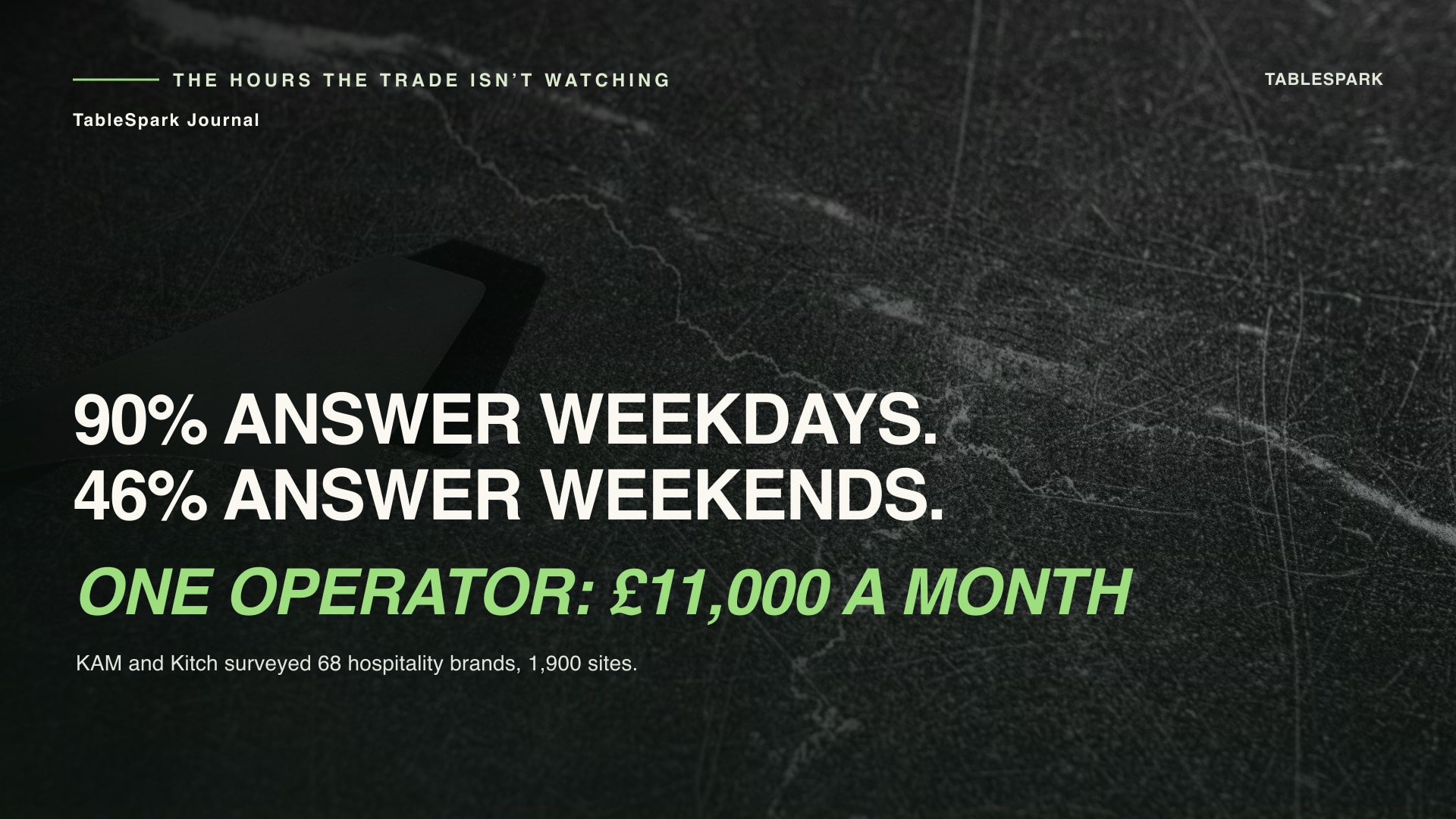
Across 68 UK hospitality brands, 90% engage on Instagram on weekdays, 46% at weekends and 51% in the evenings. A restaurant’s hardest trading hours are the hours a message waits.
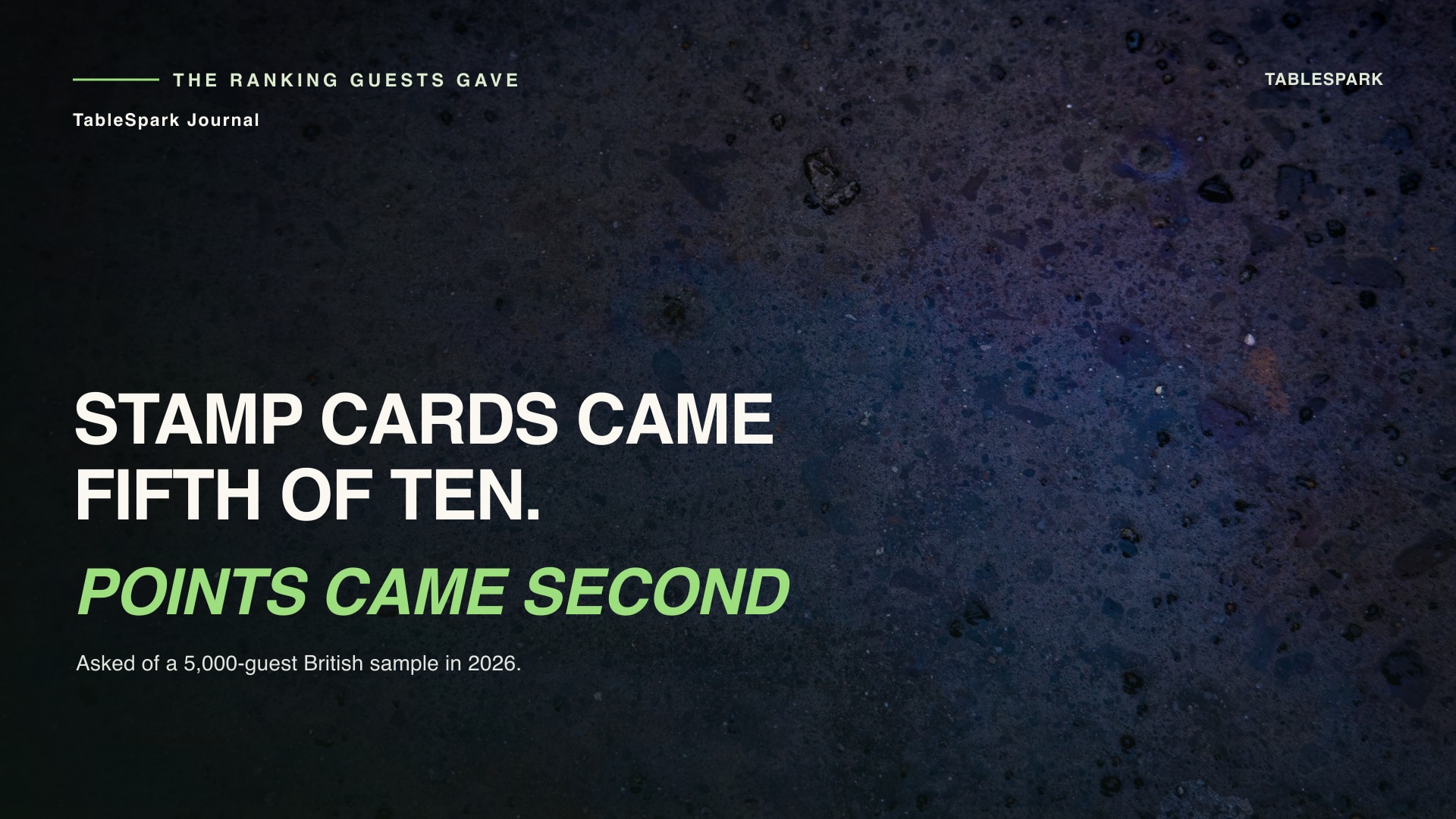
Most restaurants pick a loyalty mechanic on what it costs to print, not on what guests say they want, and the published ranking puts stamp cards fifth of ten.
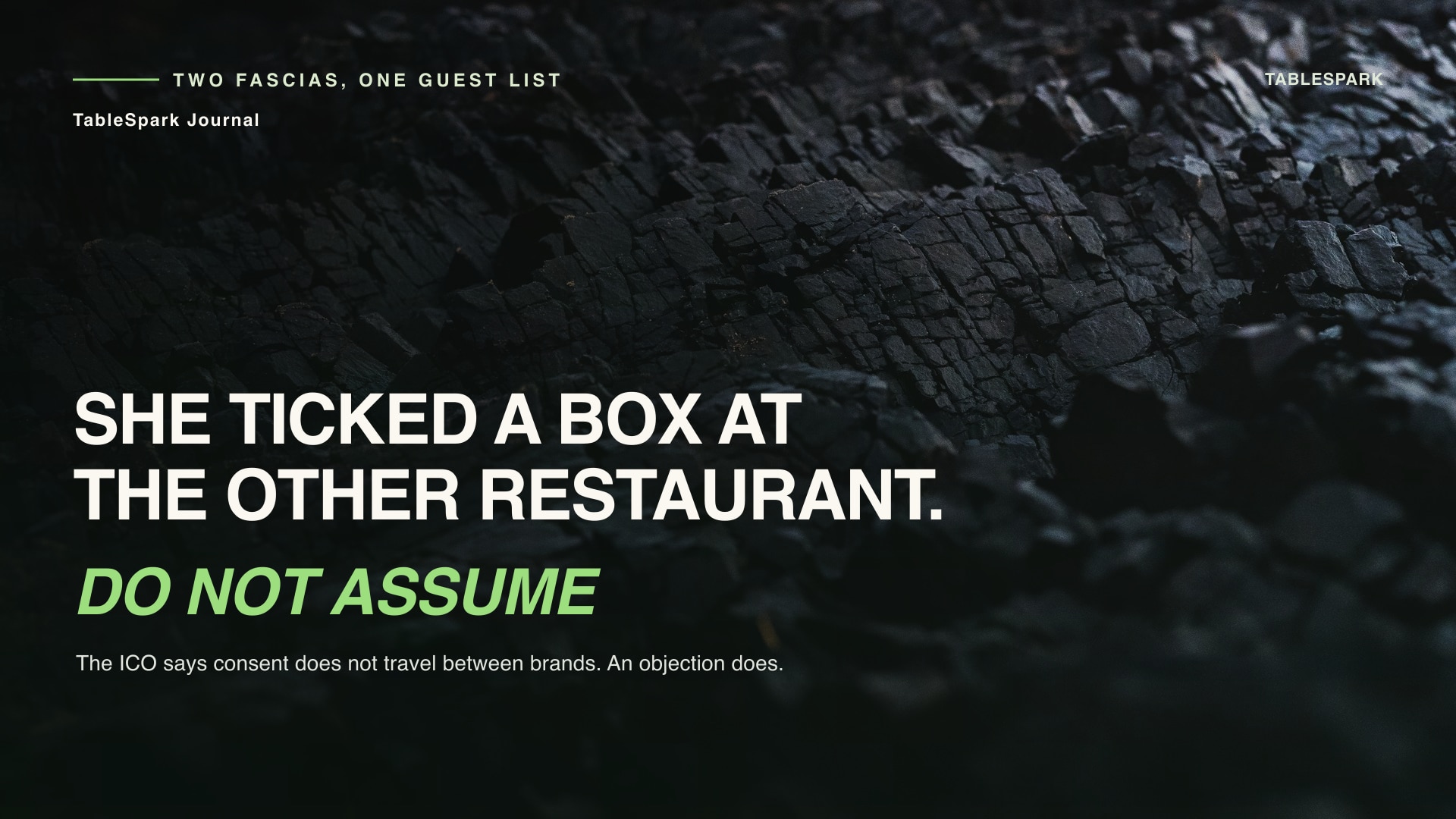
Two restaurants, one company, one guest list — and a guest who never agreed to hear from the second name. The ICO's answer bites at the send; the risk starts with an assumption.
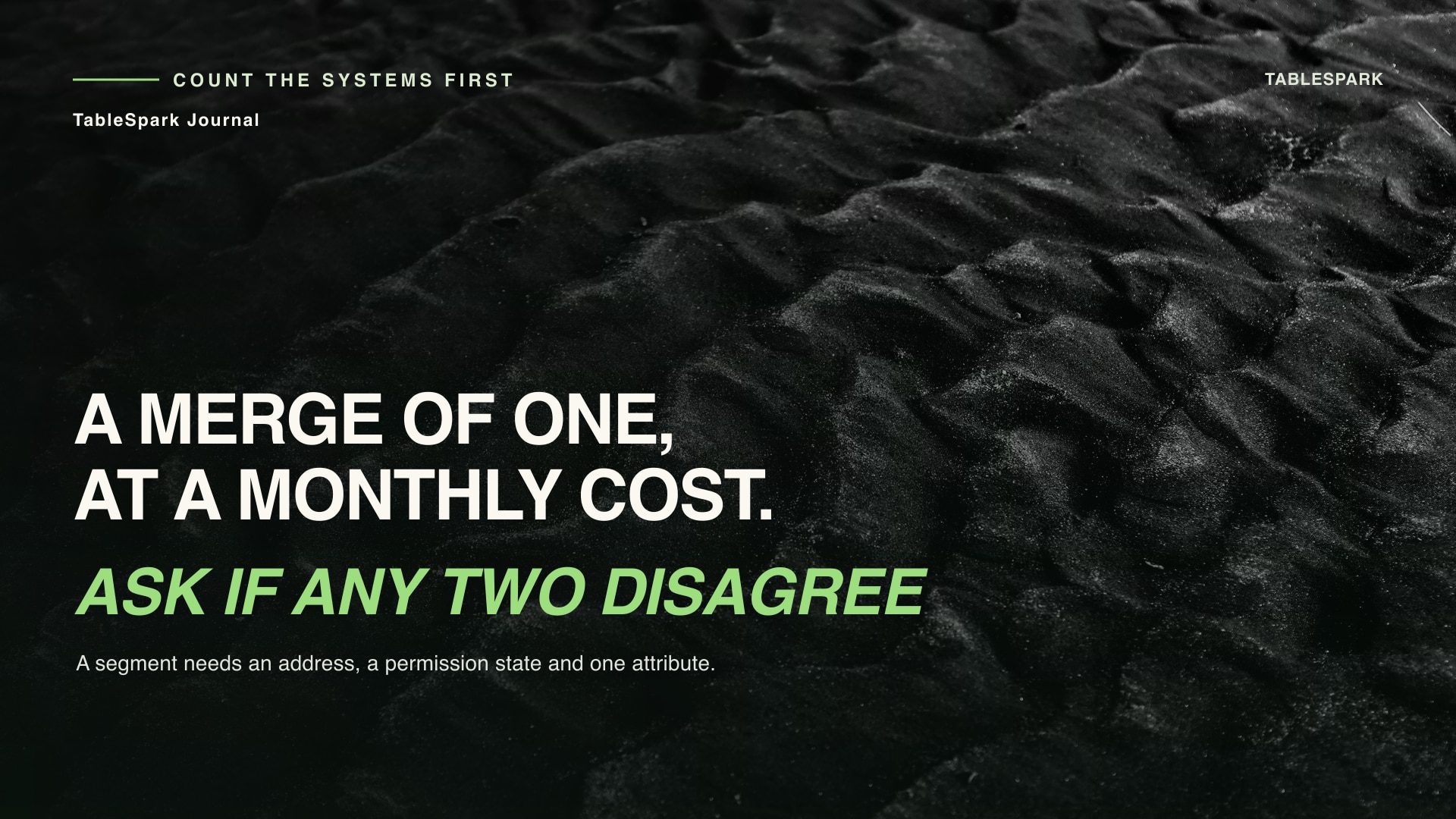
Before buying a platform to unify guest data, count the systems that actually disagree about who a guest is. For one site the merge is usually a merge of one, at a recurring cost.
A guest list fed by hand is only ever as current as the last upload — and the opt-out recorded on Monday is missing from Wednesday's send.
Guest notes kept one login away are lost to the rush. Three reachability questions, not a feature list, decide this purchase.
Before paying for a subscription to unify guest data, check what the booking, the order and the enquiry already create, and what the consent duty costs either way.
A guest list holding the same regular three times, one row carrying the allergy note. What the law requires when a guest says the record is wrong — and where it is unsettled.
A loyalty form's date-of-birth field is the easy part — sending the birthday message afterwards is where restaurants risk a live PECR breach.
A vendor's ransomware notice can start the restaurant's own 72-hour clock and its own liability risk — being hacked by proxy is not, on its own, a defence.
Too small for a staff accident book doesn't mean too small to report a guest's injury — and the record it creates is its own compliance risk.