What a restaurant site needs to carry before it is worth publishing. Restaurant website design with TableSpark →
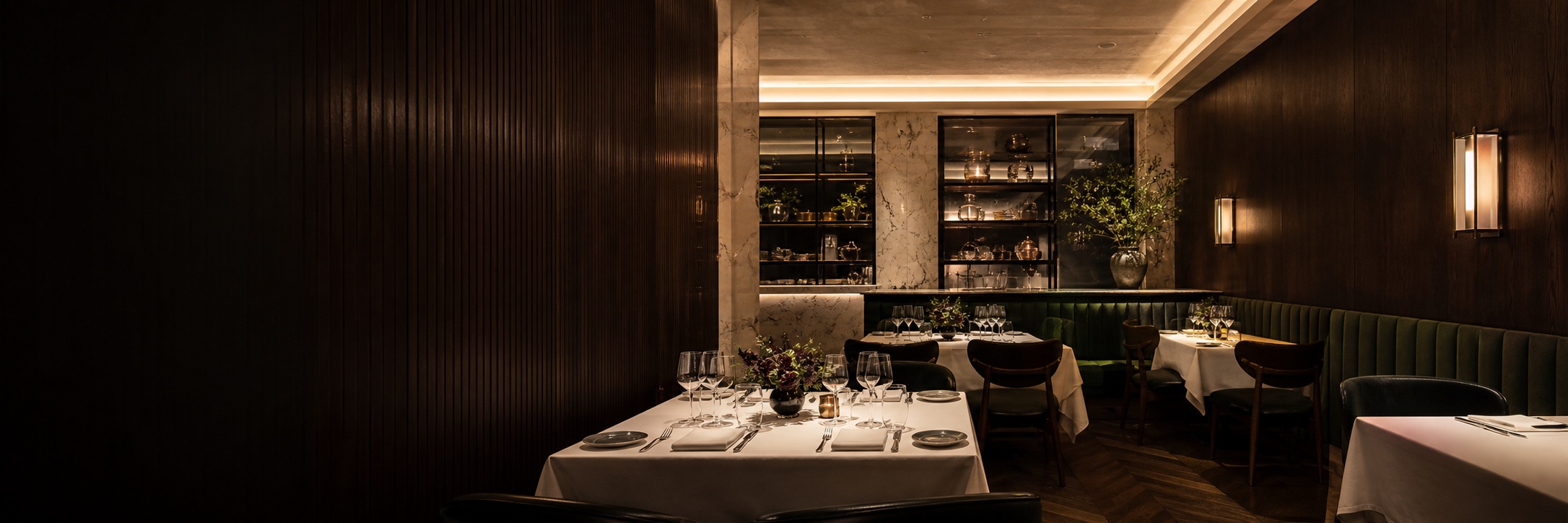
A hero photograph's tone shifts across the frame, across the crop and across the light it is read in. When the booking action goes with it, the cover is lost in silence.
Click depth to a booking is one measurable number, countable in a minute. On a template-built site it is usually not one, and the friction never reaches the owner as a problem.
Nobody ever removes a widget that has stopped being useful, so it keeps fetching from someone else's server on every page view, and the cost lands on a guest who quietly gives up.
Signing a second lease forces a website decision most owners make in a fortnight, and the wrong structure leaves two menus quietly drifting apart for years.
Describing parking as “free” is automatically unfair where the guest ends up paying to park — and the cost of getting it wrong lands on the restaurant, not the car park operator.
A regulator can now disable a restaurant's website and impose a penalty without a court case, while the diner's own right sits on a saving with a condition, not a date.
A copied menu listing raises two different property-right tests and a separate, unsettled liability question — confusing them leaves the exposure with you.
A lapsed footer badge needs no proof anyone was fooled — Schedule 20 skips that test, and paragraphs 3 and 4 open a real criminal exposure most advice never mentions.
Registering a company name checks nothing against the trade marks register, and the exposure a rebrand years in can trigger is real, not theoretical.
Three unconnected statutes each demand something different from a restaurant website, and only one of the three failures is a criminal offence — the other two cost money quietly.
Heavy restaurant photographs are routinely blamed for the wrong metric, and a fortnight of work is spent against the wrong number. The report that settles it is field data.
Ask one applicant about immigration status and not the others and the exposure flips from a capped civil penalty to tribunal compensation with no upper limit.