Bookings, menus, online ordering, search. Written by the people building the product, between services.
No file and no special markup buys a restaurant a place in an AI answer. The ordinary fundamentals that decide whether a page is even eligible are quietly wrong on a lot of sites.
A tag on one line among twenty is easy to miss, and a menu page that scatters its plant-forward dishes leaves the group's answer invisible at the speed a phone menu is read.
The upsell a server makes by habit is easy to leave out of an online menu, and the loss is invisible: no abandoned basket, no complaint, just a smaller order nobody recorded.
A repeat-visit email sent too early reads as inattention and costs an address; sent too late it arrives after the guest has found somewhere else. Neither failure announces itself.
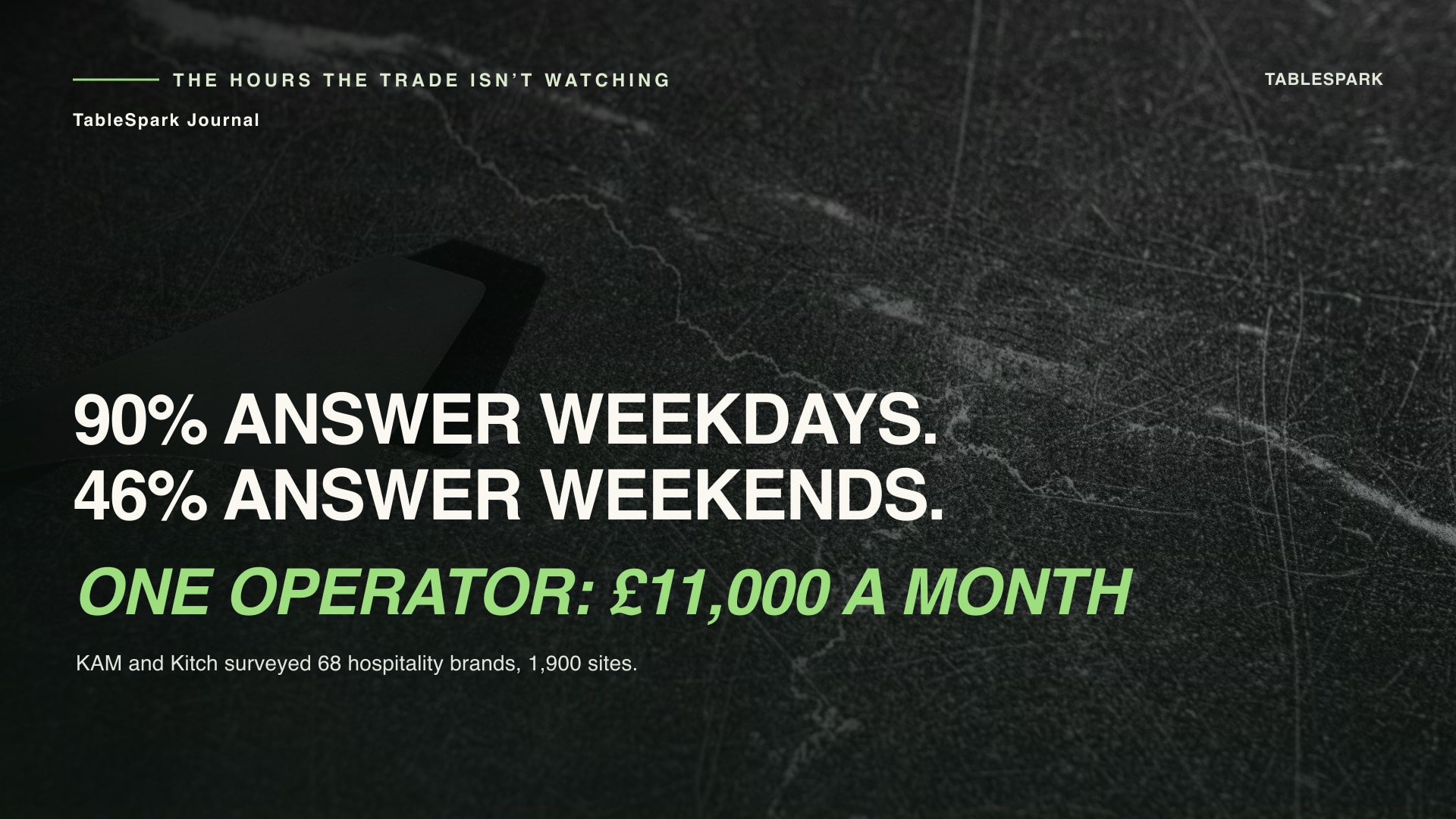
Across 68 UK hospitality brands, 90% engage on Instagram on weekdays, 46% at weekends and 51% in the evenings. A restaurant’s hardest trading hours are the hours a message waits.
A small order carries the same packaging, the same fixed card fee and the same handling minutes as a large one, and a marketplace commission takes more than a third off the top.
Losing a merchant account stops the till, the checkout and every held deposit at once. A new statutory notice floor arrives in April, but the contract date decides who is exposed.
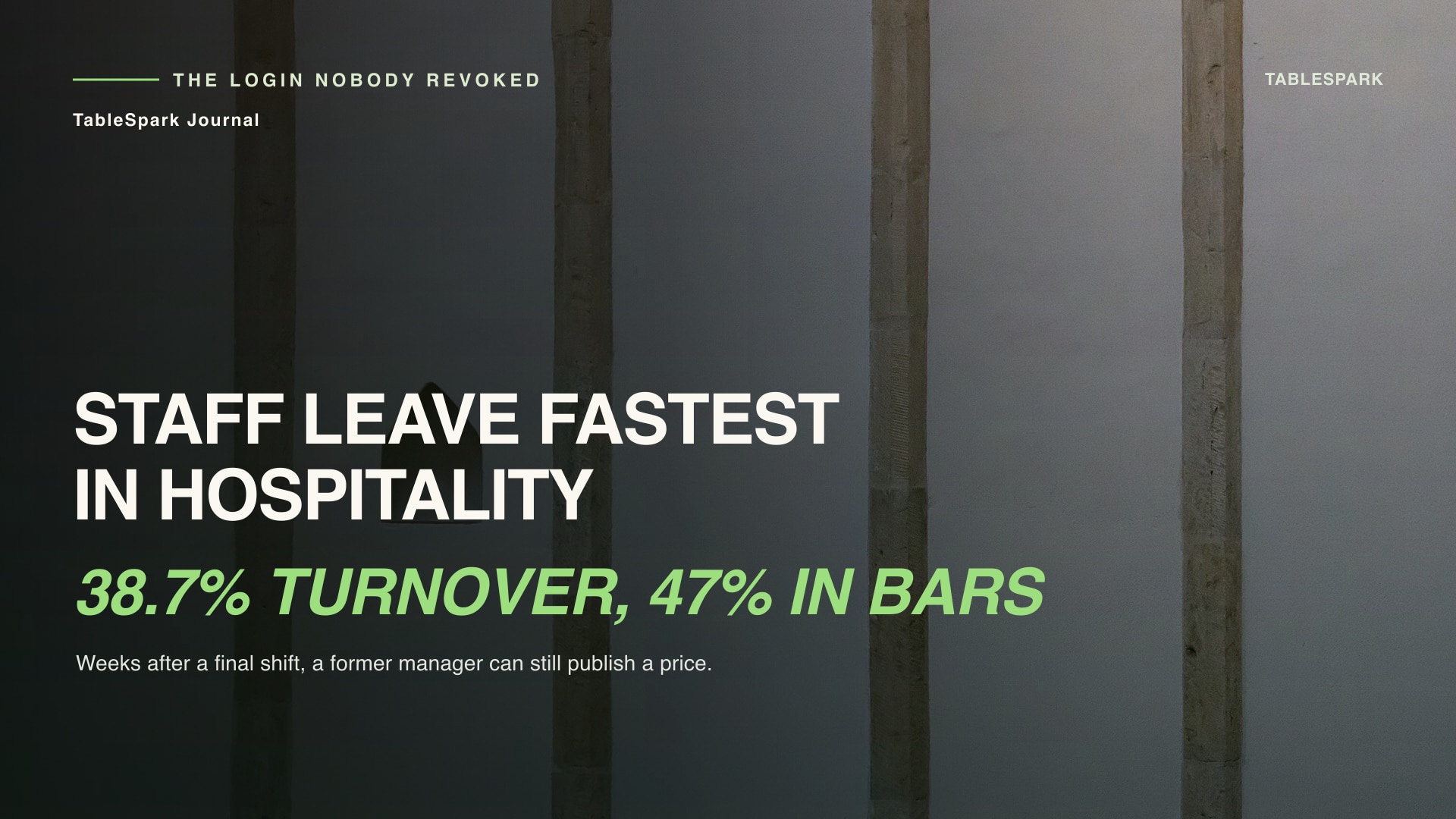
Website, social and ordering logins seldom reach a restaurant's offboarding checklist — so unless someone revokes them, a former manager can still publish a wrong price.
Click depth to a booking is one measurable number, countable in a minute. On a template-built site it is usually not one, and the friction never reaches the owner as a problem.
A \"free delivery over £40\" offer does not make the fee non-calculable: a mandatory delivery charge must stay in the running total until the basket reaches the threshold.
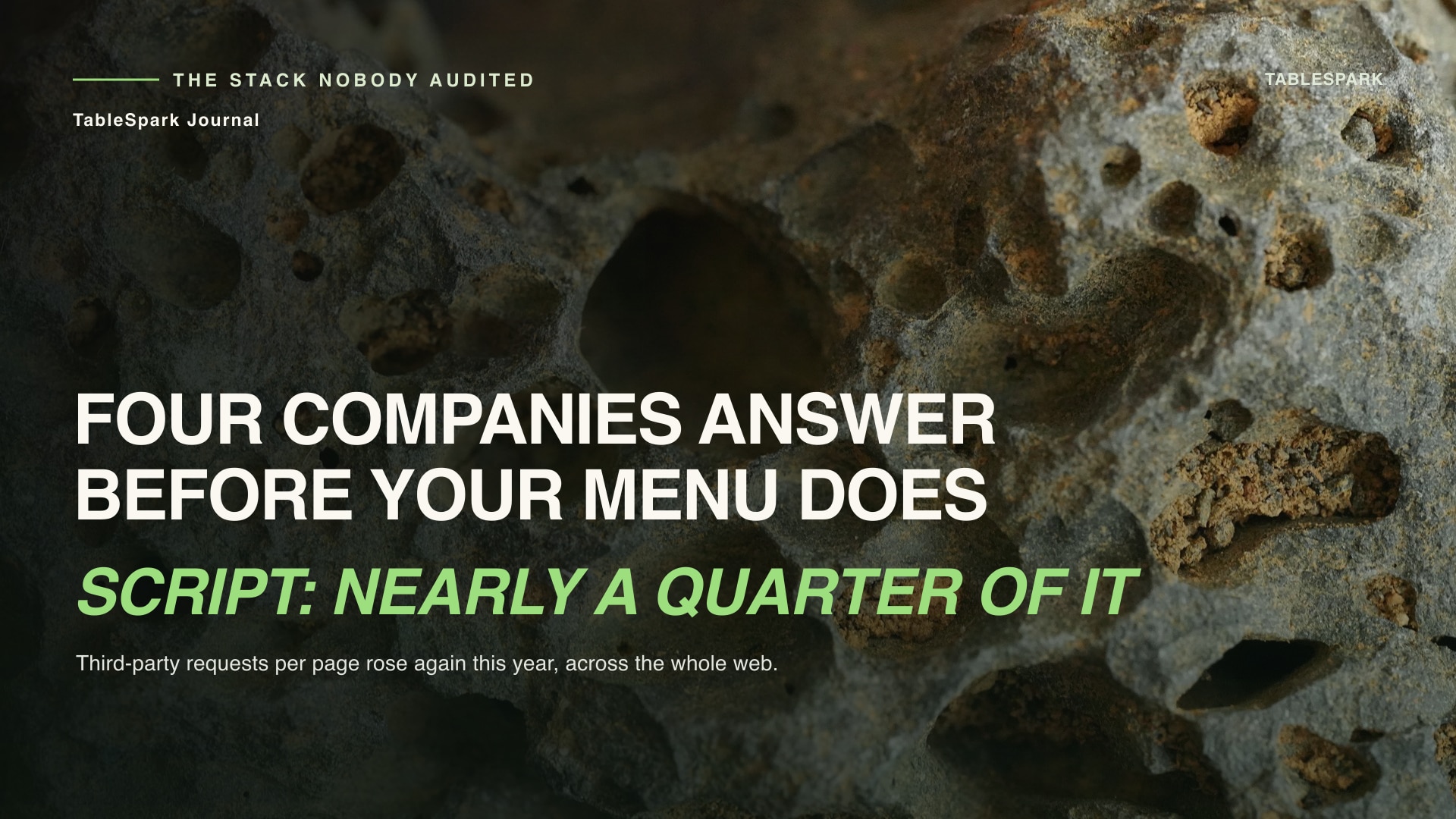
Nobody ever removes a widget that has stopped being useful, so it keeps fetching from someone else's server on every page view, and the cost lands on a guest who quietly gives up.
Nobody warns a restaurant before its website add-ons renew, and the rules announced for January 2027 were drafted for consumers, so the recurring fees keep leaving unannounced.